Why Princess Cut Engagement Rings Get More Compliments (And More Complaints)
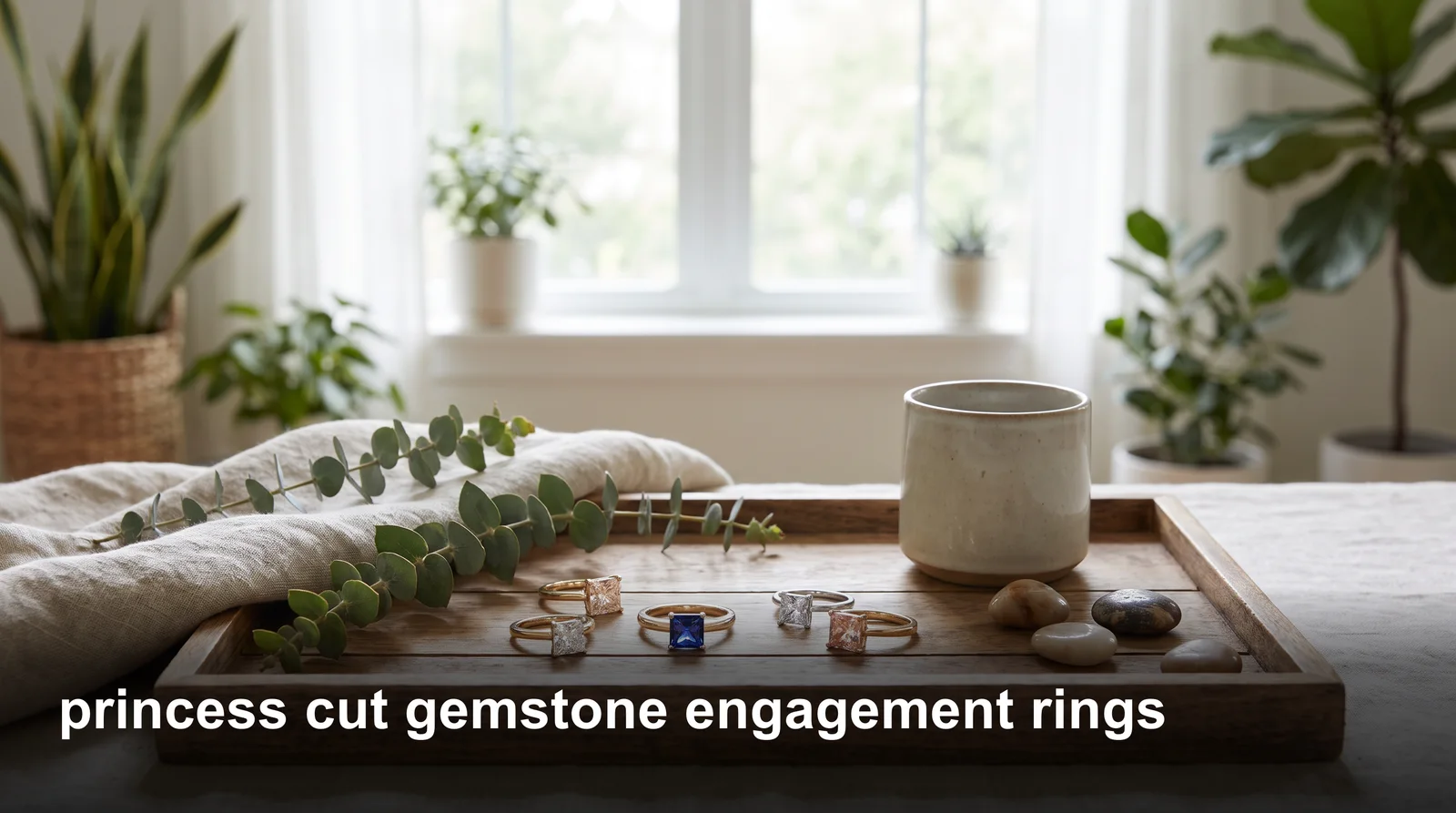
Princess cut engagement rings turn heads. They also cause more return trips to the jeweler than any other shape. Why? The sharp corners chip if you're not careful, and the setting matters more than most buyers realize. Let's get into what makes this cut so loved, and where people go wrong picking one.
A princess cut is a square shaped diamond with pointed corners. It's the second most popular shape after round, and it gives you big sparkle for less money per carat. That's the short answer. Now let's break down why that matters for your ring.
What Is a Princess Cut Diamond and Why Does Shape Matter So Much
A princess cut diamond is a square or rectangular stone with pointed corners and a faceted pattern that runs in pyramids underneath. It was invented in the 1980s and quickly became a favorite for its clean, modern look. Unlike round cuts, it keeps more of the rough diamond during cutting.
That means less waste. Less waste means the stone often costs 10 to 25 percent less than a round diamond of the same carat weight. For a 2 carat stone, that gap can mean a few thousand dollars saved.
The tradeoff is fire and brilliance. Round cuts are built to bounce light in every direction. Princess cuts flash light in bigger, blockier bursts instead of tiny sparkles. Some people love that bold look. Others miss the classic twinkle. It comes down to personal taste, and that's exactly why comparing shapes matters before you buy.
Princess Cut vs Round Cut Diamond: The Real Differences
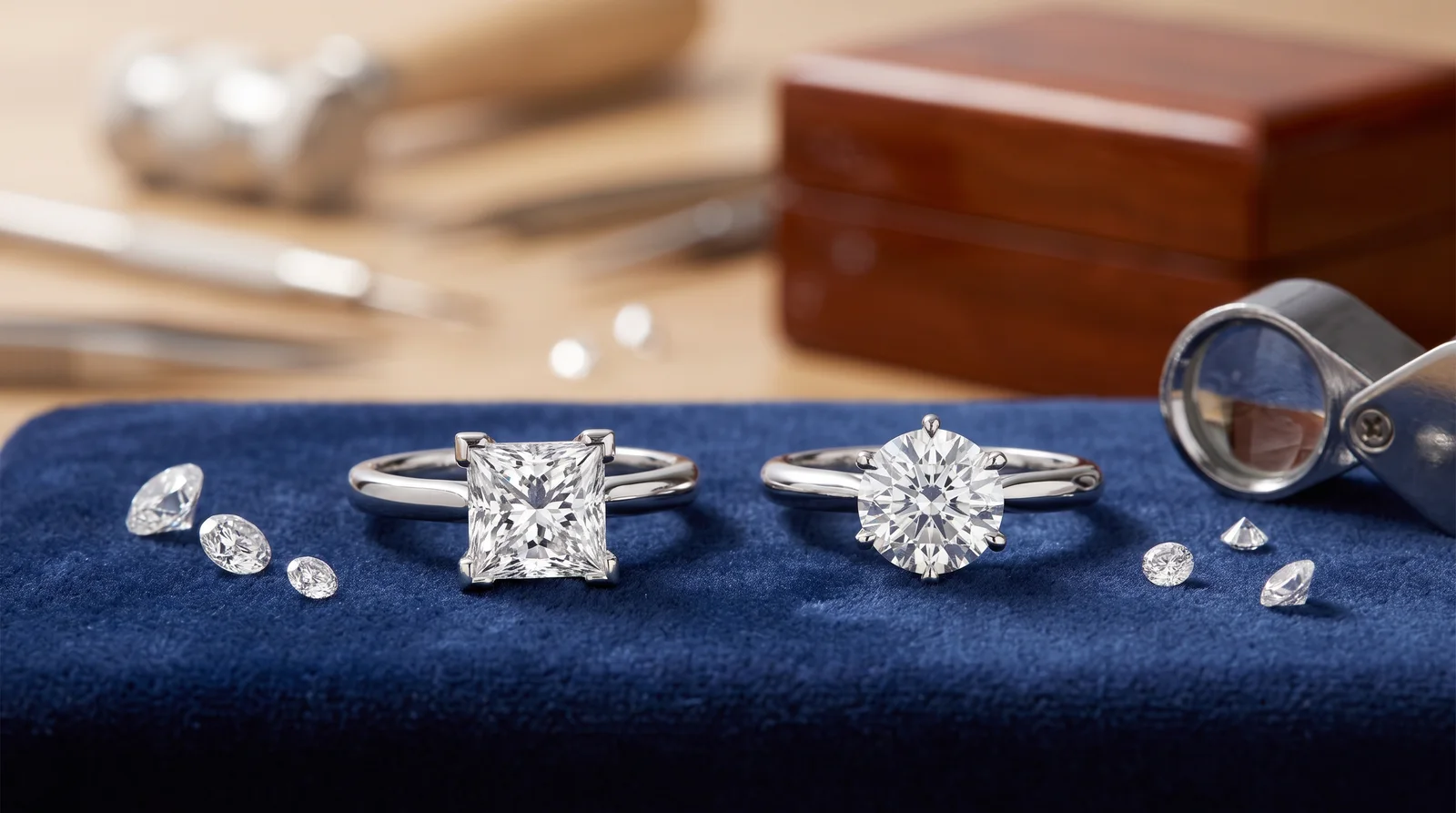
Princess cut and round cut diamonds differ most in shape, price, and how they wear over time. Round diamonds are cut for max sparkle. Princess cuts are cut for size and value. That's the core tradeoff buyers face.
Durability and Daily Wear
Round cuts have no corners, so they resist chipping. Princess cuts have four sharp corners that can catch on things. A prong setting with protected corners fixes most of this risk.
Price Per Carat
Round diamonds usually cost more because cutting them wastes more rough material. Princess cuts stretch your budget further, which is why so many couples pick them for bigger center stones. If you're still weighing shape against budget, this guide on how to choose a diamond for an engagement ring breaks down the tradeoffs in plain terms.
Princess Cut Diamond Engagement Rings vs Gemstone Options
Princess cut diamond engagement rings aren't your only choice anymore. Sapphires, moissanite, and lab grown stones all come in this shape now. Each option changes your price and your maintenance routine.
Princess cut gemstone rings using sapphire or morganite give you color without the diamond price tag. A princess cut sapphire runs about 30 to 50 percent less than a diamond of the same size. That's a real number buyers should know before they start shopping.
If you're weighing a lab grown princess cut diamond ring against moissanite, the choice gets more personal. Lab diamonds are chemically identical to mined ones. Moissanite sparkles differently and costs even less. This comparison of lab diamond vs moissanite for a bigger center stone walks through which one actually wows in person. Once you've picked your stone type, the setting style is next.
Princess Cut Halo Engagement Ring or Solitaire: Which Setting Wins
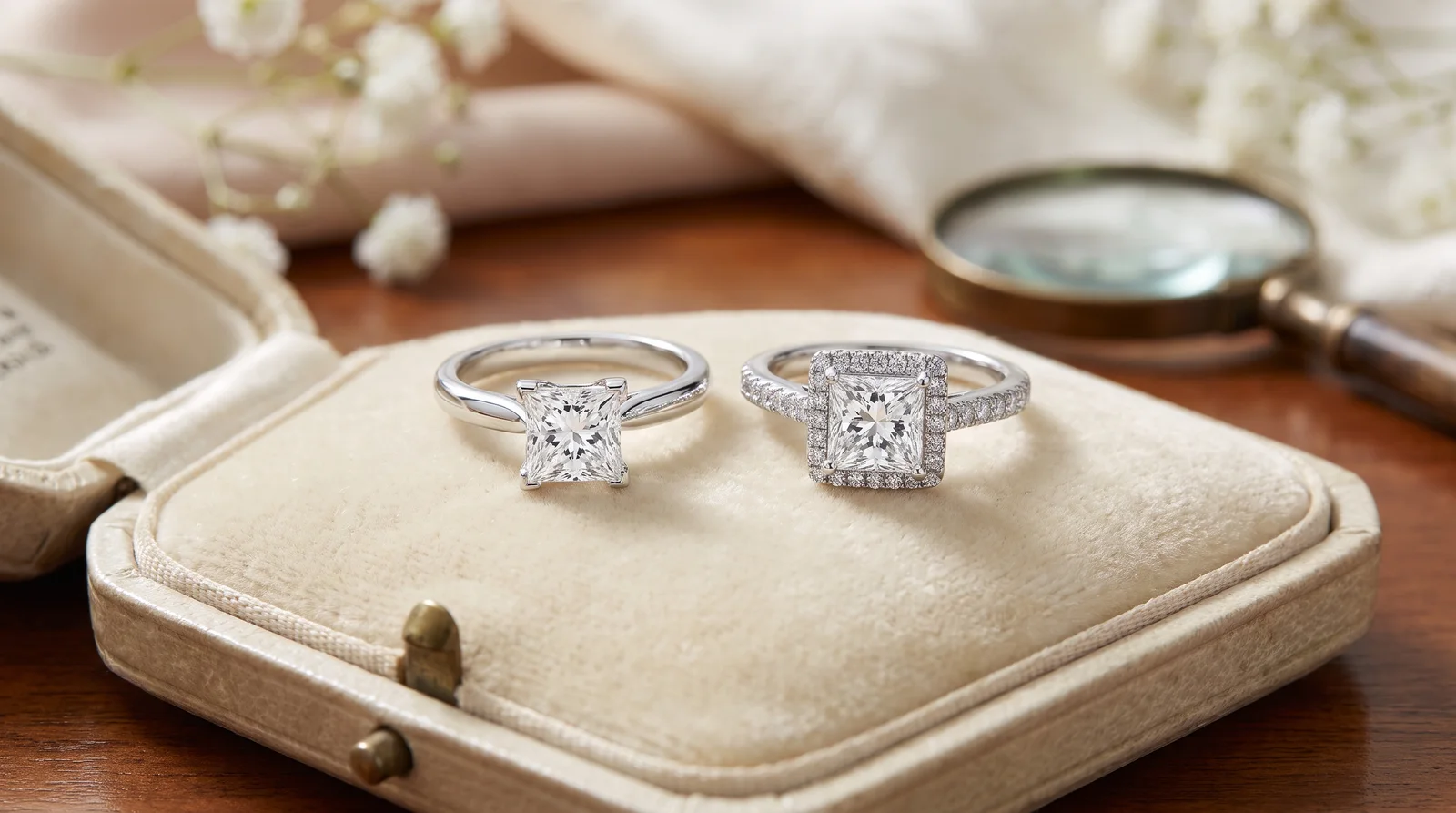
A princess cut halo engagement ring makes the center stone look bigger, while a princess cut solitaire engagement ring keeps the focus purely on the diamond itself. Both are popular for good reason. Your choice depends on how much sparkle you want and how the stone reads on your hand.
The Halo Advantage
A halo setting rings the center stone with tiny pave diamonds. This can boost visual size by 20 to 30 percent without adding real carat weight. It's a smart move if budget is tight but you want a bigger look.
The Solitaire Advantage
A solitaire setting is simple and timeless. But setting style changes how big a stone looks in ways people don't expect. If you've ever wondered why a diamond looks smaller after setting, this piece on why your diamond may look smaller after setting explains exactly what's going on. Once you've locked in a setting, the next big question is budget.
What a Bigger Princess Cut Center Stone Actually Costs
Bigger princess cut stones cost more, and the jump isn't always straight line math. Price per carat climbs fast once you cross the 2 and 3 carat marks. It climbs even faster at the very top end.
Buyers chasing a massive center stone should know how wild the pricing can get at scale. This breakdown of 10 carat diamond ring pricing shows why even wealthy buyers do a double take at the final number. Most princess cut buyers stay well under that range, but it's useful context. Now let's talk about what happens after you've said yes.
Pairing Your Princess Cut Ring With a Wedding Band
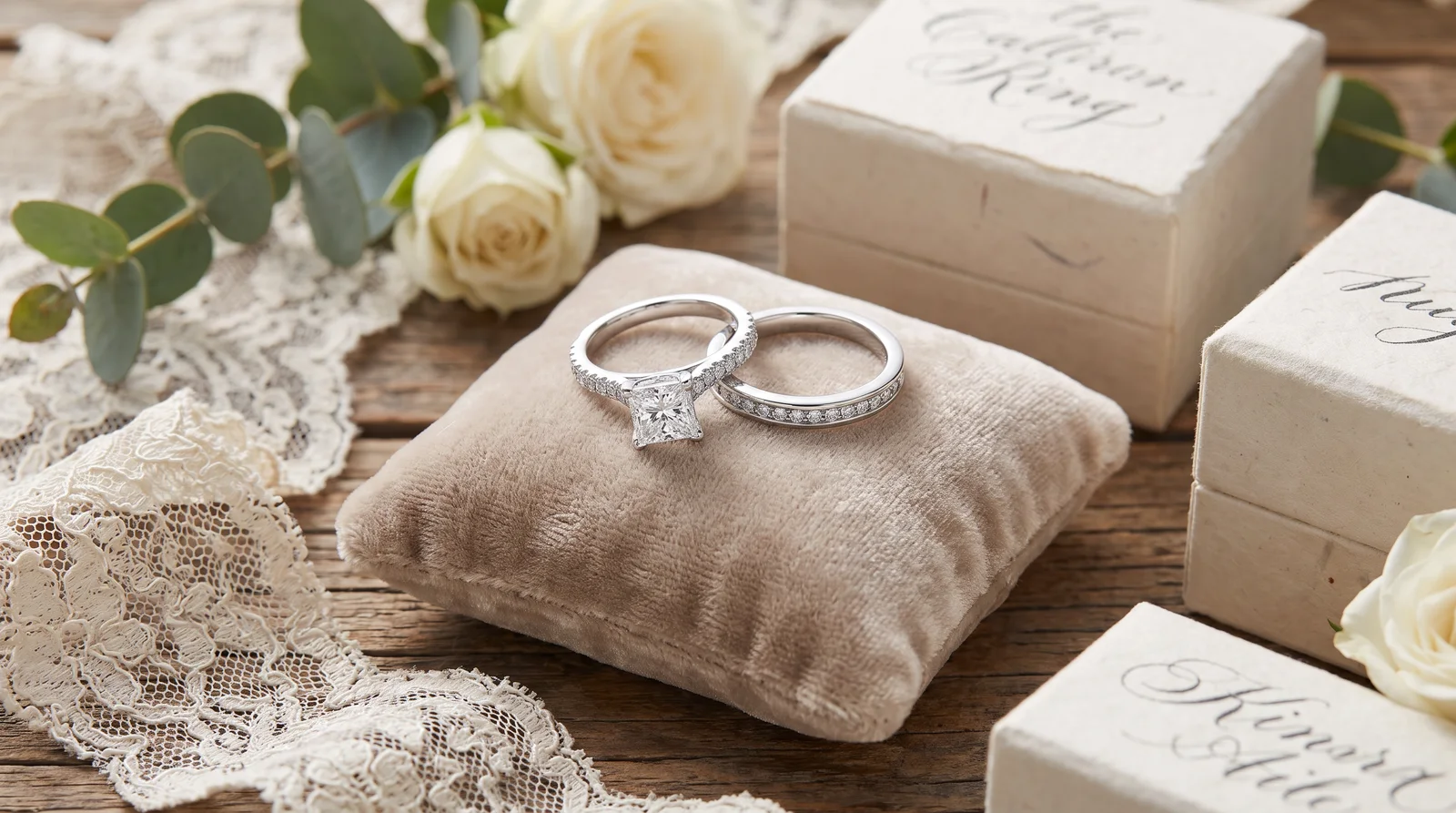
Princess cut rings need thoughtful pairing when it's time to add a wedding band. The square shape and pointed corners can clash with certain band styles if you're not careful. A curved band, for case, often leaves gaps next to a princess cut's straight edges.
Jewelers usually suggest a contoured or notched band built to hug the princess cut shape. This guide on how to stack wedding and engagement rings the way jewelers do shows the pairing tricks that actually work. Getting this right now saves you a resizing headache later.
Frequently Asked Questions
How much does a princess cut diamond cost compared to round?
Princess cuts usually run 10 to 25 percent cheaper per carat than round diamonds. The exact gap depends on quality and size. Bigger stones tend to show a wider price difference.
Why do princess cut diamonds chip more easily?
The four pointed corners are more exposed than a round diamond's edge. A protective prong setting lowers this risk a lot. Regular wear and tear still adds up over years.
Can a lab grown princess cut diamond ring look identical to a mined one?
Yes, lab grown diamonds share the same chemical makeup as mined stones. Even trained jewelers need special tools to tell them apart. The price difference is the biggest giveaway, not the look.
Does a princess cut halo engagement ring make the stone look bigger?
Yes, a halo can boost visual size by 20 to 30 percent. It surrounds the center stone with smaller diamonds for extra sparkle. This is a popular trick for stretching a smaller carat budget.
Finding Your Perfect Princess Cut
Picking between princess cut diamond engagement rings, gemstone versions, or lab grown options comes down to what you value most. Maybe that's price. Maybe it's sparkle, or maybe it's simply the bold square shape itself. Whatever you choose, the right setting and the right jeweler make all the difference in how that stone looks on your hand for years to come. If you're ready to see princess cut options in person, reach out to a jeweler who can walk you through real stones side by side. That's the only way to know for sure which one is yours.