Lab Diamond vs Moissanite for a Bigger Center Stone That Wows
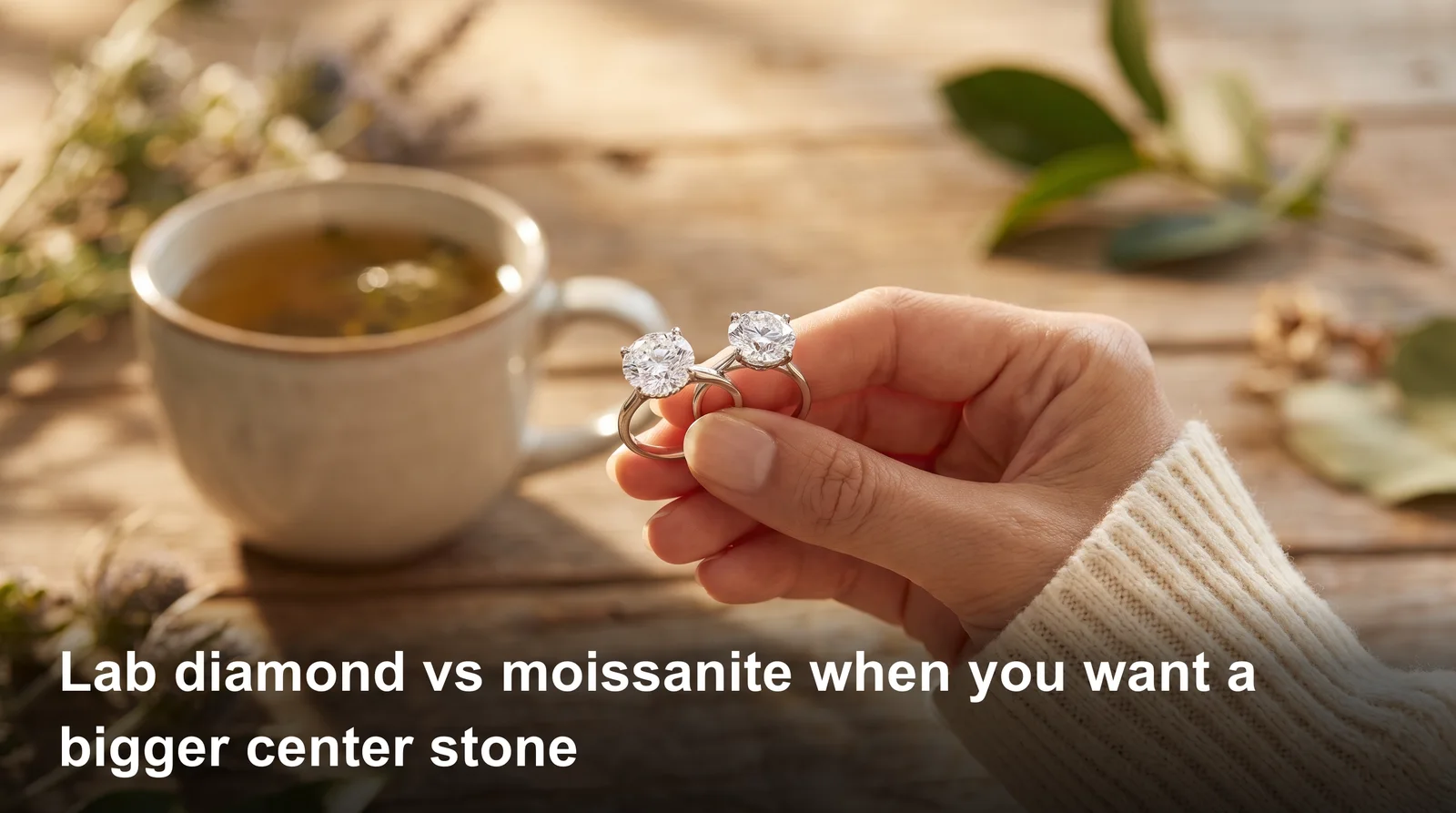
Want a big center stone without a big price tag? The lab diamond vs moissanite question comes down to one thing. It's your budget versus your size goals.
Moissanite costs far less per carat than a lab diamond. That means you can go bigger for the same money. But there's more to this choice than just size, so let's break it down.
Lab Diamond vs Moissanite: The Real Difference in Size and Price
A lab diamond and moissanite look similar at first glance. But they're not the same stone at all.
Moissanite is silicon carbide. Lab diamonds are pure carbon, grown in a lab to match natural diamonds atom for atom. Moissanite costs about one tenth the price of a lab diamond at the same size.
A 2 carat lab diamond might run you $3,000 to $5,000. A 2 carat moissanite often costs $400 to $600. That gap is why so many buyers ask about moissanite vs lab diamond price before they shop.
If you're trying to figure out how to choose a diamond for an engagement ring, this price gap changes all. It opens the door to sizes you might not have considered. Let's look at why that matters so much.
Moissanite Bigger Carat for the Money Is the Whole Point
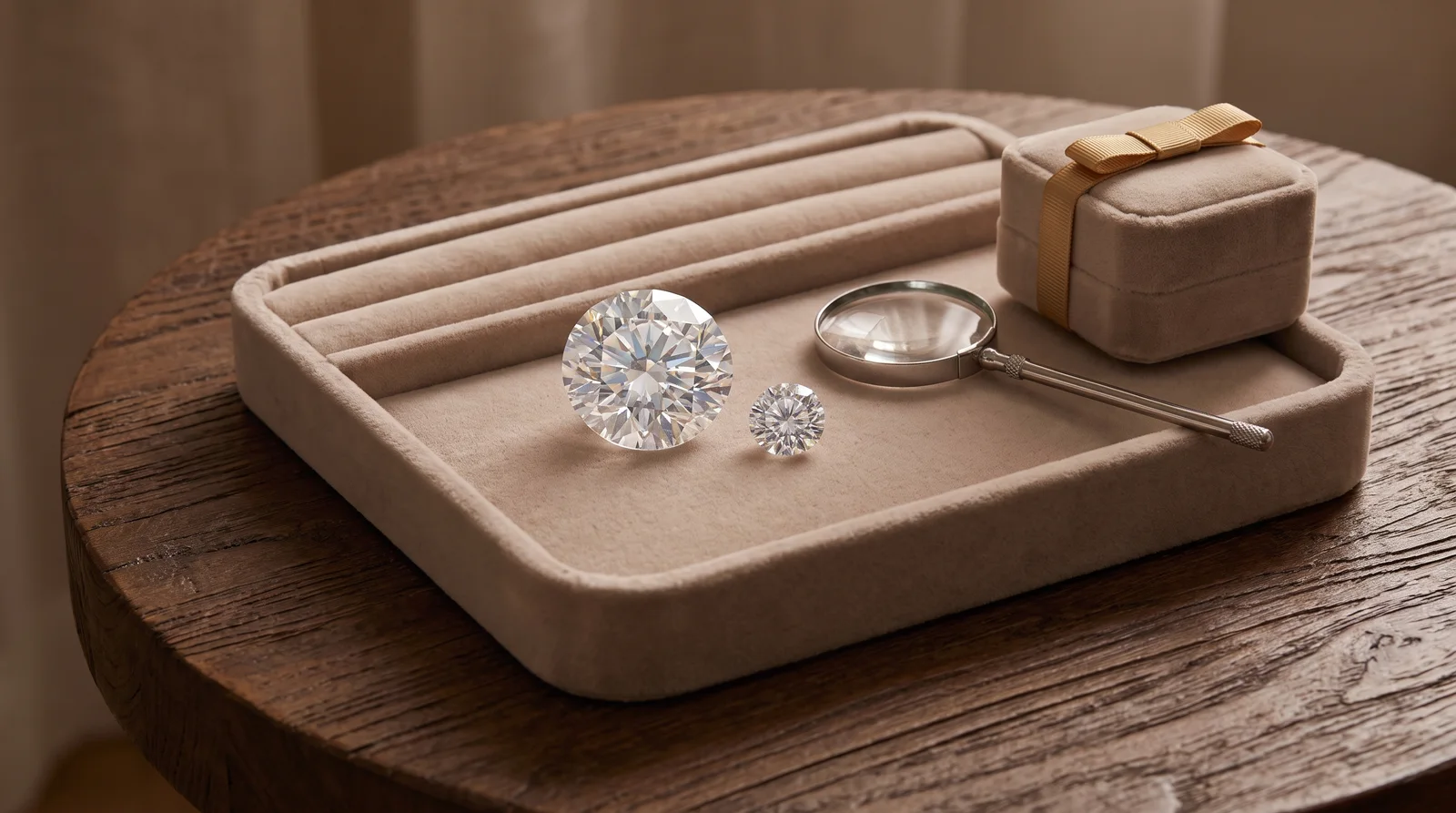
Moissanite gives you more visible size for less cash. That's the main reason people switch.
Why the Math Works in Your Favor
Say your budget is $2,000. With lab diamonds, that might get you a solid 1 carat stone. With moissanite, that same $2,000 could land you a 3 carat stone with room to spare for a nicer setting.
This is the real appeal behind a large moissanite engagement ring. You get the visual impact of a big stone. You don't pay the price a diamond that size would demand.
Is Moissanite Bigger Than Diamond, or Does It Just Look That Way?
Moissanite isn't physically bigger carat for carat. A 1 carat moissanite and a 1 carat lab diamond measure close to the same width.
But moissanite is less dense than diamond. So a moissanite stone often has more surface spread per carat weight. That means it can face up slightly larger than a diamond of the same weight, which adds to the illusion of size.
This is a small effect, not a dramatic one. The bigger factor is still what your budget lets you buy. Now let's talk about how these stones actually perform once they're on your hand.
Moissanite vs Diamond Sparkle: What You'll Actually Notice
Moissanite sparkles more than a diamond does. That surprises a lot of first time buyers.
Diamonds have a refractive index of about 2.42. Moissanite sits higher at 2.65 to 2.69. That higher number means more light bending inside the stone, which creates more flash.
The catch is moissanite throws off more colorful flashes, sometimes called the disco ball effect. Lab diamonds give you a whiter, more classic sparkle. Some people love the extra fire moissanite gives off. Others find it a bit much for daily wear.
If you've worn a diamond your whole life, moissanite might feel flashy at first. Give it a week. Most people adjust fast and start loving the extra light show. Next let's compare how each stone actually wears over time.
Moissanite vs Lab Grown Diamond: Durability and Daily Wear
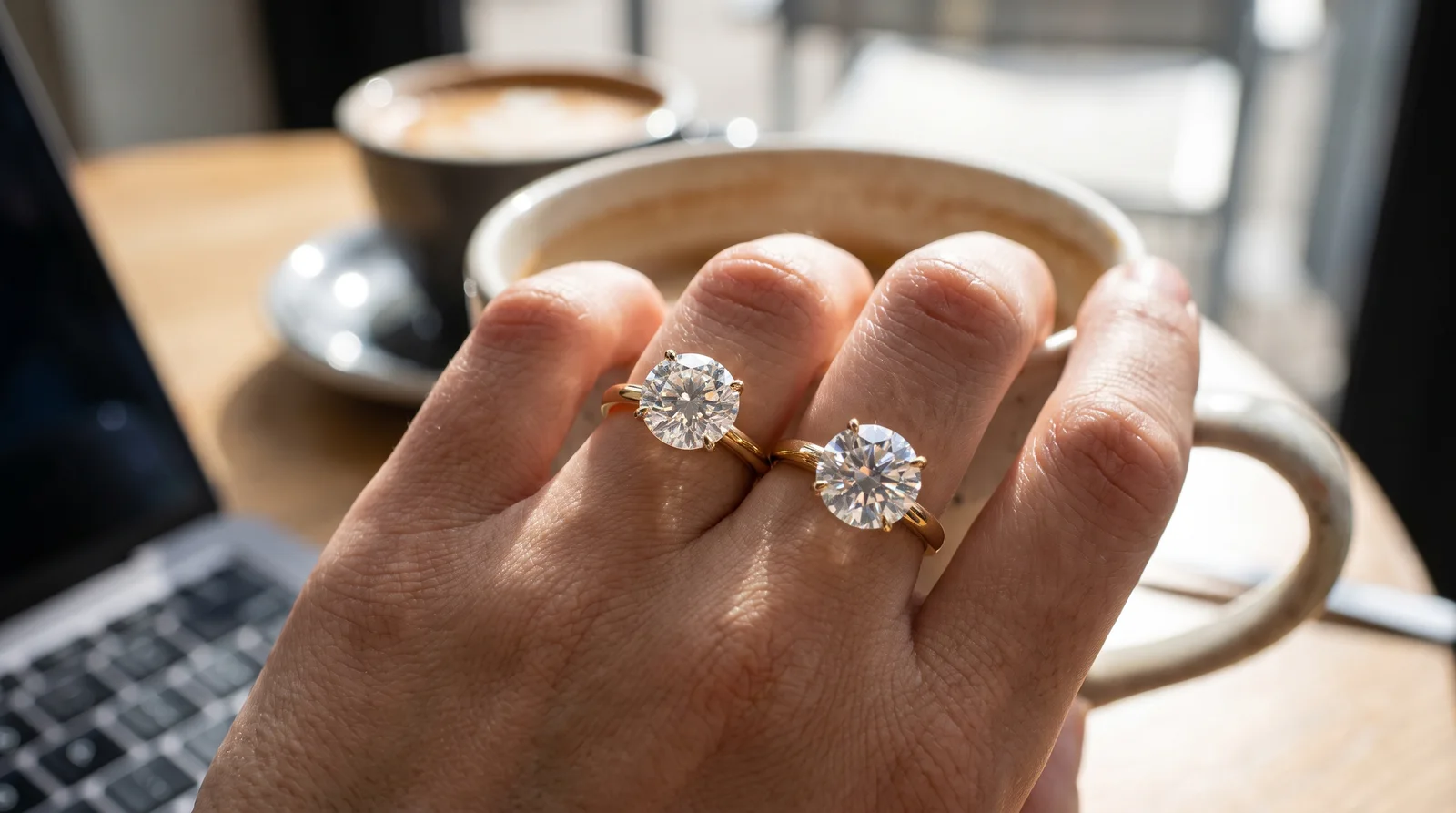
Lab diamonds are harder and more scratch resistant than moissanite. That matters if you work with your hands a lot.
Hardness Numbers That Matter
Diamonds score a 10 on the Mohs hardness scale. Moissanite scores 9.25. Both are tough enough for daily wear, but diamond wins if you're rough on jewelry.
For most people this difference won't show up for years. You'd need to bang your ring against hard surfaces often to notice a real gap. Still, if you garden, lift weights, or work in trades, that edge favors diamond.
Setting Security Matters More Than People Think
A bigger stone puts more stress on its setting, no matter which material you pick. Prongs bend. Metal wears thin. This applies to lab diamonds and moissanite equally.
If you're not sure your setting is holding up, this guide on signs your diamond is loose walks through what to check. The same warning signs apply to moissanite rings too. A stone that shifts or catches on fabric needs focus fast, so don't wait to get it checked.
Moissanite vs Lab Diamond Engagement Ring: Which One Fits Your Case
The right choice depends on your budget, your values, and what you want people to notice first. There's no universal right answer here.
When Moissanite Makes More Sense
Pick moissanite if size is your top priority. It's also a smart pick if you're working with a tight budget but still want a showstopper ring.
A large moissanite engagement ring lets you skip the sticker shock that comes with big diamonds. If you've read about the 10 carat diamond ring price, you know how fast diamond costs climb at bigger sizes. Moissanite sidesteps that problem completely.
When Lab Diamond Still Wins
Choose a lab diamond if resale value and long term durability matter most to you. Lab diamonds hold their material value better than moissanite over decades.
Lab diamonds also carry more emotional weight for some buyers. If you plan to pass the ring down someday, a diamond might feel more fitting. It's still a real diamond, just grown differently than a mined one.
What About Perceived Size Once It's Set?
Setting style changes how big any stone looks, diamond or moissanite. A thin band and low profile setting makes the center stone pop more.
If you've ever wondered why does my diamond look smaller after setting, the setting itself is usually the reason, not the stone. The same rules apply to moissanite. A bezel setting can shrink the visual size, while a hidden halo setting adds noticeable width. Choose your setting with as much care as you choose the stone.
Passing Down a Moissanite or Lab Diamond Ring
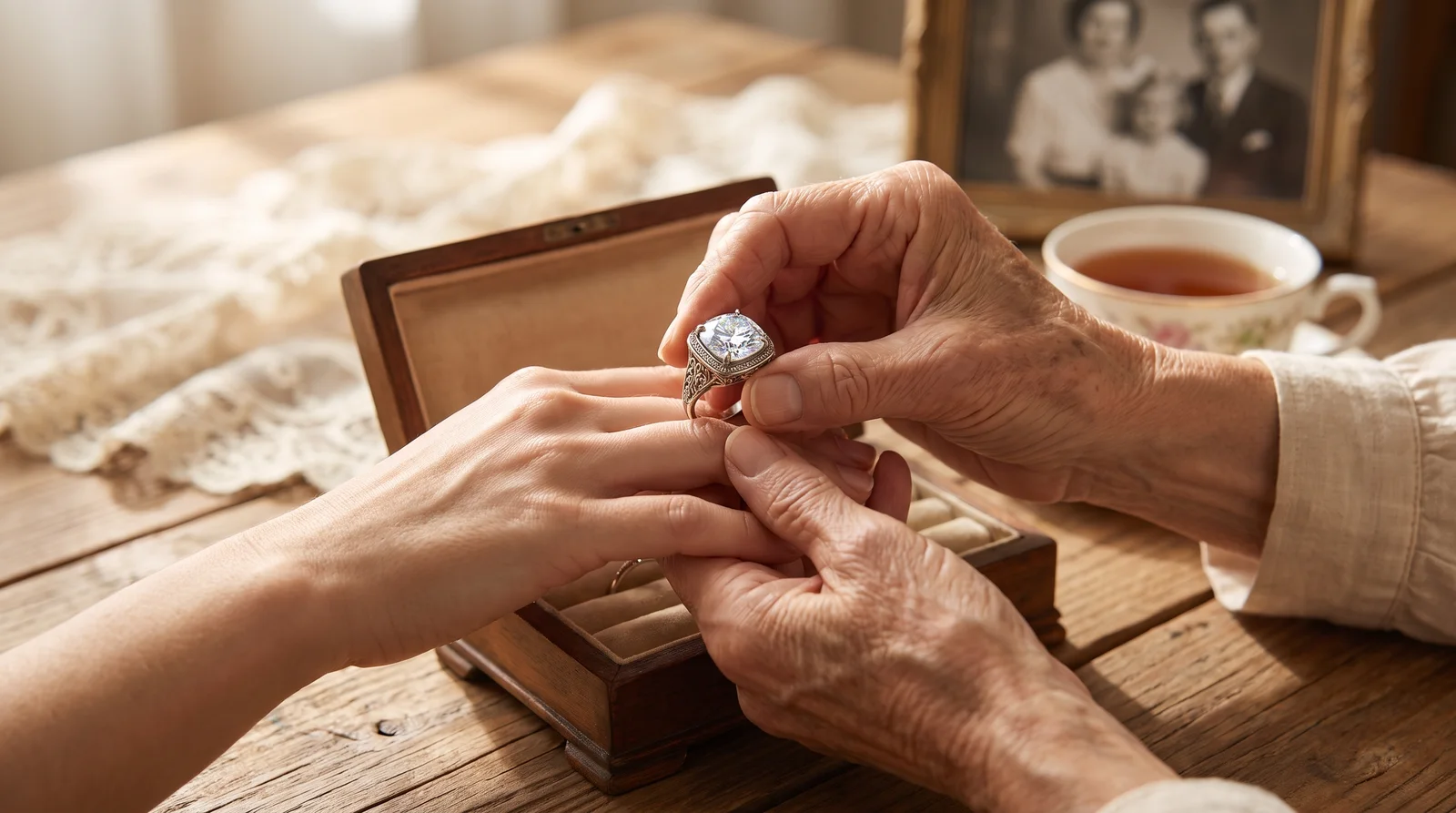
Both stones can become family heirlooms if you take care of them. Neither one is off limits for future generations.
If you already own an heirloom ring and want to reset it with a new center stone, read this piece on resetting an heirloom diamond ring first. It covers the one mistake that ruins the original setting for good. The same care applies whether you're setting a moissanite or a lab diamond into that family piece.
Frequently Asked Questions
Does moissanite look fake next to a real diamond?
No, not to the average eye. Trained jewelers can spot the difference by the extra sparkle, but most people can't tell them apart.
Can you tell moissanite from a lab diamond in photos?
Sometimes, yes. Moissanite tends to show more rainbow flashes in bright light or camera flash, which can give it away in photos.
How long does moissanite last compared to a diamond?
Moissanite lasts decades with normal care. It's not as hard as diamond, but it won't scratch or dull under everyday wear.
Why is moissanite so much cheaper than a lab diamond?
Moissanite is easier and cheaper to produce than lab diamond. The growing process takes less time and costs less, so the savings pass to you.
What size moissanite looks like a 2 carat diamond?
A 2 carat moissanite is a close visual match to a 2 carat diamond. Their size and spread look nearly identical to the naked eye.
Making the Final Call on Your Center Stone
Both stones have real strengths. It comes down to what you want your ring to say about your priorities.
If size and sparkle top your list, moissanite delivers more for less. If you want the classic diamond look and don't mind paying more for it, a lab diamond still makes sense. Either way, get the setting right and get the stone checked once a year. That's how you protect your investment no matter which one you pick.
Ready to see both options side by side in person? Visit Fulop Jewelry and let our team help you find the center stone that fits your ring, your budget, and your story.