Does quartz watch second hand alignment mean your watch needs repair?
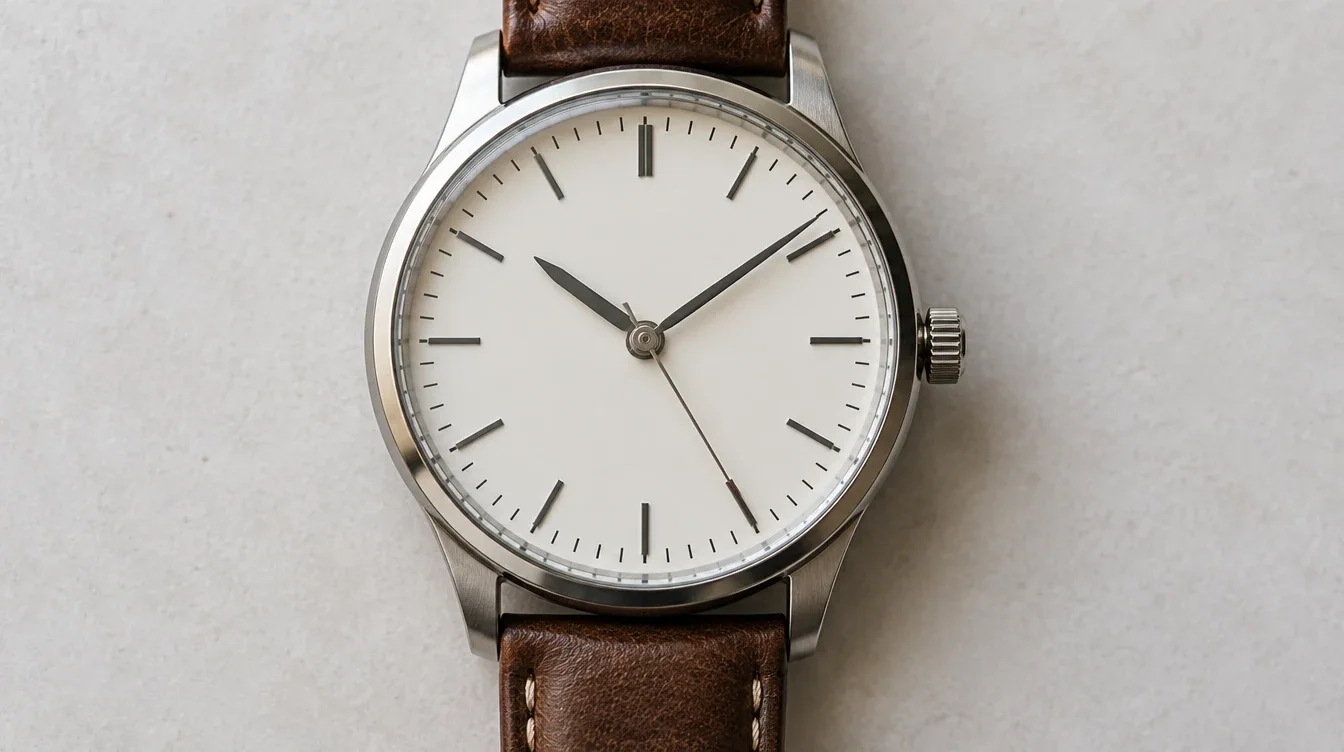
A quartz second hand that misses the markers may have a cosmetic offset, but rubbing, stopping or a new change calls for inspection. Judge quartz watch second hand alignment alongside reliable movement and timekeeping, not appearance alone. Watch Winder Mall’s explanation separates display position from a possible fault.
Why the hand can miss without losing time
A second hand can miss a marker while the watch keeps accurate time. Alignment means where the tip rests. Accuracy means how much time the watch gains or loses. Check each on its own.
Compare two watches. One lands slightly left of each mark but keeps a steady rhythm. Another hits the marks but falls behind your reference clock. Neat alignment does not prove the watch keeps time well. A small offset does not prove it keeps time poorly.
These examples show the difference. They are not results from tests on real watches.
People often ask “does second hand misalignment affect watch accuracy”. A cosmetic offset alone need not change how well the watch keeps time. But a hand that catches or slips needs a different check. The same source distinguishes those symptoms from ordinary visual mismatch.
To judge which fits your watch, first consider why a steady hand can look off.
What changes quartz watch second hand alignment?
Viewing angle, small assembly differences and gear play can affect where a second hand seems to land. More than one cause may be at work. Looking at one marker cannot tell you which part is responsible.
Your viewing angle changes the picture
The second hand sits above the dial. From the side, its tip can seem shifted against the scale below. That visual shift is called parallax. A curved crystal can make it easier to notice, as Watch Winder Mall explains.
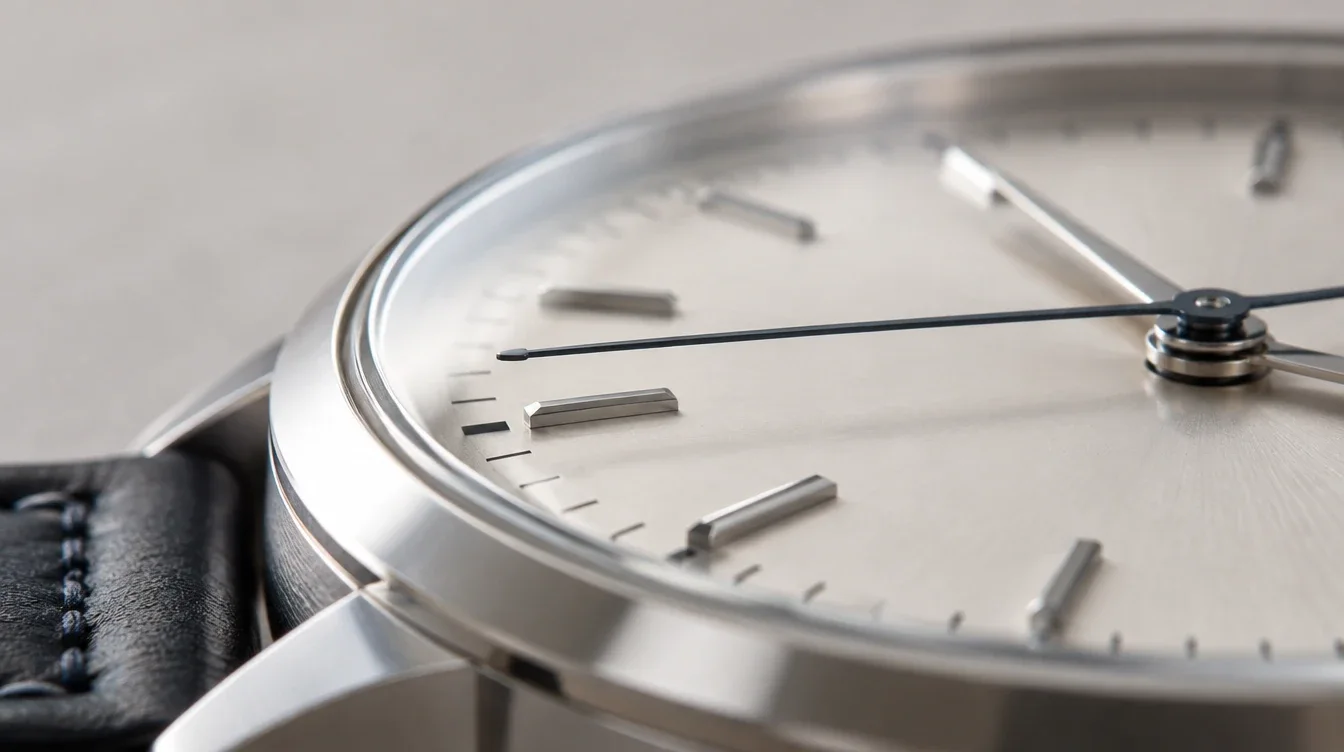
Start by looking straight down at the dial. If the gap seems to change as your head moves, viewing angle plays a part. That does not prove every part is in the right place.
The hand and dial are separate parts
Small differences in hand fitting, dial printing and assembly can cause a visible offset. A constant angular shift may hint at how the hand was fitted. An offset that changes around the dial can have several causes. These include dial geometry and gear play, according to this discussion of quartz hand position.
Neither pattern gives a firm diagnosis through the crystal. Note what repeats rather than deciding which part is faulty.
Gear play can change the resting point
Backlash means clearance between meshing gear teeth. Vaer describes how that clearance lets gears run and can affect where the second hand settles. Perfect hand placement alone does not tell you how good the movement is.
That does not make every jump, pause or large shift harmless. Next, watch the whole dial without trying to adjust anything.
Check the pattern without opening the watch
At home, check the viewing angle and where each step lands. Check timekeeping too, but keep the case closed. The aim is to note what you see, not attempt a repair.
For a watch second hand not lining up, keep the light and position the same. Changing both makes it harder to compare what you see.
Watch one full circuit
Place the watch on a stable surface under soft, bright light. Look straight down and watch the second hand circle the dial. Note whether it lands before or after the marks. Check whether that changes from one side to the other.
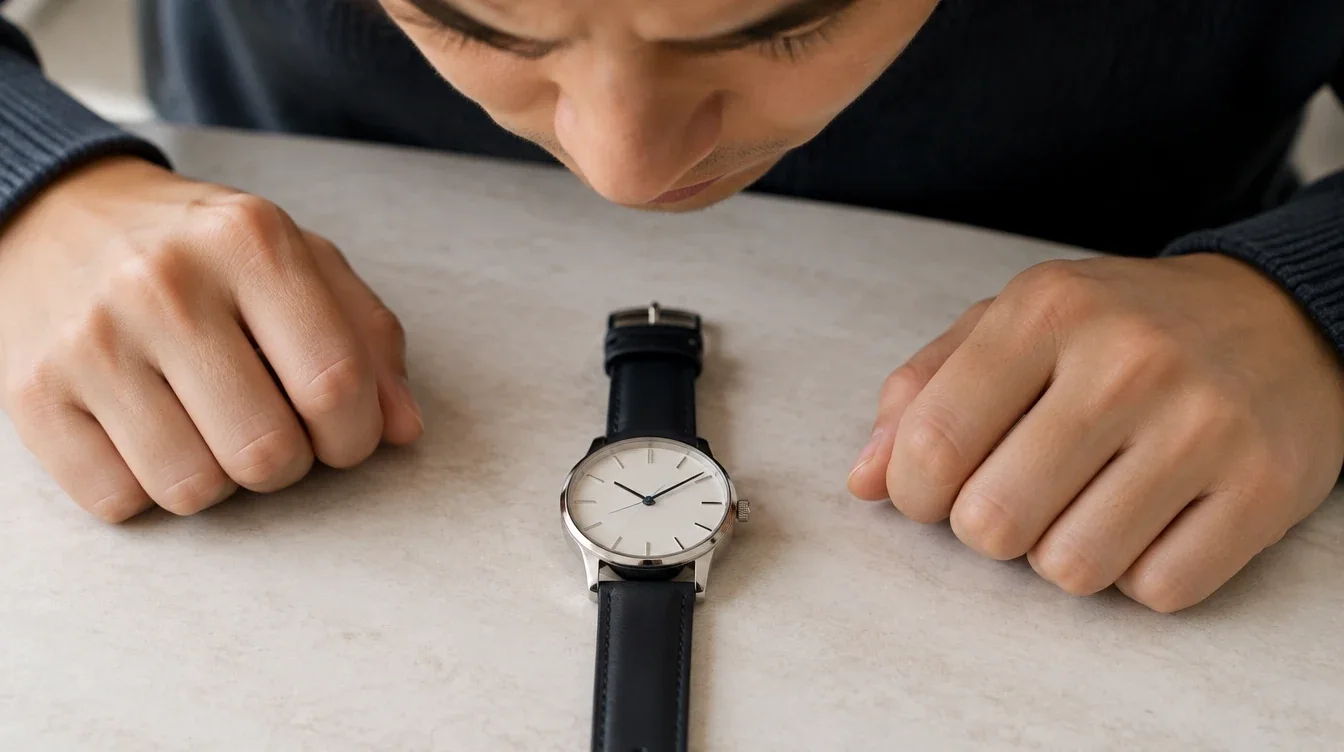
Watch again. When checking quartz watch second hand alignment, look for a pattern that repeats. It tells you more than the worst gap in one photo.
Record position separately from movement
Use plain words such as “slightly left near the top, centred near the bottom”. Note whether the hand completes each step or pauses. Do not treat a rough visual estimate as an exact measurement.
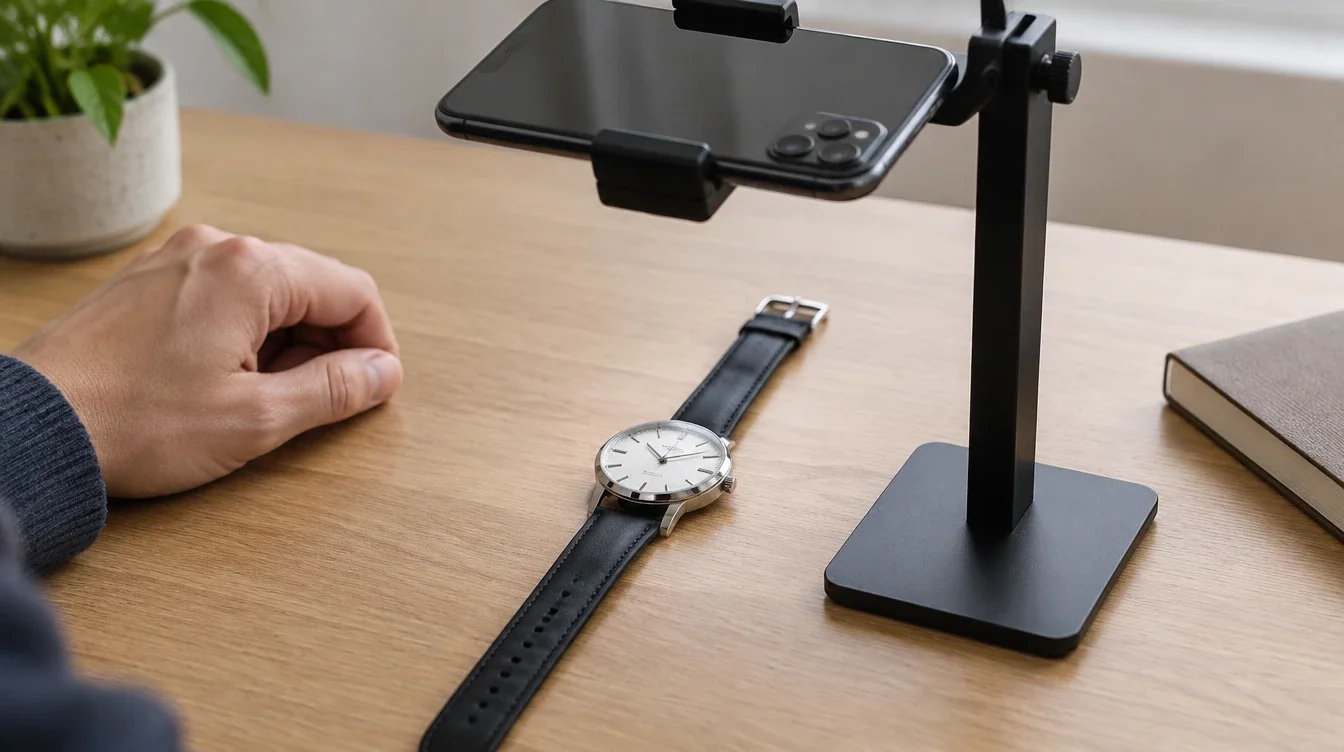
A short video can help show the pattern to a seller. Keep your camera still and include the whole dial.
Compare time against one reference
Note the watch’s displayed time against the same reliable clock on separate days. Record any change in the difference. Compare that result with the accuracy specification for your exact model, rather than a generic quartz claim.
This helps tell a concern about looks from a timekeeping problem. For a new watch, note when you first saw the offset too.
Use those notes to make a calm choice about inspection.
When observation is reasonable and inspection makes sense
A small offset that repeats with reliable movement is less worrying. A new shift, rubbing or stopping is more cause for concern. Watch Winder Mall describes growing offsets and interference as different problems from cosmetic misalignment.
Keep observing a stable cosmetic offset
Suppose the hand has missed the same marks since you bought it. Its steps stay regular, and nothing seems to touch. Timekeeping stays within the model’s stated range. Those signs suggest a concern about looks rather than movement failure.
Even then, quartz watch second hand alignment may affect how much you enjoy the watch. Ask the seller if its looks meet that model’s standard. The cited sources do not set one acceptable gap for all watches.
A concern about looks is still fair to raise.
Request inspection when behaviour changes
Arrange an assessment if the hand starts catching another hand. Repeated stops at one spot or a clear change in position also call for a check. Mention any recent drop or impact. Do not dismiss a new change because older photos show a small offset too.
For a watch second hand not lining up after an incident, state when it changed. “It changed after a fall yesterday” tells the seller more than “the alignment looks bad”.
If you think the hands touch, set the watch aside. Seek advice rather than tapping it to make it move again. A visual check cannot tell you what causes the interference.
If inspection makes sense, ask how much an adjustment could help.
What a repair can and cannot promise
A repair should deal with a known cause. A photo alone is no basis for a promise of perfect alignment. Ask what the watchmaker thinks is wrong before you agree to work.
Anyone searching “how to fix a misaligned watch second hand” should first separate hand fitting from viewing effects and gear play. Moving the hand cannot remove parallax. Nor should you assume that repositioning it will correct every landing point around the dial.
Those limits come from the different causes described in Watch Winder Mall’s explanation. What to do depends on which cause is present.
Discuss quartz watch second hand alignment in terms of a clear goal. Are you asking for a closer visual match, reliable movement or assessment of a sudden change? Those requests are not interchangeable.
At home, stick to watching and taking notes. Vaer notes that fitting the second hand takes training and suitable tools. It also calls for care around the dial. Opening the watch to nudge the hand is not a sensible first step.
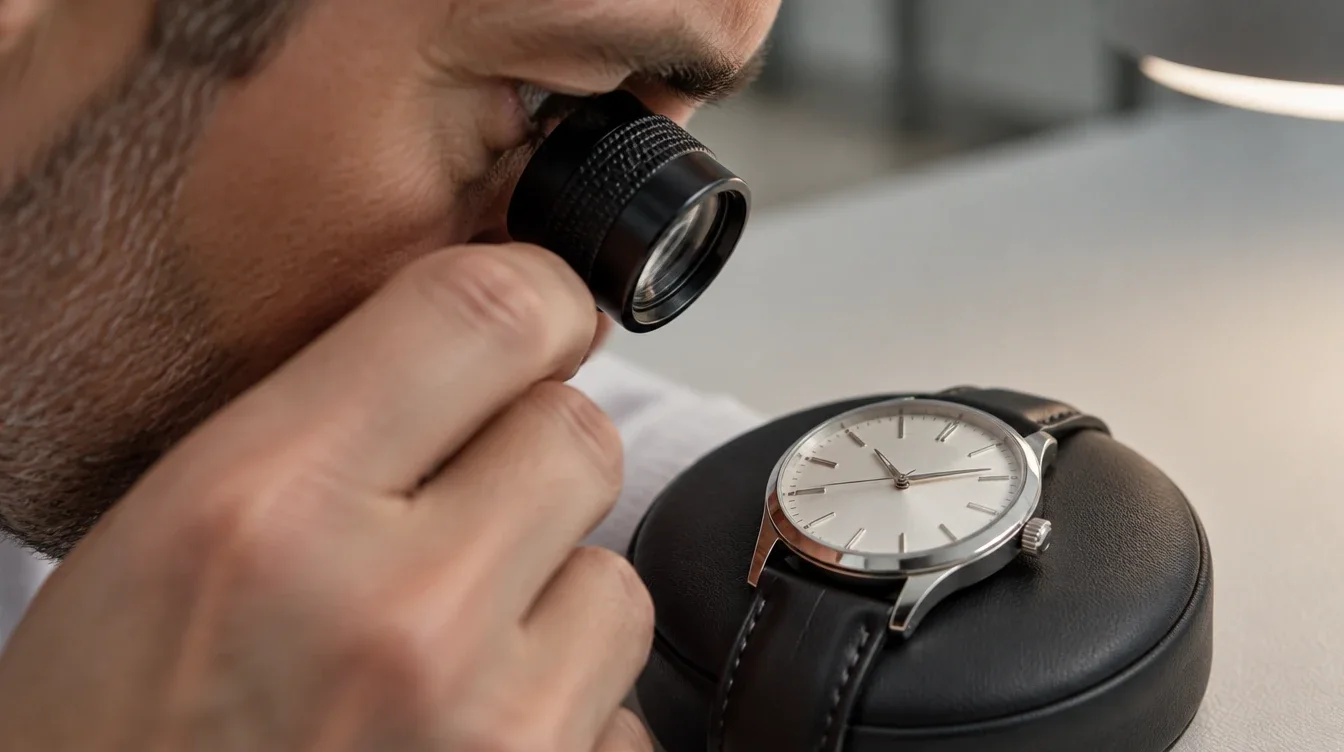
For a new purchase, contact the seller before authorising work. Ask about assessment, exchange terms and any effect on warranty coverage. Do not assume a cosmetic adjustment is covered, or that an exchange will look different.
Ask for the proposed work and its expected limits in writing. Would it improve alignment across the dial or only at some points? Use that answer to weigh the likely benefit against the cost. A preference about looks does not prove the watch is broken.
These common questions can help you decide what to ask.
Common questions about a second hand missing markers
Safe advice separates what you can see from what needs a closer check.
Why does my second hand hit some markers but miss others?
Dial geometry, hand fitting, gear play and viewing angle can all play a part. They can change the apparent offset around the dial. Watch Winder Mall identifies these possibilities, but the pattern alone cannot tell you which applies to your watch.
Does second hand misalignment affect watch accuracy?
For “does second hand misalignment affect watch accuracy”, separate looks from rate. A small cosmetic offset alone need not affect the rate. Check for gained or lost time. Seek inspection if the hand catches, slips or stops.
How can I fix the alignment safely?
For “how to fix a misaligned watch second hand”, look straight down first. Note the pattern, but leave physical hand adjustment to a qualified watchmaker. Ask if the likely gain is worth the work.
Can I ask for help even if the watch keeps time?
Yes, accurate timekeeping does not prevent you from raising an appearance concern with the seller. Share a clear video and ask about the model’s standard, then use that answer to choose between keeping it and requesting assessment.
Choose your next step from the pattern
Choose your next step based on a pattern, not one awkward viewing angle. You may accept a slight offset that stays the same. A new change or movement that stops deserves a closer look.
To judge quartz watch second hand alignment, check three things. Note where the hand lands, whether it moves freely and whether the watch keeps time. None replaces the others.
Before you speak with the seller, gather the model reference and a clear video. Bring your timekeeping notes too. Ask them to assess the cause and explain realistic options. Do not ask for a promise of perfection. That helps you choose your next step without paying for needless work.