Your watch crown won't screw in? Know When to Stop Turning
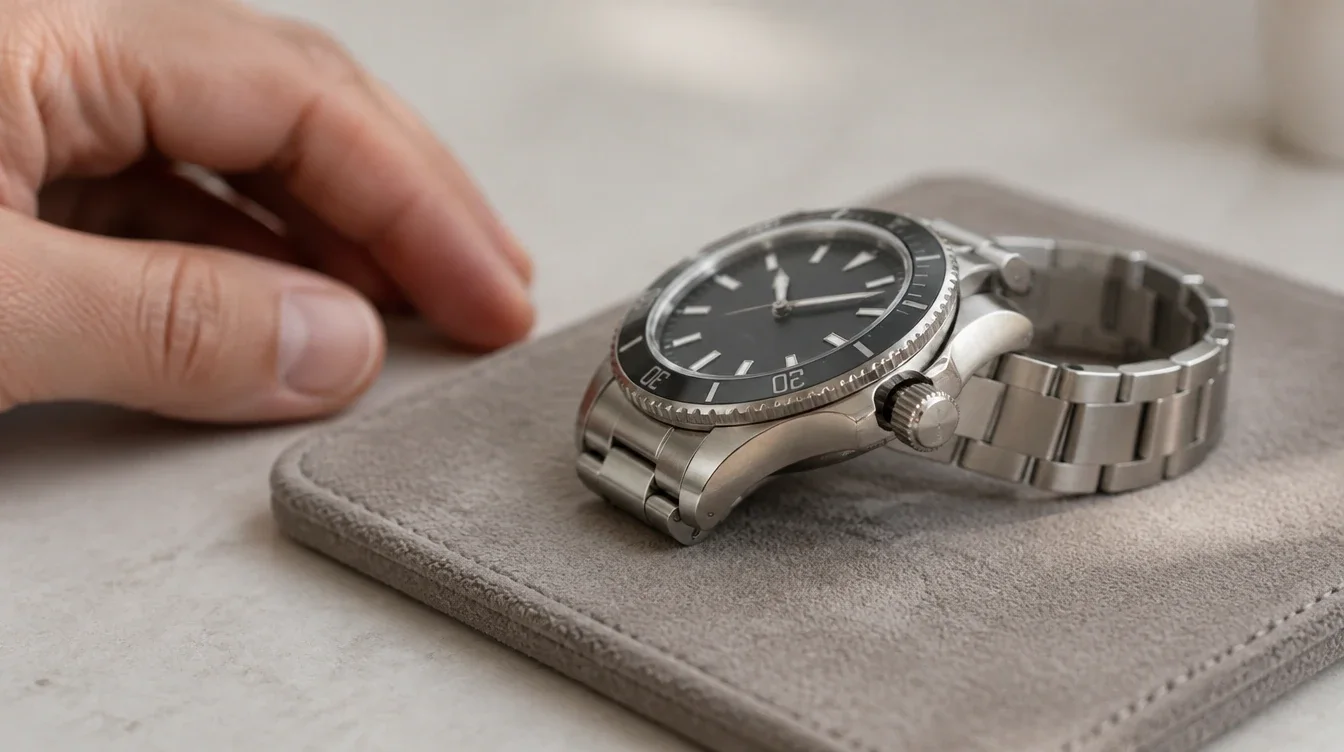
If your watch crown won't screw in, stop forcing it and keep the watch dry. A gentle attempt may be reasonable if the crown looks straight and feels smooth. Your model’s instructions must also allow it. Skip further attempts and contact a watchmaker if you notice grit, binding, a crooked crown, or visible moisture.
First check whether the crown should screw down
Confirm your watch has a screw down crown before trying to turn it closed. Find the instructions for the exact model reference, rather than relying on another watch’s feel. If the closure type is unclear, ask the manufacturer or a watchmaker before doing more.
Think about how the crown usually works. Did you unscrew it before setting the hands? Has it always needed light inward pressure to catch? A change in that action tells you more than comparing it with someone else’s watch.
Also separate two questions: does the watch still work, and does its crown secure? Those are not the same. In a Watch Repair Talk discussion, an owner reported normal winding and setting despite failed closure. That is a reported symptom, not proof of any particular fault.
Once you know the crown should screw down, focus on what happens when it meets the tube.
Read the symptom before trying again
How the crown fails to close helps you describe the problem. It cannot confirm which part needs repair.
WatchWorks describes spinning without engagement, rough threads, and a crown that comes back out as possible signs of thread damage. These signs call for caution. They are not a home diagnosis.
Spinning without catching
A crown that turns without moving inward may not be engaging its threads. Misalignment and worn threads are both possible causes described in Watch Winder Mall’s troubleshooting article. More turns do not tell you which cause applies.
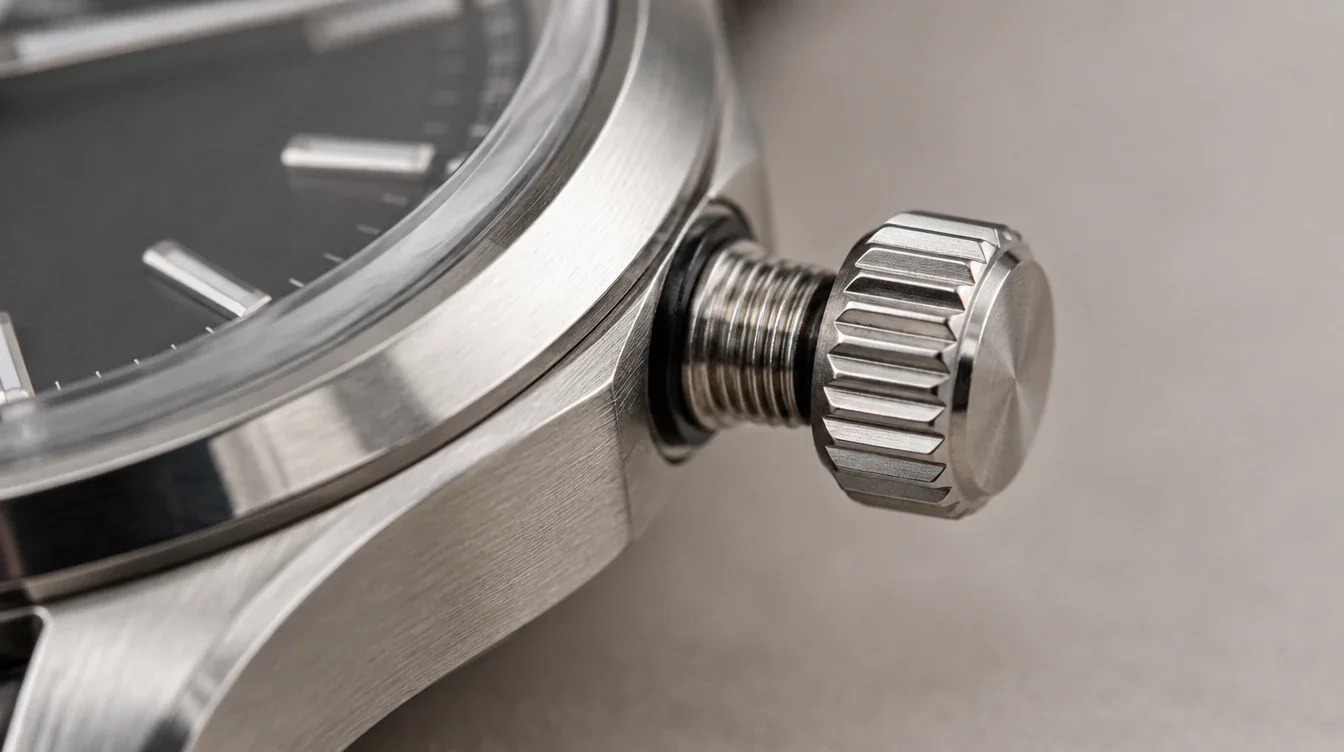
A stripped watch crown is one possibility, but do not assume it. Note whether the crown never catches or catches briefly, then slips.
Starting, then binding
If the crown starts turning and then stops hard, stop trying. The same troubleshooting source warns against forcing poorly aligned threads. Doing so can damage the crown or tube. Do not push through the tight spot.
Springing outward
If your watch crown pops back out before the threads catch, spring pressure may be part of the normal action. Toronto Watch Exchange describes this action for Rolex crowns, but that does not explain every case.
A crown may seem tight, then come loose. That is more concerning than springing outward before engagement. Keep that difference in mind when deciding whether to try again.
When your watch crown won't screw in, limit the home check
At home, limit the check to identifying the closure and trying it gently. Do not remove parts or try to repair threads.
Work over a clear, dry surface with good light. Take the watch off your wrist so you can see the crown straight on. Keep pliers and other gripping tools away from the task.
Use the instructions for your model
Learning how to screw down a watch crown starts with the correct manual. Follow its directions for returning the crown from a setting position. If the crown will not move inward as described, stop rather than changing positions repeatedly.
Check alignment first
Look for an obvious tilt, impact mark, or debris around the crown. Do not try to straighten anything. A crown sitting at an angle needs inspection, according to Watch Repair Station’s crown repair explanation.
Keep pressure light
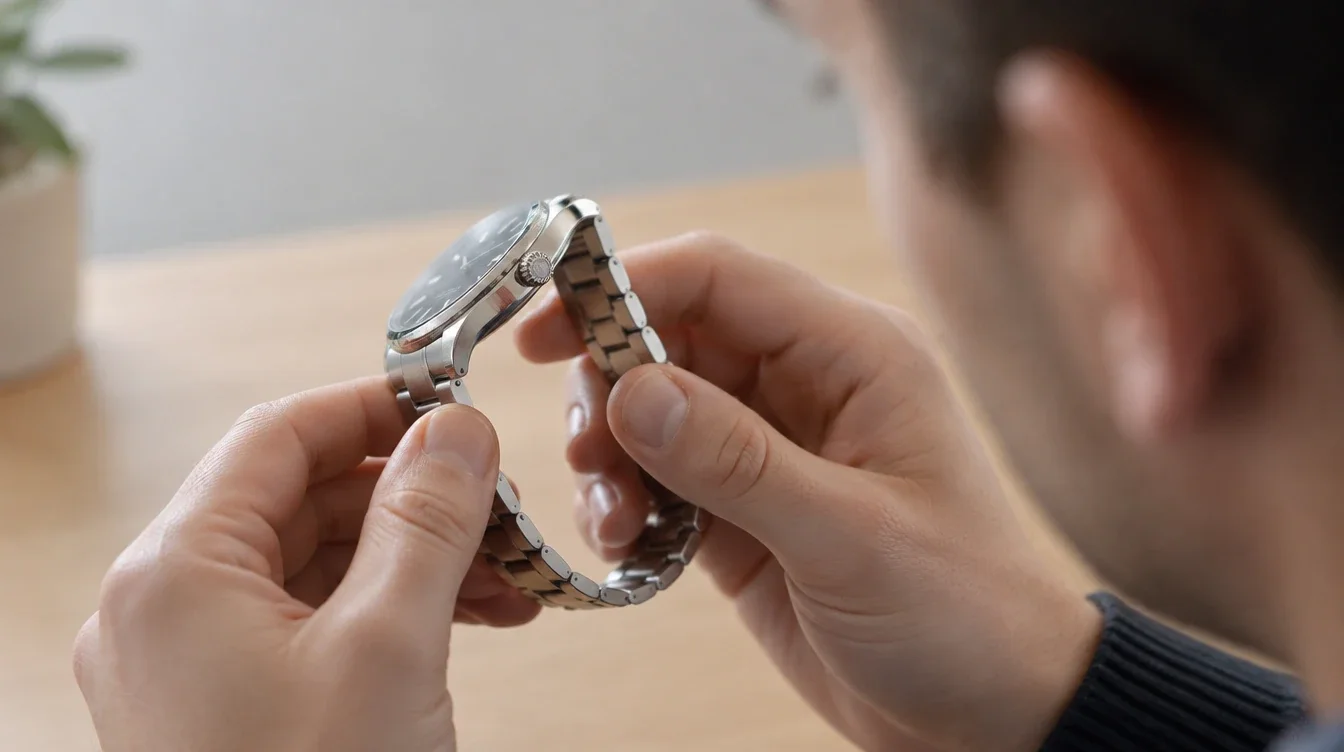
For suitable Rolex crowns, Toronto Watch Exchange suggests gentle inward pressure with a slight backward turn to find the thread start. Then turn clockwise to close it. Use this method only if it suits your model’s instructions. Do not add pressure to hunt for a click.
If the threads engage smoothly, follow the manual’s tightening guidance. Stop when the crown is secure. Do not add an extra twist for luck. If the action feels rough or uncertain, leave further handling to a watchmaker.
One careful attempt is a sensible limit to set yourself. It is not a manufacturer specification. If your watch crown won't screw in after that, stop trying and arrange an inspection.
Keep cleaning and water out of the experiment
An unsecured crown should be treated as a reason to avoid water, not as an invitation to rinse away the problem.
Watch Winder Mall advises assuming water protection is compromised when the crown will not close. Skip swimming, showering, and washing the watch until the fault has been assessed.
Debris can hinder closure, but not every stiff crown needs cleaning. Do not put oil, solvent, or a sharp tool into the crown area. Seeing a speck does not prove the threads beneath it are sound.
For example, imagine a crown that became stiff after a beach trip. Sand or salt might seem the obvious explanation. Yet Watch Repair Station treats stiffness after salt exposure as a service warning, not a routine home fix.
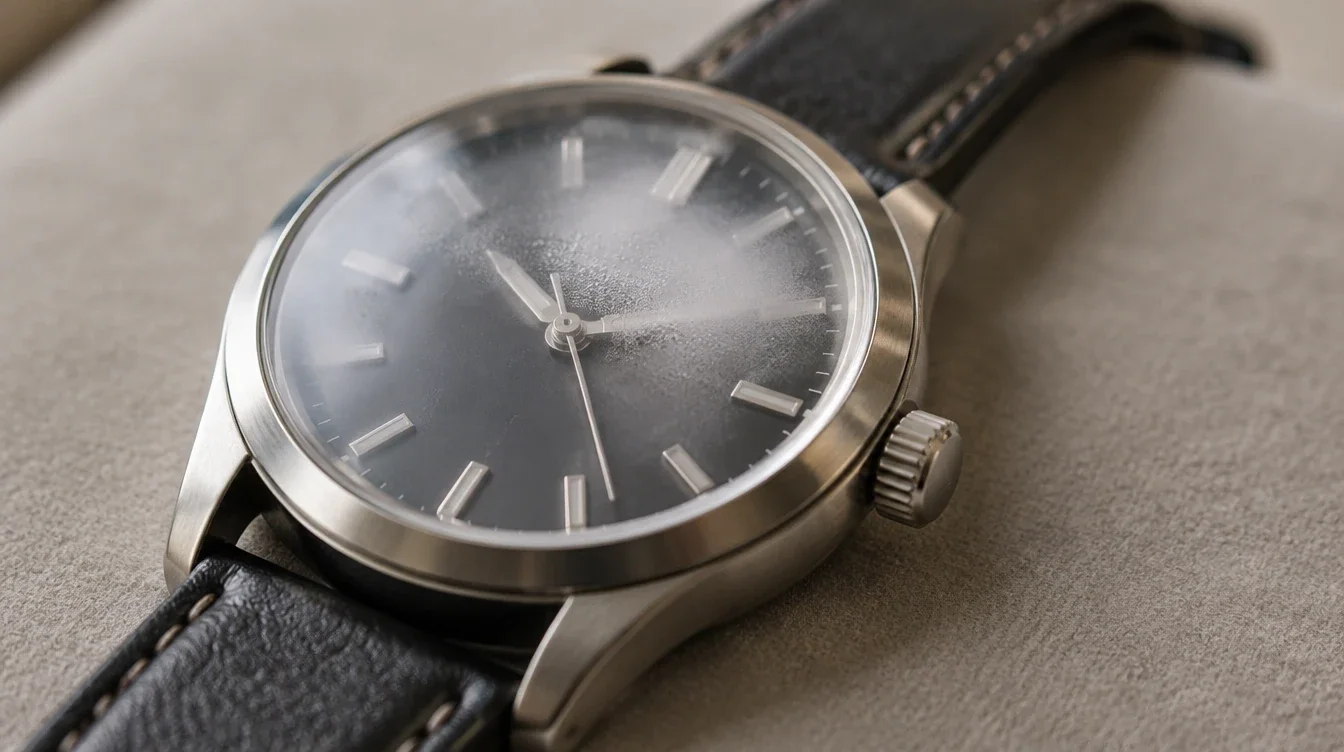
Visible fog beneath the crystal calls for prompt professional help. Tell the repairer if the watch was exposed to water recently. Once these risks are ruled out or flagged, you can make a clearer choice about service.
Choose between a gentle retry and professional inspection
A gentle retry suits a smooth, straight crown with no warning signs. Repeated failure or any sign of damage calls for inspection.
Use three observations: history, feel, and result. History means what changed before the fault. Feel means smooth, gritty, loose, or blocked. Result means whether the crown catches and stays secured.
Consider two examples. After setting the time, an owner misses the thread start once. They then follow the manual and close the crown smoothly. Another owner feels a hard stop every time. They recall knocking the crown against a doorframe.
Those situations do not deserve the same advice. The first may be a handling error. The second needs assessment because impact and thread damage are among the causes described by WatchWorks.
Note what happened instead of testing it again to be sure. A useful message is, “The crown turns freely but never draws inward.” Another is, “It starts to close, then stops at the same point.” Neither claims a diagnosis.
If your watch crown won't screw in, describe these details to the repairer. They say more than “the crown is broken.” They also lead to the next question: what work might be needed?
What repair involves and what affects the price
The repair depends on which parts have a fault. These may include the crown, tube, stem, seals, or connected parts.
WatchWorks lists crown, tube, stem, and seal replacement as possible responses to crown damage. Replacing one part is not automatically enough, nor does every case need all of them.
Ask the watchmaker what failed and how they found the fault. A stripped watch crown should be confirmed by inspection, not a phone description. Ask whether the work includes checking that the crown closes securely. The seals should also be part of that question.
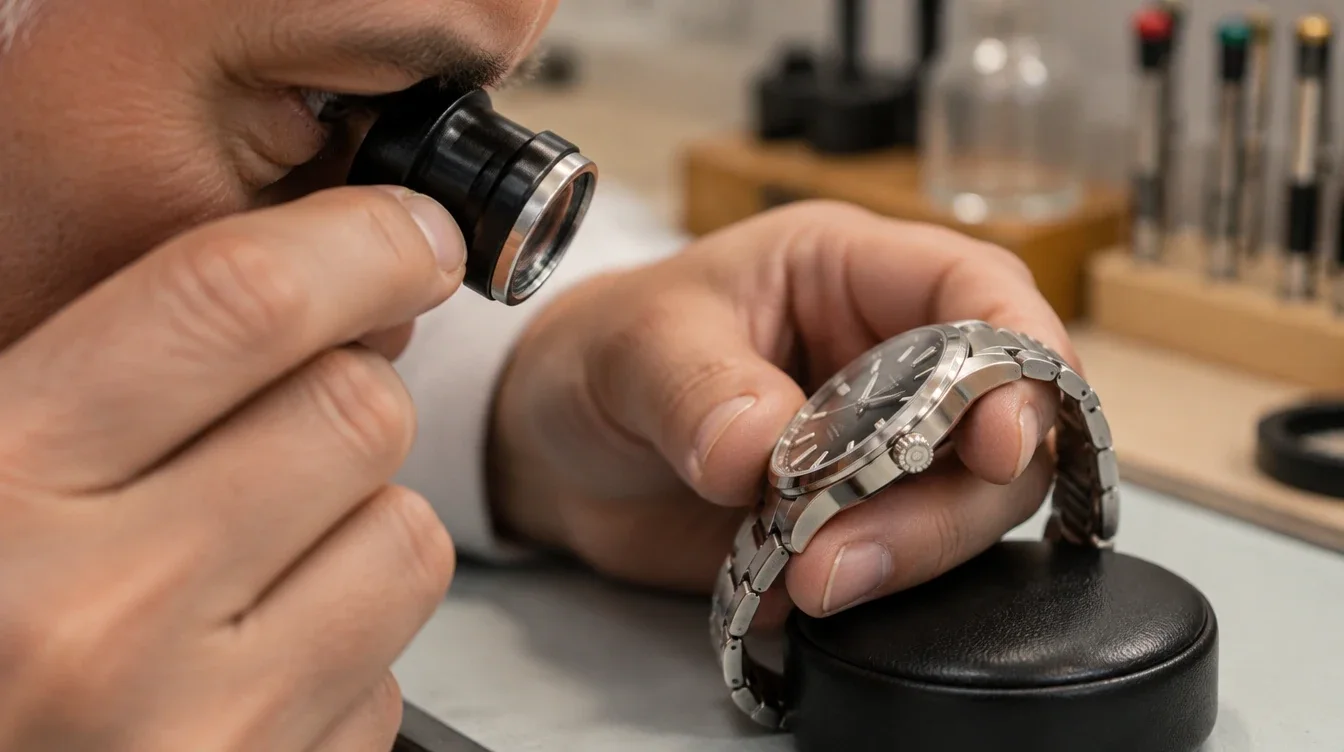
Your watch crown repair cost depends on the model and parts needed. Whether those parts are available also matters, as does any further damage found. Watch Repair Station notes that tube work, hard to find parts, and movement service can take a repair beyond a basic replacement.
There is no verified quote here for your watch. Ask for a written estimate in your local currency. Request separate costs for parts, labour, testing, and shipping. Any optional service should be separate too. That way, you know what work you are agreeing to.
Ask about turnaround as well as bench time. Even a short repair can mean a long wait for parts. Before booking, clear up these common questions.
Common questions about a crown that will not secure
Crown symptoms can guide your next step, but neither a running watch nor a tidy appearance proves that closure is sound.
Why does my watch crown pops back out search give different answers?
The timing matters: springing out before engagement differs from slipping loose after tightening. Describe when it happens, rather than assuming every outward movement means the same fault.
What should I do if my Rolex crown won't screw down?
If your Rolex crown won't screw down, stop if you feel grit or binding, or the threads fail to engage. Seek advice for your model. Do not force the crown flush just to remove a visible gap, since looks alone cannot confirm its condition.
How can I learn how to screw down a watch crown safely?
Start with the manufacturer’s instructions for your exact reference. Ask someone to show you the action if it is unclear. Even with a tutorial, a damaged or binding crown is not safe to force.
Can I estimate watch crown repair cost from a photo?
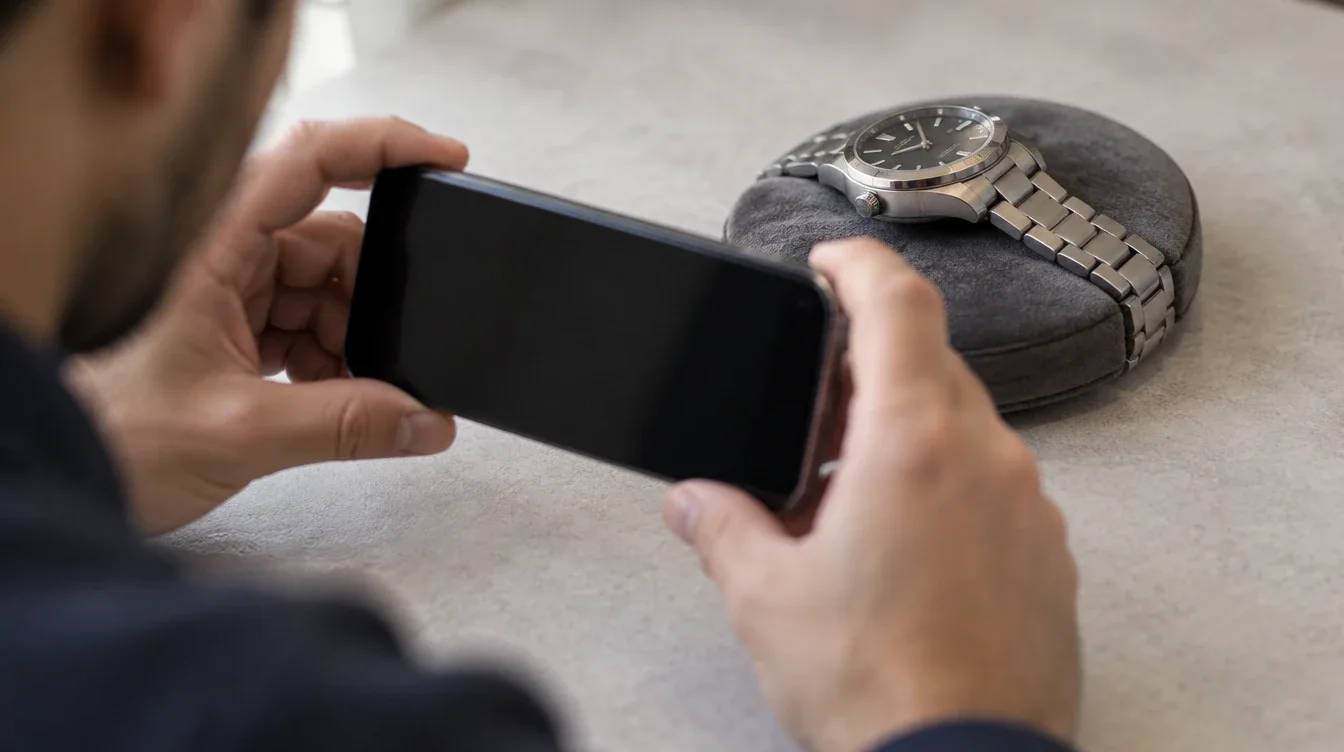
A photo may show an obvious tilt or external damage. It cannot show the full repair needed. Use an initial estimate to plan, then approve work after inspection. That keeps your choice based on the actual fault.
Stop before a small problem becomes a forced repair
A crown that will not secure needs a clear stopping point, not a stronger grip. Check the manual, note the symptom, and keep the watch dry.
If your watch crown won't screw in after a gentle, appropriate attempt, book a watchmaker inspection. Share the model reference and any impact or water exposure. Describe exactly where closure fails. Ask what needs repair. Before wearing the watch again, ask how secure closure will be checked.