10 Carat Diamond Ring Price: Why This One Number Can Shock Even Wealthy Buyers
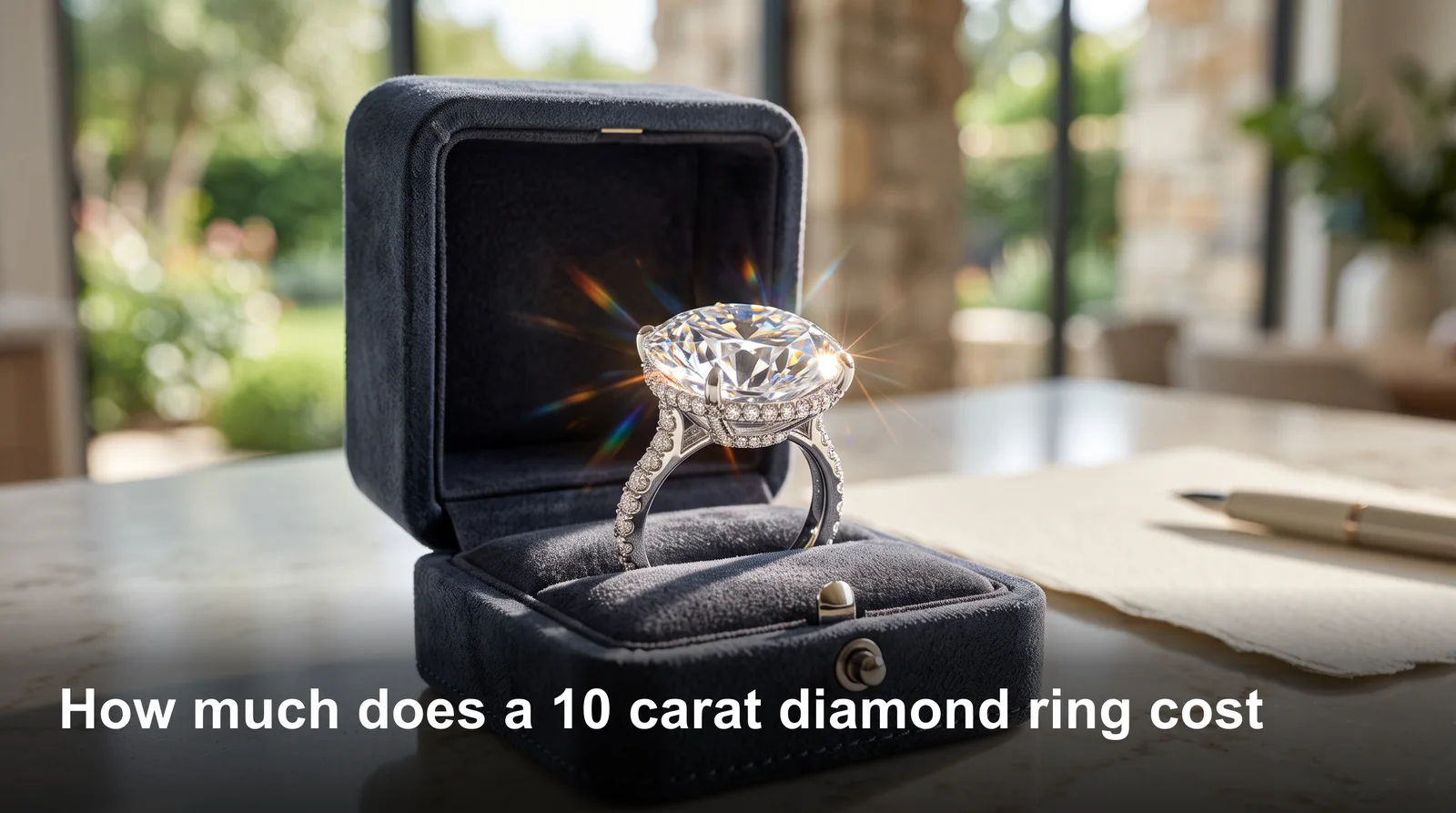
Let's get right to it. A 10 carat diamond ring price can run anywhere from $150,000 to over $2 million. The gap depends on cut, color, clarity, and whether your stone is natural or lab grown. That's a huge range, and I'll break down exactly why below.
What Drives the 10 Carat Diamond Ring Price
The 10 carat diamond ring price comes down to four main factors. Cut, color, clarity, and carat weight all stack together. Change one, and the price can swing by six figures.
A flawless, colorless 10 carat round diamond can cost close to $2 million. Drop the clarity to slightly included and the color to near colorless, and you might pay $400,000 for the same size stone. Size alone doesn't set the price. Quality does the heavy lifting.
I've worked with clients who assumed bigger always meant pricier in a straight line. It doesn't work that way. A 10 carat stone with visible flaws can cost less than a flawless 3 carat stone. Once you know this, the whole pricing puzzle makes more sense.
Now let's talk about what a 10 carat diamond price actually looks like per carat.
Breaking Down the 10 Carat Diamond Price Per Carat
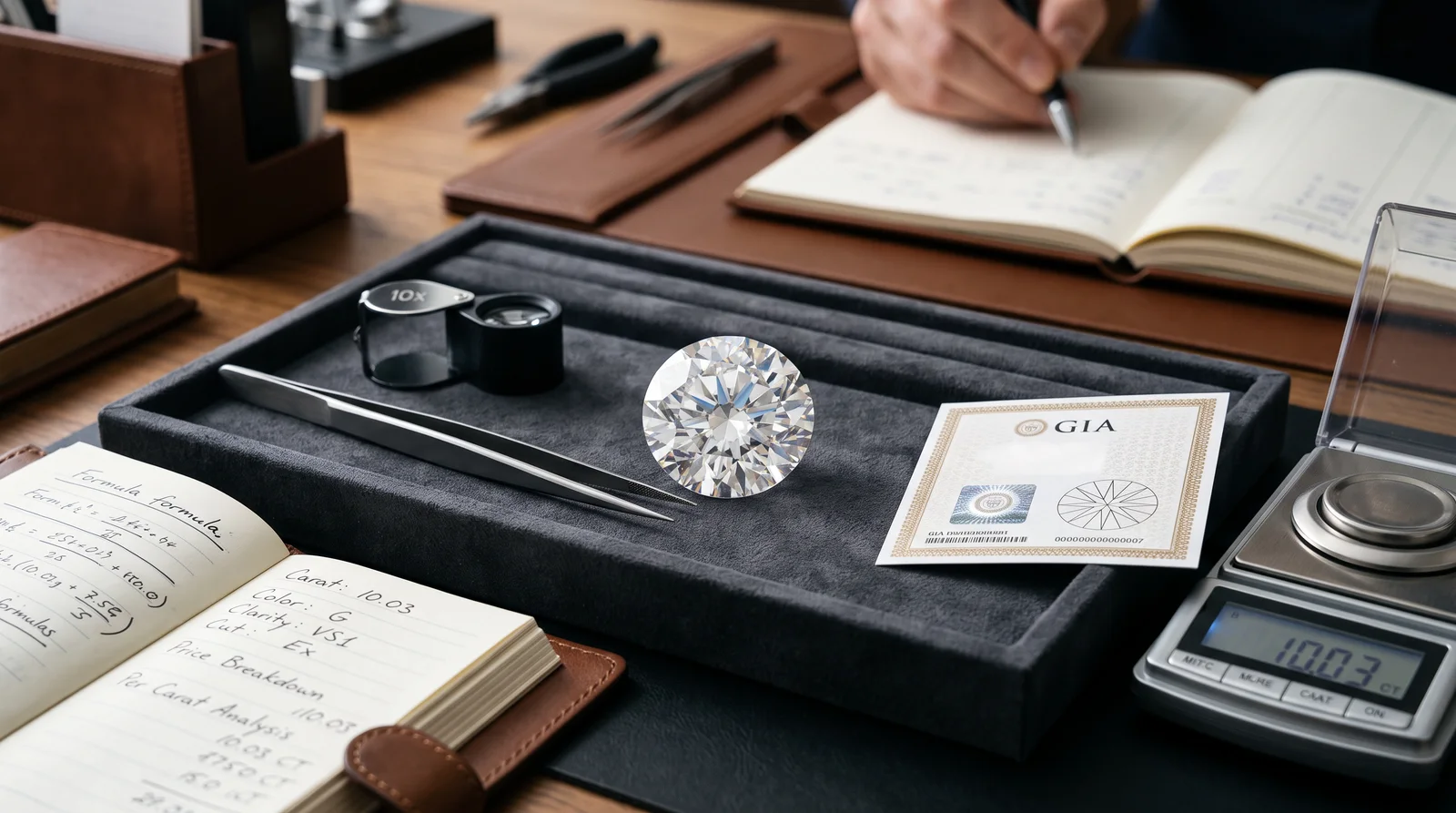
Diamond pricing isn't linear, and that's the biggest shock for first time buyers. Price per carat jumps sharply as size increases. A 1 carat diamond might cost $6,000 per carat. A 10 carat diamond of similar quality can cost $100,000 or more per carat.
Why Larger Stones Cost So Much More Per Carat
Large rough diamonds are rare. Cutting a big stone without flaws takes serious skill. Cutters often lose weight and value trying to remove inclusions, so the finished stone becomes even more precious.
This rarity premium is why the cost of 10 carat diamond stones doesn't scale the way people expect. You're not just paying for size. You're paying for scarcity.
Real Numbers From the Market
A 2023 GIA report noted that stones over 10 carats make up less than 0.1% of graded diamonds worldwide. That scarcity alone pushes prices up fast. It's part of why a jump from 5 to 10 carats isn't just double the price. It's often four or five times more.
With that pricing logic in mind, let's look at how natural stones compare to lab grown options.
How Much Is a 10 Carat Diamond Ring Compared to Lab Grown Options
A 10 carat lab grown diamond price runs dramatically lower than a natural stone of the same specs. You're looking at roughly $50,000 to $150,000 for a high quality lab grown 10 carat diamond. Compare that to $400,000 or more for a natural stone with similar grading.
Lab diamonds are chemically identical to mined ones. The difference is how they form. One grows in the earth over billions of years. The other grows in a lab over weeks.
More buyers are asking about lab grown 10 carat diamond price options because the savings are massive. You get the same fire, same hardness, same sparkle. You just pay far less for it.
If you're weighing your options between natural and lab grown, it also helps to know how diamond specs affect the ring itself, which I cover in this guide on how to choose a diamond for an engagement ring.
Next, let's talk about how the size of a 10 carat stone actually looks on the hand.
Grasp 10 Carat Diamond Size on the Hand
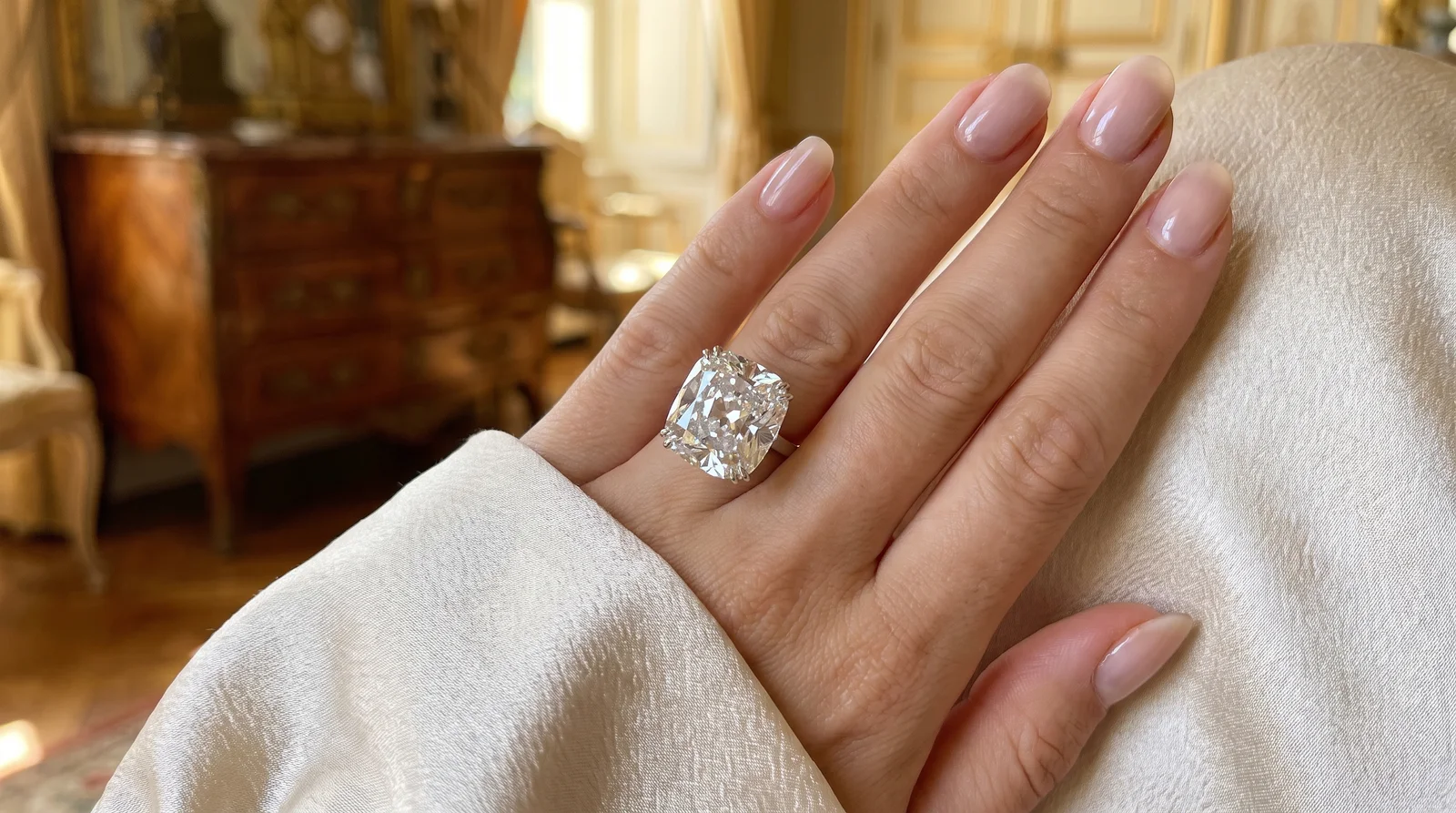
A 10 carat diamond size is roughly 14mm to 15mm across for a round cut. That's about the size of a small gumball sitting on your finger. It's bold. It's noticeable from across the room.
Shape Changes the Visual Size
Elongated shapes like oval or marquise can look even bigger than round stones of the same weight. This is a trick many buyers don't know until they try stones on side by side.
A pear shaped 10 carat diamond can look like it stretches across the whole finger. Round stones look more compact and concentrated. Both are stunning, but the visual impact differs a lot.
Why Setting Style Matters for Perceived Size
The setting you choose can make a 10 carat diamond look even bigger, or oddly smaller. Thin bands make the stone pop. Thick, heavy settings can visually shrink it.
I always tell clients that the mounting matters as much as the stone itself. If you want to know this better, I wrote a full piece on why your diamond might look smaller after setting, and it applies just as much to huge stones as small ones.
Speaking of settings, let's look at how they affect the final 10 carat diamond ring cost.
How 10 Carat Diamond Ring Settings Affect Total Cost
Your setting choice can add anywhere from $2,000 to $50,000 to your total price. Platinum costs more than white gold. Intricate pave bands cost more than simple solitaires.
Popular Settings for Large Stones
Six prong settings are common for stones this size because they hold the diamond more securely. A four prong setting looks sleek but offers less grip for a stone this heavy.
Halo settings can also change your 10 carat diamond ring price. Adding a ring of smaller diamonds around the center stone boosts both the visual size and the price tag, sometimes by $10,000 or more depending on quality.
Security Matters More With Bigger Stones
A stone this valuable needs a setting that won't fail. Loose prongs on a 10 carat diamond are a nightmare scenario.
I've seen clients skip this detail and regret it later. If you want to know the warning signs, check out this piece on how to tell if your diamond is loose before it becomes a real problem.
Now let's talk about a scenario that comes up a lot with big stones: inherited diamonds.
What Happens When a 10 Carat Diamond Is an Heirloom
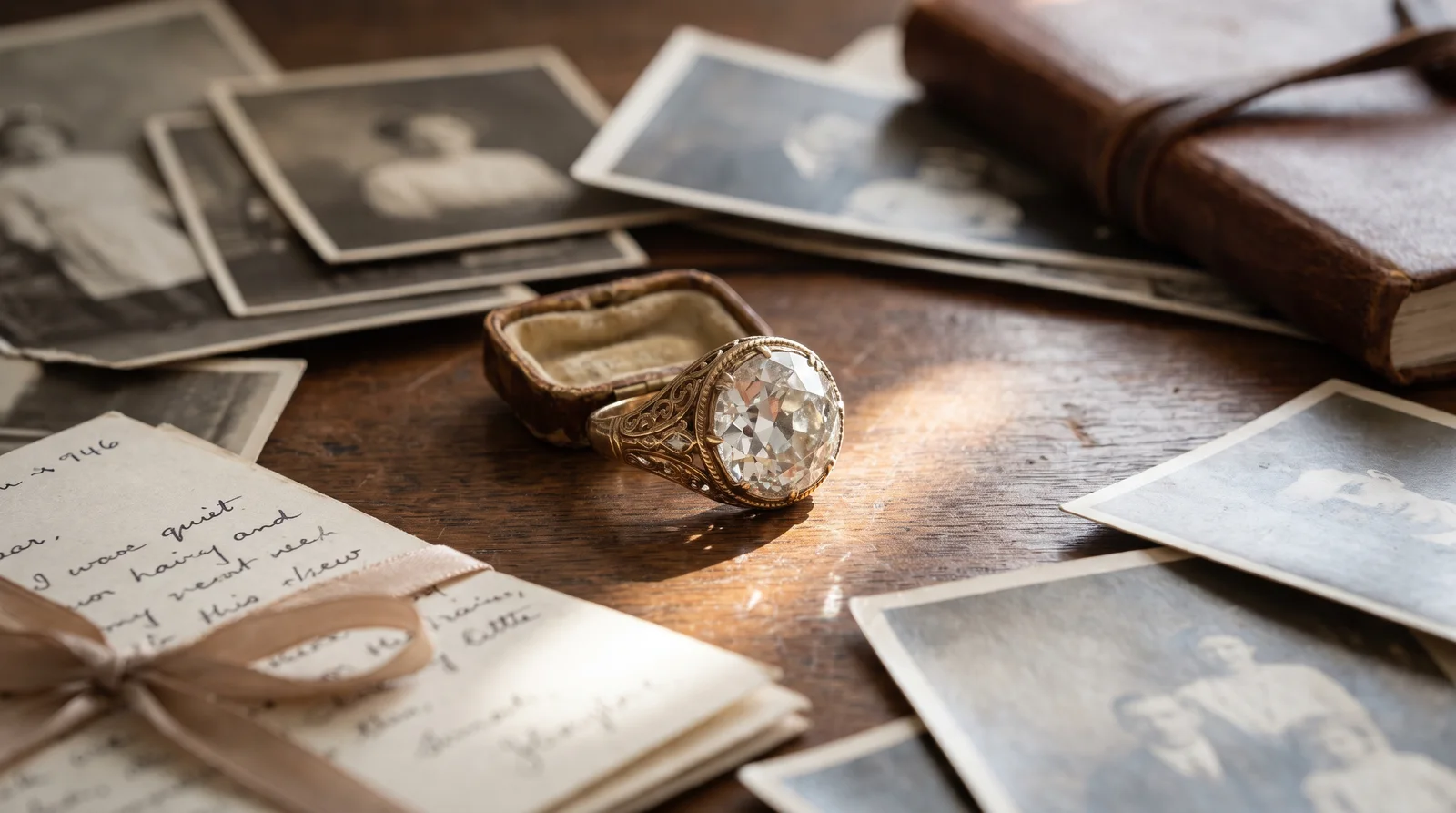
Many large diamonds come from family collections rather than new buys. If you've inherited one, the ring cost equation shifts completely.
You're not paying for the stone. You're paying for the redesign, the new setting, and sometimes a fresh grading report. This can still run into the thousands depending on the setting style and metal.
Resetting an heirloom stone takes real skill, mainly with something this large and valuable. One wrong move during the reset can damage a stone that took generations to acquire. I go deep into this topic in my article on resetting an heirloom diamond ring, like the one mistake that ruins family stones most often.
Once your ring is reset or resized, there's one more cost buyers often forget about.
Hidden Costs People Forget When Pricing a 10 Carat Diamond Ring
Resizing a ring this valuable isn't like resizing a basic band. Because the shank often needs reinforcement to support the weight of a 10 carat stone, resizing can cost far more than people expect.
I always tell clients to budget for this ahead of time. My guide on ring resizing costs breaks down why a simple adjustment can range from $20 to $200, and why large stone rings often land at the high end.
Coverage is another cost buyers forget. A stone worth six figures needs proper appraisal and coverage, which adds an annual cost most people don't budget for upfront.
Now let's answer some of the most common questions buyers ask about this topic.
Frequently Asked Questions
How much is a 10 carat diamond ring on average?
Most buyers spend between $300,000 and $800,000 for a natural 10 carat diamond ring with good clarity and color. Lab grown versions can cost far less, often under $150,000.
Why does 10 carat diamond ring cost vary so much?
Cut, clarity, and color all shift the price dramatically. Two 10 carat stones can look similar but cost hundreds of thousands of dollars apart based on quality grading alone.
Does a 10 carat lab grown diamond look other from a natural one?
No. Lab grown diamonds have the same optical and chemical properties as natural stones. Only specialized equipment can tell them apart.
Can I finance a 10 carat diamond ring?
Yes. Many jewelers offer financing plans for large buys like this, mainly through certified retailers who specialize in investment grade stones.
What is the safest setting for a 10 carat diamond?
Six prong settings in platinum are usually the safest for stones this large because they distribute pressure evenly and reduce the risk of chips or loosening.
Final Thoughts on Pricing a Diamond This Size
A 10 carat diamond ring is a serious investment, and the price reflects far more than size alone. Cut, clarity, color, and even your choice between natural and lab grown all shape the final number. If you're shopping for one, take your time and ask real questions before you commit. Reach out to a jeweler who's handled stones this size before. It makes all the difference.