How to Get a Secure Ear Cuff Fit Without Piercing Your Ears
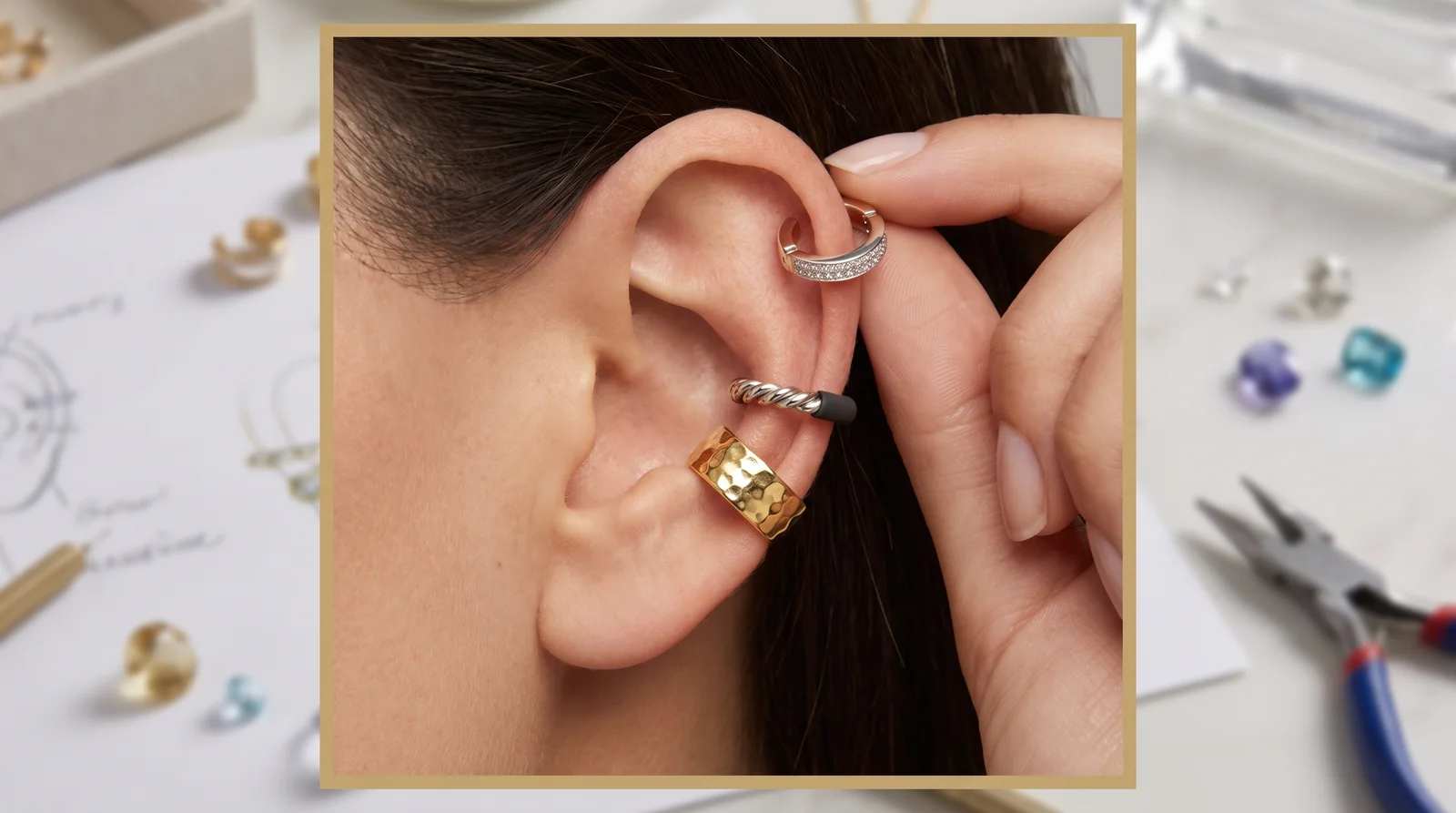
Getting a proper ear cuff fit without piercing comes down to three things. Match the spring tension to your cartilage thickness. Place the cuff on the right zone of your ear. Pick a material with grip instead of just shine. Most slipping problems have nothing to do with the cuff being "bad" quality. They happen because the clamping force doesn't match your specific ear shape. Once you understand the mechanics behind grip, sizing gets a lot less confusing.
What Actually Keeps an Ear Cuff From Falling Off
An ear cuff stays put through spring tension, not friction from your skin. The metal band is shaped slightly narrower than your cartilage. When you slide it on, the material flexes open, then presses back inward and creates clamping force. That squeeze is the entire mechanism. There's no post, no butterfly back, no hole doing the work. Just tension.
This is why two cuffs that look nearly identical can behave completely differently on the same ear. One might have a wider gap and softer metal. It opens easily, but it also loses its grip faster. Another might use a stiffer alloy that holds its shape and keeps pressing inward even after weeks of wear. Cheaper cuffs often use thin, soft metal that deforms permanently after a few uses. That's why they start feeling loose within days.
Grip mechanics also explain why a cuff that fit perfectly in the store can feel different a week later. Metal fatigues with repeated opening and closing. Understanding this helps you test a cuff properly before committing, which we'll get into shortly.
Best Ear Cuff Fit for Cartilage Depends on Where You Place It
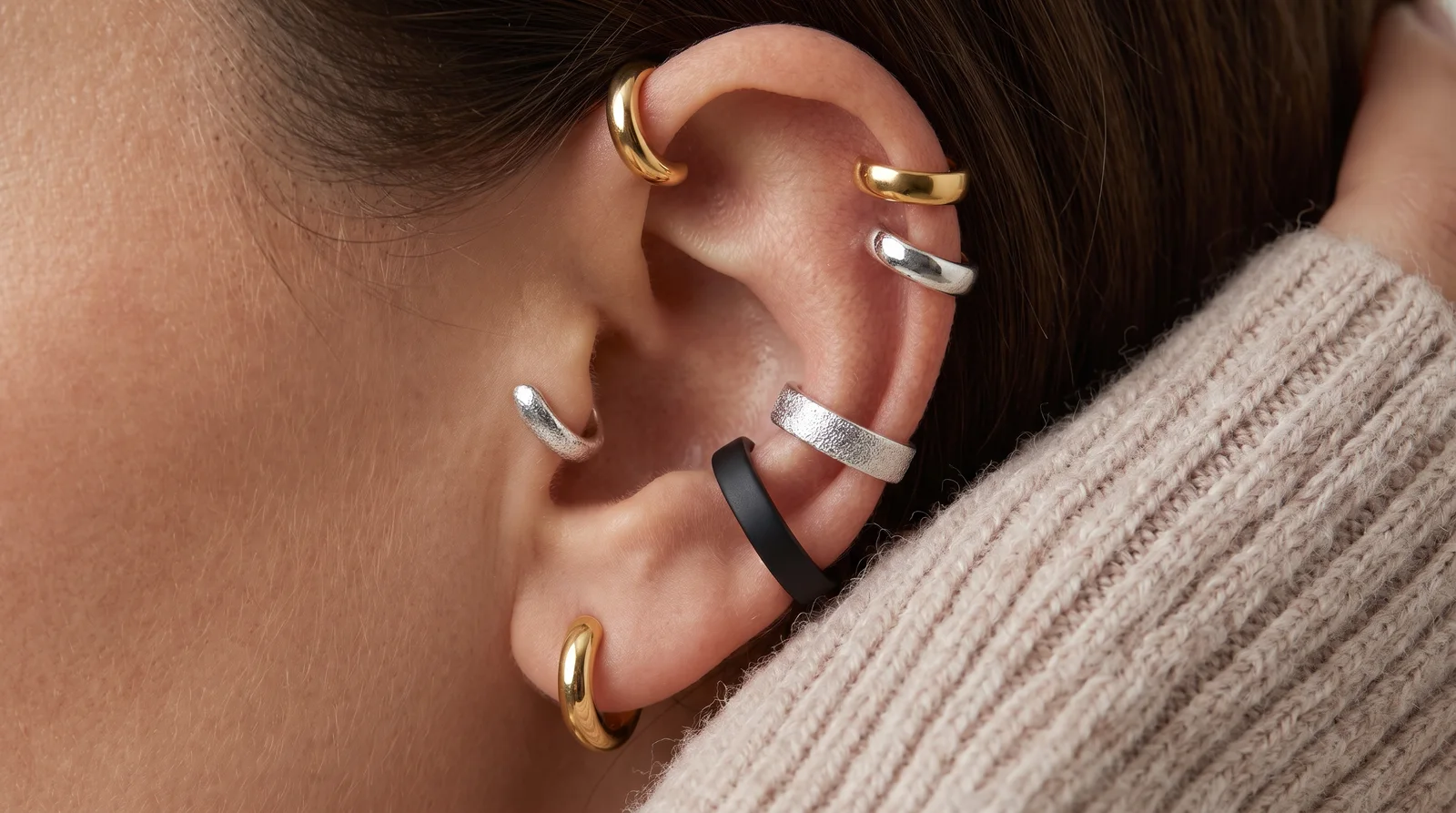
The best ear cuff fit for cartilage comes from matching the cuff to a zone where your ear tissue is thin and firm, not soft and fleshy. Ear cartilage isn't uniform. The upper helix, the curved rim near the top of your ear, is usually thin, firm, and consistent in thickness. That makes it the most forgiving zone for a snug grip.
The mid-rim, roughly the middle third of the outer ear, tends to have a bit more curve and slightly thicker cartilage. It works well for wraparound styles that need more surface contact. The lower third, closer to the lobe, is soft tissue with no cartilage support at all. Cuffs marketed as "no piercing" almost never grip well there, since there's nothing firm to clamp against.
How to Find Your Ear's Thinnest Cartilage Zone
Run your finger along the outer rim of your ear, from top to bottom. You'll feel the cartilage go from firm near the top to softer and more flexible near the lobe. Mark mentally where that transition happens. That firm upper two thirds is your working zone for almost any no piercing ear cuff sizing guide you follow.
Why Curve Shape Matters as Much as Thickness
Some ears have a tight, pronounced curl in the helix. Others have a flatter, more open curve. A cuff designed for a tight curl will sit loose on a flatter ear, even if the tension is technically strong enough. This is one reason the same cuff style gets wildly different reviews online. It's not the product. It's the anatomy mismatch.
Once you know your ear's curve and thickness pattern, you can start narrowing down grip styles that actually match it. That brings us to the mechanical side of things.
Ear Cuff Grip Styles and Materials That Actually Hold
Ear cuff grip styles and materials fall into three main categories. Each one behaves differently under tension. Open C-shaped cuffs rely purely on spring force from the metal itself. Hinged cuffs use a small mechanical joint that lets you squeeze them shut like a tiny clamp. Wraparound designs distribute pressure across a longer stretch of cartilage instead of concentrating it at two points.
Spring Tension Versus Hinged Mechanisms
Open spring cuffs are simple and often cheaper. But they lose tension faster, since the metal itself does all the work every time it flexes. Hinged cuffs hold their clamping force longer, because the hinge takes some of the mechanical stress instead of the metal alone. If you take cuffs on and off daily, a hinged design will usually outlast a basic open band by a wide margin, sometimes months longer before it feels loose.
Material Grip Quality Compared
Sterling silver is soft enough to shape comfortably. But it's also soft enough to lose its spring after repeated adjustments. Stainless steel holds tension far longer, often keeping a snug grip through a year or more of regular wear, because it resists the metal fatigue that softer alloys develop. Gold vermeil sits in between: decent tension, but a thin plated layer that can wear thin with constant twisting.
If you've ever dealt with a clasp that won't stay put, you already understand this trade off between softness and hold. The same logic that explains why a necklace clasp moves to the front applies here. Weight distribution and material stiffness both affect whether something stays where you put it.
Padded cuffs, ones with a small silicone or rubber insert on the inside of the band, add friction on top of spring tension. This matters most for thinner cartilage zones, where pure metal grip alone might not feel secure. The padding compensates for a slightly looser mechanical fit without needing more clamping force. It also makes the cuff more comfortable for all day wear.
How to Keep Ear Cuffs From Falling Off With a Proper Fit Test
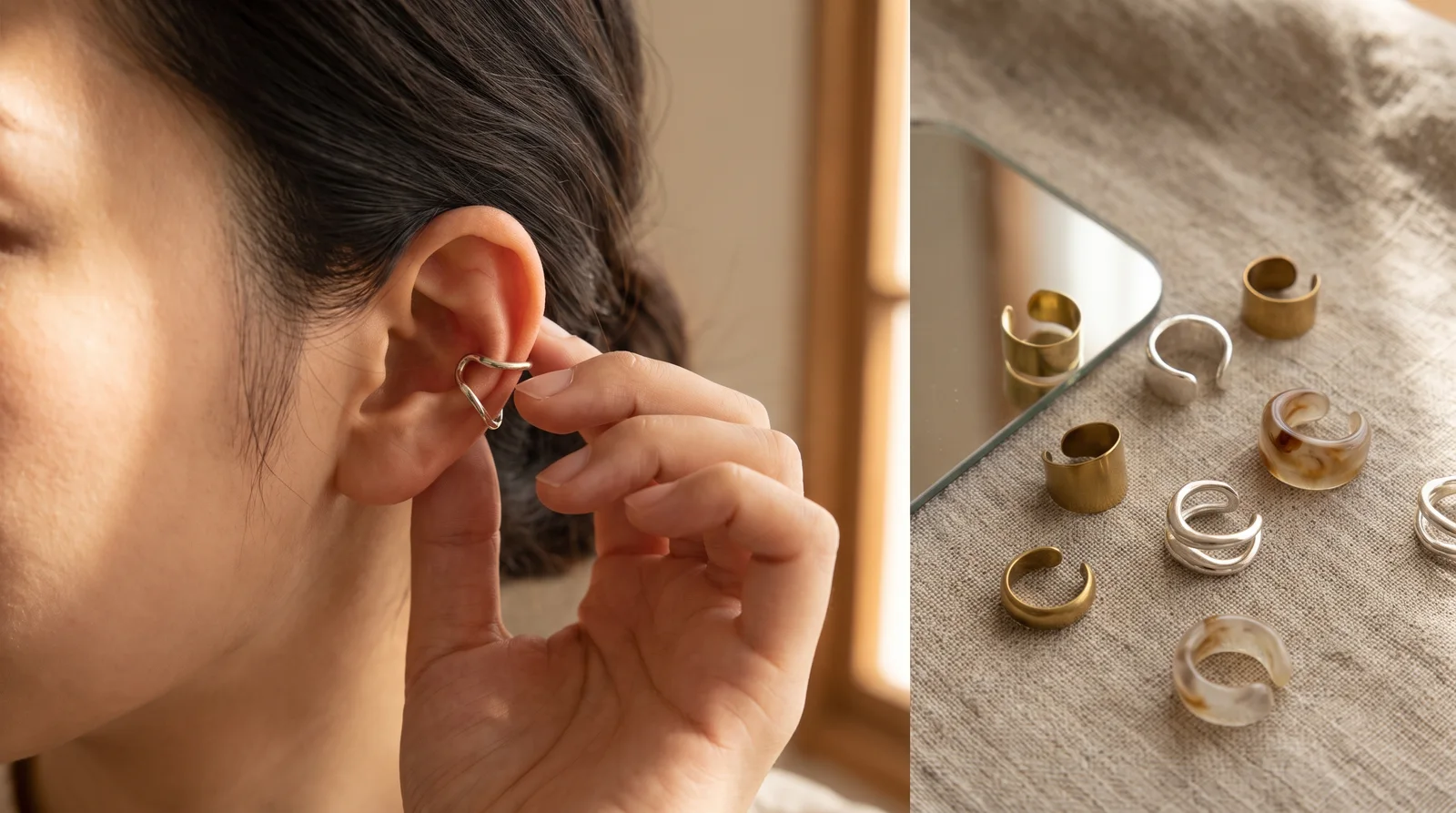
You keep ear cuffs from falling off by testing the fit under movement before you wear one out of the house. A cuff that feels secure while you stand still in front of a mirror can behave differently once you're talking, laughing, or pulling a sweater over your head.
Slide the cuff onto your upper helix at a slight angle rather than pushing it straight down. Once it's on, do a deliberate head shake, side to side, then a quick nod. If it shifts even slightly, the tension isn't matched to that spot on your ear. Try moving it half an inch toward the thicker part of the mid-rim. Or gently pinch the open ends a touch closer together, if the design allows adjustment.
Wear it around the house for two or three hours before committing to it for a full day out. Put on and take off a shirt. Rest your head on a pillow. These ordinary movements reveal weak spots in grip that a thirty second mirror check never will.
This kind of practical testing mirrors how jewelers think about matching hardware to real world use. It's similar to how pendant weight needs to match chain strength to avoid stress on the metal over time. Fit isn't just about the moment you put something on. It's about how it holds up under normal daily motion.
How to Wear Ear Cuffs Without Piercings on Different Ear Shapes
How you wear ear cuffs without piercings changes depending on whether your ear has a tight curl, a flat helix, or thicker cartilage overall. If your helix curls in tightly, look for cuffs with a narrower opening angle, since a wide gapped cuff won't make enough contact to grip properly. If your ear is flatter with less curve, wraparound styles or hinged cuffs tend to perform better, because they don't rely on a specific curl shape to create tension.
Thicker cartilage, common in the mid to lower helix area for some people, actually gives you more forgiving options. You can use cuffs with a slightly wider gap, since there's more tissue to press against. Thinner cartilage zones need tighter tolerances and often benefit from that silicone padding mentioned earlier.
Metal choice also plays into this. If you know your grip style guide already, you might recognize this trade off from other jewelry categories. The way chain link styles affect durability and flexibility in bracelets follows a similar principle. Stiffer materials hold their shape longer under repeated stress. Softer ones feel nicer at first but need more frequent adjustment.
Common Ear Cuff Fit Mistakes That Cause Slipping
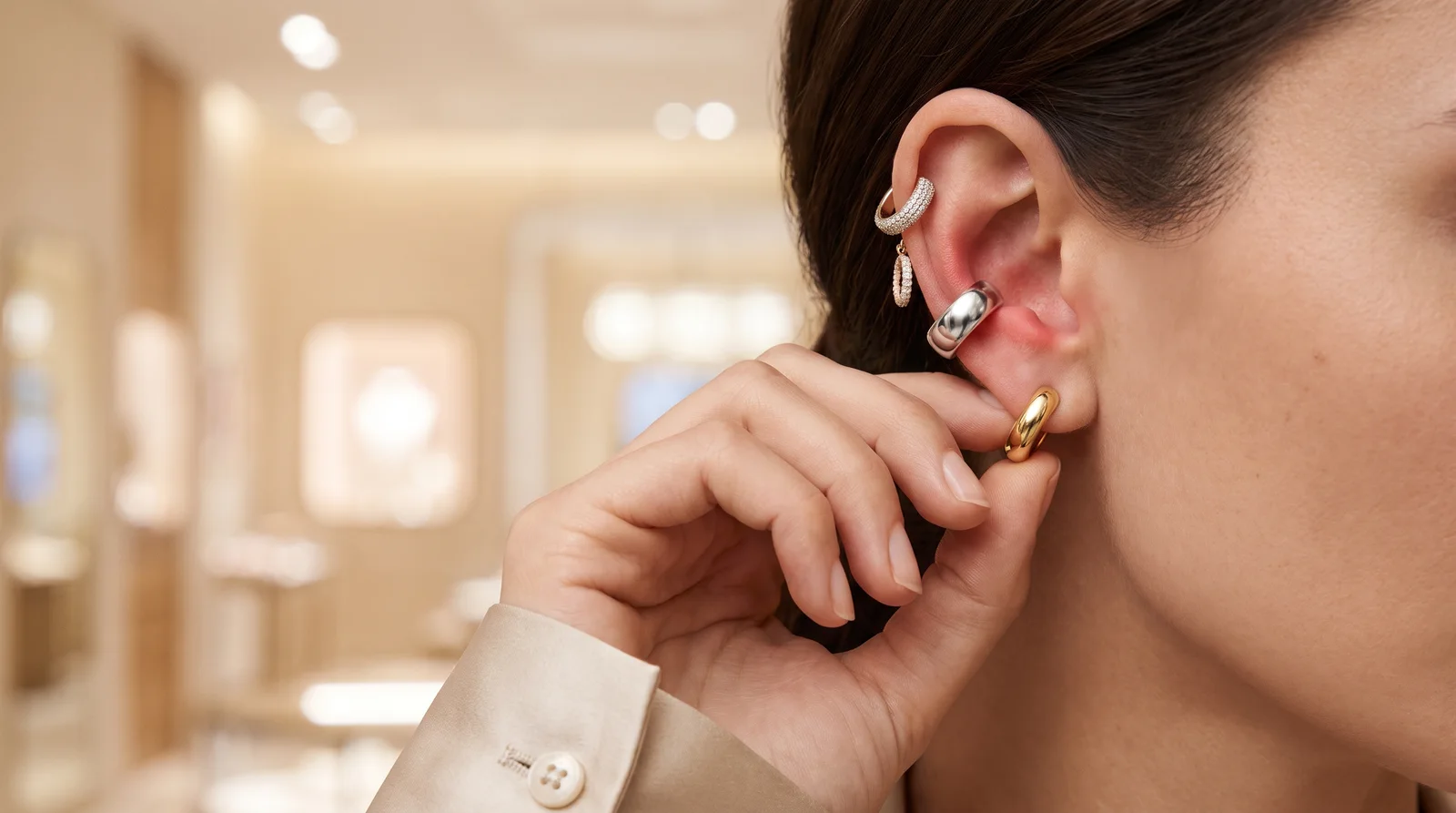
Most ear cuff slipping problems trace back to placement, not product defects. Wearing a cuff too low on the lobe, where there's no cartilage support, is the single most common mistake people make. It looks fine in photos but has almost no chance of staying secure through a normal day.
Another frequent issue is over-adjusting the metal. Bending an open cuff too many times to test different tightness levels weakens the spring tension permanently. Adjust once, test it, and only make small tweaks after that, rather than repeatedly squeezing and releasing it.
Buying based on looks alone, without checking whether the design matches your ear's curve, also causes a lot of returns. A cuff that photographs beautifully on a model with a tight helix curl might sit awkwardly loose on a flatter ear shape. Checking a few close up product photos for the gap width can save you a lot of frustration before you order.
Frequently Asked Questions
How do I know if an ear cuff is too tight?
If the cuff pinches within the first few minutes, or leaves a red mark after removal, the tension is too high for that spot. Move it slightly toward a thicker cartilage zone, or choose a design with a wider opening gap.
Can ear cuffs damage cartilage over time?
A properly fitted cuff worn for reasonable periods shouldn't cause damage, since it relies on gentle pressure rather than puncturing tissue. Excessive tightness, or wearing one non-stop for many days in a row, can cause soreness, so give your ear breaks.
Why does my ear cuff feel loose after a few weeks?
Metal fatigue is the usual cause. Repeated opening and closing gradually reduces the spring tension in softer metals like sterling silver more than it does in stainless steel.
Does ear cuff material affect how secure it feels?
Yes, significantly. Stainless steel generally holds tension longer than silver or plated gold. Padded designs add extra grip through friction rather than metal tension alone.
What's the difference between cartilage cuffs and helix cuffs?
These terms often describe the same general area, the upper outer ear. But "helix" usually refers specifically to the curved rim, while "cartilage cuff" can describe any firm zone along the outer ear. Both rely on the same grip principles.
Getting the fit right isn't about finding one perfect cuff everyone should buy. It's about understanding your own ear's curve and cartilage thickness, then matching that to a grip style and material built to hold. Test before you commit to wearing something out all day. Don't be afraid to return a cuff that never quite settles right. Your ears aren't identical to anyone else's, and the best fit is the one that disappears once it's on, no fidgeting, no checking in the mirror every ten minutes. Take the time to find that, and you'll enjoy wearing cuffs instead of worrying about losing one.