why does my automatic watch stop overnight (And When to Suspect a Fault)?
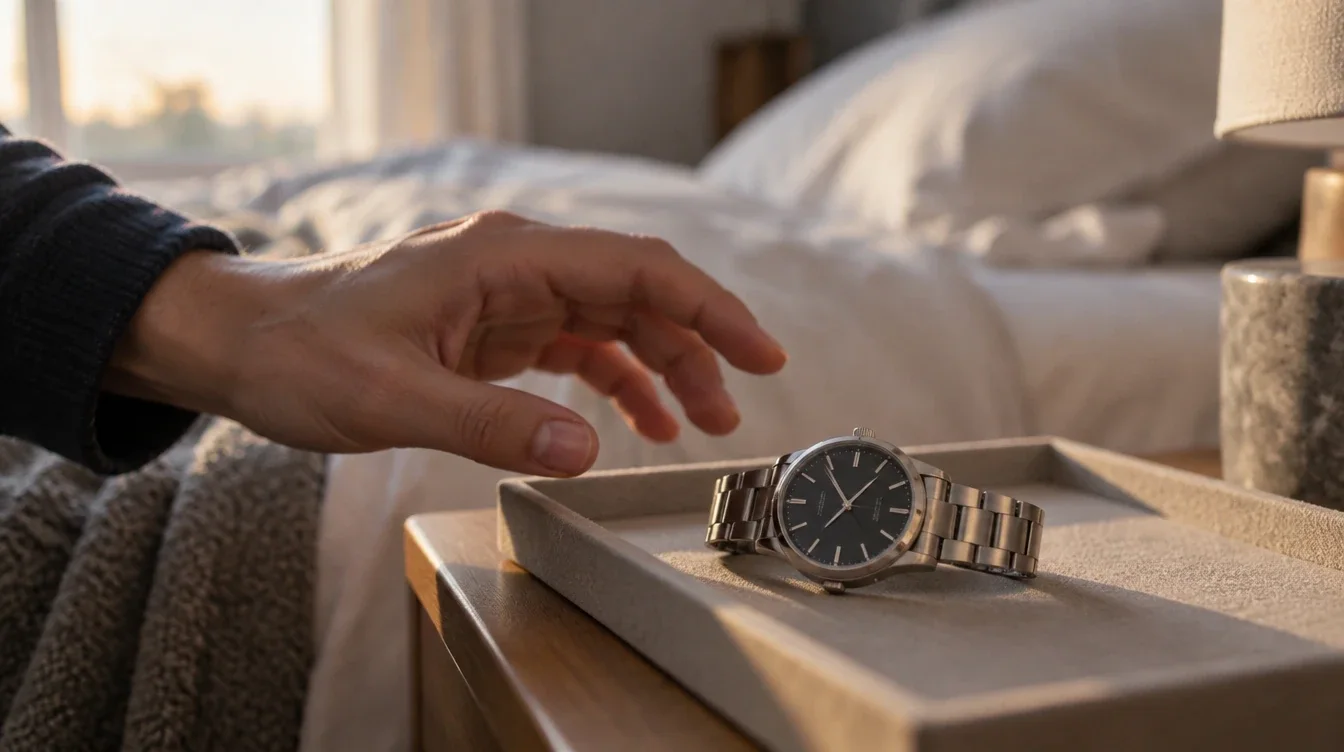
Your automatic watch may stop overnight because it went to bed with too little stored power, but repeated stops after proper winding need investigation. If you are asking “why does my automatic watch stop overnight,” start by checking winding rather than assuming the watch is broken. Longines identifies both insufficient movement and mechanical faults as possible causes.
A stopped watch does not always mean a broken watch
An automatic watch stores energy. Taking it off should not make it stop at once. According to Longines’ explanation of automatic movements, wrist motion turns a rotor, which winds the mainspring. Stored energy then powers the watch while your wrist is still.
Think of winding as filling a tank. A watch that starts ticking has some power. That does not tell you how much is left. Starting and fully winding are different things.
Desk time can leave the reserve low
If your automatic watch keeps stopping after quiet days, your daily habits may play a part. Longines notes that sedentary routines can provide insufficient movement. Hours on your wrist do not tell you how much power is stored.
That does not mean every office worker needs a winder. Compare how your watch runs after normal wear with how it runs after winding. Follow your manual for the winding check.
First, find out how long your specific movement should run.
How much power should last until morning?
Your watch should last through the night if it has enough power reserve left to cover those hours. What matters is the power left, not the advertised reserve.
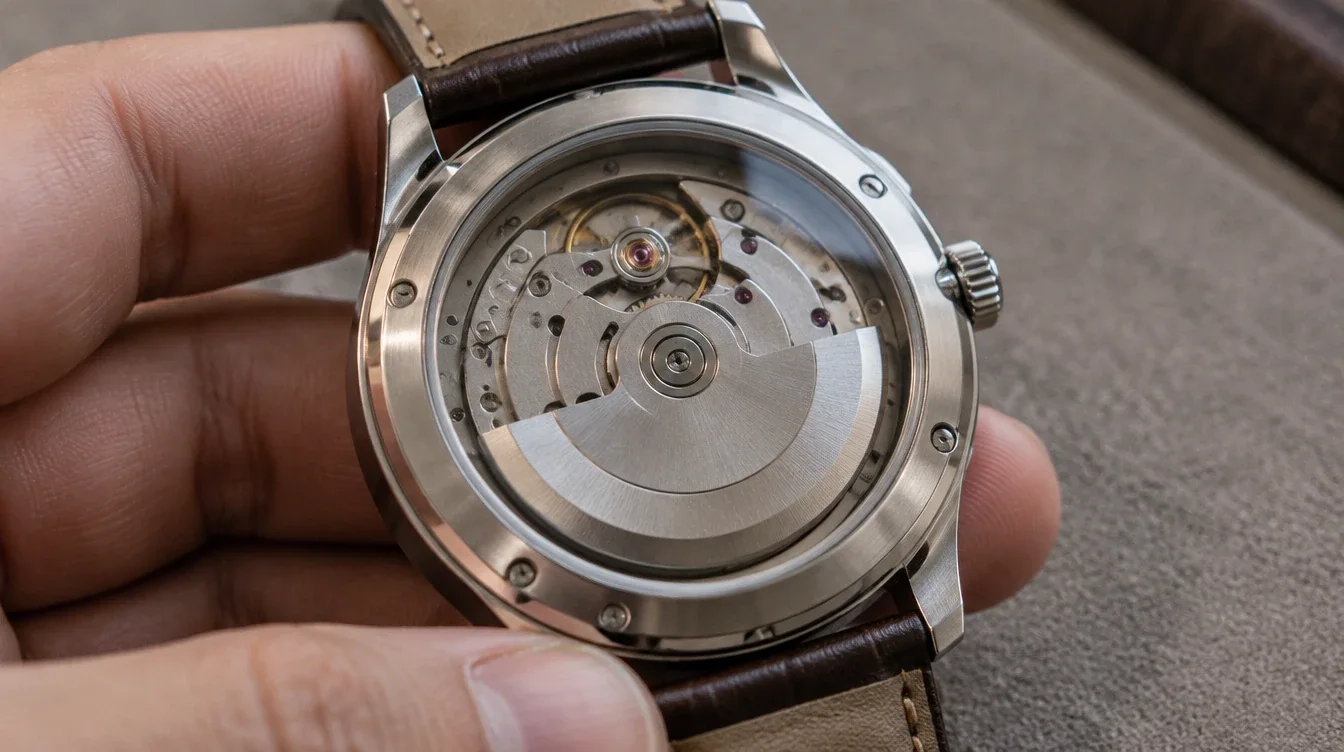
People who ask “how long does an automatic watch last without winding” often mean its full power reserve. VIEREN gives around 38 to 42 hours for many automatic movements, while noting that some offer longer reserves. Check your model’s manual instead of treating that range as a promise.
A simple overnight calculation
For example, assume a watch has six hours of power left at 11 p.m. Leave it untouched until 7 a.m., and it must run eight hours without winding. It would stop around 5 a.m., despite working normally.
Those figures are assumptions, not measured results or a diagnosis.
If an automatic watch stops when not worn, the useful question is how soon. Two days on a shelf and six hours beside your bed are different clues.
Once you know the stated reserve, a controlled check becomes much more useful.
Testing why does my automatic watch stop overnight
A power reserve check, with notes, helps tell low winding from a possible fault. Start with the maker’s instructions. Then watch how long it runs without adding more power.
Confirm how to wind an automatic watch
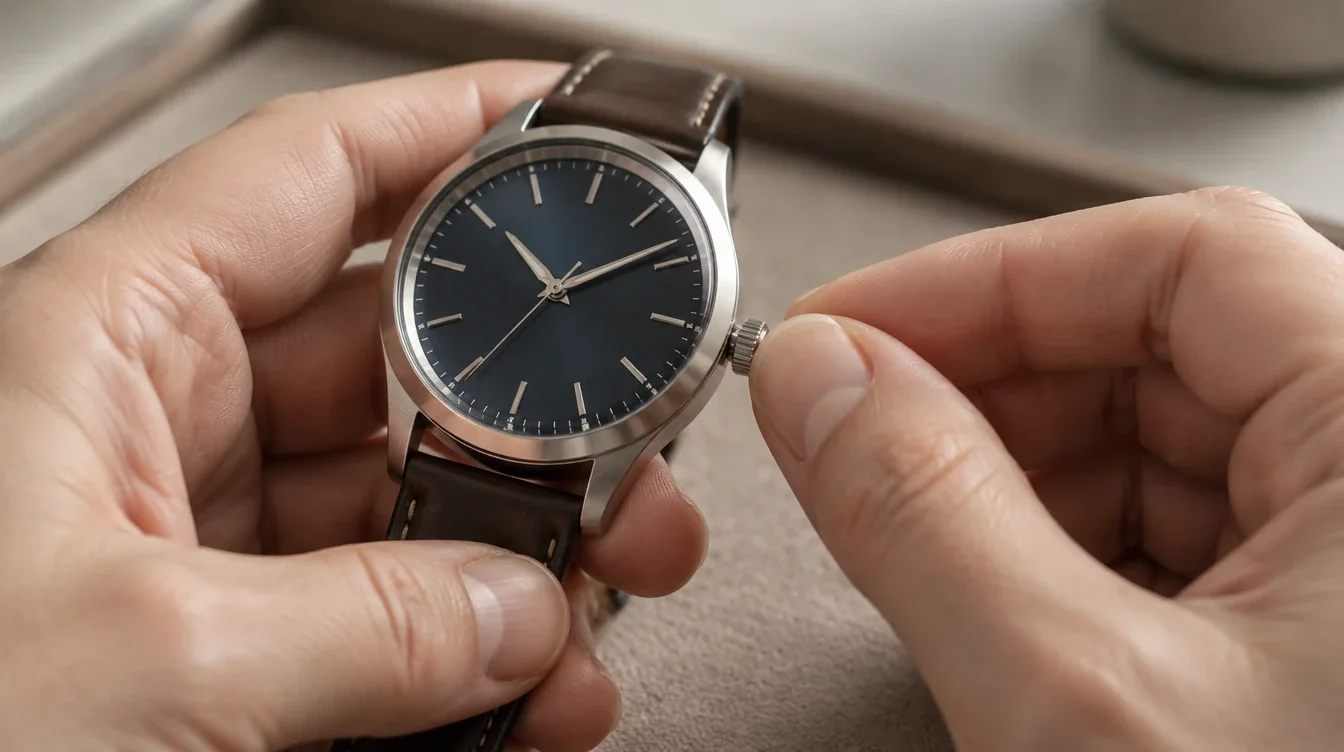
Start with your model’s manual to learn how to wind an automatic watch. Check that the watch supports manual winding. Find the right crown position, then follow the maker’s winding steps.
The same turn count may not fully wind every movement. Longines advises gentle crown winding and warns against forcing resistance. If the crown feels wrong, stop rather than pushing through it.
Record the starting point
Follow the winding instructions, then note the date and time. Check that the crown is back in its normal position. Leave the watch somewhere dry and safe. Choose a spot where you can see it without picking it up.
Note when you last saw the watch running. Record when you found it stopped, too. If you missed the exact moment, write a time range rather than guessing.
Compare like with like
Compare how long the watch ran with your movement’s stated reserve. If it falls well short, ask for advice. That result does not prove that a specific part has failed.
Repeat the check only if something was unclear the first time, such as whether you wound it fully. Keep each set of notes separate.
Your next step depends on whether the watch runs well after winding.
What the test results actually tell you
Normal runtime after manual winding points toward the amount of winding from daily wear. Short runtime calls for a closer check. Neither result tells you the fault on its own.
Normal reserve but poor results after wear
If manual winding gives the expected reserve, compare that with normal wear. Use a normal working day for this check. Note hours worn, how active you were, and when the watch stops.
One owner in a Watchuseek discussion reported full reserve after manual winding but overnight stops after wear. They said replacing the rotor and rotor bearing solved the problem. That is one owner’s report. It is not a verified diagnosis for your watch. Still, it shows why activity should not take all the blame.
Short reserve despite correct winding
If your automatic watch stops even when fully wound, have it checked. Do not keep adding turns instead. Longines lists worn or dry parts, moisture, and shock damage among possible causes of stopping.
A watchmaker needs the watch itself to narrow those possibilities. Describe what happened rather than requesting a repair based on a forum match.
Use your notes to help decide if a winder suits your routine.
Should you buy a watch winder?
A watch winder is a convenience to consider, not the first response to unexplained stopping. Ask “do I need a watch winder” after checking your watch’s reserve and winding instructions.

VIEREN recommends winders for owners who rotate watches. That use differs from trying to keep a watch running when it cannot hold its expected reserve.
Choose based on convenience, not worry
Manual winding adds power, if your watch supports it. There is no need to buy storage equipment. It suits owners happy to follow the watch’s instructions before they wear it.
A winder may suit you if you switch watches often and dislike resetting them. Ask the watchmaker or maker about settings before you buy. Check which ones suit your movement. The same setting may not work for every watch.
If “do I need a watch winder” really means “does my watch need repair,” get that second question answered first.
Some signs mean it is best to seek professional help next.
When to stop testing and call a watchmaker
Seek professional assessment when correct winding fails to restore reasonable runtime, or when stopping follows damage. Longines recommends a certified repair centre when basic winding checks do not help.
If your automatic watch keeps stopping, bring your notes and the model reference. Report any recent drop or water exposure. Note any change in how winding feels, too. Do not open the case or try to oil the movement yourself.
For a new watch, ask the seller or brand before booking work elsewhere. Ask about a warranty check. Describe the problem without claiming to know the cause.
Keep your report plain and specific. Note that the watch ran after winding but stopped in storage. Describe how it ran differently after wear. Include times where known.
These common questions can help make sense of your notes.
Frequently asked questions
These answers help you tell normal power loss from signs worth checking.
Why does my watch stop after I take it off?

If an automatic watch stops when not worn, its stored power may have run out. After correct winding, compare how long it runs with your model’s reserve. Do that before assuming a fault.
How long can my watch run untouched?
For “how long does an automatic watch last without winding,” two things matter. They are the movement and how much power it starts with. Your model’s rated reserve applies to a full wind, not brief wear.
What if winding does not solve the problem?
If your automatic watch stops even when fully wound, have it checked. Bring your runtime notes and the winding steps you followed. These help the watchmaker assess why it ran short.
Those details give the watchmaker more to work with than a vague concern.
Start with evidence, not accessories
An overnight stop calls for a check, not a rush to repair. Check the winding method. Compare actual runtime with the stated reserve, then note what changes after daily wear.
Start that log tonight. If correct winding still leaves your watch stopped by morning, book a check. Bring your notes.