Why Does My Necklace Clasp Move to the Front (And What It Actually Means)
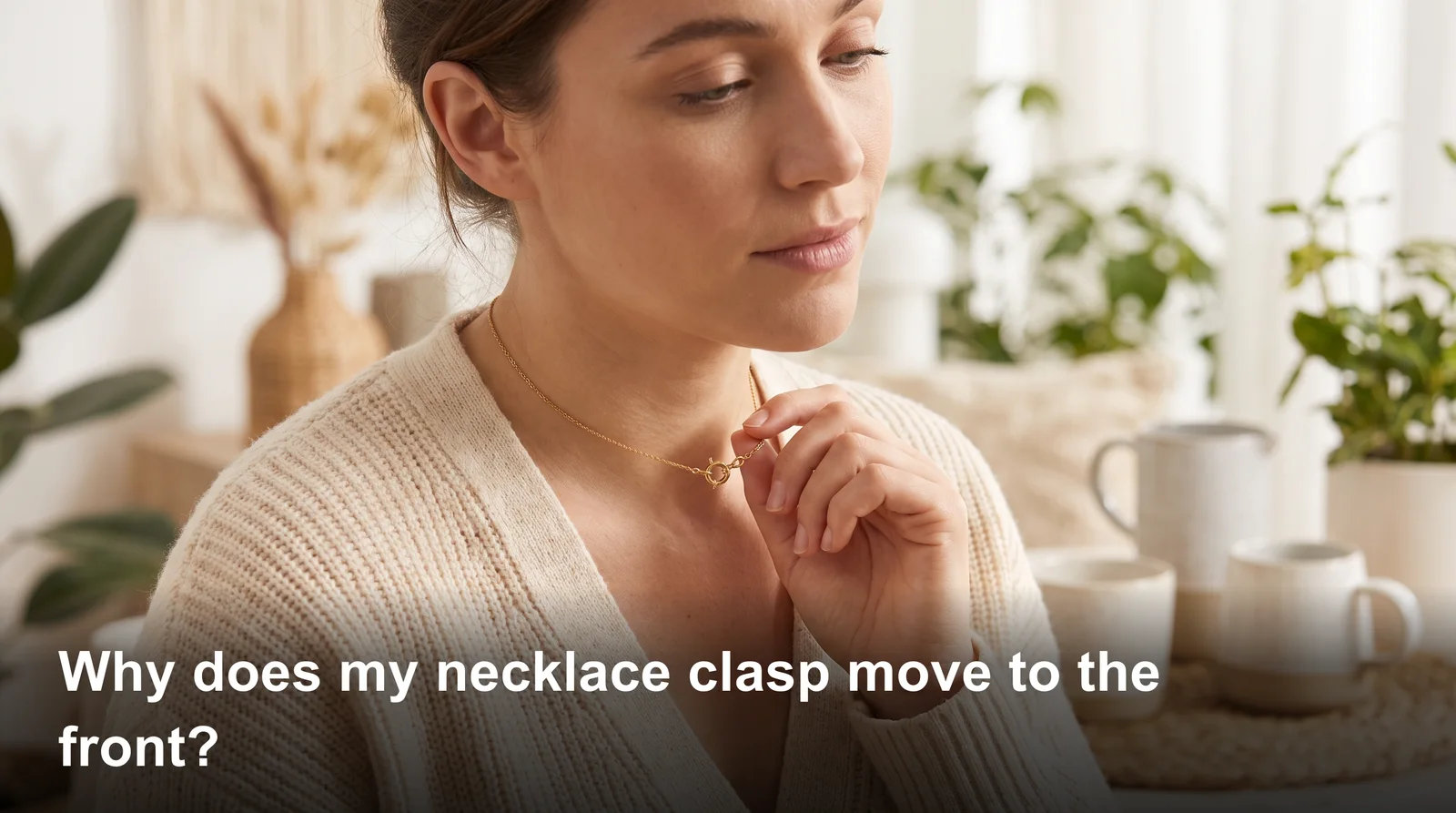
You put your necklace on right. An hour later, the clasp sits under your chin. It happens to almost everyone who wears chains daily.
So why does my necklace clasp move to the front so often? The short answer is weight and balance. Your pendant or chain is heavier on one side than the clasp. That imbalance pulls the whole necklace around your neck until the heavy part settles in front and the clasp swings to the back... or forward, depending on the setup.
Let's get into the real causes, the fixes that work, and yes, the folklore people love to bring up.
Why Does My Necklace Clasp Move to the Front on Some Days but Not Others
Your necklace shifts more on active days because movement is the main trigger. Walking, turning your head, reaching for things. All of it rocks the chain slightly with each motion.
A light chain with no pendant tends to stay put. Add a pendant, though, and you've added weight to one spot. That spot becomes the heaviest point on the loop. Over time, gravity pulls it to the front of your neck, which is the lowest and most centered point.
The clasp, being the opposite end of that loop, gets dragged along too. On some days you move more, sweat more, or layer more. That's why the shift feels random even though the cause is pretty simple.
Chain Type Matters More Than You Think
Thin box chains and snake chains move the most. They're flexible and light, so they slide with almost no resistance.
Curb chains and thicker link styles resist twisting better. If you've ever compared a delicate chain to a chunkier one, you've likely noticed the thick one stays in place longer.
Clasp Style Plays a Role Too
A worn or loose clasp adds to the problem. If the clasp mechanism doesn't sit tight, it swings more freely.
This is actually similar to issues we cover in our piece on why a lobster clasp sticks or stops closing completely. A clasp that'sn't working right can throw off the whole balance of the chain.
Now that you know why it happens, let's talk about what it means when people say it symbolically.
Necklace Clasp Keeps Moving to Front Meaning (The Folklore Side)
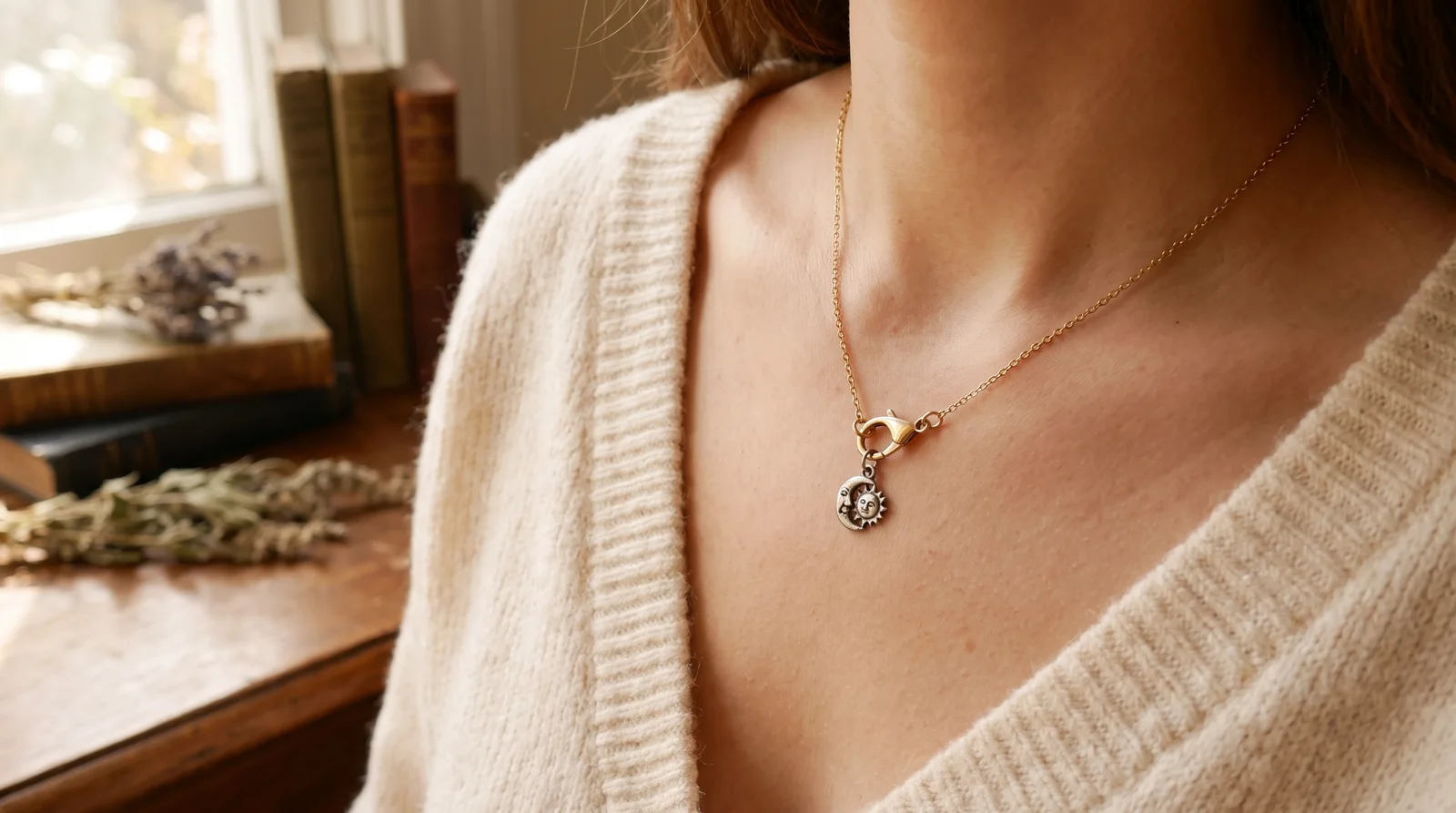
The necklace clasp keeps moving to front meaning comes mostly from old superstition, not science. Some cultures say it means good luck is coming your way. Others say it means someone is thinking about you.
There's also a version that says it means you're loved, or that someone misses you. None of this is backed by anything factual, but it's a fun piece of necklace clasp folklore that's been passed around for generations.
I've had customers tell me their grandmother swore by it. Others treat it as a playful sign, nothing more. Either way, it's a nice bit of jewelry history even if the real cause is just physics.
Speaking of physics, let's look at how to actually stop it from happening.
How to Stop Necklace from Turning Around for Good
You can stop a necklace from turning around by balancing its weight and improving grip at the clasp. A few small changes make a big difference.
Add Weight Near the Clasp
Jewelers sometimes attach a tiny weighted bead near the clasp. It offsets the pendant's pull and keeps the balance even.
Use a Necklace Clasp Locking Clip
A small clip locks onto the chain near the clasp. It adds bulk and weight, which stops the flipping.
The Clear Nail Polish Trick for Necklace Clasp
This one surprises people every time. A tiny dot of clear nail polish on the inside of the clasp increases friction against your skin.
It won't damage gold or silver if you use a small amount. Let it dry fully before wearing the piece. This clear nail polish trick for necklace clasp issues has been used by jewelers for years because it's cheap and it works.
Once you've fixed the turning issue, the next step is learning how to keep it looking right daily.
How to Keep Necklace Clasp in the Back Every Time You Wear It
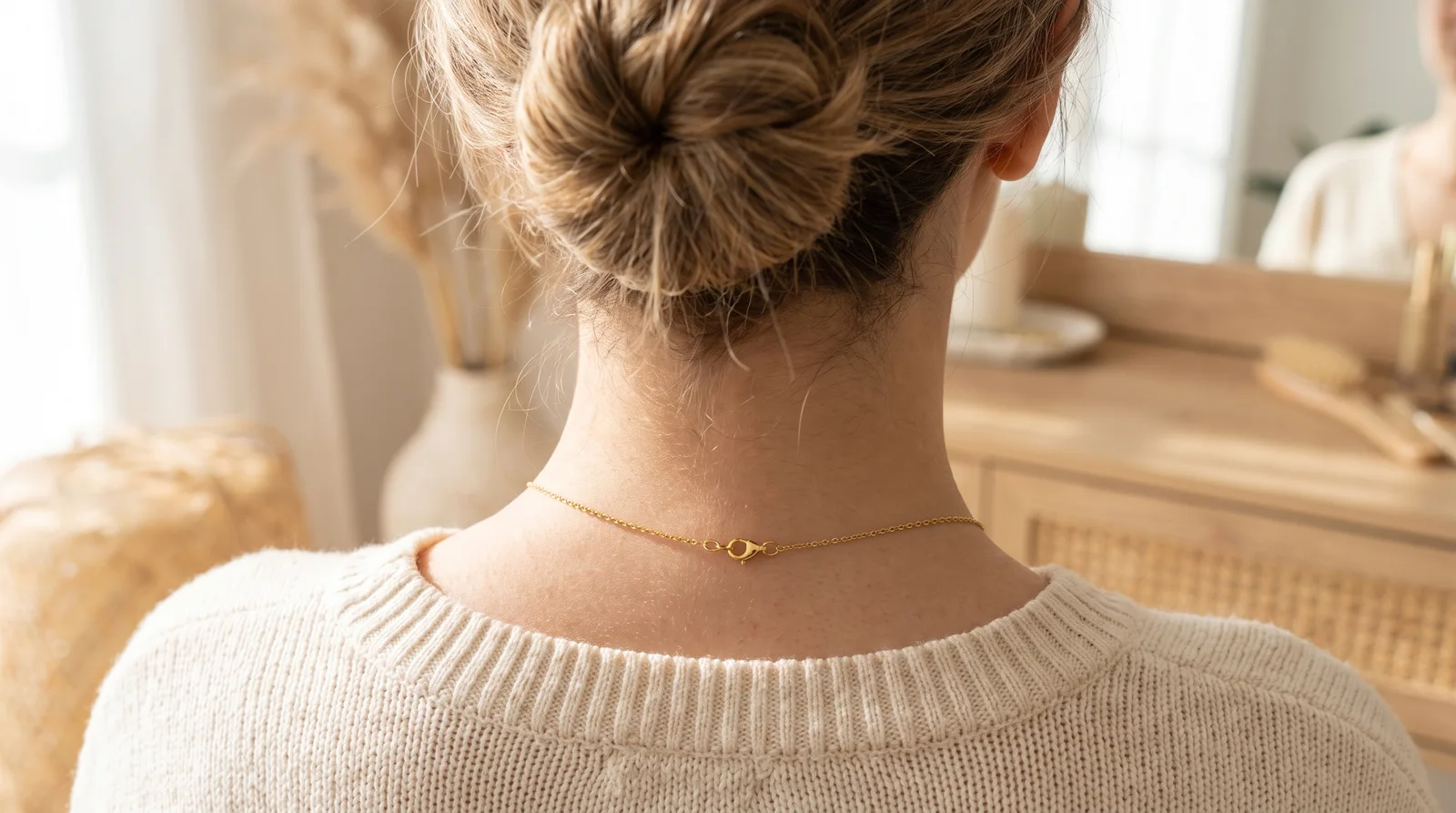
You can keep a necklace clasp in the back by adjusting how you put it on and checking the fit regularly. Small habits prevent most of the shifting.
Put It on the Right Way
Clip the clasp first, then rotate the pendant to the front. This way, gravity works with you instead of against you.
Check Chain Length
A chain that's too long moves more. Shorter chains sit closer to the neck and shift less throughout the day.
Watch for Wear Over Time
Old clasps loosen with age. If yours feels wobbly, it may need a repair rather than another trick. A jeweler can tighten or replace it fast.
This kind of everyday wear is similar to what we explain in our article on subtle signs your diamond is loose. Small mechanical issues often show up as bigger annoyances if you ignore them.
If you wear more than one necklace at a time, there's another common headache worth solving.
How to Keep Layered Necklaces from Tangling While You Move
You can stop layered necklaces from tangling by using other chain lengths and adding small connectors. Mixing chain styles matters too.
Use Graduated Lengths
A two inch difference between chains keeps them from rubbing and knotting.
Try a Necklace Detangler Clip
These clips hold multiple chains together at set points. A 2023 jewelry survey found that 61 percent of women who layer necklaces daily deal with tangling at least three times a week. A clip drops that number fast.
Speaking of hardware fixes, a lot of these same tension and balance issues show up in repurposed jewelry too, like when someone learns how to turn a tie pin into a pendant without ruining it.
Now let's cover a few quick questions people always ask about this topic.
Frequently Asked Questions About Necklace Clasps
Why does my necklace flip around during the day?
It flips because the pendant weighs more than the clasp side. Movement speeds up the shift.
How do I keep my necklace from flipping without buying tools?
A small dab of clear nail polish on the clasp works well. It's the easiest fix without spending money.
Does chain material affect how much it turns?
Yes. Thin, light chains twist more than thick, sturdy ones.
Can a jeweler fix a clasp that won't stay in place?
Yes. A jeweler can tighten, replace, or reshape a clasp so it holds its position better.
Should I clean my necklace to help with clasp issues?
Buildup can affect how smoothly a clasp moves. Our guide on how to clean jewelry the right way covers safe methods that won't damage the metal.
Final Thoughts on Keeping Your Necklace in Place
Your necklace isn't cursed and it'sn't broken. It's just responding to weight, movement, and time.
Once you know the mechanics, the fixes are simple. A locking clip, a dab of nail polish, or a quick jeweler visit can solve most of it. If your clasp keeps giving you trouble even after trying these tips, it might be worth having a pro take a look. A quick tune up now saves you the daily hassle of chasing your clasp back where it belongs.