The Men's Silver Bracelet Styles Guide That Saves You From an Expensive Sizing Mistake
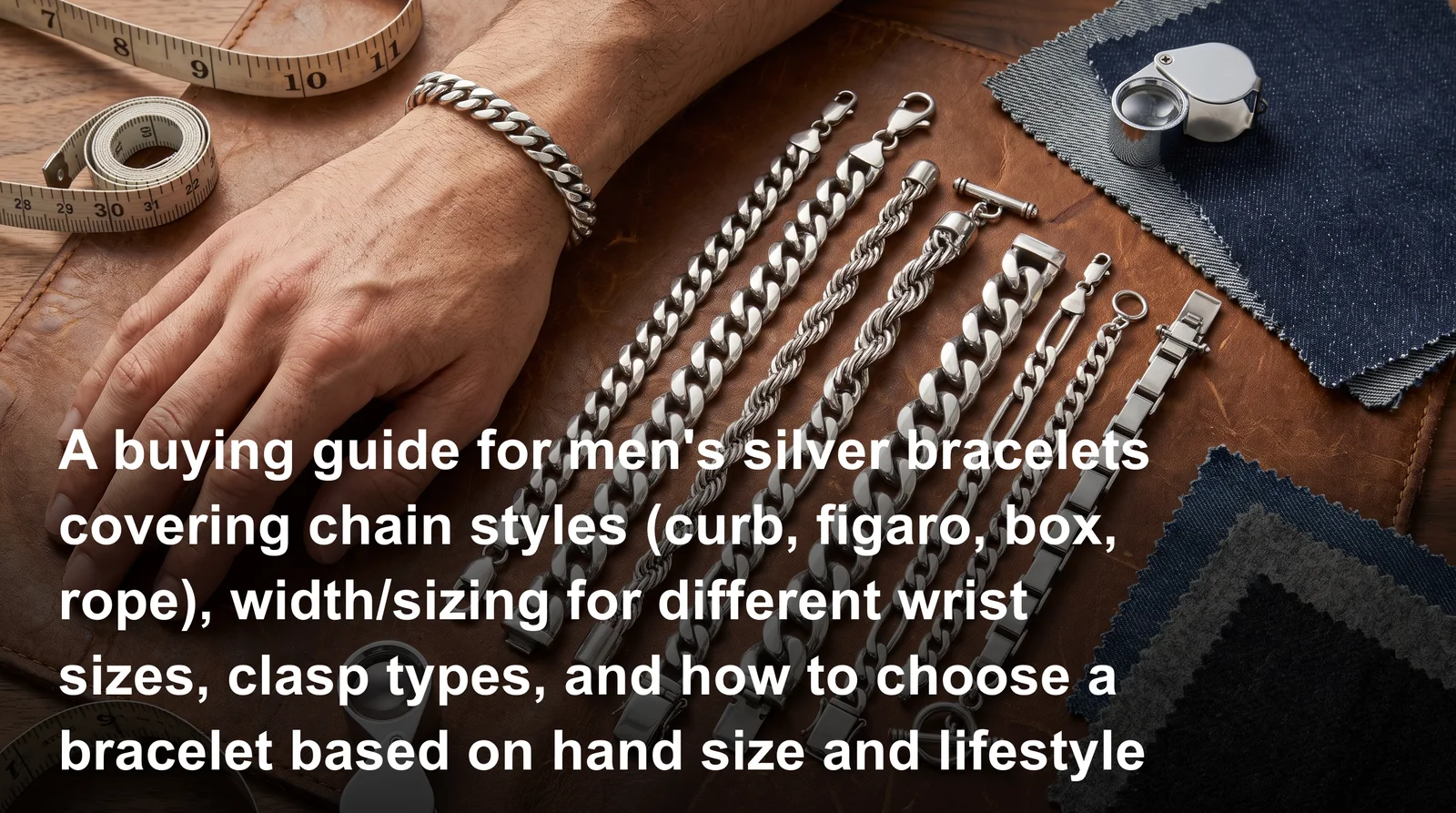
Buying a men's silver bracelet means choosing between chain styles, widths, and clasps that all wear differently once they're actually on your wrist. Curb, figaro, box, rope, byzantine: different link structures, different widths, different clasps, and price points that aren't always obvious from a product photo.
This men's silver bracelet styles guide covers the chains that matter, how to measure your wrist correctly, and which clasp holds up to daily wear. By the end you'll know what to order, not just what looks good in a listing photo. 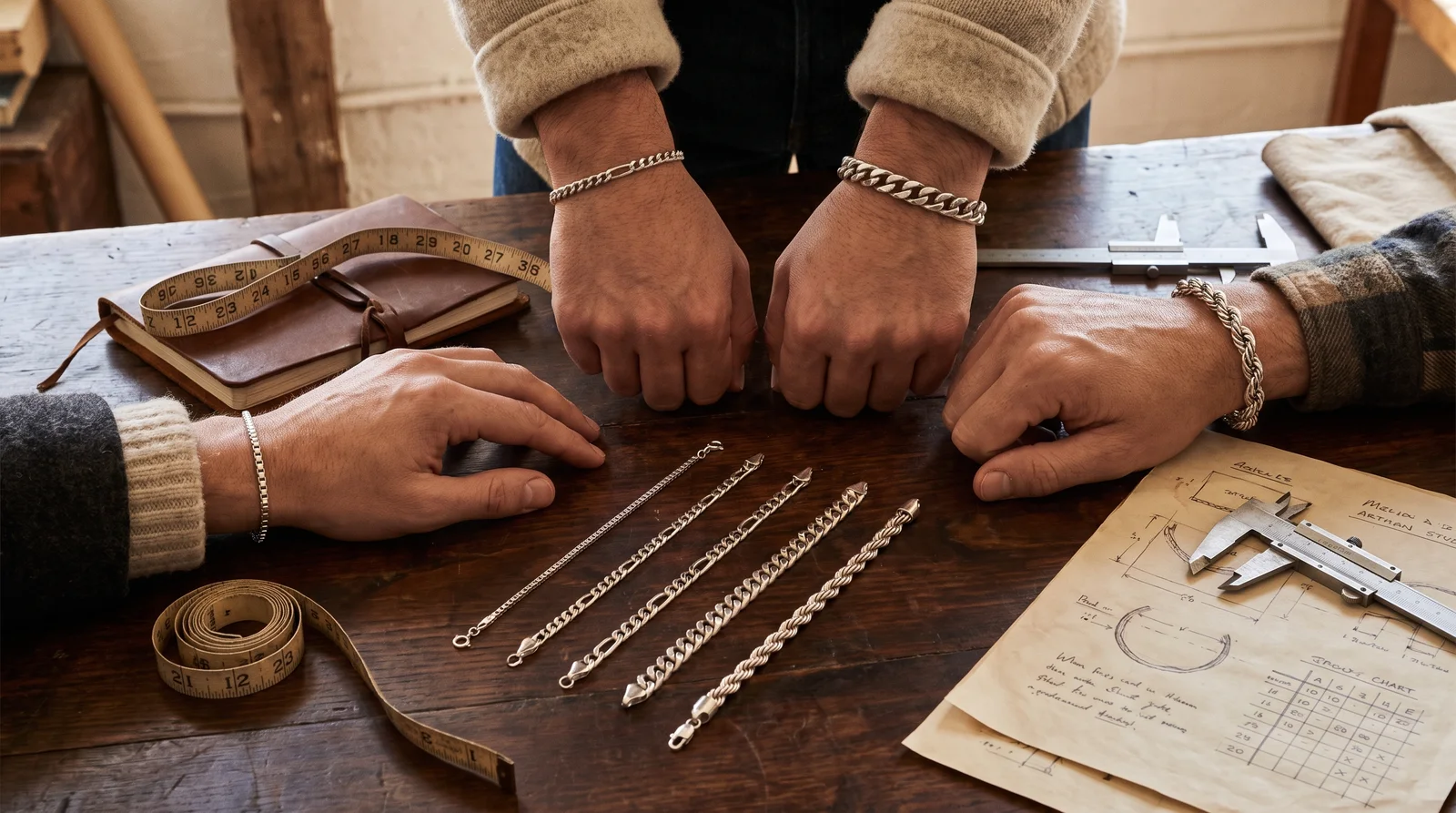 A men's bracelet sizing chart should account for both wrist circumference and chain width, because the two work together to determine how a bracelet actually sits. A 4mm curb chain and an 8mm curb chain in the same 8 inch length will wear completely differently. Width affects visual weight. Length affects fit. You need both numbers right, not just one.
 Men's bracelet clasp types fall into three main categories, lobster, toggle, and box clasp, and each one makes a different tradeoff between security and ease of use. The clasp is arguably more important than the chain style itself, because it's the one part of the bracelet doing mechanical work every single time you take it off or put it on.
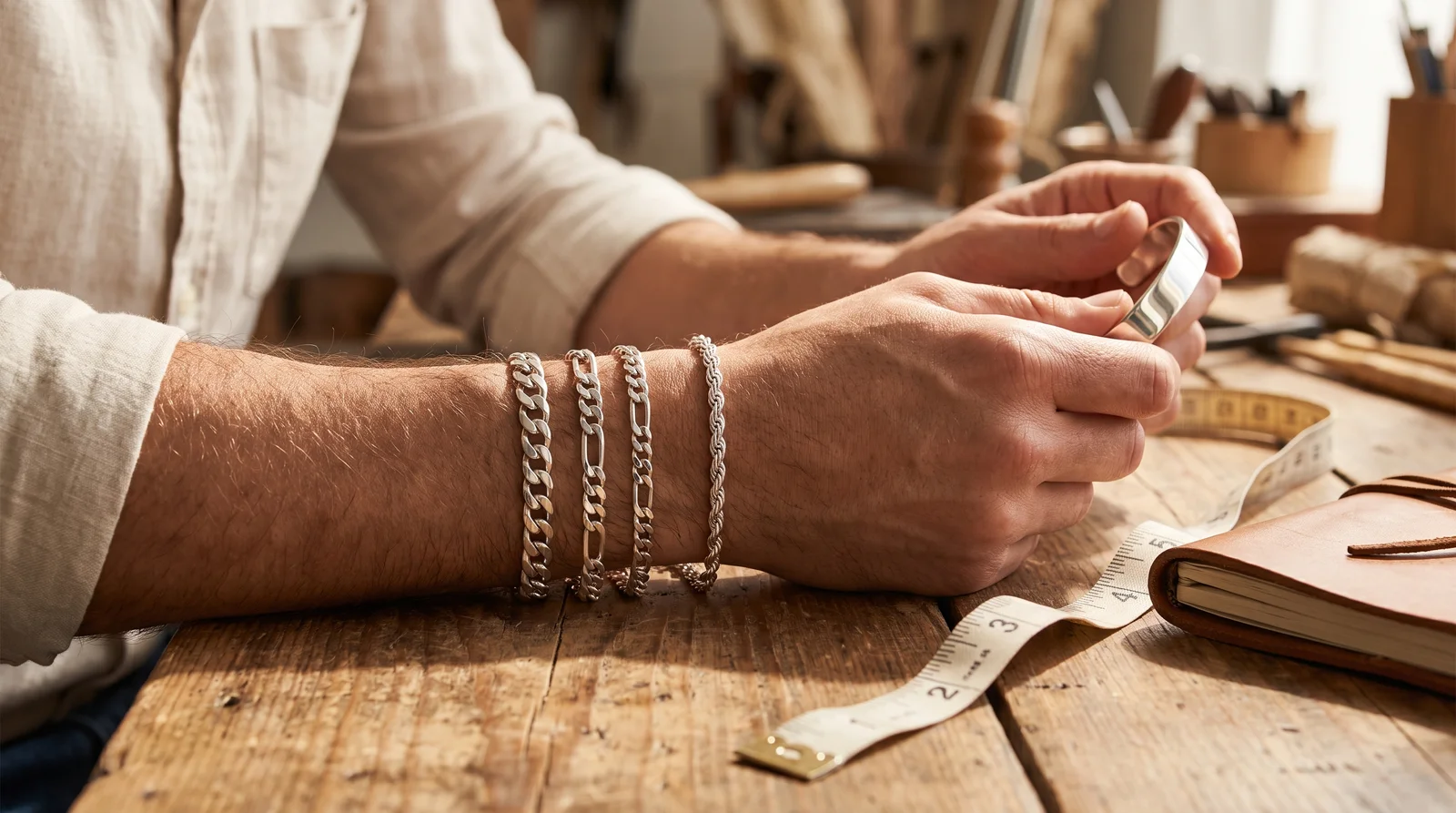 Choosing a bracelet for your wrist size means balancing proportion against how you actually use your hands day to day, not just picking whatever looks best on a model. A bracelet that photographs well on a broad, muscular wrist can look oversized on a slim frame, and the reverse is just as true.
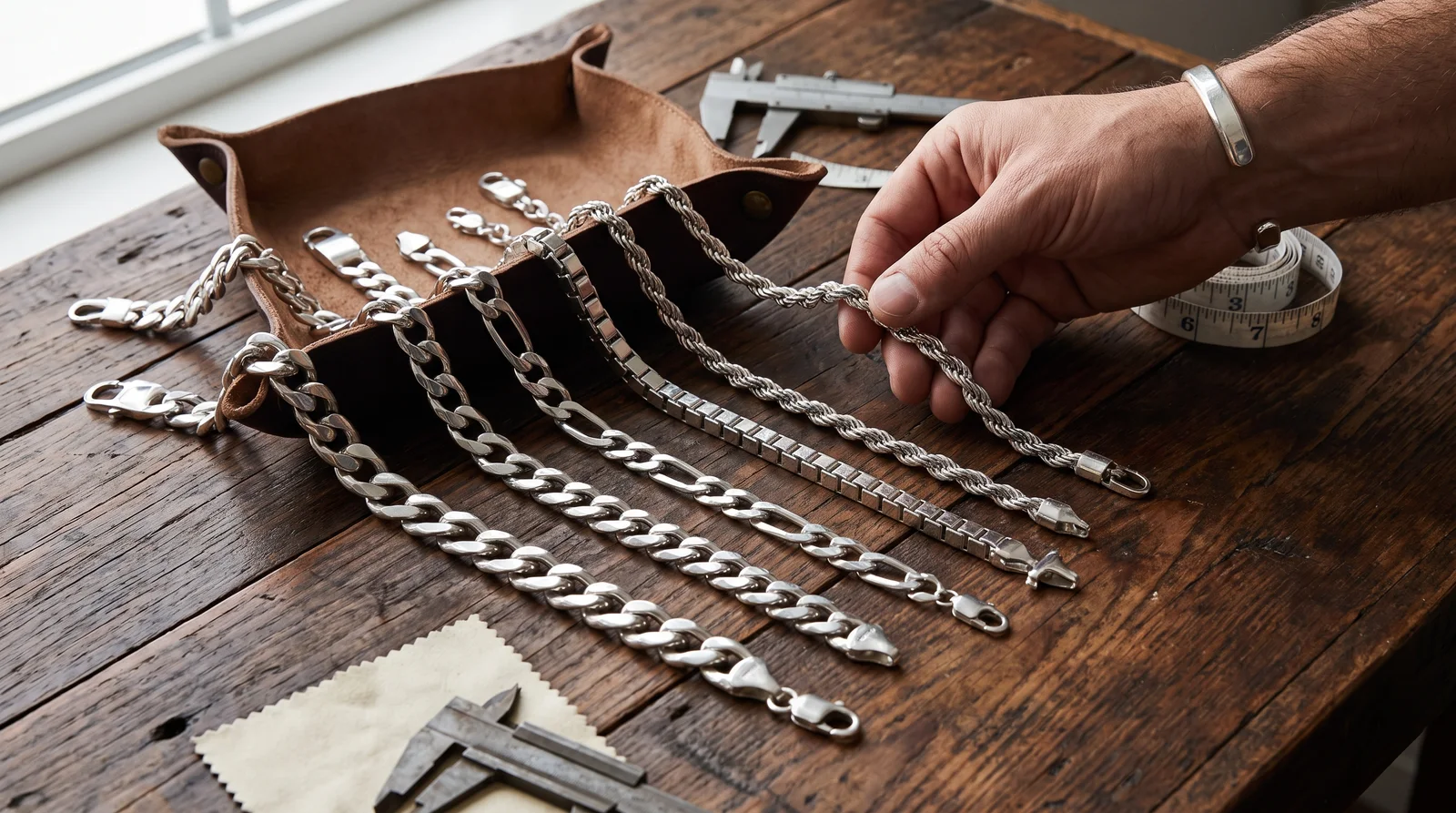
What Are the Main Men's Silver Bracelet Chain Styles?
The four chain styles you'll see most often are curb, figaro, box, and rope, each built with a different link structure that changes how the bracelet moves and catches light. Byzantine shows up too, usually as the more textured, dressier option. Knowing the difference matters because these aren't interchangeable. A curb chain and a box chain can be the same width and length yet feel completely different on the wrist.Curb Chain: The Everyday Standard
Curb links are flat, twisted, and interlocked so tightly that the chain lies almost flush against your skin. That flat profile is what makes curb the most common men's bracelet style. It doesn't roll or twist during the day, and it reads as solid rather than delicate, which is exactly why it's the default recommendation for a first silver bracelet. Most men who buy one curb chain end up wearing it daily for years.Curb Chain vs Figaro Chain Bracelet: What Changes
The curb chain vs figaro chain bracelet comparison comes up often, and figaro is best understood as curb's more detailed cousin. Figaro alternates one longer oval link with two or three shorter round ones, repeating that pattern down the length. The rhythm gives it more visual interest without adding bulk. If curb feels a little plain, figaro is the natural step up. It's been a menswear staple since at least the 1970s and never really left.Box Chain: Structured and Understated
Box chains use square links that stack into a continuous, almost tube-like column. The result is a bracelet that looks clean and geometric, with none of the open, airy movement you get from curb or figaro. It photographs well and sits flat under a shirt cuff, which makes it a popular choice for men who want something quiet at the office. The tradeoff is that box chains in thinner gauges can feel a bit stiff compared to a curb of the same width.Rope Chain: Texture Over Structure
Rope chains twist multiple strands of silver into a tight spiral, so the surface is never flat for more than a moment. That twist is what gives rope its shimmer and its slightly busier look on the wrist. It suits a man who already owns a plain chain and wants a second piece with more personality. Rope tends to read a little more casual than curb or box, which is worth keeping in mind if you're buying for someone who wears a suit five days a week.Byzantine Chain: The Dressier Option
Byzantine links interlock in a more complex, almost woven pattern that catches light from several angles at once. It looks heavier than the other four styles even at the same width, because the link structure has more surface area. Byzantine works well as a statement piece worn alone rather than stacked, and it tends to cost more given the extra link work involved. Once you have a feel for how these five styles differ, the next question is what width and length fit your wrist.Men's Bracelet Sizing Chart: Matching Width to Wrist Size
A men's bracelet sizing chart should account for both wrist circumference and chain width, because the two work together to determine how a bracelet actually sits. A 4mm curb chain and an 8mm curb chain in the same 8 inch length will wear completely differently. Width affects visual weight. Length affects fit. You need both numbers right, not just one.
Reading Wrist Size Into Bracelet Width
For wrists under 6.5 inches, a narrower chain between 3mm and 5mm usually looks proportional and doesn't overwhelm the hand. Wrists in the 6.5 to 7.5 inch range, which covers most men, work well with 5mm to 7mm widths. Larger wrists above 7.5 inches can carry 8mm and up without looking like the bracelet is wearing the man instead of the other way around. The average adult male wrist measures around 7 inches, which is why most standard bracelet lengths cluster between 8 and 8.5 inches finished.What Size Bracelet for Men Is Actually Standard
If you're asking what size bracelet for men works as a safe default, 8 inches is the answer most jewelers will give you. It's the most common finished length sold and fits most average wrists with a bit of room to spare. A 7.5 inch bracelet suits a smaller or slimmer wrist and gives a closer, neater fit. An 8.5 to 9 inch bracelet works better for a larger wrist or for anyone who prefers a looser drape. Getting this number wrong is a common reason a bracelet ends up in a drawer instead of on a wrist. Here's how to take that wrist measurement yourself.How to Measure Wrist for Bracelet Before You Buy
Learning how to measure wrist for bracelet fit takes about two minutes and just a soft tape measure or a piece of string. Wrap it around your wrist just below the wristbone, where the bracelet will actually rest, keeping it snug but not tight. If you're using string, mark where it overlaps, then lay it flat against a ruler to get the number in inches or centimeters.Adding the Right Amount of Ease
Once you know your wrist circumference, add somewhere between half an inch and a full inch depending on how the bracelet should sit. Add half an inch for a closer, tighter fit that stays put and layers well under a watch. Add three quarters to a full inch if you want a looser, more relaxed drape that moves with your arm. A simple check once the bracelet is on: you should be able to slide one finger comfortably underneath it. If you can't fit a finger, size up. If it slides around loosely and catches on things, size down.Buying as a Gift Without a Wrist Measurement
If you're shopping for someone else and can't get a real measurement, 8 inches is the safest guess for an average adult male wrist. It's worth choosing a retailer that offers resizing rather than committing to a fixed length you can't adjust later. A bracelet that's slightly off can usually be shortened or extended without much trouble, which reduces the pressure of getting the number exactly right on the first try. With length sorted, the next detail that decides whether a bracelet lasts is the clasp holding it together.Men's Bracelet Clasp Types and Which One Actually Holds Up
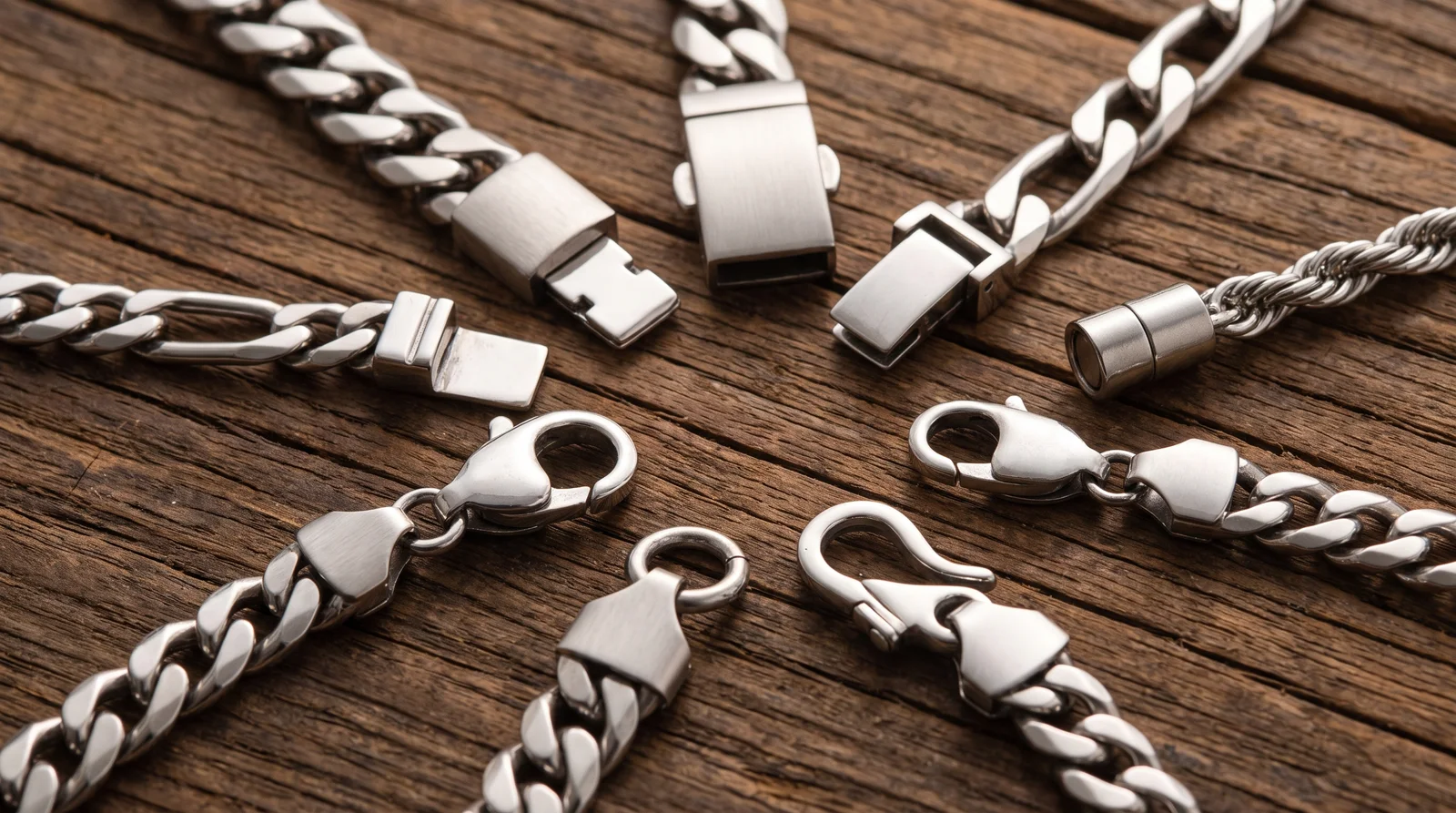
Men's bracelet clasp types fall into three main categories, lobster, toggle, and box clasp, and each one makes a different tradeoff between security and ease of use. The clasp is arguably more important than the chain style itself, because it's the one part of the bracelet doing mechanical work every single time you take it off or put it on.
Lobster Clasps: The Most Common Choice
A lobster clasp uses a small spring-loaded lever that snaps shut against the clasp body, and it's the most widely used closure on men's chain bracelets for good reason. It's secure, compact, and reasonably easy to operate one-handed once you get the hang of it. The main weak point is the spring mechanism itself, which can loosen or stick over years of daily use. If yours ever stops snapping shut properly, that's usually a simple fix rather than a reason to replace the whole bracelet.Toggle Clasps: Easier On, Less Secure
A toggle clasp uses a bar that slides through a ring, and it's noticeably easier to fasten with one hand than a lobster clasp. That ease of use comes with a tradeoff though. Toggles can work themselves open under the right pressure or angle, which makes them a less ideal choice for a bracelet you plan to wear during workouts or manual work. They tend to suit lighter, more decorative bracelets better than heavy daily-wear chains.Box Clasps: Built for Durability
A box clasp uses a folding tab that locks into a rectangular housing, often with a secondary safety latch on top. This is the closure you want on a heavier chain, a curb or byzantine bracelet in a thicker gauge, because it distributes stress better and rarely opens by accident. Box clasps take slightly more dexterity to open on your own, but the added security is usually worth that small inconvenience. Once you've settled on a clasp, the next thing to think about is how the bracelet's actual construction, solid versus hollow, holds up to daily wear.Sterling Silver vs Stainless Steel Bracelet: Which Handles Daily Wear Better
The sterling silver vs stainless steel bracelet decision comes down to look versus low maintenance, and neither answer is wrong depending on your lifestyle. Sterling silver, marked 925 because it's 92.5% pure silver alloyed with other metals for strength, has a brighter, warmer shine than stainless steel and a softer feel against the skin. Stainless steel is harder, more scratch resistant, and doesn't react with sweat, chlorine, or salt water the way silver can. If you want the specifics on what that 925 stamp actually guarantees, this breakdown of sterling silver jewelry quality covers it well.Solid Links vs Hollow Links
Within sterling silver itself, there's a construction difference that matters just as much as metal choice. Solid links are cast or drawn from a single piece of silver all the way through, so they can take knocks, bends, and years of daily wear without collapsing. Hollow links are lighter and cheaper because they use less silver, but they dent more easily and can crush if caught on something hard. For a bracelet you plan to wear every day, solid construction is worth the extra weight and cost. A gym bag zipper or a car door edge will find the weak point in a hollow chain eventually. With material and construction covered, let's talk about matching the bracelet itself to your build and how you actually live.How to Choose a Bracelet for Your Wrist Size and Daily Life
Choosing a bracelet for your wrist size means balancing proportion against how you actually use your hands day to day, not just picking whatever looks best on a model. A bracelet that photographs well on a broad, muscular wrist can look oversized on a slim frame, and the reverse is just as true. Matching Weight to Hand and Wrist Size
Slimmer wrists and smaller hands generally look more balanced in narrower widths, roughly 3mm to 5mm, in curb or figaro styles that don't overwhelm the frame. Average to larger wrists can carry 6mm to 8mm comfortably, and men with notably large hands or a heavier build often prefer 8mm and above so the bracelet doesn't disappear visually. This isn't a strict rule. It's a starting point that keeps the bracelet looking intentional rather than like it was grabbed off a shelf without much thought.Matching Style to Lifestyle
A man who works with his hands, in trades, fitness, or anything involving regular impact, is better off with a solid curb or box chain and a box clasp, since both hold up to friction and knocks. Someone in an office environment who wants something a little more refined might lean toward figaro or byzantine, worn alone rather than stacked. If you're active outdoors or swim regularly, stainless steel is worth a serious look over sterling silver simply because it shrugs off moisture without a second thought. Matching the bracelet to how you actually spend your day matters more than matching it to a trend. That same logic applies once you start thinking about wearing a bracelet alongside a watch or other jewelry.Layering a Silver Bracelet With a Watch or Other Jewelry
A silver bracelet pairs best with a watch when it's worn on the opposite wrist, which avoids the two pieces competing for space and catching on each other constantly. Wearing a bracelet on the same wrist as your watch is possible, but it tends to look crowded and can scratch the watch case over time with a metal chain in close contact.Stacking Multiple Bracelets
If you want to stack more than one bracelet, keep one piece as the anchor, usually your widest or most solid chain, and add narrower pieces around it rather than combining two bracelets of similar weight. A 6mm curb chain paired with a slim 3mm box chain reads as deliberate. Two similar 6mm chains together just look bulky and unplanned. Mixing textures, a smooth curb against a twisted rope, also helps each piece stand out instead of blending into a single mass on the wrist.When One Bracelet Is Enough
For a lot of men, one well chosen sterling silver bracelet worn alone works better than a full stack. A single solid curb or figaro chain, sized correctly and paired with a clean clasp, reads as confident rather than overdone. You can always add pieces later once you know how a single bracelet fits into your daily routine. If none of the standard widths or lengths feel quite right for your wrist, a custom option through a custom jewelry project can get the proportions where they need to be. A few common questions are worth answering directly before wrapping up.Frequently Asked Questions About Men's Silver Bracelets
How do I know if a bracelet is too big?
If you can fit more than two fingers underneath it comfortably, or it slides down over your hand when your arm hangs naturally, it's too loose. A well fitted bracelet allows one finger between the chain and your skin.Can a lobster clasp be repaired if it stops closing properly?
Yes, in most cases a lobster clasp that won't snap shut is a simple mechanical fix rather than a reason to replace the bracelet. This guide on a lobster clasp that won't close walks through what's usually going on and how it gets fixed.Does a wider bracelet always mean a heavier bracelet?
Not always. A wide hollow link can weigh less than a narrower solid link, so width alone doesn't tell you how substantial a bracelet actually feels on the wrist. Always check whether the chain is solid or hollow construction before assuming heavier means better built.What happens if I buy the wrong bracelet length?
Most sterling silver chain bracelets can be shortened or lengthened by a jeweler without much difficulty, so a wrong first guess isn't usually a costly mistake. A resizing service can adjust the length to fit properly once you know your correct measurement.Should I clean a new silver bracelet before wearing it daily?
A quick wipe with a soft cloth before first wear is a good habit, though it's not strictly necessary on a new piece. For ongoing upkeep once the bracelet becomes part of your daily routine, this guide on cleaning sterling silver jewelry at home covers the basics.Picking the Right Bracelet Comes Down to Fit, Not Just Looks
Getting this right isn't complicated once you've measured your wrist properly and matched the chain style to how you live. Curb for everyday reliability, figaro for a bit more detail, box for something clean and structured, rope or byzantine when you want texture and presence. Get the width proportional to your wrist, choose a clasp built for how hard you'll use the bracelet, and the rest tends to fall into place. If you're still not sure which combination fits your wrist or your routine, reach out and start a conversation about what would work for you. A bracelet built to your exact measurements beats a guess off a shelf.Share this articleLink copied