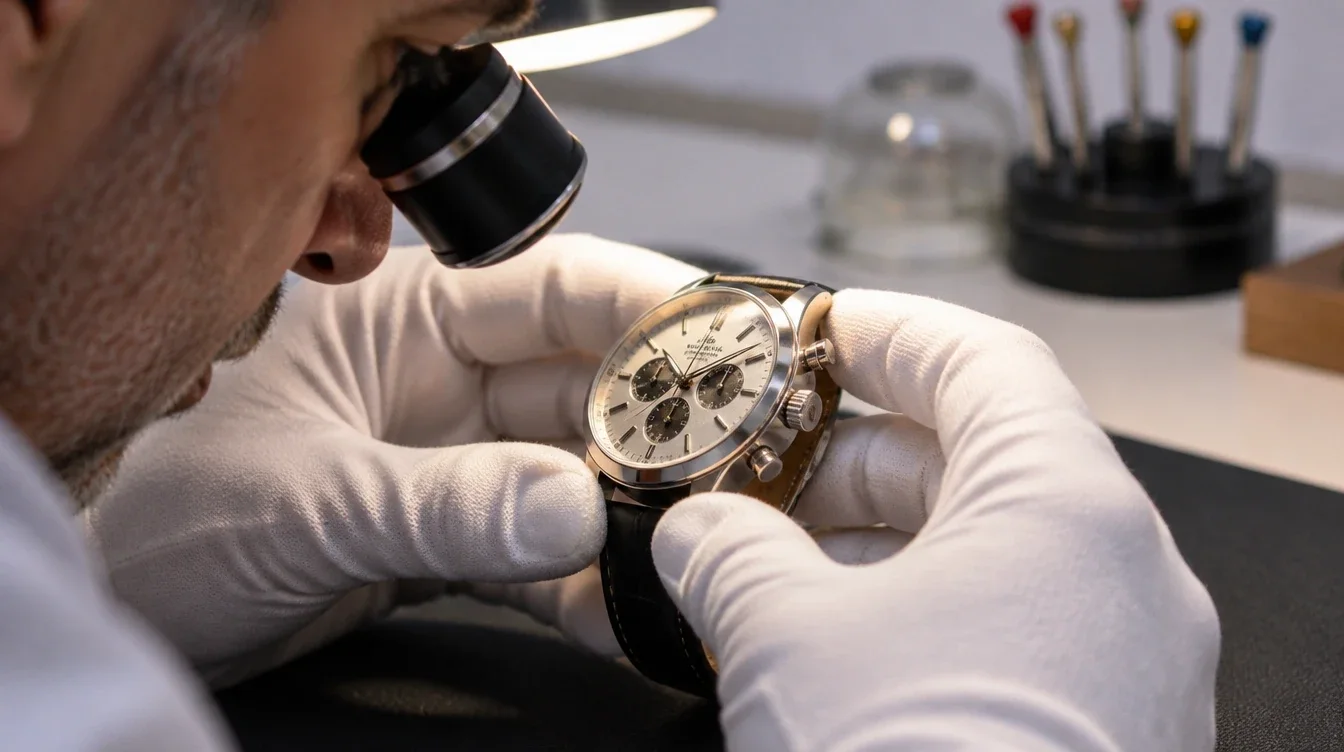
Will chronograph hand calibration Fix Your Watch or Hide a Fault?
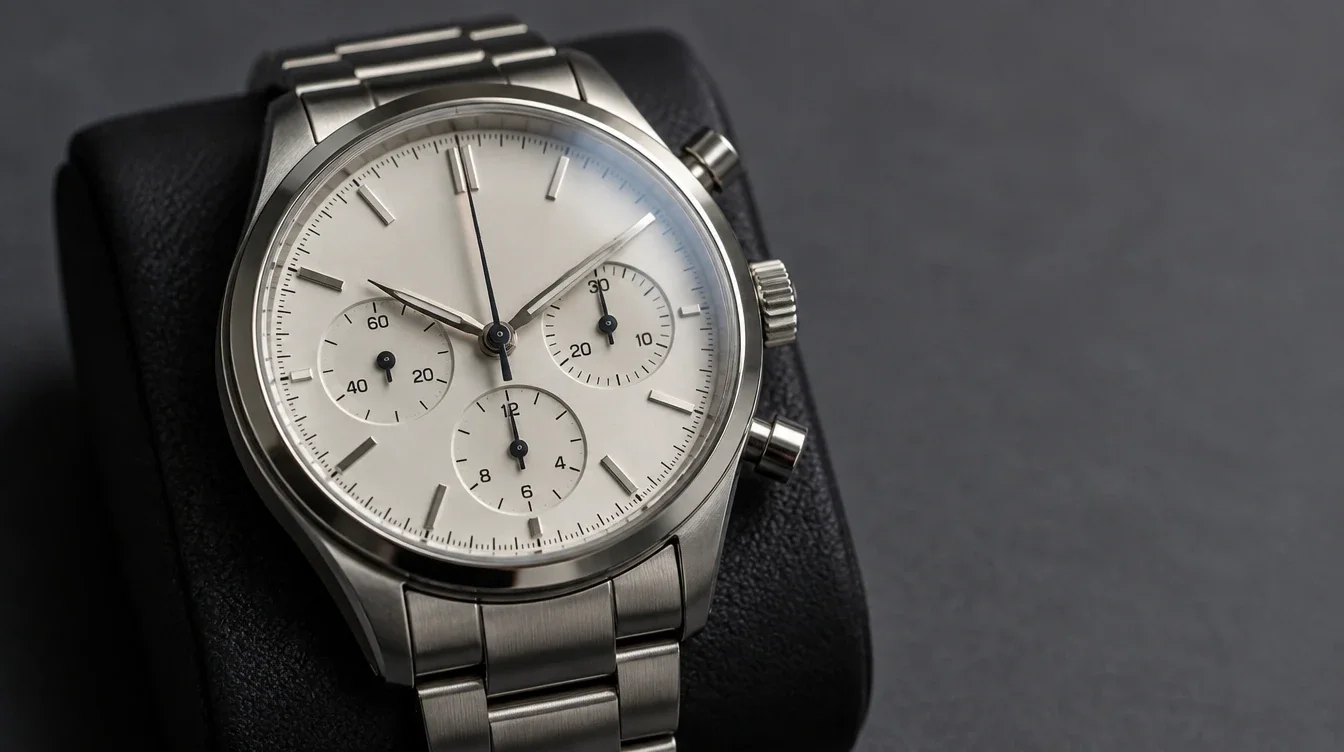
Try chronograph hand calibration only when your watch manual provides a correction procedure for its movement. A mechanical chronograph, a hand that lands in different places, or a stiff pusher needs professional assessment rather than guessed button presses. The useful distinction is whether the stopwatch has a wrong reference position or a fault that prevents a reliable return.
Check which hand is missing zero
Identify the stopwatch hand before trying to correct its position. Many chronographs use the large central hand for elapsed seconds, with a separate hand showing the seconds of ordinary time. Layouts vary, so match the dial to your manual rather than assuming the largest hand always serves the same role.
Its About Time describes these common chronograph functions, including central elapsed seconds and smaller minute or hour counters. A running seconds hand should not return to zero when you reset the stopwatch.
Read the instructions before testing. Follow the stated start, stop, and reset sequence. Do not assume you can reset your watch while the stopwatch runs. Look straight at the dial in clear light. Note which hand misses its mark. Check whether the other counters return to zero.
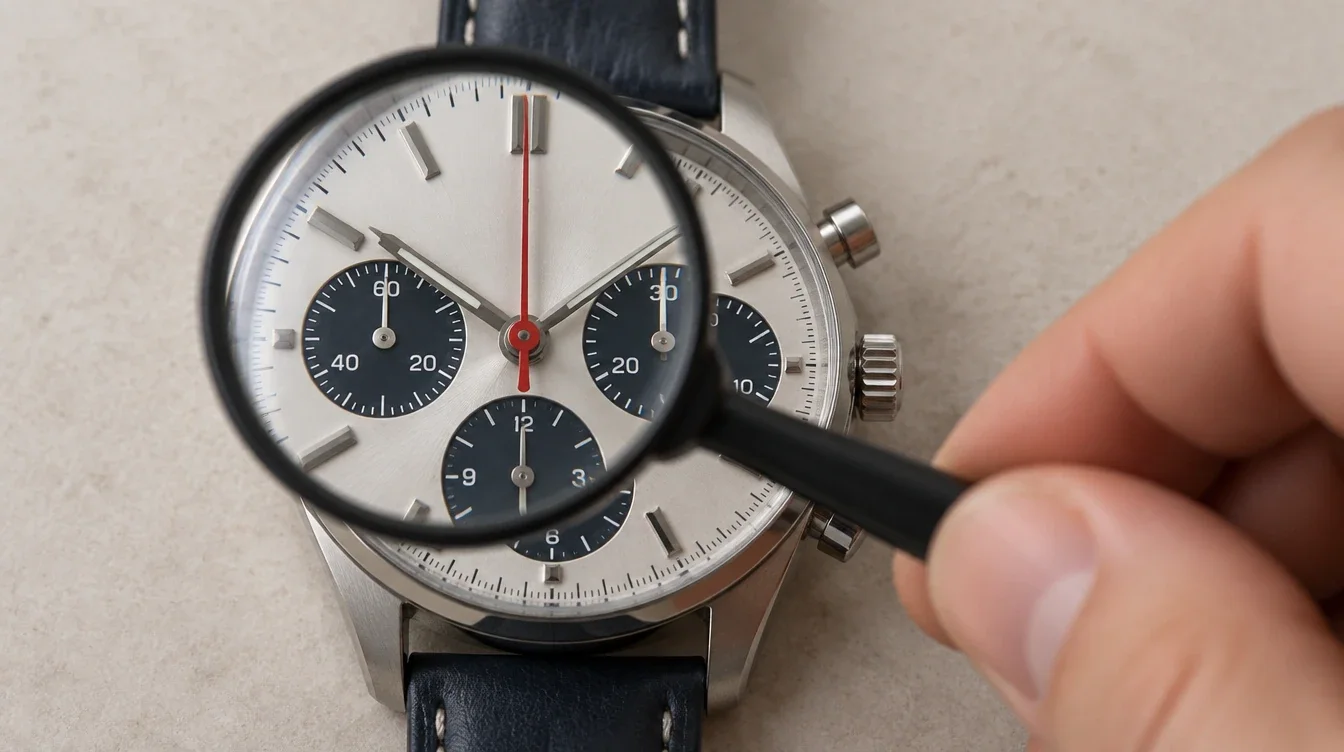
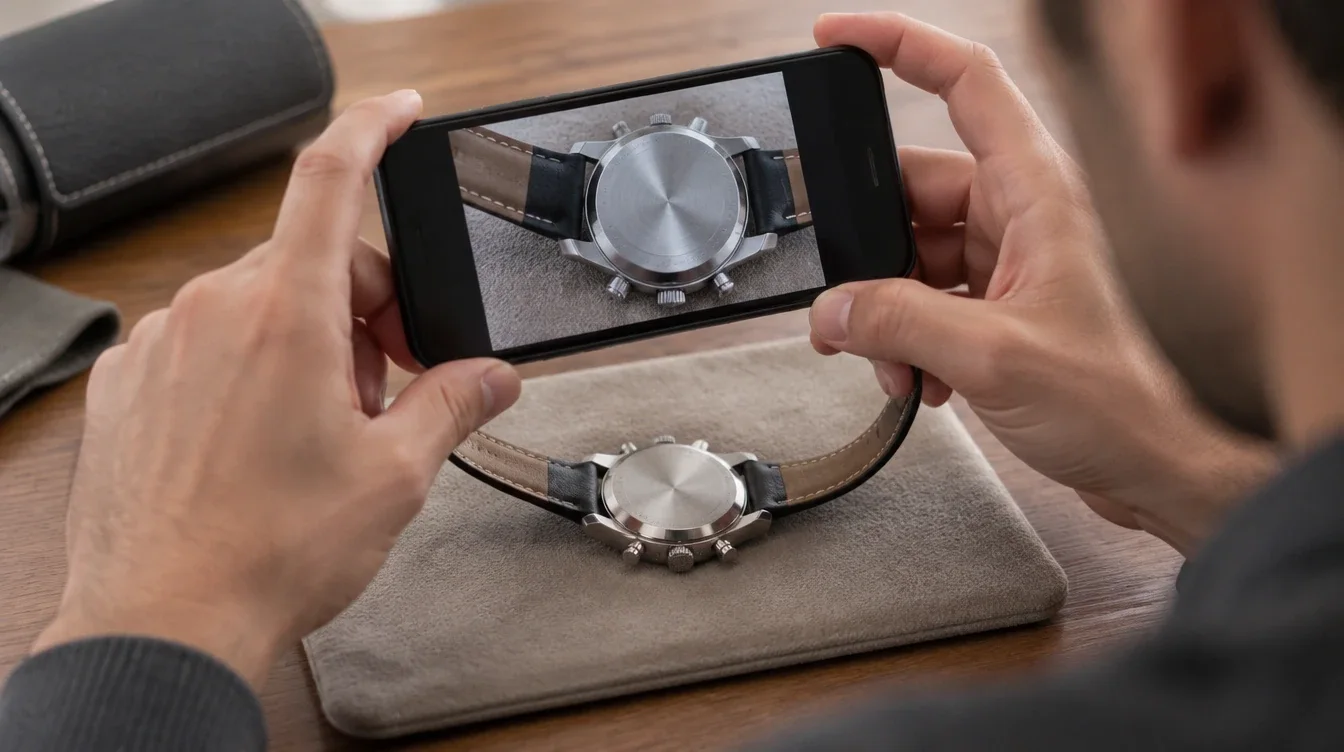
Describe the fault clearly. For example, “the central stopwatch hand rests at the 58 second mark after reset.” That tells a watchmaker more than “the seconds are wrong.” Take a photo if the offset is hard to describe.
First, find out which movement controls the hands. Then search for how to reset chronograph second hand positions.
Match chronograph hand calibration to the movement
The movement determines whether you can adjust the hands from outside the case. A brand name or similar dial layout is not enough. Neither tells you which buttons to press.
Quartz models with a documented correction mode
Some quartz chronographs let you adjust the stopwatch’s reference position. You do this with the crown and pushers. WestWatches describes this distinction and gives steps linked to the Miyota 0S20 movement. Do not use that example as a method for every quartz watch.
If you want to know how to calibrate a chronograph watch, start with the exact model and calibre. Calibre means the movement designation. Look for that information in your paperwork or the manufacturer’s model details, and ask the maker if identification remains unclear.
Do not open the case just to find a number. Instead, send the maker clear photos and any reference printed on the case back.
Mechanical movements and hybrid designs
A mechanical chronograph not resetting to zero needs a different approach from an electronic reference adjustment. Members in this NAWCC discussion of mechanical reset faults describe possible faults with hand attachments and the reset mechanism. These are things a watchmaker can check. The dial alone cannot tell you which fault is present.
Take care with hybrid designs too. WestWatches treats mecha quartz chronographs apart from its ordinary quartz example. Do not choose the steps based on ticking or sweeping alone. Find the calibre and its instructions first.
Once you know the movement, the next clue is how the hand behaves.
Separate a fixed offset from an inconsistent return
If the hand returns to the same wrong spot, check the stated correction steps. If it lands in different spots, have it assessed. Neither pattern alone tells you which part has failed.
The hand returns to the same wrong mark
A hand that rests in one place is easier to record. Imagine a quartz stopwatch hand returning to the same mark just before zero. If its manual gives an adjustment mode, that is a reasonable place to start.
This is an example, not proof that the movement is sound. WestWatches links some quartz offsets to an altered reference position, but also points out faults that need service. A hand can rest neatly off zero without showing you why.
Use chronograph hand calibration only as the instructions describe. It does not rule out every other fault. A recent impact or changed pusher feel changes your next step. Visible damage does too. That holds even if the hand rests in the same spot.
The hand returns to different places
Does the hand stop before zero sometimes and beyond it at other times? Stop changing the settings. Its About Time identifies inconsistent reset positions as a reason for evaluation.
Record what you have already seen rather than repeatedly trying to reproduce it. Mention whether the problem appeared after a short run, a longer run, or an impact. Those details help describe the fault without claiming its cause.
A fixed correction does not make sense when the resting point keeps changing.
Next, check whether the fault began after a battery job.
What an offset after battery replacement tells you
A battery change may help explain a quartz reset problem. When the fault started does not prove its cause. A chronograph not resetting after battery change may need a reference adjustment. Use the one stated for its movement.
WestWatches lists battery depletion or replacement among circumstances associated with misalignment. That is a reason to check the right instructions. It does not mean a battery change always erases a chronograph’s settings.
Did the fault appear after a battery job? Contact that shop first. Explain which hand is off zero. Say whether the offset stays the same. Ask if the work included the movement’s required initialization and hand position checks.

Stick to what you know. “It reset correctly before the visit and now rests at this mark” is useful. “The movement must be broken” claims more than the symptom proves.
For a chronograph not resetting after battery change, check the correct manual next. Does it let you adjust the hands yourself? If so, read the steps before touching the crown.
Use the manual rather than a universal button sequence
To learn how to calibrate a chronograph watch safely, use the exact calibre’s instructions. General guides can explain the idea. They cannot tell you the right controls for an unknown watch.
The guidance here describes different pusher actions and crown positions. Those differences rule out one set of steps for every watch. Do not try each version until one works. No official manual has been established here for your specific watch.
Find the right adjustment section
Look for terms such as stopwatch hand adjustment, reference position, or zero position correction. Check that the manual’s model or calibre matches yours. Read all the steps before you start. Include the steps for leaving adjustment mode.
Confirm the crown position
Use the manual’s diagram to find the right crown position. Do not assume “pull the crown out” always means the farthest setting. Stop if the crown does not move as described. Ask for help rather than pulling harder.
Once you know the crown position, check which hand is selected.
Confirm which pusher selects each hand
Some instructions have separate steps to select a counter and move it. Follow those steps closely. Before each press, check which hand should move and how.
If the wrong hand moves, do not guess what to do. Check the instructions and model match before you go on.
Complete only the documented adjustment
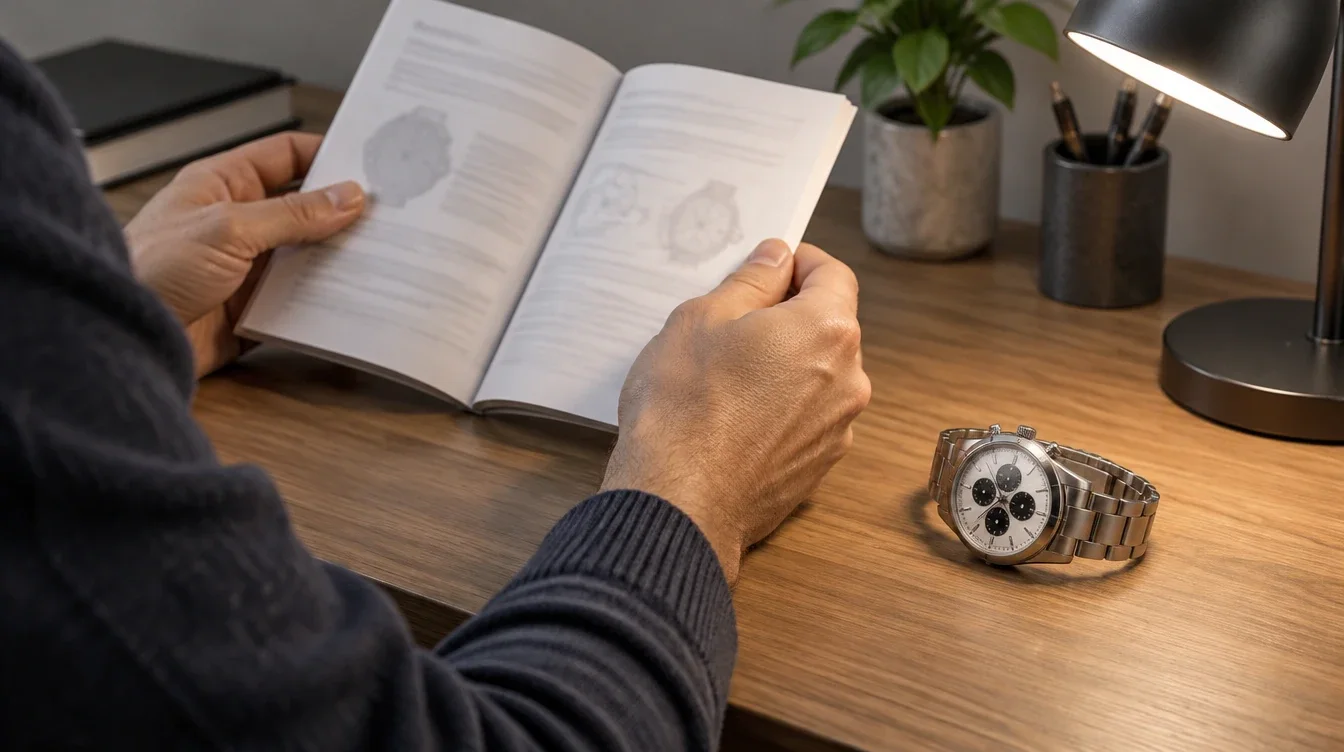
Work on a dry, stable surface with good light. Follow the manual’s steps to enter adjustment mode. Adjust the stated hand, then follow the steps to leave that mode. Keep the case closed throughout.
The Miyota 0S20 example from WestWatches warns against returning the crown while the hand is still moving. That instruction applies to the stated movement. It does not show that every calibre works the same way.
End chronograph hand calibration with a function check. A hand that points up is not enough.
Check whether the correction holds
The correction must hold through the manual’s normal start, stop, and reset sequence. A hand on zero while still in adjustment mode does not prove that.
Once you leave adjustment mode, run the check in the manual. Watch the central hand and each stopwatch counter it names. Stop if a control feels wrong or a hand moves erratically.
Note where the hand rests before correction and after reset. Write down which steps you followed. Add whether normal timekeeping changed as you worked. Do not keep testing just to gather more notes.
Compare two illustrative outcomes
Imagine a quartz watch whose hand rests at 58 seconds before adjustment. After the stated steps, it returns to zero during the manual’s check. That result supports ending the adjustment and watching normal use. Do that rather than press more buttons.
Now imagine a second watch whose hand reaches zero once. On the next reset, it misses zero again. The fix has not held. Inconsistent reset action warrants evaluation, even if regular timekeeping appears normal.
These examples show how to choose a next step. They are not customer cases or test results. What matters is whether the result holds, not how good the first reset looked.
If the offset returns, take your notes to a professional instead of making chronograph hand calibration a routine workaround.
Recognize when adjustment should give way to service
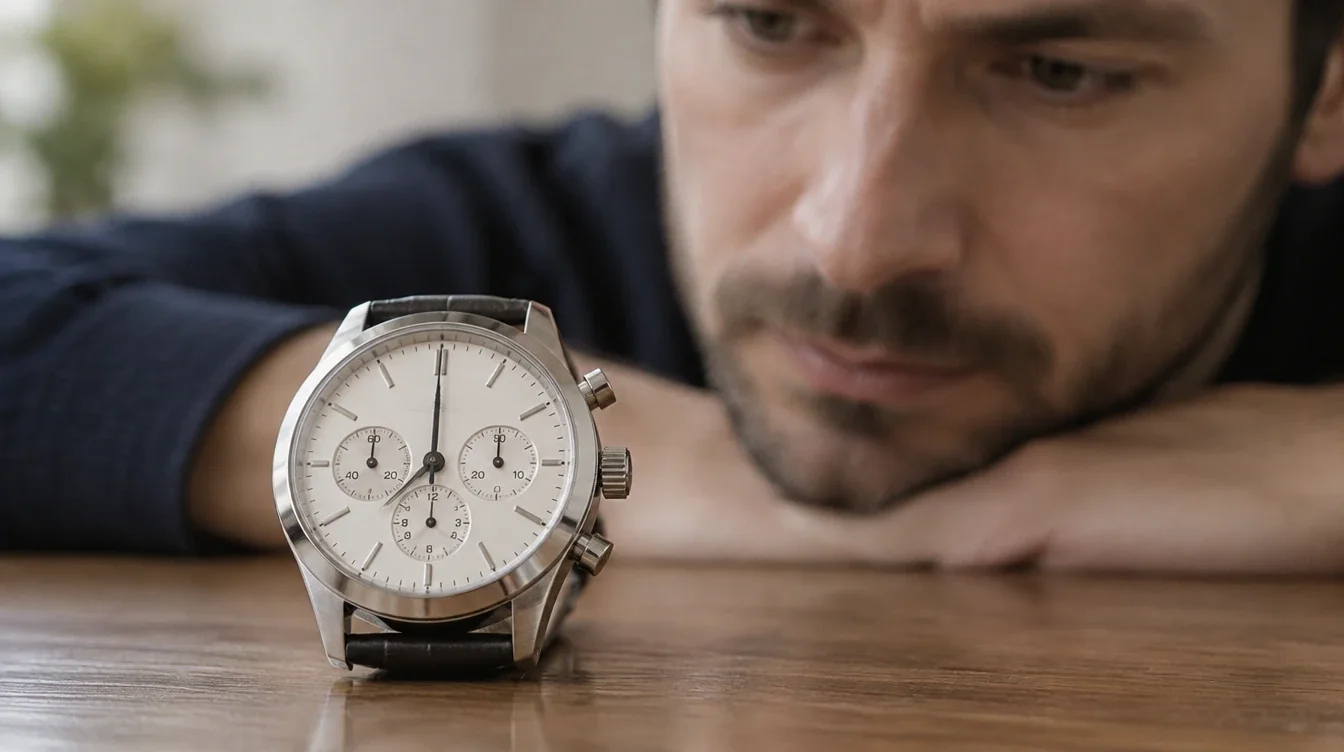
Have the watch checked if its reset varies or the controls feel wrong. Do the same if the manual gives no owner correction that applies. The answer to “when does a chronograph need servicing” rests on two things. These are the symptoms and movement type, not the visible gap alone.
Its About Time flags stiff or loose pushers, erratic engagement, unexpected stopping, moisture, and recent impact. Do not force a reluctant button. Visible condensation deserves prompt attention rather than another alignment attempt.
For a mechanical chronograph not resetting to zero, ask for a diagnosis before you approve work. The NAWCC discussion lists several possible causes. These include loose hand attachments and faults around reset components. Forum advice cannot replace a check of your movement.
Nor should forum suggestions about internal adjustments become home repair instructions.
Give the watchmaker a useful account
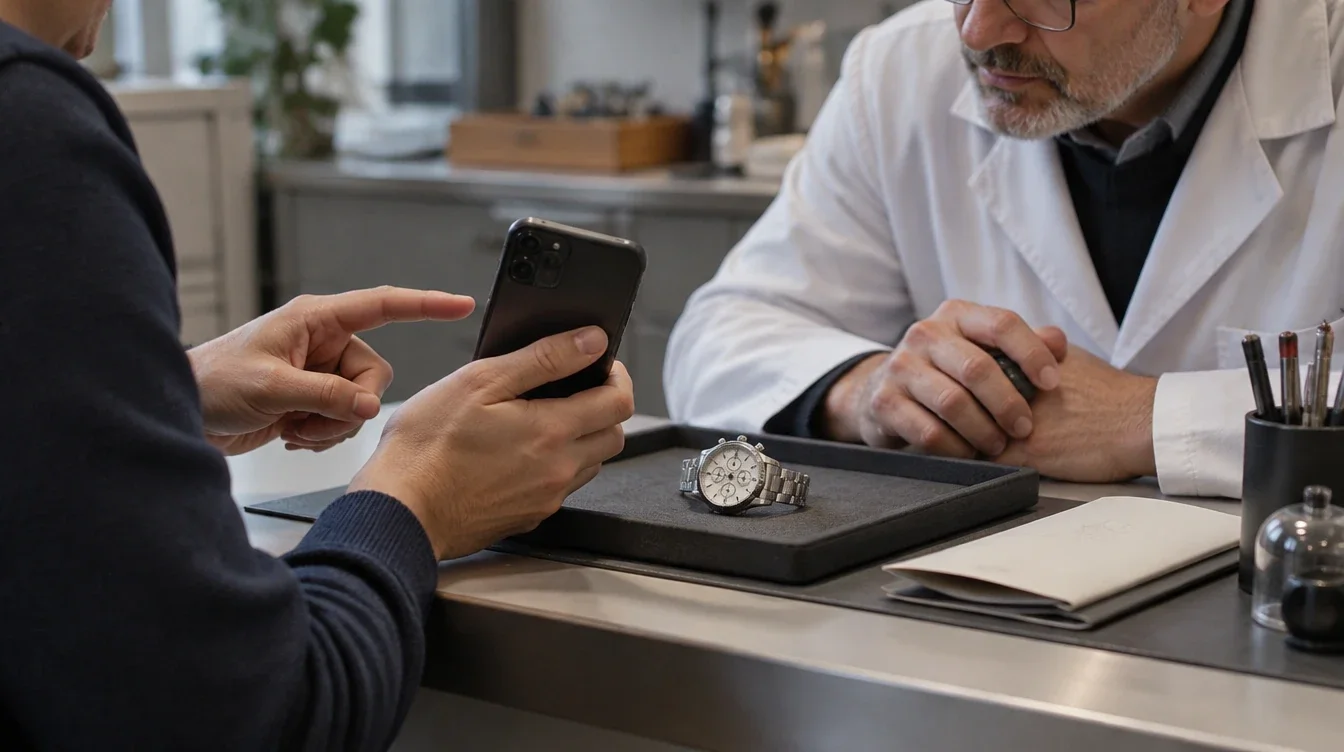
Bring the model reference, service paperwork, and photos. Explain when you first saw the offset and whether it stays the same. Tell the watchmaker which adjustment steps you tried. Mention any impact, even if the watch still keeps time.
Ask if the proposed work fixes hand position alone or an underlying fault. Have the shop explain what it found and what work it plans. Ask how it will check the reset function afterward.
Asking for an inspection does not mean you approve every repair. Agree on how the shop will contact you before leaving the watch. Ask for its work plan in writing. That helps you tell a position correction from new parts or broader movement service.
That conversation is more useful than requesting chronograph hand calibration without describing the symptom. A clear account also helps answer the common questions below.
Questions owners ask before correcting the hands
Most owner questions share one concern. Does the next step suit the watch’s movement and symptoms?
How do I find how to reset chronograph second hand instructions?
Find the maker’s manual for your exact model or calibre. Look for its stopwatch hand adjustment section. Unsure which model you have? Ask the maker or a watchmaker before following a generic video.
Why does the watch keep time while the stopwatch resets badly?
Its About Time explains that the chronograph function can develop problems while ordinary timekeeping continues. Keeping correct time does not prove that the reset mechanism works as it should.
Can I correct an automatic chronograph with its pushers?
Do not use a quartz hand adjustment sequence on an automatic chronograph. Have a displaced mechanical stopwatch hand checked rather than assuming it has an electronic correction mode.
What signs answer when does a chronograph need servicing?
Have the watch checked if reset positions vary or pushers feel wrong. Failed start or stop actions also need a check. Seek professional help if the offset stays after the correct stated steps.
Get the right fix before pressing again
Choose chronograph hand calibration only if the movement supports it. The symptoms must also fit the manual’s owner correction steps. Start with the right hand and the right manual. Keep clear notes on the offset.
A hand that returns to the same spot after adjustment gives useful evidence. Stop if the fault returns or a pusher feels stiff. Stop too if you are unsure which movement you have.
Find your model reference today and check its official instructions. If the steps are unclear or the fix does not hold, book a watchmaker’s assessment. Bring your notes and ask for a diagnosis before you agree to a repair.