Diamond Earring Security Backs and Settings: Why Your Studs Disappear More Than Your Rings
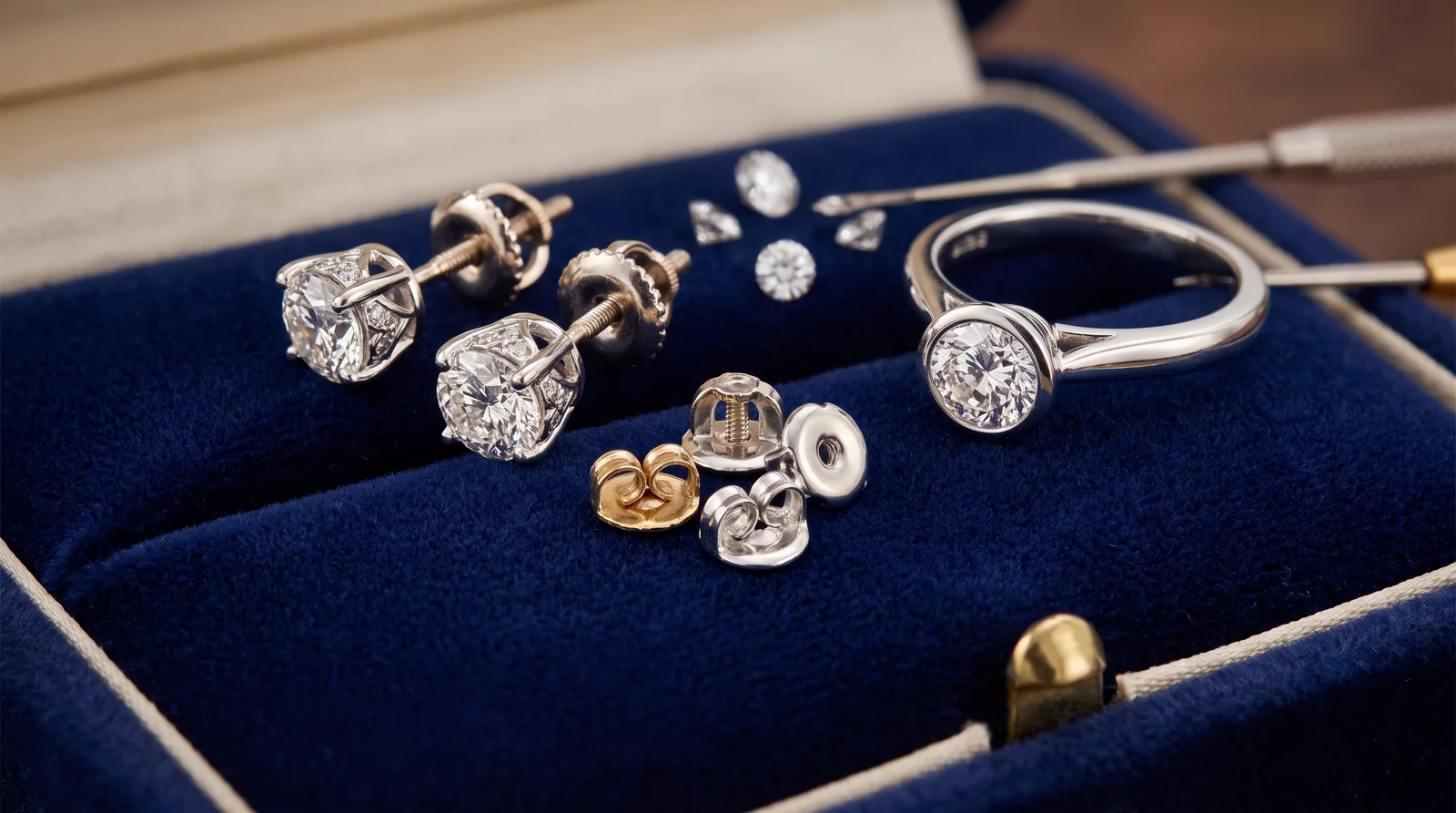
Diamond earring security backs and settings matter more than most people realize, because earrings fail differently than rings do. A ring stays on your hand thanks to sizing and grip. An earring depends entirely on a small metal mechanism behind your ear, and that mechanism wears out, loosens, or gets bumped loose without you noticing. The fix involves choosing the right back for your lifestyle, understanding how your setting protects the stone itself, and catching wear signs before you lose an earring for good.
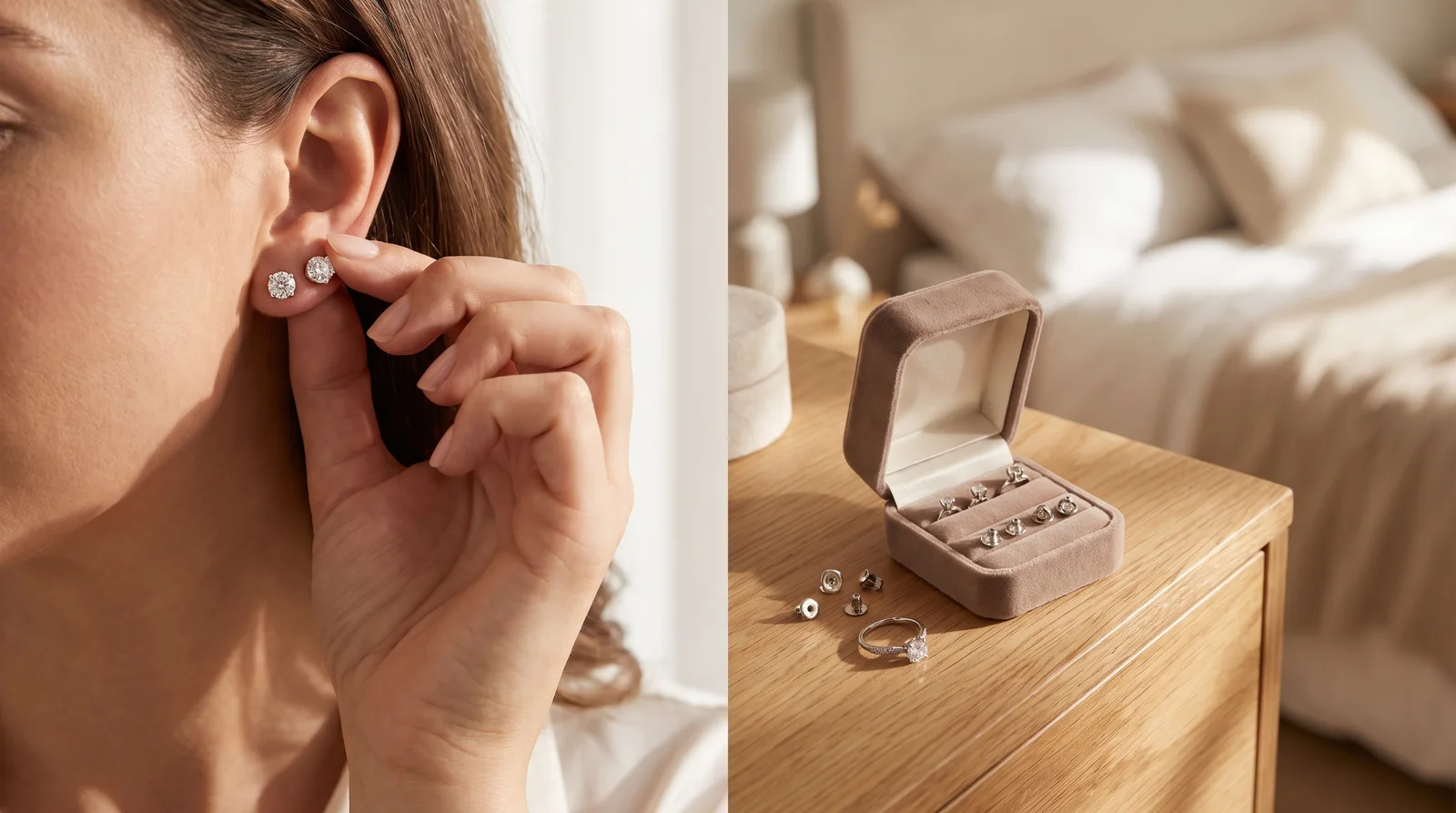 The backing you choose determines whether your earrings survive a normal day of errands, workouts, and wardrobe changes. Not all backs are built for the same kind of movement, and picking one designed for occasional wear when you actually wear studs daily is a common and costly mistake.
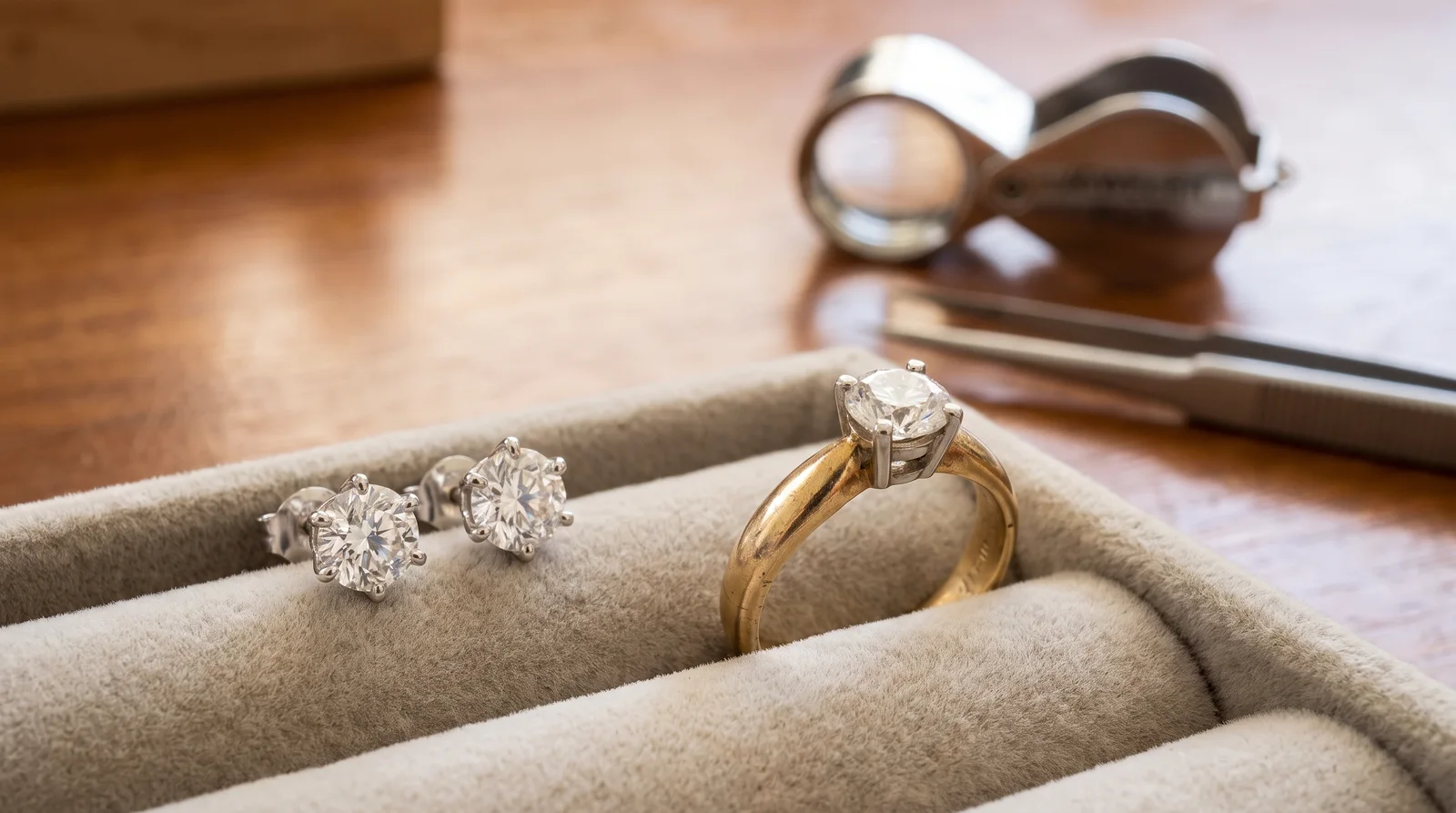 Diamond stud settings durability works on different physics than ring settings. Earrings hang freely, while rings absorb direct impact against surfaces constantly. This changes what kind of damage each is prone to, and how you should inspect them.
  Screw back earrings vs push back comfort isn't a simple win for one side, because comfort depends on how long you wear studs and how sensitive your ears are. Both styles can feel completely comfortable when properly fitted, and both can feel wrong when they're not.
Screw backs sit slightly thicker against the ear due to the threaded mechanism, which some wearers notice during the first few days of wear. Most people adjust within a week and stop feeling it entirely. Push backs feel lighter immediately since there's less bulk behind the lobe, which is part of why they remain popular for sensitive or newly pierced ears.
The comfort question really comes down to fit rather than mechanism type. A screw back that's properly sized won't press uncomfortably, and a push back that's too tight will bother you regardless of style. If comfort is your main concern, prioritize proper sizing over backing type first, then weigh security needs second.
With comfort and security both factored in, a few common questions still come up regularly from people shopping for new studs.
Screw back earrings vs push back comfort isn't a simple win for one side, because comfort depends on how long you wear studs and how sensitive your ears are. Both styles can feel completely comfortable when properly fitted, and both can feel wrong when they're not.
Screw backs sit slightly thicker against the ear due to the threaded mechanism, which some wearers notice during the first few days of wear. Most people adjust within a week and stop feeling it entirely. Push backs feel lighter immediately since there's less bulk behind the lobe, which is part of why they remain popular for sensitive or newly pierced ears.
The comfort question really comes down to fit rather than mechanism type. A screw back that's properly sized won't press uncomfortably, and a push back that's too tight will bother you regardless of style. If comfort is your main concern, prioritize proper sizing over backing type first, then weigh security needs second.
With comfort and security both factored in, a few common questions still come up regularly from people shopping for new studs.
Why Earrings Disappear More Often Than Rings Do
Rings and earrings fail in different ways. That's why you probably know someone who lost a diamond stud, but nobody who lost a diamond ring off their finger. A ring wraps around your finger with constant contact and sizing tension holding it in place. An earring only touches your ear at two small points: the post going through the lobe and the backing clamping behind it. That small contact area is the whole problem. Gravity constantly pulls down on an earring. Every time you pull off a sweater, adjust a scarf, or run a brush through your hair, you introduce a snag risk that a ring never faces. Rings get scratched and worn down over years. Earrings just fall off, often without you feeling it happen. Some people feel sure they lost an earring at a specific event. Often it slipped off hours earlier, during a car ride or while removing a coat. There's no dramatic moment. It just goes quiet. This is exactly why the backing matters as much as the diamond itself. Understanding the mechanisms available helps you match the back to how you actually live. That's the next thing worth breaking down.Diamond Earring Backs Security Everyday Wear Demands
The backing you choose determines whether your earrings survive a normal day of errands, workouts, and wardrobe changes. Not all backs are built for the same kind of movement, and picking one designed for occasional wear when you actually wear studs daily is a common and costly mistake.
Push Backs and Their Real-World Limits
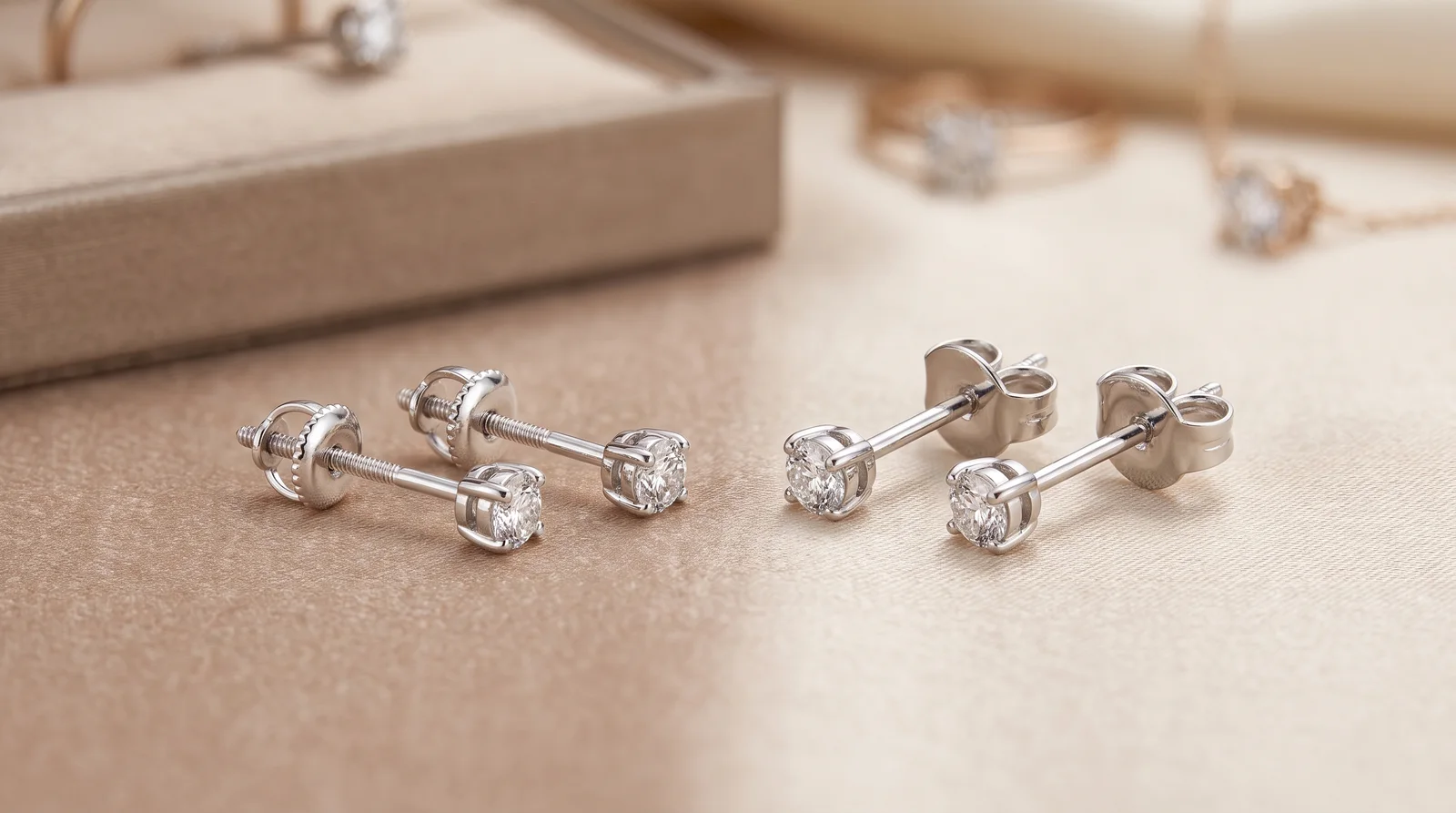
Push backs, sometimes called friction backs or butterfly backs, slide onto a straight post and hold through simple tension. They're fast. You can put them on in seconds without looking in a mirror. For light studs worn a few times a week, they work fine. The problem shows up with repeated use. Each time you remove and reattach a push back, the metal opening stretches slightly. Over months of daily wear, that tension weakens. Add hand lotion, hair product, or sweat from a workout, and the grip loosens further. A push back that felt snug in January can feel noticeably loose by summer.Screw Backs for Daily Security
Screw backs use a threaded post. The backing twists into place instead of sliding on. This creates a mechanical lock rather than relying on friction alone. Once tightened, it takes deliberate effort to remove. That's exactly why jewelers recommend them for larger or higher value diamond studs. The tradeoff is speed. Screwing a back into place takes a few extra seconds compared to a push back, and the threads need occasional cleaning to keep turning smoothly. For someone commuting, exercising, or wearing studs from morning to night, that small inconvenience is worth the added security.Guardian Backs and Locking Mechanisms
Guardian backs add a second layer of protection on top of a standard post system, often using a spring-loaded clip or secondary latch that engages after the initial backing is in place. Locking backs work similarly, requiring you to press a release mechanism before the backing can slide off. These options exist specifically for people who've lost an earring before and don't want a repeat. They're bulkier than a standard push back and take longer to master, but for sentimental pieces or larger stones, that extra step is cheap insurance. If you're deciding between backing types for studs specifically, our diamond stud earring size guide walks through how post length and backing size should match your ear for a secure fit. Backing choice solves the loss problem at the point of contact, but it doesn't address what happens to the diamond itself inside its setting, which brings up a separate concern entirely.Best Earring Backs for Diamond Studs Based on Stone Size
The best earring backs for diamond studs depend heavily on carat weight, because heavier stones put more strain on whatever mechanism holds them in place. A 0.25 carat stud and a 1.5 carat stud are not interchangeable when it comes to backing needs.Small to Medium Studs Under One Carat
For studs in the quarter carat to half carat range, a well made push back from solid gold or platinum usually holds securely for daily wear. The lighter weight means less gravitational pull on the friction mechanism, so the standard slide on backing has less work to do.Larger Studs Above One Carat
Once you get above one carat, screw backs or locking backs become worth the extra effort. Heavier stones create more leverage against the post, and a friction back alone may not resist that pull consistently through a full day. Jewelers commonly pair larger studs with disc style or jumbo backs too, since a wider surface area distributes weight more evenly and helps prevent the earring from tilting forward. Stone size guides backing choice, but it also affects how the setting itself needs to grip the diamond, which is where earrings and rings genuinely part ways.Diamond Stud Settings Durability Compared to Ring Settings
Diamond stud settings durability works on different physics than ring settings. Earrings hang freely, while rings absorb direct impact against surfaces constantly. This changes what kind of damage each is prone to, and how you should inspect them. How Ring Settings Take Damage
A ring setting faces constant contact. Prongs get knocked against doorframes, countertops, and steering wheels dozens of times a day. That repeated impact is what bends prongs and eventually chips stones over time. If you've ever wondered why a diamond ring can crack or chip under normal wear, our article on whether a chipped diamond can be repaired covers exactly how prong wear leads to that kind of damage.How Earring Settings Take Damage Differently
Earring settings rarely get struck the same way, since they hang below the ear away from most contact. Their vulnerability comes instead from vibration and repeated small movements throughout the day. Walking, talking, and simply moving your head creates constant micro motion. Over years, this can gradually loosen prongs, even without a single hard impact.Open Back Versus Closed Back Settings
Setting style also affects durability. Open back settings let light pass through the bottom of the diamond, boosting brilliance, but they expose the stone's underside to lotion, dust, and buildup. Closed back settings protect the stone's pavilion but block some light return, slightly dulling sparkle in exchange for protection. This tradeoff mirrors a similar design choice in rings. Our piece on why diamond rings have holes explains how open settings maximize brilliance at the cost of some added exposure, and the same principle applies directly to stud earrings. Metal choice plays into this too. Softer metals wear down faster under the constant micro vibration earrings experience, so if you're deciding between karat options, our comparison of 14k versus 18k gold for daily wear explains how alloy composition affects prong strength over years of use. Once you understand how settings wear differently in earrings, the next logical step is knowing what warning signs to watch for before a stone actually falls out.Diamond Earring Loss Prevention Starts With Reading Warning Signs
Diamond earring loss prevention comes down to catching mechanical wear early. Almost every lost stud or lost diamond gave some warning first. Most people just don't know what to look for.Signs Your Backing Needs Replacing
If a push back slides on loosely instead of gripping with resistance, that's your first sign. A backing should require a small amount of pressure to seat properly. If it spins freely on the post or falls off with a gentle tug, the metal has stretched beyond usefulness. Screw backs that feel gritty or catch while turning usually have debris in the threads, and cleaning them often restores smooth function. If turning stays difficult after cleaning, the threads themselves may be worn and the backing should be replaced.Signs Your Setting Needs Attention
Run your fingernail gently across the top of a prong setting. If a prong feels sharp, snagged, or noticeably raised compared to the others, it may have bent or lifted from its original position. A stone that looks slightly tilted compared to how it originally sat is another red flag. Any of these signs mean a trip to a jeweler for prong retipping or tightening before the stone works its way loose entirely.A Simple Habit That Prevents Most Losses
Check your backs and settings once a month. It takes under a minute per pair. Gently wiggle the stud and confirm the backing resists movement rather than sliding freely. This single habit catches most problems while they're still cheap and easy to fix, well before an earring falls off somewhere you'll never find it. Reading these signs early is the difference between a quick jeweler visit and a permanent loss. That naturally leads into how backing choice affects daily comfort too.Screw Back Earrings vs Push Back Comfort for All Day Wear
Screw back earrings vs push back comfort isn't a simple win for one side, because comfort depends on how long you wear studs and how sensitive your ears are. Both styles can feel completely comfortable when properly fitted, and both can feel wrong when they're not.
Screw backs sit slightly thicker against the ear due to the threaded mechanism, which some wearers notice during the first few days of wear. Most people adjust within a week and stop feeling it entirely. Push backs feel lighter immediately since there's less bulk behind the lobe, which is part of why they remain popular for sensitive or newly pierced ears.
The comfort question really comes down to fit rather than mechanism type. A screw back that's properly sized won't press uncomfortably, and a push back that's too tight will bother you regardless of style. If comfort is your main concern, prioritize proper sizing over backing type first, then weigh security needs second.
With comfort and security both factored in, a few common questions still come up regularly from people shopping for new studs.
Frequently Asked Questions About Earring Backs and Settings
How often should I replace earring backs?
Most push backs last one to two years with daily wear before the metal stretches enough to affect grip. Screw backs last considerably longer since they rely on threading rather than tension, often five years or more with basic maintenance.Why do my earrings feel loose even with a screw back?
This usually means the threads have worn down from years of use, or debris has built up preventing a full, tight twist. Cleaning the threads with a soft brush often solves it, but persistent looseness means the backing needs replacing.Can a jeweler upgrade my push backs to screw backs?
In most cases, yes, if your earring posts are compatible with threaded backings. A jeweler can assess whether your existing posts can be swapped or need replacement to accommodate a screw back safely.Does sleeping in earrings damage the setting?
Sleeping in studs adds friction against a pillow all night, which can gradually loosen prongs over months or years. It won't cause sudden damage, but removing studs before bed reduces long-term wear on the setting.What causes a diamond to fall out of a stud earring?
Most stones fall out due to bent or worn prongs that no longer hold the diamond snugly, often from years of unnoticed vibration and movement. Regular prong checks catch this before the stone actually separates from the setting.Getting This Right Protects More Than Just the Diamond
Losing a diamond stud rarely happens because of one dramatic moment. It happens quietly, through a backing that stretched a little more each month or a prong that loosened without anyone noticing. Paying attention to your backing type, matching it to your stone size, and running a quick monthly check takes almost no effort. Compare that to the cost of replacing a diamond that's gone for good. If it's been a while since a jeweler looked at your studs, get that fixed before your next busy week, not after.Share this articleLink copied