The Diamond Stud Earring Size Guide That Saves You From an Expensive Mistake
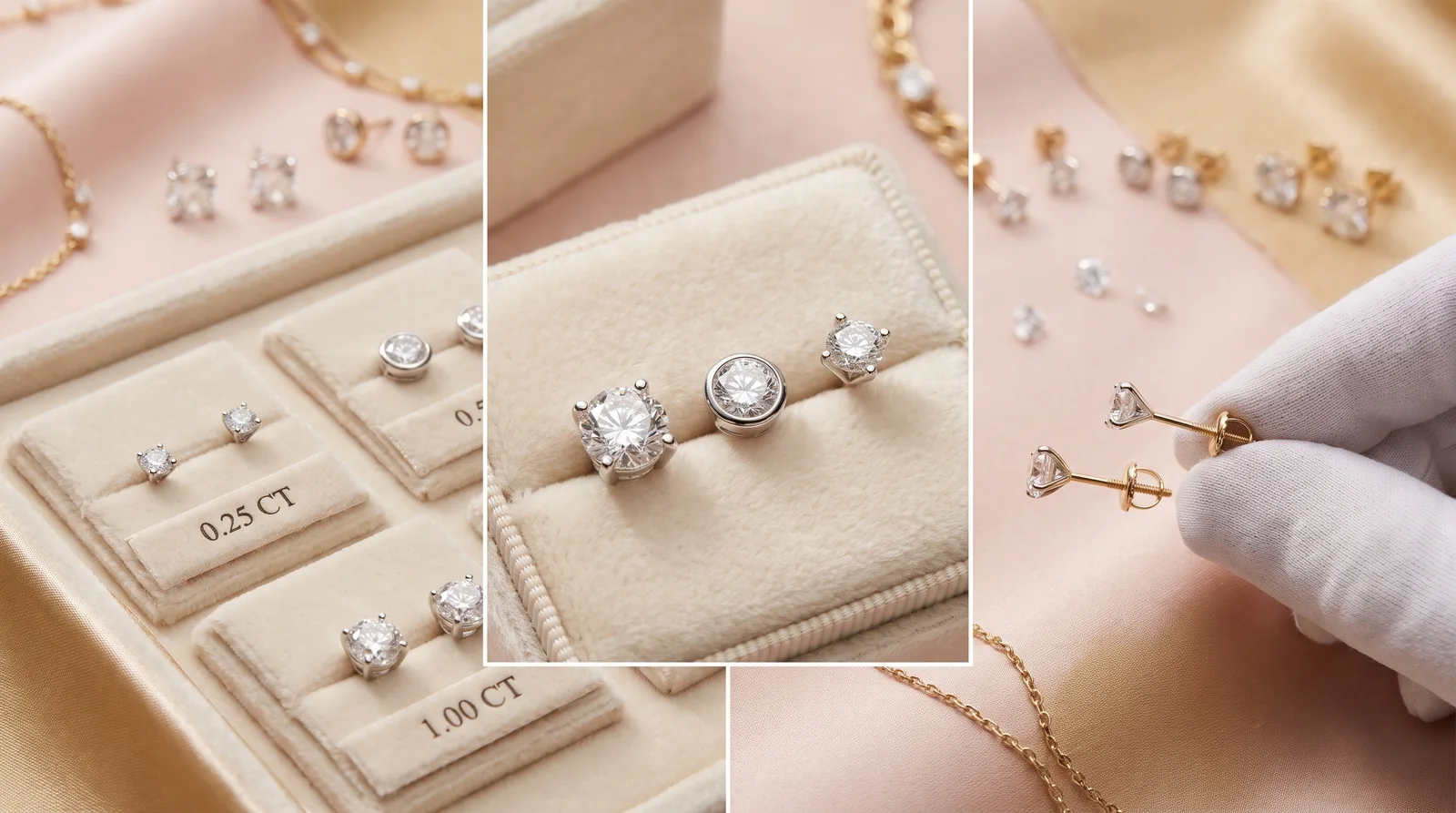
Buying diamond studs feels simple until you're staring at a screen full of carat weights and setting names you've never heard of. This diamond stud earring size guide answers the question that actually matters: what size and setting should you buy, and which back will keep them on your ears. No fluff, just the decisions that count.
Short answer: for everyday wear, most women do best with a 0.30 to 1.00 total carat weight pair in a four prong or martini setting, secured with a screw back if the studs are heavier than half a carat total. Now let's get into why.
What Does Diamond Stud Earring Size Actually Mean
Diamond stud size is almost always listed as total carat weight, or TCW. This is the combined weight of both earrings, not one. This trips up more buyers than any other part of the process. A pair listed as "1 carat TCW" gives you roughly 0.50 carats per ear, not a full carat in each lobe. If you want a full carat in each ear, search for "1 carat each" or a 2.00 TCW pair. That is a very different price point.
Carat weight does not map perfectly onto millimeter size. Diamond cut and depth affect how large a stone looks from the front. Still, there are reliable averages jewelers use every day. A 0.25 carat round stone measures close to 4.1mm. A 0.50 carat round runs about 5.1mm. A full carat round brilliant sits near 6.4mm. Those numbers matter more than the carat label itself, since millimeter size is what people actually see on your ear.
Once you understand how carat weight translates to visible size, the next step is matching that size to how you actually live and dress.
Diamond Stud Earring Size Chart for Every Lifestyle
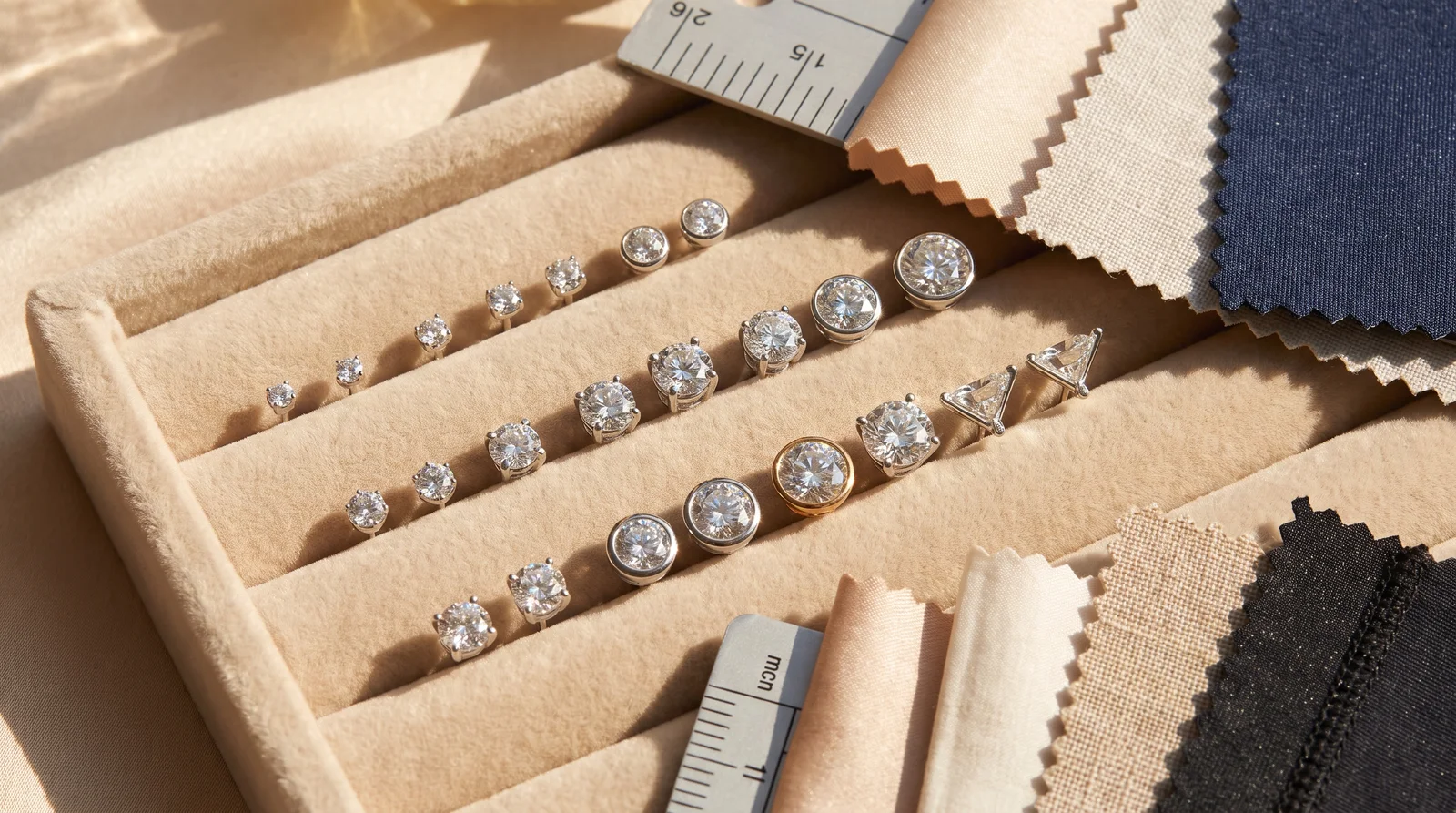
The right size depends on your ear proportions, your piercing setup, and how often you wear the studs. Here's a practical diamond stud earring size chart based on total carat weight per pair.
0.20 to 0.50 Total Carat Weight
This range covers roughly 3mm to 5mm per stone. It works well for second or third piercings, cartilage placements, and anyone who wants a subtle daily sparkle. Small studs also suit narrower earlobes. Oversized stones on a small lobe can look top heavy and tug at the piercing over time.
0.50 to 1.00 Total Carat Weight
This is the size most jewelers call the everyday sweet spot. At roughly 5mm to 6.5mm total, these studs read as noticeable without looking like special occasion jewelry. If you wear one pair of diamond earrings for work, weekends, and dinner out, this range covers all three without feeling wrong anywhere.
1.00 to 2.00 Total Carat Weight
Studs in this range start to feel more like a statement, particularly past 1.50 TCW. They still work daily on larger lobes. On smaller ears, though, they can pull forward or feel heavy by the end of a long day. This is where setting choice starts to matter as much as size, which we'll get into shortly.
2.00 Total Carat Weight and Beyond
This is red carpet territory, and it comes with real trade offs. Heavier stones need sturdier settings and often benefit from a bezel or double prong to prevent tilting. Most women reserve this size for special occasions rather than daily rotation, simply because comfort declines as weight increases.
Once you've settled on a size range, the setting you choose will shape how that size actually looks and feels on your ear.
Prong vs Bezel vs Martini Setting: Which One Fits Your Life
The setting controls security, sparkle, and comfort just as much as carat weight does, so this decision deserves real attention. Comparing prong vs bezel vs martini setting styles side by side makes the trade offs obvious fast.
Prong Settings
A prong setting uses three or four thin metal claws to hold the diamond, leaving most of the stone exposed to light. This is why prong set studs tend to sparkle the most of the three options. Four prong settings, sometimes called basket settings, offer solid security and a classic silhouette that suits almost any diamond shape. Three prong versions expose slightly more of the stone but carry a touch less security. Most jewelers recommend keeping three prong studs under about 1.5 carats per ear. Prongs can snag on scarves or hair over the years, so it helps to get a yearly check to catch any bending before it becomes a problem.
Bezel Settings
A bezel setting wraps a continuous rim of metal around the diamond's entire edge. It's widely considered the most secure of the three styles. There are no claws to catch on sweaters or snag in hair, which makes bezel studs a favorite for anyone with an active routine or small children who like to grab earrings. The trade off is light exposure. Because metal covers part of the stone's crown, bezel set diamonds sparkle a bit less than prong set ones. They do tend to look larger from the front, since the rim visually extends the diamond's edge. That's a nice bonus if you're working with a smaller carat weight.
Martini Settings
A martini setting is a three prong, cone shaped mount. It's narrower at the base and lets the diamond sit low and close to the earlobe. Martini setting diamond earrings are popular because they reduce forward tilt, which matters more as carat size climbs. A heavier stone in a basket setting can droop noticeably by midday. The same stone in a martini setting stays upright, since its weight sits closer to the piercing itself. If you're shopping for the best diamond stud setting for everyday wear at a slightly larger carat size, martini is worth serious consideration. For a deeper look at how these mounts affect apparent diamond size, this piece on why a diamond can look smaller after setting breaks down the optics well.
Setting choice narrows down naturally once you know your carat range and your daily habits, but there's one more decision that determines whether your studs stay on your ears at all.
Screw Back vs Push Back Earrings: Which Keeps Your Studs Secure
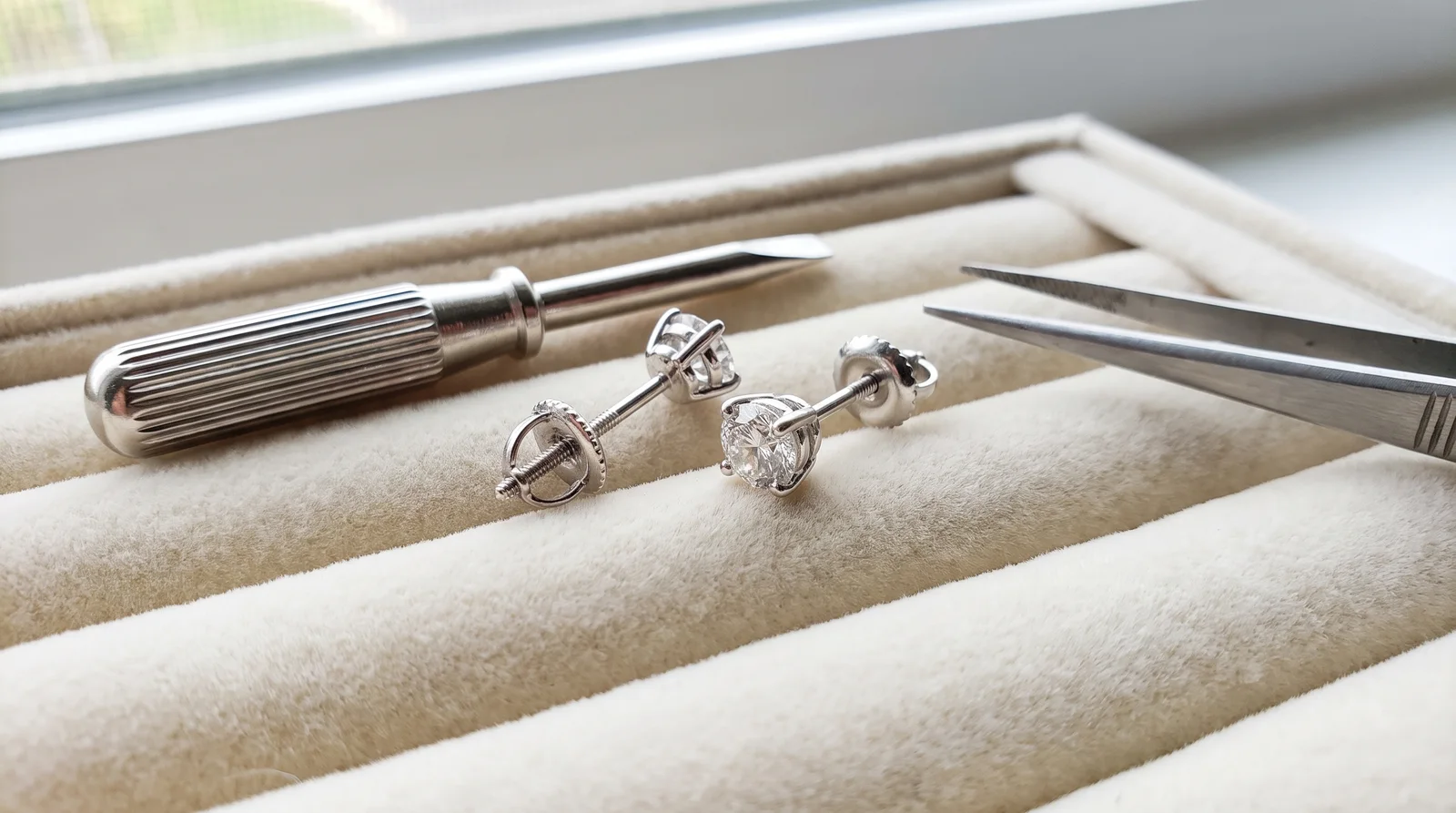
Screw back earrings use a threaded post that twists into a matching back. Push back earrings rely on friction alone to hold the stud in place. For diamond studs over about half a carat total weight, screw backs are the safer choice, full stop. The added weight of a larger stone puts more pressure on a friction back. Pressure plus gravity over a full day is exactly how push backs work loose without you noticing.
Screw back vs push back earrings really comes down to stone weight and risk tolerance. Push backs are easier to put on and take off, which appeals to people who change earrings often or have limited hand dexterity. But they offer less holding power, and a loose diamond stud is one bump away from disappearing into a carpet or a drain. For studs under about a quarter carat each, push backs are usually fine. Past that, the security trade off stops making sense.
If you're asking what are the most secure earring backs for diamond studs specifically, look at locking screw backs or the newer "guardian" style backs some jewelers now offer, which combine a screw mechanism with a wider surface to prevent tilting. These matter even more for travel, since studs get bumped and jostled far more in transit than they do at home.
Back type is a small detail with a big consequence, and it pairs directly with the size decision you've already made.
What Carat Diamond Studs Should I Get Based on How I Actually Live
The honest answer to what carat diamond studs should I get depends less on trend and more on your daily routine, your piercing, and your budget ceiling. If you wear earrings every single day and rarely take them out, 0.50 to 1.00 TCW in a martini or four prong setting with a screw back covers nearly every situation without demanding much thought. If you have small children or work with your hands often, bump the setting priority toward bezel, even if it means sacrificing a touch of sparkle for the sake of durability.
Budget matters here too, and it's worth being direct about it. A well cut 0.50 TCW pair in 14k gold typically runs less than a poorly cut 1.00 TCW pair, because cut quality affects sparkle more than size does. A smaller, brighter diamond consistently outperforms a larger, dull one in how it actually looks on the ear. If you're weighing size against quality more broadly, the same logic that applies to choosing a diamond for an engagement ring applies here: prioritize cut, then worry about carat.
Once size and setting are settled, a few smaller details round out the decision and keep your studs comfortable for years of wear.
Small Details That Change How Your Studs Feel Every Day
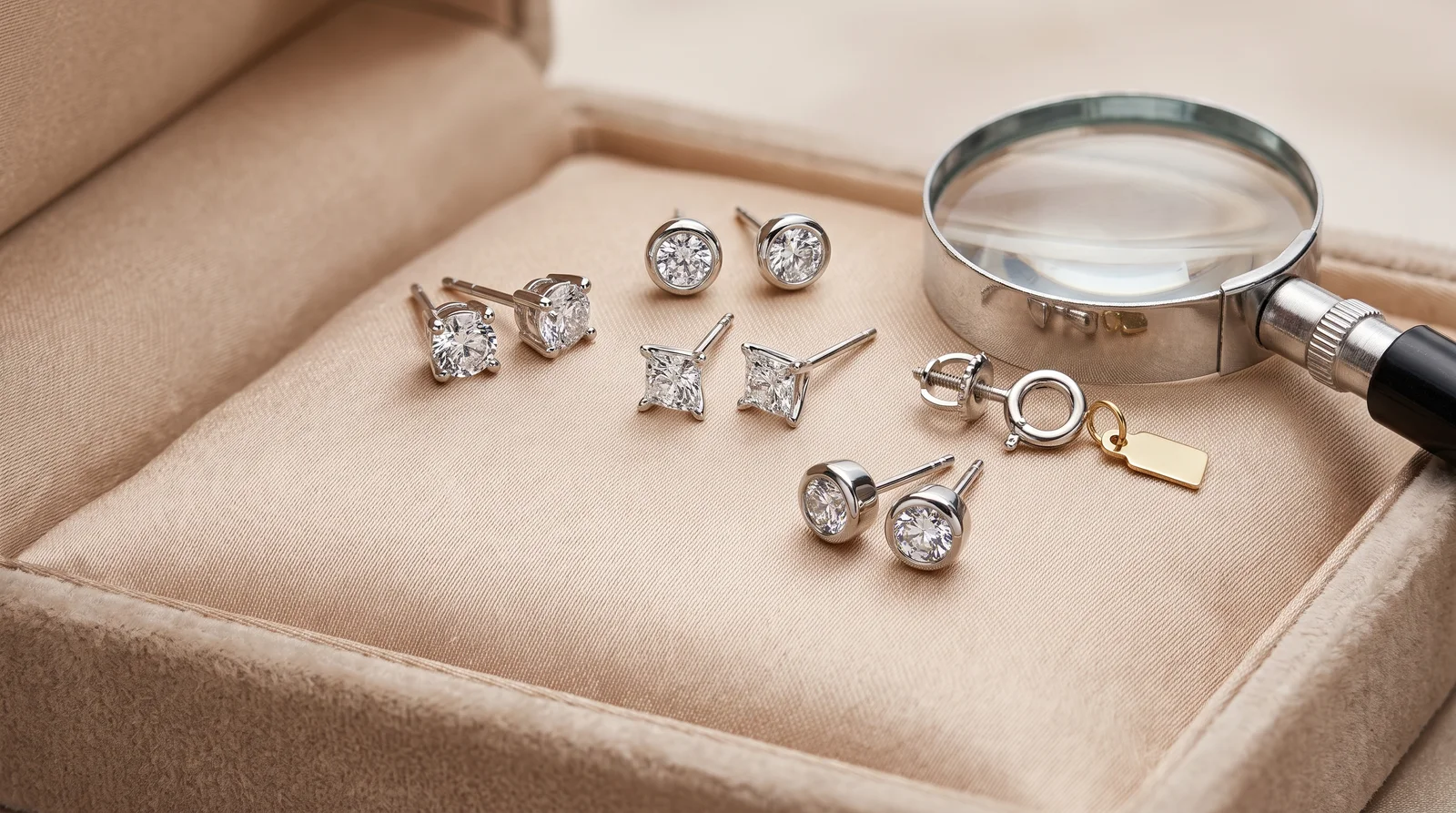
Post length and metal choice affect comfort just as much as carat weight, and they're easy to overlook when you're focused on the diamond itself. A post that's too long lets the stud wobble against the back of your ear, while one that's too short can pinch. Most standard posts run around 10mm to 12mm, but thicker earlobes may need a slightly longer post for a comfortable, flush fit.
Metal choice matters for durability more than most people expect. 14k gold contains 58.3% pure gold and holds up well to daily wear. 18k gold contains 75% gold and is softer, which means prongs can bend more easily over time. Platinum costs more but resists tarnish and holds prongs tightly for decades. That's worth considering if these studs are meant to be a long term piece rather than a seasonal accessory.
If you're drawn to a slightly different silhouette than a classic single stone stud, it's worth glancing at how three stone earrings handle sparkle and setting security, since the same prong and bezel principles apply. And if hoops with diamond accents are also on your list, this guide to diamond hoop earrings covers similar setting trade offs for a different shape entirely.
With size, setting, and back type decided, most of the remaining questions are quick ones, so let's clear those up directly.
Frequently Asked Questions About Diamond Stud Size and Setting
What is the most popular diamond stud earring size for everyday wear
Most jewelers report that 0.50 to 1.00 total carat weight is the most frequently purchased range for daily use. It offers visible sparkle without excessive weight or cost, and it works across nearly every outfit and occasion.
Are martini settings less secure than four prong settings
Martini settings typically use three prongs instead of four, which means slightly less holding power on paper. In practice, the difference is minor for stones under about 1.5 carats, and the low profile design actually reduces the tilting that causes many security issues in the first place.
Can I sleep in screw back diamond studs safely
Yes, screw back studs are generally considered safe for sleeping since the threaded post prevents accidental loss. Some people prefer to remove all earrings at night simply for comfort, but there's no security reason screw backs need to come out.
Does a bezel setting really make a diamond look bigger
Yes, a bezel's metal rim extends slightly past the diamond's actual edge, which visually increases the stone's apparent diameter. This is a genuine optical effect, not just a sales pitch, and it's especially useful if you're buying a smaller carat weight but want more visual presence.
What size diamond studs work best for a first pair
A 0.50 to 0.75 total carat weight pair in a four prong or martini setting is a safe, versatile first choice. It's substantial enough to notice, small enough to wear anywhere, and forgiving if your taste in jewelry changes over time.
Making the Final Call on Your Diamond Studs
Choosing diamond studs really comes down to three decisions stacked on top of each other. Pick a carat range that matches your daily habits. Choose a setting that balances sparkle against security. Select a back that matches the weight of what you're wearing. Get those three right, and the rest of the decision, metal color, diamond shape, budget, falls into place fairly naturally.
If you're still weighing options or want a pair matched specifically to your ear shape and lifestyle, it's worth talking to a jeweler who will actually measure and advise rather than just sell you the biggest stone in the case. That conversation, more than any chart, is what gets you studs you'll wear every day for the next decade.