Can You Skip a watch pressure test after battery replacement?
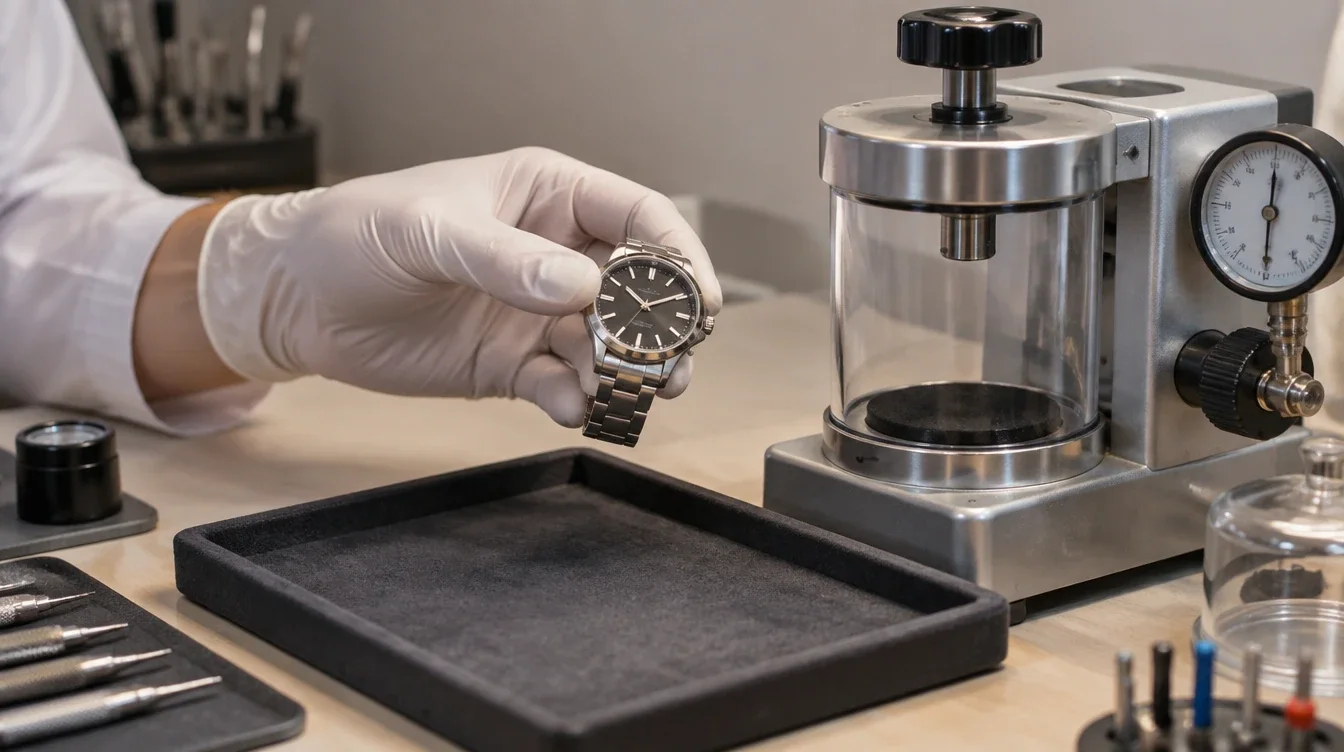
A watch pressure test after battery replacement is advised before water use, especially swimming. Opening the case can disturb its seal. Not every battery change causes a leak. The Watch Lab explains that seal condition, correct closure, and testing all matter. Testing is less urgent for a watch kept dry. Start with how you wear it.
Why changing a battery raises questions about water resistance
Changing a battery can affect water resistance. To reach the battery, the case usually needs to be opened. The battery itself is not the problem. A gasket seals the gap between the case and its back. That seal may shift or get damaged during the work.
According to The Watch Lab’s service explanation, worn seals, trapped debris, and poor closure can all leave gaps. A watch may look fine from outside yet no longer seal well.
Why a tight case back is not proof
A firmly closed back does not prove the gasket sits correctly. A fresh battery tells you nothing about the crown or crystal seals.
That answers “is my watch still waterproof after battery change?” The watch might keep its water resistance. Looks alone cannot prove it.
Resealing and testing do different jobs
Proper watch battery replacement and resealing addresses the condition and fit of the seal. Testing checks the result. Neither should be treated as another name for the other.
Ask what the shop means by “resealed” before agreeing to the work. Does it include checking the gasket and replacing unsuitable parts? Will the shop test the closed watch? Clear answers matter more than a service label. Then decide how much water your watch will face.
When a watch pressure test after battery replacement makes sense
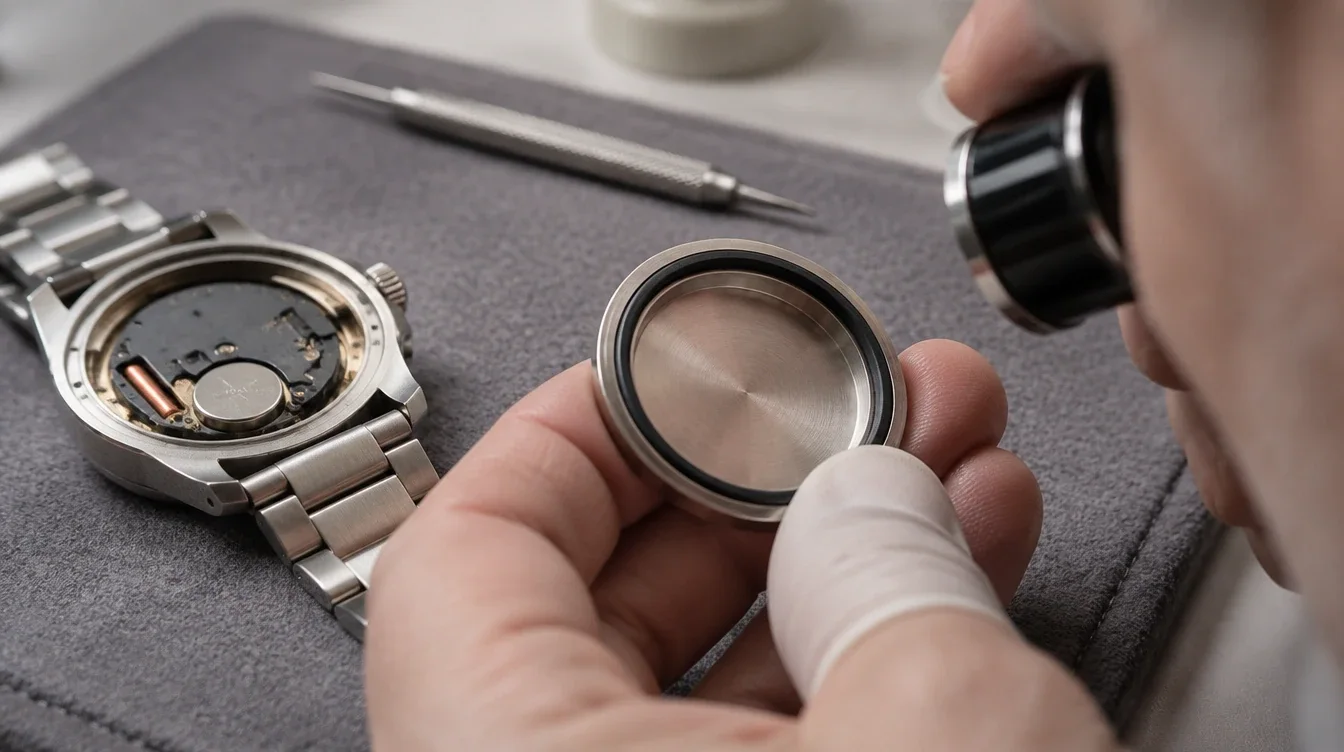
Testing makes sense if you plan to rely on water resistance. Take extra care with swimming and diving. It’s About Time recommends testing after case opening before relying on the stated rating around water.
Base your choice on how you wear the watch and its condition. Follow the maker’s instructions, too. Price alone does not settle the question. Even a cheap swimming watch needs a sound seal.
For swimming or regular water exposure
Arrange the test before returning to the pool. Tell the watchmaker what you actually do, rather than simply asking whether the watch is “waterproof.” Swimming laps and keeping a watch dry at work are different needs.
For “can I swim with my watch after battery replacement,” ask the shop to confirm two things. Does the model suit swimming? Did it pass an appropriate test?
For a watch you keep dry
A basic battery change may meet your needs if you accept that water resistance remains unverified. Keep the watch out of water rather than treating the old rating as a fresh promise.
A practical comparison
Consider two owners of the same model. One removes it before any water exposure. The other wears it swimming. This is an example, not a customer case. Testing has more immediate value for the swimmer. Next, check what the test can tell you.
What a pressure test can and cannot tell you
A watch water resistance test checks the assembled case for leaks. The result applies to the test conditions. Testing does not fix a seal or raise the watch’s original rating.
It’s About Time describes checks of the case, crown, case back, and crystal seals. A failed result may mean the gasket needs work or other repairs are needed. The watch then needs another test.
Dry testing and wet testing
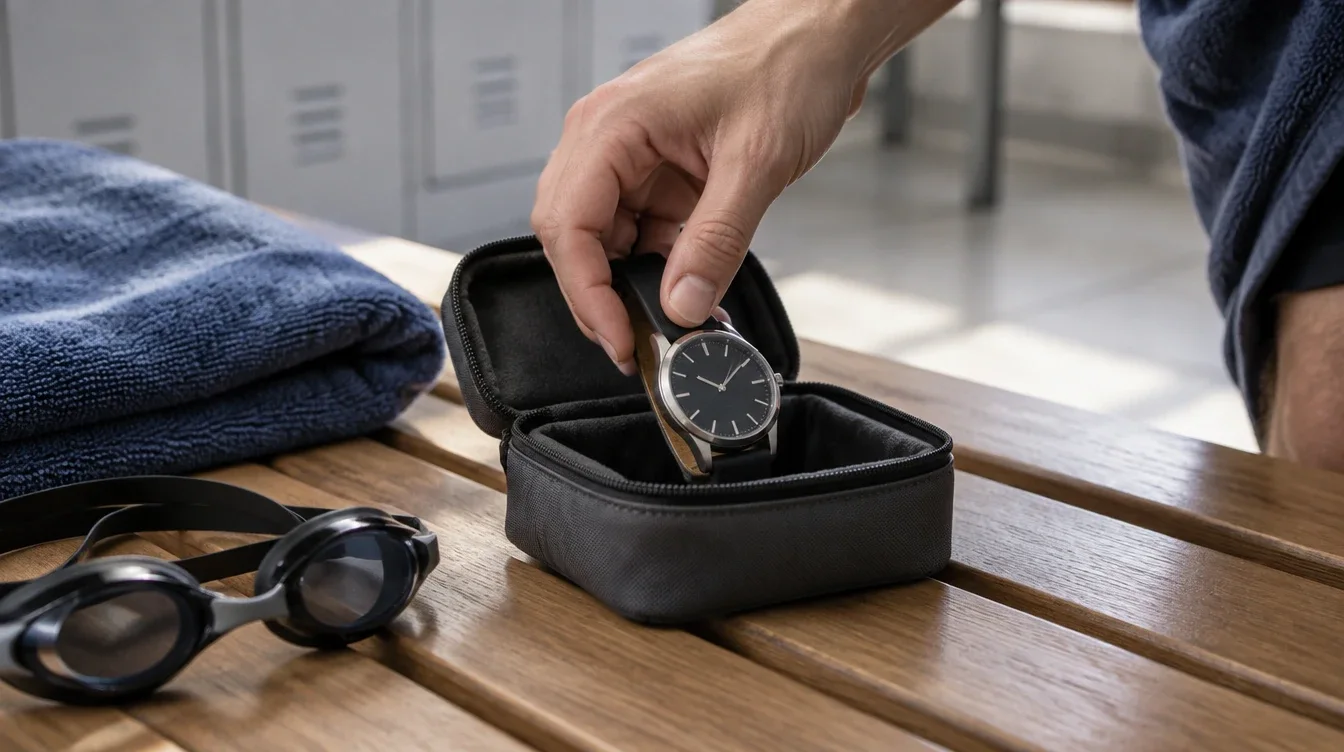
Dry testing uses air pressure without putting the watch in water. Wet testing uses water under controlled conditions. Ask which method suits your watch. Also check what the workshop’s equipment can test.
A method’s name is not enough to judge the service. The test pressure and watch design matter. So does how the result is read. Do not try to prove water resistance in a bowl or sink.
Ask what “passed” means
Ask what pressure was tested and how you can use the watch afterward. A receipt saying only “battery fitted” does not record a pressure test.
Keep any test record with the service receipt. It gives the next watchmaker useful context and helps avoid confusion about what was done.
A pass shows how the watch fared during that test. It does not cover all future use. Knowing those limits helps you compare service quotes.
What affects the price of testing and resealing?
Compare the watch pressure test cost for all the work your watch needs. An advertised fee alone may not tell the whole story.
The supplied sources do not give a sound local price range. Ask for a quote for your exact model. Check which currency it uses. A guess would not help you compare shops.
Ask for separate costs for the battery, seal inspection, and replacement parts. Include the pressure test and any retest. Will you still pay the first charge if the watch fails? Ask whether the shop needs your consent for more repairs.
To compare watch battery replacement and resealing, tell both shops what you need. Explain how you plan to use the watch around water. Ask what written result you will get. A lower quote may cover less work. Compare the service before the total.
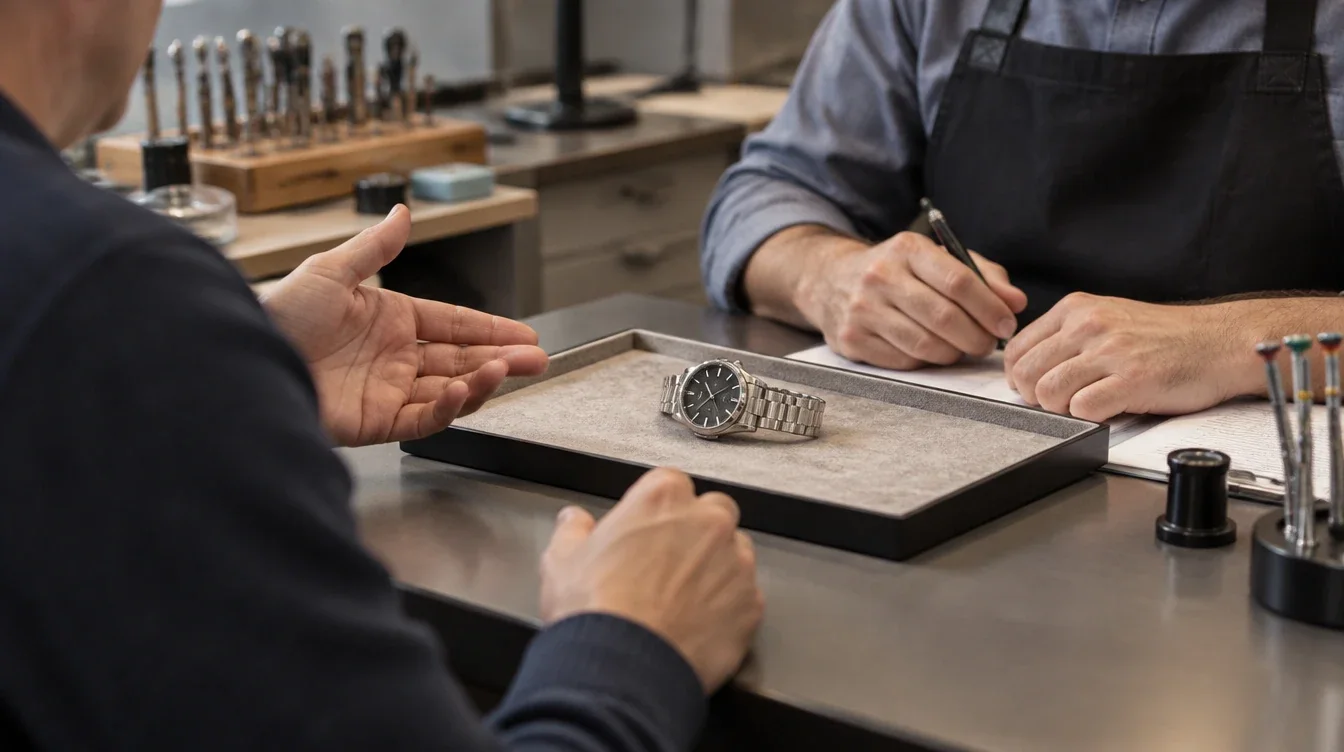
Must the watch go elsewhere for testing? Check whether your watch pressure test cost includes shipping. Ask how long the work takes before you book. This matters most before a trip.
A shop selling batteries may not have the tools to test watches. Ask who does the test and how you will get the result. Then think about care between service visits.
How to manage water resistance after the service
Water resistance needs care over time because seals age. Later damage can affect the watch, too. It’s About Time suggests annual checks for regular swimmers and divers, plus checks after relevant damage or case work.
That helps answer “how often should a watch be pressure tested,” but no single schedule fits all watches. Follow the maker’s advice for your model. Tell the watchmaker how you use it.
Is the crown damaged, or has moisture appeared inside? Do not wait for the next battery change. Have the watch checked rather than booking a routine visit months away.
The Watch Lab links compromised seals with moisture entry and warns that the original rating should not simply be assumed after opening.
Have a professional check fog or droplets under the crystal promptly. Keep the watch away from water while you seek advice. A new battery cannot fix a moisture problem.
Keep the service record somewhere easy to find. Note any limits the watchmaker gives you. The answers below explain what those limits mean for daily wear.
Frequently asked questions about battery changes and testing
The safest answers distinguish a working watch from one with verified water resistance.
Does a battery change make a watch waterproof again?
No, a new battery gives the watch power. It does not prove water resistance. For “is my watch still waterproof after battery change,” check the seals, case closure, and test result.
Can I swim immediately after the battery is changed?
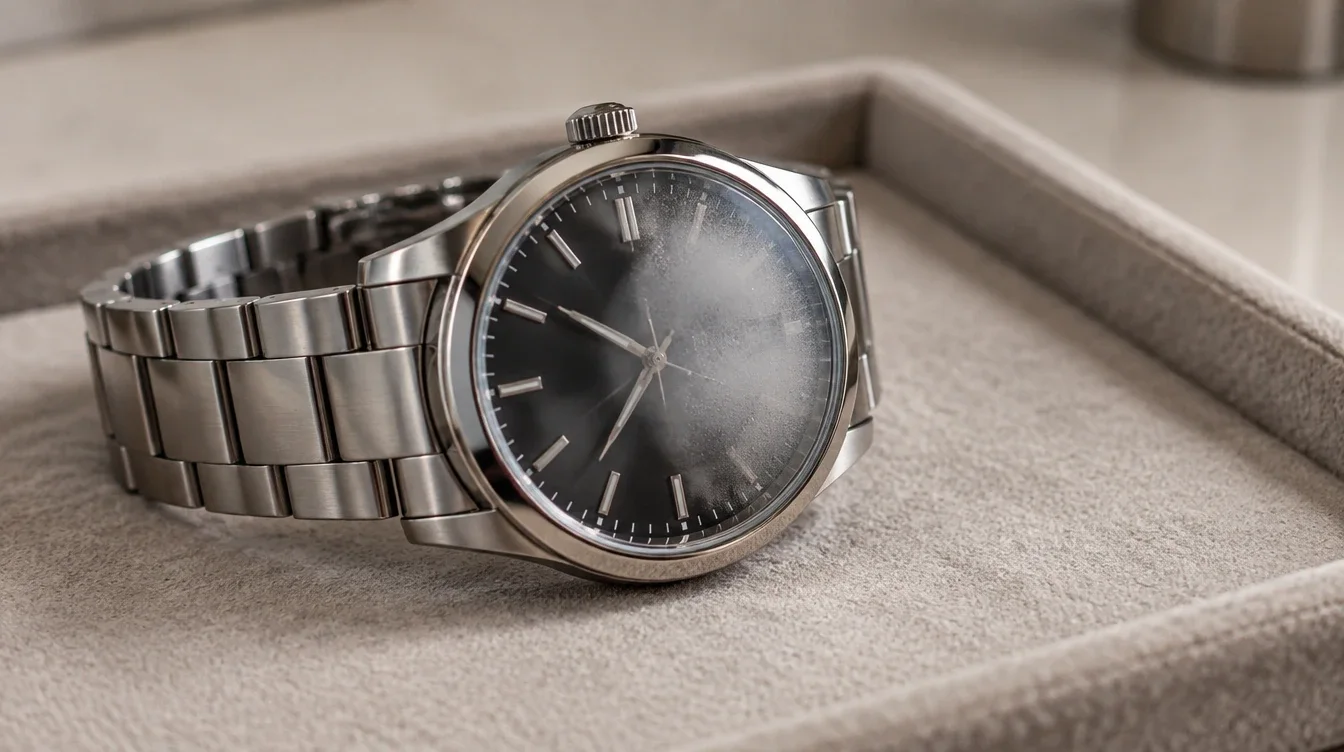
For “can I swim with my watch after battery replacement,” wait for the shop’s answer. The shop must confirm that water resistance suits your planned use. A working display or moving seconds hand cannot prove that.
How often does a swimming watch need testing?
For “how often should a watch be pressure tested,” start with your model’s instructions. If you swim often, ask about the yearly check suggested by It’s About Time. Do not ignore damage between visits.
What happens if my watch fails the test?
Find the cause of a failed watch water resistance test before relying on the watch in water. Ask about repair options and the cost of a retest. Then decide whether to repair the watch or keep it dry.
Get a clear answer before the next swim
A watch pressure test after battery replacement checks the seal rather than leaving you to guess. Book it before water use. Ask what pressure was tested and how you can use the watch afterward.
If you choose not to test, keep the watch dry. Give a qualified watchmaker your model details and explain your planned use. Ask for a clear quote before agreeing to the work.