Why Does Solder Look Different Color on Gold Jewelry Repair (And When That Discoloration Actually Means Trouble)
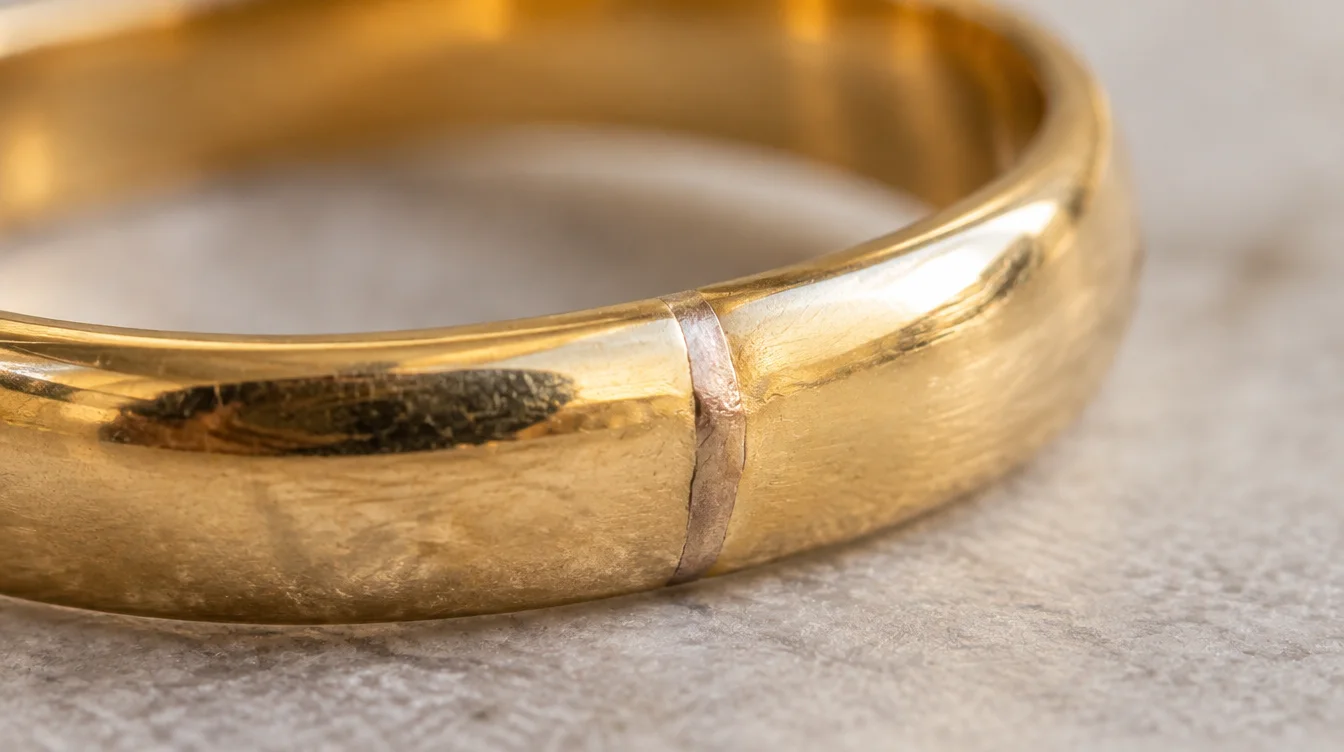
Solder often looks different from the surrounding gold. There's a simple reason for this. It's a separate alloy. Jewelers blend it to melt at a lower temperature than the rest of your ring or chain. That alloy mix usually combines gold with copper, silver, zinc, or cadmium. It doesn't always match the exact color or purity of your jewelry. Over time it can also tarnish faster than the gold around it. In most cases a slightly different shade is normal. Black or flaking solder is different, though. It usually means the repair used the wrong material.
Why Does Solder Look Different Color on Gold Jewelry Repair in the First Place
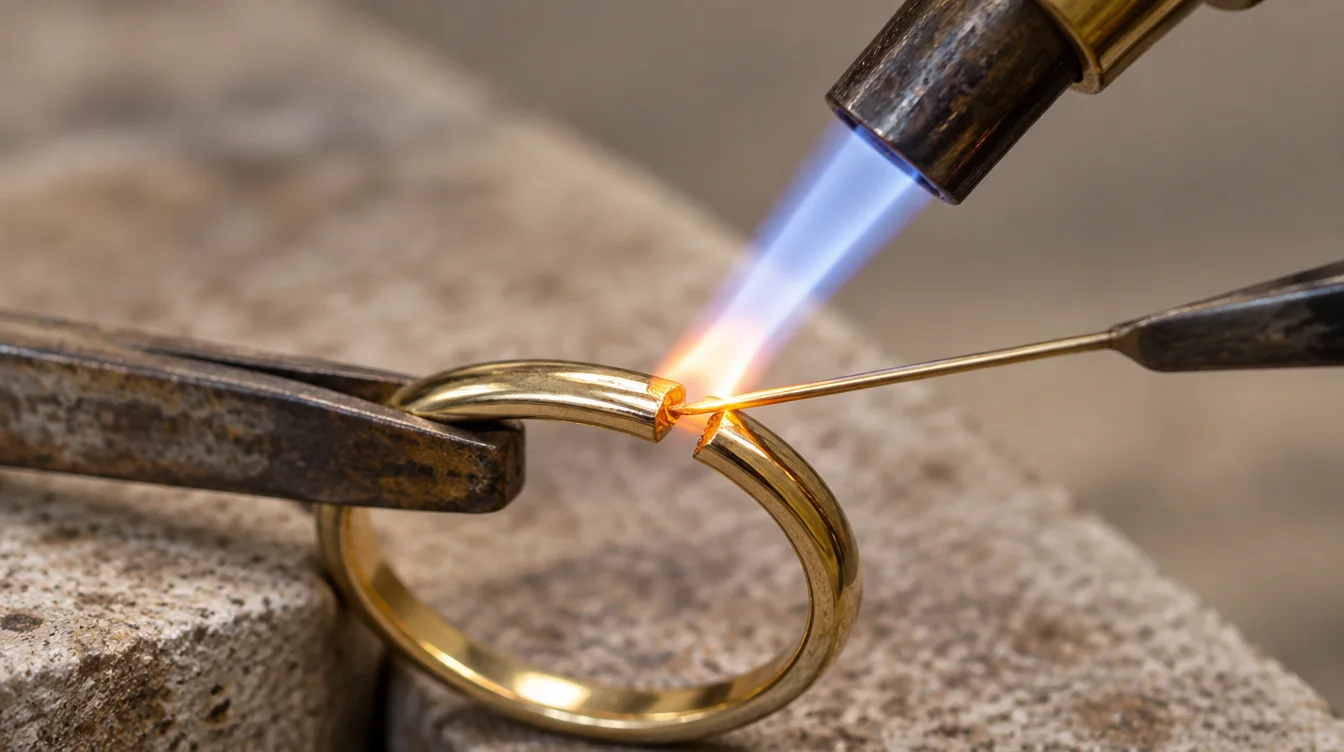
Solder is never the exact same metal as your jewelry. That's by design. Jewelers need a filler metal that flows and bonds at a lower melting point than your ring or chain. Otherwise the whole piece would slump before the joint ever closed. To get that lower melting point, solder makers add metals like zinc, cadmium, tin, or indium into the gold and copper mix. Those additions change the color slightly. They also change how the metal reacts to air, skin, and chemicals. So even a well matched solder job can look a shade off under close light. That's not sloppy work. That's just chemistry doing what it does.
The Alloy Mismatch Nobody Warns You About
Regular karat gold and solder gold are cousins, not twins. Your 14k ring is roughly 58.3 percent pure gold. The rest is made up of copper, silver, and sometimes nickel or palladium. Solder made for that same ring uses a similar ratio. But manufacturers tweak it to hit a lower melting point. That tweak often means slightly more copper or a touch of zinc. This shifts the color warmer or cooler. A trained jeweler picks solder that's close enough to disappear visually. A rushed repair might use whatever solder happens to be in the torch station that day. That's where mismatch shows up.
Why Manufacturers Add Low Melting Metals
Low melting metals get added to solder for a reason. Gold alone won't cooperate during repair work. Say a jeweler tried to join two pieces of 18k gold. They used pure 18k gold as the filler. Both pieces would reach melting temperature at the same time. The whole area would then collapse into a blob. Adding cadmium, zinc, or indium changes this. It drops the solder's melting point. The drop is anywhere from 50 to 150 degrees Fahrenheit below the base metal. That gap gives the jeweler room to work. They can melt the solder without touching the structural integrity around it. It's a clever workaround. But it comes with a tradeoff in color stability. That tradeoff is where oxidation enters the picture.
Solder Color Mismatch Gold Repairs and What Causes It
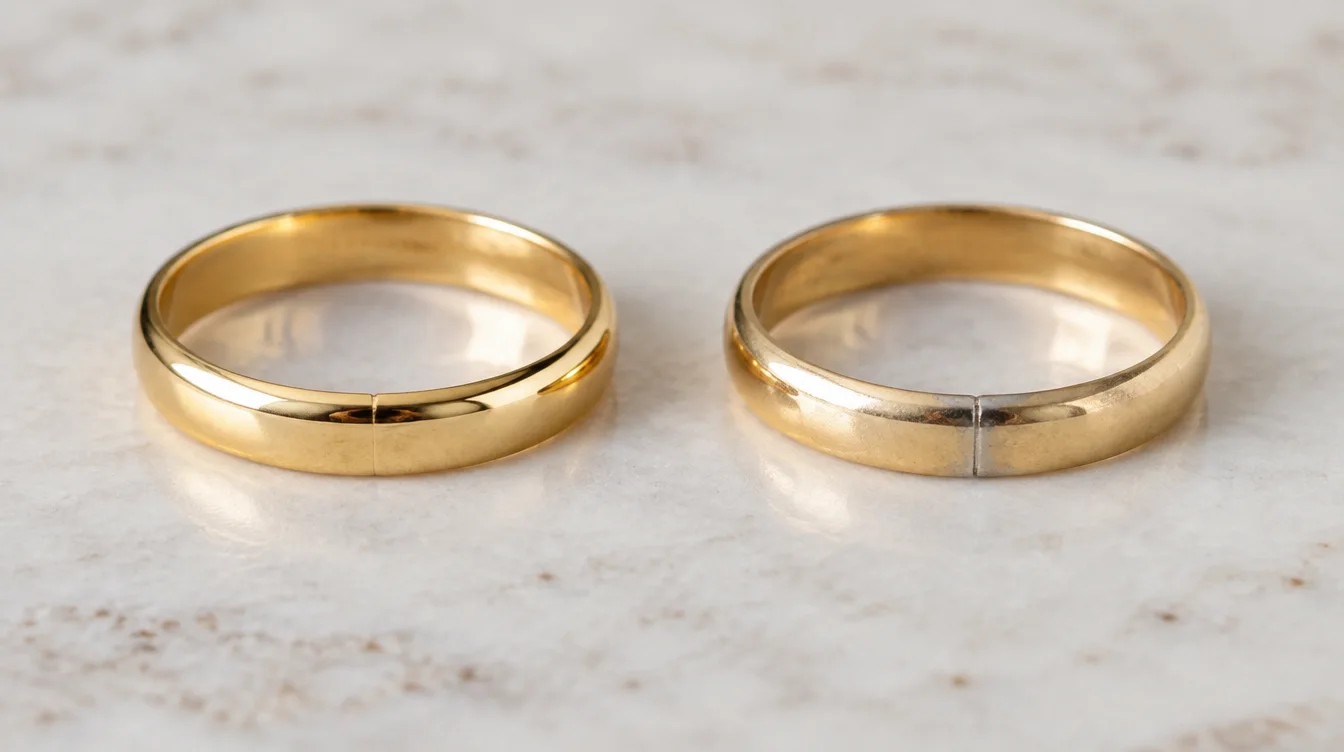
Solder color mismatch happens under a specific condition. The filler metal's alloy doesn't line up closely with your jewelry's karat and color. This isn't always a red flag. A tiny visible seam near a ring shank or chain link is common. You'll see it even in quality repairs. This is especially true right after the work is done. Problems start when the mismatch is dramatic. Picture a yellow ring with a noticeably white or gray line at the joint. That kind of contrast usually means one of two things. Either the jeweler didn't have matching solder on hand. Or they chose speed over precision.
Matching Karat and Color Correctly
Good jewelers stock solder in multiple karats and colors. They do this specifically to avoid this problem. A shop doing serious repair work keeps yellow, white, and rose gold solder. They stock it in easy, medium, and hard melting temperatures. That adds up to a lot of small spools sitting in drawers. Antique Jewelry University notes that gold solders are alloys of gold, copper, and silver. The proportions get adjusted so the solder matches the color of the gold it's applied to. Skip that matching step, and you get a problem. The joint looks fine under store lighting. It looks wrong under daylight. This is one of the clearest ways to spot poor soldering on gold. You can catch it before you even pull out a loupe.
When a Repair Shop Cuts Corners
Sometimes a mismatch isn't about stock. It's about laziness or cost cutting. Low karat solder melts easier and costs less. A repair shop trying to save time might use 10k solder on a 14k piece. They may hope nobody notices. It usually holds fine at first. The problem shows up months later. That lower karat solder starts to darken. It darkens against the higher karat gold around it. This connects directly to oxidation. Oxidation is really the second half of the discoloration story.
Gold Solder Oxidation and Tarnishing Explained
Gold solder oxidizes faster than the surrounding gold. It contains more reactive base metals. Pure gold barely reacts with air or moisture. That's why ancient gold artifacts still shine. Solder isn't pure gold, though. It carries copper, zinc, and sometimes cadmium. All of these tarnish when they meet oxygen, sulfur, or chlorine. That reaction creates a new compound on the surface. This compound has a darker color. It shows up right at the solder joint. That's where those reactive metals are concentrated.
Why the Joint Tarnishes Before the Rest of the Ring
The joint tarnishes first for a clear reason. It's chemically the weakest link in an otherwise stable piece. Think of your ring as mostly resistant metal. One small patch of less resistant metal sits right at the seam. Swimming pool chlorine can trigger a reaction. So can hot tub water, sulfur in some lotions, and even certain medications. One jewelry repair resource described a silver ring. Chlorine reacted with the solder's base metals. The rest of the ring stayed untouched. The joint darkened noticeably within days of pool exposure.
Low Karat Solder Turns Black More Often
Low karat solder turns black more often. It holds less gold and more reactive metal. A jeweler and gold buyer named Bob Adams described a repair job. He used 6 karat repair solder on a 14k necklace. He chose it because it melted at a much lower temperature. This meant less risk of melting the original piece. It looked fine right after polishing. A few years later, that low karat solder joint had darkened noticeably. He said this pattern shows up often in vintage jewelry. You'll see it near clasps, pin stems, and ring sizing seams. That's a tradeoff worth knowing about before you approve a quick fix.
How to Spot Poor Soldering on Gold Before It Becomes a Bigger Problem
You can usually tell poor soldering apart from normal wear. Just check the joint's texture and color under good light. A solid repair job flows into the seam smoothly. It leaves a joint that's tight, shiny, and barely visible. A bad one often looks burnt. It may sit as a raised blob instead of blending into the metal. Or it may show a distinct color band running across the joint.
Warning Signs Worth Checking
Run your fingernail lightly across the repair area. A properly flowed joint feels flush, not lumpy. Look for gray or bluish lines along a seam. That shade often points to a mismatched or low quality solder. It will keep discoloring with wear. A gentle tug test on chain links helps too. It can reveal whether the joint actually bonded, or just sits there cosmetically. None of these checks need special tools. You just need decent lighting and a few minutes of attention.
When Discoloration Signals a Deeper Issue
Not every dark spot means trouble. But a joint that keeps darkening every few weeks, despite normal care, is worth asking about. If your jeweler used the wrong karat solder, that pattern will repeat no matter how often you polish it. A reputable shop will re-do the joint with properly matched solder, rather than telling you to just keep cleaning it. This is where laser soldering has changed the game for jewelers dealing with older or delicate repairs.
Laser Soldering vs Traditional Solder Jewelry Repairs
Laser soldering avoids the alloy mismatch problem entirely. It can join metal using the same karat gold as the piece itself. There's no need for a separate low melting solder alloy. Traditional torch soldering relies on that filler metal. We covered this earlier. A laser welder works differently. It uses a tight beam of light. This beam melts a tiny, precise spot. Sometimes the jeweler adds a matching gold wire as filler. This wire takes the place of commercial solder.
Why Laser Repairs Resist Discoloration
Laser repairs resist discoloration well. There's no reactive low karat alloy sitting at the joint. So there's nothing left to tarnish. The heat stays in one small spot. It's often smaller than a millimeter wide. That also protects nearby gemstones from heat damage. This matters during ring sizing or prong work. This method costs more per repair. Not every shop owns the equipment. But it solves the exact problem this article covers. For antique or heirloom pieces, color matching really matters. It's worth asking if your jeweler offers this option.
Frequently Asked Questions About Solder Discoloration on Gold
Why does my ring look fine except for one darker spot near the sizing seam?
That spot is almost always the solder joint from a resizing job. Solder often oxidizes slightly faster than the surrounding gold. This is especially true if it's a lower karat filler metal.
Can solder discoloration be polished away?
Light surface tarnish often buffs out with a standard jewelry polish. Deeper discoloration is different. It comes from oxidized base metals inside the solder itself. This kind will usually come back within weeks or months. The underlying alloy hasn't changed. So the problem keeps coming back.
Does solder discoloration mean my repair is falling apart?
Not necessarily. Color change and structural integrity are two different things. A joint can look slightly off while still holding strong. A loose or cracked joint is a separate concern. It's worth having checked by a jeweler.
How do I know if my jeweler used the correct karat solder?
Ask them directly before the repair. Reputable shops keep multiple karats and colors of solder. They do this specifically to match your piece. You can also request something simple. Ask them to show you a color comparison against your metal. Do this before they start the work.
What does gold solder oxidation and tarnishing actually look like over time?
It typically starts as a faint gray or brownish tint. This shows up right at the joint line. It darkens slowly with exposure to chlorine, sulfur, or everyday skin oils. It rarely spreads beyond the actual solder line. The surrounding karat gold usually stays unaffected.
Getting a Repair That Actually Matches
A little color variation at a solder seam isn't a sign your jeweler messed up. It's a side effect of how solder has to work chemically. This chemistry protects the rest of your piece. What matters is asking questions before the repair happens. Find out what karat and color solder they're using. Ask whether they offer laser welding for pieces where color match really counts. Ask how they handle joints that darken faster than expected. A jeweler who answers those questions clearly and confidently is one you can trust. Trust them with the next repair too.