The Fit Mistake to Avoid When Learning how to choose a coin bezel for a pendant
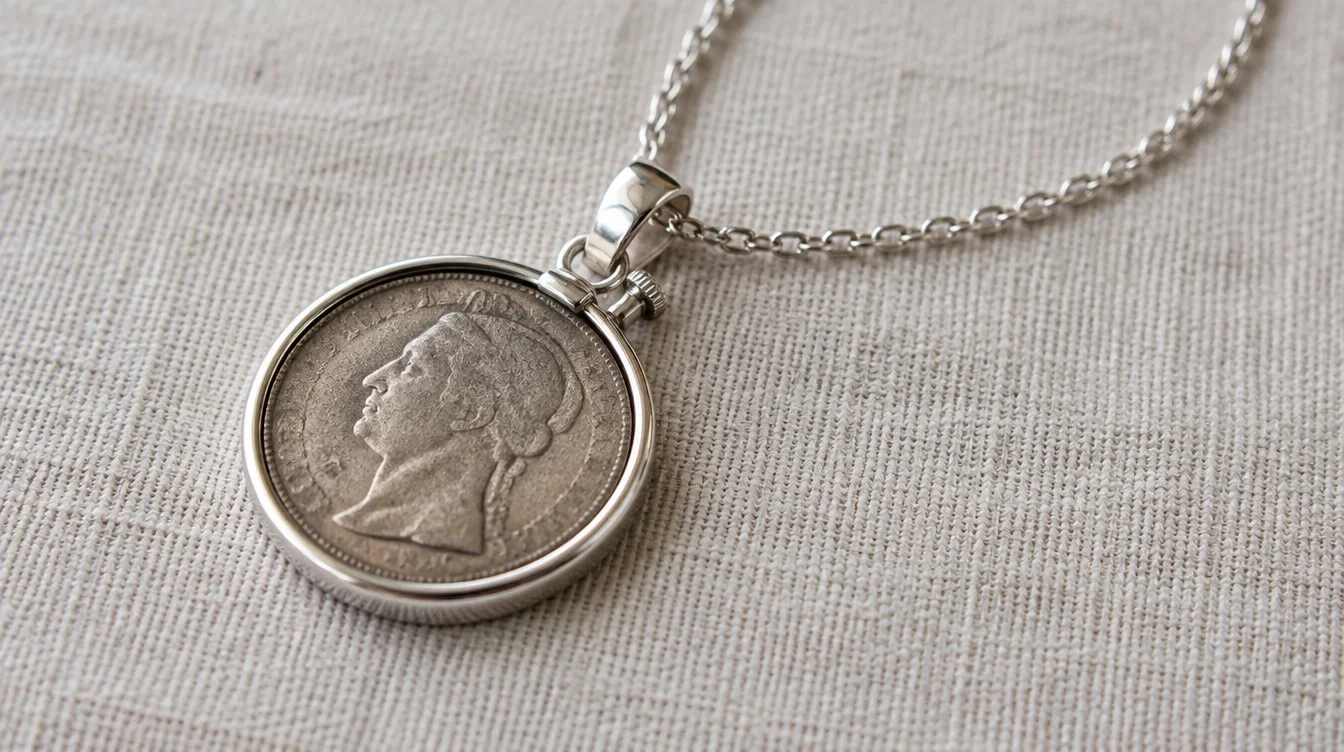
Choose a removable bezel that fits the coin’s diameter and edge thickness. The closed frame should hold it without pressure or play. That is how to choose a coin bezel for a pendant without drilling, soldering, or gluing the coin. If the coin may be valuable to a collector, ask a specialist before mounting it. A removable frame can still leave surface marks.
Why can a removable bezel still mark a coin?
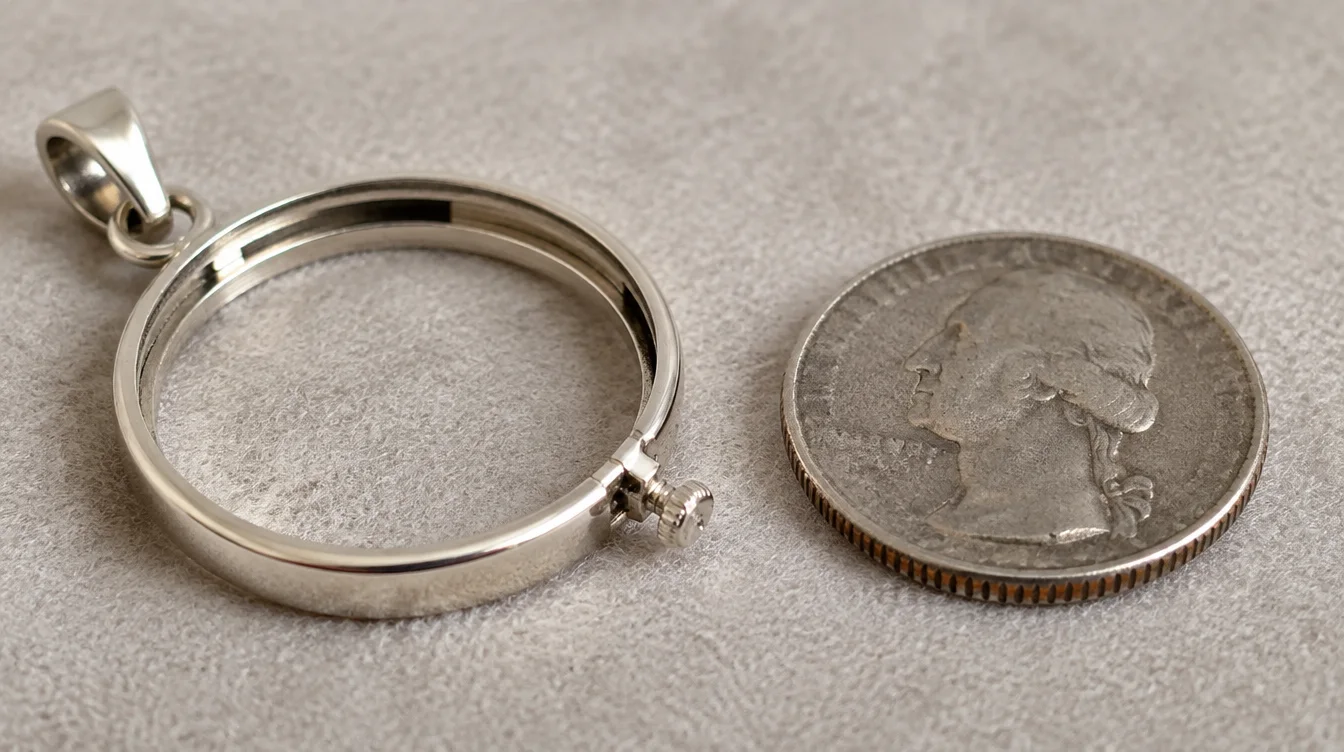
A removable bezel avoids a hole in the coin, but its inner edge still touches the surface. Dust caught between metal and coin can rub as the pendant moves. A tight frame may press on the rim; a loose one may let the coin shift. Those risks matter most when the coin’s original surface is part of its value.
A coin bezel pendant is a good choice for a travel coin or family keepsake you want to wear and remove later. Still, the coin may not come out in the same condition. Decide how much surface contact you can accept before you shop. Measure your coin, not just the coin named in a listing.
Measure the coin before choosing a frame
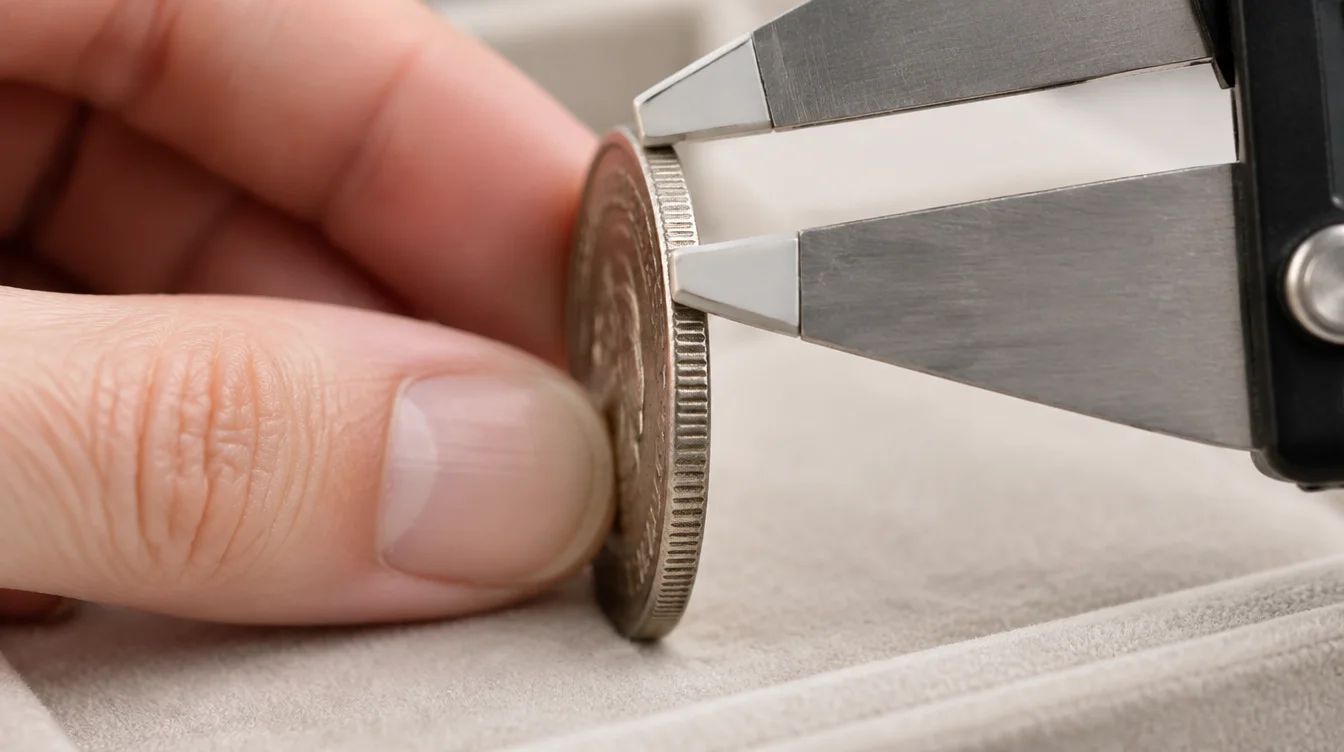
A coin holder for necklace wear must fit the actual coin’s diameter and edge thickness. Sellers may list a bezel by a familiar coin name, but that alone does not tell you how your piece will sit. Wear, damage, and raised details can affect the fit.
Check two dimensions
Diameter
Measure straight across the widest part of the coin, edge to edge. Take a second reading at a right angle. If the readings differ, do not force the coin into a rigid circular frame. Compare both readings with the seller’s stated opening size. Ask whether that size is an exact fit or an upper limit.
Edge thickness
Measure at the rim, where the bezel will grip. Also look for a raised border or an uneven edge. A listing that gives diameter but says nothing about the depth of its channel leaves a key fit question unanswered. Ask the seller for that measurement before ordering.
For an illustrative comparison, suppose a coin measures 25 millimeters across and a bezel is listed for 25 millimeters. The matching figures do not prove a fit if the rim is too thick for the channel. Once you know both dimensions, compare how the frame opens and closes.
Still unsure how to choose a coin bezel for a pendant?
Choose a closure you can reopen safely and inspect easily. Removable bezels vary in how they release the coin. Your choice depends on how often you remove it. Also check how firmly the frame closes and whether it presses on the rim.
Compare screw, hinged, and bend to open frames
A screw top coin bezel has a small fastener that joins the frame near the bail. It suits someone who wants a closure they can inspect before each wear. Check that the screw seats fully and that its parts stay aligned. A missing or poorly seated screw defeats the frame’s grip.
A hinged frame usually opens at one point and closes at another. It may be convenient if you change coins often, but check that the latch stays shut when handled. With either style, ask the seller how the coin is supported along its edge, not just how the opening works.
Some frames must be gently spread or bent to admit a coin. They may be removable in theory, yet repeated opening can change their shape. For a coin you expect to remove often, a closure designed to open and close is the more sensible starting point. Fit matters more than the style name, so test retention before wearing it.
How do you check that the coin will stay in place?
Check retention with the bezel closed and the pendant held over a soft surface. Gently turn it face up, face down, and sideways. The coin should stay seated without shifting or rattling. Do not shake it hard to test security. That can cause the contact you want to avoid.
Look closely where the frame meets the rim. Is the grip even, or does one spot pinch while another shows a gap? Can the coin rotate inside the mount? If it moves, ask about another size or design rather than adding adhesive. One coin necklace tutorial suggests glue for a loose bezel. Glue works against keeping the coin unaltered and easy to remove.
Repeat the gentle check after the first short wear. If the closure loosens or the coin shifts, stop wearing it until the fit is corrected. That check also helps you decide whether a cherished coin belongs in jewelry at all.
When should a collectible coin stay out of a bezel?
Ask a coin specialist before mounting a coin that may have collector value, unusual wear, or an original surface you want to preserve. The coin’s price is not the only concern. A family piece may matter enough that even a faint contact mark would be unwelcome.
Do not polish a coin merely to prepare it for a pendant. If you do not know what the surface or edge can tolerate, leave it as it is and seek advice first. A specialist can help you decide whether display or storage serves your goal better than wear. For an ordinary keepsake, the remaining questions are simpler.
Common questions about removable coin bezels
A removable mount makes a coin wearable without a hole, provided the fit and closure are right. These answers cover common questions before you fit a coin or buy a bezel.
How do you put a coin in a bezel without scratching it?
If you are unsure how to put a coin in a bezel, follow that frame’s opening instructions first. Work over a clean, soft surface, and keep grit away from the channel. Stop if the coin needs force to seat. Close the frame fully before testing the fit.
Can one bezel fit several coins of the same type?
Maybe, but check each coin on its own. A shared name does not replace measurements of diameter and rim thickness. If you plan to swap coins, choose a frame made for repeated opening.
Does a screw closure make a coin secure?
A screw top coin bezel is secure only when the coin fits and the screw closes properly. Inspect it each time you swap coins and before wearing it. The closure cannot make up for an oversized channel.
What if I cannot find the right size?
Ask a jeweler about a removable frame sized to your coin. Bring the coin and explain that you do not want drilling, solder, or glue on it. That conversation can settle the fit question before any work begins.
Give the coin a fit you can trust
The safest plan for a coin bezel pendant is simple: measure the coin, check the channel, compare closures, and test the grip gently. A coin holder for necklace wear should release the coin when you intend to remove it, not while you are wearing it. If the fit takes force or leaves the coin free to move, keep looking. Bring your measurements to a jeweler. Ask to see how the proposed frame holds your coin before you commit.