White Gold Emerald Cut Engagement Rings Are Trickier to Buy Than You Think (Here's the Fix)
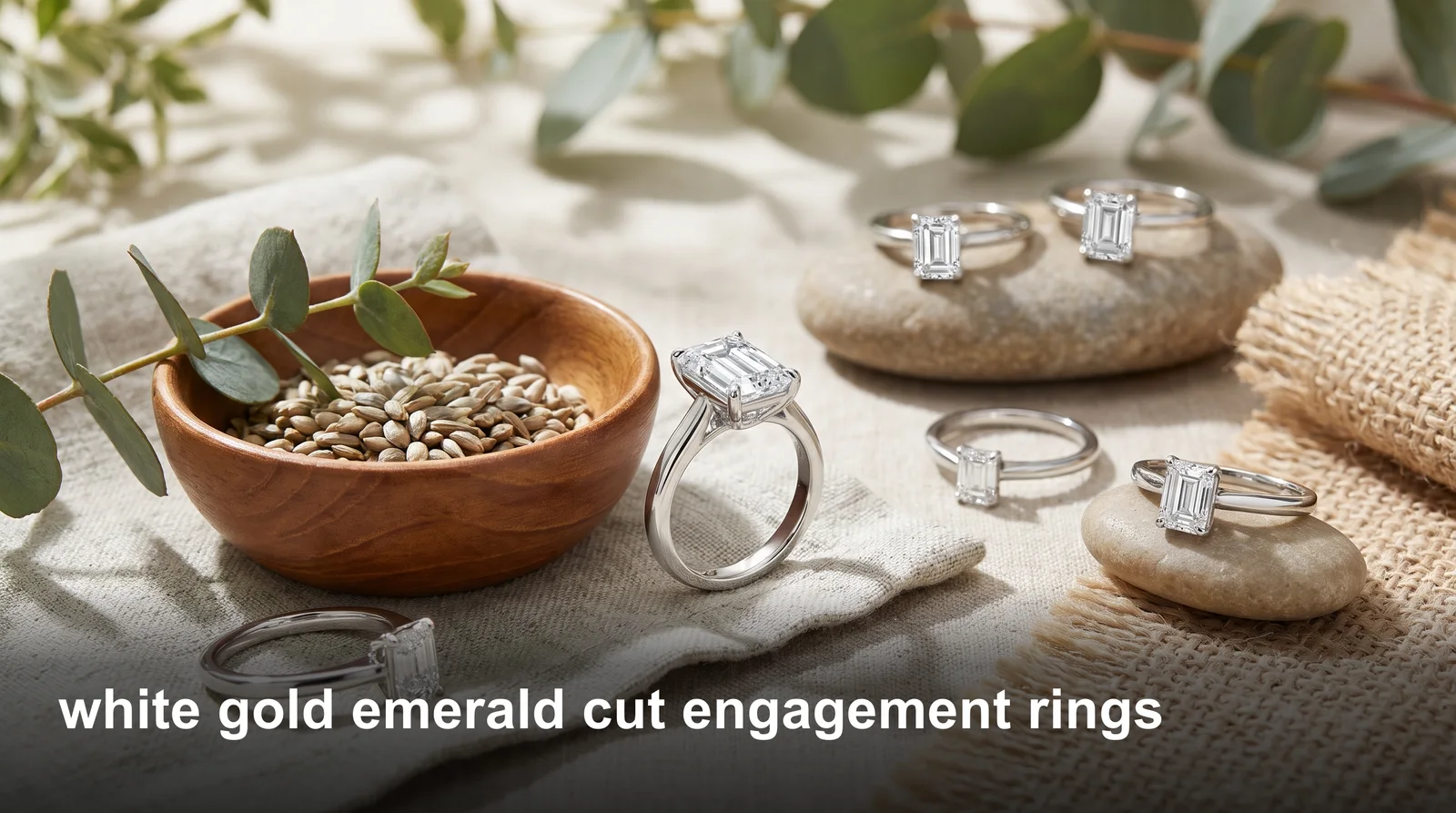
Shopping for white gold emerald cut engagement rings sounds simple. It's not. This cut shows every flaw, so setting choice and metal choice matter more than with round stones. Get it right and the ring looks like glass. Get it wrong and you'll notice every included flaw for years. Here's what actually matters.
What Makes White Gold Emerald Cut Engagement Rings Other
White gold emerald cut engagement rings pair a step cut stone with a bright silvery metal. The emerald cut has long, flat facets instead of tiny sparkly ones. That means clarity flaws show up fast. About 65% of jewelers report emerald cuts need one clarity grade higher than round stones to look clean.
White gold adds cool contrast that makes the stone pop. It also reflects light back into the diamond's open table. This combo is why so many buyers ask for it by name. Next, let's talk about the settings that make or break the look.
Emerald Cut Engagement Ring Settings That Actually Work
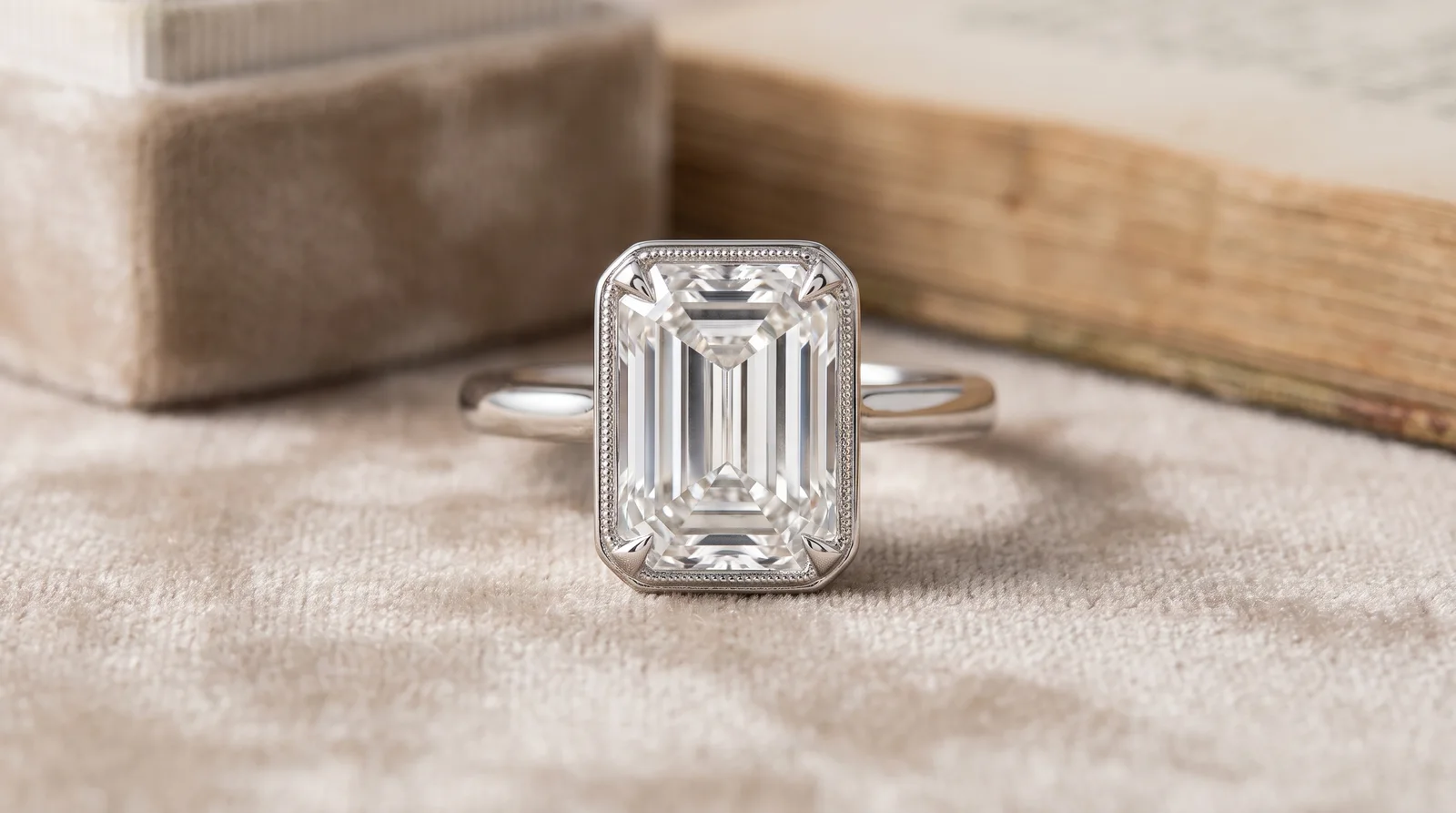
The setting you pick changes how big and how bright your stone looks. Four prong or double claw prongs are the safest choice. They protect the sharp corners, which chip easier than round edges.
Emerald Cut Halo Engagement Ring Options
An emerald cut halo engagement ring adds small stones around the center. This makes the main diamond look bigger without paying for extra carats. It's a smart move if your budget is tight but you still want size.
Emerald Cut Solitaire Engagement Ring Choices
An emerald cut solitaire engagement ring is cleaner and more classic. No distractions, just the stone and the band. Many of my clients pick this style because it ages well and never looks trendy.
Setting choice also affects how the stone sits, which leads right into a common complaint I hear from buyers.
Why Your Emerald Cut Diamond Ring White Gold Might Look Smaller Than Expected
Your stone can look smaller once it's set, even if nothing's wrong with it. This happens because prongs and metal cover part of the diamond's edge. Emerald cuts lose visual size fast when the setting sits too high or covers too much girdle.
I always tell clients to check the setting depth before buying. A good jeweler will show you a loupe view first. If you want the full breakdown on this, I wrote a whole piece on why your diamond might look smaller after setting. Now let's talk about picking the actual stone.
Choosing the Right Diamond for Your White Gold Emerald Cut Diamond Ring
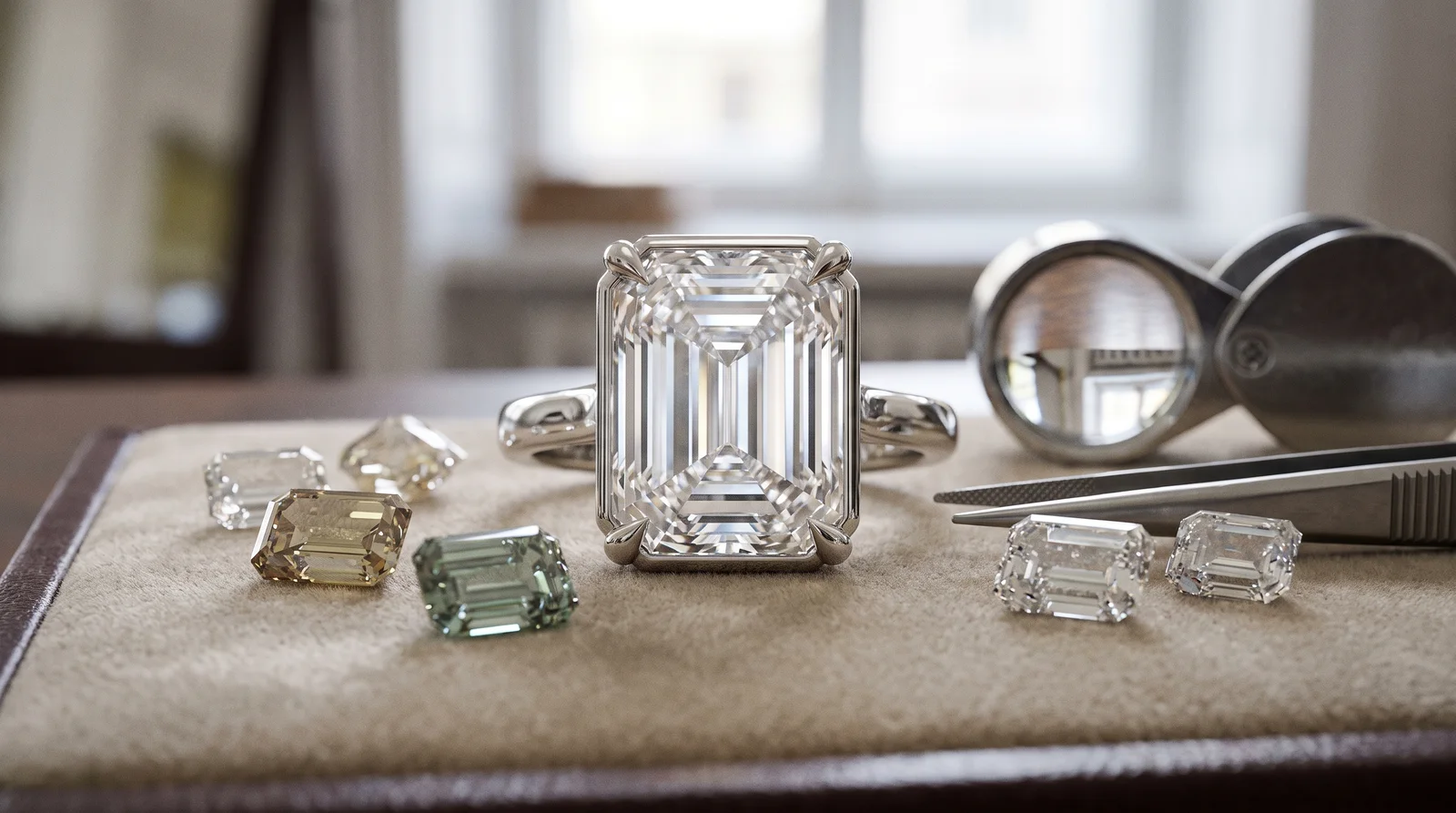
Pick clarity first, then color, then cut ratio. Emerald cuts need a VS1 or higher clarity in most cases. Anything lower and you'll likely see flaws with your bare eye.
Color grade matters too, since white gold shows warmth in a stone faster than yellow gold does. I recommend G or better for this metal pairing. For a deeper guide on stone selection, check out my post on how to choose a diamond for an engagement ring. Some buyers also ask about lab stones versus other options, which is worth covering next.
Lab Diamonds and Moissanite for Emerald Cuts
Lab diamonds give you more size for less money. Moissanite is even cheaper but has more fire, which can look odd in a step cut. I compared both in detail in lab diamond vs moissanite for a bigger center stone. Once your stone and setting are picked, metal care becomes the next big question.
Caring for Your White Gold Emerald Cut Engagement Ring Long Term
White gold needs rhodium replating every one to two years to stay bright. This is the part most jewelers gloss over during the sale. I break down the full maintenance truth in the white gold ring mistake nobody warns you about.
Skipping replating won't ruin your ring. It'll just turn slightly yellow underneath over time. Most couples plan this into their yearly ring cleaning anyway. Speaking of pairing pieces together, let's cover how to stack this ring with a wedding band.
Building Your Emerald Cut Wedding Ring Set
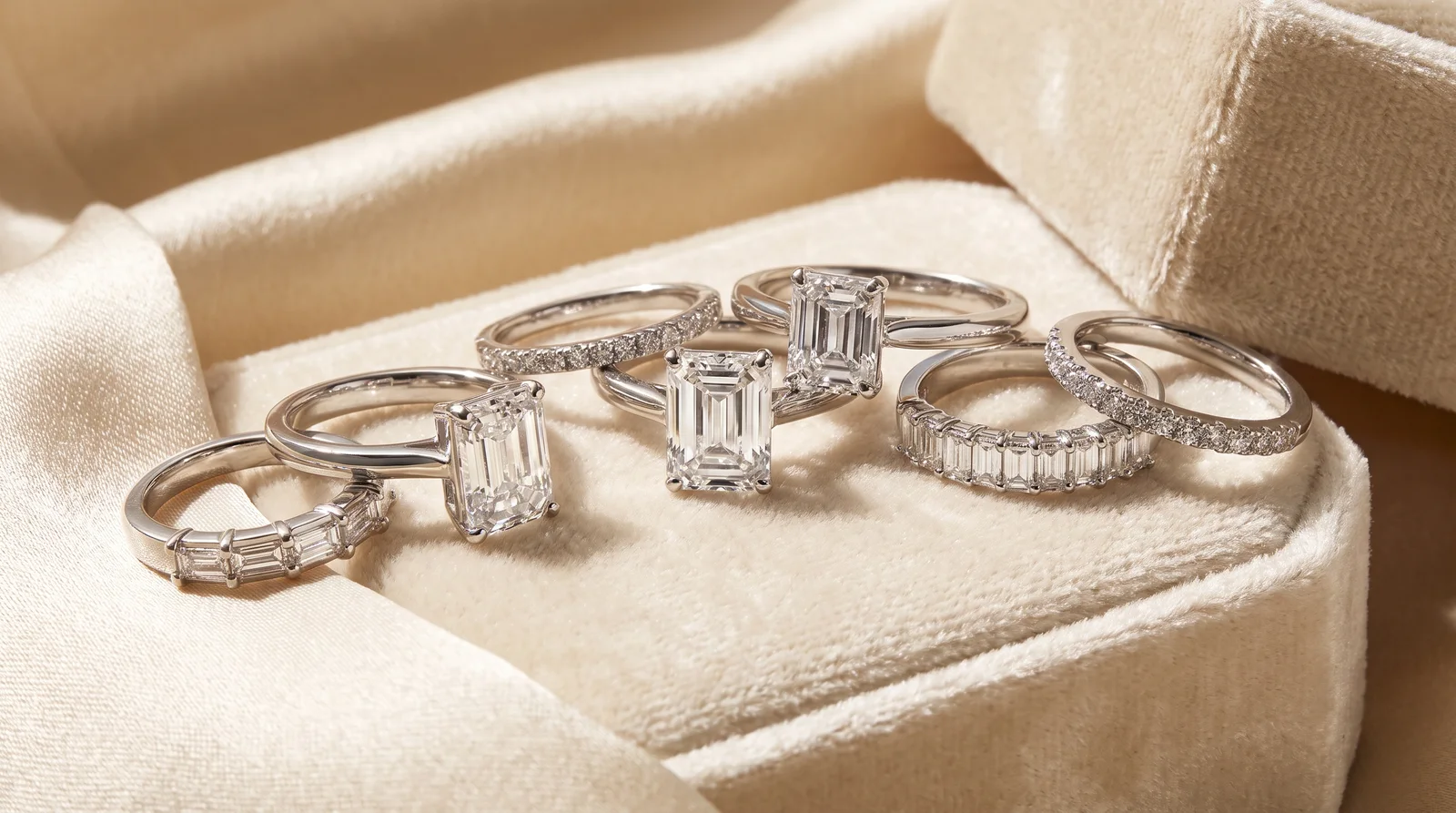
An emerald cut wedding ring set works best with a curved or notched band. This lets the band sit flush against the emerald cut's straight edge. Flat bands often leave a gap that catches on clothing.
I always suggest bringing your engagement ring when shopping for the band. Fit testing in person saves you a return later. For more on this, read my guide on how to stack wedding and engagement rings the way jewelers do.
Frequently Asked Questions
How much do white gold emerald cut engagement rings cost?
Prices start around $2,500 for a one carat stone with a basic setting. Larger stones or halo settings can push costs past $10,000. Lab grown options cut this price by 30 to 40%.
Why do emerald cut diamonds show flaws more than round ones?
The flat, open facets act like a window into the stone. Round cuts hide flaws behind tiny sparkly facets. That's why clarity grade matters so much more here.
Can I turn my emerald cut solitaire into a halo later?
Yes, most jewelers can add a halo to an existing solitaire setting. It usually costs less than buying a new ring. Ask your jeweler about resetting options before selling your current band.
Does white gold turn yellow over time?
Yes, the rhodium coating wears down and shows the natural gray gold underneath. This is normal and fixable with replating. It's not a sign of a bad ring.
Picking the right emerald cut ring comes down to a few smart choices. Get the clarity right, pick a setting that protects the corners, and plan for yearly metal care. Do that and your ring will look sharp for decades, not just on your wedding day.