Understanding Tanzanite Pleochroism Color Change Lighting Effects
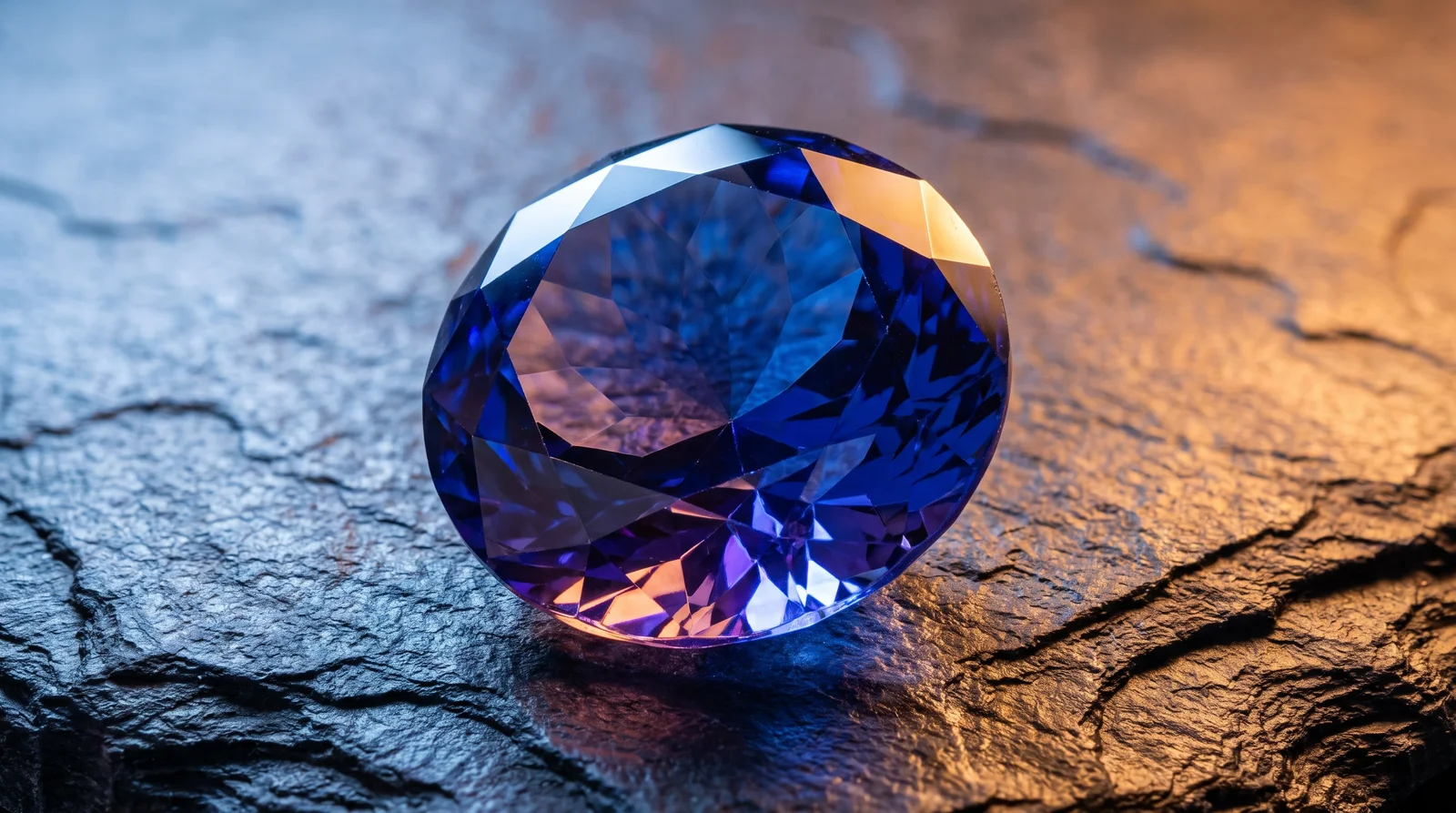
Tanzanite pleochroism color change lighting explains why your gemstone looks navy blue at dinner and violet under store lights. It comes down to how tanzanite's crystal structure absorbs light. The effect changes depending on the angle and the color temperature of the bulb overhead. Cool light, like daylight or LED, pulls out the blue. Warm light, like candlelight or old incandescent bulbs, pulls out the violet. Neither color is fake. Both are genuinely part of the stone.
What Actually Causes Tanzanite To Show Two Colors
Tanzanite changes color because it's pleochroic. This means the crystal shows different hues depending on which direction light passes through it. This isn't a trick of polish or a coating. It's baked into the atomic structure of the mineral itself. Tanzanite is a variety of zoisite. Its internal structure absorbs certain wavelengths of light along one axis and different wavelengths along another. American Mineralogist first documented this back in 1969. Researchers described the pleochroic colors as red-violet, deep blue, and yellow-green, according to GIA's tanzanite description.
Most tanzanite on the market today is heat treated. That process removes or softens the brownish yellow-green tone, leaving the blue and violet colors dominant. So when you tilt a finished tanzanite gem, you're watching those two remaining pleochroic colors blend and separate in real time. Every stone is a mix. There's no such thing as a tanzanite that's purely one color or the other, no matter what a listing photo suggests.
This crystal-level cause sets up the next question most buyers ask: why does lighting specifically change what you see?
Why Tanzanite Changes Color In Different Light
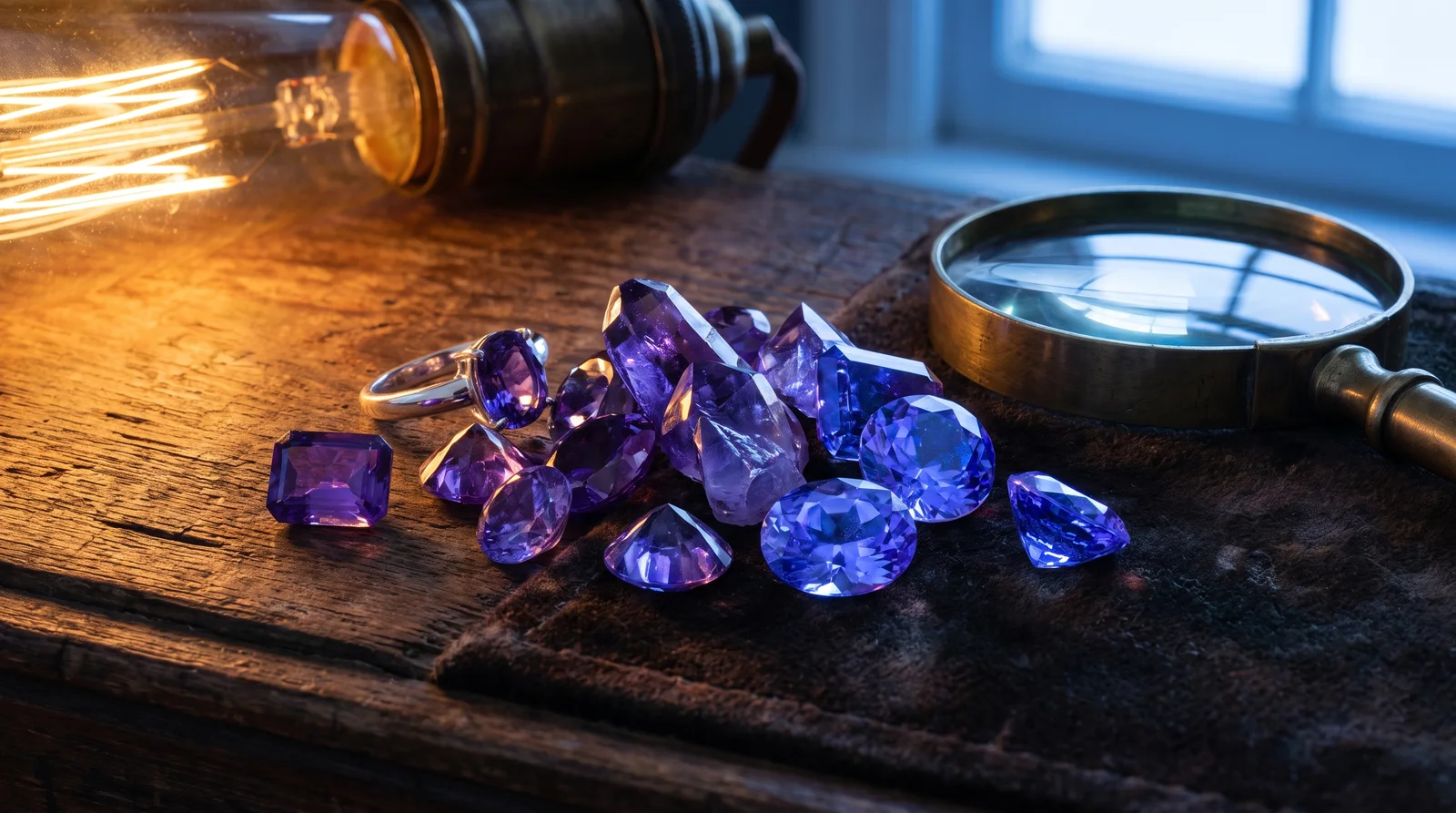
Tanzanite shifts because different light sources bring out different wavelengths. Pleochroic stones are especially sensitive to this. Daylight and cool LED lighting sit higher on the color temperature scale, often above 5000 Kelvin. That cooler light brings out the blue pleochroic color in tanzanite. Incandescent bulbs and candlelight sit much lower, often around 2700 Kelvin. That warmer light brings out the violet and reddish undertones instead.
This is the same underlying idea covered in guides about how lighting changes gold's appearance, particularly on phone cameras. Metal and gemstone color both respond to the color temperature of the light source. A tanzanite ring photographed under a ring light will look bluer than the same ring photographed near a warm lamp at home. Neither photo is wrong. They're just capturing different truths about the same stone.
Daylight And Cool LED Lighting
Under daylight, tanzanite tends to show its most balanced look. Jewelers often describe this as a deep royal blue with violet flashes underneath and frequently call it the truest expression of the stone. Cooler LED lighting in stores mimics this effect fairly closely. That's one reason gems often look more blue in a showcase than they do once you get them home.
Incandescent And Warm Indoor Lighting
Switch to a warm lamp or candlelight and the same stone leans violet, sometimes drifting toward a soft lilac. This happens because incandescent bulbs emit more energy at the red end of the spectrum. That shifts the balance of what your eye picks up from the stone's pleochroic colors. It's a real optical event, not a lighting trick or a cheap bulb problem.
Tanzanite Blue Vs Purple Appearance Explained
The blue versus purple debate in tanzanite comes down to which pleochroic color the cutter chose to favor when orienting the rough stone. A skilled cutter studies the rough crystal and decides how to angle the face-up view. That choice can maximize either the blue or the violet. This single decision has more influence on a stone's dominant color than almost anything else in the cutting process.
In the trade, a stone that leans more blue than violet is called violetish-Blue, often shortened to vB. One that leans more violet is called bluish-Violet, or bV. Neither is objectively better. It's a matter of personal preference, similar to choosing between a warmer or cooler diamond in a colored gemstone buying guide for rubies, where hue preference is just as personal as it is with tanzanite.
Size plays a role too. Tanzanite under 3 carats tends to run pastel to medium in tone. Stones over 5 carats usually carry the deepest, most saturated color. Past the 50-carat mark, tanzanite often turns a blue so dark it edges toward black. That's part of why larger tanzanite commands such a premium at auction and in fine jewelry collections.
Tanzanite Color Under Incandescent Vs Daylight In Real Situations
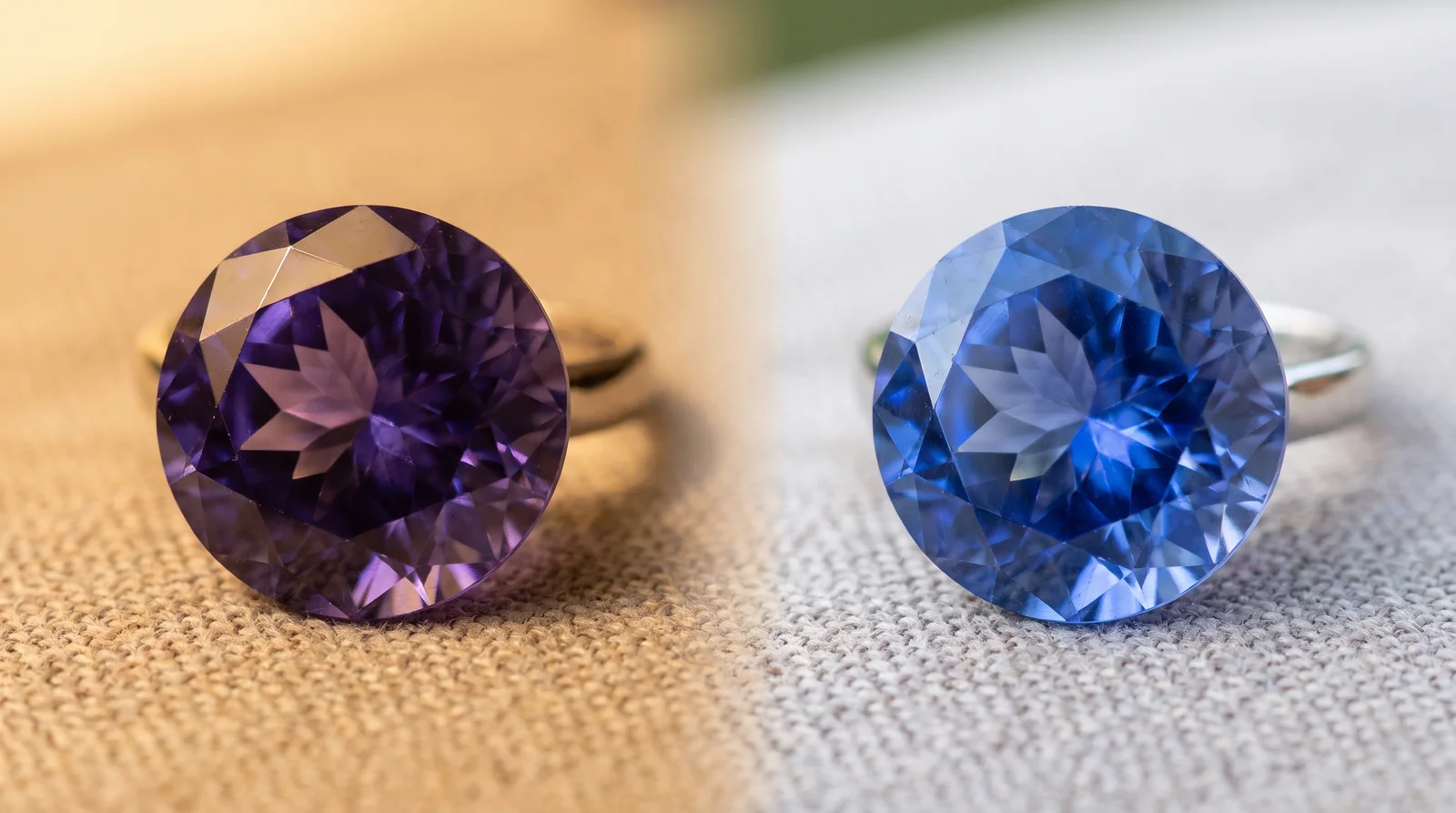
The clearest way to see tanzanite's shift is to compare it under a single lamp indoors, then outside in open daylight, within a few minutes of each other. Retailers who photograph tanzanite only in a studio booth can unintentionally mislead buyers. Studio lighting rarely matches how the stone will look on your hand at a restaurant table or walking outside. This is exactly the gap described in grading discussions from TopTanzanite's real-world grading breakdown, which notes that two stones with identical lab grades can look completely different once they leave the lab.
I've watched customers try on the same ring under three light sources in one sitting and react like they're looking at different stones. That reaction is normal. It's also useful information, since it tells you how the ring will actually perform in your daily life rather than in a single photograph.
What This Means When You Shop In Store Versus Online
Store lighting is almost always cooler and more flattering to the blue side of tanzanite. Home lighting, especially older lamps, tends to be warmer. If you're buying online, ask for a video shot in at least two lighting conditions rather than a single polished photo. That single request solves most of the buyer's remorse tied to tanzanite color surprises.
How To View Tanzanite True Color Before You Buy
There is no single true color for tanzanite, since the stone is designed by nature to shift. The better goal is understanding its full range before purchase. Start by tilting the stone slowly under one light source and watching how the blue and violet trade dominance. Then repeat that same motion under a completely different light, ideally moving from an indoor lamp to a window with natural daylight.
Pay attention to the setting metal as well. White gold and platinum tend to cool the stone's appearance and push it toward blue, while yellow and rose gold warm it and let the violet come forward. This mirrors a point often made when comparing sapphire's color stability against stones that shift more dramatically, since metal choice changes perceived hue in nearly every colored gemstone.
A Simple Three-Step Check
Hold the stone under daylight near a window first. Then move to a warm lamp indoors. Finally, check it under any LED lighting in your home, since most modern fixtures run cooler than older incandescent bulbs. If you like the stone in all three settings, you've found one with a color range you'll enjoy long term, rather than one that only looks good in a single spot.
Tanzanite Dichroism Violet Blue Shift And Why Experts Talk About Trichroism
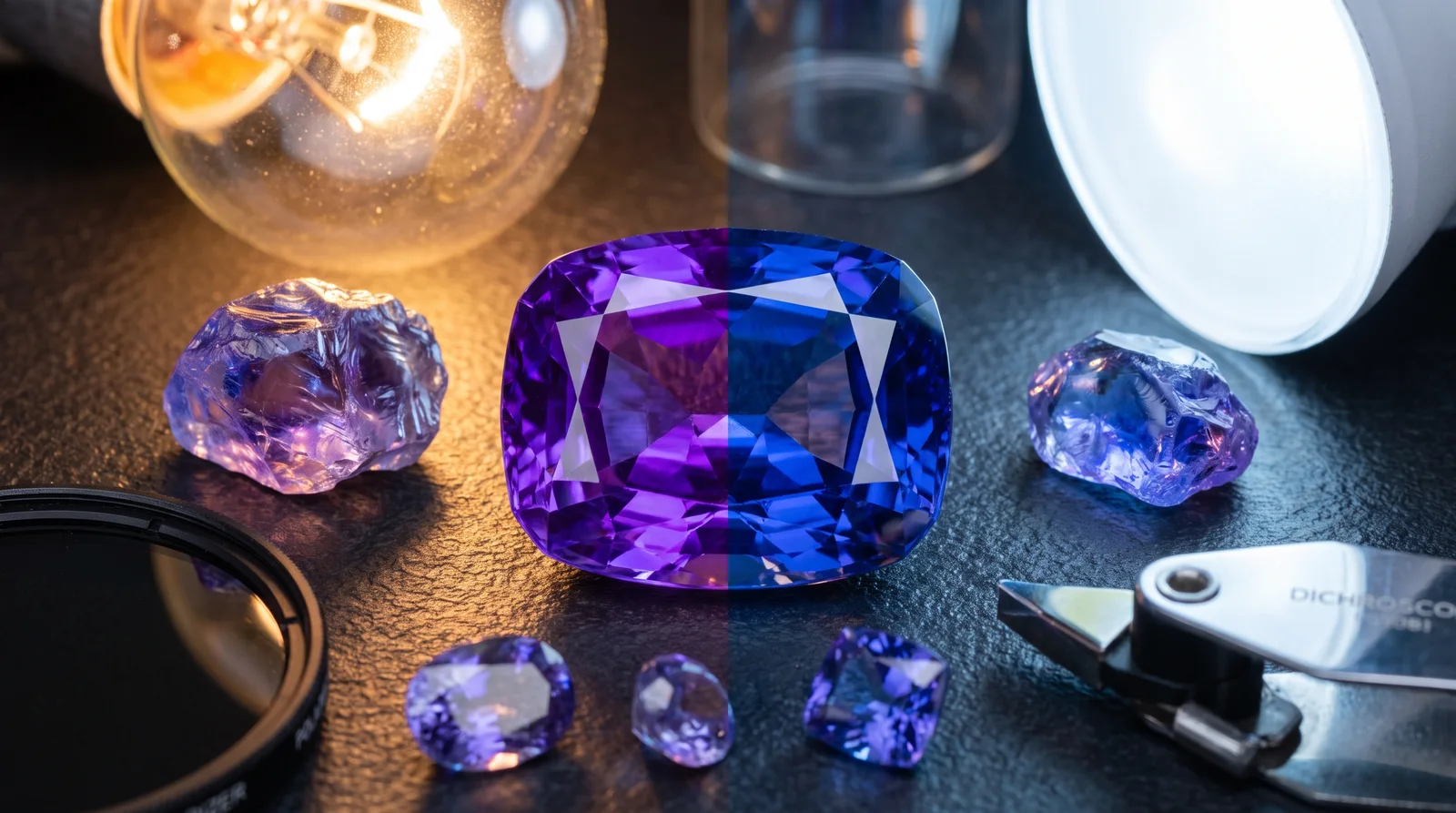
Technically, tanzanite shows three pleochroic colors, not two. That's why gemologists sometimes call it trichroic rather than simply dichroic. The third color, a reddish brown, is largely removed through heat treatment. That's why most finished tanzanite on the market only visibly displays the violet blue shift between two dominant tones. Untreated rough crystals, by contrast, can still show flashes of that brownish third color if you know where to look.
Mohs hardness for tanzanite sits around 6 to 6.5, noticeably softer than sapphire's 9, based on comparisons from GemsNY's tanzanite blue breakdown. That softness matters for everyday wear, but it doesn't affect the color shifting behavior at all. The trichroism is a structural property tied to the crystal lattice, completely separate from hardness or durability.
Frequently Asked Questions About Tanzanite Color Shifting
Why does tanzanite look different in every photo I see online?
Camera white balance and the lighting used during the shoot both influence how blue or violet a photo appears. A studio ring light often produces a cooler, bluer image than the same stone would show under your bathroom lighting at home. Always ask for video under multiple light sources before buying sight unseen.
Does tanzanite color change mean the stone is fake or treated poorly?
No. Color shifting is a natural optical property of genuine tanzanite and has nothing to do with quality or authenticity. Almost all commercial tanzanite is heat treated to improve color, and that process is standard practice, not a red flag. A stone that refuses to shift at all under different lighting is more unusual than one that does.
Is blue tanzanite more valuable than purple tanzanite?
Value depends more on saturation, tone, and clarity than on whether the dominant hue leans blue or violet. Some collectors pay a premium for a strong violetish-Blue stone, while others specifically seek out a rich bluish-Violet. Personal taste and current market demand both play a role here.
How can I tell what color my tanzanite will look like day to day?
Try the stone on in at least two different lighting environments before finalizing a purchase, ideally one warm and one cool. Jewelers experienced with tanzanite can also show you how the piece performs under a phone flashlight versus daylight, which approximates most everyday situations. This small extra step prevents the most common source of buyer disappointment with colored gemstones.
Can the metal setting change how tanzanite's color shift looks?
Yes, white metals like platinum and white gold tend to sharpen and cool the blue tones, while yellow and rose gold warm the stone and bring out more violet. This is a real optical effect, not just a styling preference. Choosing a setting metal is one of the few color decisions you actually control after the stone itself is cut.
Getting Comfortable With A Stone That Never Sits Still
Tanzanite was never meant to hold one fixed color. Once you understand why, the shifting stops feeling confusing and starts feeling like the whole point. The stone's pleochroism is a genuine optical property rooted in its crystal structure, not a defect or a marketing trick. Blue under daylight, violet under lamplight, and every shade between the two are all honest expressions of the same gem. If you're shopping for tanzanite, take the time to view it under a few different light sources before you commit. Ask questions about how the stone was cut and oriented, since that decision shapes its dominant color as much as lighting does. A jeweler who understands pleochroism well will welcome those questions rather than rush past them. That conversation is usually the best sign you're buying from someone who actually knows the stone.