Sapphire Vs Moissanite Engagement Ring: Why Smart Canadian Shoppers Are Split 50/50
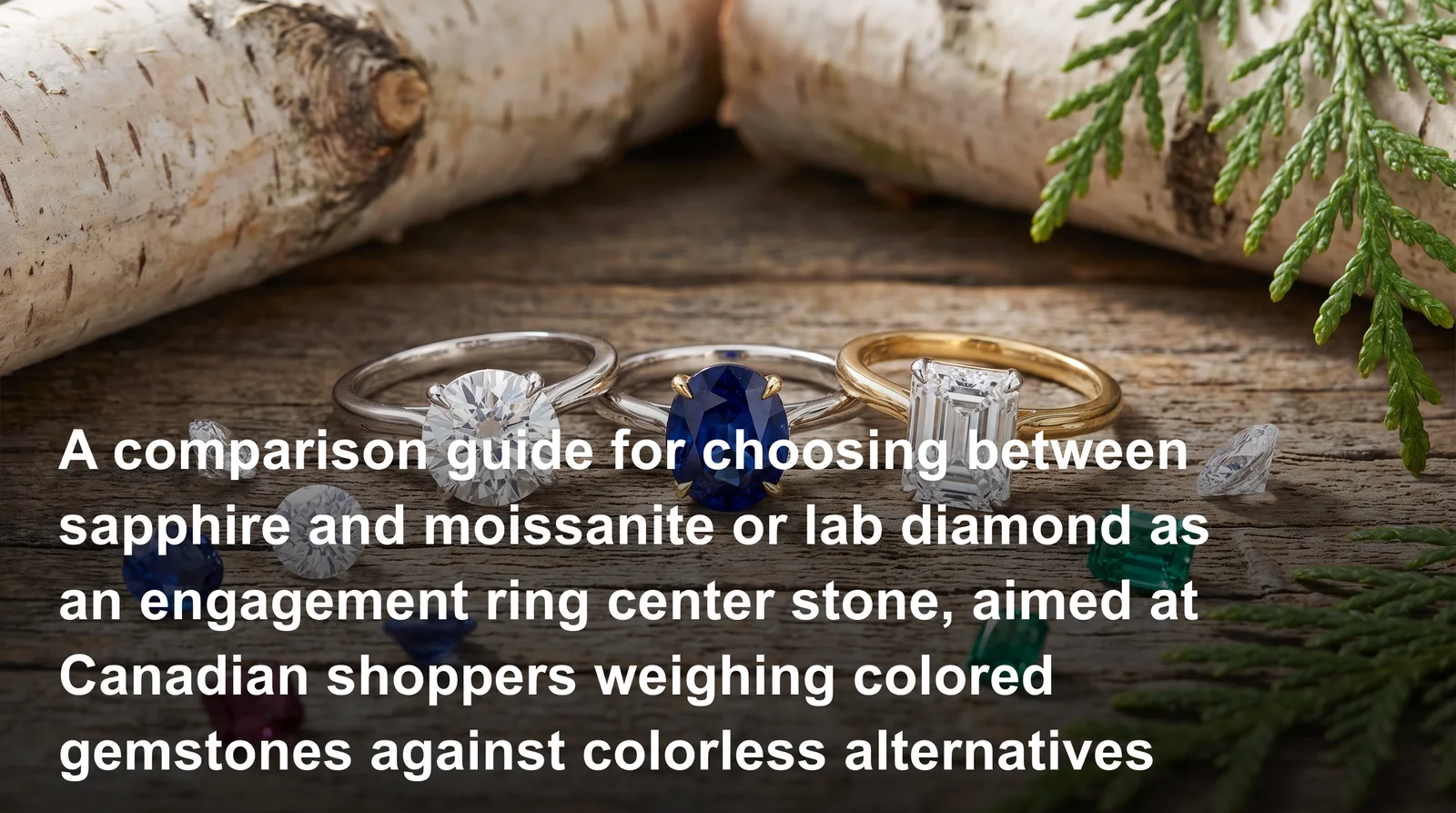
You've got two rings side by side. One's a deep blue sapphire. One's a colorless stone that throws rainbow light across the table. Picking between them isn't about which stone is "better." It's about what you actually want to wear for the next 40 years.
Here's the short answer. A sapphire vs moissanite engagement ring choice comes down to color versus fire, and both stones hold up fine for daily wear. Sapphire sits at 9 on the Mohs hardness scale. Moissanite sits at 9.25. That gap barely matters in real life. What matters more is how each stone looks in ten years, what it costs per carat in Canada, and how it resells if you ever need to know that.
Which Engagement Ring Stone Is Most Durable for Everyday Wear?
Moissanite scores slightly higher on paper, but sapphire is tough enough for anyone's daily life. Both stones can handle dish washing, gym workouts, and typing all day without a scratch.
The Mohs scale measures scratch resistance. It's not a straight line though. It's logarithmic, meaning the jump from 9 to 10 is bigger than the jump from 1 to 9 combined. So moissanite's edge over sapphire is real but small. Lab grown diamond sits at the very top, a full 10 on the scale.
Here's what most guides skip. Hardness isn't the whole durability story. Toughness matters just as much. Toughness is a stone's resistance to chipping if you knock it on a counter.
Sapphire has excellent toughness and no cleavage plane, which means it won't split along a weak line the way some gems can. Moissanite also holds up well against chipping. For a ring you'll wear every day gardening, cooking, or hauling groceries, both stones pass the test easily.
Moissanite Vs Sapphire Hardness in Useful Terms
Moissanite vs sapphire hardness sounds like a big deal until you live with either stone. A 0.25 point gap on the Mohs scale won't show up in normal wear. You'd need to work with abrasives daily, think construction or metalworking, before that gap ever mattered.
For an office worker, a nurse, a teacher, or a parent chasing toddlers, both stones will look sharp for decades. Choose based on how the stone looks, not the number on a hardness chart. That leads to the next question. How do these stones actually look after years of wear?
Sapphire Vs Diamond Engagement Ring Color: Does It Fade Over Time?
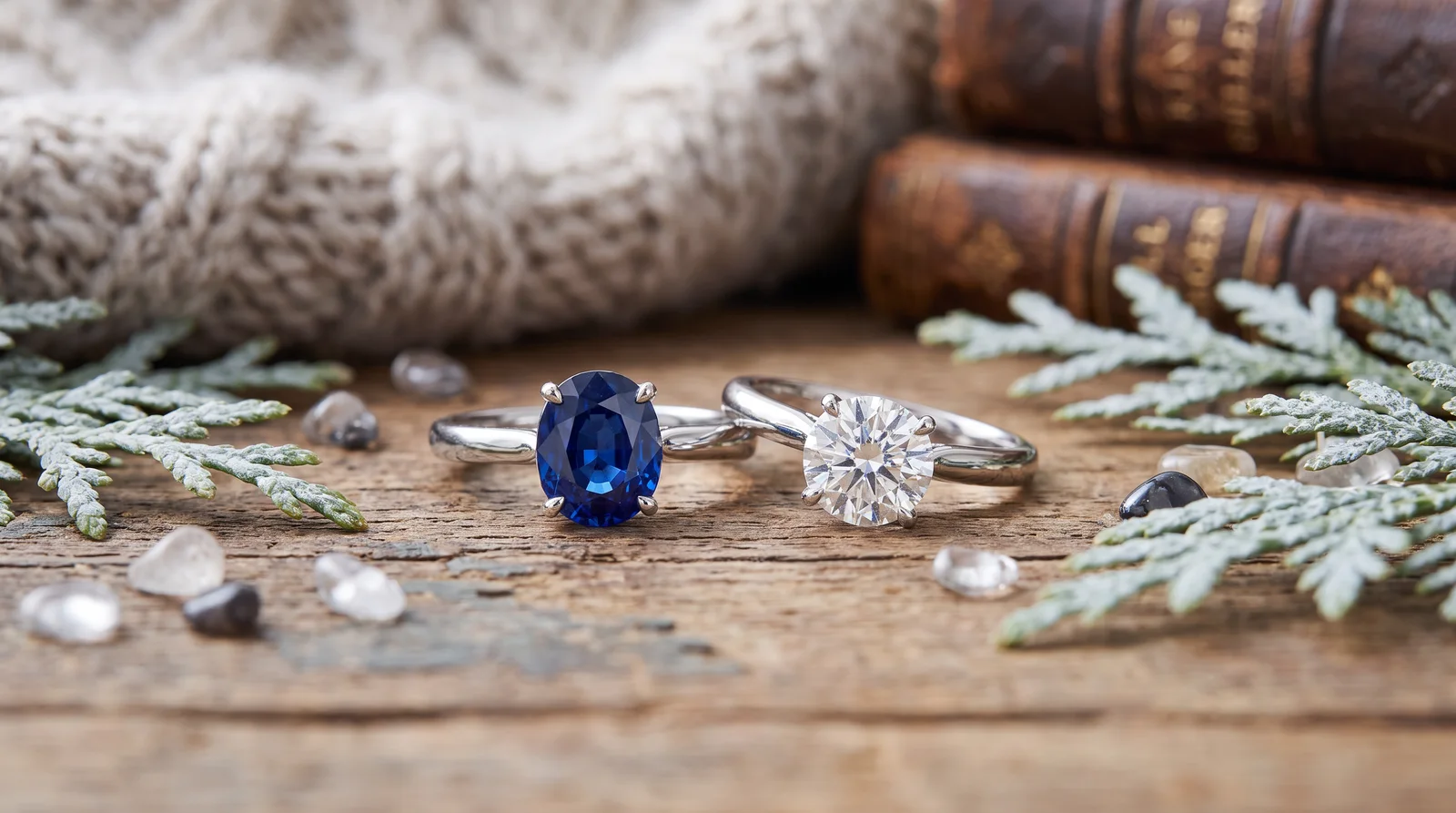
A well chosen sapphire holds its color for life. It won't fade, cloud, or go dull under normal cases. This is one of the biggest differences in a sapphire vs diamond engagement ring debate, and it's often overlooked.
Sapphire is corundum, the same mineral family as ruby. Its color comes from trace elements locked into the crystal structure millions of years ago. That color isn't going anywhere. I've seen sapphires passed down three generations that still show the same rich blue they had on day one.
Moissanite and lab diamonds don't fade either, but they can pick up an oily film from lotion or soap. That film dulls their sparkle until you clean them. Sapphire shows this less because its brilliance is quieter to begin with. A colorless stone with heavy fire shows a dirty smudge more obviously than a deep blue sapphire does.
How Sparkle Changes With Wear
Moissanite keeps its fire forever, but you'll notice buildup faster because the contrast is sharper. A foggy moissanite looks noticeably less lively than a clean one. Sapphire's subtler brilliance means a little residue is less obvious to the eye.
Either way, a soft brush and warm soapy water once a week keeps both stones performing. That's a small price for decades of daily sparkle. Now let's talk about the visual side of this choice, because it's where the real decision usually gets made.
White Sapphire Vs Moissanite: What Do They Actually Look Like Side by Side?
White sapphire vs moissanite isn't really a fair fight if you want maximum sparkle. Moissanite wins that contest by a wide margin. But sparkle isn't everyone's goal, and that's the whole point of this section.
Moissanite has a refractive index around 2.65, higher than diamond's 2.42. Its dispersion, the rainbow flash effect, is more than double a diamond's. Under any light source, moissanite throws visible color flashes that catch focus from across a room.
White sapphire has a refractive index closer to 1.76. It produces a calmer, more subdued shine. Some buyers find it elegant and understated. Others find it flat next to a fiery moissanite. Neither reaction is wrong. It's about what you want your ring to do when someone looks at your hand.
Colored Sapphire Changes the Comparison Entirely
If you're set on a blue, pink, or green sapphire instead of white sapphire, the comparison shifts completely. You're no longer chasing the same colorless look as moissanite at all. You're picking a colored gemstone vs diamond engagement ring style on purpose.
A colored gemstone vs diamond engagement ring decision is really a decision about identity. Do you want a ring that looks like everyone else's, or one that's unmistakably yours? Princess Diana's sapphire ring, now worn by Kate Middleton, made that case decades ago. It still gets copied today because deep blue color reads as timeless, not trendy.
Sapphire Engagement Ring Canada Pricing: What You'll Actually Pay Per Carat
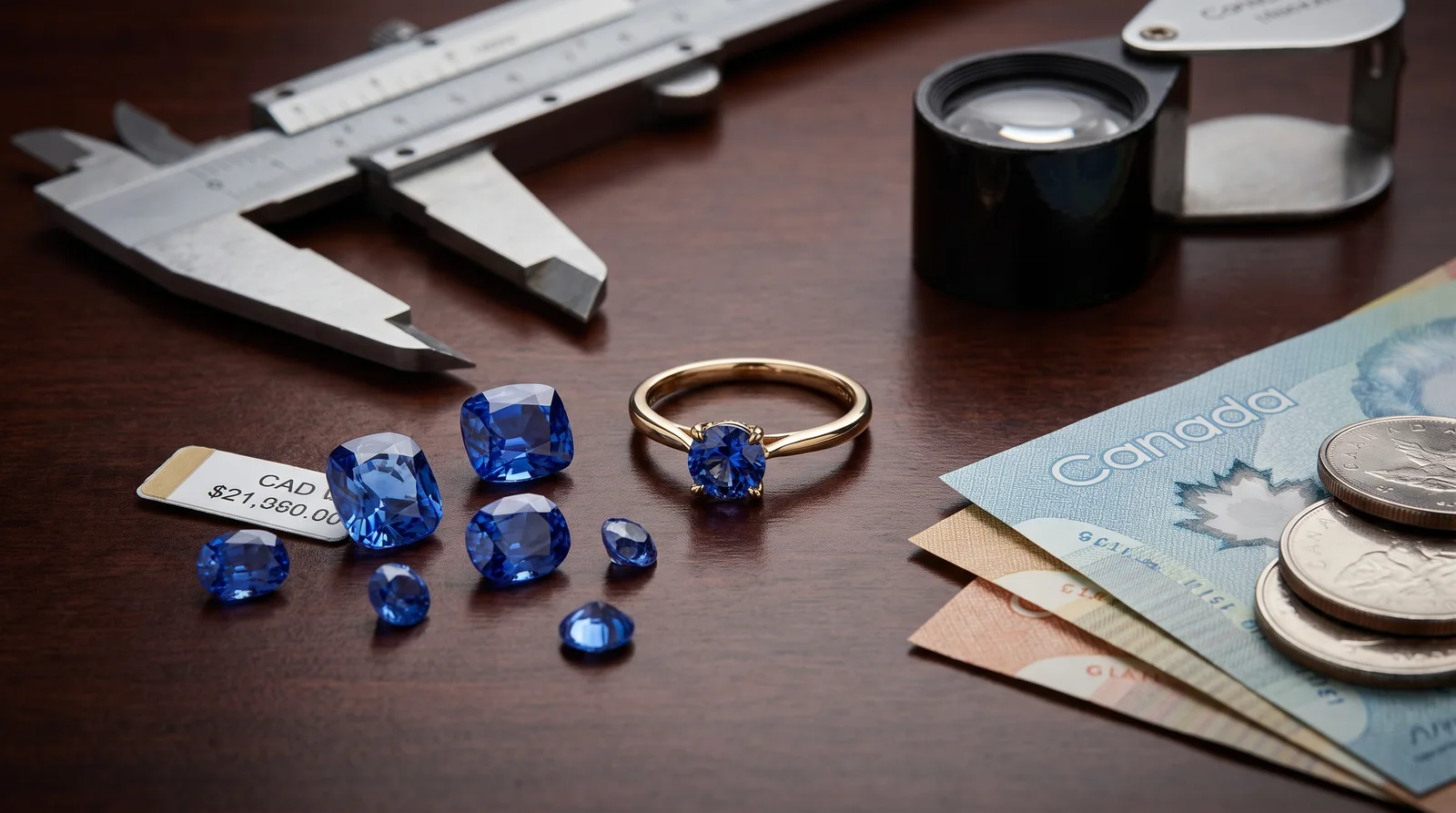
Sapphire engagement ring Canada prices vary a lot more than moissanite or lab diamond prices do. That's because natural sapphire is a mined gemstone with real rarity behind it. A one carat natural blue sapphire in Canada can run anywhere from 700 to 6,000 CAD depending on color saturation and clarity.
Lab grown sapphire costs far less, often under 300 CAD per carat, and looks nearly identical to the untrained eye. Moissanite is the budget leader across the board. A one carat moissanite usually runs 100 to 500 CAD.
Lab grown diamonds sit in the middle. A one carat lab diamond in Canada usually runs 800 to 2,000 CAD, and prices keep dropping as production scales up. Mined diamonds remain the priciest option per carat by a wide margin.
Moissanite Vs Lab Grown Diamond on a Real Budget
Moissanite vs lab grown diamond comes down to how close you need to get to a true diamond. Moissanite costs a fraction of a lab diamond's price but reads differently under close inspection. It's brighter, fierier, and a trained eye can spot the difference.
Lab diamonds are chemically identical to mined diamonds. A gemologist needs special equipment to tell them apart from natural stones. If the goal is a real diamond at a lower cost, lab grown wins that set race.
If the goal is maximum sparkle for minimum spend, moissanite is hard to beat. For a deeper breakdown of that set matchup, this guide on lab diamond vs moissanite walks through the details. Either path saves serious money over a mined diamond of the same size.
Colored Gemstone Vs Diamond Engagement Ring Resale and Insurance Value
A colored gemstone vs diamond engagement ring choice affects resale value in ways most shoppers don't expect going in. Natural sapphire, mainly untreated stones with strong color, can actually hold or grow in value over time. Fine sapphires are genuinely rare, and rarity supports resale demand.
Lab grown diamonds don't share that advantage. Because supply is unlimited and production costs keep falling, resale value for lab diamonds drops fast. You might get back a small fraction of the original price if you ever sell.
Moissanite has the least resale value of the three. It's mass produced to spec, so there's no scarcity story supporting a secondary market. If resale isn't a concern for you, this barely matters day to day.
Insuring Each Stone Type
Insurance works a little differently for each stone. Natural sapphire needs an appraisal that documents treatment status, origin, and color grade, since those factors drive value. Lab grown diamonds and moissanite are simpler to insure since replacement cost is easier to pin down.
Either way, get a written appraisal and keep receipts. Most Canadian home insurance rules cap jewelry coverage low, so a rider or separate jewelry rule is worth the small yearly cost. This matters more with a natural sapphire since replacing an identical stone isn't as simple as reordering from a catalog.
Halo Vs Solitaire Settings: Which Suits Sapphire and Which Suits Moissanite?
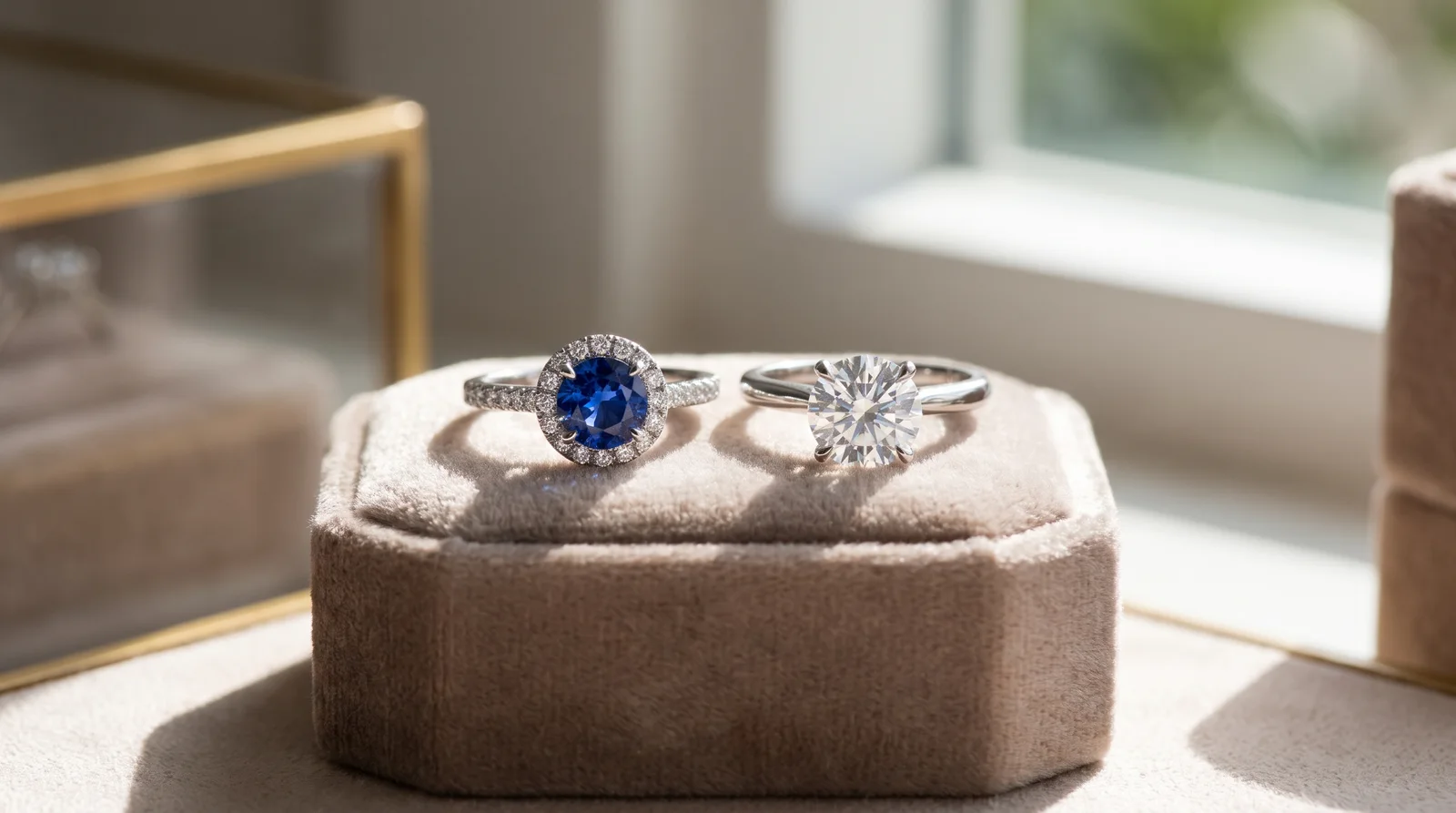
A solitaire setting favors a moissanite's fire and a sapphire's color equally well, but for other reasons. Solitaires put the stone front and center with nothing competing for focus. That works beautifully for a moissanite because every angle throws light. It also works for a sapphire because the color reads clean and uninterrupted.
A halo setting changes the story more for moissanite than for sapphire. Surrounding a moissanite with small diamonds or more moissanite amplifies the fire even further. Some people love that. Others find it overwhelming, almost too much sparkle in one small space.
A halo around a colored sapphire does something other. It frames the color and makes the center stone look larger without changing its character. A blue sapphire in a halo of white diamonds is a classic look for a reason. It draws the eye to color first, sparkle second.
Which Setting Wins for Everyday Wear
Solitaires snag less on clothing and hair, which matters if you work with your hands. Halos protect the girdle of the center stone a bit more, since the metal sits closer to the edges. Neither setting style is more durable in a meaningful way. Pick the one that shows off the stone you actually chose.
If you're still deciding on a setting style and want something built around your exact stone choice, a custom build lets you test both looks before committing.
Frequently Asked Questions
Does moissanite look fake next to a real diamond?
Moissanite looks other, not fake. It throws more rainbow fire than a diamond, which some people notice right away in bright light. Whether that reads as fake or simply more brilliant depends on personal taste.
Can a sapphire engagement ring get scratched from daily wear?
Sapphire resists scratches well at 9 on the Mohs scale. Only diamond and moissanite rank higher. Normal daily tasks like typing, cooking, or workout won't scratch a sapphire.
Which holds up better long term, moissanite or sapphire?
Both hold up well for decades of daily wear. Moissanite has a slight edge in scratch resistance. Sapphire has an edge in color stability since it never fades or changes tone.
Is a colored sapphire a good idea for an engagement ring?
Yes, colored sapphire works well for an engagement ring and has centuries of royal history behind it. It's plenty hard for daily wear and won't lose its color. The main tradeoff is less sparkle compared to a colorless diamond or moissanite.
How do I know if I should pick sapphire over moissanite?
Pick sapphire if you want color, history, and a quieter shine that won't ever change. Pick moissanite if maximum sparkle and a lower price matter more to you than color. Neither choice is a compromise, they're just other priorities.
Making Your Final Call
Look, there's no wrong answer here. Both stones handle daily life just fine. Both look stunning in the right setting.
The real question is simpler than any spec sheet. Do you want color that never changes, or fire that never quits? Sit with that question for a minute and the rest usually sorts itself out. Once you know your stone, budgeting for the band matters too, so check current metal prices before you settle on a design. And if you want a ring built around your exact choice, from stone to setting to metal, a custom project is the easiest way to get there.