The Ruby Engagement Ring Guide That Answers What Every Jeweler Wishes You Asked First
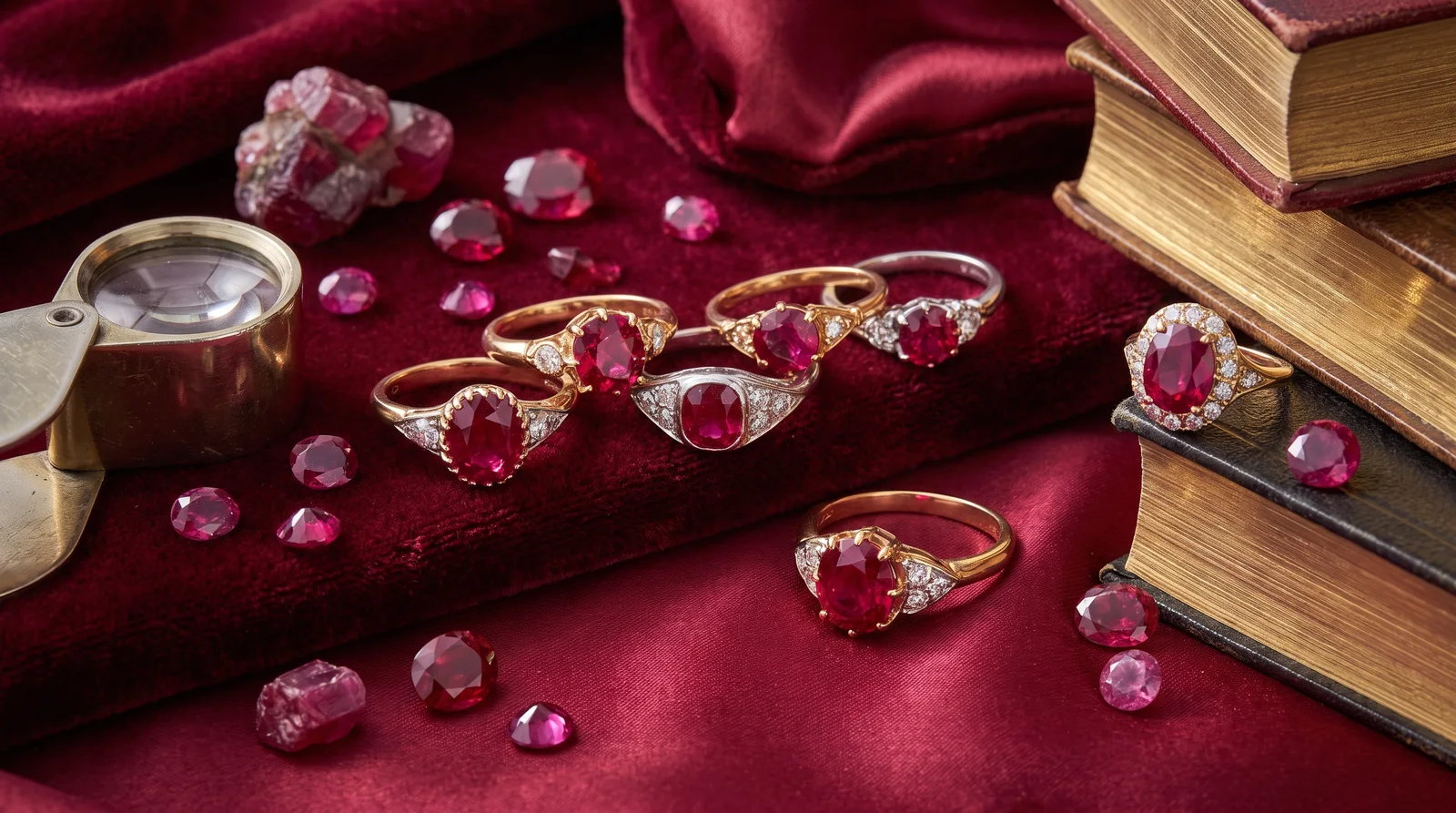
Thinking about a ruby center stone? Good instinct. This ruby engagement ring guide answers the one question most shoppers get wrong: can ruby handle daily wear the way a diamond does? Short answer, yes, with some real caveats. Rubies score 9 on the Mohs hardness scale, just below diamond's 10. That makes ruby one of the few colored gemstones tough enough for a ring you wear every day. But hardness is only half the story. Color grading, origin, and treatment history swing ruby prices from a few hundred dollars a carat to well over $50,000. Let's get into what actually matters. 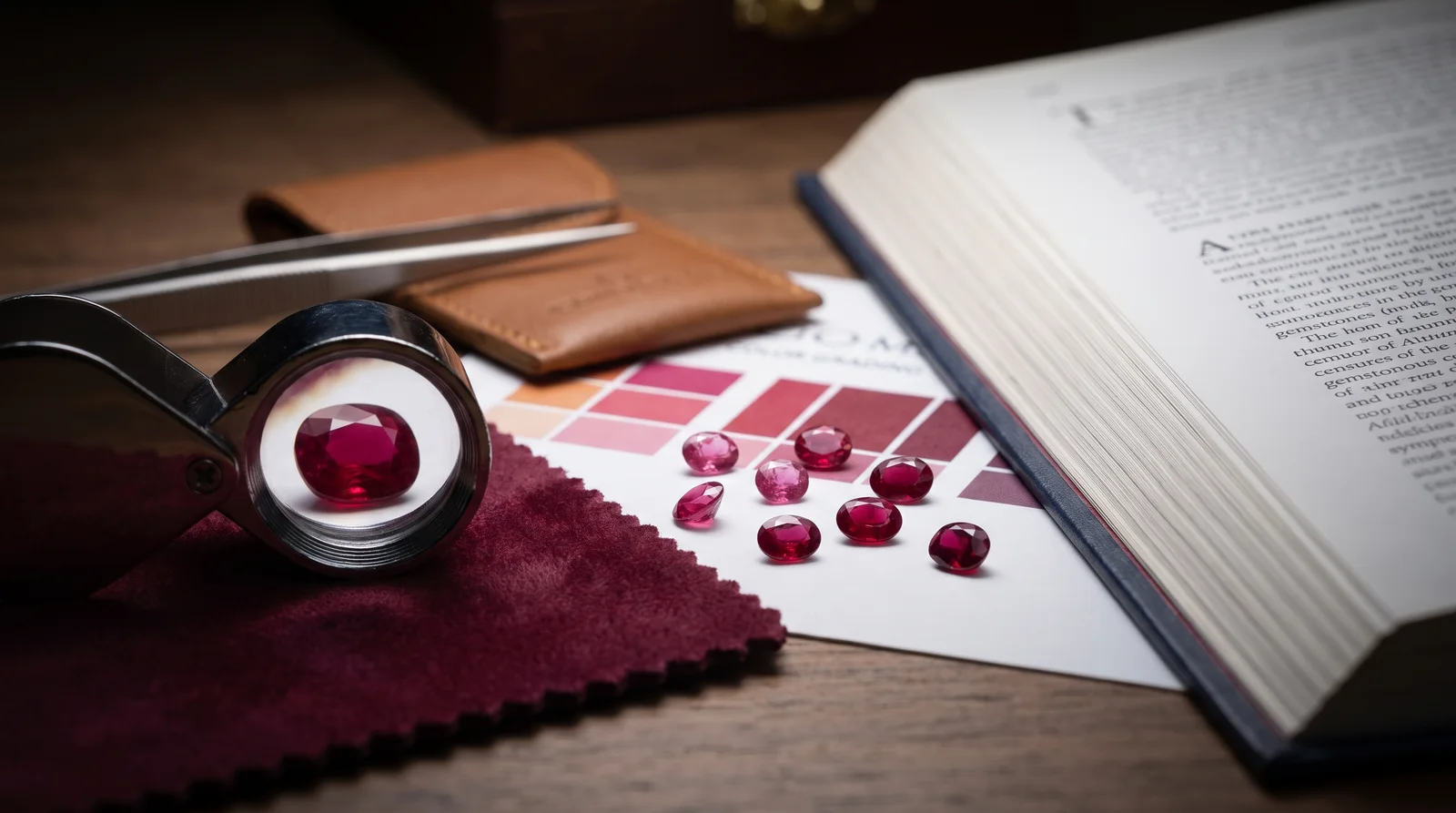 Ruby color grading is the single biggest factor in a ruby's price, far more influential than clarity or carat weight. Unlike diamonds, where colorlessness is the goal, rubies are valued for how saturated and pure their red actually is. The top grade, informally called pigeon blood ruby, describes a vivid red with a whisper of blue undertone and almost no brown or gray masking the color. It's rare. It's also why two rubies that look similar in a photo can carry wildly different price tags.
Gemologists look at three things when grading ruby color: hue, saturation, and tone. Hue is the actual color family, ranging from purplish red to orangey red, with pure red sitting in the middle as most desirable. Saturation is intensity, how vivid or muted the red appears. Tone is lightness or darkness. A ruby that's too dark reads almost black in low light. One that's too light drifts toward pink and gets classified differently altogether.
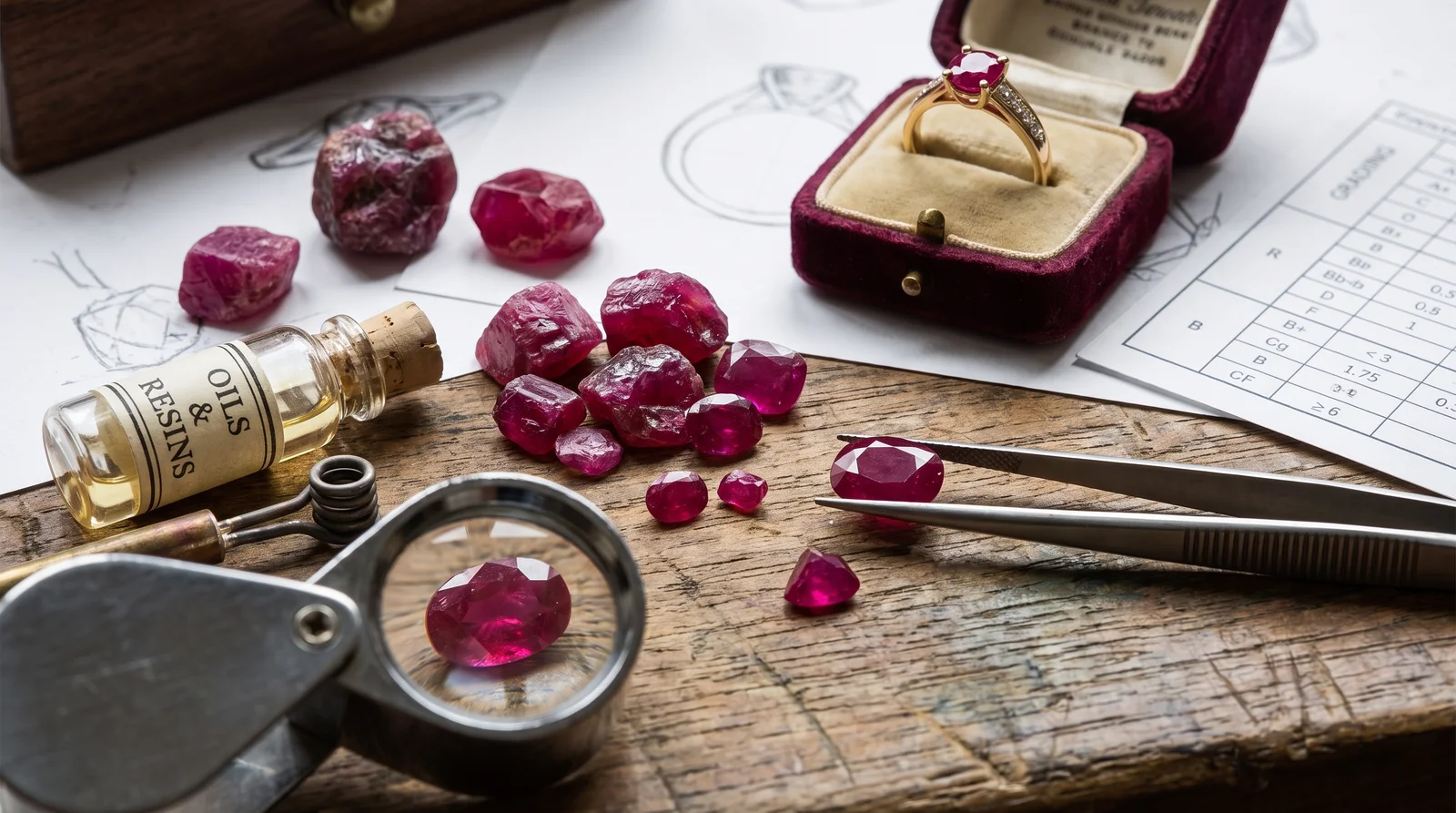 Almost all rubies on the market today receive heat treatment. That's considered standard industry practice, not a red flag. Heat treatment improves color and clarity by dissolving certain inclusions. It can turn a purplish or brownish stone into a cleaner red. It's stable, permanent, and doesn't need special disclosure beyond what a reputable jeweler already provides. Untreated rubies exist but they're genuinely rare and command serious premiums, often three to five times the price of an equivalent heat treated stone.
Beyond heat, some rubies undergo glass filling or lattice diffusion. These treatments fill surface fractures with glass or add color through the outer layer. They're far more significant and should always be disclosed, since they affect long term durability and value substantially. A glass filled ruby, for example, needs gentler cleaning, because ultrasonic cleaners can damage the filling.
Always ask your jeweler directly what treatment a ruby received before buying. A reputable seller will have this documented, often through a gemological lab report from GIA or AGL. This single question protects you from paying fine grade prices for a treated commercial stone.
Treatment history connects directly to something else buyers overlook: what the ring is actually for, symbolically speaking.
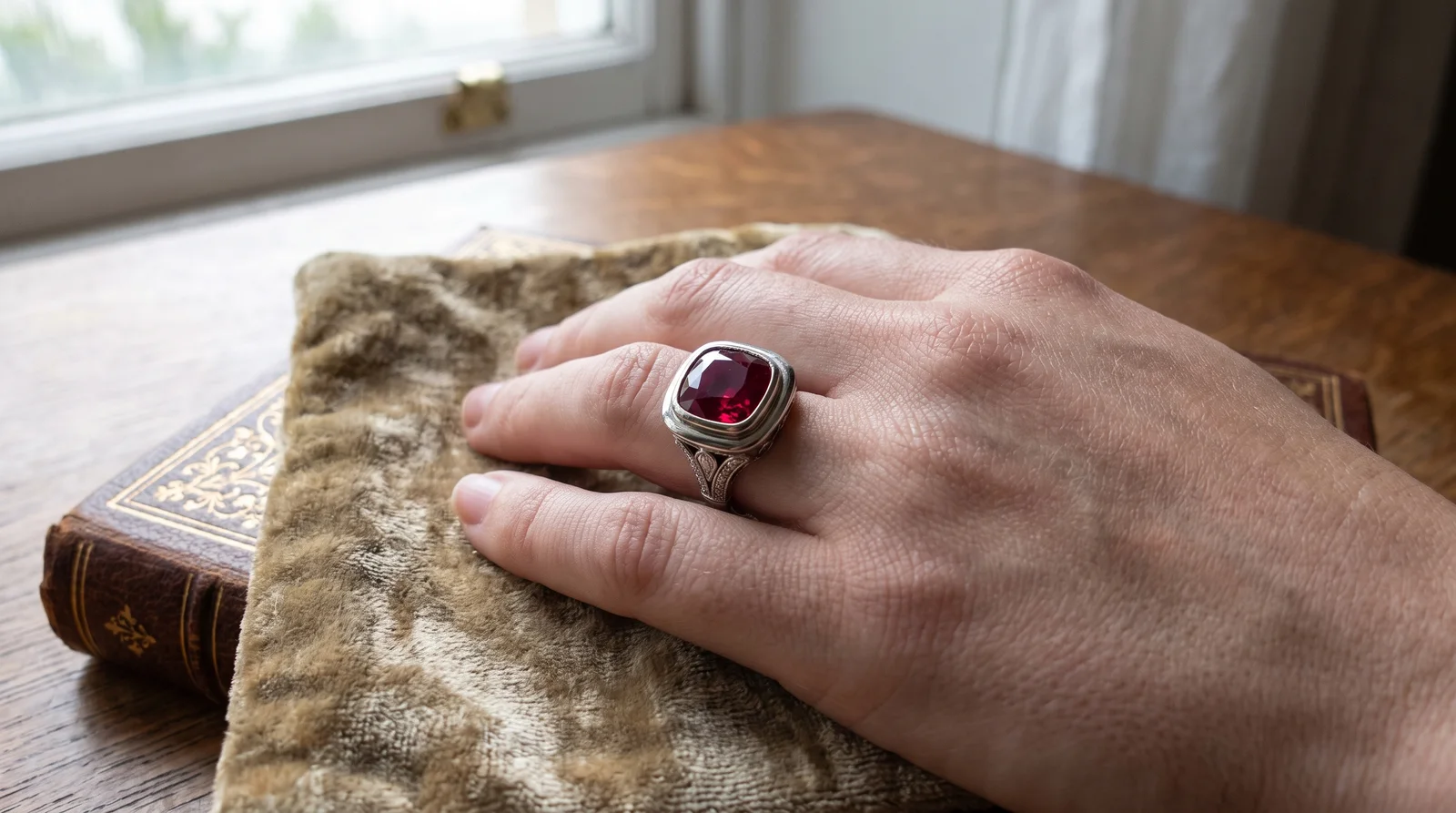 The right setting protects a ruby's facets and prongs by minimizing exposure to edge impact, which is where chipping actually happens even on a hard stone. Bezel settings offer the most protection. Metal wraps fully around the stone's girdle, so there's no exposed edge to catch on anything. This is a smart choice for anyone with an active job or hobby, though it does slightly reduce how much light reaches the stone from the sides.
Four and six prong settings are more common for ruby center stones because they show off more of the stone while still offering solid security. The key detail: make sure prongs cover any pointed corners on fancy cut rubies like cushion or emerald cuts. Those corners are the most vulnerable points on the entire stone. A skilled setter will position prongs specifically over these weak points rather than just spacing them evenly.
Is a Ruby Engagement Ring Actually a Good Idea?
Yes, rubies are genuinely good choices for engagement rings. They combine top-tier hardness with a color that diamonds simply cannot offer. A ring gets bumped against doorframes, dragged through dish soap, and knocked on car doors more times a year than most people realize. You need a stone built for that kind of life. Rubies belong to the corundum family, the same mineral group as sapphire. That's exactly why both stones show up so often in fine jewelry despite their price gap with diamond. If you're weighing ruby against other corundum options, it helps to see how sapphire performs in daily wear too. My guide on sapphire vs moissanite engagement rings covers that comparison in more depth, since sapphire shares ruby's hardness profile almost exactly. So durability isn't really the question anymore. The real question is what kind of ruby you're buying. That's where the story gets complicated fast.Ruby Hardness Mohs Scale: What 9 Actually Means Day to Day
The ruby hardness Mohs scale rating of 9 means rubies resist scratches from almost everything except diamond and a handful of lab materials. In practical terms, your ruby won't scratch from keys, sand, or normal jewelry contact. Diamond sits at 10, and that one-point gap sounds small but it's not linear. Diamond is roughly four times harder than corundum, not just slightly harder. Still, a 9 is plenty tough for a lifetime of wear. Family rubies passed through three generations often show zero surface wear. Toughness matters too, and it's a separate property from hardness. Toughness measures resistance to chipping and cracking from impact, not scratching. Rubies score well here, better than many people assume. That's why they hold up through active daily use like gardening, cooking, or gym workouts.Are Rubies Good for Engagement Rings With Active Lifestyles?
Rubies are good for engagement rings even for people with hands-on jobs or hobbies, thanks to that hardness and toughness combination. I've had clients who work in kitchens, garden every weekend, or do CrossFit five days a week choose rubies specifically because they don't want to babysit their ring. That said, no gemstone is indestructible. A hard enough blow at the wrong angle can chip any stone, ruby included. Setting choice plays a bigger role here than most shoppers expect, and we'll get into that shortly. Now that durability is settled, let's talk about the part that actually determines what you'll pay: color.Ruby Color Grading and Why Pigeon Blood Changes Everything
Ruby color grading is the single biggest factor in a ruby's price, far more influential than clarity or carat weight. Unlike diamonds, where colorlessness is the goal, rubies are valued for how saturated and pure their red actually is. The top grade, informally called pigeon blood ruby, describes a vivid red with a whisper of blue undertone and almost no brown or gray masking the color. It's rare. It's also why two rubies that look similar in a photo can carry wildly different price tags.
Gemologists look at three things when grading ruby color: hue, saturation, and tone. Hue is the actual color family, ranging from purplish red to orangey red, with pure red sitting in the middle as most desirable. Saturation is intensity, how vivid or muted the red appears. Tone is lightness or darkness. A ruby that's too dark reads almost black in low light. One that's too light drifts toward pink and gets classified differently altogether. Pigeon Blood Ruby Explained
A pigeon blood ruby shows a specific fluorescent quality that most rubies simply don't have. Under UV light, and even in regular daylight, these stones seem to glow from within. That fluorescence comes from a chemical fingerprint: low iron content paired with high chromium. Iron actually dampens fluorescence. That's why rubies loaded with iron look flatter and darker, regardless of how deep the red appears. This matters because it explains regional differences you'll see when shopping. Burmese rubies from Myanmar's Mogok Valley tend to have naturally low iron. That's exactly why so many pigeon blood specimens trace back there. It's not marketing. It's geology.Commercial Grade vs Fine Grade Ruby Color
Most rubies sold today fall into commercial grade. That means decent red color, usually heat treated, and priced for everyday budgets. These stones still look attractive and hold up fine in a ring. Fine grade rubies show stronger saturation, better hue purity, and often less visible treatment. The jump from commercial to fine can double or triple the per carat price, even before you get anywhere near pigeon blood territory. View a ruby in three lighting conditions before buying: daylight near a window, indoor incandescent light, and if possible, outdoor shade. Ruby color shifts more than people expect between these settings. You want to like it in all three, not just under a jeweler's spotlight. Color grading sets the foundation for price, but where the ruby actually came from adds another layer entirely.Ruby Ring Price Per Carat by Origin (Burmese, African, and Beyond)
Ruby ring price per carat varies more by origin than almost any other gemstone factor. Prices can shift by a factor of 50 or more between comparable sizes. Burmese rubies, particularly those with pigeon blood color, sit at the top of the market. Untreated stones over one carat from Myanmar can sell for $25,000 to $50,000 per carat at auction, occasionally higher for exceptional specimens. That's not a typo. It can even exceed the price of a flawless one carat diamond, which typically runs closer to $12,000 per carat. Mozambique has become the major supply source for the current market. Its rubies carry slightly higher iron content, which mutes fluorescence somewhat. Fine Mozambique rubies still show beautiful color. They typically run from a few hundred dollars per carat for commercial quality up to several thousand for top specimens. Madagascar and Thailand round out the other significant sources, each with its own typical color leanings. Thai rubies often trend darker with a garnet-like cast.Commercial Ruby Pricing You'll Actually Encounter
Most engagement ring shoppers land somewhere between $50 and $800 per carat for a nice heat treated ruby in the half carat to one carat range. This is the range where the vast majority of ruby engagement rings actually get purchased. You're getting solid color, good durability, and a stone that reads as rich red to anyone who sees it. You don't need museum grade rarity to get a beautiful ring.Natural vs Lab Created Ruby Rings on Price
Natural vs lab created ruby rings differ enormously in cost, for a simple reason: lab rubies skip millions of years of geologic scarcity. A lab created ruby with excellent color and clarity might run $20 to $50 per carat. That's a fraction of even commercial natural stones. Chemically and optically, lab rubies are nearly identical to natural ones. Both are crystallized corundum with chromium as the coloring agent. The tradeoff isn't beauty, it's story and resale expectation, which I'll cover later. Some couples love that a lab ruby lets them get a larger, more saturated stone within budget. Others want the one of a kind history that only a natural stone carries. Neither choice is wrong, but decide intentionally rather than by accident. Origin and treatment history shape price dramatically, so let's talk about what "treated" actually means for a ruby you're considering.Ruby Treatments and What They Mean for Your Purchase
Almost all rubies on the market today receive heat treatment. That's considered standard industry practice, not a red flag. Heat treatment improves color and clarity by dissolving certain inclusions. It can turn a purplish or brownish stone into a cleaner red. It's stable, permanent, and doesn't need special disclosure beyond what a reputable jeweler already provides. Untreated rubies exist but they're genuinely rare and command serious premiums, often three to five times the price of an equivalent heat treated stone.
Beyond heat, some rubies undergo glass filling or lattice diffusion. These treatments fill surface fractures with glass or add color through the outer layer. They're far more significant and should always be disclosed, since they affect long term durability and value substantially. A glass filled ruby, for example, needs gentler cleaning, because ultrasonic cleaners can damage the filling.
Always ask your jeweler directly what treatment a ruby received before buying. A reputable seller will have this documented, often through a gemological lab report from GIA or AGL. This single question protects you from paying fine grade prices for a treated commercial stone.
Treatment history connects directly to something else buyers overlook: what the ring is actually for, symbolically speaking. Ruby Engagement Ring Meaning Beyond the Royal Sapphire Story
Ruby engagement ring meaning centers on passion, courage, and vitality. That's distinct from the regal, protective associations most people connect with sapphire. Sanskrit texts referred to ruby as "ratnaraj," translating roughly to king of gemstones. Ancient Burmese warriors reportedly wore rubies embedded in their skin. They believed it made them invincible in battle. That's a different symbolic lineage than sapphire's association with wisdom and nobility. For couples choosing a ruby specifically, the symbolism often centers on intensity of feeling rather than status or tradition. Ruby's deep red has long been tied to the heart, to blood, and to the literal color of strong emotion. Choosing ruby over diamond or sapphire is often a deliberate statement. It says the relationship is bold rather than conventional.Ruby as a Meaningful Alternative Choice
Couples drawn to ruby often want something that feels less expected than a white diamond, without sacrificing seriousness or durability. Ruby is also the traditional July birthstone. That gives it extra resonance for anyone with a summer birthday or anniversary. This layered meaning, birthstone plus passion symbolism plus historical weight, is part of why ruby engagement rings keep gaining traction with couples who want their ring to say something specific about them. Meaning matters, but so does making sure your ring survives the honeymoon, the hiking trip, and the next forty years. Setting choice is where that protection actually happens.Setting Choices That Protect a Ruby Center Stone
The right setting protects a ruby's facets and prongs by minimizing exposure to edge impact, which is where chipping actually happens even on a hard stone. Bezel settings offer the most protection. Metal wraps fully around the stone's girdle, so there's no exposed edge to catch on anything. This is a smart choice for anyone with an active job or hobby, though it does slightly reduce how much light reaches the stone from the sides.
Four and six prong settings are more common for ruby center stones because they show off more of the stone while still offering solid security. The key detail: make sure prongs cover any pointed corners on fancy cut rubies like cushion or emerald cuts. Those corners are the most vulnerable points on the entire stone. A skilled setter will position prongs specifically over these weak points rather than just spacing them evenly. Why Ruby Cutting Affects Setting Decisions
Rubies are often cut with a deep pavilion to maximize color rather than sparkle. That's the opposite priority from diamond cutting. This means a ruby of a given carat weight may actually be smaller in diameter than a diamond of the same weight, since more of that weight sits in stone depth you don't see from above. Settings sometimes need custom depth to accommodate this. It's worth discussing upfront with your jeweler, rather than discovering it after the stone is already picked. If you're considering a fully custom setting built around a specific ruby, my article on what custom jewelry actually involves walks through cost and timeline expectations. This tends to run longer for colored center stones than standard diamond settings.Pairing Diamonds Around a Ruby Center Stone
Many ruby engagement rings use diamond accents in a halo or side stone arrangement to add brightness around the ruby's deep color. If you're going this route, understanding diamond quality basics helps you avoid overpaying for accent stones that don't need top grading anyway. My guide on choosing diamonds for an engagement ring breaks down the 4Cs in a way that applies directly to picking those smaller accent stones. Setting choice protects the stone physically. But there's also a financial side to protecting your investment that most first time ruby buyers never think to ask about.Resale and Insurance Value Specific to Ruby Rings
Ruby resale value depends heavily on documentation, origin, and treatment disclosure, more so than with diamonds. A natural, untreated Burmese ruby with a lab report from GIA holds value remarkably well. In the case of exceptional stones, value has jumped significantly over the past two decades. Some reports cite gains over 700% for top tier untreated material. Commercial heat treated rubies, on the other hand, don't carry the same investment potential, though they still hold reasonable resale value as fine jewelry. Insurance works a bit differently for ruby than for diamond too. Ruby pricing swings so widely based on origin and treatment, so you need a proper appraisal that documents these specifics, not just a generic gemstone valuation. Without that paperwork, you risk being underinsured if your ruby turns out to be rarer and more valuable than a quick glance would suggest. You could also end up overinsured if it's a treated commercial stone appraised as if untreated.What to Keep for Future Resale
Save every piece of paper that comes with your ruby purchase: the lab report, the original receipt, and any treatment disclosure documentation. These documents matter more for ruby than for most gemstones. Origin claims are hard to verify after the fact without them. A ruby without paperwork, even a genuinely fine one, will sell for noticeably less than an identical stone with proper documentation. Once you've got the ring, the paperwork, and the setting sorted, the last practical step is figuring out how it fits into your everyday jewelry life. That includes what you'll wear alongside it.Frequently Asked Questions About Ruby Engagement Rings
How does ruby vs diamond engagement ring durability actually compare?
Diamond rates 10 on the Mohs scale and ruby rates 9. That gap is larger than it sounds, since the scale isn't linear. Both stones handle decades of daily wear well. The practical difference comes down to appearance rather than survivability. Ruby offers deep saturated color, while diamond offers maximum brilliance and fire.Can a ruby engagement ring be worn every day without special care?
Yes, most ruby engagement rings handle daily wear fine with basic care, like avoiding harsh chemicals and cleaning with mild soap and warm water. Glass filled or heavily fracture filled rubies need gentler handling and should avoid ultrasonic cleaners. Ask your jeweler about your specific stone's treatment before deciding on a cleaning routine.Why do Burmese rubies cost so much more than African rubies?
Burmese rubies from Myanmar's Mogok region typically have lower iron and higher chromium. This produces that coveted pigeon blood fluorescence African stones rarely achieve. Supply is also far more limited today, due to mining restrictions and depleted deposits. Mozambique and Madagascar rubies can still be beautiful, just with more muted fluorescence on average.Does a lab created ruby lose value over time compared to natural?
Lab created rubies don't appreciate the way fine natural rubies can. Their value is tied to production cost rather than rarity. They also don't typically carry the same resale premium that natural stones with proper documentation command. That said, they hold their purchase price reasonably well as fine jewelry pieces, just without investment upside.What ring style works best for someone who wants to stack a wedding band later?
A ruby solitaire, or a setting with a low profile, tends to stack more easily against a plain or curved wedding band. If you're planning ahead for stacking, think about band width and setting height before finalizing your ruby ring design. My guide on stacking wedding and engagement rings covers specific pairing strategies worth reviewing before you commit to a final setting. Choosing a ruby center stone comes down to knowing exactly what you're paying for: color, origin, and treatment. Match that to a setting built to protect it for decades. This isn't a decision to rush through based on one photo under studio lighting. Take the time to view the stone in different light, ask direct questions about treatment, and get documentation that will matter down the road, whether for insurance or eventual resale. A ruby chosen thoughtfully becomes a ring you'll never second guess. If you're ready to talk through options for a ruby center stone, or want help thinking through setting design, reach out and let's figure out what fits your story best.Share this articleLink copied