Still Undecided on a Diamond Shape? Here's Why Radiant Cut Engagement Rings Deserve a Closer Look
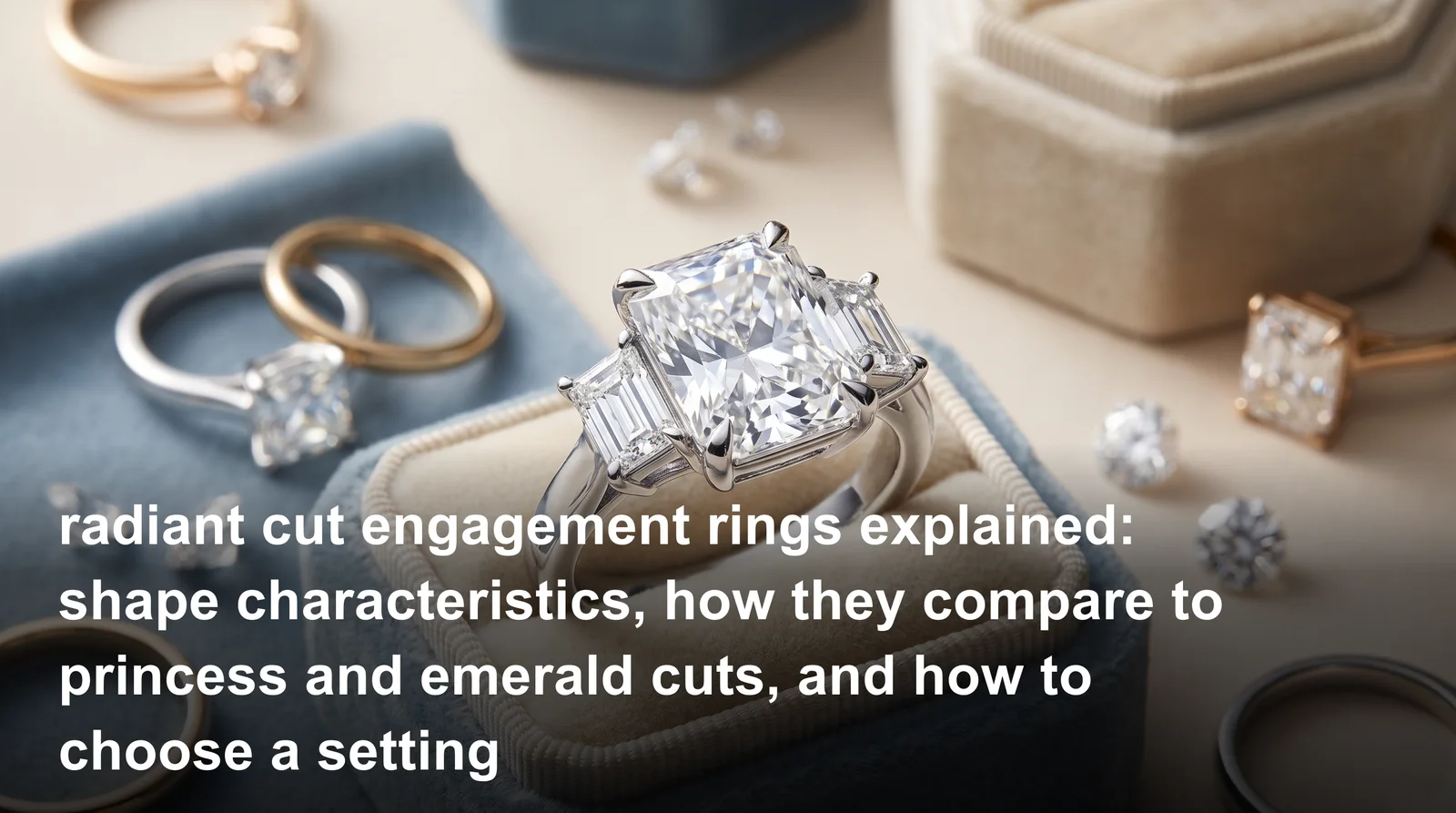
Radiant cut engagement rings are worth a close look if you want a stone that sparkles hard but still reads clean and rectangular. The shape blends the fire of a round brilliant with the elongated silhouette of an emerald cut. It hides inclusions better than step cuts, wears well day to day, and gives you more setting flexibility than most fancy shapes on the market. 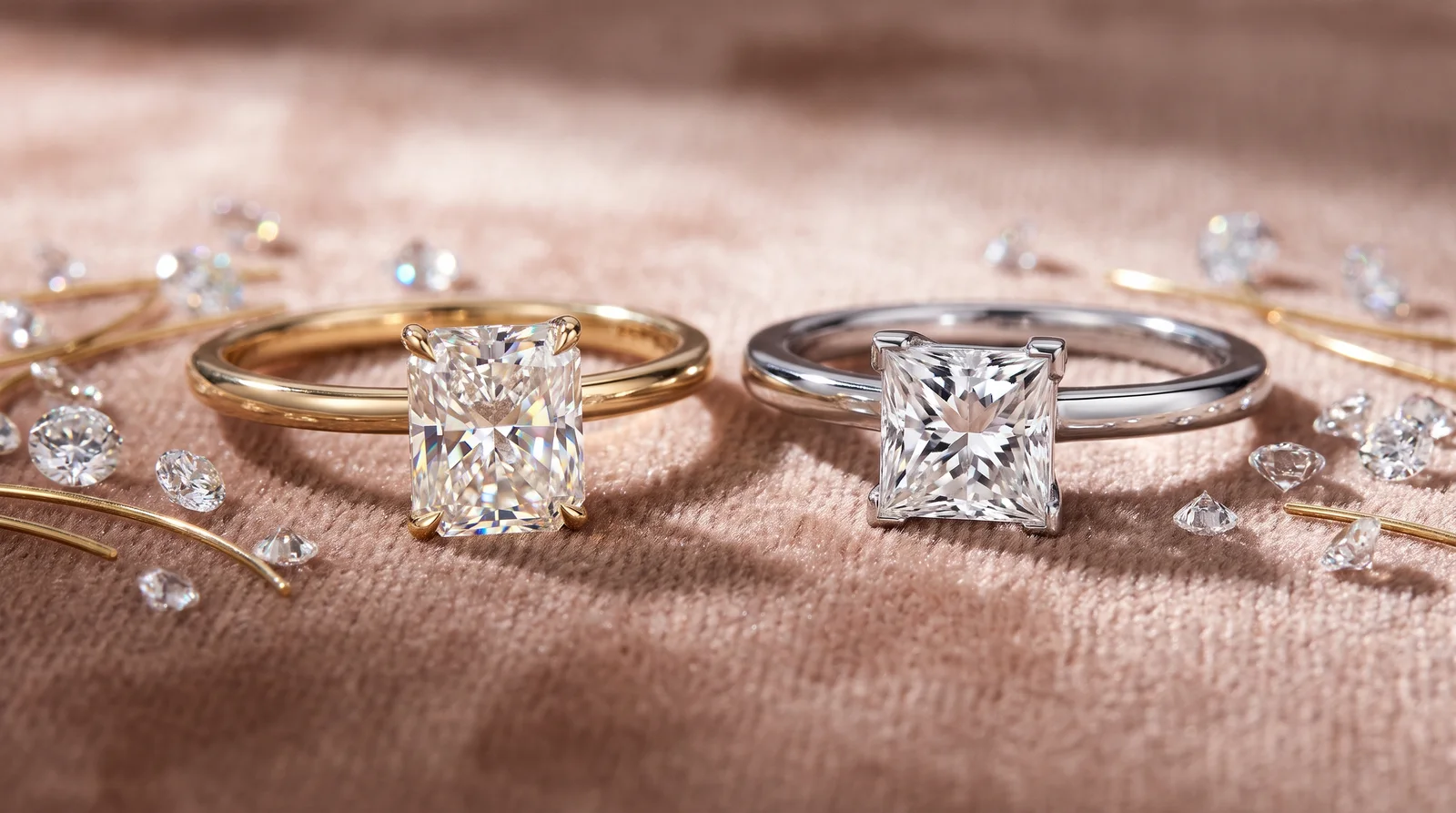 The core difference in the radiant cut vs princess cut debate comes down to corner shape and how that affects both looks and daily wear. A princess cut keeps its corners pointed, giving it crisp, architectural lines that read as very modern and geometric. A radiant trims those same corners into small facets, softening the outline into something closer to an elongated octagon.
That corner difference changes the sparkle pattern too. Princess cuts arrange their facets in a pyramid structure that throws bold, blocky flashes of light, especially when you look straight down at the table. Radiant cuts scatter light more randomly across the whole surface because of that added step cut influence layered under the brilliant faceting. If you have seen both side by side under restaurant lighting, the princess looks more graphic and the radiant looks more textured and alive.
The core difference in the radiant cut vs princess cut debate comes down to corner shape and how that affects both looks and daily wear. A princess cut keeps its corners pointed, giving it crisp, architectural lines that read as very modern and geometric. A radiant trims those same corners into small facets, softening the outline into something closer to an elongated octagon.
That corner difference changes the sparkle pattern too. Princess cuts arrange their facets in a pyramid structure that throws bold, blocky flashes of light, especially when you look straight down at the table. Radiant cuts scatter light more randomly across the whole surface because of that added step cut influence layered under the brilliant faceting. If you have seen both side by side under restaurant lighting, the princess looks more graphic and the radiant looks more textured and alive.
 The length to width ratio you choose determines whether a radiant cut looks square, moderately rectangular, or long and slender on the finger. A ratio close to 1.00 to 1.05 gives you a nearly square silhouette, which tends to look substantial and a little more traditional. Move up to 1.20 to 1.30 and you get a noticeably elongated shape that flatters longer fingers and can make the stone appear larger from certain angles, even at the same carat weight.
Ratios beyond 1.30 start to look distinctly rectangular, closer to what you would expect from an emerald cut outline. There is no universally correct number here. It comes down to hand shape, personal taste, and how the stone will sit against the setting you choose. Trying a few ratios in person, even just on a ring sizer or loose stone tray, makes this decision much easier than trying to picture it from a spec sheet.
The length to width ratio you choose determines whether a radiant cut looks square, moderately rectangular, or long and slender on the finger. A ratio close to 1.00 to 1.05 gives you a nearly square silhouette, which tends to look substantial and a little more traditional. Move up to 1.20 to 1.30 and you get a noticeably elongated shape that flatters longer fingers and can make the stone appear larger from certain angles, even at the same carat weight.
Ratios beyond 1.30 start to look distinctly rectangular, closer to what you would expect from an emerald cut outline. There is no universally correct number here. It comes down to hand shape, personal taste, and how the stone will sit against the setting you choose. Trying a few ratios in person, even just on a ring sizer or loose stone tray, makes this decision much easier than trying to picture it from a spec sheet.
 Radiant cut diamonds generally cost less per carat than round brilliants but sit close to princess cuts in price, since both shapes lose less rough diamond material during cutting compared to a round. A round brilliant can lose up to 60 percent of the original rough stone during cutting, while radiant and princess cuts typically retain more of that material because their corners follow the natural crystal shape more closely. That efficiency translates into better value per carat for the buyer.
Radiants also tend to face up slightly larger than a round of the same carat weight because of their elongated outline, which is a small but real advantage if you are trying to maximize visual size on a set budget. Compared to princess cuts, pricing is fairly similar carat for carat, so the decision usually comes down to shape preference and durability rather than cost. If you want a deeper look at how cut, clarity, and carat interact across all shapes, our guide on how to choose a diamond for an engagement ring walks through that in more detail.
Radiant cut diamonds generally cost less per carat than round brilliants but sit close to princess cuts in price, since both shapes lose less rough diamond material during cutting compared to a round. A round brilliant can lose up to 60 percent of the original rough stone during cutting, while radiant and princess cuts typically retain more of that material because their corners follow the natural crystal shape more closely. That efficiency translates into better value per carat for the buyer.
Radiants also tend to face up slightly larger than a round of the same carat weight because of their elongated outline, which is a small but real advantage if you are trying to maximize visual size on a set budget. Compared to princess cuts, pricing is fairly similar carat for carat, so the decision usually comes down to shape preference and durability rather than cost. If you want a deeper look at how cut, clarity, and carat interact across all shapes, our guide on how to choose a diamond for an engagement ring walks through that in more detail.
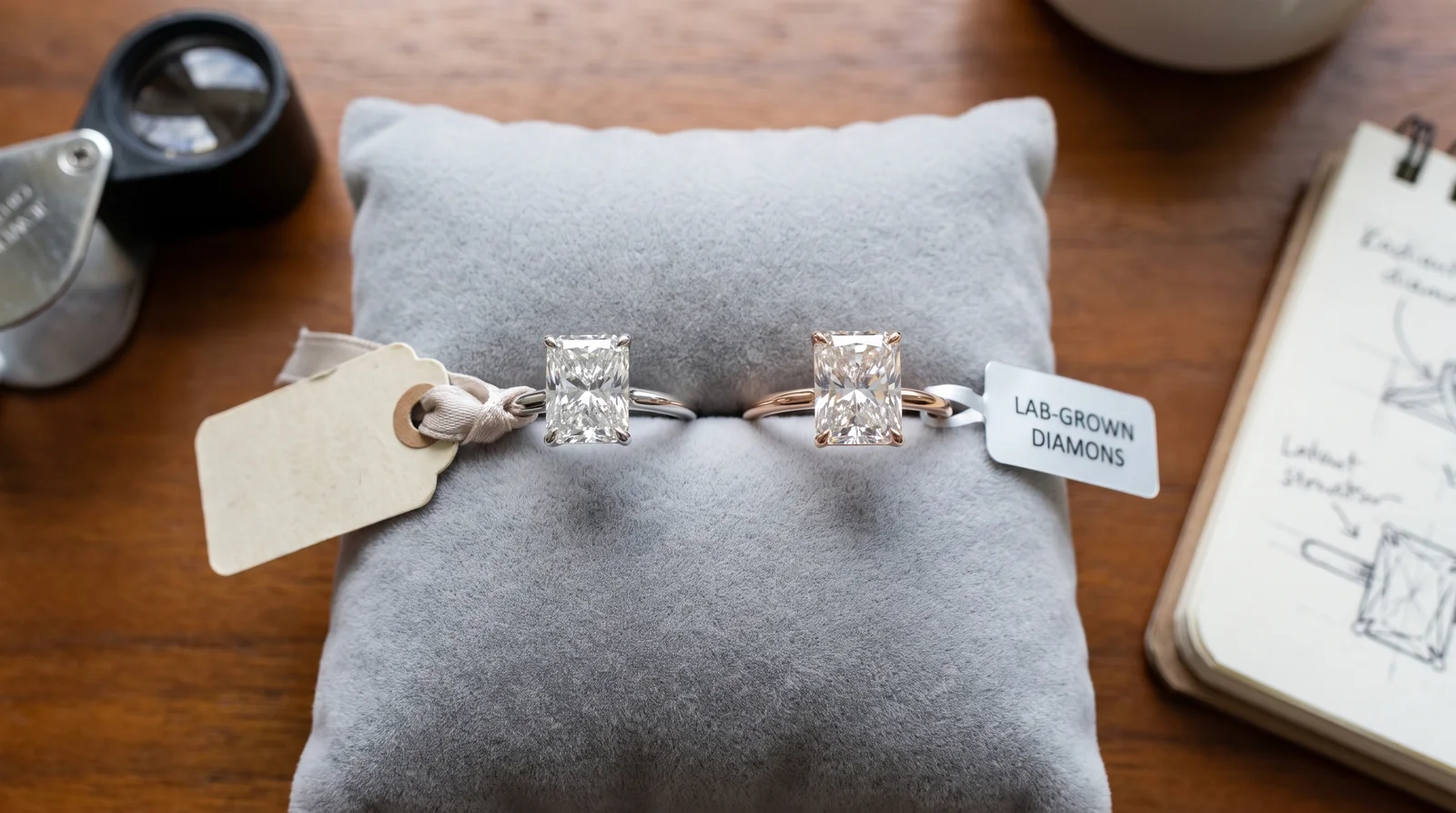 Radiant cuts work equally well in natural diamond, lab grown diamond, or moissanite, and the shape's forgiving faceting actually makes lower grades look better across all three materials. Lab grown diamonds have chemically identical properties to natural stones and cost roughly 30 to 40 percent less at the same specifications, which means your budget stretches further toward carat weight or a nicer setting. Moissanite is a different material entirely with a higher refractive index, so it throws more rainbow colored flashes than a diamond does, which some people love and others find a bit much in a radiant's already busy facet pattern.
If you are weighing these options seriously, our comparison on lab diamond vs moissanite breaks down the practical differences in more depth. Whichever material you land on, the radiant's facet structure will do a similar job of masking small imperfections and maximizing perceived brilliance.
Radiant cuts work equally well in natural diamond, lab grown diamond, or moissanite, and the shape's forgiving faceting actually makes lower grades look better across all three materials. Lab grown diamonds have chemically identical properties to natural stones and cost roughly 30 to 40 percent less at the same specifications, which means your budget stretches further toward carat weight or a nicer setting. Moissanite is a different material entirely with a higher refractive index, so it throws more rainbow colored flashes than a diamond does, which some people love and others find a bit much in a radiant's already busy facet pattern.
If you are weighing these options seriously, our comparison on lab diamond vs moissanite breaks down the practical differences in more depth. Whichever material you land on, the radiant's facet structure will do a similar job of masking small imperfections and maximizing perceived brilliance.
What Exactly Is a Radiant Cut Diamond?
A radiant cut diamond is a rectangular or square stone with trimmed corners and a facet pattern that mixes brilliant cutting with step cut structure. It typically has 70 facets, which is more than a princess cut's 57 to 76 and considerably more than an emerald's simpler step arrangement. That facet count matters because it directly controls how light bounces around inside the stone before it exits back toward your eye. The corners are the other defining feature. Instead of sharp points like a princess cut, radiant corners are beveled off at an angle, creating an octagonal outline rather than a true square or rectangle. That single design choice changes almost everything about how the stone wears, how it photographs, and how forgiving it is of minor knocks against a countertop or car door.The Crushed Ice Look Explained
Inside a well cut radiant, you get what jewelers call a crushed ice pattern. Small, irregular flashes of light scatter across the surface instead of the more organized pinwheel effect you see in a round brilliant. Some people love this texture because it looks lively and a bit unpredictable; others find it busy compared to the calmer, more graphic look of a step cut. Neither reaction is wrong. It comes down to whether you want a stone that reads as one continuous shimmer or one with visible structure. Here is how a radiant actually behaves next to the two shapes it gets compared to most.Radiant Cut vs Princess Cut: Sparkle Versus Sharp Lines
The core difference in the radiant cut vs princess cut debate comes down to corner shape and how that affects both looks and daily wear. A princess cut keeps its corners pointed, giving it crisp, architectural lines that read as very modern and geometric. A radiant trims those same corners into small facets, softening the outline into something closer to an elongated octagon.
That corner difference changes the sparkle pattern too. Princess cuts arrange their facets in a pyramid structure that throws bold, blocky flashes of light, especially when you look straight down at the table. Radiant cuts scatter light more randomly across the whole surface because of that added step cut influence layered under the brilliant faceting. If you have seen both side by side under restaurant lighting, the princess looks more graphic and the radiant looks more textured and alive.
Which One Handles Everyday Life Better
Durability is where this comparison gets practical instead of just aesthetic. Pointed corners on a princess cut are the most vulnerable spot on the entire stone, and a hard knock against a doorframe or gym equipment can chip that tip if the setting does not protect it with V-prongs. Radiant corners are already beveled, so there is no sharp point to catch on anything in the first place. For someone who works with their hands, cooks often, or just tends to bump rings against things without noticing, that structural difference is not a minor detail. It is one of the more practical reasons people choose radiant over princess once they get past the initial shape preference. Setting requirements shift accordingly. Princess cuts need corner protection built into the design, which sometimes limits how open or airy a setting can look. Radiants give a setting more room to work with, since there is no fragile point demanding coverage. That is part of why radiant cut diamond settings tend to look a little lighter and more varied.Radiant Cut vs Emerald Cut: Brilliance Versus Clarity on Display
The radiant cut vs emerald cut question really comes down to how much you want the stone's internal clarity on show. Emerald cuts use long, open step facets that act almost like a hall of mirrors, alternating between bright flashes and darker shadowed bands as the ring moves. That open table means any inclusion, cloudiness, or slight tint in the stone is much easier to spot with the naked eye. Emerald cut shoppers typically need to buy up in clarity and color grade to keep the stone looking clean. Radiant cuts flip that requirement almost entirely. Because the facet pattern is denser and more broken up, small imperfections get camouflaged inside all that scattered light. A radiant graded VS2 can often look just as clean to the eye as an emerald cut graded VVS1, simply because there are more facets working to disguise flaws. This is one of the more useful radiant cut diamond characteristics for anyone trying to stretch a budget without sacrificing visible quality.Why Radiant Cuts Hide Inclusions Better
The mechanism behind this is straightforward once you understand facet geometry. Step cuts have large, flat, open planes, so light travels through in broad sheets and any disruption in the stone's interior stands out clearly against that calm background. Brilliant style faceting, which the radiant borrows heavily from, breaks light into dozens of smaller reflective zones. An inclusion sitting under one of those zones gets visually broken up rather than displayed in one long uninterrupted plane. Practically, this means a radiant cut diamond can often carry a slightly lower clarity grade, like SI1, and still look eye clean, while an emerald cut at that same grade might show a visible flaw right in the center of the stone. If you are trying to allocate budget toward carat weight instead of grading paperwork, this is a real financial advantage.Elegance Versus Energy
Style wise, the emerald cut reads quiet and architectural. It suits someone who wants understated sophistication and does not mind a stone that shows its structure openly. The radiant cut reads more energetic, blending that same rectangular elongation with a stone that never sits still visually. Neither is more correct. It is a genuine style fork, and knowing which one matches your day to day taste matters more than knowing every technical spec on a certificate.Getting the Proportions Right: Length to Width Ratio
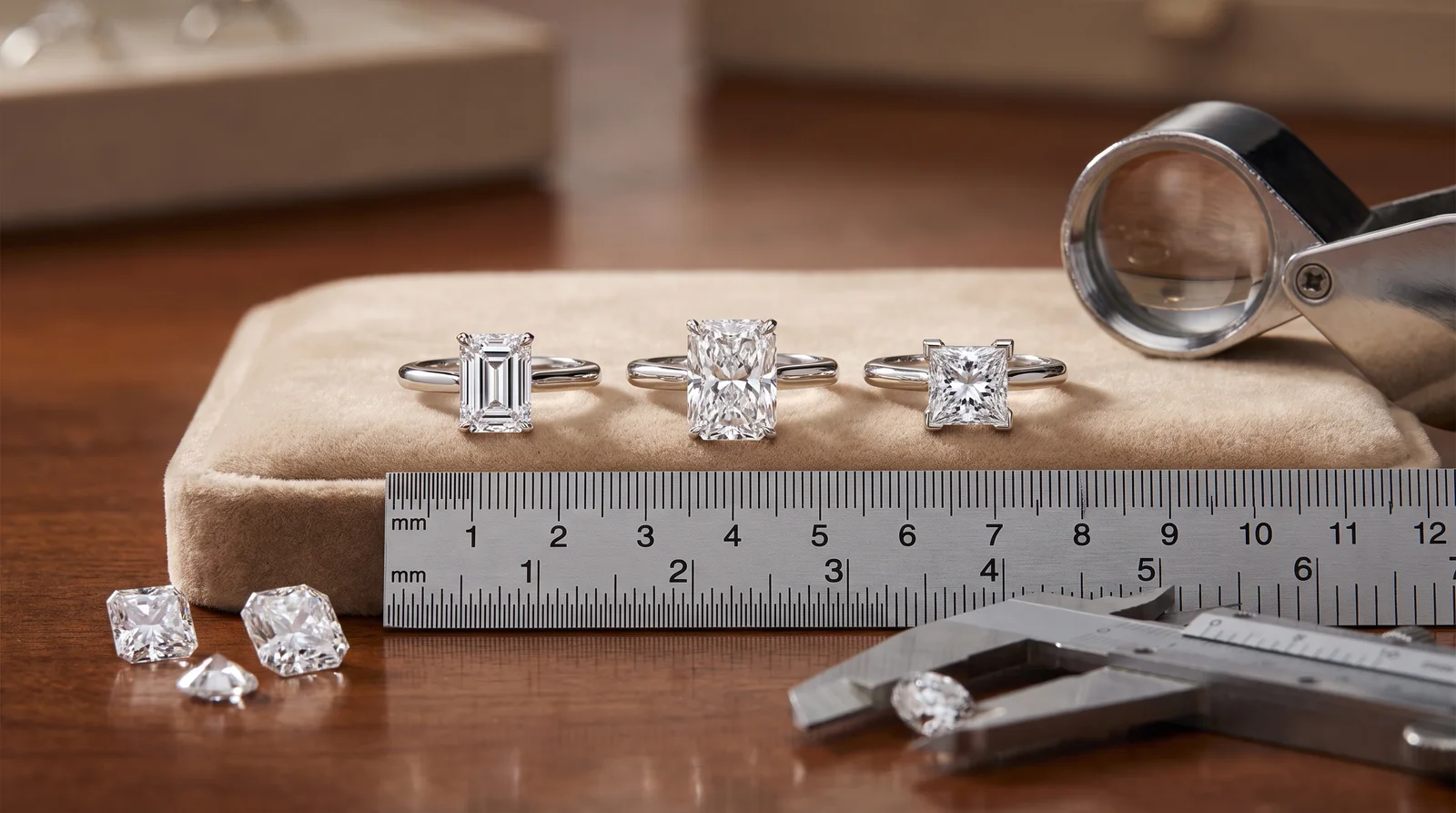
The length to width ratio you choose determines whether a radiant cut looks square, moderately rectangular, or long and slender on the finger. A ratio close to 1.00 to 1.05 gives you a nearly square silhouette, which tends to look substantial and a little more traditional. Move up to 1.20 to 1.30 and you get a noticeably elongated shape that flatters longer fingers and can make the stone appear larger from certain angles, even at the same carat weight.
Ratios beyond 1.30 start to look distinctly rectangular, closer to what you would expect from an emerald cut outline. There is no universally correct number here. It comes down to hand shape, personal taste, and how the stone will sit against the setting you choose. Trying a few ratios in person, even just on a ring sizer or loose stone tray, makes this decision much easier than trying to picture it from a spec sheet.
Best Setting for a Radiant Cut Diamond
The best setting for a radiant cut diamond depends on whether you want to add sparkle, protect the corners further, or keep the focus purely on the stone's outline. Three setting styles come up again and again with radiant stones, and each solves a slightly different problem.Halo Settings for Extra Brilliance
A halo setting surrounds the radiant with a ring of smaller pave diamonds, which does two things at once. It adds perceived size, often making the center stone look 15 to 20 percent larger than its actual carat weight suggests. It also reinforces the already durable corners with extra metal and stone coverage, giving nervous everyday wearers an added layer of protection.Split Shank Bands for a Modern Frame
A split shank band divides the ring's shoulders into two thinner strands as they approach the center stone. This style pairs naturally with the radiant's clean geometric lines, giving the setting a lighter, more architectural feel without competing against the stone's own faceting. It also tends to make the hand look a bit more elongated, which flatters the same length to width ratios that flatter the stone itself.Three Stone Settings for Symmetry
Flanking a radiant with two smaller side stones, whether trapezoids, half moons, or smaller radiants, creates a balanced, symmetrical look that many people associate with anniversary or heirloom style rings. This setting works particularly well with radiants cut closer to a square ratio, since the side stones echo the center stone's angular corners rather than clashing with them. Choosing between these three comes down to whether your priority is added sparkle, a modern silhouette, or symmetry and heirloom appeal. Once you land on a setting direction, it helps to look at how radiant cuts actually compare on price against the shapes most people cross-shop against.How Radiant Cuts Compare on Price and Carat Value
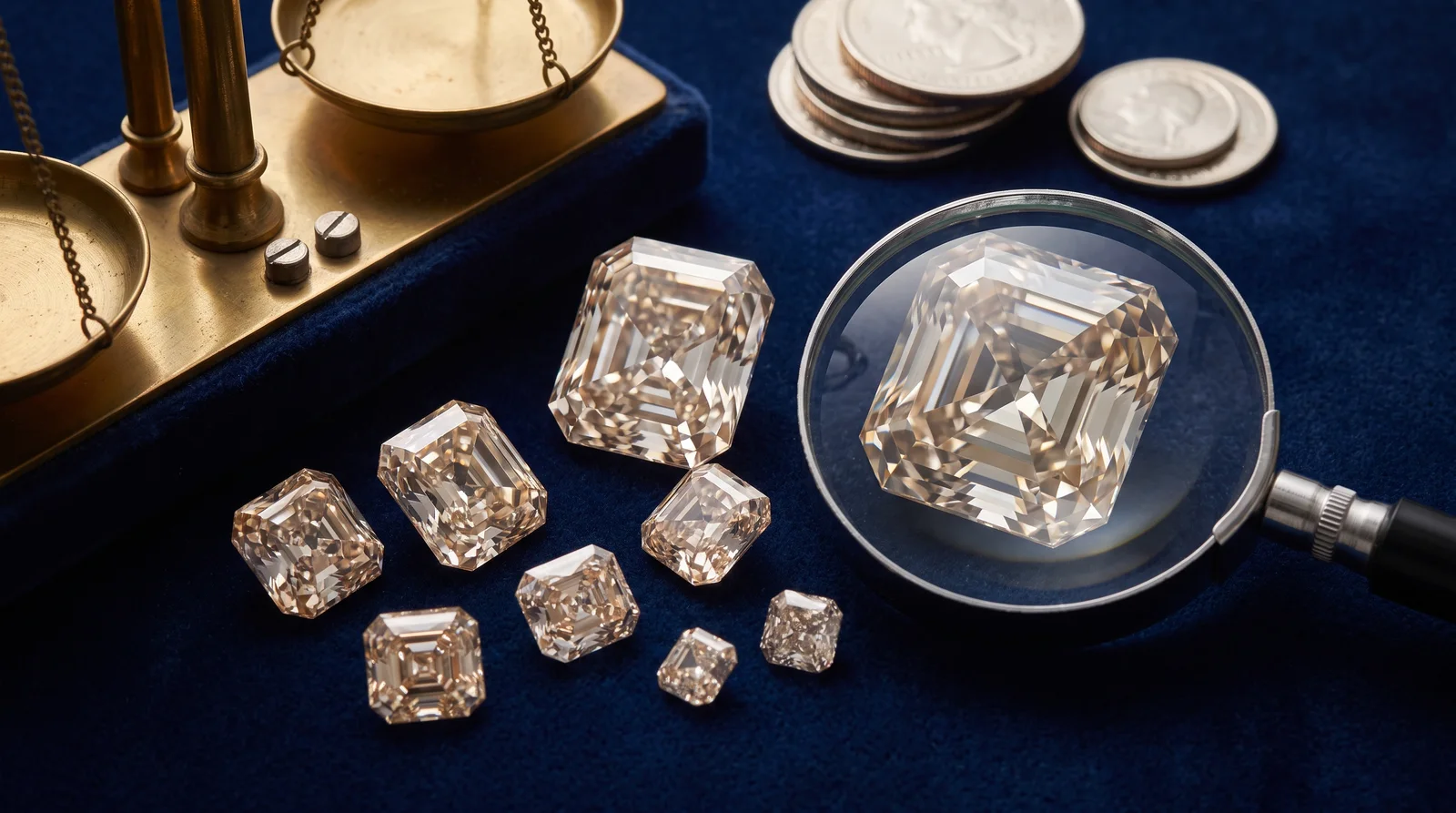
Radiant cut diamonds generally cost less per carat than round brilliants but sit close to princess cuts in price, since both shapes lose less rough diamond material during cutting compared to a round. A round brilliant can lose up to 60 percent of the original rough stone during cutting, while radiant and princess cuts typically retain more of that material because their corners follow the natural crystal shape more closely. That efficiency translates into better value per carat for the buyer.
Radiants also tend to face up slightly larger than a round of the same carat weight because of their elongated outline, which is a small but real advantage if you are trying to maximize visual size on a set budget. Compared to princess cuts, pricing is fairly similar carat for carat, so the decision usually comes down to shape preference and durability rather than cost. If you want a deeper look at how cut, clarity, and carat interact across all shapes, our guide on how to choose a diamond for an engagement ring walks through that in more detail.
Is a Radiant Cut Durable Enough for Daily Wear?
Radiant cut diamond durability holds up well for daily wear because the beveled corners eliminate the sharp vulnerable points found on shapes like princess or marquise cuts. Diamonds are the hardest natural material on the Mohs scale at a 10, but hardness does not mean a stone is chip proof. Weak points come from geometry, not just material, and a sharp 90 degree corner concentrates stress in a way that a beveled corner simply does not. That said, no fancy shape is as forgiving as a round brilliant, which has no corners at all. If you have a physically demanding job, work with your hands constantly, or just tend to be rough on jewelry without meaning to, a protective setting still matters. Bezel accents at the corners or a slightly raised halo can add another layer of security without changing the stone's overall look.Choosing Between Diamond and Lab-Grown Alternatives
Radiant cuts work equally well in natural diamond, lab grown diamond, or moissanite, and the shape's forgiving faceting actually makes lower grades look better across all three materials. Lab grown diamonds have chemically identical properties to natural stones and cost roughly 30 to 40 percent less at the same specifications, which means your budget stretches further toward carat weight or a nicer setting. Moissanite is a different material entirely with a higher refractive index, so it throws more rainbow colored flashes than a diamond does, which some people love and others find a bit much in a radiant's already busy facet pattern.
If you are weighing these options seriously, our comparison on lab diamond vs moissanite breaks down the practical differences in more depth. Whichever material you land on, the radiant's facet structure will do a similar job of masking small imperfections and maximizing perceived brilliance.
Frequently Asked Questions
How does a radiant cut compare to a cushion cut?
A radiant has crisper, more defined corners and a denser facet pattern, while a cushion cut has rounded corners and a softer, more pillow shaped outline. Cushions also tend to show larger individual facets, giving a slightly different sparkle pattern than the crushed ice look of a radiant.Does a radiant cut show its setting through the stone?
Not typically. The dense faceting on a radiant scatters light in enough directions that the setting underneath rarely shows through the way it sometimes can with a very open emerald cut table.Can a radiant cut look good in a vintage style setting?
Yes, radiant cuts pair well with vintage inspired details like milgrain edging or filigree side profiles, since the elongated octagonal outline reads as classic rather than strictly modern. Many custom vintage designs actually use radiant centers specifically because the shape sits between contemporary and traditional.What carat weight makes the most visual impact for a radiant cut?
Stones between 1 and 1.5 carats tend to hit a sweet spot where the elongated shape reads clearly without needing an oversized setting to support it. Below 0.75 carats, the facet pattern can look a bit cramped and lose some of its scattered light effect.How does a radiant cut compare to a princess cut for resale value?
Resale value between these two shapes is fairly comparable, since both are popular enough to have decent secondary market demand. Radiant cuts sometimes hold value slightly better simply because their durability reduces the chance of chip related damage lowering the stone's grade over time.Finding the Right Setting for Your Radiant
A radiant cut gives you brilliance without giving up the clean rectangular lines people love about step cuts, and it wears better day to day than a princess cut while hiding more than an emerald cut. The next step is seeing how a specific stone looks in a setting built around its exact proportions. If you want a ring shaped entirely around your radiant's ratio, facet pattern, and the details that matter to you, our custom design process is built for exactly that conversation. You can also compare the shape directly against princess cut engagement rings or emerald cut engagement rings before making a final call.Share this articleLink copied