White Topaz vs Cubic Zirconia vs Diamond: Which Fake Diamond Actually Survives Daily Wear?
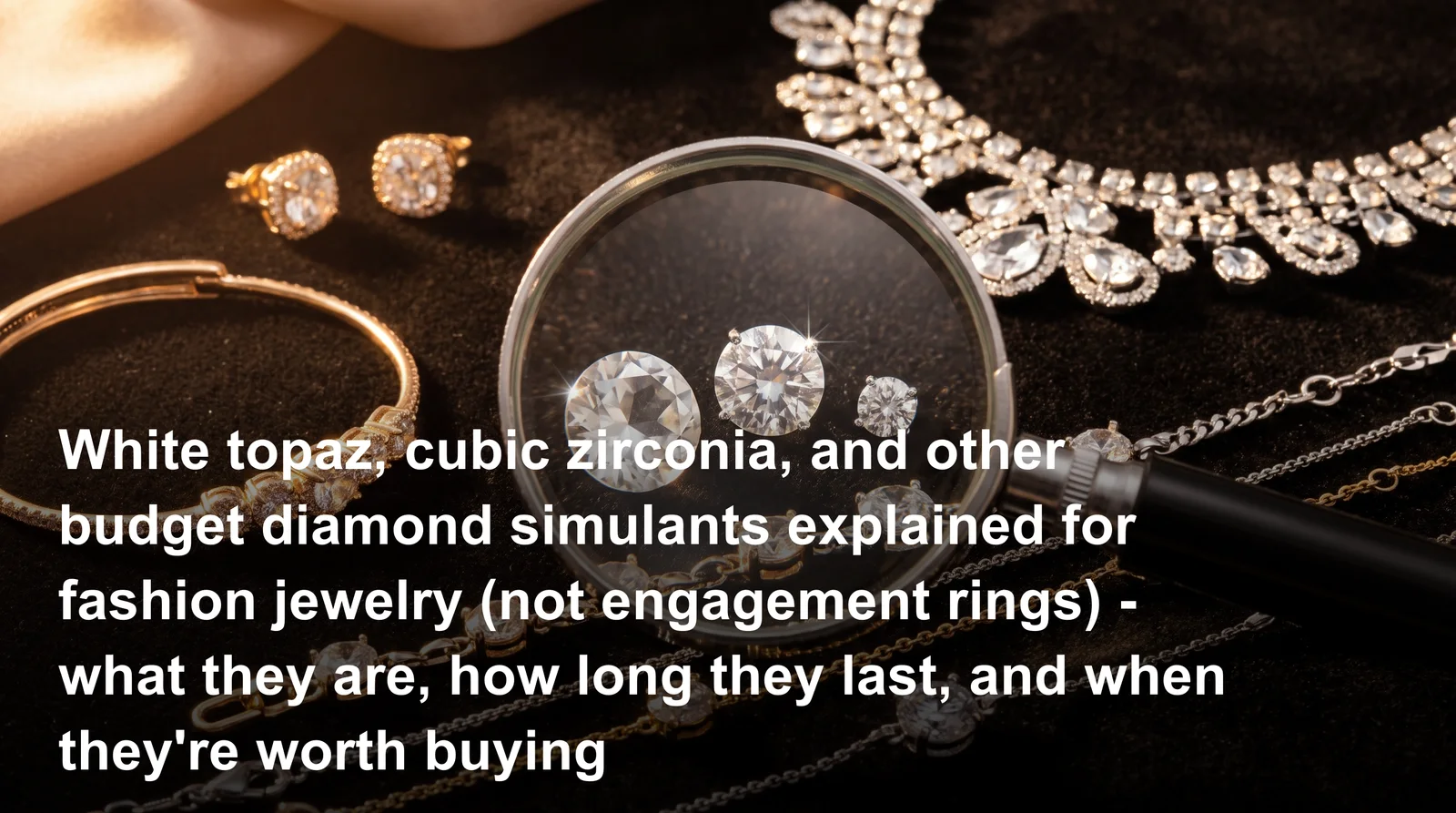
If you wear earrings every day or stack tennis bracelets without babying them, the question isn't which stone looks most like a diamond in the store. It's which one still looks good in eighteen months. In the white topaz vs cubic zirconia vs diamond debate, the honest answer for everyday fashion jewelry is that cubic zirconia sparkles hardest out of the box but clouds fastest, white topaz is a genuine natural gemstone that scratches easier than people expect, and diamond outlasts both by a wide margin because nothing else on this list comes close to its hardness.
None of that means diamond is the only reasonable choice. It just means each stone has a job it's good at, and a job it isn't.
What Cubic Zirconia, White Topaz, and Diamond Actually Are
These three materials aren't variations on the same thing. They're chemically unrelated, and that's exactly why they behave so differently on your wrist or in your ears after months of wear.
Cubic Zirconia: A Lab-Made Crystal With No Natural Counterpart
Cubic zirconia, or CZ, is zirconium dioxide grown in a lab starting in the late 1970s. It doesn't occur naturally in gem quality, so every CZ you've ever seen was manufactured. Jewelers like it because it comes out nearly flawless, colorless, and cheap to produce in bulk. It sits at 8 to 8.5 on the Mohs hardness scale, which sounds solid until you compare it to diamond's 10.
White Topaz: A Real Mined Gemstone, Not a Synthetic
White topaz is genuinely natural. It's an aluminum fluorosilicate that forms underground and gets mined just like sapphire or amethyst, it just happens to grow colorless instead of blue or pink. That natural origin surprises a lot of shoppers who assume anything called a "diamond alternative" must be lab-made. Topaz rates 8 on the Mohs scale, similar to CZ, but it has a structural quirk called perfect basal cleavage, meaning it can split along a plane if it takes a sharp knock. It's a real stone with a real weak point.
Diamond: Still the Hardness Benchmark
Diamond is pure carbon, crystallized under extreme heat and pressure, and it sits alone at 10 on the Mohs scale. That gap between 8 and 10 isn't small since the scale isn't linear, so diamond resists scratching in a way neither CZ nor topaz can match. That's the whole reason it became the standard everyone else gets measured against. With the basics of what each stone is out of the way, the next question is how they actually hold up once you're wearing them daily.
How Long Does Cubic Zirconia Last Before It Looks Worn?
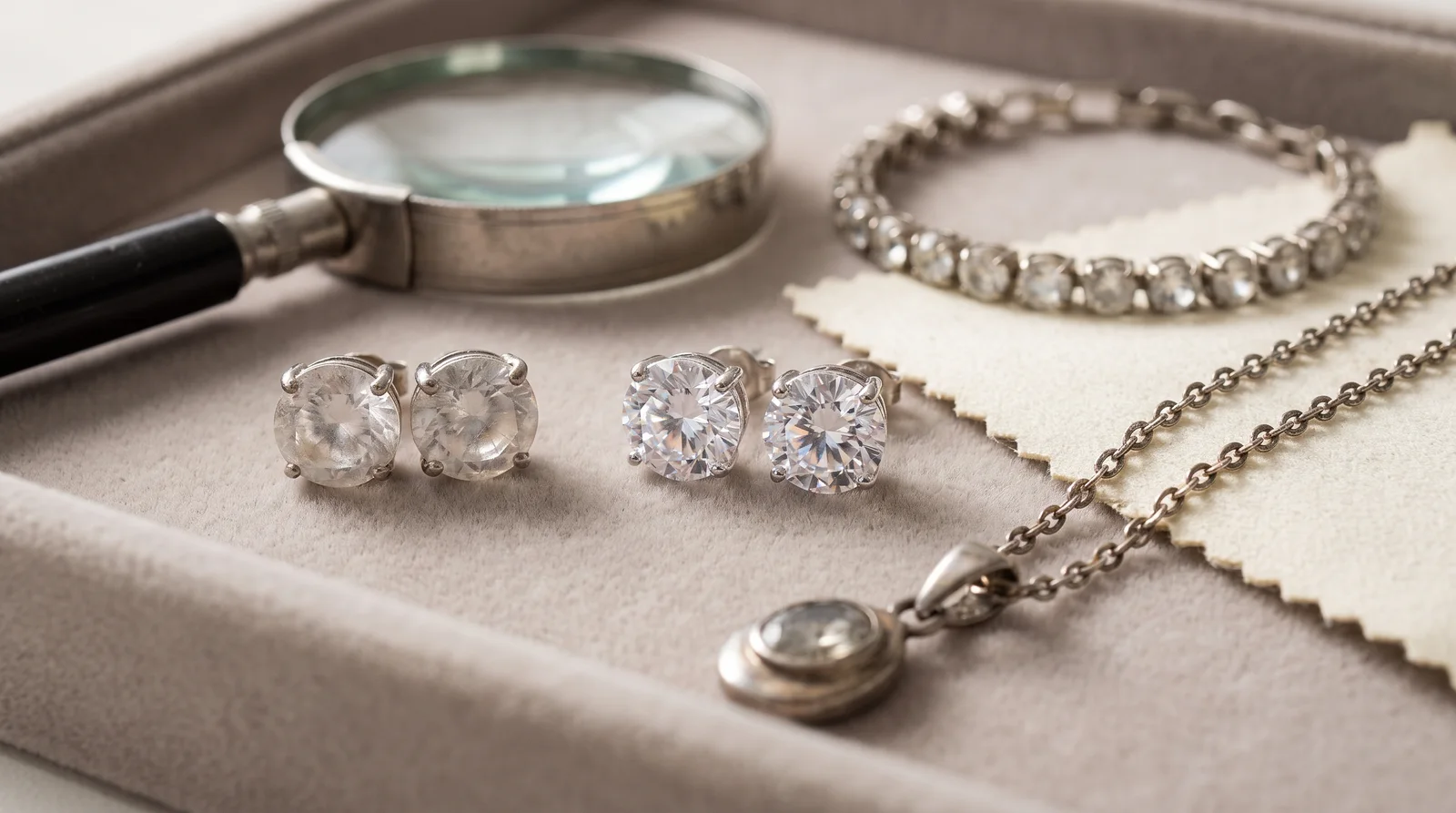
Cubic zirconia typically holds its shine for one to two years of regular wear before it starts showing cloudiness, surface scratches, and a duller sparkle. That's not a defect, it's just physics. At 8 to 8.5 Mohs, CZ picks up microscopic scratches from everyday contact with countertops, other jewelry, even fabric over time, and those scratches scatter light instead of reflecting it cleanly.
Does Cubic Zirconia Turn Yellow?
Yes, cubic zirconia can develop a yellowish tint over time, and this is one of the most searched questions about the stone for a reason. According to the Gemological Institute of America, CZ will yellow in color as it ages, which is a known property of the material rather than a sign of a bad batch. It happens gradually, often not even noticeable until you compare an older piece to a newer one side by side.
Why This Matters More for Rings Than Earrings
A CZ stud earring gets far gentler treatment than a CZ ring worn while you type, garden, or load a dishwasher. That's the practical upside of this whole discussion for fashion jewelry shoppers. Pendants and earrings simply don't take the abuse a ring does, so the "one to two years" estimate is really a worst-case number for rings and bracelets. Put the same CZ in drop earrings you take on and off carefully, and you can realistically stretch that lifespan out considerably longer. Cost is the other half of the equation, so let's look at what you're actually paying for with each option.
Cheap Diamond Alternatives for Jewelry and What They Really Cost
Price is where these stones separate dramatically, and it's usually the deciding factor once people understand the durability tradeoffs. Cubic zirconia runs from a couple dollars to maybe twenty dollars per stone depending on size and cut quality, making it the cheapest option on this list by a wide margin. White topaz costs more since it's mined rather than manufactured, but it's still a fraction of diamond pricing, often landing at roughly a tenth of what a comparable diamond costs or less.
Where White Sapphire Fits Into the Budget
White sapphire sits in the middle price-wise, above CZ and topaz but well below diamond, and it earns that price with genuine durability. It's natural or lab-grown corundum at 9 Mohs, hard enough for daily wear without much worry. The tradeoff is visual. White sapphire has a lower refractive index than diamond, so it reads softer and slightly milky rather than throwing sharp flashes of light. It's a reasonable pick for someone who wants durability over maximum sparkle in a fashion piece.
Is White Topaz a Good Diamond Alternative for the Money?
For occasional wear pieces like drop earrings or a pendant you save for dinners out, yes, white topaz is a good diamond alternative. It's a legitimate natural gemstone, it photographs well, and the price makes it an easy yes for anyone who wants something better than costume jewelry without diamond pricing. Where it struggles is in daily-wear rings and bracelets that take constant knocks, since that basal cleavage issue means a hard hit at the wrong angle can chip it. Now that pricing is clear, it helps to know how to actually tell these stones apart when you're shopping.
White Topaz vs Cubic Zirconia: Spotting the Difference by Eye
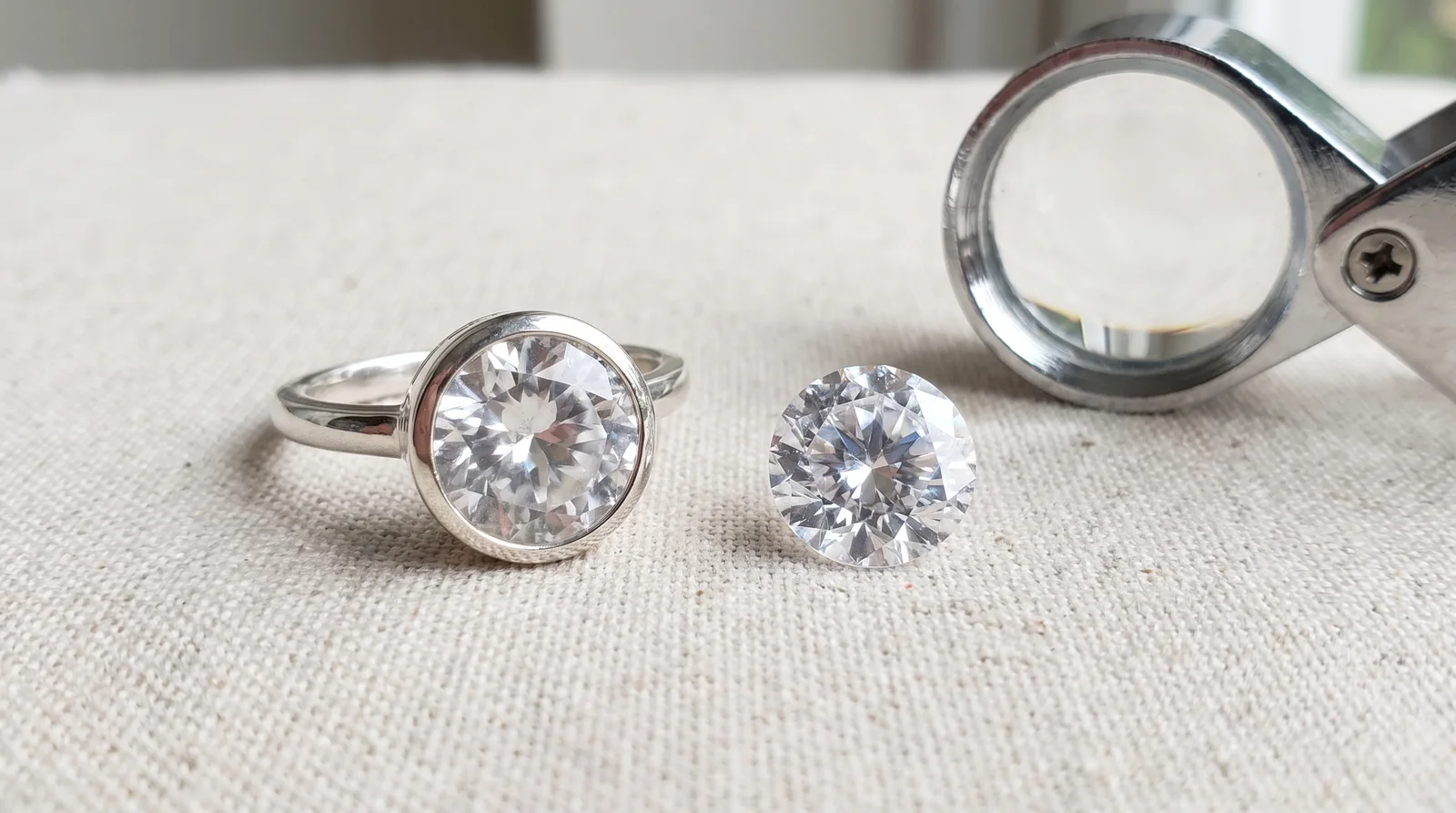
The clearest visual difference between white topaz vs cubic zirconia comes down to sparkle intensity, since CZ throws noticeably more fire than topaz does. Cubic zirconia has more dispersion than diamond itself, which is part of why it can look almost too sparkly and slightly artificial under bright light. White topaz has much lower dispersion, closer to a third of diamond's, so it gives off a softer, quieter shine that reads more like glass than fireworks.
Checking Clarity and Cut
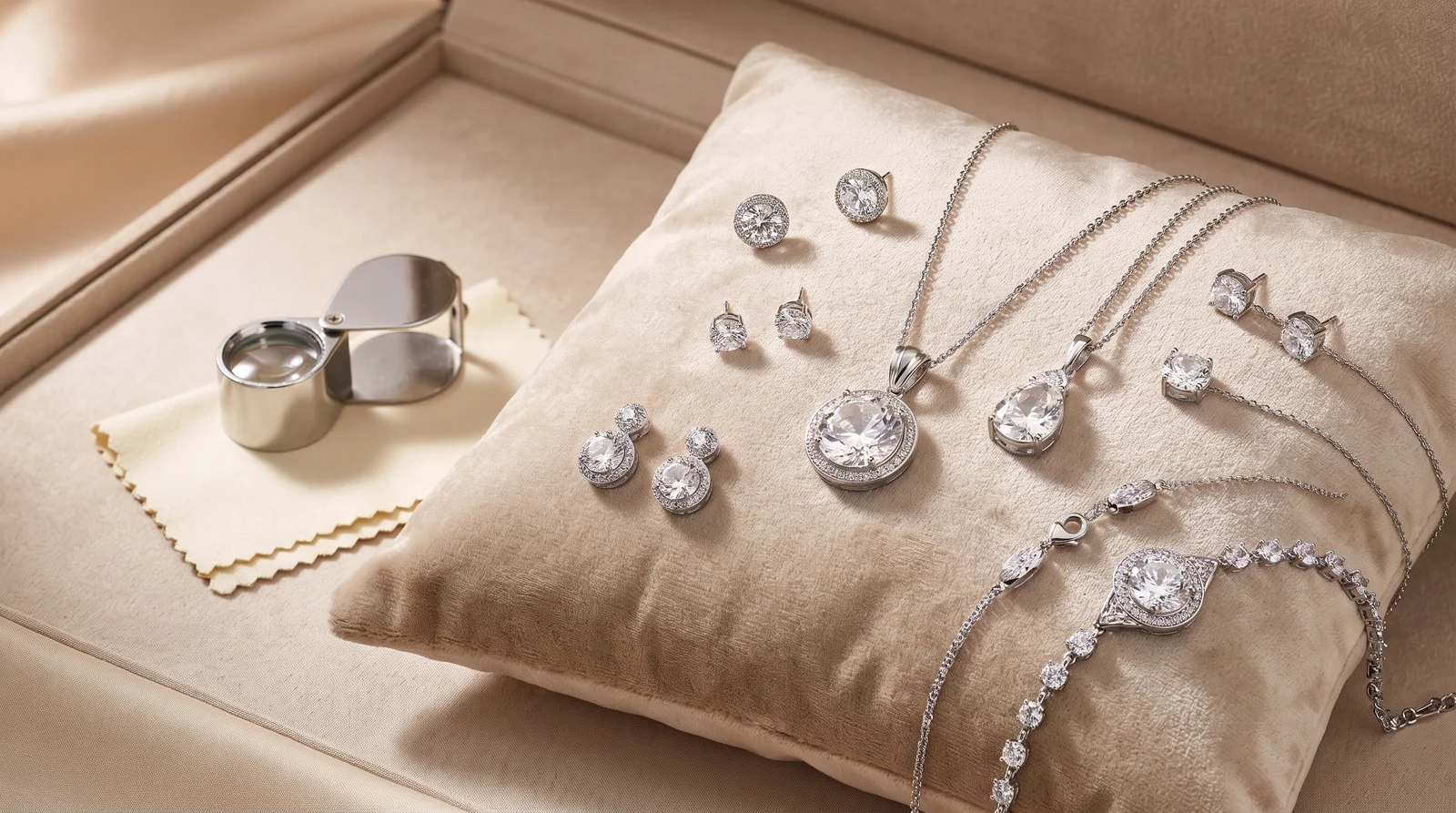
Cubic zirconia usually comes out nearly flawless because it's manufactured under controlled lab conditions, with no inclusions visible to the naked eye. White topaz, being mined, occasionally shows tiny internal inclusions, though plenty of stones look clean too. If you're examining a piece under a loupe or strong light and see a little internal texture, that's more likely topaz. Perfectly clean with almost too much sparkle usually points to CZ.
Weight Can Be a Giveaway Too
Cubic zirconia is noticeably denser than both topaz and diamond, meaning a CZ stone of the same size will feel heavier in the hand. Jewelers sometimes use this as a quick field test when a stone is loose from its setting. It's not something you'll notice with a stone mounted in a ring, but it's a useful fact to know if you're ever comparing loose stones side by side. Weight and sparkle aside, there's one more comparison shoppers frequently ask about, and it deserves its own space.
Cubic Zirconia vs Moissanite for Everyday Sparkle
Cubic zirconia and moissanite occupy different tiers entirely, with moissanite winning on both hardness and longevity by a significant margin. Moissanite sits at 9.25 Mohs, close to diamond's 10, while CZ sits nearly a full point and a half lower at 8 to 8.5. That difference shows up in real life as moissanite holding its polish and clarity for years of daily wear, while CZ tends to show wear within a couple of seasons of regular use.
The price gap reflects that durability. Moissanite costs more than CZ but considerably less than diamond, making it a solid middle option if you want something you can wear constantly in a tennis bracelet or everyday studs without replacing stones. For a deeper look at how moissanite compares to lab-grown diamonds specifically, this guide on lab diamond vs moissanite breaks down the differences in detail. For fashion pieces you wear occasionally rather than daily, though, CZ's lower price often still makes sense. That brings us to the real question most shoppers actually have.
What's the Best Fake Diamond for Everyday Jewelry?
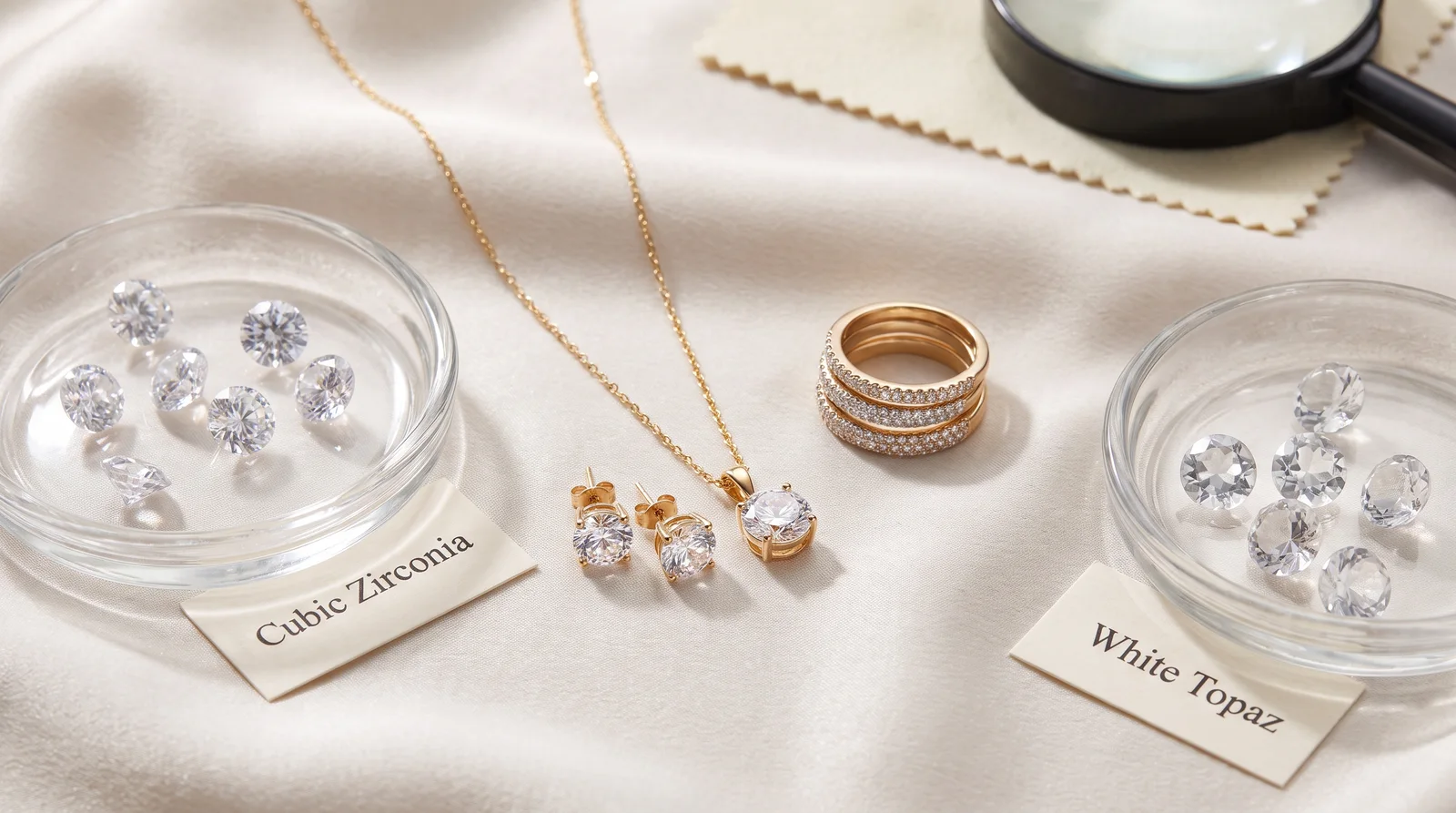
The best fake diamond for everyday jewelry depends on how rough that jewelry's daily life actually is, and there's no single right answer for every piece. For rings and bracelets that get bumped against desks, car doors, and dishwater constantly, moissanite or white sapphire make more sense because their hardness holds up under repeat contact. For earrings, pendants, and occasional-wear pieces, cubic zirconia's low price makes it hard to argue against, since replacing a cheap stone every couple of years costs less than upgrading to something harder in the first place.
A Real-World Example Worth Considering
Say you buy a pair of CZ stud earrings for fifteen dollars and a white topaz pendant for sixty. Wear the earrings daily for two years and you might notice a little clouding, easily fixed with a thorough cleaning or a low-cost replacement. Wear the topaz pendant a few times a month and it could look sharp for a decade, since it's rarely exposed to the friction and impact that dulls stones faster. Matching the stone to how often and how hard you'll actually wear the piece matters more than chasing the "best" material in the abstract.
When Diamond Still Makes Sense in Fashion Pieces
Diamond earrings or a diamond tennis bracelet make sense for people who want zero maintenance thinking about the stone for decades. You're paying for durability and resale value more than you're paying for extra sparkle, since a well-cut CZ can genuinely rival a diamond's brilliance when it's brand new. If budget allows and you want something you never have to think about again, diamond earns its price premium here. Whatever stone you land on, a little care goes a long way toward getting the most out of it.
Keeping Simulant Stones Looking Their Best
Cloudiness in CZ and topaz often comes from lotion, soap residue, and skin oils building up on the surface rather than actual damage to the stone. A regular gentle cleaning routine removes that film and restores a surprising amount of shine, even on stones that looked dull a week earlier. This guide on how to clean jewelry covers safe methods for different stone types without risking the setting or the stone itself.
It's also worth checking prongs periodically on any piece with a raised stone, since simulants are just as prone to loosening in a setting as any other gem. If you notice a stone shifting or rattling slightly, this article on signs your diamond is loose applies just as well to CZ and topaz settings, and catching it early prevents losing the stone entirely. For anything that needs tightening or resetting, a jeweler offering repairs can usually fix it in one visit. With care covered, let's run through the questions people ask most often about these stones.
Frequently Asked Questions About Budget Diamond Simulants
How long does cubic zirconia last with daily wear?
Most cubic zirconia holds up well for one to two years of daily wear before showing noticeable cloudiness or scratching. Earrings and pendants that see less friction can last considerably longer than rings or bracelets.
Does cubic zirconia turn yellow over time?
Yes, CZ can develop a yellowish tint as it ages, which is a documented property of the material rather than a manufacturing flaw. It tends to happen gradually and is most noticeable when comparing an older stone to a new one.
Is white topaz a good diamond alternative for daily wear?
White topaz works better for occasional-wear pieces like pendants and earrings than for rings worn every day. Its perfect basal cleavage makes it prone to chipping under a hard, sharp impact, so daily-wear rings benefit from a tougher stone.
Can you tell white topaz and cubic zirconia apart without a lab test?
Generally yes, since CZ throws noticeably more fire and sparkle than topaz under the same lighting. CZ also tends to look flawless due to its lab origin, while topaz occasionally shows faint natural inclusions.
What's the best fake diamond for everyday jewelry on a budget?
For daily-wear pieces, white sapphire or moissanite hold up better than cubic zirconia because of their higher hardness. For occasional-wear earrings or pendants, cubic zirconia's low cost still makes it a smart, practical choice.
Choosing the Stone That Fits Your Life
There's no universal winner in the white topaz vs cubic zirconia vs diamond comparison, just a better fit depending on how you actually wear your jewelry. Grab CZ for pieces you'll rotate through and don't mind replacing. Reach for white topaz when you want something natural and affordable for special-occasion pieces. Save diamond, or a durable alternative like moissanite or white sapphire, for anything you plan to wear constantly for years. Think honestly about your own habits before you buy. The stone that survives your daily routine matters more than the one that photographs best under store lighting.