Is Your Chain Strong Enough for That Pendant? The Real Men's Chain Necklace Weight Capacity Guide
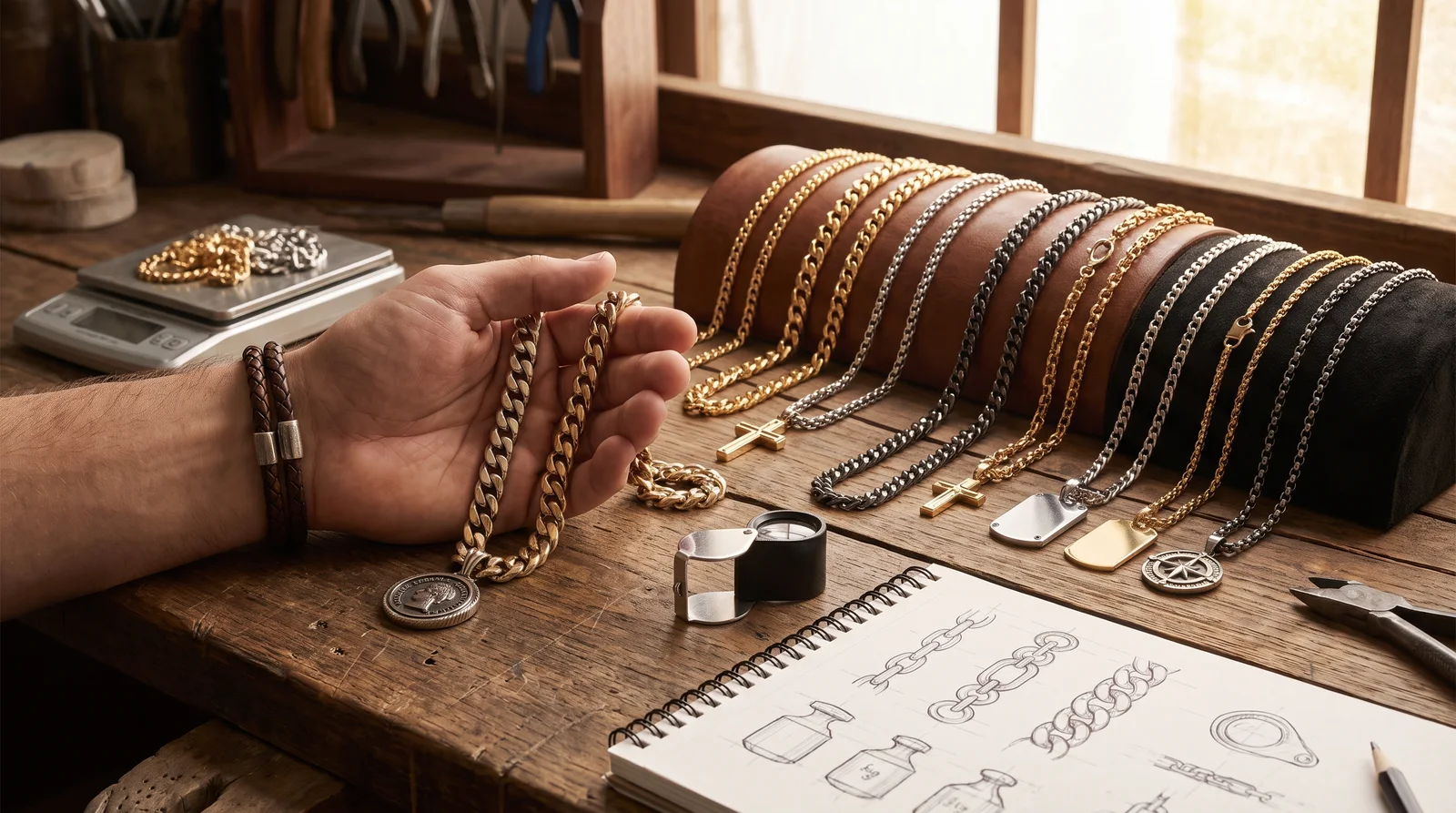
A men's chain necklace weight capacity guide comes down to one simple ratio: your chain should weigh at least 1.5 to 2 times what your pendant weighs, and the links need to be solid, not hollow. Gauge matters too. A thin 1mm chain will stretch and snap under a pendant meant for a 3mm or thicker link. The exceptions are heavy-duty clasps and solid construction, which can let a thinner-looking chain outperform a bulkier hollow one.
What Actually Determines a Chain's Weight Capacity
A chain's weight capacity depends on three things working together: link thickness, link construction, and metal type. Most guys assume a thicker looking chain automatically holds more weight. That's not always true. A hollow 6mm chain can actually fail faster than a solid 3mm chain, because there's less metal doing the actual work. Gauge tells you how thick the wire is that forms each link. Construction tells you whether that wire is a solid core or a thin shell wrapped around empty space. Metal type tells you how well the material resists stretching and fatigue over months of wear.
Think of it like comparing a solid steel rod to a steel tube of the same width. The rod handles way more stress before bending. Chains work the same way. When you're shopping for something to hold a pendant every day, gauge alone doesn't tell the full story. You need to know what's actually inside those links.
Why Gauge Numbers Alone Can Mislead You
Gauge measures diameter, not strength. Two chains with identical gauge can perform completely differently. A 4mm hollow curb chain and a 4mm solid curb chain look nearly the same on a scale or under a loupe. Put a two-ounce pendant on both and you'll see the difference within a few months. The hollow one starts to elongate at the stress points. The solid one holds its shape. This is the biggest blind spot for guys buying online, where product photos make everything look uniformly sturdy.
How to Match Chain Thickness to Pendant Weight Without Guessing
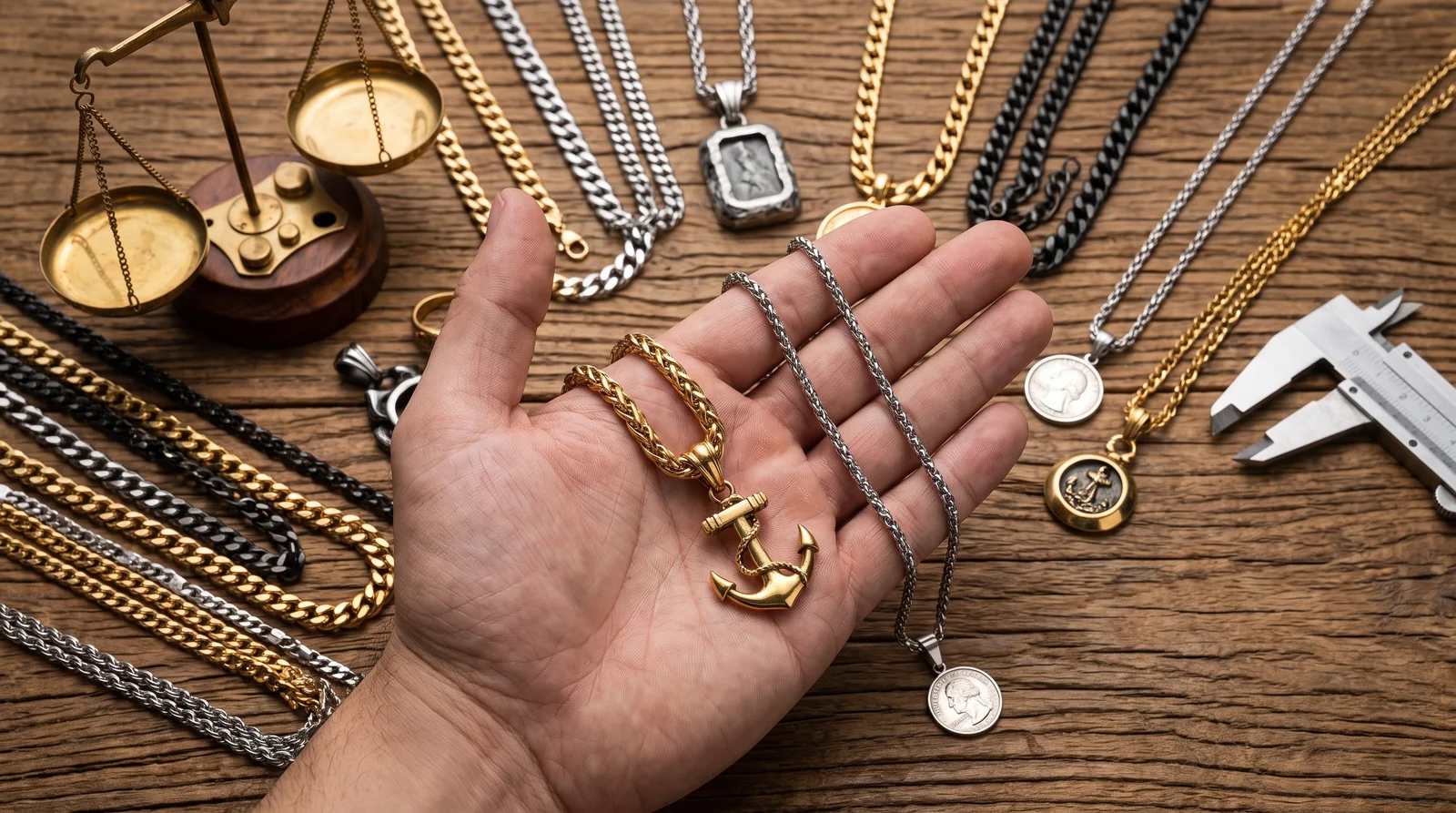
Matching chain thickness to pendant weight starts with weighing your pendant. Then choose a chain gauge rated to carry at least 1.5 times that weight. If your pendant weighs 10 grams, you want a chain in the 15 to 20 gram range, assuming solid links. This isn't a hard science lab measurement, but it's a reliable starting point jewelers have used for decades. A jeweler I've spoken with who repairs snapped chains daily said most breaks trace back to a lightweight fashion chain paired with a pendant that was simply too heavy for it.
Here's a practical way to think about how to match chain thickness to pendant weight. Small pendants under 5 grams, like a simple cross or small medallion, do fine on a 1.5mm to 2mm chain. Medium pendants between 5 and 15 grams need at least a 2.5mm to 3.5mm gauge. Anything heavier than 15 grams, including large military-style dog tags or chunky medallions, needs a 4mm chain or wider, and solid links become non-negotiable at that point.
The Pendant to Chain Weight Ratio Explained
The pendant to chain weight ratio is a quick gut check, not an exact formula. Jewelers commonly recommend the chain weigh 1.5 to 2 times more than the pendant it's carrying. This accounts for the constant back and forth motion a pendant makes throughout the day. Walking, bending, and reaching all create repeated friction at the same points on the chain. A heavier, denser chain distributes that stress better than a delicate one.
If you're unsure how heavy your pendant actually is, a kitchen scale works fine for a rough estimate. Anything over 20 grams is genuinely substantial for a pendant. For a deeper breakdown of specific weight thresholds and what they mean for chain selection, this guide on how heavy can a pendant be for a chain covers the numbers in more detail.
Chain Gauge Recommendations for Heavy Pendants
Heavy pendants need wider gauge and solid construction, full stop. For anything over 15 grams, a curb or figaro chain at 4mm to 6mm in solid stainless steel or solid gold handles the load without stretching. Rope chains also perform well here because the twisted design spreads tension across more contact points instead of concentrating it at single links.
Cuban link chains are popular for heavy medallions because the flattened, interlocking links create a dense structure that resists bending. A 6mm solid Cuban link can comfortably carry pendants that would destroy a thin box chain in weeks. If you're going the statement piece route with a large crucifix or a chunky pendant, don't cheap out on gauge just because a thinner chain looks more refined in photos.
Once you understand gauge and ratio, the next question is what's actually happening inside the metal itself, and that's where link construction becomes the real deciding factor.
Solid vs Hollow Chain Links: Which One Actually Survives Daily Wear
Solid chain links survive daily wear significantly better than hollow ones, because they have uniform metal density throughout, not just on the surface. Hollow chains are made by wrapping thin sheet metal around a core and sealing the seam. This keeps costs down and makes the chain feel lighter around the neck. That lightness comes at a price. Once the thin outer shell wears through at a stress point, usually where the pendant bail rubs against the link, the whole structure weakens fast.
Solid links don't have that vulnerability. The metal is the same thickness all the way through, so friction wears down the surface evenly and much more slowly. I've seen solid chains that have carried the same pendant daily for over a decade and still show minimal wear at the bail contact point. Hollow chains rarely make it that long under similar conditions.
How Solid vs Hollow Gold Chain Performance Compares Under Load
Solid versus hollow gold chain performance differs mainly in how each handles repeated pendant movement over time. Hollow gold chains are common because gold is expensive. Hollow construction lets manufacturers make a chain look bigger and bolder while using less actual gold. That's a fine trade-off for a chain worn without a pendant. Add daily pendant friction, though, and the thin gold shell starts thinning out at exactly the spots where the bail slides back and forth.
Solid gold chains cost more upfront, sometimes twice as much for the same visual width, but they hold pendant weight without deforming. For anyone planning to wear one primary pendant daily rather than rotating pieces, solid construction pays for itself in avoided repairs. This detailed comparison of solid vs hollow gold chain for pendant setups breaks down the construction differences further if you want to see how manufacturers build each type.
Signs a Chain Is Failing Before It Snaps
A chain rarely breaks without warning signs first. Watch for links that look slightly stretched or oval-shaped compared to the rest of the chain, especially near the clasp or wherever the pendant hangs. Discoloration or a thinning appearance at specific links means the metal is wearing through. If the chain feels loose or has developed a slight kink that wasn't there before, that's often the last stage before a full break.
Catching these signs early means you can get the chain repaired or replaced before losing a pendant that might have sentimental or financial value. Chain link strength and durability aren't static. They degrade gradually, and paying attention to small changes saves you from a sudden loss.
Understanding construction is only half the equation. The metal itself plays just as big a role in how long a chain lasts under pendant weight.
Which Chain Metal Actually Holds Up Best Under Pendant Weight
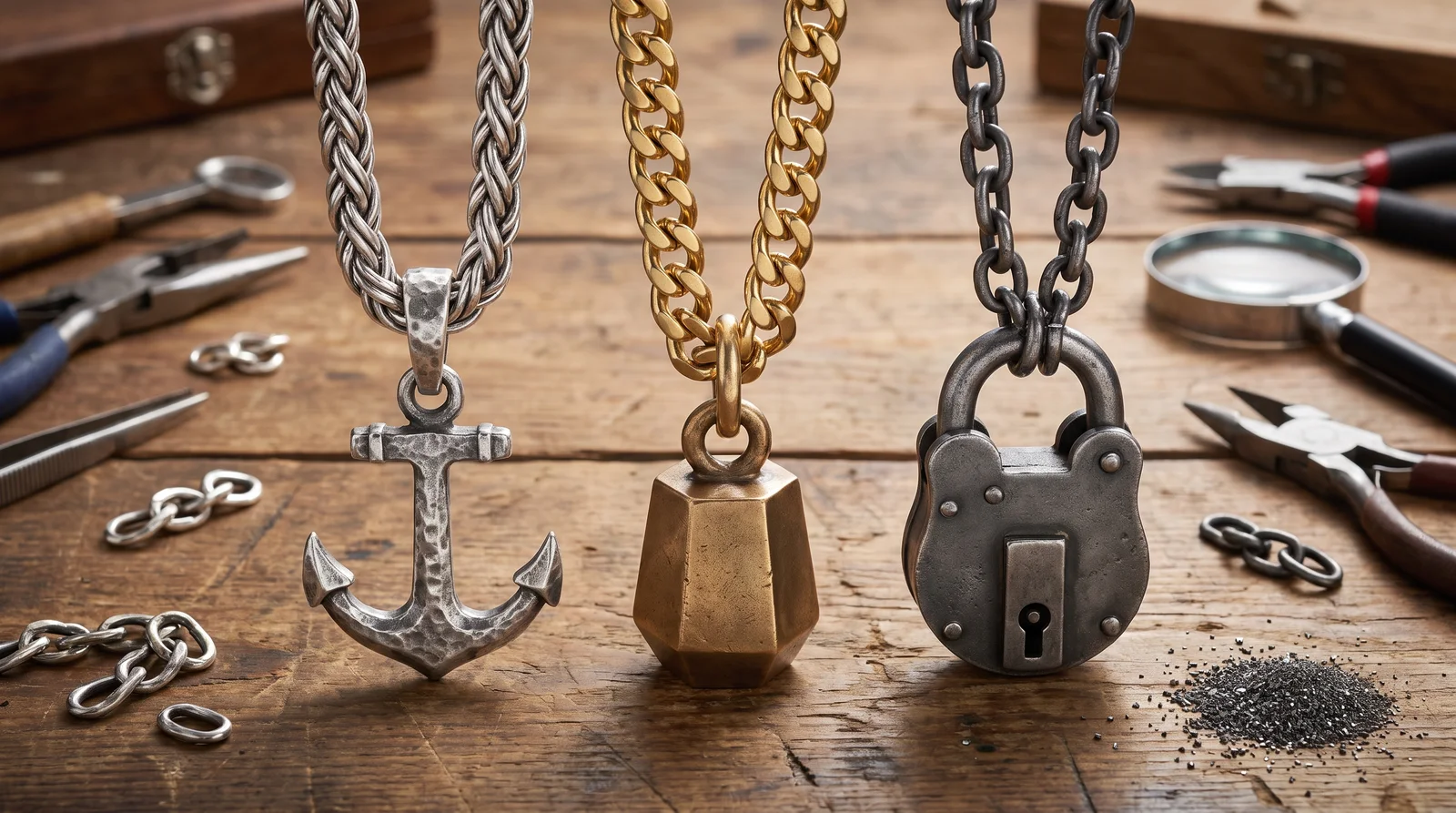
Stainless steel and platinum handle pendant weight better than high karat gold, because they resist stretching and fatigue at a molecular level. This surprises people who assume gold, especially 18k or 24k gold, is automatically the toughest choice because it's the most expensive. Often the opposite is true. Pure gold is a soft metal. 24k gold is 99.9% pure, which makes it beautiful but structurally weak for anything bearing constant tension.
14k gold, which contains about 58% gold mixed with stronger alloy metals like copper and silver, holds up considerably better than 18k or 24k for daily pendant wear. Solid 316L stainless steel outperforms all of them in raw durability, resisting corrosion, sweat, and the repeated friction of a moving pendant without stretching. It's part of why steel chains have become the standard for heavy hip hop style Cuban links.
Finding the Best Chain Metal for Pendants You Wear Every Day
The best chain metal for pendants worn daily is one that balances strength with how it reacts to your skin and lifestyle. Stainless steel wins for pure durability and low maintenance, plus it's naturally hypoallergenic for most people. Sterling silver looks great and is more affordable than gold, but it's softer than steel and needs more frequent inspection if you're hanging anything heavier than 10 grams on it.
Gold remains the classic choice for a reason. It doesn't tarnish, it ages well, and 14k strikes a solid balance between purity and strength. If you're weighing metal options for other daily wear pieces too, this guide on mens silver bracelet styles covers similar durability trade-offs between silver and steel that apply just as much to chains.
Why the Clasp Matters as Much as the Metal
A strong chain with a weak clasp still fails, just at a different point. Spring ring clasps are common but they're also the first thing to bend or pop open under sustained pendant tension. Lobster clasps, especially heavy-duty versions, hold up far better because the spring mechanism is enclosed and reinforced. If you're hanging anything over 10 grams, check the clasp rating before you check anything else about the chain.
Metal choice sets the foundation, but daily habits determine how long any chain, regardless of what it's made from, actually lasts under real wear conditions.
Daily Wear Habits That Wreck Even the Strongest Chains
Daily wear habits like sleeping in your chain, swimming in chlorinated pools, and constantly removing pendants without unclasping first are the fastest ways to damage even a well-built chain. Sleeping in a chain seems harmless. But the constant rolling and pressure against pillows and sheets speeds up wear at the exact points where a pendant bail sits. Over months, this creates thinning that wouldn't happen if the chain came off at night.
Chlorine is genuinely rough on metal, including stainless steel over long periods. It reacts with alloy metals and speeds up microscopic corrosion you won't see until the chain starts looking dull or feeling weaker at stress points. Gym workouts add another layer of wear through sweat and constant movement against gym equipment or clothing.
Cleaning and Maintenance That Actually Extends Chain Life
Regular cleaning removes the buildup that accelerates wear at friction points, particularly where the pendant bail contacts the chain. A soft cloth and mild soap solution works for most stainless steel and gold chains. Avoid anything abrasive, since scratching the surface creates tiny grooves where friction concentrates even more.
Inspect the chain every few weeks if you wear it daily with a pendant. Check for stretched links, clasp tightness, and any thinning near the pendant contact point. This takes thirty seconds and catches problems long before they turn into a lost pendant on a sidewalk somewhere.
Good habits protect your investment, but choosing the right durable men's chain necklace from the start makes maintenance a lot less stressful.
Choosing a Durable Men's Chain Necklace for Long Term Pendant Wear
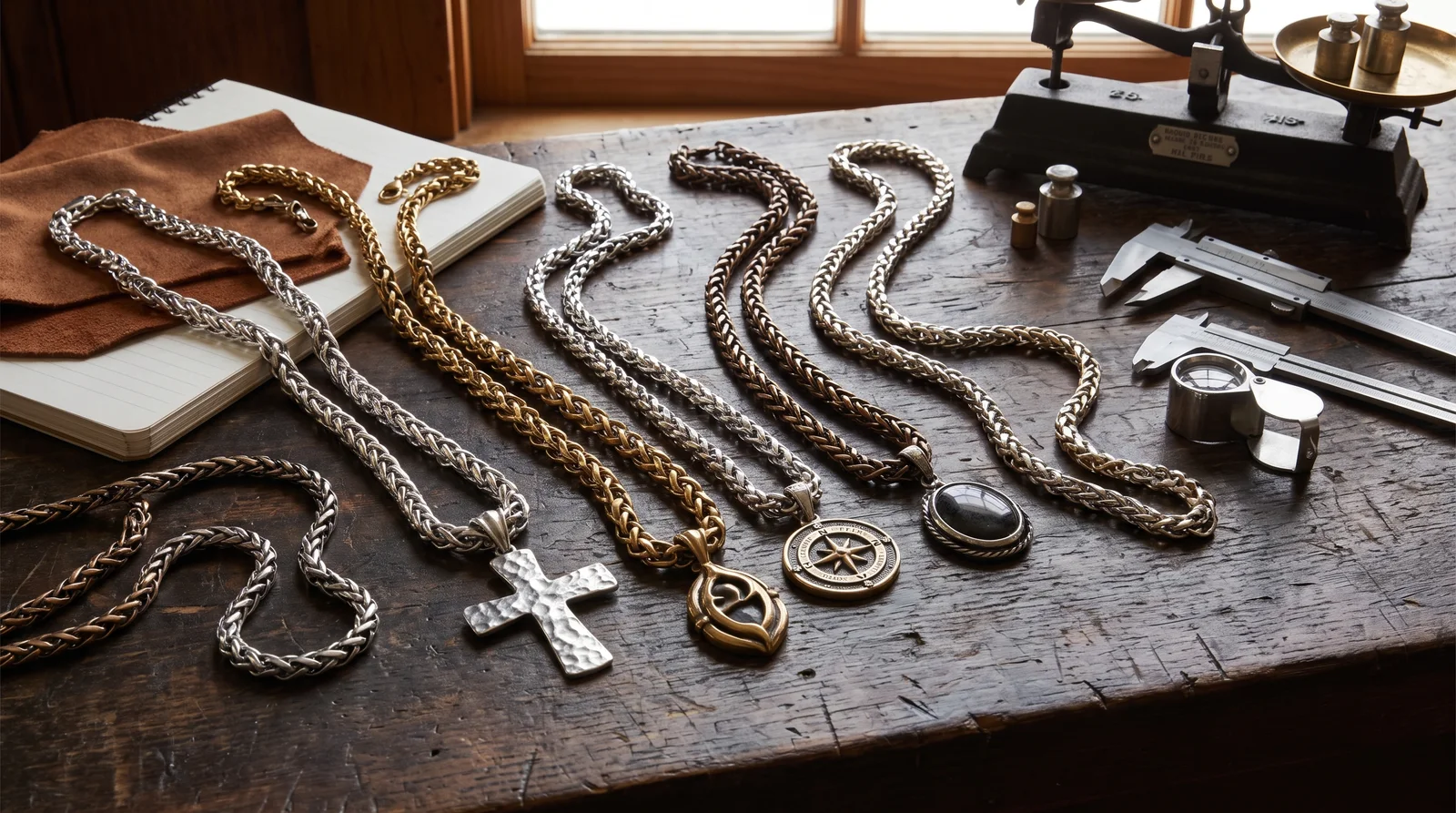
A durable men's chain necklace for long term pendant wear needs three things confirmed before purchase: solid link construction, a gauge matched to your pendant's weight, and a reinforced clasp. Skip any of these and you're gambling on how long the setup lasts. Ask specifically whether links are solid or hollow when shopping, since this detail often isn't obvious from photos alone. Buy based on the heaviest pendant you plan to wear, not just what you're wearing right now. If you might upgrade to a heavier medallion later, choosing a slightly heavier gauge chain now saves you from buying twice.
When It Makes Sense to Buy a Dedicated Pendant Chain
Buying a chain specifically built for pendant weight makes sense once you're planning to wear one significant piece daily rather than rotating light chains. A dedicated pendant chain, usually solid construction in 3mm to 5mm gauge, costs more but eliminates the guesswork of whether your existing chain can handle the load. This is especially worth it for sentimental pendants you don't want to risk losing.
With the buying decision covered, a few common questions still come up often enough to answer directly.
Frequently Asked Questions About Chain Strength and Pendant Weight
How do I know if my chain is too thin for my pendant?
If your pendant weighs more than the chain by a wide margin, or if you notice the chain sagging or the links near the clasp look stretched, it's too thin. A good rule is comparing weights directly. The chain should be 1.5 to 2 times heavier than the pendant for safe daily wear.
Can a hollow chain ever hold a heavy pendant safely?
Hollow chains can hold lighter pendants under 5 grams reasonably well, but they're not built for consistent heavy loads. The thin outer shell wears through faster under repeated friction, so a heavy pendant on a hollow chain will likely cause premature failure within months rather than years.
Does stainless steel really outperform gold for pendant chains?
In terms of raw strength and resistance to stretching, yes, solid stainless steel generally outperforms high karat gold. Gold above 14k is softer and more prone to deforming under constant pendant tension, while stainless steel resists corrosion and fatigue much better over years of daily wear.
Why does my chain keep breaking at the same spot?
That's almost always the point where the pendant bail contacts the chain link. Constant sliding motion creates concentrated friction there, and if the chain is hollow or too thin for the pendant's weight, that spot wears through faster than the rest of the chain.
What chain type holds up best for a heavy medallion?
Solid Cuban link and solid curb chains in 5mm to 8mm gauge handle heavy medallions best. The flattened, interlocking design of Cuban links spreads tension across a wider surface, which reduces the concentrated wear you'd see on a thinner rope or box chain.
Picking the right chain isn't about finding the flashiest option in a display case. It's about knowing your pendant's actual weight, checking whether the links are solid or hollow, and matching gauge to load before you swipe a card. Get that part right and you won't be back at the jewelry counter in six months wondering why your chain gave out. Weigh your pendant, check the construction, and buy a chain that's actually built to carry it every day.