How to Build a Charm Necklace That Grows With You (Without Ever Looking Overloaded)
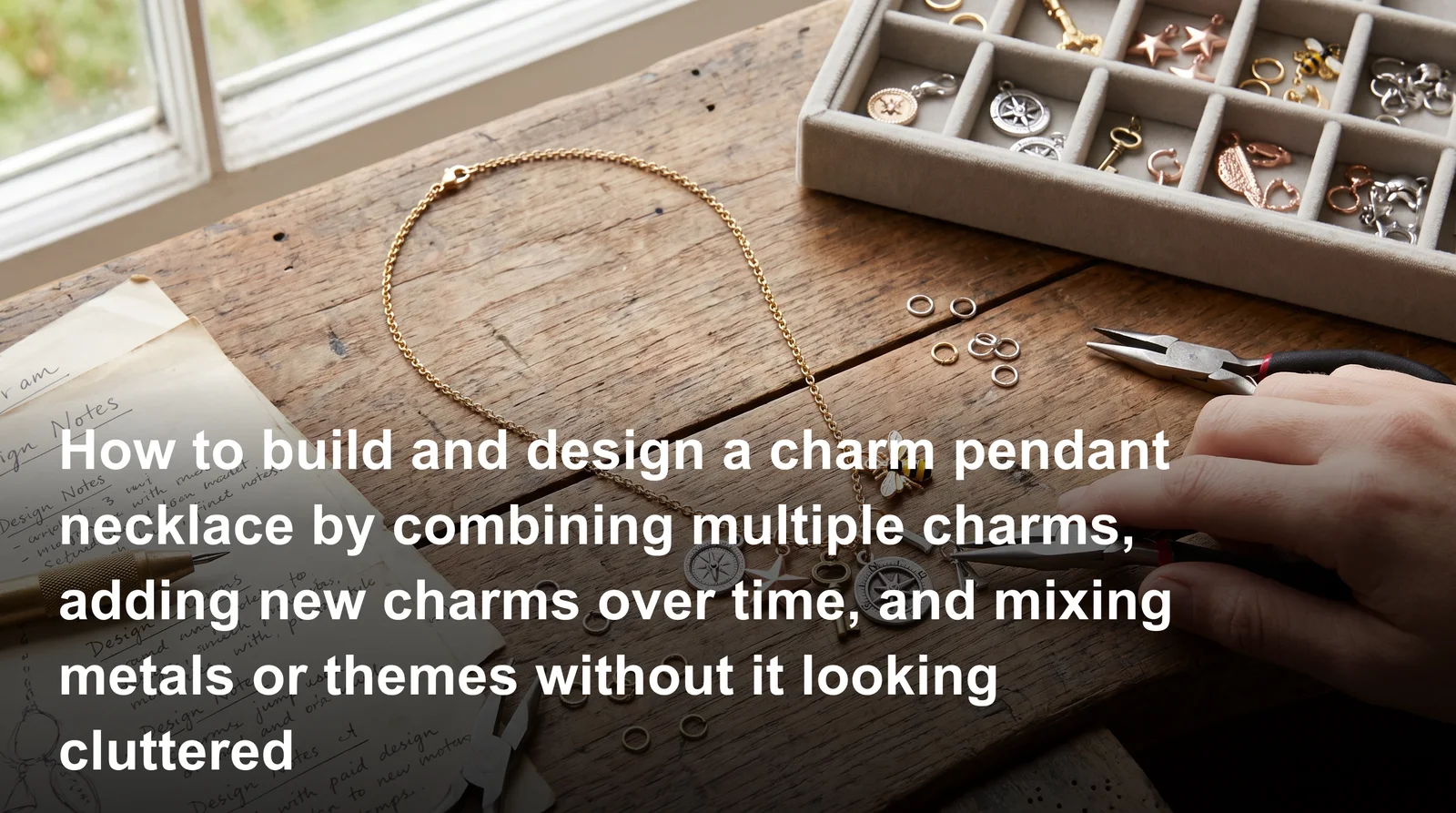
Most people start a charm necklace with one meaningful piece, then panic a year later when it looks like a cluttered junk drawer. The fix isn't fewer charms. It's knowing how to build a charm necklace with the right connectors, spacing, and metal mixing from the start, so every new addition makes sense instead of competing for attention.
If you already have a pendant or you're planning your first one, this is the part nobody explains clearly: how to keep adding without ruining what you built.
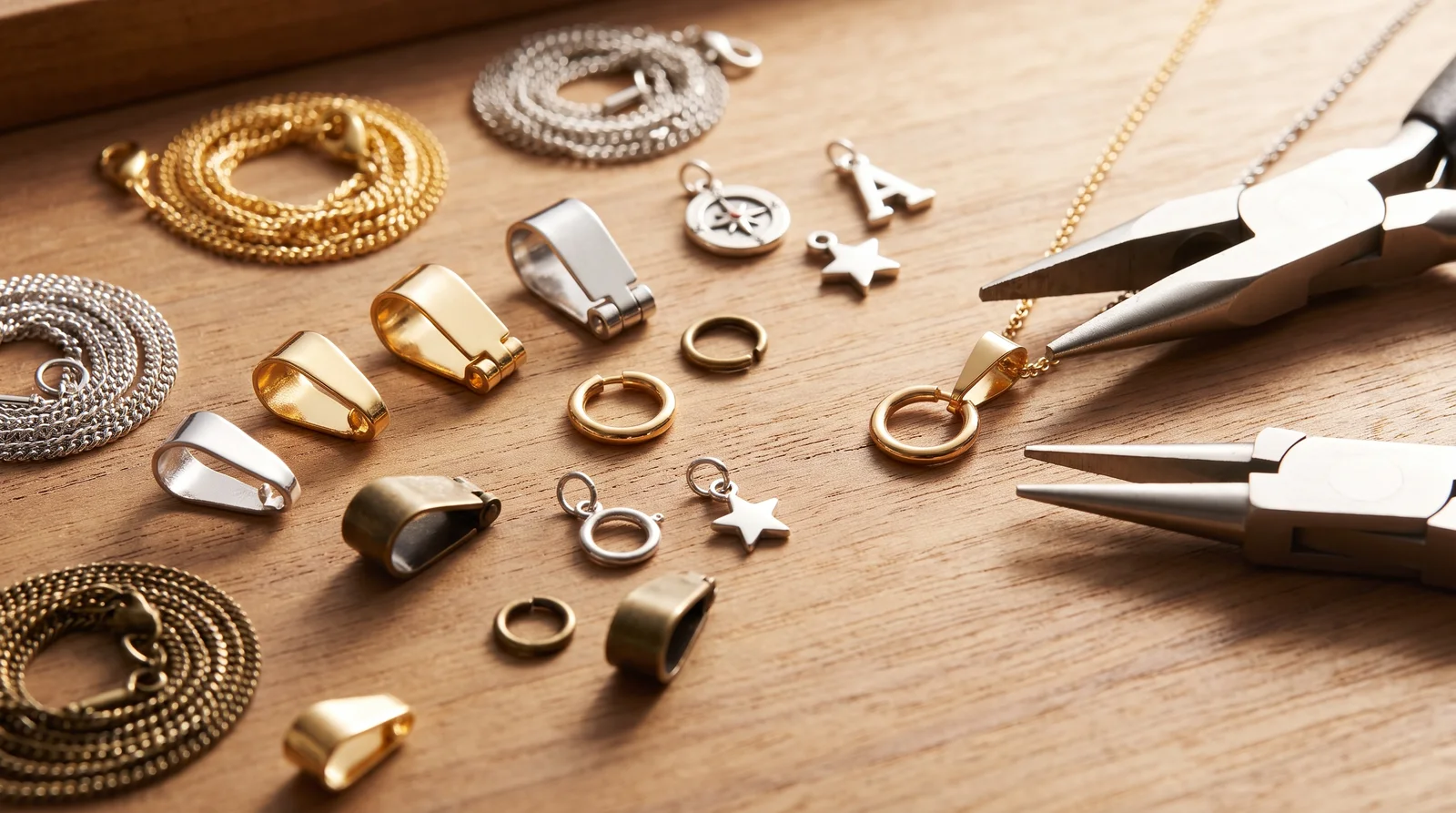 The connector on your pendant matters more than most people realize when you're planning to add charms down the road. A fixed, soldered bail looks clean, but it locks your pendant in place permanently. That's fine if you never plan to touch the arrangement again. But if you know you'll want to add a charm for a birthday, a new baby, or an anniversary, you want a connector that opens.
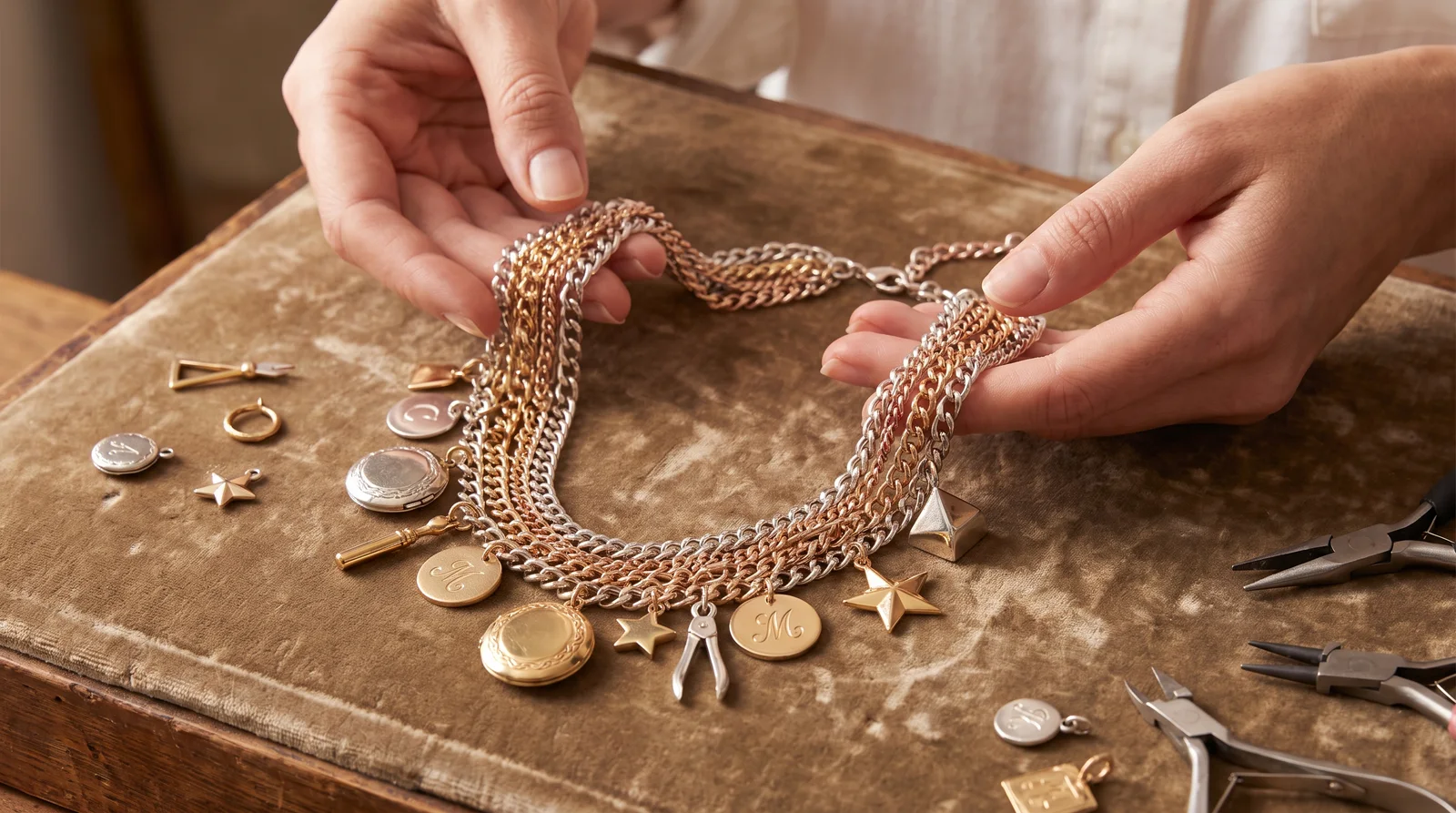 Mixing metals on a charm necklace works when you treat one metal as dominant and the other as an accent, rather than splitting everything fifty-fifty. Gold and silver together used to be considered a styling error. That rule is gone. What still matters is intention. If most of your charms are yellow gold and you add one white gold or sterling silver piece, it reads as a deliberate contrast. If you've got three different metals fighting for attention with no clear majority, it starts to look like you grabbed whatever was available.
A rose gold charm often works as a bridge between yellow gold and silver pieces, since it shares warmth with one and cool undertones with the other. If you're unsure whether your existing white gold pieces will work with yellow gold additions, this breakdown on wearing white gold and yellow gold together covers exactly where that pairing works and where it falls apart.
Mixing themes follows a similar logic to mixing metals, and it's worth handling with the same care.
Mixing metals on a charm necklace works when you treat one metal as dominant and the other as an accent, rather than splitting everything fifty-fifty. Gold and silver together used to be considered a styling error. That rule is gone. What still matters is intention. If most of your charms are yellow gold and you add one white gold or sterling silver piece, it reads as a deliberate contrast. If you've got three different metals fighting for attention with no clear majority, it starts to look like you grabbed whatever was available.
A rose gold charm often works as a bridge between yellow gold and silver pieces, since it shares warmth with one and cool undertones with the other. If you're unsure whether your existing white gold pieces will work with yellow gold additions, this breakdown on wearing white gold and yellow gold together covers exactly where that pairing works and where it falls apart.
Mixing themes follows a similar logic to mixing metals, and it's worth handling with the same care.
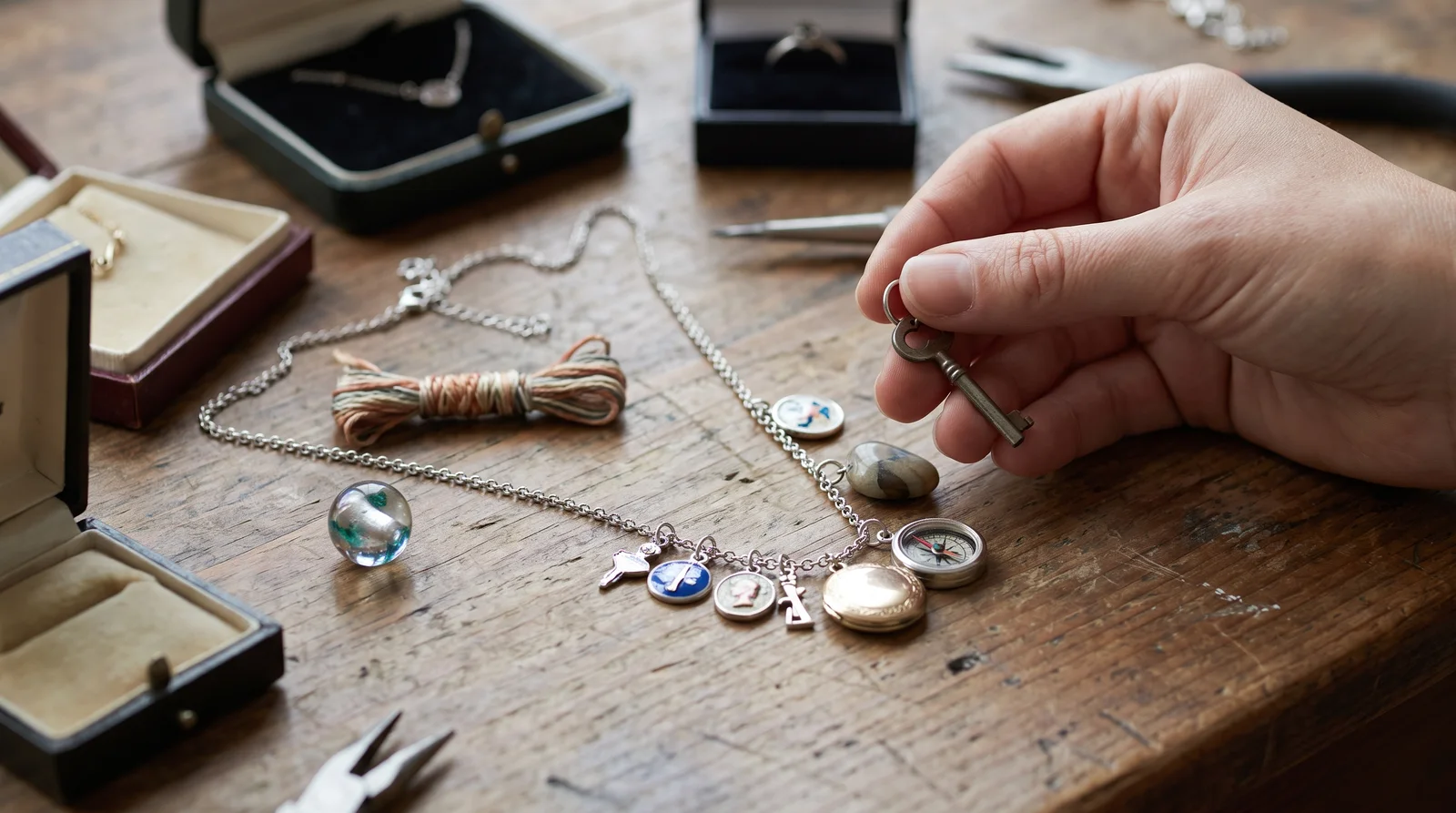 Yes, and it's more common than people expect, especially with pieces tied to a specific person or memory. A tie pin, a small pin from a lapel, or another repurposed item can be converted into a wearable charm and added to an existing necklace using the same jump ring approach as any other piece. The guide on how to turn a tie pin into a pendant walks through how that conversion works, which is worth knowing if you're planning to add something sentimental down the line instead of buying a new charm outright.
That flexibility is really the whole point of building a necklace this way from the start.
Yes, and it's more common than people expect, especially with pieces tied to a specific person or memory. A tie pin, a small pin from a lapel, or another repurposed item can be converted into a wearable charm and added to an existing necklace using the same jump ring approach as any other piece. The guide on how to turn a tie pin into a pendant walks through how that conversion works, which is worth knowing if you're planning to add something sentimental down the line instead of buying a new charm outright.
That flexibility is really the whole point of building a necklace this way from the start.
Start With One Anchor Charm and a Plan for What Comes Next
The smartest way to build a charm necklace is to pick one anchor piece first, then design around the assumption that you'll add two or three more over the coming years. Your anchor is whatever matters most right now. Maybe it's an initial, a birthstone, or a symbol tied to a specific memory. Whatever it is, it should be slightly larger or more detailed than anything you plan to add later, because that's what gives the whole piece a visual hierarchy instead of a flat row of equally-sized shapes. I've seen customers bring in a single pendant and ask for two more charms within eighteen months. The ones who planned ahead, even loosely, ended up with necklaces that looked intentional at every stage. The ones who just kept adding charms as they bought them often ended up with a cluster that looked more accidental than personal. Once you have that anchor, the next decision determines whether future additions will be easy or a headache.Choose a Bail or Connector Style Built for Adding Charms Later
The connector on your pendant matters more than most people realize when you're planning to add charms down the road. A fixed, soldered bail looks clean, but it locks your pendant in place permanently. That's fine if you never plan to touch the arrangement again. But if you know you'll want to add a charm for a birthday, a new baby, or an anniversary, you want a connector that opens.
Jump Rings Versus Soldered Connections
Jump rings are small metal loops that open and close, letting you attach or remove a charm without cutting into the chain. They're the standard choice for anyone planning to add charms to a necklace over time, because a jeweler, or you, can open one with two pairs of pliers in under a minute. Soldering fuses the connection permanently, which is more secure but means every future change requires cutting the charm free and re-soldering a new one. For a necklace meant to evolve, jump rings win almost every time. Just make sure they're sized correctly. A 4mm or 6mm jump ring fits most standard charm loops, and a jeweler can size up if a new charm's loop is thicker than your existing ones.Charm Clips and Clasp-Style Bars
A charm clip, sometimes called a connector clasp, is a small hinged bar you can open like a tiny carabiner. These are worth considering if you plan to swap charms frequently, not just add them permanently. You get the flexibility of changing your arrangement for an outfit or a mood without touching jump rings at all. The tradeoff is that clips are slightly more visible than a jump ring, so they work best when the clip itself fits the design instead of looking like an afterthought. With your connector sorted, the next question is where those charms actually sit on the chain.How to Arrange Charms on a Necklace So Nothing Fights for Space
The way you arrange charms on a necklace determines whether it reads as curated or crowded, and it comes down to two basic layouts. You're choosing between spacing charms individually along the chain, or clustering them together using a charm holder bar or a single connector point.Spacing Charms Individually Along the Chain
Spacing works well when you have two to four charms of noticeably different sizes. Give each one room, roughly an inch or more between pieces, so your eye can register them as separate symbols rather than a jumbled row. Small silicone stoppers, sold at most craft and bead stores, keep charms from sliding into each other over a day of wear. This layout tends to look better with a slightly longer chain, since spaced charms need more real estate to breathe than a clustered group does.Using a Charm Holder Bar Instead
A charm holder bar is a short horizontal bar with several loops attached, letting multiple charms hang together at one fixed point on the chain. This is the better option once you're past four or five charms, because it keeps everything anchored at the collarbone instead of sliding around the chain individually. It also makes swapping charms easier later, since you're only working with one attachment point instead of managing several jump rings spread across the chain. Once your layout is settled, the next challenge is making different metals and themes sit together without looking mismatched.Mixing Metals on a Charm Necklace Without It Looking Like a Mistake
Mixing metals on a charm necklace works when you treat one metal as dominant and the other as an accent, rather than splitting everything fifty-fifty. Gold and silver together used to be considered a styling error. That rule is gone. What still matters is intention. If most of your charms are yellow gold and you add one white gold or sterling silver piece, it reads as a deliberate contrast. If you've got three different metals fighting for attention with no clear majority, it starts to look like you grabbed whatever was available.
A rose gold charm often works as a bridge between yellow gold and silver pieces, since it shares warmth with one and cool undertones with the other. If you're unsure whether your existing white gold pieces will work with yellow gold additions, this breakdown on wearing white gold and yellow gold together covers exactly where that pairing works and where it falls apart.
Mixing themes follows a similar logic to mixing metals, and it's worth handling with the same care.
Combining Initials, Symbols, and Birthstones in One Design
An initial, a birthstone, and a symbol can coexist on the same necklace as long as one of them functions as the lead and the others support it. A common combination is an initial charm as the anchor, a birthstone as a secondary piece marking a specific person or date, and one symbolic charm, like a moon or a heart, rounding things out. Three well-chosen charms in this format almost always read cleaner than five charms with no clear relationship to each other. If you're building toward a birthstone-heavy design, this guide to birthstone necklace charms walks through combinations that stay cohesive even as you add more stones. And if you're combining stones for multiple family members into one design, the approach used in a family birthstone necklace shows how that balance plays out in a real piece. With metals and themes sorted, the last practical question is how many charms you can actually add before the whole thing tips over into too much.How Many Charms Is Too Many Before a Necklace Looks Overloaded
Most charm necklaces start to look overloaded somewhere between six and eight charms, depending on their size and how they're arranged. That's not a strict ceiling, but it's a reliable warning zone. A necklace with three small charms and one larger anchor reads as curated. A necklace with nine charms of similar size, regardless of how meaningful each one is, starts to blur together visually, and the individual pieces lose their impact.Signs You've Added One Charm Too Many
If you can't identify each charm at a glance without touching the necklace, that's usually the first sign you've gone past the point of clarity. Another tell is weight distribution. When charms start overlapping or twisting the chain to one side, that's not just a durability issue, it's a visual one too, since the necklace no longer sits the way it was designed to.What to Do When You've Outgrown Your Original Design
Sometimes the answer isn't removing charms, it's redistributing them. Moving from a single cluster to a charm holder bar, or splitting a large group across two chains of different lengths, often solves the overload problem without giving up a single piece. If you're at this stage and want a design built specifically to handle growth, working with a jeweler through a custom project lets you plan the connector style and spacing before you add anything new. Even sentimental, non-traditional pieces can become part of this system, which brings up a question a lot of people don't consider until they already own something meaningful.Can You Add Non-Charm Items to Your Necklace Later
Yes, and it's more common than people expect, especially with pieces tied to a specific person or memory. A tie pin, a small pin from a lapel, or another repurposed item can be converted into a wearable charm and added to an existing necklace using the same jump ring approach as any other piece. The guide on how to turn a tie pin into a pendant walks through how that conversion works, which is worth knowing if you're planning to add something sentimental down the line instead of buying a new charm outright.
That flexibility is really the whole point of building a necklace this way from the start.
Frequently Asked Questions About Building a Charm Necklace
How do I add charms to a necklace over time without ruining the design?
Plan your connector style upfront, ideally jump rings or a charm holder bar, so new pieces attach without needing to alter the chain. Add one charm at a time and step back to check balance before buying the next.What is the best chain length for a charm necklace?
An 18 to 20 inch chain works for most charm arrangements, sitting at or just below the collarbone with enough room for multiple pieces. Shorter chains crowd charms together, while anything past 22 inches can let heavier pieces twist or flop.Can I mix gold and silver charms on the same necklace?
Yes, mixed metals are widely accepted now, especially when one metal is dominant and the other acts as an accent. A rose gold piece can help bridge the two if the contrast feels too sharp on its own.Should I use jump rings or have charms soldered on?
Jump rings are better if you plan to add, remove, or rearrange charms in the future, since they open and close without altering the chain. Soldering is more permanent and better suited to a design you never intend to change.How do I know if my charm necklace has too many charms?
If you can't identify each individual charm at a glance, or the chain twists and pulls to one side, you've likely passed the point of balance. Somewhere around six to eight charms is where most necklaces start needing a redesign or a second chain. Building a charm necklace really comes down to making a few smart decisions early and trusting that the piece can change as your life does. Pick a connector that lets you add without starting over, keep your metals and themes talking to each other instead of competing, and don't be afraid to redistribute charms across a second chain once you've outgrown the first design. If you're ready to plan a piece meant to grow with you rather than one you'll have to rebuild later, our team can walk you through a design built for exactly that.Share this articleLink copied