The Science Behind Gemstone Transparency and Light Transmission
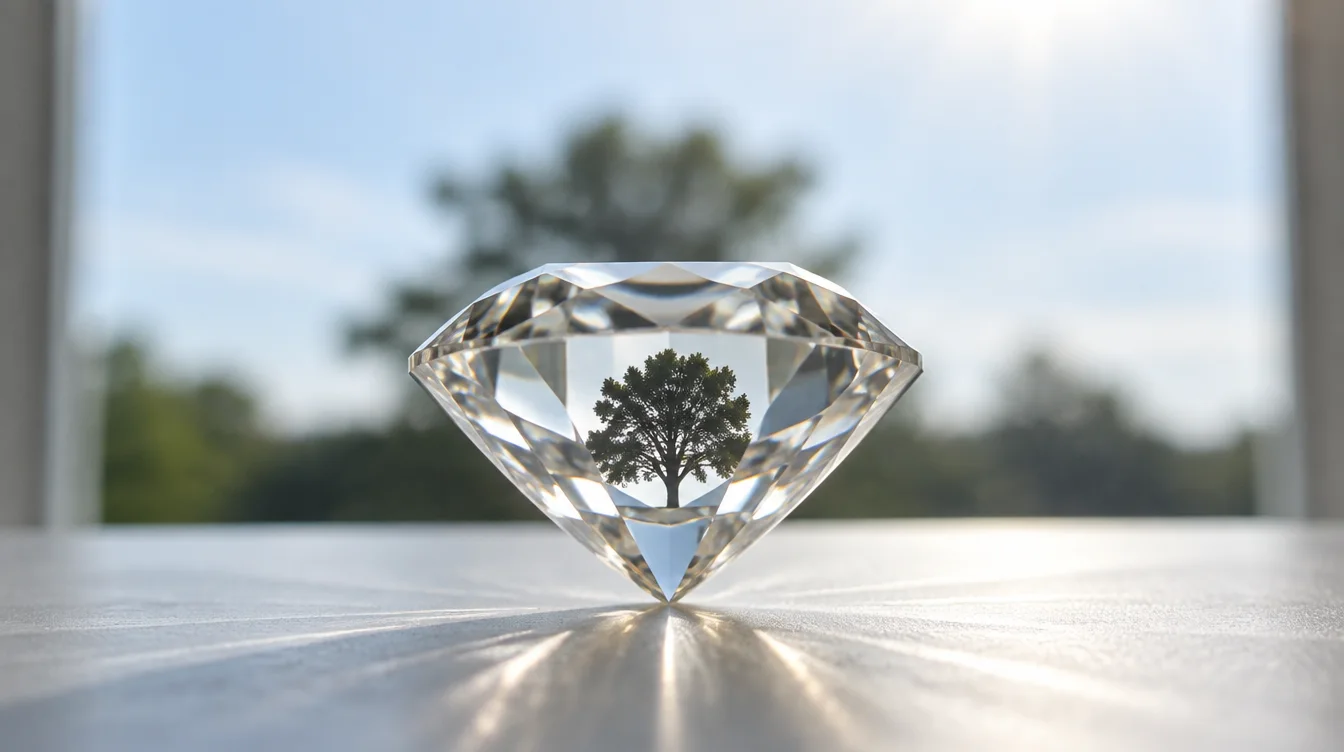
Gemstone transparency and light transmission depend on what happens at the atomic level. It is not just about how a stone looks on the surface. Light can pass straight through in an orderly path. It can scatter off internal features instead. Or it can get absorbed completely. Three things decide this. They are crystal structure, chemical purity, and what is trapped inside the stone. Once you understand these three things, you can look at almost any gem. You can then predict how it will behave in light.
What Actually Happens When Light Hits a Gemstone
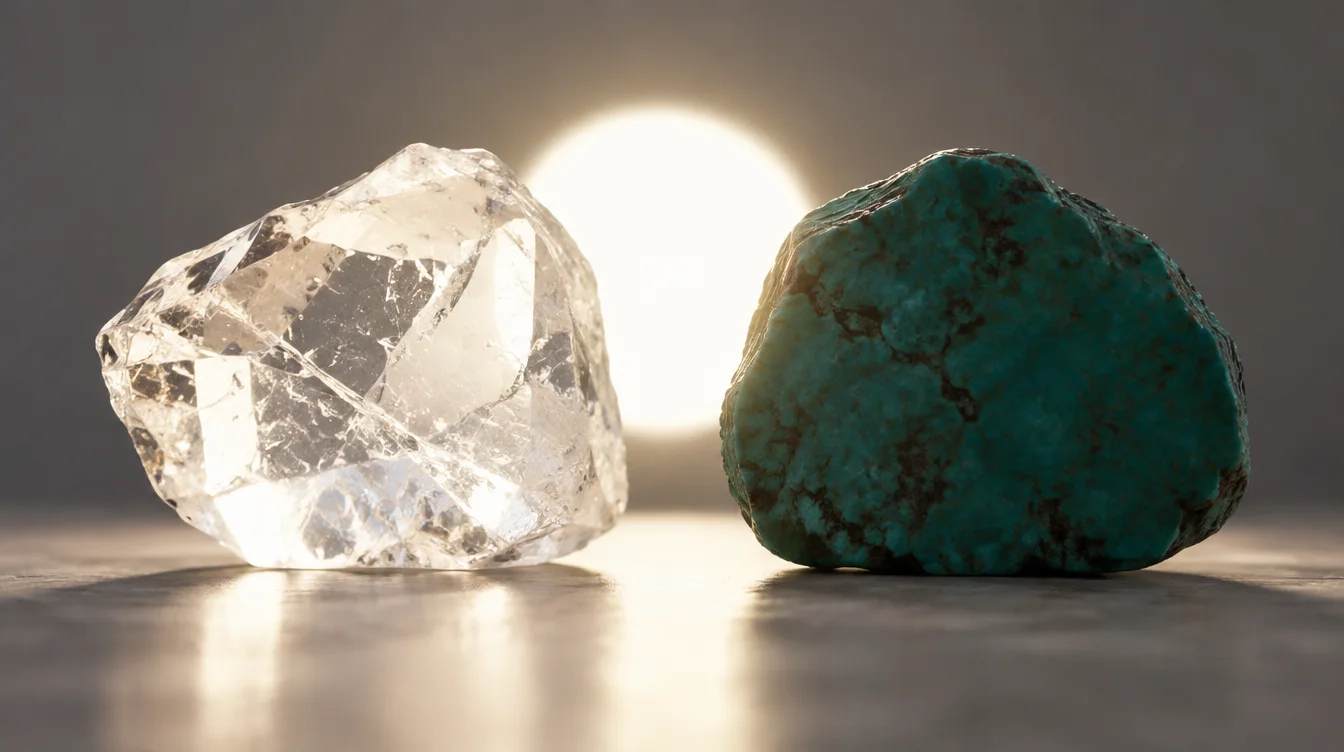
Light behaves in one of three ways once it hits a gem's surface. It reflects off the top, gets absorbed by the material, or passes through and exits the other side. Which path it takes depends on how atoms are arranged inside the crystal.
In a stone with a highly ordered lattice, like quartz or corundum, light moves through in a fairly straight line. There is nothing much in its way. In a stone with a jumbled or fibrous structure, light bounces around before it can escape. Some of it never makes it out at all.
This is the foundation of gemstone transparency and light transmission. It is not about color or sparkle. It is about whether the mineral's internal structure lets light travel cleanly from one side to the other.
Transparent vs Opaque Gemstones Comes Down to Crystal Order
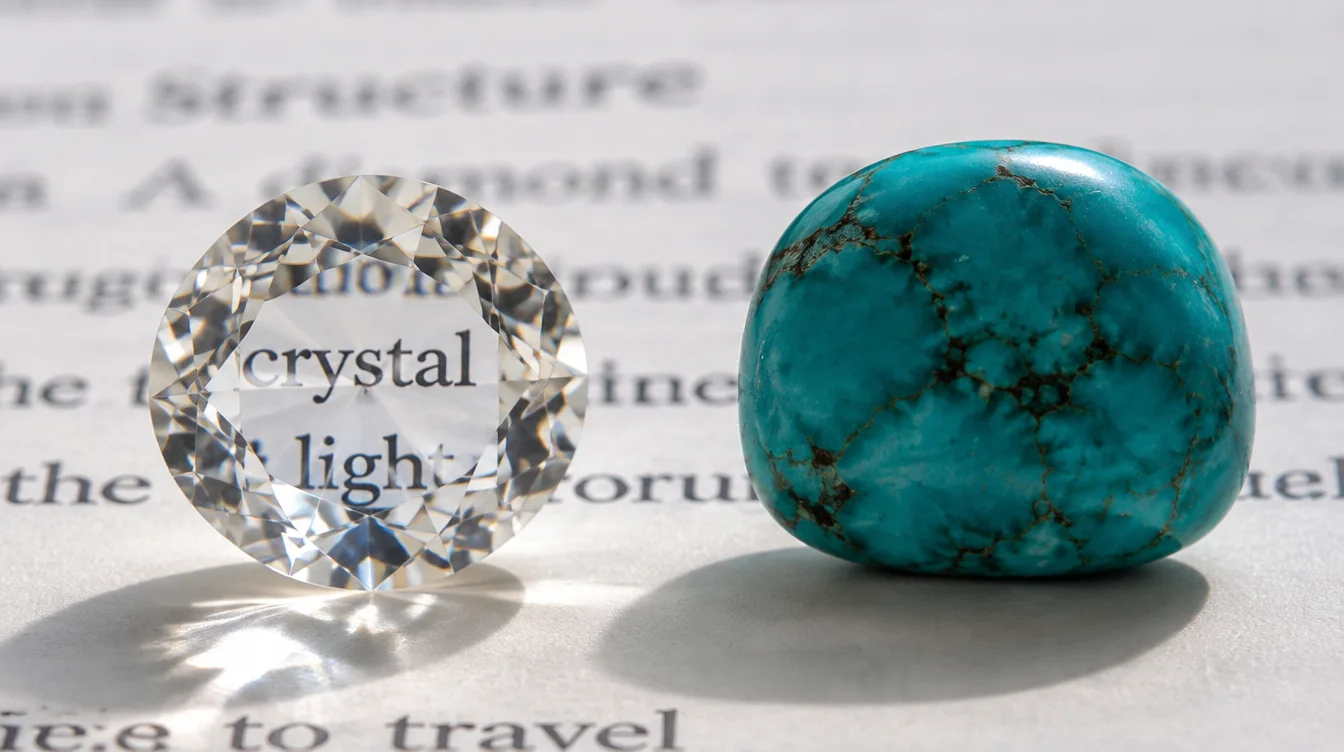
Transparent vs opaque gemstones differ mainly in how organized their internal structure is. A diamond has one continuous crystal lattice. Its atoms lock into a repeating pattern. Light enters and travels through with almost no interruption. Then it exits the other side. That is why you can read text through a clean diamond. Just hold it flat against a page.
Opaque stones like malachite or turquoise are built differently. They often form as aggregates. This means millions of tiny crystals fuse together at odd angles.
Light entering one of these stones hits a crystal boundary almost right away. It reflects. Or it refracts. Or it gets absorbed. This happens before it can travel any real distance. The stone looks solid because, optically, it is a maze rather than a hallway.
Refractive Index and Why It Matters Here
Refractive index measures how much a material bends light as it enters. Diamond has a refractive index of about 2.42. That is high. But refractive index alone does not decide transparency. It shows how much light bends. It does not show how much light gets through.
A material can have a high refractive index. It can still be perfectly transparent. Diamond is a good example. A material can also share similar chemistry with diamond. It can still lose transparency. This can happen due to structural defects. It can also happen from heavy inclusions. Refractive index shapes the path light takes. Crystal order and purity decide if that path stays clear.
This distinction matters. People often assume a denser or heavier feeling stone will automatically be more or less transparent. That is not how it works. It is architecture over mass.
Gemstone Inclusions and Light Transmission Are Directly Linked
Gemstone inclusions and light transmission interact constantly. Inclusions are usually the biggest reason a stone loses clarity. An inclusion is anything trapped inside the crystal as it forms. It could be a fracture. It could be a fluid pocket. It could be a gas bubble. It could also be a foreign mineral crystal that grew alongside the main stone.
Every inclusion acts like a tiny obstacle. Light traveling through the stone hits that obstacle. It scatters instead of continuing straight. More inclusions mean more scattering. Larger inclusions mean more scattering too. The result is a cloudier looking stone.
Emeralds are a textbook example. They are a Type III gem. This means emeralds almost always form with visible inclusions. Gemologists often call this jardin. Under magnification, it looks like a tiny garden. A heavily included emerald can look hazy. This happens even though beryl, the mineral itself, can be very clear when clean.
Why Some Inclusions Are Invisible to the Eye
Inclusion size compared to light wavelength decides visibility. Visible light wavelengths run roughly between 380 and 700 nanometers. An inclusion much smaller than that range will not scatter light in a way your eye can detect. This is true even though it technically breaks up the internal structure.
This is why a gem can be graded eye-clean under the GIA colored stone clarity scale. It can still hold inclusions under magnification. Type I stones like aquamarine and tanzanite are expected to be clean without a loupe. Type II stones such as peridot or garnet often show minor inclusions. These usually do not disrupt the overall look.
Translucent Gemstones Sit Between the Two Extremes
Translucent gemstones let some light through. But they never form a clear image on the other side. Moonstone, chalcedony, and jadeite fall into this category. Light enters and scatters partly inside the stone. It then exits diffused rather than direct.
Think of it like frosted glass compared to a clean windowpane. You can tell there is light on the other side. You cannot make out shapes or details.
This happens because translucent stones usually have a semi-ordered internal structure. It sits between two extremes. One is the tight single crystal of a diamond. The other is the chaotic aggregate of turquoise. Jadeite is a good case study here. Its value often depends on how fine and even its grain structure is. Finer grains scatter light more gently. This produces the soft glow collectors look for.
How to Evaluate Gemstone Clarity Through a Stone Yourself
You can evaluate gemstone clarity without a lab. Simple light tests and careful observation are enough. Start by holding the stone up to a light source. Natural daylight works well. A bright white LED works too. Look through the stone rather than at it.
Check whether you can see a sharp outline of something behind the stone, like text or a shape. A crisp, clear outline means high transparency. A blurry or fuzzy version means some scattering is happening inside. This is true even if the stone still passes light.
Next, rotate the stone slowly under the light. Watch for cloudy zones. Watch for feathery lines. Watch for dark spots that shift as you turn it. Those are inclusions interrupting the light path. A jeweler's loupe at 10x magnification is the same standard used for diamond grading. It will reveal far more detail than the naked eye alone.
If you are shopping for a diamond specifically, this kind of hands-on check pairs well with a broader look at cut and carat. You can read about that in our guide on how to choose a diamond for an engagement ring. The same light transmission rules apply whether you are checking clarity or verifying authenticity. Our guide on how to tell if a diamond is real at home covers several practical light tests you can try with items you already have.
Reading the Gemstone Transparency Scale
Gemologists use a standard gemstone transparency scale. It describes what the eye sees. There are five common categories. These are transparent, semi-transparent, translucent, semi-translucent, and opaque. The list starts with stones you can see through clearly. It ends with stones that block light entirely.
A transparent stone shows sharp, clear outlines of objects behind it. Semi-transparent stones show shapes that look slightly blurred. Translucent stones only reveal vague shadows. Sometimes you just see a glow from a light source. Semi-translucent stones let a small amount of light through. This only happens at their thinnest edges. Opaque stones show nothing at all. This stays true no matter how bright the light behind them is.
Why Cut Style Changes What You See
Faceted cuts and cabochon cuts show transparency in different ways. Faceted stones are cut with flat, angled surfaces. This design helps light bounce around more inside the stone before it exits. That is why transparent stones are almost always faceted.
Step cuts, like the emerald cut, use long open facets that act almost like a window into the stone. This makes inclusions more visible than a brilliant cut would, since fewer facets are left to break up and hide internal flaws. If you want to see how this plays out in a real design, our piece on emerald cut engagement rings gets into how that open faceting style changes what shoppers need to look for in clarity.
Frequently Asked Questions
Why can I see through the center of a gemstone but not the edges
Light travels a shorter distance through the center of most cut stones. This is especially true for round or oval shapes. That means less material to pass through. Near the edges, the path length gets longer. Any inclusions or internal strain there have more distance to scatter light before it exits.
Does gemstone transparency affect value more than color
Value depends on a mix of clarity, color, size, and rarity. Transparency alone does not decide it. A deeply colored opaque stone, like fine turquoise, can be worth more. It can beat a pale, poorly colored transparent stone of similar size.
Can a stone be transparent but still full of inclusions
Yes. The inclusions must be small enough compared to visible light wavelengths. If they are, they will not scatter light in a way your eye can detect. The stone can pass magnification tests. It can still be classified as eye-clean and transparent.
How do gemologists measure transparency in a lab setting
Labs like GIA use standardized viewing conditions. They also use magnification. Sometimes they use optical instruments too. All of this helps them judge how light passes through a stone. This process is separate from color grading. It focuses only on internal clarity and light behavior.
Are translucent gemstones lower quality than transparent ones
Translucency is a natural trait of certain minerals. It is not a defect. Jadeite, moonstone, and chalcedony are prized for their soft, diffused glow. High grade examples of these stones can be quite valuable.
Getting Comfortable Judging Clarity on Your Own
Transparency comes down to three things. These are crystal order, inclusion size, and how light moves through a stone. Once you understand this, evaluating clarity stops feeling like guesswork. You do not need a lab to start. You can learn to spot the difference. A clean transparent gem looks different from one with real internal scattering. A light source helps. A steady hand helps too. A bit of patience will tell you more than you expect. Are you shopping for a specific piece? Do you want a second opinion on clarity or authenticity? Our team at Fulop Jewelry is always happy to walk through a stone with you in person.