Why Metal Choice Matters More for Gold Diamond Stud Earrings
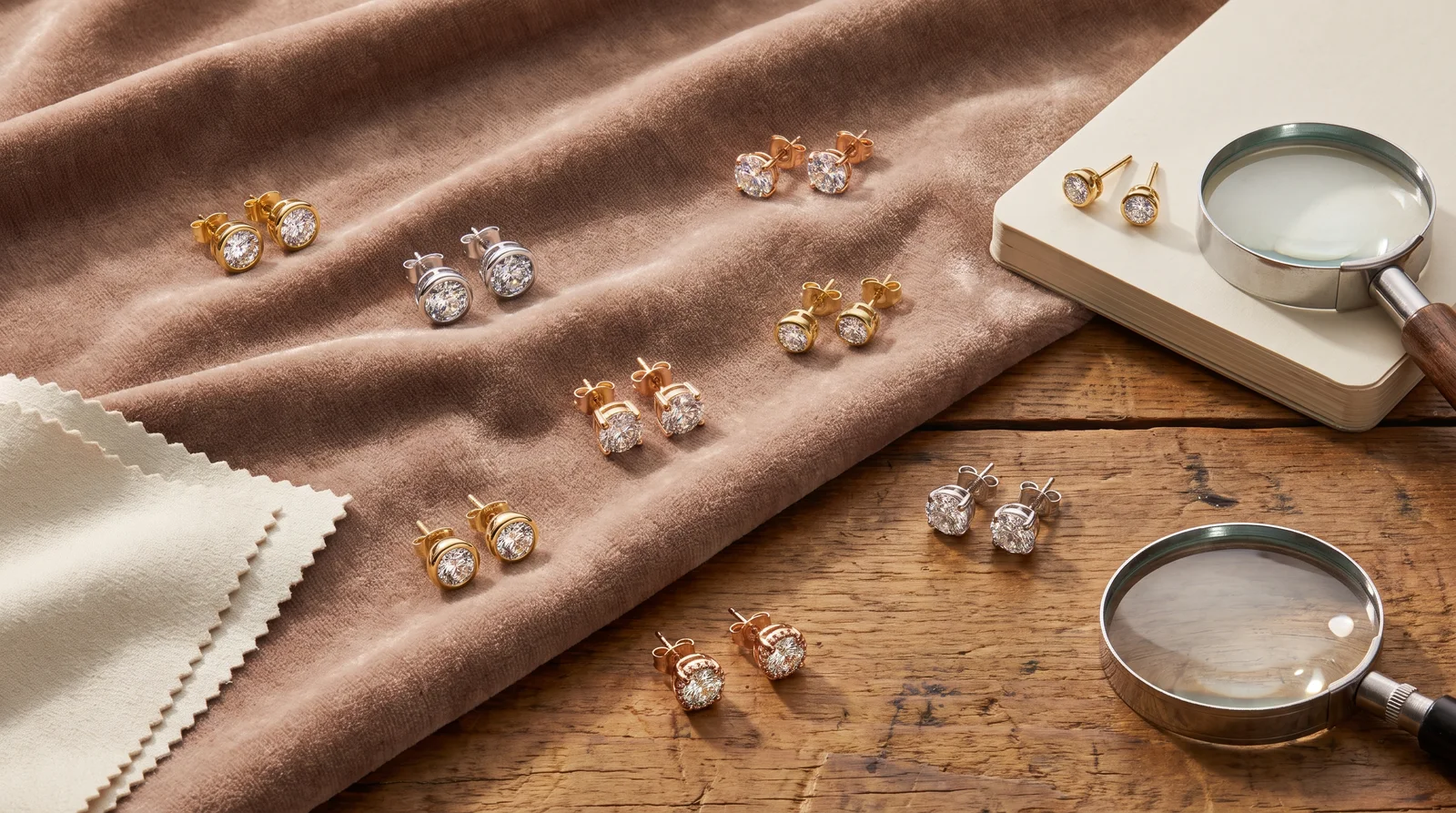
Gold diamond stud earrings take a different kind of beating than rings do. They get caught on hair, pillows, and phone calls dozens of times a day. White gold studs need rhodium replating every one to two years to stay bright. Yellow gold barely needs anything beyond a polish. Rose gold sits in the middle, since its copper content resists scratching but shows brassiness differently over time. The right metal depends on how often you sleep in your earrings, whether you have a nickel sensitivity, and how much upkeep you're willing to pay for down the road.
Why Diamond Studs Wear Differently Than Rings
Studs face constant small impacts that rings simply don't experience in the same way. A ring sits on your hand and takes direct hits against surfaces. But it also gets cleaned and inspected more often, because people notice ring wear faster. Earrings hide in your hair. They brush against scarves, pillowcases, and coat collars, and most people don't think to check them for months at a time.
That constant low-level friction adds up differently depending on the metal. A ring might get one hard knock a week. A stud earring gets a hundred tiny ones every single day, from tucking hair behind your ear to pulling a sweater over your head. This is why gold vs platinum diamond earrings durability conversations need a different framework than the one jewelers usually give for engagement rings.
This changes how you should think about metal purity, plating, and even prong design. Here's what happens to each metal type under everyday wear.
Yellow Gold Diamond Stud Earrings: The Low-Maintenance Choice
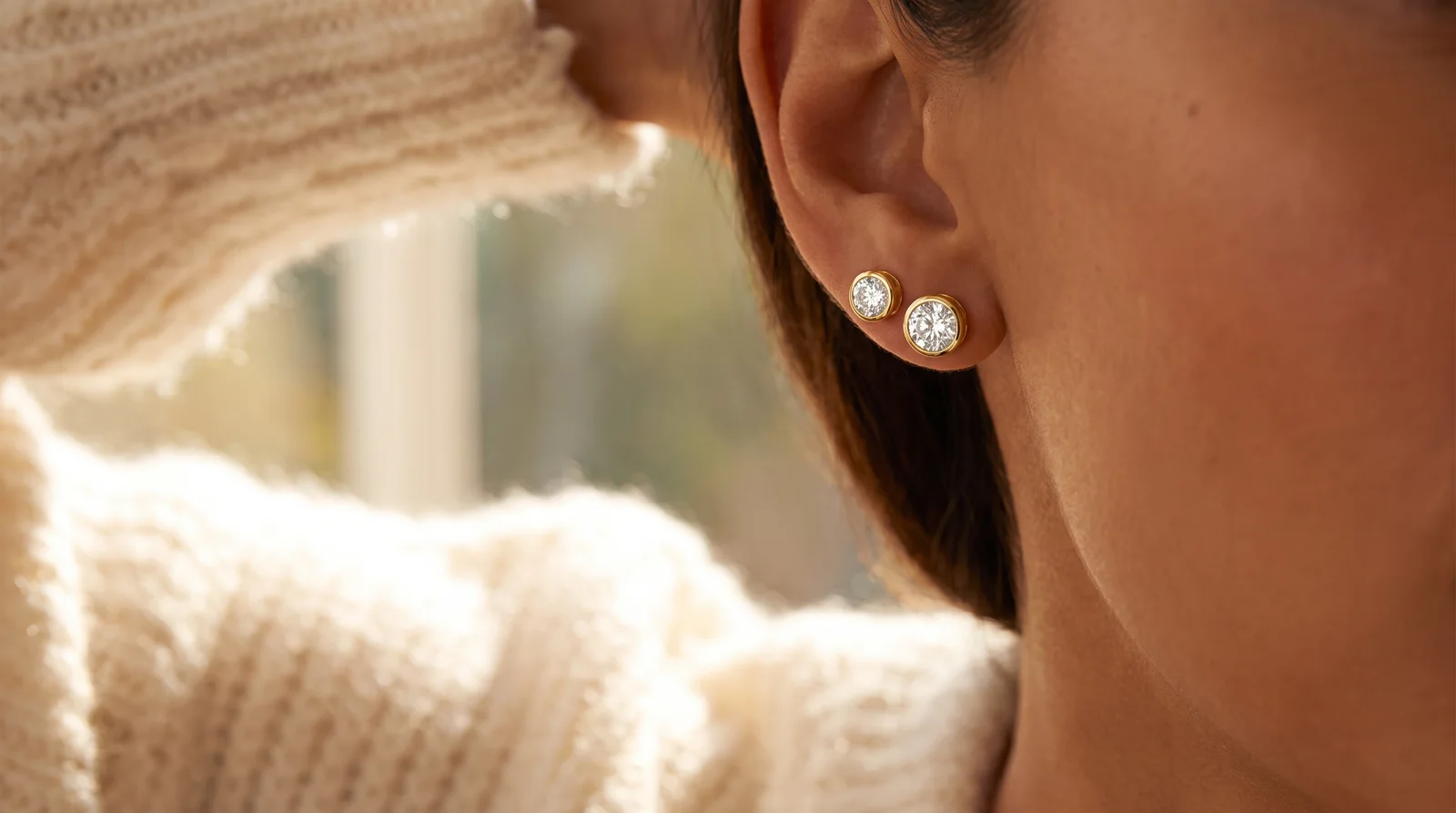
Yellow gold diamond stud earrings require the least upkeep of any option. The color is baked into the alloy itself, not applied as a surface coating. There's no plating layer to wear through, so the earrings look the same in year five as they did on day one, aside from minor surface scratching that a jeweler can buff out in minutes.
How Karat Purity Affects Everyday Toughness
Higher karat gold is softer, which sounds backward until you think about what karat actually measures. 24k gold is pure and quite soft. 18k gold contains 75 percent gold mixed with other metals. 14k gold drops that down to about 58 percent, with the rest made up of harder alloys like copper and silver. For stud earrings worn daily, 14k tends to hold its shape and resist bending better than 18k. That matters more for earring posts than most people realize, since a bent post is a common repair request.
If you're deciding between the two, our breakdown on whether 14k gold is good for daily wear goes deeper into the specific alloy tradeoffs.
Scratch Patterns You'll Actually See Over Time
Yellow gold shows scratches as fine surface lines rather than dull patches. A quick polish restores the shine almost completely. Jewelers call this a self-healing quality, though nothing is actually healing. The gold is just soft enough that a light buffing wheel smooths the surface back out, without removing much material. This is one reason yellow gold has stayed the practical favorite for daily earrings across generations, even as white gold and platinum have gained popularity for rings.
Yellow gold's low-maintenance nature makes it easy to recommend, but white gold tells a more complicated story once you factor in plating costs.
White Gold Diamond Stud Earrings: What the Replating Costs Actually Look Like
White gold diamond stud earrings need rhodium replating roughly every one to two years for daily wearers. This is the maintenance cost most buyers don't budget for upfront. White gold isn't naturally white. It's yellow gold alloyed with white metals like palladium or nickel, then dipped in a thin layer of rhodium to give it that bright, silvery finish everyone expects from white gold jewelry.
Why the Rhodium Layer Wears Thin at the Ears
That rhodium layer is only a few microns thick. Constant contact with hair oils, skincare products, and fabric wears it down faster at the ear than it does on a ring finger. Once it thins out, the yellow or gray base metal starts showing through, usually as a warm tint near the setting first. Most jewelers charge between 40 and 80 dollars per replating session for stud earrings, though prices vary by region and by how many stones need to be removed and reset during the process.
Over a decade of daily wear, that can mean five to eight replating visits, which adds up to a real ongoing cost that yellow gold simply doesn't carry.
Nickel Sensitivity and Why It Matters for Studs Specifically
Some white gold alloys use nickel, and earring piercings sit closer to sensitive skin than most other jewelry contact points. A reaction at the ear tends to show up faster and more visibly than one on a finger, often as redness or swelling right at the piercing site. If you've had any reaction to costume jewelry in the past, ask your jeweler whether the white gold alloy is nickel-free before buying. Palladium-based white gold avoids this problem entirely.
White gold's higher upkeep doesn't mean it's a bad choice, but it does mean the sticker price isn't the full cost story, which brings us to rose gold's different set of tradeoffs.
Rose Gold Diamond Stud Earrings: The Middle Ground With Its Own Quirks
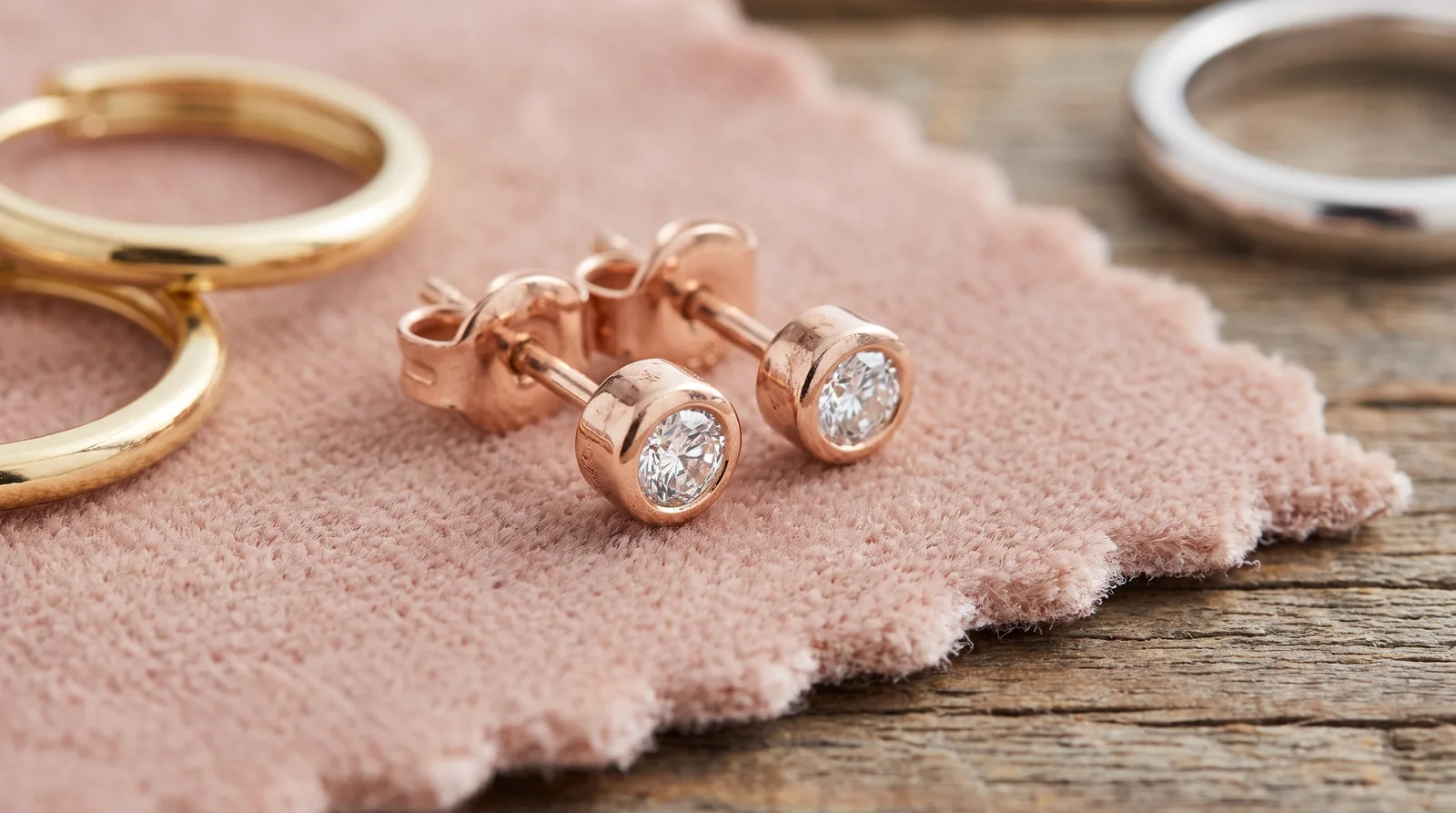
Rose gold diamond stud earrings resist scratching better than yellow or white gold because of their higher copper content. That same copper can cause a faint color shift over years of wear, though. The pinkish hue comes from copper alloyed into the gold, and copper happens to be a genuinely tough metal. That's part of why rose gold has become popular for pieces that see daily contact.
The tradeoff shows up slowly. Skin oils and everyday chemicals can cause slight darkening or a subtle shift toward a deeper copper tone after several years. This is cosmetic. It doesn't affect the earring's structural integrity. Some wearers actually prefer this aged patina, similar to how a well-worn leather bag develops character over time. Others don't notice any change at all, since the effect depends heavily on individual skin chemistry and climate.
Rose gold rarely needs replating the way white gold does, since the color comes from the alloy itself rather than a surface coating. That puts it closer to yellow gold in terms of long-term maintenance costs, even though its scratch resistance profile is genuinely its own thing.
Best Metal for Diamond Stud Earrings Based on Your Actual Habits
The best metal for diamond stud earrings depends less on which one looks best in a display case, and more on how you actually live day to day. If you sleep in your earrings, shower with them on, or rarely take them off, yellow gold or rose gold will save you money and hassle over the years, since neither requires replating. If you wear earrings occasionally and don't mind an annual jeweler visit, white gold's bright finish might be worth the maintenance to you.
Skin tone plays a role too, though it's a personal preference question rather than a durability one. Warmer skin tones often look striking with yellow or rose gold, while cooler undertones tend to pair well with white gold or platinum. Neither pairing is a rule. Plenty of people wear whatever metal they simply love, regardless of undertone charts.
Setting style interacts with metal choice too, and for a deeper look at how carat weight and prong security affect long-term wear, our diamond stud earring size guide covers that ground well. Once you've settled on a metal, the next big decision is where your budget actually goes.
Diamond Stud Earrings Cost Comparison Across Metal Types
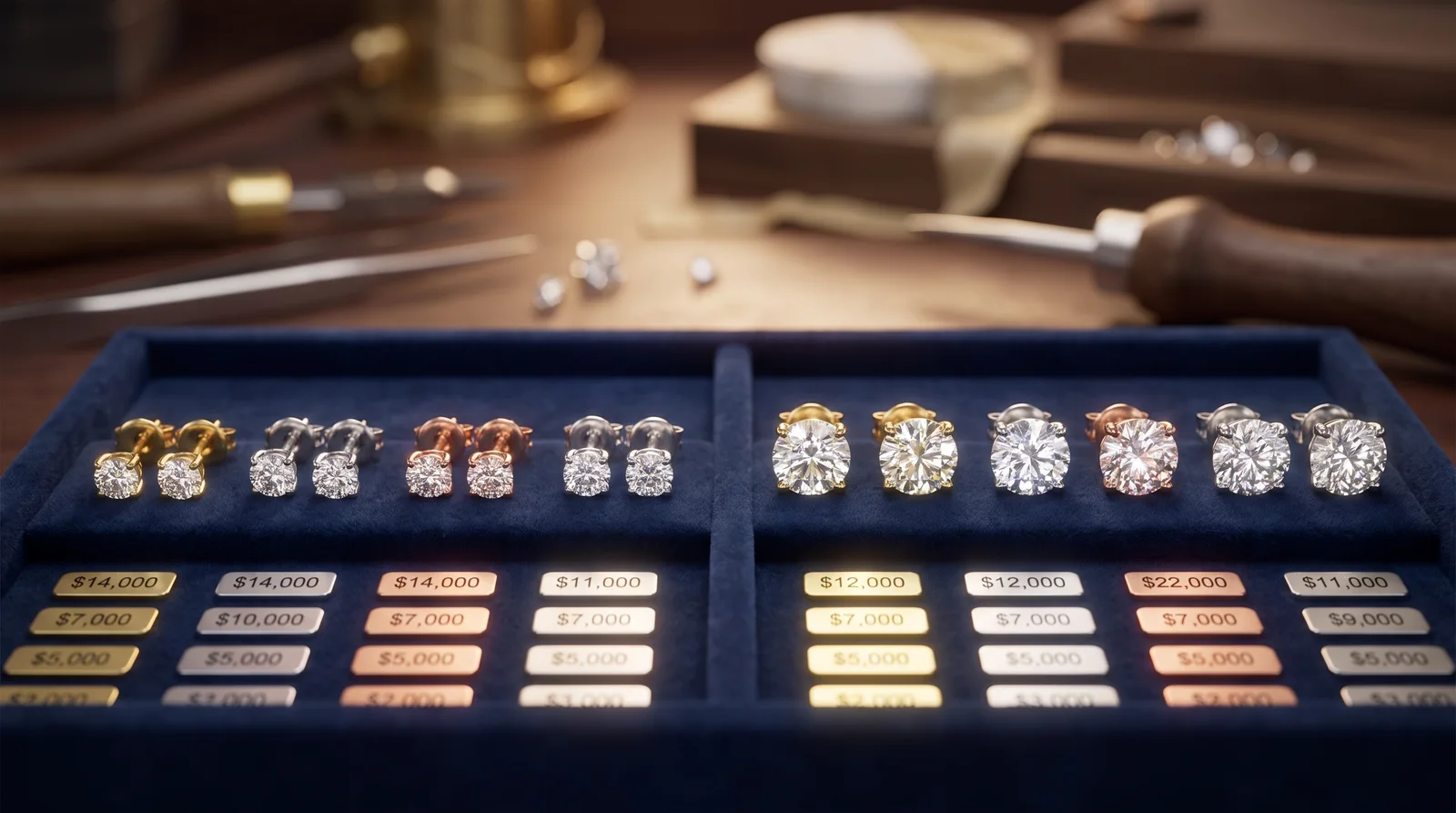
A diamond stud earrings cost comparison across metals shows platinum sitting well above gold. Gold sits in a moderate range depending on karat. The diamond itself usually accounts for the largest share of the total price. Platinum is denser and more expensive to work with than gold. It also needs more raw material by weight for the same design. This pushes retail prices up significantly compared to 14k or 18k gold settings.
For a one carat total weight pair of round brilliant studs with good color and clarity, gold settings typically run several hundred dollars less than platinum equivalents, purely on metal cost. That gap widens further if the platinum piece uses a heavier setting style. Over a lifetime of ownership, though, gold's replating costs for white gold can partially close that gap, especially for daily wearers who need frequent maintenance.
Our comparison of gold versus white gold for diamond earrings walks through more of these upfront cost differences if you're weighing platinum against gold specifically. Metal cost is only half the equation, though. The diamond itself carries its own set of decisions that affect your final price just as much.
Diamond Studs 4Cs Cut Clarity Color Carat and How They Interact With Metal Choice
The diamond studs 4Cs cut clarity color carat framework matters just as much as metal selection. The two decisions actually influence each other. Cut affects how much light the diamond reflects back to the eye. It's the one factor that can't be corrected after the fact, so it deserves priority over color or clarity grades.
Color and metal choice work together in a useful way. Yellow and rose gold settings mask warmer color grades, so a G to I color diamond, or even J to K in some cases, can look bright white against a warm metal backdrop. White gold and platinum show color more honestly. That means you'll want to spend more on a higher color grade if you're set on those cooler metal tones.
Clarity is forgiving in earrings generally, since studs sit farther from close inspection than a ring does. SI1 or SI2 clarity often looks clean to the naked eye, freeing up budget to put toward better cut quality or a larger carat weight instead.
Lab-Grown vs Natural Diamond Studs Price and What It Means for Your Metal Budget
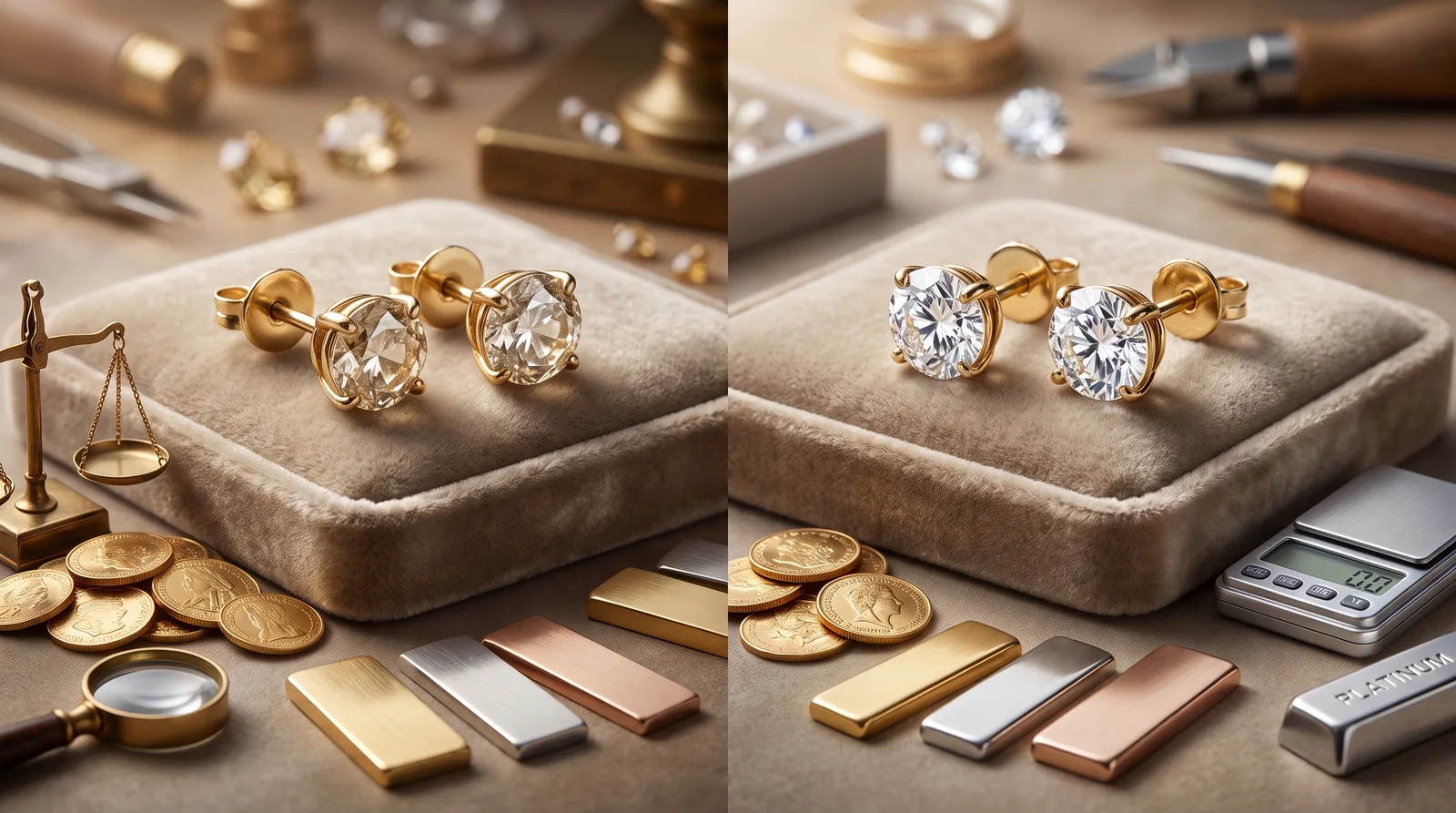
Lab-grown vs natural diamond studs price differences can be significant enough to shift how much you spend on metal and setting quality. Lab-grown diamonds typically cost 30 to 40 percent less than natural stones of comparable size and grade, since they skip the mining and distribution chain that drives up natural diamond pricing.
That savings often gets redirected toward the setting. Buyers who choose lab-grown center stones frequently upgrade to platinum or 18k gold instead of 14k, since the money saved on the diamond covers the metal upgrade with room to spare. It's a reasonable strategy, and one that doesn't compromise the earring's everyday durability either way.
Resale value is the one place natural diamonds still hold an edge, since lab-grown stones haven't built the same secondary market yet. For everyday wear studs that you're buying to keep rather than resell, that distinction matters far less than cut quality and metal durability. With both diamond and metal decisions covered, a few common questions still come up often enough to address directly.
Frequently Asked Questions About Gold Diamond Stud Earrings
How often should I get white gold studs replated?
Most daily wearers need rhodium replating every 12 to 18 months. If you wear your studs occasionally, you might stretch that to two or three years before noticing any yellow tint coming through.
Why do earrings show more wear than rings made from the same gold?
Earrings make constant small contact with hair, fabric, and skin products throughout the day, while rings typically get noticed and cleaned more regularly. That frequent, low-level friction wears down plating and surface finish faster on studs than on rings of the same karat and metal type.
Can rose gold diamond studs cause skin reactions?
Rose gold rarely causes reactions because copper allergies are far less common than nickel allergies. If you have sensitive ears, rose gold and yellow gold are generally safer starting points than nickel-alloyed white gold.
Does 18k gold scratch more easily than 14k for everyday studs?
Yes, 18k gold is softer because it contains more pure gold, roughly 75 percent compared to 14k's 58 percent. For studs worn daily, 14k typically holds up better against dents and scratching over the years.
What metal lasts longest without any maintenance for daily wear?
Yellow gold and rose gold both need essentially no maintenance beyond an occasional polish, since their color runs through the entire alloy. Platinum also avoids replating, though its higher upfront cost is worth weighing against that convenience.
Choosing the Metal That Actually Fits Your Life
Picking between yellow, white, and rose gold for diamond studs really comes down to honesty about your own habits. If you take earrings off every night and don't mind an annual polish, white gold's bright shine might be worth the upkeep. If you want something you can forget about for years at a time, yellow or rose gold will treat you better and cost less over the long run. There's no wrong answer here, only the one that matches how you actually live. Think about how often you'll wear them, whether you're prone to skin sensitivities, and how much replating cost you're willing to absorb down the road. Once you've nailed down the metal, the rest of the decision, from carat weight to diamond origin, gets a lot easier to sort through with confidence.