Engagement Ring Insurance Cost: Why Most People Guess Wrong (And What It Actually Buys You)
Engagement ring insurance cost typically runs between 1% and 2% of your ring's appraised value each year. So a $6,000 ring might cost $60 to $120 annually. The exact number depends on where you live, your deductible, and whether you go through a home policy rider or a standalone jewelry policy. Coverage terms matter just as much as price. Some policies exclude mysterious disappearance or require a police report before paying a claim.
What Drives Engagement Ring Insurance Cost Up or Down
Your premium depends on five things: the ring's value, your location, the deductible you choose, the type of policy, and how the insurer defines coverage. A $5,000 ring in Ontario might cost $80 to $150 a year. The same ring in Nova Scotia could run closer to $50 to $100. That gap comes down to local theft rates and claims history in your area, not the ring itself.
Deductibles also swing your rate. A policy with a $50 deductible costs more upfront than one with a $250 deductible, because the insurer takes on more risk per claim. If you already know your ring's value from a recent purchase, our guide on how much a 1 carat diamond ring costs gives you a useful benchmark for setting realistic coverage amounts.
Why Identical Rings Get Different Quotes
Two people with the same $8,000 ring can get very different quotes from the same insurer. One factor is where the ring is kept most of the time. A ring that travels frequently or sits in a home without a safe often triggers a higher premium than one stored securely.
How Much Does Engagement Ring Insurance Cost Compared to Home Policy Add-Ons
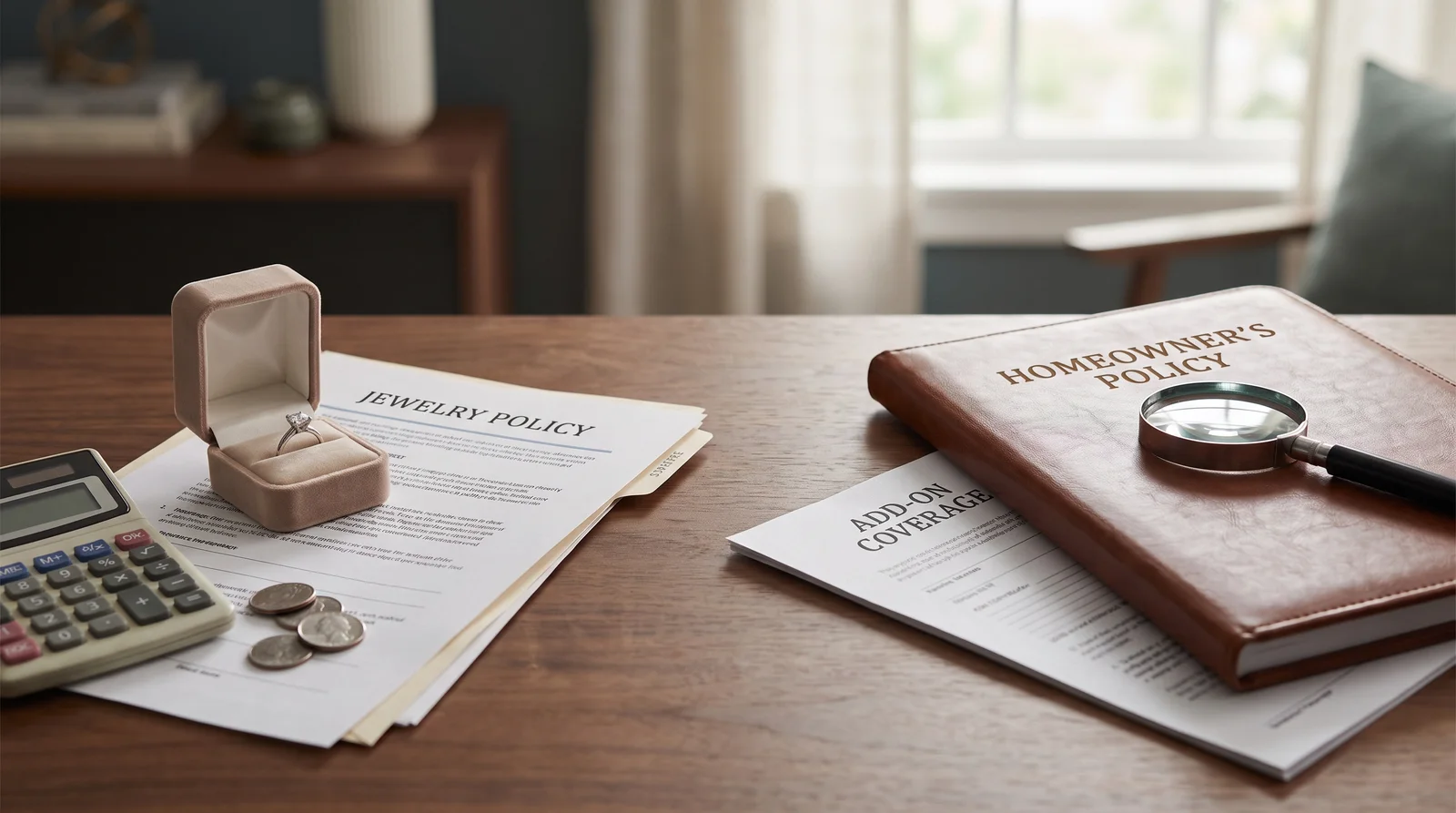
Adding your ring to an existing home or tenant policy is usually cheaper than buying a standalone policy. But it comes with lower coverage caps. Most standard home insurance policies cap jewelry coverage somewhere between $3,000 and $6,000 total. That barely covers one ring, let alone a full jewelry collection. If your ring is worth more than that cap, you need a rider, sometimes called a floater or scheduled item, to raise the coverage limit. Riders typically add 1% to 2% of the ring's value to your annual premium. A standalone policy from a jewelry-focused insurer might charge a similar percentage. But it often includes broader protection, like coverage for mysterious disappearance or worldwide travel. The tradeoff is real: filing a claim on a rider can sometimes affect your home policy's claims history. A standalone policy usually doesn't touch your home coverage at all.
Engagement Ring Insurance Home Policy vs Standalone: Making the Right Call
Choosing between a home policy rider and a standalone policy comes down to three things: your ring's value, how you use it, and what you want covered. A rider makes sense for rings under $10,000, as long as your insurer offers solid scheduled jewelry coverage and reasonable deductibles. If your ring is custom-made, high-value, or something you wear while traveling internationally, a standalone policy usually gives you more complete protection. Home policy riders are convenient because you're already working with an insurer you know. But they don't always cover every scenario. Some home insurers require a police report before paying out on a stolen ring. A standalone jewelry policy might pay out on mysterious disappearance alone, with no report needed.
When a Rider Makes Sense
A rider works well if your ring is modest in value and you want simplicity. You're already paying for home insurance, so adding a rider means one bill, one insurer, one point of contact.
When a Standalone Policy Makes More Sense
Standalone coverage tends to be the better fit for custom rings or anything above $15,000 in value. If you had a ring custom-made, understanding what custom jewelry actually involves helps explain why standard appraisal templates sometimes fall short for one-of-a-kind pieces. A jewelry-focused insurer is often better equipped to value and replace something built around a specific stone and design.
Engagement Ring Appraisal for Insurance: What Insurers Actually Require
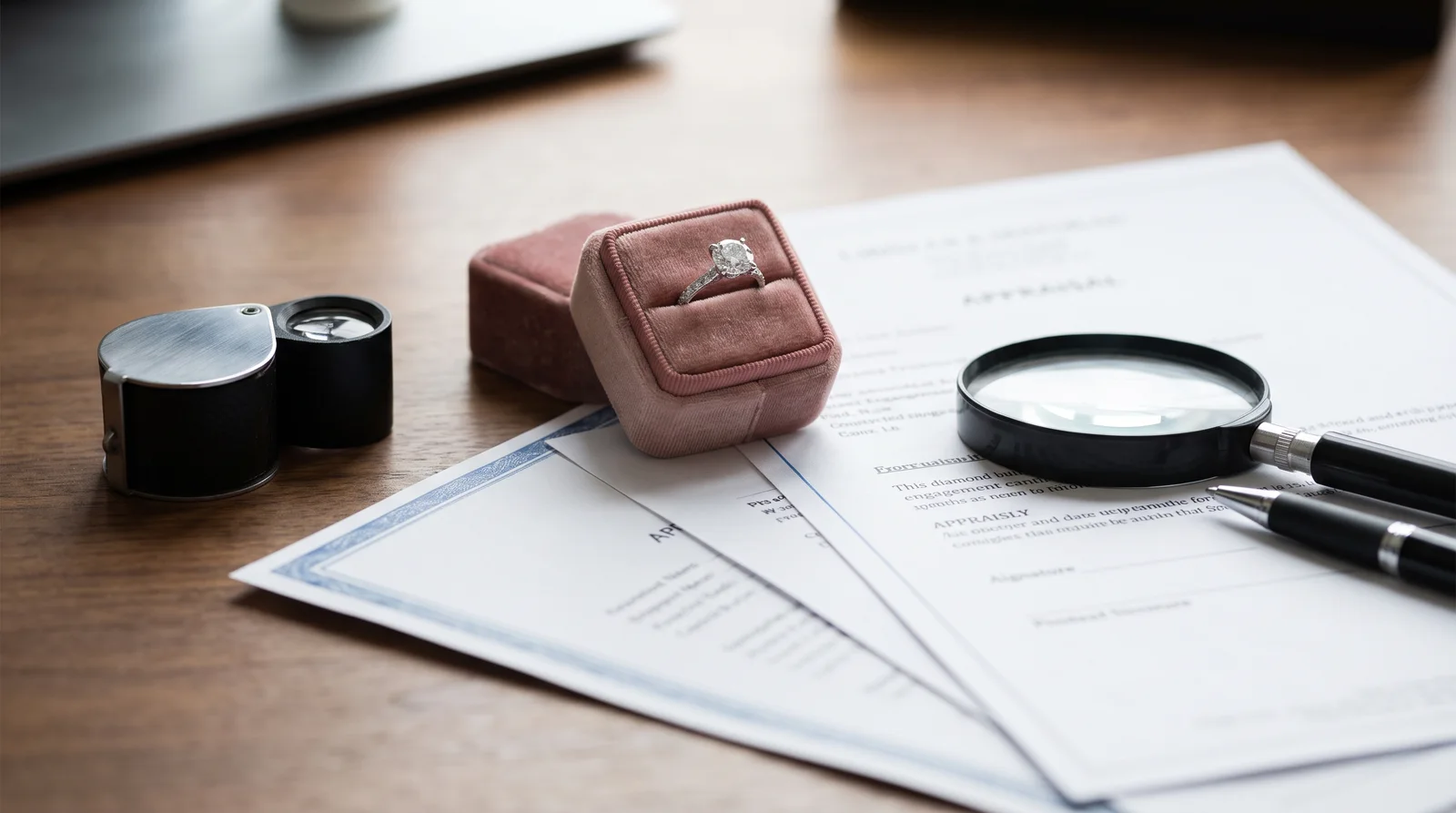
Most insurers require a professional appraisal before they'll issue coverage above a certain value threshold, often somewhere between $10,000 and $20,000. Below that line, some companies will accept your original bill of sale instead. A proper appraisal should include the stone's carat weight, color, clarity, and cut. It should also list the metal type, setting style, and a replacement value stated in your local currency. Skipping this step is one of the most common mistakes people make. Without a detailed appraisal, you risk being underinsured. That means your payout after a claim doesn't match what it would actually cost to replace the ring. This gap becomes especially painful in cases involving stone loss, which is a separate financial hit from a full ring claim. Our article on the cost to replace a lost diamond in a ring breaks down why that specific expense often surprises people.
Who Should Perform the Appraisal
Use an independent, credentialed appraiser rather than relying only on the jeweler who sold you the ring. Insurers want an unbiased valuation. A qualified gemologist with no stake in the sale gives that credibility. Look for appraisers certified through recognized programs. Insurers sometimes reject appraisals that lack proper documentation.
Jewelry Insurance Rider vs Standalone Policy: The Coverage Details That Matter
The real difference between these two options isn't just price. It's what happens when you actually file a claim. A rider added to your home policy often follows the same claims process as any other home insurance claim. That can mean slower turnaround and stricter documentation requirements. A standalone jewelry policy, by contrast, is usually built around faster claims specific to jewelry loss, theft, and damage. Coverage for accidental damage varies more than people expect. Some riders only cover total loss or theft, not a cracked stone or bent prong from everyday wear. If your ring gets damaged rather than lost, understanding whether a stone can even be repaired matters just as much as knowing your coverage limits. Our piece on whether a chipped diamond can be repaired covers what's fixable and what typically requires a full claim instead.
The Engagement Ring Insurance Claim Process, Step by Step
Filing a claim starts with documenting exactly what happened, whether that's theft, loss, or damage. You'll need your appraisal, original receipt, and any photos you have of the ring. If theft is involved, add a police report. Most insurers ask for this documentation within a set window, often 30 to 60 days from the incident. Once submitted, the insurer reviews your claim. They either approve a cash payout based on appraised value or arrange replacement through a partner jeweler. This is where policy differences really show up. Some companies make you use their chosen jeweler for a replacement. Others let you pick your own and simply reimburse the cost. Ask this question before you buy the policy, not after you need to file a claim.
Frequently Asked Questions About Engagement Ring Insurance Cost
How much does engagement ring insurance cost for a $5,000 ring?
Expect to pay roughly $50 to $150 per year, depending on your province or state and the deductible you choose. Areas with higher theft rates or natural disaster risk tend to sit at the higher end of that range.
Does home insurance automatically cover an engagement ring?
Yes, but only up to a low limit, often between $3,000 and $6,000 total for all jewelry combined. If your ring exceeds that cap, you need a rider or standalone policy to close the gap.
Can I insure a ring I've had for years without a recent appraisal?
Yes, most insurers will accept an updated appraisal at any point, even years after purchase. It's actually a good idea. Gem prices shift over time, and an old appraisal may undervalue your ring.
What happens if my ring is damaged but not lost?
This depends entirely on your policy. Some riders only cover total loss or theft. Standalone jewelry policies typically also include accidental damage, like a chipped stone or bent setting.
Is a standalone jewelry policy worth it for a ring under $5,000?
For lower-value rings, a home policy rider is usually enough, and it costs less. Standalone coverage starts making more financial sense once you're insuring something custom, high-value, or hard to replace exactly.
Getting the Right Coverage Without Overpaying
Insuring an engagement ring doesn't need to be complicated once you understand the moving parts. Start with a proper appraisal. Then decide whether a rider or standalone policy fits your ring's value and how you live with it. Read the claims process before you sign anything. The cheapest policy on paper isn't always the best deal if it leaves out coverage you'll actually need. Talk to your current home insurer first to see what a rider would cost. Then compare that against a quote from a jewelry-focused provider. A few minutes of comparison now can save you a lot of frustration later, especially if you ever need to file a claim.