Convert Pierced Earrings to Clip-On Earrings: Why Some Pairs Say No Matter What You Try
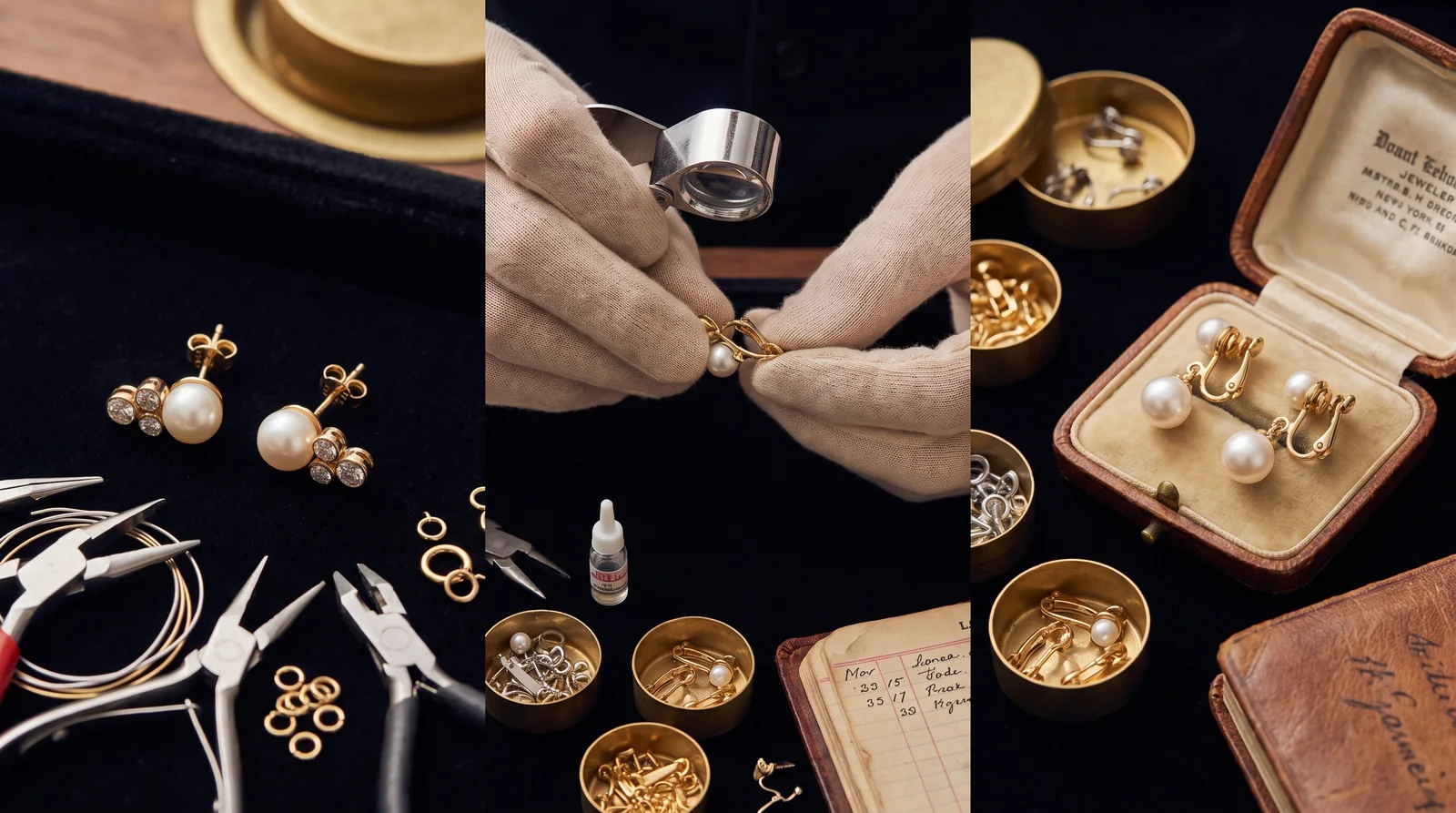
You can convert pierced earrings to clip-on earrings in most cases. This works using converter posts, clip backs, or hoop adapters. But success depends entirely on the earring's original construction. Studs with removable posts convert easily. Dangles soldered directly to fish hooks often cannot be modified without damage. The same is true for earrings with delicate stone settings. Before you buy a converter kit or call a jeweler, check what's underneath your earring. Don't judge it by how it looks on the outside.
What Convert Pierced Earrings to Clip-On Earrings Actually Means
Converting an earring means changing how it attaches to your ear without changing the decorative front. That sounds simple. It isn't always.
There are three basic conversion paths. You can add a converter to an existing post. You can replace a fish hook wire entirely with a clip mechanism. Or you can use a hoop adapter that hangs the original earring from a new clip finding.
Each method depends on the earring having a stable point of attachment. It needs to support the added hardware. A stud with a straight metal post gives you that. A dangle earring with a thin, decorative wire loop may not.
Some customers assume any earring can be converted after seeing a fifteen dollar kit online. The kit works fine on some earrings. On others, it ruins them. Knowing which category yours falls into saves you money and heartbreak.
The Hardware Options You'll Actually Encounter
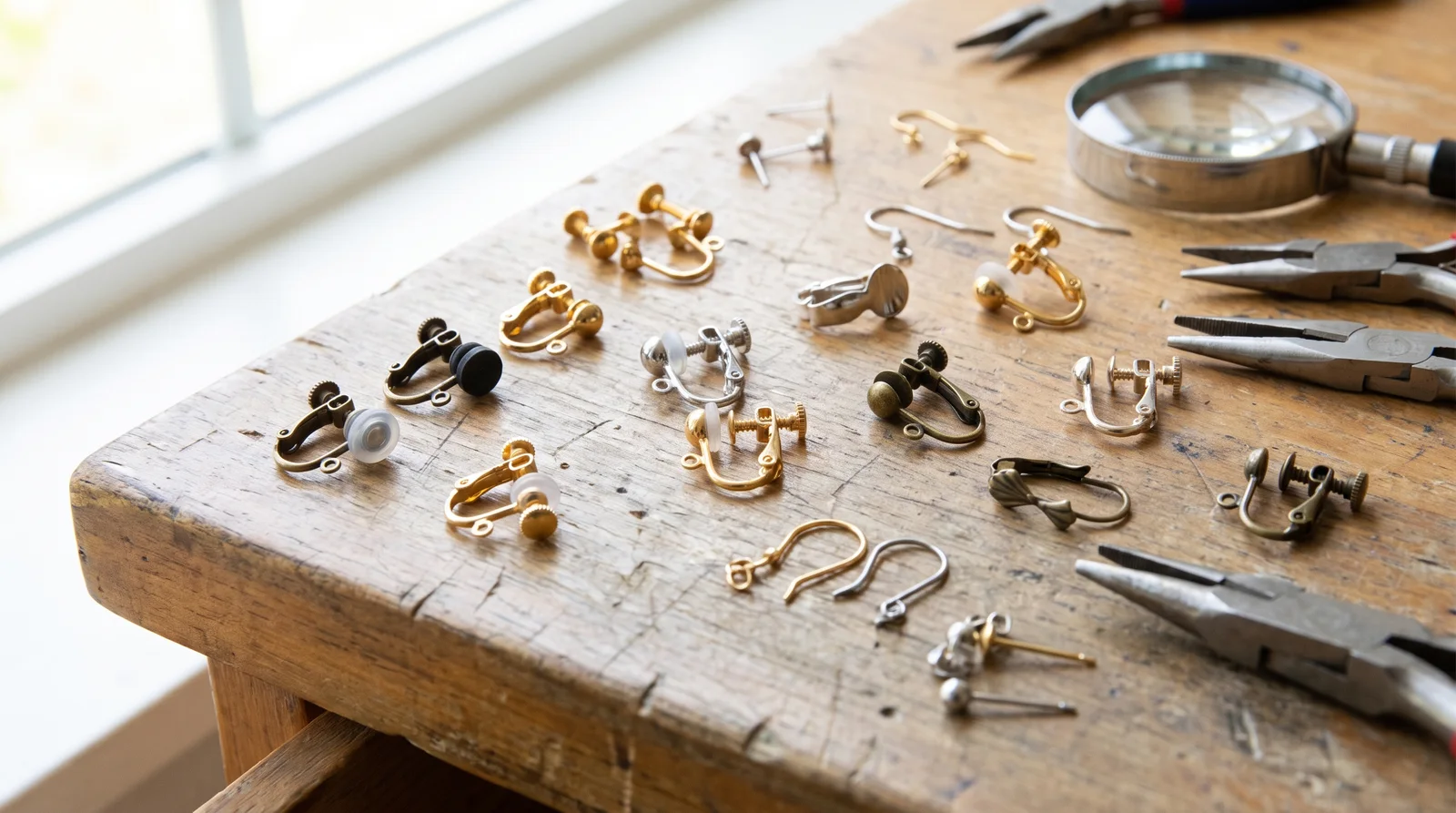
Clip-On Earring Converters for Post Earrings
A converter post has a small metal barrel on the back. It accepts your existing earring post. You slide the post in, then bend it roughly 90 degrees so the earring sits flush against your earlobe instead of poking straight out. Once bent, the post can't go back into a pierced ear.
There's also a no-bend version. You insert the post into the barrel without bending anything. This keeps the option to wear the earring as pierced later. The tradeoff is fit. No-bend converters sit lower on the ear than a standard pierced stud does. The earring can look slightly off-center on your lobe.
Clip-on earring converters like these cost very little. Craft stores and Amazon sell packs of twenty to sixty for under twenty dollars. The catch is durability. Cheap copper or brass converters can bend out of shape after repeated wear. The barrel can also loosen if the post diameter doesn't match well.
How to Convert Fish Hook Earrings to Clip-On
Fish hook earrings need a different approach, since there's no straight post to work with. If you're wondering how to convert fish hook earrings to clip-on, here's the honest answer: you're not modifying the hook itself. You're removing it and replacing it with a clip finding, or hanging the whole earring from a hoop adapter.
The removal method uses jewelry pliers to open the loop where the fish hook meets the decorative part of the earring. You detach the hook, then attach a clip-on finding using the same loop. This works well when the earring has a proper jump ring connection.
The hoop method skips removal entirely. You close the fish hook into a small loop with pliers, then hang it on a separate hoop converter that has a clip back attached. This keeps the earring intact but adds length and weight. That matters if the earring is already heavy or dangly.
Magnetic Clip Backs and Where They Fall Short
Magnetic converters use two small magnetic discs, one behind the ear and one in front, to hold the earring in place without any post at all. They're gentle and comfortable for people with sensitive ears.
The problem is holding power. Magnetic backs work fine for lightweight studs but struggle with anything over a few grams. A dangling earring with beads or a decent-sized charm will often pull loose or tilt sideways during normal movement. Magnetic clips work best for small, light studs, not statement earrings.
With the hardware options covered, the next question is which earrings can actually take these converters without falling apart.
Which Earring Types Convert Without Damage
Post studs with a straight, solid metal post are the easiest earrings to convert to clip-on with no risk to the original piece. The post gives the converter something solid to grip. Bending it doesn't touch the front-facing part of the earring at all. Small pearl studs, simple gemstone studs, and plain metal studs all fall into this easy category.
Earrings With Stable Loops
Dangle earrings built with a proper jump ring or soldered loop at the top also convert well. That loop is a permanent connection point. A jeweler or an experienced DIYer can detach the hook and reattach a clip finding cleanly. The key detail is whether the loop was soldered shut during manufacturing or just pinched closed. Soldered loops hold up. Pinched loops can weaken and separate with handling.
Vintage and Fragile Settings
Older earrings, especially anything from before the 1980s, often use softer metals or filigree work. This work wasn't designed to be taken apart. Vintage pieces with pave settings or channel-set stones are risky. The vibration from pliers work can loosen stones you didn't even touch. If you're converting a piece with sentimental or resale value, this is where a professional jeweler earring conversion becomes worth the extra cost. A jeweler can assess stone security before touching anything with a tool.
This is also where a related problem shows up. Loose stones aren't always obvious until someone starts working on the setting. People run into the same issue when they check the cost to replace a lost diamond in a ring after a prong finally gives out.
Now that you know which earrings are good candidates, here's what it actually costs to have someone else do the work.
Earring Converter Cost and Professional Jeweler Pricing
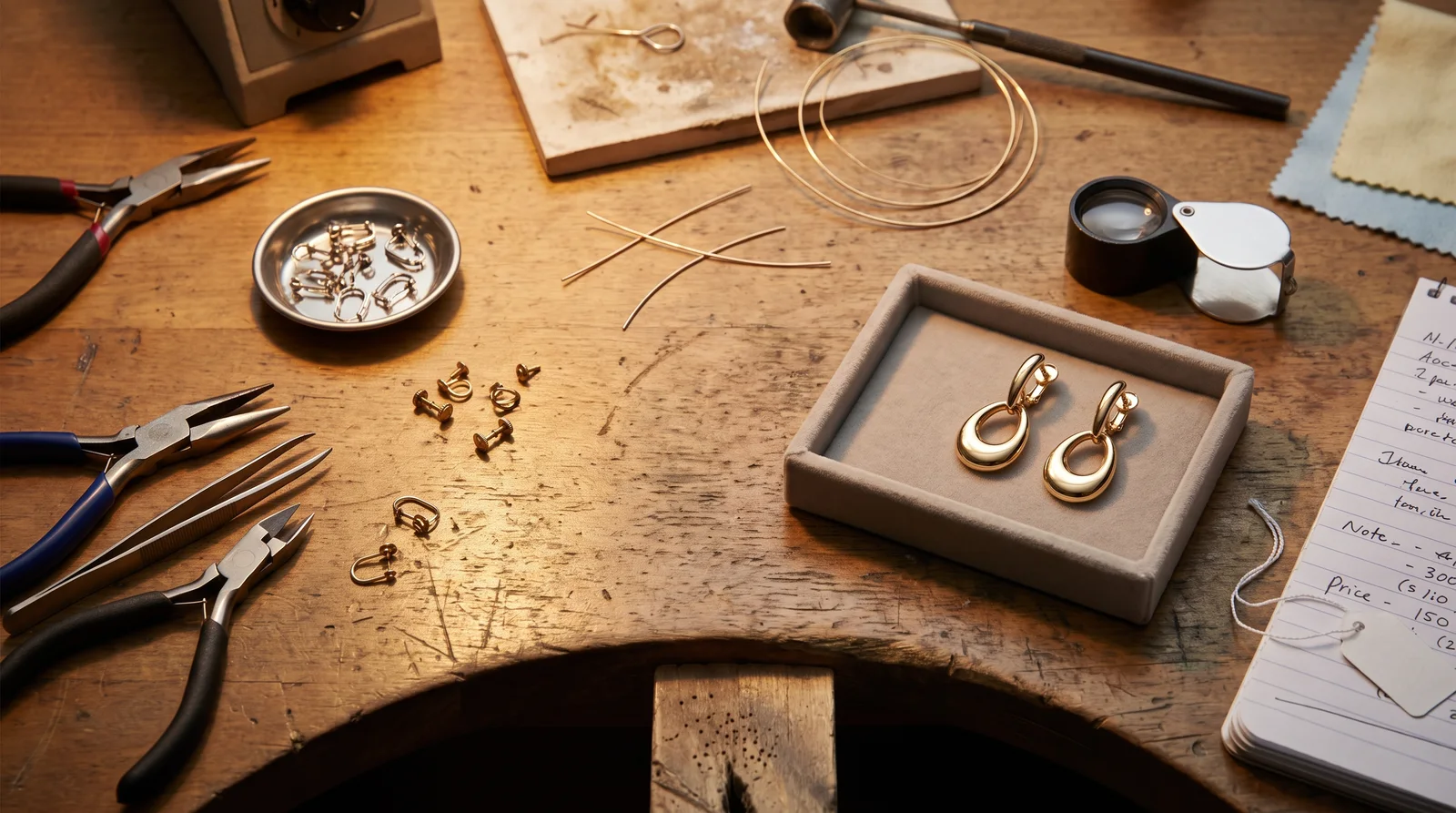
Earring converter cost ranges from a few dollars for basic DIY hardware to fifty dollars or more per pair for professional labor, depending on complexity. The spread is wide because DIY kits and jeweler services solve different problems.
DIY Kit Pricing
Converter kits sold online typically run between ten and twenty dollars for a pack of twenty to sixty pieces. That works out to well under a dollar per earring if you're converting simple studs yourself. Clip-on earring cushions add padding for comfort. They usually come bundled in these kits, or sell separately for around five to ten dollars for a set of pads.
Jeweler Labor Rates
Professional jewelers typically charge between fifteen and fifty dollars per pair for a basic post-to-clip conversion, depending on the shop and your location. More involved work costs more, like removing a soldered fish hook and resoldering a clip mechanism. This uses actual jewelry repair tools rather than simple hardware assembly.
For comparison, other small jewelry conversion jobs tend to land in a similar range. Simple metalwork conversions, like the process used to turn a tie pin into a pendant, often cost between seventy five and two hundred fifty dollars when soldering and finishing are involved. Earring conversions are usually cheaper since there's less metal to work with, but the same labor logic applies. You're paying for skill and equipment, not just parts.
When the Math Doesn't Favor DIY
If you're converting one pair of simple studs, DIY makes sense every time. If you're converting several pairs of dangle earrings with different attachment styles, or anything with stones you can't afford to lose, professional jeweler earring conversion starts looking like the better deal. A ruined thirty dollar pair of earrings costs more in regret than a twenty dollar jeweler fee would have.
Cost is only half the decision, though. The other half is knowing when a DIY attempt is likely to fail before you even start.
DIY Clip-On Earring Conversion Failures and Warning Signs
DIY clip-on earring conversion fails most often for three reasons: the earring's post is too thin, the loop is pinched instead of soldered, or the stone setting can't handle pressure from pliers. These aren't rare edge cases. They're the three most common reasons a home conversion goes wrong.
Thin or Bendable Posts
Some cheaper stud earrings use very thin posts, sometimes barely thicker than a sewing needle. These posts can snap when you try to bend them 90 degrees for a converter. If the post feels flexible or flimsy before you even start, stop. Consider a no-bend converter instead, or take it to a jeweler.
Pinched Loops That Open Under Pressure
A pinched jump ring looks closed but isn't actually soldered shut. When you try to detach a fish hook using pliers, a pinched loop can spring open unpredictably. This sometimes loses small beads or spacers in the process. If you're not sure whether a loop is soldered, a jeweler's loupe or even a strong magnifying glass will usually show a visible seam on pinched rings.
Stone Movement During Conversion Work
Any earring with a set stone carries some risk during conversion, even if you're not touching the stone directly. Vibration from bending metal or squeezing pliers travels through the whole piece. Loose prongs that were already borderline can fail during this process. You won't always notice until the stone falls out days later.
Testing Stone Security Before You Start
Gently press on each stone with a fingernail before attempting any conversion work. If it wiggles at all, stop. A jeweler can tighten prongs first for a small fee. This protects your investment before you introduce any new stress to the setting.
Signs You Should Stop and Call a Jeweler
Stop immediately if the post won't sit straight in the converter barrel. Also stop if you hear a click or feel resistance while bending metal, or if any part of the earring feels like it's separating rather than bending. Continuing usually turns a fixable problem into a broken earring.
Understanding these failure points naturally leads to the bigger question most people ask before they even open a converter kit.
How to Convert Fish Hook Earrings to Clip-On Without Ruining Comfort
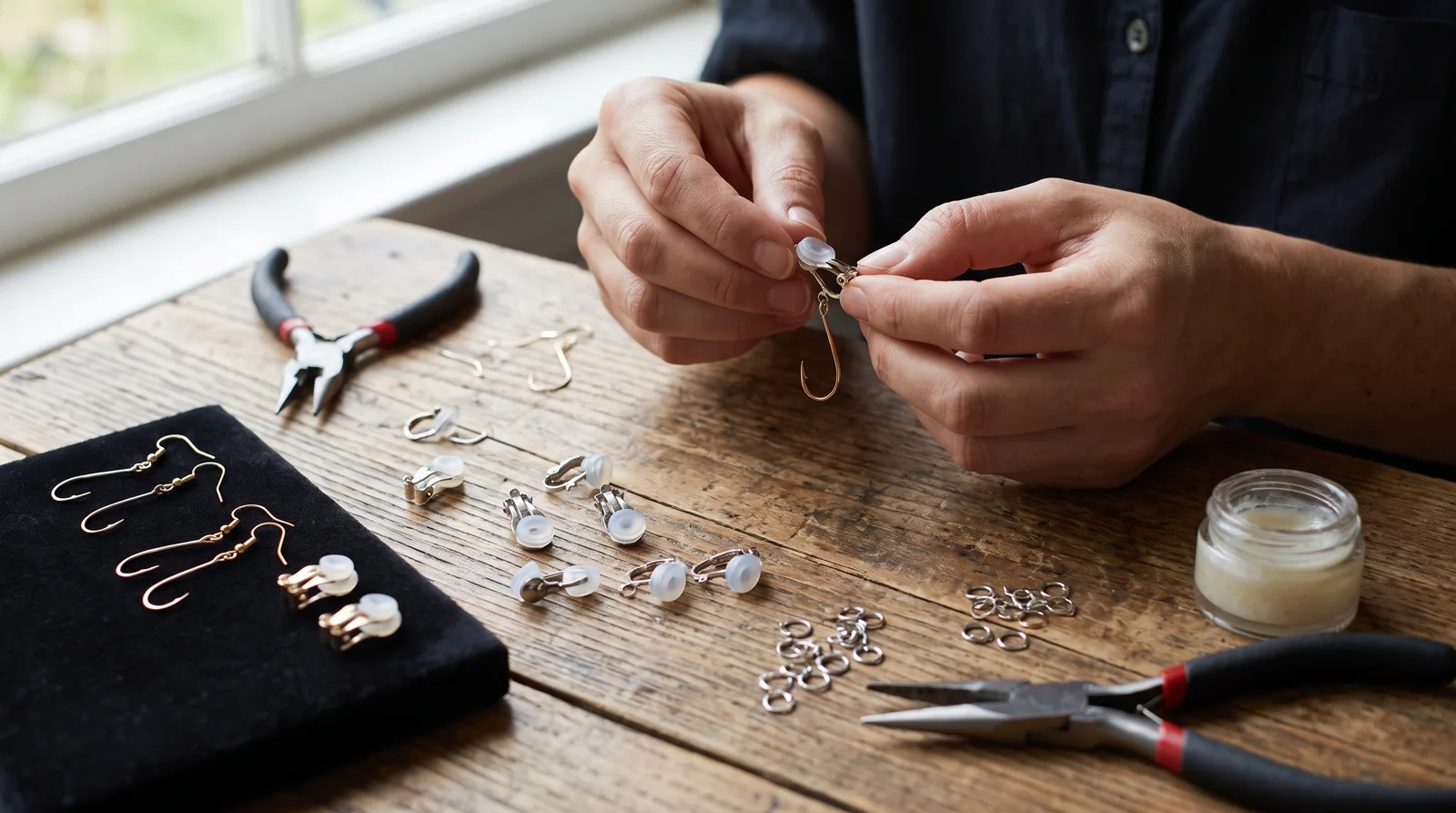
Comfort after conversion depends on padding, tension adjustment, and how much weight the new clip mechanism has to support. This part gets overlooked. People focus so much on the conversion itself that they forget clip-ons feel different from pierced earrings, no matter how well the conversion goes.
Using Clip-On Earring Cushions Correctly
Clip-on earring cushions are small foam or silicone pads that sit between the clip and your earlobe. Adhesive versions stick directly to the clip's inner surface. Slide-on versions wrap around the clip mechanism itself. Either style reduces the pinch feeling that makes clip-ons uncomfortable after a few hours.
Most cushions are reusable. You can move them to a different pair of earrings once you're done wearing the first set. If you don't have dedicated cushions on hand, adhesive foam pads from a hardware store work as a temporary substitute, cut down to size.
Adjusting Clip Tension for All Day Wear
Paddle-back clip-ons have a small metal tongue that controls how tightly the clip grips your earlobe. If new converted earrings feel too tight, use tweezers or a clip-on comfort key to gently lift that tongue a small amount. Test the fit after each small adjustment rather than loosening it all at once.
Loosen too aggressively and the tongue can snap off entirely. This ruins the clip mechanism you just installed. Small adjustments, tested repeatedly, work better than one big change.
Even with good padding and proper tension, clip-ons have a comfort ceiling. Wearing converted earrings for more than a few hours at a stretch will likely cause some discomfort no matter what hardware you use. Clip pressure simply works differently than a pierced post ever did.
Frequently Asked Questions About Converting Pierced Earrings
Can any pierced earring be converted to clip-on?
No. Simple stud earrings with a solid post convert easily. But earrings with delicate stone settings, pinched jump rings, or very thin posts often can't be converted without damage. Always check the attachment point before starting.
How much does professional earring conversion cost?
Basic conversions typically run between fifteen and fifty dollars per pair at a jeweler. More complex work involving soldering can cost more. DIY converter kits cost far less but carry higher risk for delicate or valuable earrings.
Do clip-on converters damage the original earring?
Bending a post to fit a converter is permanent and prevents the earring from being worn as pierced again. No-bend converters avoid this issue but change how the earring sits on your ear.
Why do some conversions fail even when done carefully?
Failures usually trace back to weak connection points, like pinched loops or thin posts. These can't handle the mechanical stress of adding new hardware. Stone settings that were already loose can also fail during the process, even with careful handling.
Are magnetic clip-on converters a good alternative?
Magnetic converters work well for small, lightweight studs but tend to fail with heavier or dangling earrings. The magnets can't hold enough weight to prevent tilting or slipping. They're best treated as a comfort option rather than a universal solution.
Converting earrings isn't a one-size-fits-all project, and now you know why. A simple stud with a solid post is a five minute job with a cheap kit. A vintage dangle with a pave setting needs someone with the right tools and a steady hand. Check your earrings honestly before you decide which path fits. If anything feels uncertain once you start, a jeweler's small fee is a lot cheaper than replacing a pair you actually loved wearing.