White Gold Diamond Earrings Maintenance Isn't What You'd Expect
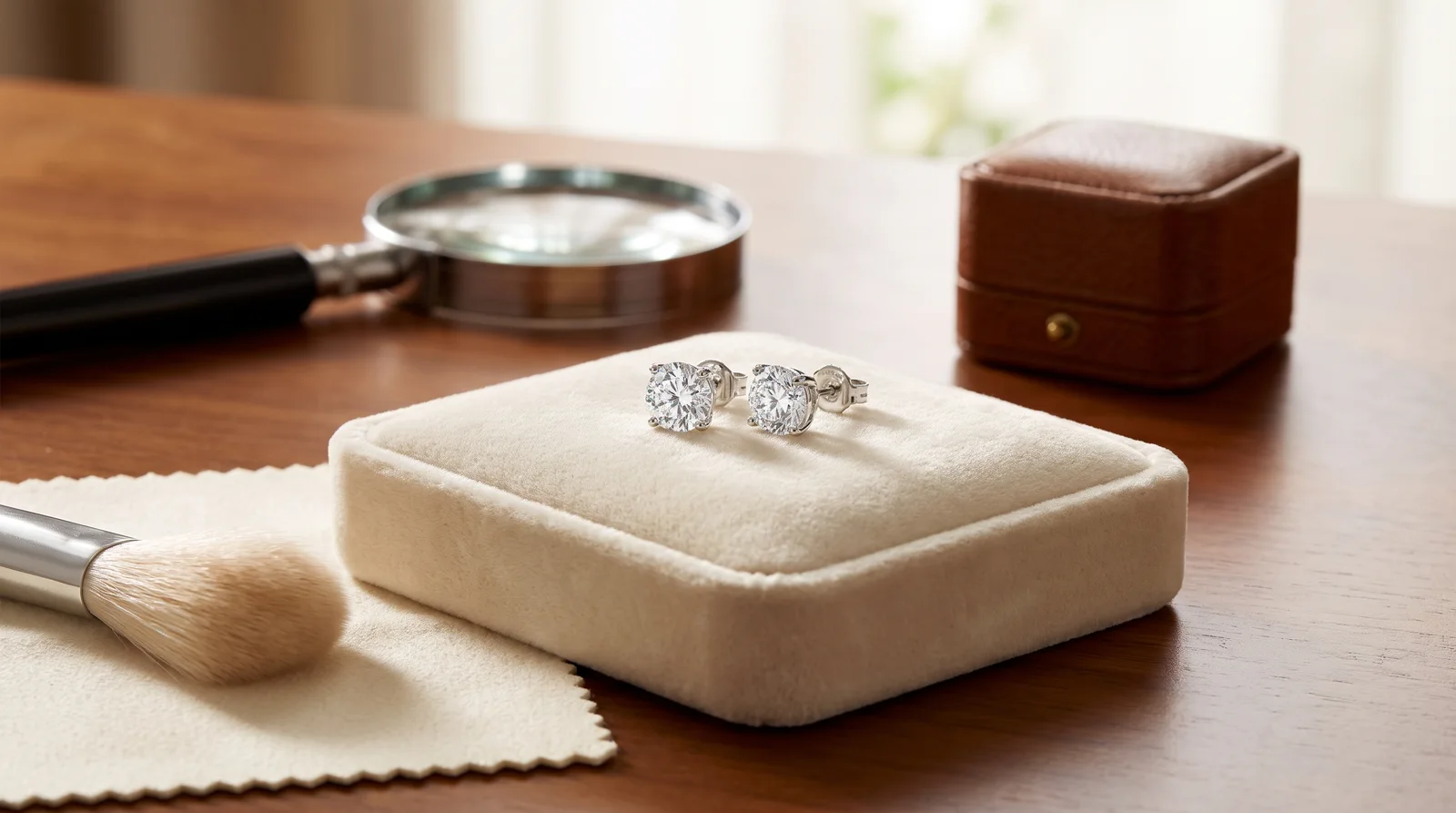
No, they don't, and that changes the whole math on white gold diamond earrings maintenance. Earrings sit still against your earlobe most of the day, so they miss the constant friction that wears down rings worn on active hands. Most people get several years of bright finish before earrings need a rhodium touch up, sometimes longer, though sweat, hair products, and how often you handle them still play a role.
Why White Gold Diamond Earrings Wear So Differently Than Rings
White gold earrings age slower than white gold rings for one simple reason: they don't touch anything. A ring gets squeezed against steering wheels, keyboards, doorknobs, and other rings all day long. Earrings hang from your lobe or sit against it, mostly undisturbed. They only move when you put them in, take them out, or brush your hair against them. That difference in contact explains why rhodium plating wear patterns rings vs earrings look so different side by side. A ring might show bare metal at the shank within a year of daily wear. Earrings in the same rhodium bath, worn the same number of days, often still look crisp.
The Friction Math Behind Rhodium Loss
Rhodium plating is thin, usually somewhere between 0.75 and 1.5 microns on jewelry, and it wears away through mechanical abrasion rather than tarnishing or oxidizing. That means the plating only disappears where something rubs against it repeatedly. A ring gets that rubbing constantly. Stud earrings mostly get it at the post, where it slides in and out of the piercing, and maybe along the edge of the setting if it brushes your hair or a scarf. Drop earrings and hoops see slightly more movement, which can mean marginally faster wear at contact points, but nothing close to what a ring endures in a normal week.
Where Earrings Actually Show Wear First
If your white gold earrings do start to dull, the earring post is usually the first place it shows. That's the part pushed through your earlobe every day, sometimes twice if you take them off at night. The setting around the diamond, especially the tops of the prongs, can also show slight wear if you touch your earrings often or if they catch on clothing. Everywhere else on the earring, including the back and other parts that never contact skin, the finish tends to hold its shine for years. This uneven wear pattern is normal. It does not mean anything is wrong with the piece.
Understanding why earrings and rings age so differently sets up the real question most buyers actually want answered, which is how often replating actually needs to happen.
How Often Does White Gold Need Rhodium Replating When It's Earrings Specifically
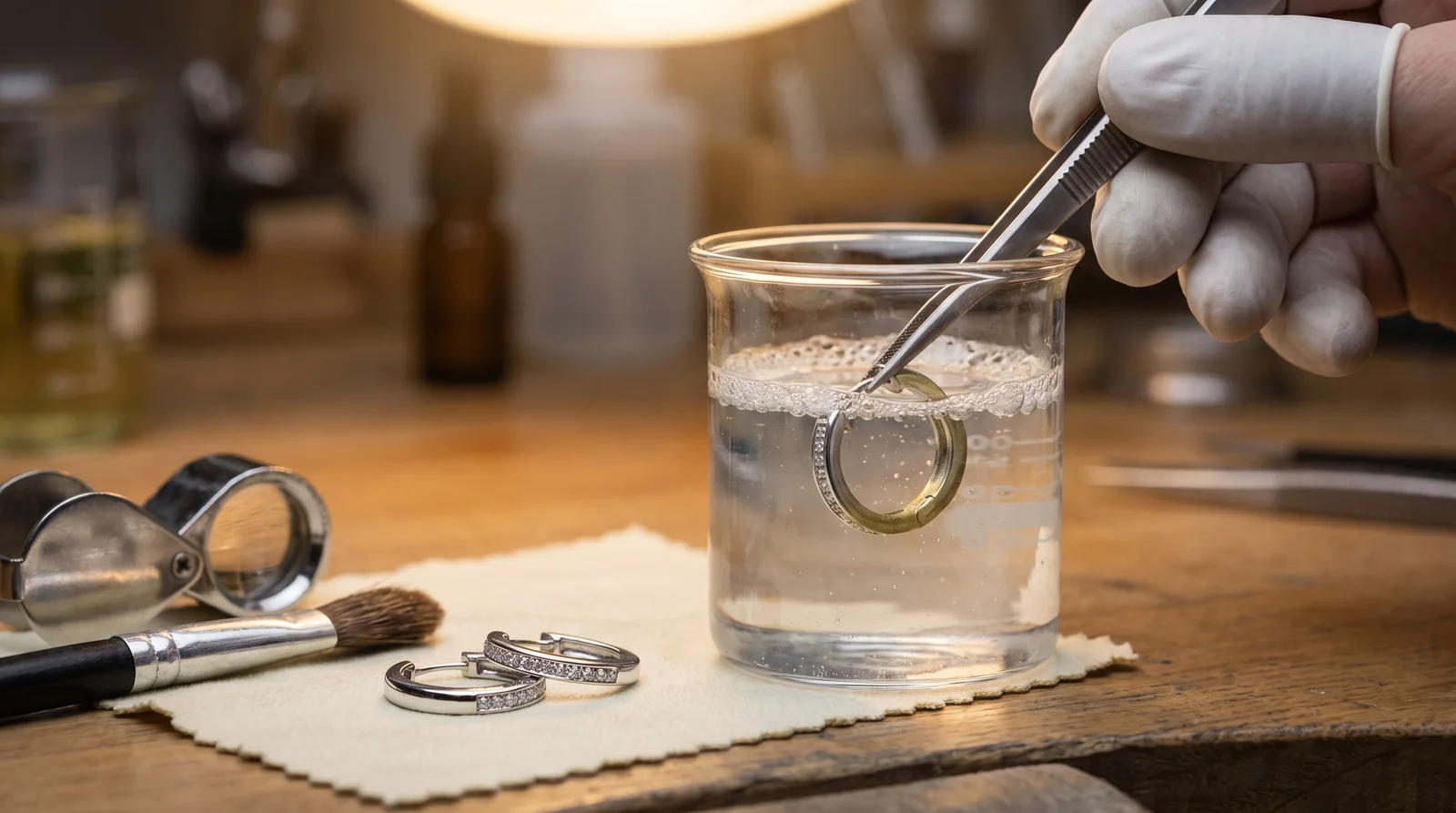
For earrings worn daily, expect somewhere between three and seven years before you notice enough dulling to justify replating. Compare that to the one to three years typical for a ring worn every day. That's a meaningful gap, and it's the main reason white gold diamond earrings maintenance concerns get overstated by people comparing them to rings. Sweat exposure, gym use, and swimming can shorten that window, since chlorine and salt water are harder on rhodium than plain daily wear. If you wear your earrings to the gym constantly, or live somewhere humid and sweaty most of the year, lean toward the shorter end of that range.
People who sleep in their earrings, which some do with small studs, add a bit more friction from pillows and hair. That's still nothing compared to what a ring worn to bed experiences against sheets and a partner's hand. Most earring wearers won't think about replating until the diamonds look slightly less bright against the setting. Sometimes someone else points out the metal looks a touch warmer than it used to. At that point, a jeweler can tell you in under a minute whether it needs attention or whether you're just imagining it.
Signs Your Earrings Are Actually Due
Look at the earring post and the underside of the setting first, since those wear before anywhere else. A slightly yellow or grayish cast where it used to look bright white is the clearest sign. Dullness that shows up even after cleaning is another cue, since a properly cleaned rhodium surface should still throw back light. If one earring looks noticeably different from its pair, that's often because one gets handled more during insertion, which happens more than people expect with asymmetric habits like always putting the right earring in first.
Once you know the signs to watch for, the next logical question is what that replating actually costs when the time comes.
Rhodium Plating Cost 2026 for Earrings Compared to Rings
Rhodium plating cost 2026 for earrings typically runs lower than rings, generally $50 to $100, or roughly £40 to £60 in the UK, based on current trade pricing reported by jewelers. Rings usually cost a bit more, sometimes $50 to $150, because the labor involves careful masking around prongs and stones set close together. Earrings, especially simple stud settings, are often faster and cheaper to plate, since there's less intricate metalwork to protect during the process. The rhodium itself barely factors into that price. A gram of rhodium metal costs a fortune on paper, but the amount deposited on a stud earring is a fraction of a fraction of a gram. Labor and polishing make up almost the entire bill.
Given how rarely earrings need replating compared to rings, the total cost over the years you own them stays remarkably low. If you replate a pair of white gold diamond stud earrings once every five years at $75 a visit, that's $15 a year. Compare that to a wedding ring replated every eighteen months at similar pricing, and the ring costs roughly three to four times more over the same stretch. That gap matters when you're deciding whether the bright white finish is worth the ongoing commitment.
What Drives the Price Up or Down
Setting complexity affects cost more than metal type does. A simple four-prong stud is quick work for a jeweler. A halo setting with pave diamonds around the main stone takes longer, since the plater has to mask tiny stones carefully so the solution doesn't build up unevenly around them. Drop earrings with multiple moving parts, like a dangling design with several joints, also take more time than a fixed stud. If maintenance cost matters to you, ask about the setting style before you buy, not after.
Regional Pricing Differences Worth Knowing
US pricing tends to run a bit higher than UK pricing for comparable work, though both markets vary a lot by region and by whether you're using an independent jeweler or a large chain. Chain jewelers sometimes offer replating as part of a lifetime warranty package included with purchase, which changes the math entirely if you bought your earrings somewhere with that policy. Independent jewelers usually charge per visit but may offer more personalized service and faster turnaround. It's worth asking wherever you bought your earrings whether replating is included before you pay out of pocket somewhere else.
With the cost question settled, it helps to step back and look at how white gold actually holds up structurally, not just cosmetically, over years of daily wear.
White Gold vs Platinum Daily Wear Durability for Earrings
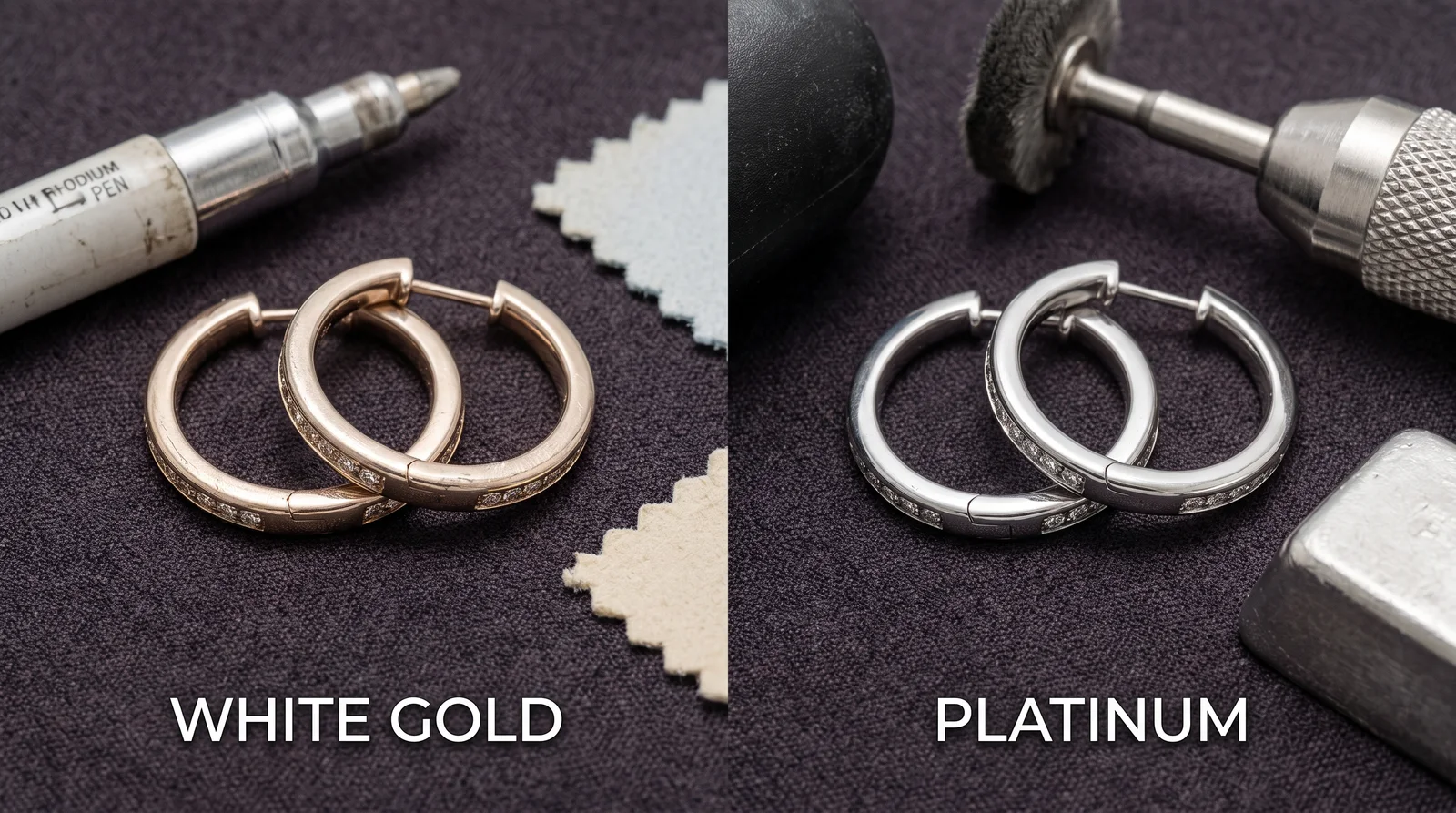
White gold vs platinum daily wear durability comes down to a simple tradeoff. White gold needs occasional rhodium refreshing but costs less upfront. Platinum needs almost no plating maintenance but costs more to buy. Platinum is a naturally white metal, so there's no coating to wear through in the first place. When platinum scratches, the metal displaces rather than wearing away. That means a platinum earring back keeps its structural integrity, even as the surface develops a soft matte look over years. White gold underneath its rhodium layer is a paler yellow-gray alloy. Once the plating wears thin, that base color starts to show.
For earrings specifically, this difference matters less than it does for rings, simply because earrings experience so little wear in the first place. A pair of platinum stud earrings might never need any maintenance at all beyond routine cleaning. A pair of white gold studs might go five or six years before needing attention. Both are reasonable choices for daily wear, and the decision often comes down to budget and whether you like platinum's naturally softer white tone versus the icy brightness of a fresh rhodium finish.
Weight and Comfort Differences
Platinum is noticeably heavier than white gold, which matters more for earrings than almost any other jewelry category because they hang directly from your earlobe. Large platinum drop earrings can feel heavy after a full day, while the same design in white gold feels lighter and more comfortable for extended wear. If you have sensitive piercings or wear your earrings from morning to night, that weight difference is worth trying on in person before you commit to either metal.
Allergy Considerations for Sensitive Ears
Rhodium itself is hypoallergenic and sits as a barrier over the white gold alloy underneath, which often contains nickel. While the plating is intact, most people with mild sensitivities tolerate white gold earrings without issue. Once the plating wears thin at the post, the part actually inside your piercing, nickel-sensitive wearers may start noticing irritation. Platinum is nickel-free all the way through, so a known metal allergy is one less variable to worry about. This is worth mentioning to your jeweler if you've had reactions to costume jewelry in the past.
Knowing how these two metals compare structurally makes it easier to answer the practical question most buyers actually care about, which is whether white gold is worth committing to at all.
Should You Choose White Gold Diamond Earrings If You Won't Keep Up With Maintenance
Yes, in most cases, because earrings are the one white gold jewelry category where skipping maintenance for years causes minimal visible damage. A white gold ring left unplated for a decade looks noticeably warm and worn. A white gold earring left unplated for the same period usually just looks slightly softer in tone, not dramatically different, since it never took the daily abuse a ring does. If you buy jewelry and never think about maintenance again, earrings are a far safer bet than a white gold engagement ring or wedding band.
That said, honesty matters here. If bright, icy white is the exact look you're after and you notice even small color shifts, you'll eventually want a replate regardless of how slowly it happens. Some people genuinely don't notice or don't care once the metal warms up slightly, and for them, unplated white gold earrings still look perfectly attractive, just softer. Neither approach is wrong. It comes down to how particular you are about that specific mirror brightness rhodium provides.
When Rose Gold or Yellow Gold Makes More Sense
If the idea of any maintenance schedule bothers you, rose gold and yellow gold diamond earrings skip the issue completely. Rose gold gets its color from copper mixed through the entire alloy, not a surface coating, so there's no plating to wear off, ever. Yellow gold is simply gold alloyed with metals that don't require a white finish on top. Both options give you decades of consistent color without a single trip back to the jeweler for anything beyond normal cleaning. If you're weighing metal options broadly, it's worth reading through how 14k vs 18k gold performs under daily wear before deciding which karat and color combination fits your lifestyle.
Mixing Metals Without Overthinking It
Plenty of people wear white gold earrings alongside yellow or rose gold rings and necklaces without any issue, and mixed metal styling is common enough now that it barely raises eyebrows. If you're curious whether that combination works visually before you commit to a purchase, our guide on wearing white gold and yellow gold together covers how the tones interact and how maintenance differs across the pieces you own.
Once you've decided white gold fits your habits, the last piece of the puzzle is knowing what total ownership actually looks like over the years you'll wear these earrings.
What Total Cost of Ownership Looks Like Over Five to Ten Years
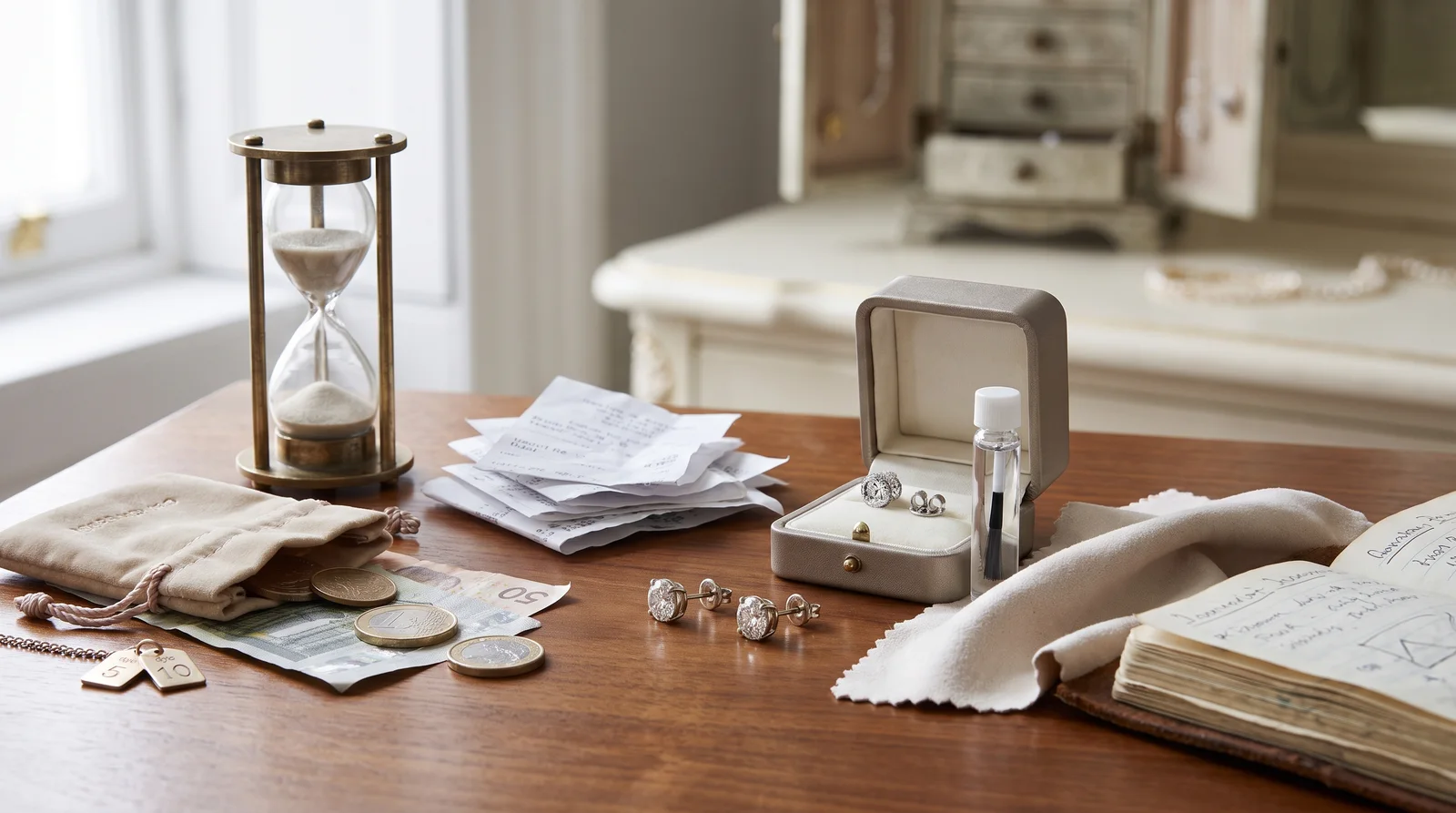
Total ownership cost for white gold diamond earrings stays low even with occasional replating, typically adding somewhere between $75 and $150 across a full decade of daily wear. That's based on needing one, maybe two replating visits over ten years, at roughly $50 to $100 each, in line with how slowly earrings wear compared to rings. Compare that to a white gold engagement ring, which might need four to six replating visits over the same decade, adding $300 or more to the ownership cost. Earrings simply don't rack up the same bill.
This is part of why white gold remains such a popular choice for stud earrings and small diamond drops specifically, even among people who avoid it for rings. The maintenance burden that makes white gold rings frustrating for some owners barely applies here. If you're shopping for diamond hoop earrings or studs and comparing metal options, factor in that the white gold premium in brightness costs you very little in upkeep over the years, especially compared to how that same metal behaves in a ring setting.
Building a Simple Maintenance Habit
You don't need a strict schedule for earrings the way some jewelers recommend for rings. A reasonable approach is to have your jeweler take a look whenever you bring your earrings in for a routine cleaning or prong check, maybe once every couple of years. They can tell you in seconds whether the rhodium still looks solid or whether it's starting to thin. There's no need to preemptively replate earrings on a timer the way some people do with wedding bands, since the wear simply doesn't progress that fast.
For a deeper breakdown of replating schedules and costs across different jewelry types, our guide on how often white gold actually needs attention walks through rings, bracelets, and earrings side by side so you can see exactly where earrings fit into the bigger picture.
Frequently Asked Questions About White Gold Diamond Earrings Maintenance
How often does white gold need rhodium replating for earrings specifically?
Most white gold earrings worn daily go three to seven years before needing replating, far longer than rings worn on active hands. Sweat, swimming, and gym use can shorten that window somewhat. A jeweler can check the finish in seconds during a routine cleaning visit.
Does sweat damage rhodium plating on earrings?
Sweat itself doesn't chemically damage rhodium, since the metal resists corrosion and tarnish. Repeated exposure combined with friction from touching your ears or removing earrings can gradually wear the plating thinner over time. Rinsing earrings occasionally and drying them helps, though it's not strictly necessary for most wearers.
Can you wear white gold earrings every day without ever replating them?
Yes, many people do exactly this for years without issue. The earrings will gradually shift from bright white to a slightly warmer, softer tone as the plating thins. It's a cosmetic change, not a structural problem, and plenty of wearers never bother replating at all.
Why do white gold rings need replating more often than earrings?
Rings experience constant friction from hands touching surfaces, other rings, and daily activities like typing or gripping objects. Earrings mostly sit still against the earlobe with minimal contact beyond the post and occasional hair or clothing brush. Less friction means the rhodium layer lasts significantly longer on earrings.
Is platinum a better long-term investment than white gold for daily earrings?
Platinum costs more upfront but needs essentially no plating maintenance since the white color runs through the metal itself. For earrings, which already wear slowly in white gold, the maintenance savings from platinum are smaller than they'd be for a ring. The choice often comes down to budget, weight preference, and whether you have a nickel sensitivity.
The Real Takeaway on Living With White Gold Earrings
White gold diamond earrings ask far less of you than most people assume, especially if you've heard horror stories about rings needing replating every year or two. Earrings simply don't take that kind of daily beating. You can wear them constantly, sleep in them, take them in and out a dozen times a week, and still get years of bright finish before anyone but you would notice a change. If the maintenance schedule was the only thing holding you back from white gold, it's probably not the dealbreaker you thought it was. Buy the pair you actually love, wear them without worrying, and deal with replating whenever your jeweler mentions it during a routine visit, not before.