Solid Gold Bangle vs Hollow Gold Bangle Durability Daily Wear: The Real Cost Nobody Tells You
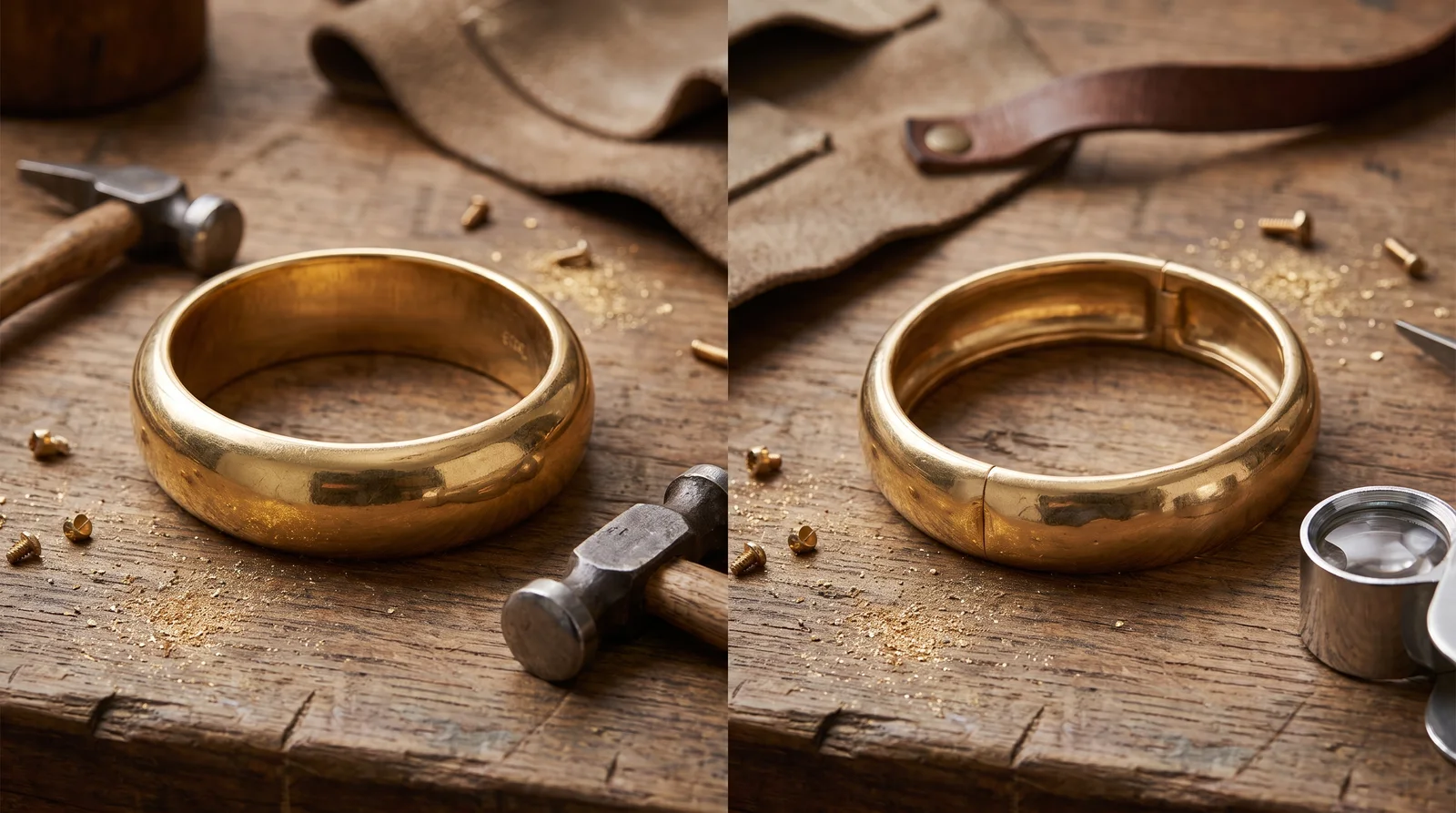
For daily wear, solid gold bangles win on durability and lifetime cost even though they cost more upfront. Hollow bangles dent easier and repair bills add up fast, sometimes surpassing what you would have paid for solid gold in the first place. The right choice still depends on how often you actually wear the piece, your budget today versus later, and whether you stack multiple bangles that knock against each other. This guide walks through the real math.
Why Total Cost of Ownership Matters More Than Sticker Price
The purchase price only tells part of the story. A hollow gold bangle might cost 40% less at checkout, but if you wear it every day and it dents within two years, you're looking at repair bills that chip away at those initial savings. Solid gold bangles cost more to buy but rarely need structural repairs beyond routine polishing.
Think of it like buying a car. A cheaper car with worse fuel economy and frequent repairs can cost more over five years than a pricier, reliable model. Gold bangles work the same way once you factor in maintenance and the chance you'll need a professional repair or full replacement.
This is where the solid gold vs hollow gold jewelry cost comparison gets interesting, because the numbers shift dramatically depending on how the piece gets worn. Someone who wears a bangle three times a year for dinner parties has a completely different cost equation than someone who wears it to work, the gym, and everywhere in between. Let's break down what actually drives that difference.
Solid Gold Bangle vs Hollow Gold Bangle Durability Daily Wear: What Changes Under Real Pressure
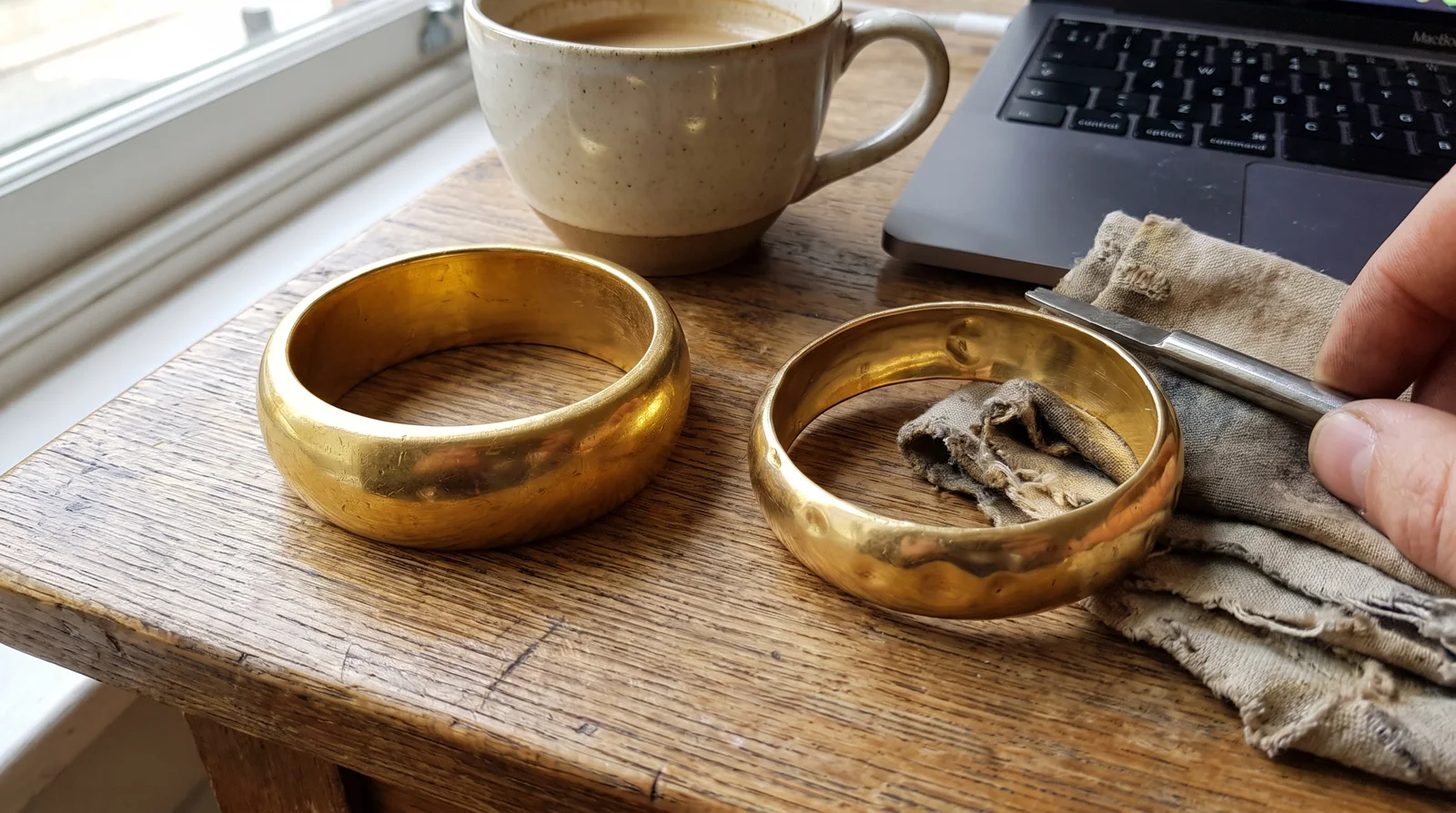
Solid gold holds up better under daily impact because there's no empty shell to collapse. Hollow bangles dent easily when they hit a doorframe, a desk edge, or another bangle in a stack. That's the core mechanical difference driving everything else in this comparison.
How Hollow Construction Fails Over Time
Hollow gold bangles are made from thin gold walls, sometimes as thin as 0.3 to 0.5 millimeters, wrapped around an empty core. That thin shell has almost nothing behind it to absorb impact. A knock against a countertop can leave a permanent dent because there's no solid mass to distribute the force.
Over years of daily wear, these small dents accumulate. Eventually the shell can crack, especially near seams where the metal was joined during manufacturing. Once a hollow bangle cracks, it often can't be fully restored to its original shape without significant rework, and even then the repair site tends to be visibly weaker.
Why Solid Gold Resists Everyday Wear and Tear
Solid gold bangles are gold alloy from surface to core, typically 14k or 18k, with no hollow space to compromise the structure. That mass absorbs impact instead of deforming permanently. A solid bangle can pick up surface scratches from daily wear, but scratches polish out. Dents that change the actual shape are far less common.
This is the same durability principle that applies to solid gold chains, where wall thickness and construction determine how well a piece survives daily contact with skin, clothing, and other jewelry. If you're also weighing a pendant chain purchase, the comparison in solid vs hollow gold chain for pendant covers similar weight and strength tradeoffs.
Durability is only half the equation though. What happens when something does go wrong is where the real cost difference shows up.
Hollow Gold Bangle Repair Cost: Why Fixing a Dent Gets Expensive
Hollow gold bangle repair cost runs higher than solid gold repair because jewelers have to work around an empty structure instead of a solid mass. Reshaping a dent in a hollow piece risks collapsing the wall entirely, which turns a simple fix into a full reconstruction job.
What Jewelers Actually Charge for Hollow Repairs
A minor dent repair on a hollow bangle can run anywhere from 50 to 150 dollars depending on severity and the jeweler's approach. If the dent has caused a crack or the metal has thinned unevenly, some jewelers won't attempt a repair at all and will recommend melting the piece down for scrap value instead. That scrap value reflects only the actual gold content, which is lower in hollow pieces to begin with.
Heat is the tricky part. Soldering a crack in hollow gold requires careful temperature control because too much heat can warp or collapse the thin walls around the repair site. This is a slower, more delicate process than repairing solid gold, and jewelers often charge more for the extra care involved.
Solid Gold Repairs Cost Less and Last Longer
Solid gold repairs are more predictable. A jeweler can reshape, resize, or polish out scratches without worrying about structural collapse. Most solid gold bangle repairs fall in the 30 to 80 dollar range for standard maintenance, and the repair tends to hold permanently since there's solid material to work with.
Over a decade of daily wear, someone with a hollow bangle might need two or three repairs, while a solid gold owner might need one polish and resize. That gap adds up. Now let's put real numbers next to real ownership timelines.
Solid Gold vs Hollow Gold Jewelry Cost Comparison Over 10 Years
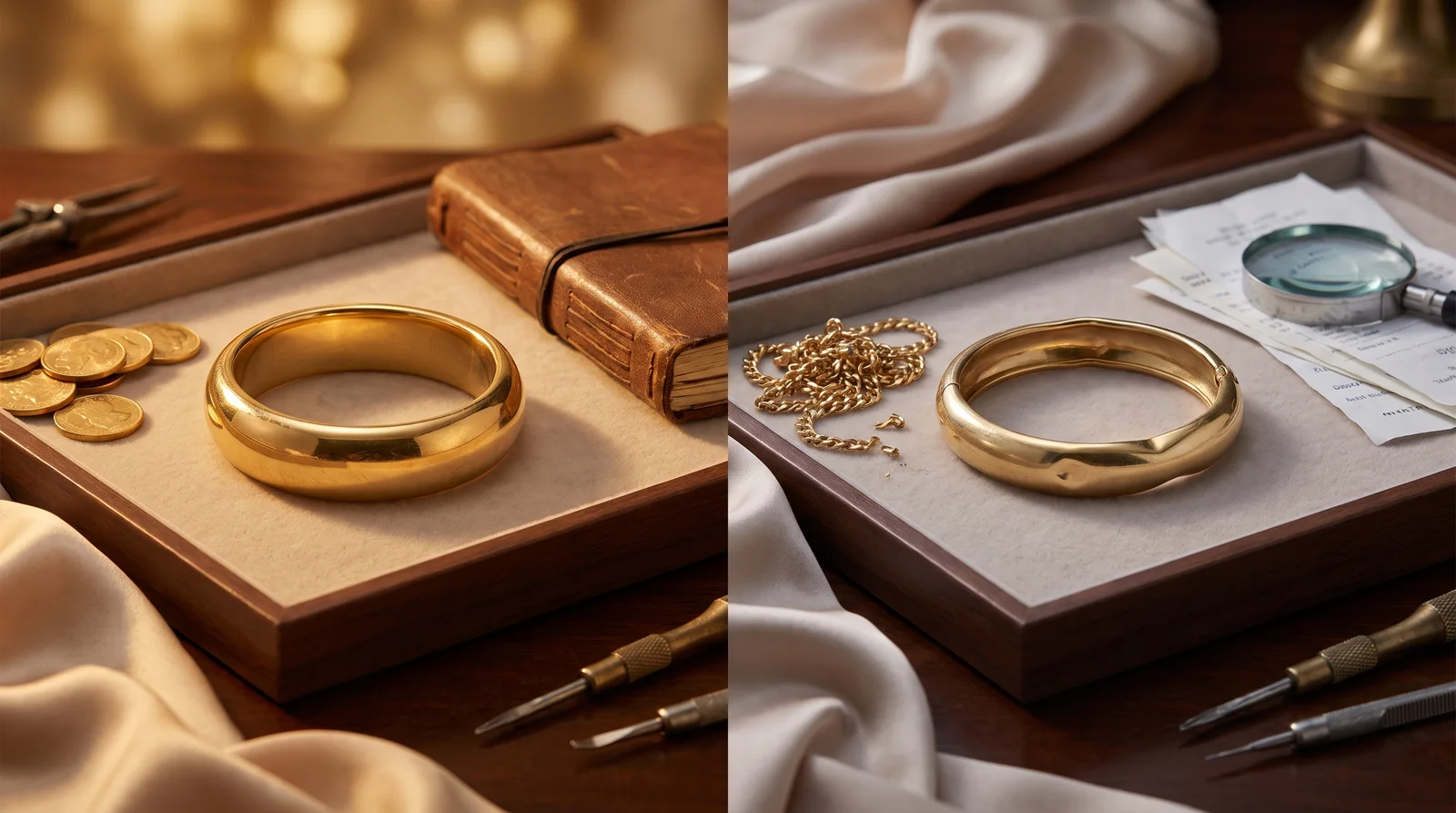
Solid gold costs more upfront but often costs less over a decade of daily wear once you add repairs and replacement risk into the math. Hollow gold saves money at checkout but that gap narrows or disappears depending on how hard the piece gets worn.
Scenario One: Daily Wear, Active Lifestyle
Say a hollow 14k gold bangle costs 600 dollars and a comparable solid 14k version costs 1,000 dollars. If you wear the hollow bangle every day, including workouts and household chores, you might need two repairs over ten years at 100 dollars each, plus a 30% chance of needing full replacement due to irreparable damage. That pushes hollow ownership toward 800 to 1,200 dollars over a decade.
The solid bangle at 1,000 dollars might need one 60 dollar polish and resize. Total cost stays close to 1,060 dollars, but you keep the original piece the entire time with essentially no replacement risk.
Scenario Two: Occasional Wear, Special Occasions Only
If you're only wearing the bangle a few times a month for events, the hollow gold bangles dent easily problem barely comes into play. Less contact means less risk of dents or cracks. In this case, the 600 dollar hollow bangle might never need repair, making it the clearly cheaper option over ten years.
This is exactly why lifestyle matters more than blanket rules. Karat purity plays into this too, since softer alloys dent more easily regardless of construction. The comparison in 14k vs 18k gold for daily wear explains how alloy hardness affects longevity independent of hollow versus solid construction, which stacks directly onto everything covered here.
Gold Bangle Resale Value Solid vs Hollow: What You Get Back Later
Solid gold bangles hold resale value better because they contain more actual gold weight, which is what buyers and scrap dealers pay for. Gold bangle resale value solid vs hollow comes down almost entirely to gold content, not craftsmanship or brand.
Why Gold Content Drives Resale More Than Design
When you sell gold jewelry, most buyers pay based on weight and purity, not sentimental or aesthetic value. A solid 18k bangle weighing 20 grams contains roughly 15 grams of pure gold. A hollow bangle of the same size and karat might weigh only 8 grams, containing around 6 grams of pure gold.
That's less than half the resale value for a piece that looks nearly identical on the wrist. If you ever plan to sell, trade in, or pass down a bangle, this gap matters far more than most buyers realize at the time of purchase.
Damage History Also Lowers Resale Value
A hollow bangle with a repair history sells for even less, since buyers and appraisers can often spot solder marks or structural inconsistencies. Solid gold with minor wear still appraises close to its melt value because the gold content itself hasn't changed. If resale or inheritance value matters to you, solid construction protects that value far more reliably. Foundational context on what solid gold actually means and why it holds value is covered in solid gold jewelry.
Best Gold Bangles for Everyday Wear Based on Your Lifestyle

The best gold bangles for everyday wear depend on how physically active your daily routine is, not just your budget. Someone who works with their hands all day needs a different bangle than someone who wears jewelry mostly at a desk job.
If You Stack Multiple Bangles
Stacking creates constant metal on metal contact, and that contact is brutal on hollow construction. Every time bangles clink together, hollow pieces absorb small impacts that solid gold shrugs off. If you love the stacked look, solid gold in 14k is the more practical daily choice, since 14k's higher alloy content resists dents better than softer 18k.
If You Wear One Statement Piece Occasionally
A single hollow bangle worn a few times a month for dressier occasions makes sense financially. You get the larger, bolder look at a lower price point, and infrequent wear means lower dent risk. This is where hollow construction genuinely earns its reputation as a smart budget choice, provided you store it carefully and avoid wearing it during physical activity.
Whichever path fits your life, understanding karat purity rounds out the picture. The breakdown in is 14k gold good explains why 14k often outperforms softer, higher karat options for anyone wearing gold daily.
Frequently Asked Questions
How do I tell if a gold bangle is solid or hollow before buying?
Weight is the biggest giveaway. A solid gold bangle feels noticeably heavier than a hollow one of the same size, since it contains far more actual gold. Ask the jeweler directly and check the listed weight in grams, since reputable sellers disclose construction type.
Why do hollow gold bangles dent so easily compared to other jewelry?
Bangles sit on the wrist, which takes constant knocks against desks, doorframes, and other objects throughout the day. That level of contact is far higher than what a necklace or ring typically experiences, which is why hollow construction struggles specifically with bangles.
Can a dented hollow gold bangle always be repaired?
Not always. Minor dents can often be smoothed out, but deep dents or cracks near seams may cause the thin walls to collapse further during repair attempts. Some jewelers will recommend melting the piece down rather than risking a failed repair.
Does hollow gold tarnish faster than solid gold?
No, tarnish resistance depends on karat purity, not whether the piece is hollow or solid. A 14k hollow bangle and a 14k solid bangle will tarnish at the same rate since they contain the same gold percentage.
Is it worth paying more for solid gold if I only wear bangles occasionally?
Probably not. If your bangle sees light, occasional wear, the durability advantage of solid gold matters less, and hollow construction offers a bigger, bolder look for less money. Save solid gold for pieces you plan to wear daily or pass down.
Making the Choice That Actually Fits Your Life
There's no universal right answer here, only the right answer for how you actually live and wear jewelry. If you're reaching for the same bangle every single day, solid gold protects your investment and saves you repair headaches down the road. If you're buying a statement piece for occasional wear, hollow construction lets you get more visual impact for less money without much added risk.
Think honestly about your routine before you buy. Do you stack bangles, work with your hands, or wear jewelry to the gym? That answer matters more than any general rule about solid versus hollow. Talk to a jeweler about weight, wall thickness, and karat purity together, since all three factors combine to determine how well a bangle survives the years ahead.