How to Remove Engraving From Ring Without Damage (Really)
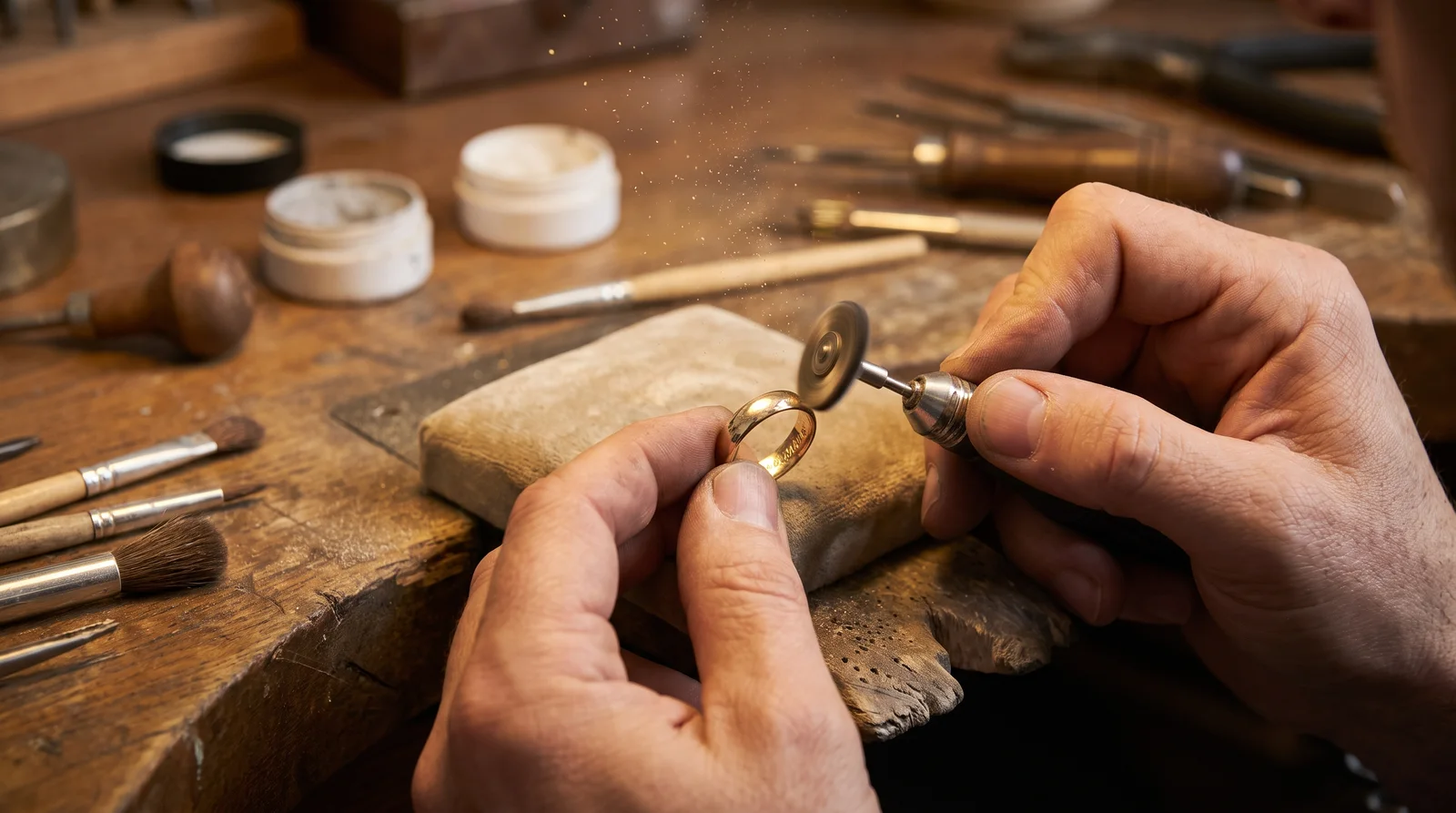
Yes, you can remove engraving from a ring without damage in most cases, but only when the engraving is shallow enough that polishing it out doesn't thin the metal below a safe thickness. A jeweler removes engraving by physically grinding down the surface to the depth of the deepest cut, which means the ring gets thinner wherever that inscription lives. Deep hand engraving, wide bands with intricate lettering, or rings already worn thin from years of resizing often can't be fully erased without weakening the shank or changing its shape.
What Actually Happens When a Jeweler Removes Engraving From a Ring
Removing engraving is not an erasing process. It's a subtraction process. To remove engraving from a ring without damage, a jeweler has to grind or laser away metal. They keep going until the surface sits level with the deepest point of the inscription, then polish it smooth. Think about what that means physically. If your engraving cuts 0.3 millimeters into the metal, the jeweler has to remove 0.3 millimeters from the entire surrounding area to make it disappear evenly.
That's not a cosmetic fix. It's metal loss, plain and simple. On a thick men's wedding band this barely registers. On a delicate estate ring shank that's already been sized twice, it can push the metal past a safe minimum thickness.
Once you understand that removal means real material loss, the next question is how deep is too deep. That depends entirely on how the engraving was made.
Shallow Surface Engraving vs Deep Hand Engraving
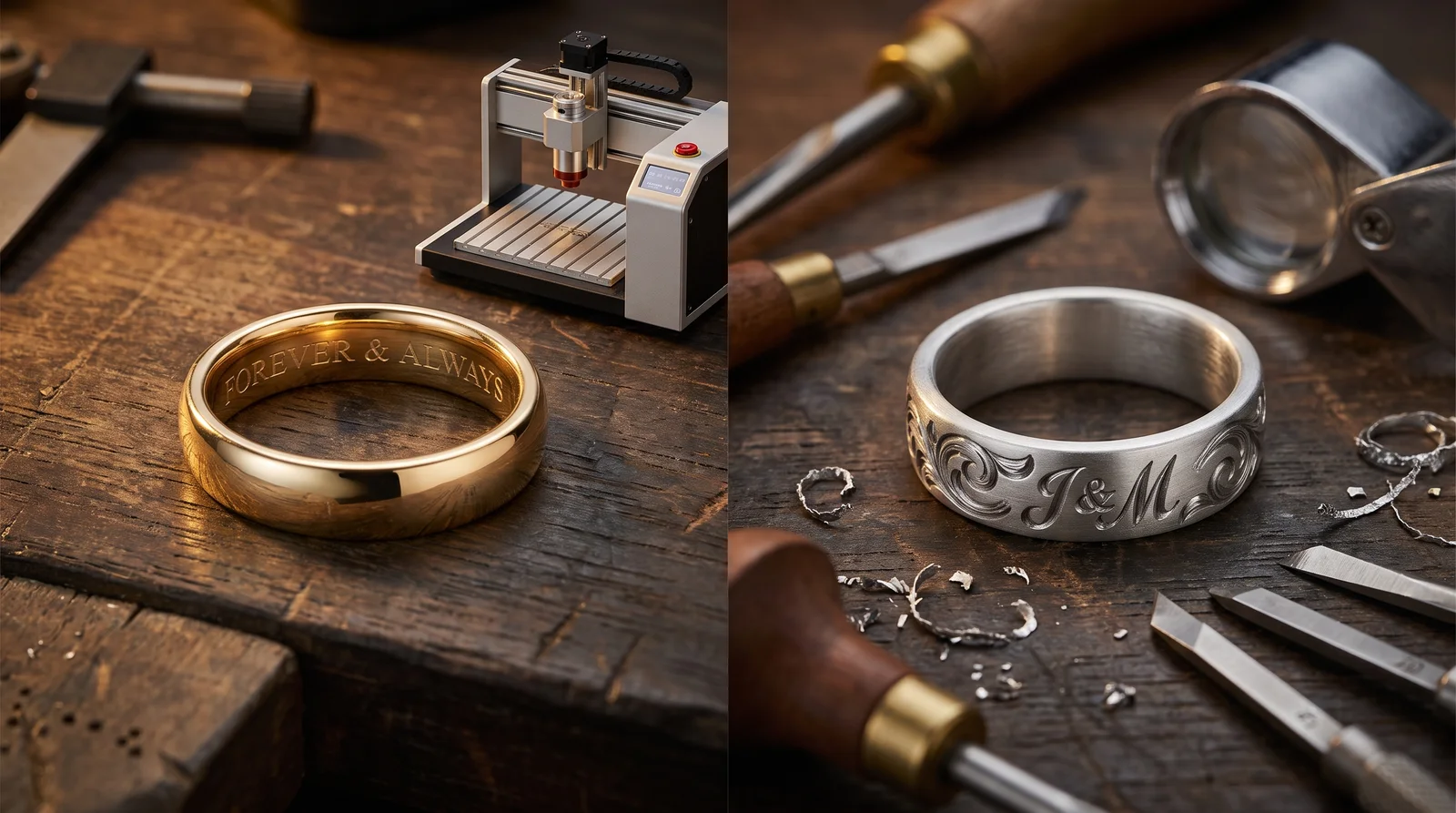
Shallow engraving polishes out cleanly. Deep hand engraving often can't be removed without visible thinning or shape distortion. The type of engraving your ring has determines almost everything about whether removal is realistic.
Laser Engraving Removal Jewelry Basics
Laser engraving removal jewelry work is usually the easiest scenario, because laser engraving tends to be shallow by nature. A laser burns a fine, consistent line into the metal. Most laser engraved inscriptions inside a ring shank sit at a depth a jeweler can polish out in minutes. This is why inside-band inscriptions with a name or date are frequently removed for engagement rings changing hands, estate pieces, or couples splitting up. The polishing wheel simply works its way down to just past the laser's depth and smooths it over.
Why Hand Engraving Runs Deeper
Hand engraving is a different story, because the cuts vary in depth across each letter. A skilled engraver goes shallow to deep and back to shallow within a single character. This creates the visual texture that makes hand engraving beautiful. It also means removing it requires grinding down to the deepest point of every letter, not an average depth. On a ring with elaborate script or a monogram that dips deep into the metal, that can mean removing a significant amount of material just to erase the lowest points.
This difference in depth is exactly why the type of engraving matters more than most people realize before they book a repair appointment.
Can Engraving Be Polished Off a Ring Without Thinning the Band Too Much?
Sometimes, and it comes down to how much metal is left to work with. Can engraving be polished off a ring safely depends on the band's current thickness, not just the depth of the inscription. A ring that started at 2 millimeters thick and has already been sized up or down a couple of times may not have enough margin left to lose more material.
Jewelers generally consider a shank unsafe once it thins to roughly half its original thickness in any one spot. If your ring has already been resized multiple times, check out our guide on how many sizes a ring can go before assuming engraving removal is risk free. Combining prior resizing with engraving removal is where most damage complaints actually come from.
Remove Engraving Gold Ring Projects vs Platinum and Silver
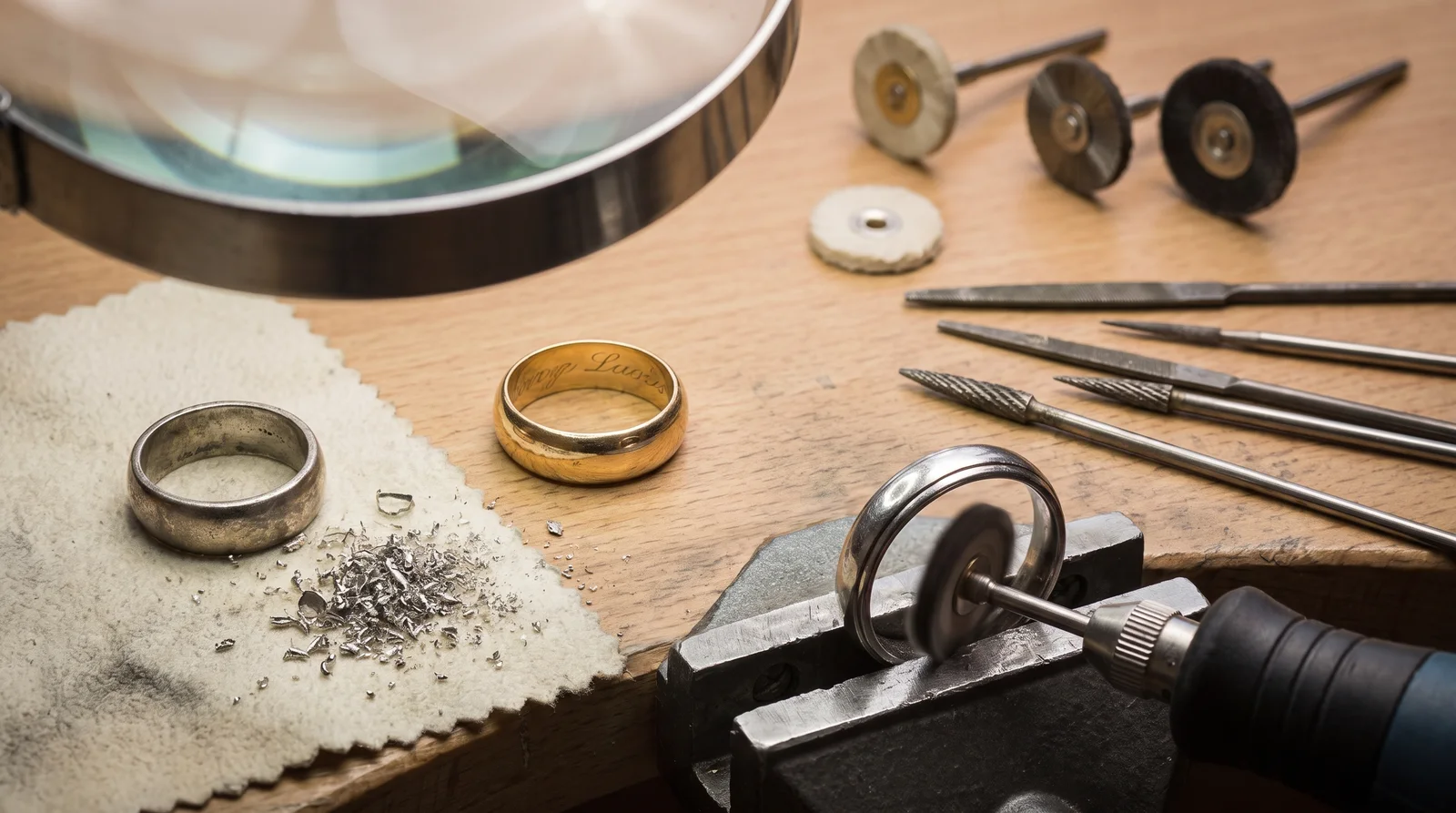
Metal type changes how forgiving the removal process is. If you want to remove engraving from a gold ring, you're generally in good shape. Gold is soft and polishes evenly, especially in 14k or 18k purity where the metal isn't overly hardened by alloy content. Platinum behaves similarly, though it work-hardens faster under a polishing wheel, so a jeweler needs a lighter touch and more passes.
Sterling silver removes just as easily as gold but scratches more easily afterward, so a fresh finish needs more careful handling early on. Gold-plated rings are the outlier. Removing engraving there strips the plating along with the inscription, and the piece needs replating afterward. That typically adds cost and a return trip to the jeweler.
Tungsten, titanium, and ceramic rings sit in their own category entirely. These materials don't respond to standard polishing wheels the way precious metals do. That means engraving on them is close to permanent. Trying to remove it risks pitting, cracking, or visible scuffing rather than a clean, smooth surface. With the metal type sorted out, the next factor to weigh is cost.
Engraving Removal Cost Jewelry Owners Should Expect to Pay
Engraving removal cost for jewelry usually starts around the price of a standard polish, often in the $20 to $60 range for simple laser inscriptions. More involved hand engraving or gold-plated pieces cost more, due to replating or extra labor. Turnaround is typically same day for gold, platinum, and silver. Stainless steel can take three to five days, because of how the metal needs to be processed.
If your ring also needs resizing at the same time, ask your jeweler to quote both jobs together. Combining engraving removal with resizing in one visit often costs less than two separate appointments. It also lets the jeweler manage metal thickness across both procedures at once, instead of removing material twice.
When Professional Ring Engraving Removal Isn't Enough
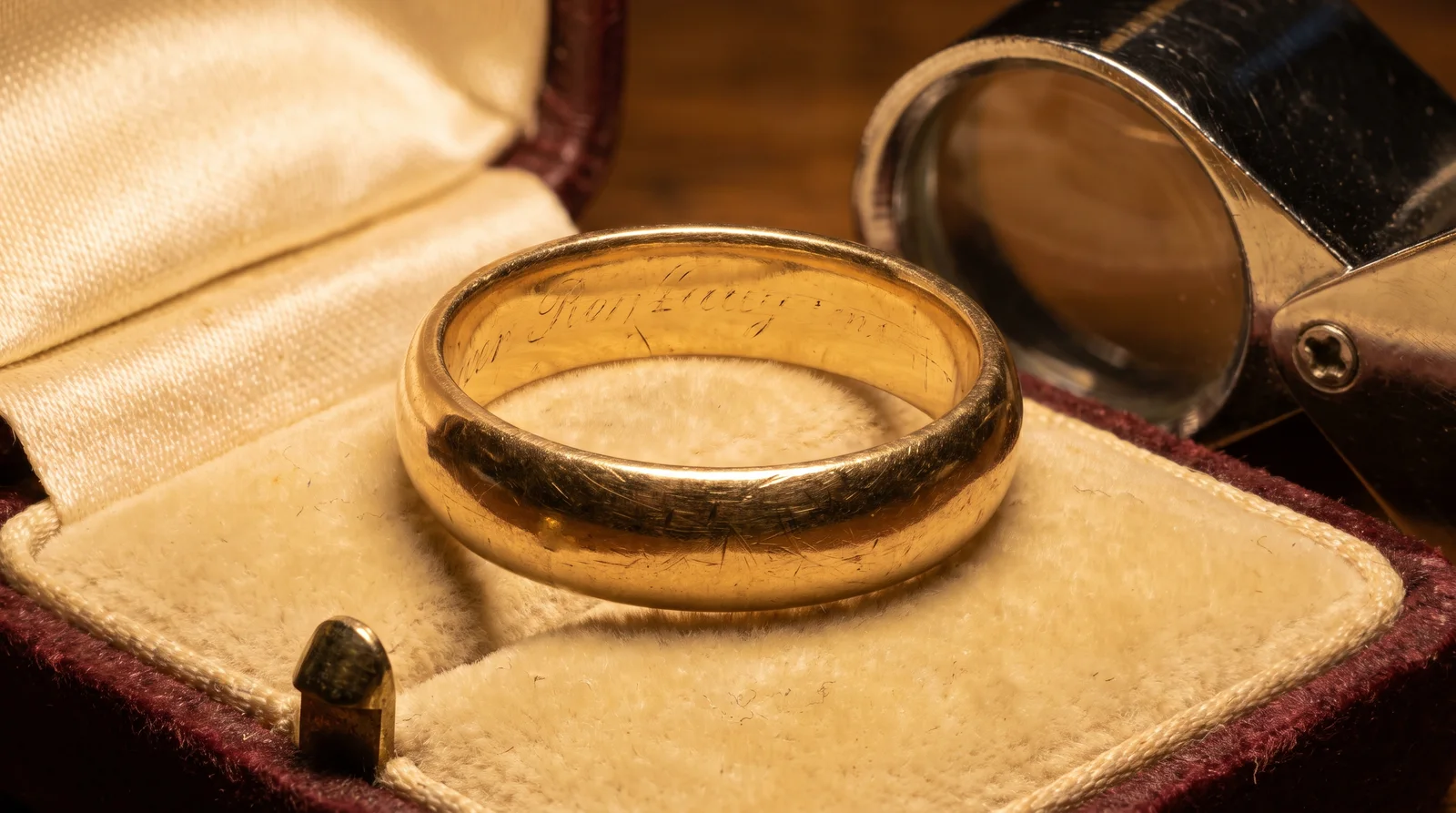
Some engravings simply cannot be removed without compromising the ring. A good jeweler will tell you that upfront instead of taking your money for a doomed attempt. Professional ring engraving removal has limits, and recognizing them early saves you a wasted trip and a disappointed reaction.
When Filling and Re-Soldering Makes More Sense
For very deep engraving on a thin band, some jewelers recommend filling the engraved channel with matching metal solder rather than grinding the whole surface down. This adds material instead of removing it, preserving the ring's original thickness. It's a more skilled repair, similar in spirit to the soldering and resetting work described in our piece on the cost to reset a diamond into a pendant, where adding and reshaping metal is standard practice.
When the Honest Answer Is No
If a ring is already thin, made from a metal that resists polishing, or engraved so deeply that removal would flatten the band's profile, the honest answer is to leave the engraving alone or consider a replacement setting. A reputable jeweler examines the piece under magnification before quoting removal work, checking wall thickness with a caliper or gauge rather than guessing. If they skip that step, get a second opinion before letting anyone touch the ring.
Knowing when to walk away from a removal project is just as valuable as knowing how the process works. That brings us to the questions people ask most often.
Frequently Asked Questions About Removing Engraving From a Ring
How to remove ring engraving without damage on a thin band?
The safest approach on a thin band is filling the engraved area with matching metal solder rather than grinding down the whole surface. This preserves thickness that a full polish removal would sacrifice. A jeweler experienced in solder work can usually blend the repair so it's invisible.
Can engraving be polished off a ring at home?
Home attempts with sandpaper or rotary tools almost always leave uneven surfaces, flat spots, or visible grinding marks. Jewelers use graduated abrasives and polishing wheels calibrated for precious metal, which is hard to replicate without professional equipment. It's one repair worth leaving to a shop.
Does removing engraving weaken a ring?
It can, since removal always takes away metal rather than adding it. The risk depends on how deep the engraving was and how thick the band already is. A jeweler should check thickness before starting, especially on rings that have been resized before.
What does engraving removal cost for a gold ring?
Simple laser engraving removal on gold typically costs about the same as a standard polishing service, often $20 to $60. Deeper hand engraving or gold-plated pieces need replating, so they cost more, sometimes double, depending on the shop and the amount of work involved.
Why can't engraving be removed from titanium or tungsten rings?
These metals don't respond to standard jewelry polishing wheels the way gold, silver, and platinum do. Trying to remove engraving often causes pitting, cracking, or visible scarring instead of a smooth finish. Engraving on these materials is generally considered permanent.
Getting the Right Advice Before You Commit
Removing engraving from a ring is possible in many cases, but it's never a one-size-fits-all fix. The depth of the inscription, the metal type, and how much wear the ring has already seen all determine whether polishing it away is safe. In some cases you're better off filling it, leaving it, or resetting the piece entirely. A jeweler who checks thickness and explains the tradeoffs before touching your ring is worth far more than one who just says yes to every request.
If you're weighing engraving removal alongside resizing or a deeper repair, bring the ring in and ask for an honest assessment first. And while you're caring for the piece in the meantime, our guide on how to clean jewelry can help you avoid accidentally damaging engraved details before you've even decided what to do with them.