Paraiba Tourmaline Report Interpretation Reveals the Claim Buyers Often Miss

Before paying for a stone sold as Paraiba, check whether its lab report supports the seller’s exact claims about identity, origin, and treatment. Paraiba tourmaline report interpretation starts with the words the lab actually uses, not the color you see in a photo. A Paraiba name does not, by itself, prove Brazilian origin, and silence about treatment does not prove the stone was never heated.
Paraiba Tourmaline Report Interpretation Starts With Identity
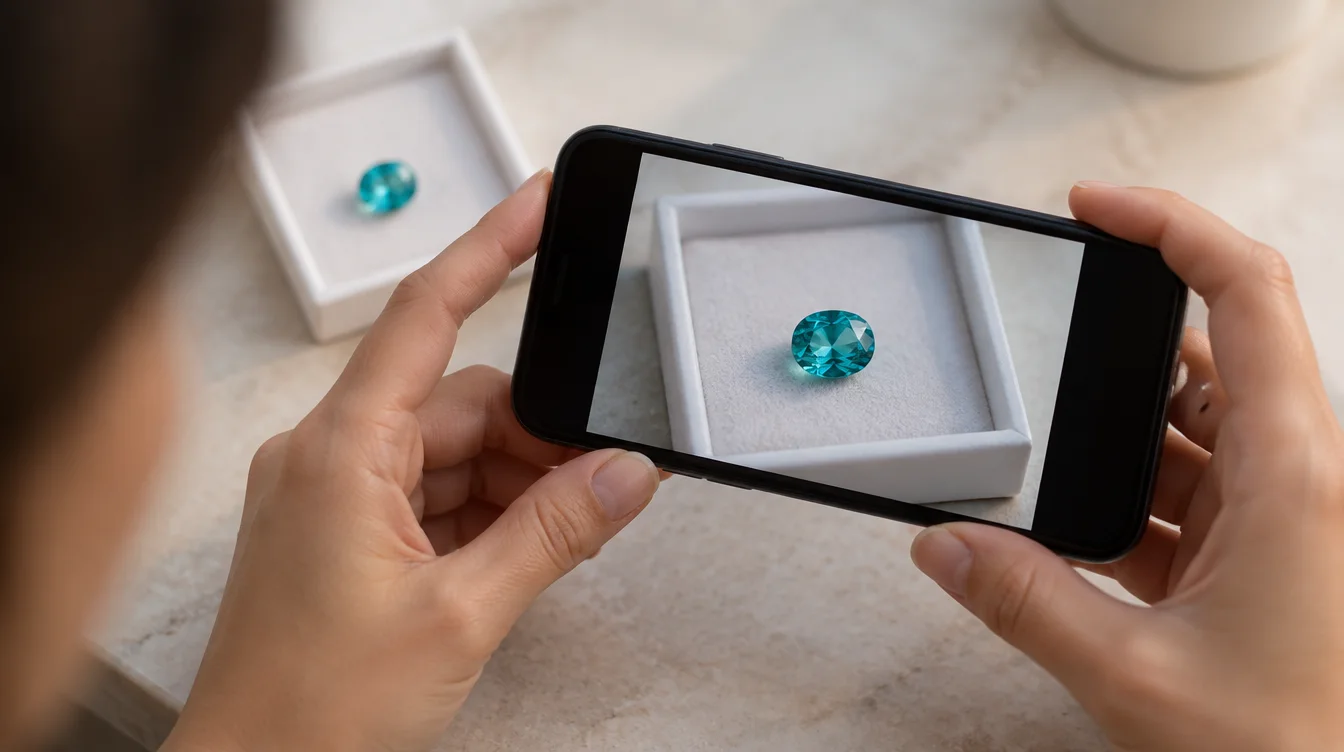
First, check what the lab says the stone is. Does it call the gem Paraiba tourmaline? Read the identification and variety lines before the sales listing. “Natural tourmaline” and “Paraiba tourmaline” answer different questions. Neither tells you where the stone was mined.
The distinction matters because blue and green tourmalines are not all Paraiba. The Paraiba name is tied to color and copper bearing chemistry, rather than blue color alone. The shared lab definition quoted by Filigree Jewelers describes blue to green tourmaline colored by copper and manganese, regardless of geographic source. A bright photograph cannot establish that chemistry.
Copy the report’s exact words. Does it identify a natural stone? Is “Paraiba” the lab’s term, or only the seller’s? Does it say “Paraiba type”? Similar terms may mean different things. Ask the seller or lab about any wording that does not match the sales claim.
What copper bearing identification can tell you
Copper helps produce the color linked to Paraiba tourmaline. Labs weigh that result with the stone’s look and gemological properties. Ferreira Gems’ explanation of lab identification treats chemistry, color, and report terms as separate parts of that decision.
Do not treat a copper result as a complete buying verdict. It does not grade the color, show how lively the stone looks, or establish a mine. Nor does the word “tourmaline” alone confirm that the gem meets a lab’s Paraiba naming criteria. The safest reading stays close to the full identification line and any comments beneath it.
Why a photo or a jeweler’s opinion is not the same evidence
Color gives you a reason to look closer. It is not a chemical test. Lighting, cameras, and screens can change how a blue stone looks. A skilled jeweler may spot traits worth testing. Still, a visual opinion cannot replace a report when the Paraiba name drives the price.
If you wonder how to tell if Paraiba tourmaline is real, start with an independent identification. Then match it to the offered stone. Once you know its identity, check the seller’s origin claim separately.
Why the Paraiba Name Does Not Prove Brazil
“Paraiba tourmaline” names a gem variety. It does not prove the stone came from Brazil. Brazil is central to its history, but African sources have also yielded copper bearing material. A variety name and an origin opinion answer different questions.
This is where a listing can mislead without stating an outright falsehood. Imagine a seller describes a ring as “Brazilian Paraiba” and supplies a report identifying “Paraiba tourmaline.” If the report has no origin conclusion, it supports the variety claim but not the Brazilian claim. The seller needs separate evidence for the latter.
Pay close attention to whether “Brazil” appears on the report as a lab conclusion. A mine name in an invoice, a supplier’s account, or a handwritten note is not the same thing. Such records may help document a chain of custody, but they should be described for what they are.
The supplied excerpts disagree on a further point. One buying guide presents the Paraiba name as limited to material from three countries. Another quotes a geographic origin neutral lab definition and discusses a reported newer source. Because those claims conflict, do not infer a country restriction from a trade listing. Ask the issuing lab what its current naming policy means for the specific report in hand.
Read the origin field as its own answer
A report may name a country or say origin was not determined. It may omit origin because no one requested that service. These results mean different things. “Not determined” does not support a seller’s preferred country. A blank field does not show whether origin testing took place.
If a seller charges more for Brazilian origin, ask what supports that claim. A Paraiba identification alone is not enough. Request origin testing from an established gem lab before payment. If the seller declines, treat Brazil as undocumented when you assess the price.
Do not turn a general color pattern into an origin test
Some dealers describe Brazilian stones as bluer and African stones as greener. Individual stones overlap, so that shorthand is a poor way to verify a purchase. A vivid blue gem is not Brazilian just because it resembles a well known example.
GIA’s published research on geographic origin determination treats origin as a question for analysis and reference samples, not sight alone. What, then, can a lab origin opinion tell you?
What a Lab Can Establish About Paraiba Tourmaline Origin
A stated origin is the lab’s opinion based on evidence from that stone. It supports a country claim better than color or a seller’s story. It is not a photograph of the mine. Read the conclusion and any limits the lab states.
Labs compare a stone with samples from known deposits. According to the lab methods overview from Ferreira Gems, precise trace element tests may help tell material from Brazil, Nigeria, and Mozambique apart. Standard tests may not settle the question. The article discusses LA ICP MS. It measures tiny amounts of elements.
That method is useful, but it does not make every stone easy to place. Deposits can share characteristics, and a lab can only compare against the reference material and methods it has. If a report declines to assign an origin, accept that limit. Filling the gap with a dealer’s confident guess defeats the point of buying documentation.
Compare origin claims using the same standard
Imagine two stones of similar size and color. One report calls the gem Paraiba tourmaline and states Brazil. The other calls it Paraiba tourmaline but gives no origin. Both may be genuine Paraiba. Only the first report supports a Brazilian origin claim.
The first stone is not automatically prettier or worth any price. Compare color, cut, clarity, and visible condition in both. Then weigh the origin evidence. If looks matter most to you, a stone without stated origin may suit you. If Brazil drives your budget, require a report that addresses Brazil.
When an origin result is inconclusive
An inconclusive result leaves the country claim unproved. Ask whether a second qualified lab could add useful evidence, and confirm the cost and return terms first. Another opinion may still be inconclusive. Do not pay a country specific premium in advance on the assumption that testing will settle it later.
When a seller offers mine records instead
Invoices and parcel records can add context. Dates and stone details help if they form a clear chain. Still, these records are not an independent origin opinion. Ask how the seller tracked the gem from rough to cut stone. Keep the records with your purchase papers.
Origin is one part of the review. Treatment wording needs the same care.
What Paraiba Tourmaline Heat Treatment Wording Means
A treatment comment reports what the lab found in its examination. It cannot tell you everything that ever happened to the stone. Read it word for word. “No indications of heating” does not mean “guaranteed unheated.”
Heating can change a Paraiba stone’s visible color, so buyers often ask about it. Filigree Jewelers’ overview says heating is common. That does not tell you whether this stone was heated. Check its report and the seller’s written disclosure.
Labs differ in what they examine and how they state a result. A report may note signs of heat or no detectable signs. It may make no treatment statement at all. If it says nothing, ask whether the service included treatment assessment. Silence is not a finding.
Separate a detection limit from a disclosure
A lab studies the evidence present when it receives the gem. A seller may also have records from the cutter or supplier. Those records can tell a different part of the story. Ask for the lab’s finding and the seller’s written treatment disclosure.
If a seller says “unheated,” ask what supports that claim. Even “no indications of heating” may not prove heat was never used. The limit depends on the stone, the lab’s methods, and its wording. Ask the issuing lab when that difference affects your choice.
A documented heated stone can still be appealing. Compare its color and price with other documented stones instead of treating the word “heated” as an automatic rejection. What matters here is an accurate description and a price you accept for that description.
Keep identity and treatment separate
Heating alone does not tell you whether a gem is Paraiba tourmaline. Identity names the material and its lab variety. Treatment describes changes made to it. Neither a treatment comment nor an origin line proves a separate claim about the other.
Paraiba tourmaline certification is often used as a broad sales phrase, but the actual report is more specific. Read each field on its own terms. Even perfect wording has little value, though, if the document belongs to a different gem.
Match the Report to the Stone Before You Pay
A report helps only if it belongs to the stone for sale. Ask for its number and clear images of every page. If the lab has an online record, compare it with the seller’s document.
Compare the stone with the report’s weight, shape, size, color, and photo, if any. One match is not enough. Many stones share a shape or rounded weight. Several close matches give you more reason to trust the link.
A mounted stone needs extra care. The setting can hide inclusions, alter the visible outline, and make weight hard to check directly. Ask whether the lab examined the stone loose or mounted. If the report describes a loose gem and you are buying a finished ring, request a clear explanation of how the seller tracked it through setting.
Use a simple claim and evidence check
Write the seller’s three claims in plain language: what the stone is, where it came from, and whether it was treated. Beside each claim, note the report’s exact answer. Mark any claim the report does not address as “seller evidence needed,” not as “confirmed.”
Consider this illustrative example, not an actual sale. A listing says “natural, unheated Brazilian Paraiba tourmaline.” Its report identifies natural Paraiba tourmaline. Origin is blank, and there is no treatment comment. The report supports identity only. Before paying, ask for evidence of Brazil and “unheated.” Or ask the seller to change the listing and price.
That short exercise catches a common mistake: treating the existence of a respected report as proof of every sentence in an advertisement. It also makes a useful email. Send the seller the unmatched claims and ask for direct answers in writing.
Check whether the document itself can be relied on
Use the issuing lab’s own verification service when one is offered. Check the report number there rather than trusting a screenshot alone. A copied report can describe a real stone while being attached to the wrong listing.
Ask who currently holds the gem, whether the sale includes the original report, and whether any later recutting or damage changed its measurements. Request recent photos in ordinary lighting as well as the seller’s studio images. None of these checks replaces a lab exam, but together they make a document swap or stale description easier to spot.
If you cannot match a high value stone to its report, pause the sale. A written return period may let you arrange an independent inspection. Once you can link the stone and report, judge the offer on that basis.
Choose the Evidence That Fits the Price Claim
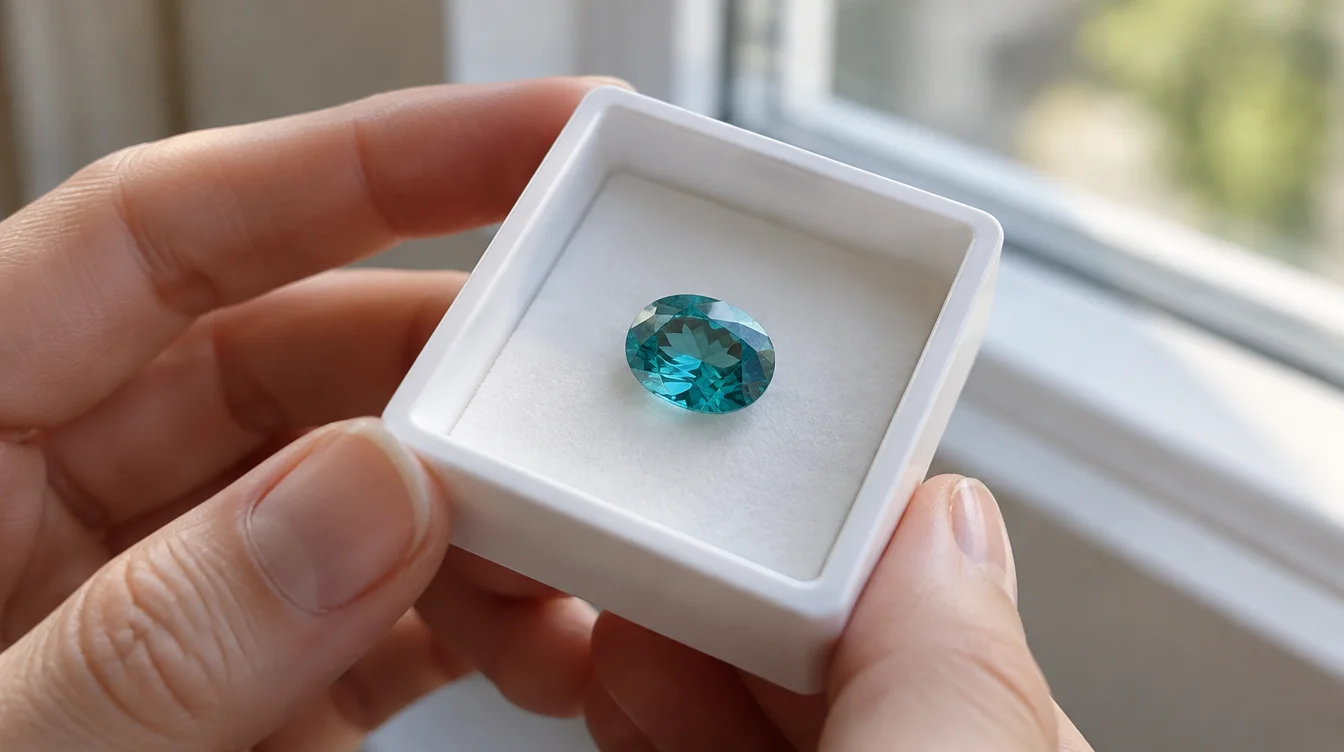
Ask which claim adds most to the asking price. If you care mainly about color, start with reliable Paraiba identification. Then view the gem in suitable light. If Brazil or “unheated” raises the price, seek evidence for that exact claim.
This is the practical core of a Paraiba tourmaline buying guide: do not buy more certainty than the paperwork gives you. A report that identifies the variety but omits origin may be adequate for a buyer who does not value a specific country. It is not adequate support for a seller’s country specific premium.
Look at the stone after reading the document, not instead of reading it. Face up color, bright and dark areas, visible inclusions, and the cut all affect your experience of the gem. A report can confirm identity while a stone still looks too dark for your taste. For help judging dark areas in colored gems, see our guide to dark centers and gemstone tone.
Ask for an invoice that repeats the agreed identity, origin claim, and treatment disclosure. Keep it with the report, seller messages, and return terms. If the invoice differs from the listing, settle that before you pay.
The final questions buyers ask tend to be short. Their answers still need the same careful split between identity, origin, and treatment.
Frequently Asked Questions About Paraiba Reports
Look for the report field that answers your question. Use these answers as a starting point. Your stone’s report wording sets the limit on what you can claim.
How can I tell if Paraiba tourmaline is real?
Ask an established gem lab to identify the offered stone, then match its report to that stone. Color alone cannot confirm copper bearing chemistry or the lab’s Paraiba classification. Check the identification wording rather than relying on the listing title.
Does a GIA Paraiba tourmaline report prove Brazilian origin?
No. A GIA Paraiba tourmaline report supports Brazil only if it states that origin. The Paraiba name identifies a variety, not a mine or country. Check the origin field on its own.
Can a report prove Paraiba tourmaline was never heated?
Do not assume so from silence or from “no indications” wording. A treatment result describes what the lab found under its examination. Ask the issuing lab what that result covers, and get the seller’s disclosure in writing.
Why might a lab leave origin off a Paraiba report?
Origin work may not have been requested, or the lab may not have reached a conclusion. Ask which applies to the report you were shown. Neither situation supports a seller’s unsupported country claim.
What should I do if the stone and report details differ?
Stop and ask the seller about the mismatch before paying. If it concerns the report record, contact the issuing lab. A recut gem or a report for another stone calls for updated paperwork.
Pay for claims the evidence supports, not claims that appear only in the sales copy.
Buy the Stone, Not the Story Around Its Report
Paraiba tourmaline report interpretation helps you ask better questions before paying. Confirm identity. Look for a separate origin result. Read treatment wording with its limits. Match the report to the gem. Then judge the stone at a price that fits what is known.
If the seller claims Brazil or “unheated” without report support, ask for evidence. You can also ask for a corrected offer. A good seller can explain what is known and what is not. Use that answer, along with the report, to make your choice.