The palladium or platinum wedding band buying checklist that catches the costly surprises
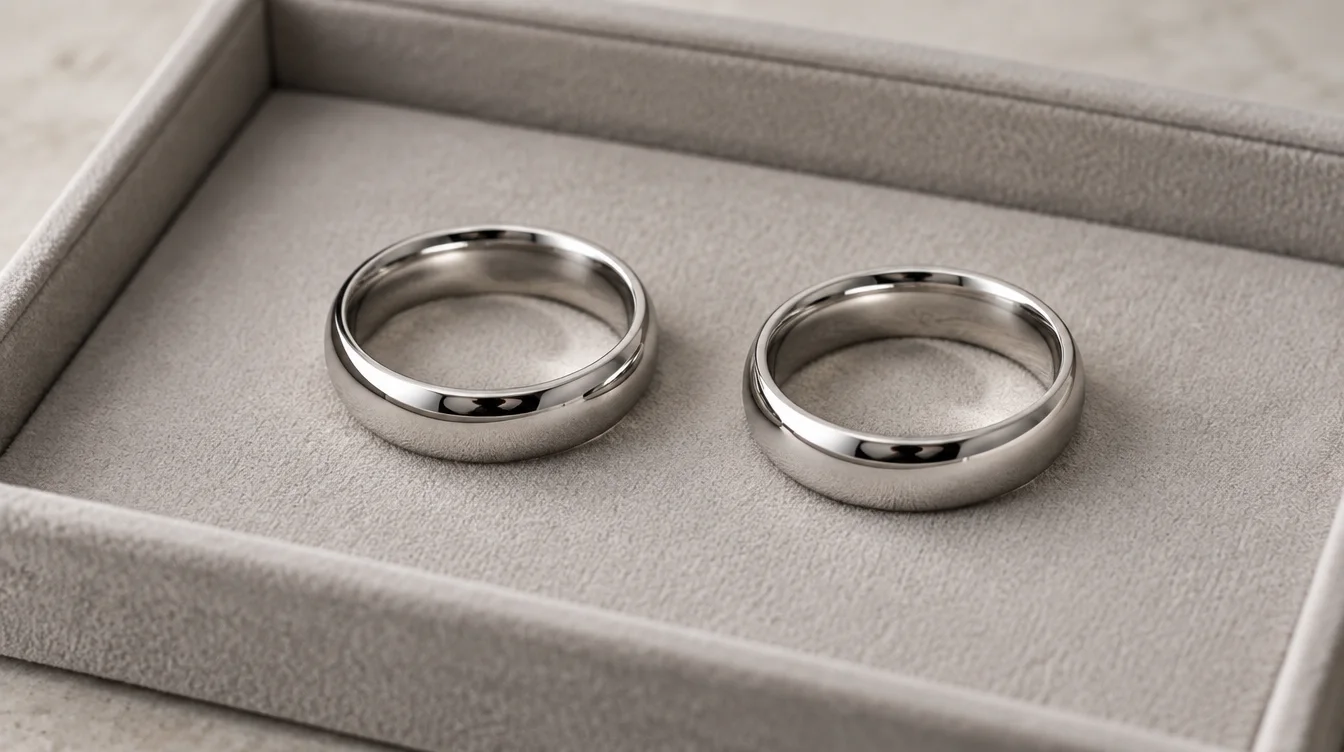
Compare the palladium and platinum rings you can actually buy. Do not rely on broad claims about either metal. A palladium or platinum wedding band buying checklist should cover alloy, weight, finish, full price, and written repair terms. Platinum may suit you if you like its weight and can find local service. Palladium may suit you if you want less weight, but check who can service that ring later.
Start the palladium or platinum wedding band buying checklist with two real rings
Start with two bands of the same width, shape, size, and finish. If those details differ, you may mistake a design difference for a metal difference.
A wide, domed platinum band feels unlike a narrow, flat palladium band. That tells you little about palladium vs platinum wedding rings. Try bands with the same profile and similar thickness. Wear each for more than a quick glance. Close your hand. Hold a phone. Notice whether the ring catches on the next finger.
If the store has only one metal in stock, ask whether it can show you the other in the same design. A photo cannot tell you how a band feels. A sample in another width can help, but treat its weight as a rough impression, not a fair test.
Keep each product page or written quote. Note the size, width, metal mark, alloy, finish, engraving, and return terms. That record helps when one seller quotes less for a different ring.
Once the designs match, check what each seller means by its metal description.
What should the alloy and hallmark tell you?
The label should name the metal. The seller should say what is mixed into it. Palladium and platinum are naturally white, but finished jewelry is often alloyed. Those added ingredients can affect how a ring is worked and repaired.
Ask for the full alloy, not just the headline metal
A Pt950 or Pd950 stamp states a fineness of 950 parts precious metal per 1,000 parts alloy. It does not name the other ingredients. Ask for the maker’s alloy specification. Have it attached to your receipt. Without it, you will have less to tell a repair jeweler later.
A metal name alone does not guarantee against allergies. If you have a known contact allergy, ask about every alloy ingredient. Discuss uncertain reactions with your clinician. A ring may feel fine at first but bother sensitive skin after long wear.
Check the actual band and its finish
Check the mark inside the ring against the metal named on the invoice. If it affects service, ask whether the band is cast, formed, or made to order. You do not need a manufacturing lesson. You need to know who will fix the finished ring.
Compare polished with polished, or matte with matte. Both metals can look quite similar when new, as the examples in Reflective Jewelry’s comparison show. A brushed sample beside a polished one can make the choice seem larger than it is.
Once you know what each ring is, compare its finished price.
Compare the finished price, not the metal headline
Compare the full price of finished rings with service terms you can accept. An old metal price chart cannot settle palladium vs platinum ring cost. Metal prices change. Band weight, labor, finish, and the seller’s stock also affect each quote.
That helps explain why older online comparisons disagree. One supplied retailer article calls palladium costlier. Another calls it the cheaper finished band. They use different dates and examples. Neither tells you what two rings in your size cost now. Ask for current, itemized quotes.
Get a like for like quote
Send each seller the same request: ring size, width, profile, finish, metal purity, engraving, and delivery date. Ask whether tax, shipping, sizing before delivery, and any custom work are included. If one band has more metal or a complex surface, its price is not a clean test of palladium against platinum.
Separate purchase price from possible service
This example is not a market price or forecast. Suppose comparable palladium and platinum bands cost $780 and $860 in the same currency. The sellers’ written policies quote $180 and $60 for one future size change. Your totals would be $960 and $920. You may never need resizing. Still, the $80 saving at checkout does not tell the whole story.
Check what the quote leaves out
A free first resize sounds useful until you learn it applies only before engraving. A warranty may cover a manufacturing fault but not ordinary scratches. Ask what each promise covers, how long it lasts, and whether shipping is your responsibility. Compare those terms beside the prices, not after paying.
Price is only part of the choice. The ring must feel right, and you must like how it ages.
How do weight, scratches, and patina compare?
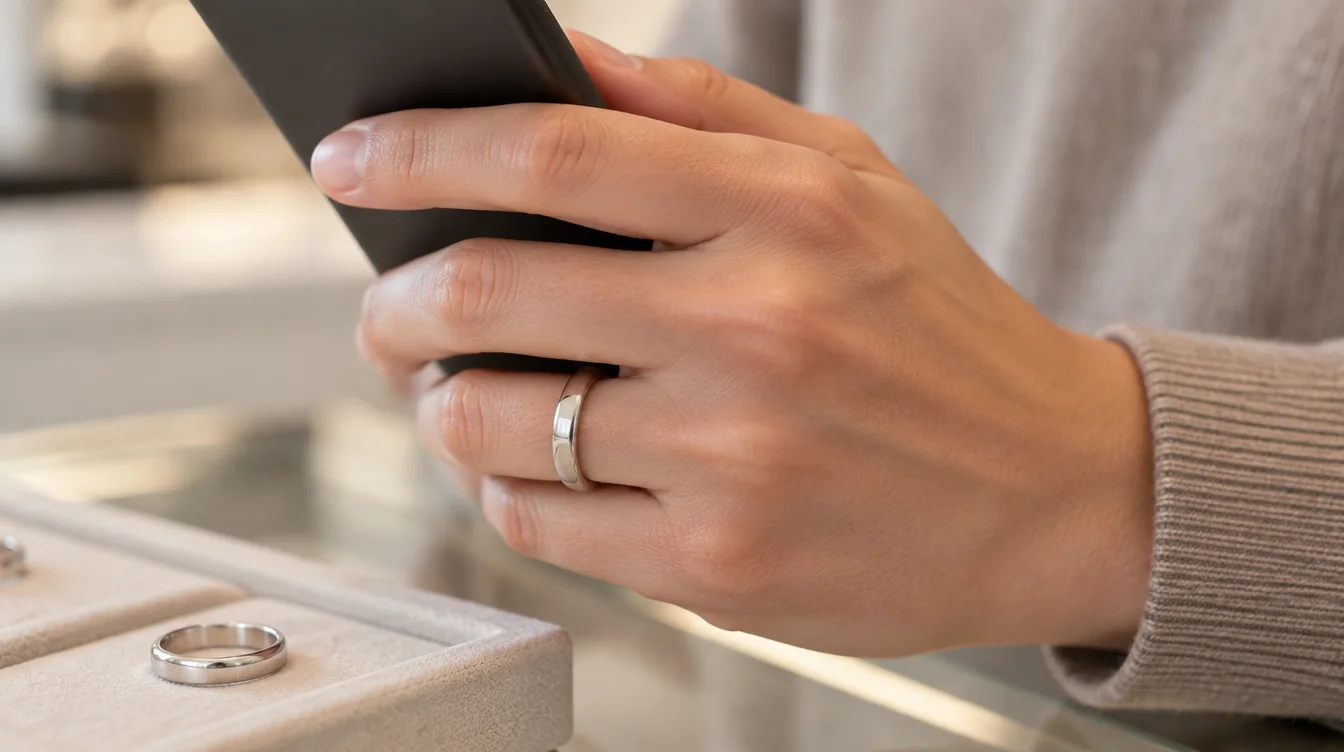
Platinum usually feels heavier than a palladium band in the same size. Both metals can pick up marks from daily wear. In its metal comparison, Diamonds Pro describes palladium as markedly lighter and notes that the metals look similar. Try both before you decide whether you like the extra weight.
Judge weight on your own finger
Some people like to feel a band on their finger. Others notice it when they drive or carry bags. Neither response is wrong. The weight gap may feel larger with thick, wide bands. Compare the size and shape you plan to order.
Ask for each band’s finished weight in grams when available. Still, do not judge by weight alone. A comfort fit interior can change how a ring sits, even at the same outside width. If your size may change, a sample that slips over your knuckle may feel loose later.
Understand palladium vs platinum durability in daily wear
Neither metal stays free of scratches. The supplied comparisons say palladium alloys are generally harder than platinum alloys. Still, hardness varies by alloy. A harder sample may not look newer as a finished band. Finish, daily habits, and contact with other objects also matter.
Check a plain band for dents and worn areas. If it has stones, ask when the settings need checking and whether the seller will do it. Remove either ring before work that could crush, catch, or strike it. Metal choice does not remove those risks.
Think of palladium vs platinum durability as a question about the specific band and your routine, not a contest with one permanent winner. That leads to the part many shoppers overlook: how the finish changes after purchase.
Plan for the finish you will see after a year
The bright polish on either metal will change with wear. Decide whether you will like that look or want it refreshed. Small marks can dull a mirror finish. They are normal signs of wear, not proof that the ring is failing.
What does platinum ring patina look like?
Platinum ring patina is a softer, less shiny look caused by fine surface marks. Some owners like it. Others want a bright polish. 25karats notes that a jeweler can polish platinum when its shine fades. Ask what polishing your seller includes. Check if repeat work could affect texture or engraving.
Palladium can lose its fresh shine too. A brushed finish may hide small marks at first. Later, a worn patch may stand out from the original texture. For a satin or patterned band, ask if the shop can restore that finish. A simple polish is not the same job.
Learn how to clean a platinum ring safely
Clean a plain platinum band with lukewarm water, mild soap, and a soft cloth. Rinse and dry it well. Use a soft brush around details only if the maker allows it. Many plain palladium bands suit the same gentle care. Check the seller’s advice for special finishes.
Cleaning removes skin oils and soap film. It cannot erase scratches or restore a factory polish. Avoid rough paste and harsh cleaners unless your jeweler says they are safe for the whole ring. Stones, coatings, and other materials may need different care.
When you know the upkeep you want, ask who can help if the fit changes.
Get resizing and repair promises in writing
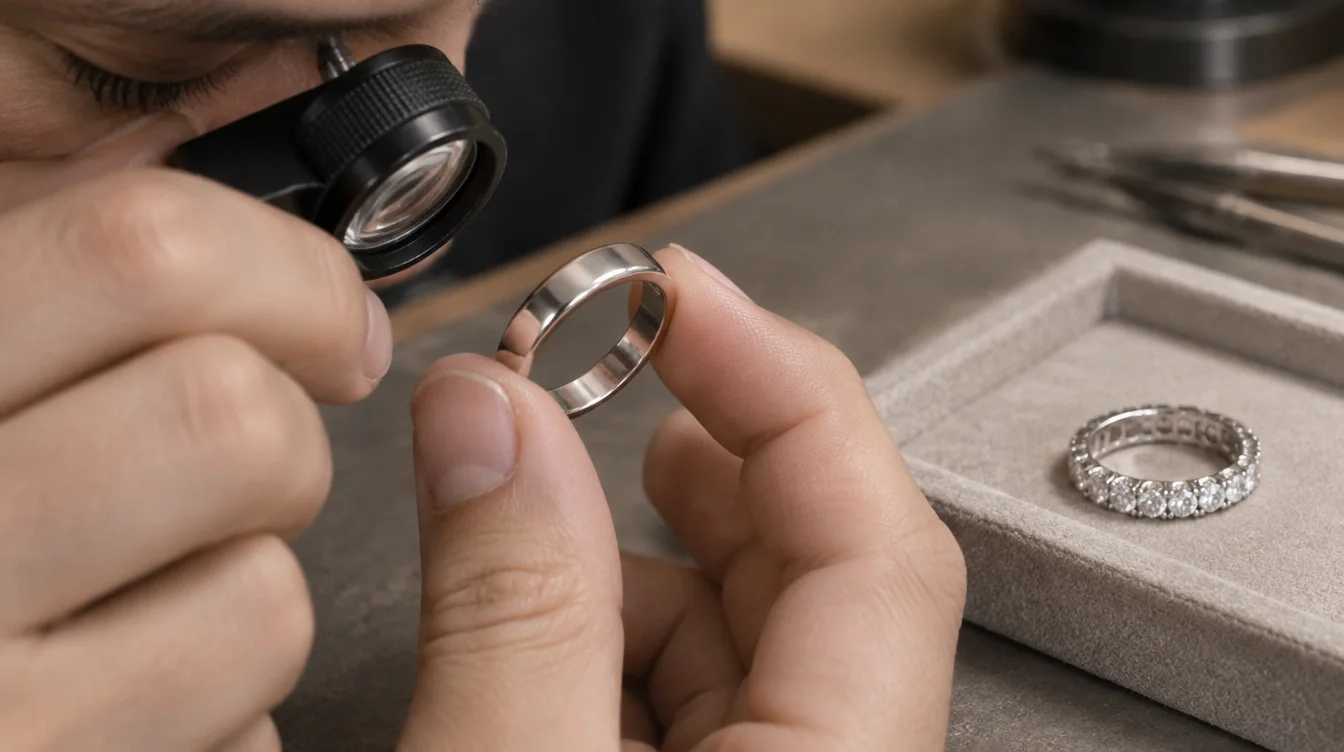
A service promise should name the work the seller will do on your ring. Palladium ring resizing may be hard to arrange if fewer jewelers will take the job. Diamonds Pro flags limited resizing access as a concern. You can check local service options before buying.
Ask who will resize each band
Ask if the retailer resizes rings in its own workshop or sends them out. How many sizes can it change? What might the work cost, and how long might it take? Ask about both metals. “Resizable” tells you too little when you need the ring before an event.
Design affects resizing. A plain band gives a jeweler more room to work than one with stones or a pattern all around it. If you want a full eternity band, the daily wear and resizing tradeoffs of eternity bands deserve a separate look before you choose either metal.
Ask about repairs after the sale
Find out who can fix a crack, replace lost metal, or restore the original finish. Ask whether an outside repair changes the warranty. If the seller says it can service palladium, request that promise in writing with the ring’s alloy and any limits. Do the same for platinum rather than assuming every local shop will take every job.
Here, a palladium or platinum wedding band buying checklist helps. A light band or lower quote means less without a clear repair plan. Once you have those terms, a few final questions remain.
Questions to ask before you order
These answers cover details that may change your choice. Check them against the quote. Confirm each service promise before you pay.
Can a palladium wedding band be resized?
Often, yes. Palladium ring resizing still depends on the alloy and design. You also need a jeweler willing to do the work. Get the size limits, price, and turnaround time in writing.
Does platinum stay shiny forever?
No. Fine marks dull a polished surface and create platinum ring patina. A jeweler may bring back the shine. A detailed finish still needs its own care plan.
How do I clean a platinum ring with stones?
Ask the maker how to clean a platinum ring with those stones and that setting. Gentle soap and water may suit the metal. The method must also be safe for each gem and any treatment.
What matters most if both rings look alike?
Compare how each ring feels, its full price, and its written service terms. Once those are clear, comfort is a sound reason to choose either metal.
Take those answers back to the two rings you tried, and make the final call on their terms.
Choose the ring you can enjoy and maintain
Choose a band that fits your hand, budget, and plans for care. Platinum may suit you if you like its weight and trust the quoted service. Palladium may suit you if you prefer its lighter feel. First, get its future resizing and repair terms in writing.
Before you order, check your palladium or platinum wedding band buying checklist again. Match the invoice to your ring’s alloy, size, finish, price, and service terms. If the seller cannot answer a repair question, ask another jeweler before you commit. Choose a band you can enjoy now and care for later.