Is a Diamond Eternity Band Practical for Everyday Wear? What Your Gym Bag and Kitchen Sink Say About It

You love the look. You are just not sure your hands can handle it. So let's answer this directly: is a diamond eternity band practical for everyday wear? For most people, yes, but only if you match the setting and metal to your actual routine, not your Pinterest board. A pave band worn to CrossFit five days a week will not age the same way as one worn at a desk job. The setting style matters more than the sparkle.
Full eternity bands can absolutely survive daily wear, dishwashing, and even manual labor, but they require more thought upfront than a solitaire does. The stones sit lower on your finger, they touch more surfaces throughout the day, and the setting you choose determines whether that's a non-issue or a constant headache. Let's get into what actually happens to these rings during real life, not showroom life.
Does a Full Eternity Band Actually Hold Up to Daily Life?
Yes, a well-made full eternity band holds up fine to daily life, as long as the setting protects the stones from direct impact. The band itself, the metal circle holding everything together, is not the weak point. The weak point is always the stones and how exposed they are. A full eternity band with 20 to 30 small diamonds set in a protective channel will outlast one with the same diamond count in delicate shared prongs, even though they look similar from three feet away.
Think about what your hands do in a normal week. You grip a steering wheel, load a dishwasher, type for hours, maybe lift weights or wrangle a toddler. None of that is inherently bad for a ring. What matters is whether the stones have metal protecting their edges or whether they're exposed and waiting to catch on something.
This is where the setting conversation becomes the real conversation. Full versus half eternity band choice gets a lot of attention, but setting style is arguably the bigger daily-wear factor once you've already decided you want the full wraparound sparkle. Let's break down how the three main setting types actually behave when life happens.
Prong vs Channel vs Bezel: Which Setting Actually Protects Your Diamonds?
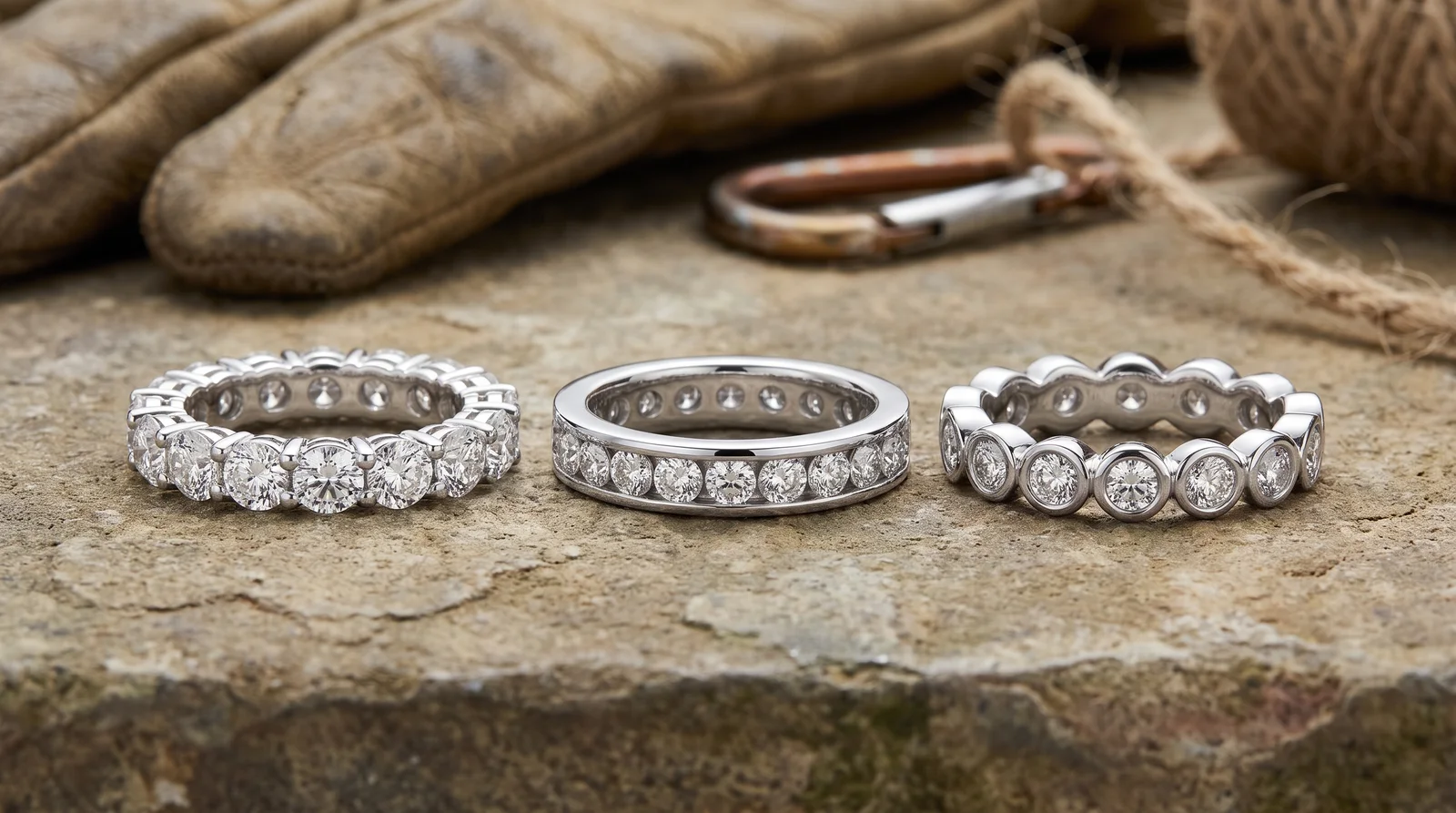
Channel and bezel settings protect diamonds far better than prong settings do during daily wear, though each comes with its own tradeoff in sparkle and cost. This is the single most important decision for anyone worried about active use, and it matters more than metal choice or even carat weight.
Shared Prong Settings: Maximum Sparkle, Maximum Exposure
Shared prong eternity bands use tiny metal claws to hold each stone, with neighboring stones often sharing a single prong. This lets in the most light of any setting style, which is why these bands photograph so well. But those prongs sit slightly raised off the band. That means they can snag on sweaters, tights, hair, and gym gloves. Over years of wear, prongs also wear down from friction and need periodic retightening. If you're deciding whether an eternity ring works for an active lifestyle, prong settings are the ones that need the most vigilance. A gym regular wearing a shared prong band should expect to have it checked by a jeweler roughly once a year.
Channel Settings: The Daily Wear Workhorse
Channel settings sit diamonds between two parallel walls of metal instead of holding them up with claws. There is nothing raised, nothing to catch. The stones sit flush, protected on both sides. This is why channel setting so often gets recommended as the best setting for eternity band daily wear, especially for people who work with their hands, hit the gym often, or have kids climbing on them all day. You lose a small amount of light compared to prong settings because the metal walls block some angles. Most people wearing the ring, rather than examining it under a loupe, will never notice the difference.
Bezel Settings: The Heavy-Duty Option
Bezel settings wrap a thin rim of metal around each stone's edge, essentially armoring it completely. This is the most protective setting available for an eternity band, full stop. Nurses, contractors, mechanics, and anyone who works with their hands constantly tend to gravitate here once they've had a prong snag catch them off guard once. The tradeoff is visual. Bezels show less of the stone's surface, so the ring reads a bit more understated and a bit less blindingly sparkly than pave or shared prong. For someone who wants daily-wear confidence over maximum brilliance, that tradeoff is usually worth it.
Once you understand how these three settings behave, the next question naturally becomes what's holding those settings together. That brings us to metal.
Does Platinum or Gold Wear Better for a Ring You Never Take Off?
Platinum wears more gracefully over decades, while gold requires more active maintenance but costs less upfront, so the better choice depends on your budget and your patience for upkeep. Neither metal is objectively wrong for an eternity band. They just age differently.
How Platinum Behaves Over Years of Wear
Platinum is denser than gold and doesn't actually lose much metal when it gets scratched. Instead, it displaces, meaning the metal shifts rather than wears away. Over years, platinum develops a soft matte patina that many people love, sometimes called a living finish. This makes it a strong pick for anyone who showers, does dishes, and works out without taking the ring off. The tradeoff is price. Platinum typically runs 30 to 40 percent more than 18k white gold for the same design, and it's a softer metal in terms of scratch resistance, so it picks up surface marks more visibly even though it isn't losing material.
How Gold Karat Affects Daily Durability
Gold jewelry is measured in karats, and that number tells you exactly how much pure gold is mixed with harder alloy metals. 18k gold is 75 percent pure gold, while 14k gold is about 58 percent pure gold, with the rest made up of stronger metals like copper or nickel. That difference matters more than people expect. 14k gold is genuinely more scratch and dent resistant than 18k because it has more hardening alloy content. For an eternity band worn every single day through gym sessions, dishes, and manual tasks, 14k often makes more practical sense than 18k, even though 18k carries a richer color and higher resale value. If you want a deeper breakdown of how these two options compare for daily wear specifically, this guide on 14k vs 18k gold for daily wear walks through it in more detail.
White gold carries an extra maintenance step worth knowing about. It's rhodium plated to get that bright white finish, and that plating wears down with friction over one to two years of daily wear, needing reapplication for about 80 to 150 dollars depending on your jeweler. Yellow and rose gold don't have this issue since they're not plated the same way. That's a real cost to factor in if you're weighing metals purely on long-term convenience.
With metal and setting covered, the next logical question is whether full eternity bands actually wear down faster than simpler ring styles, since that's often the real fear driving hesitation.
Do Full Eternity Bands Chip or Wear Faster Than Solitaires?
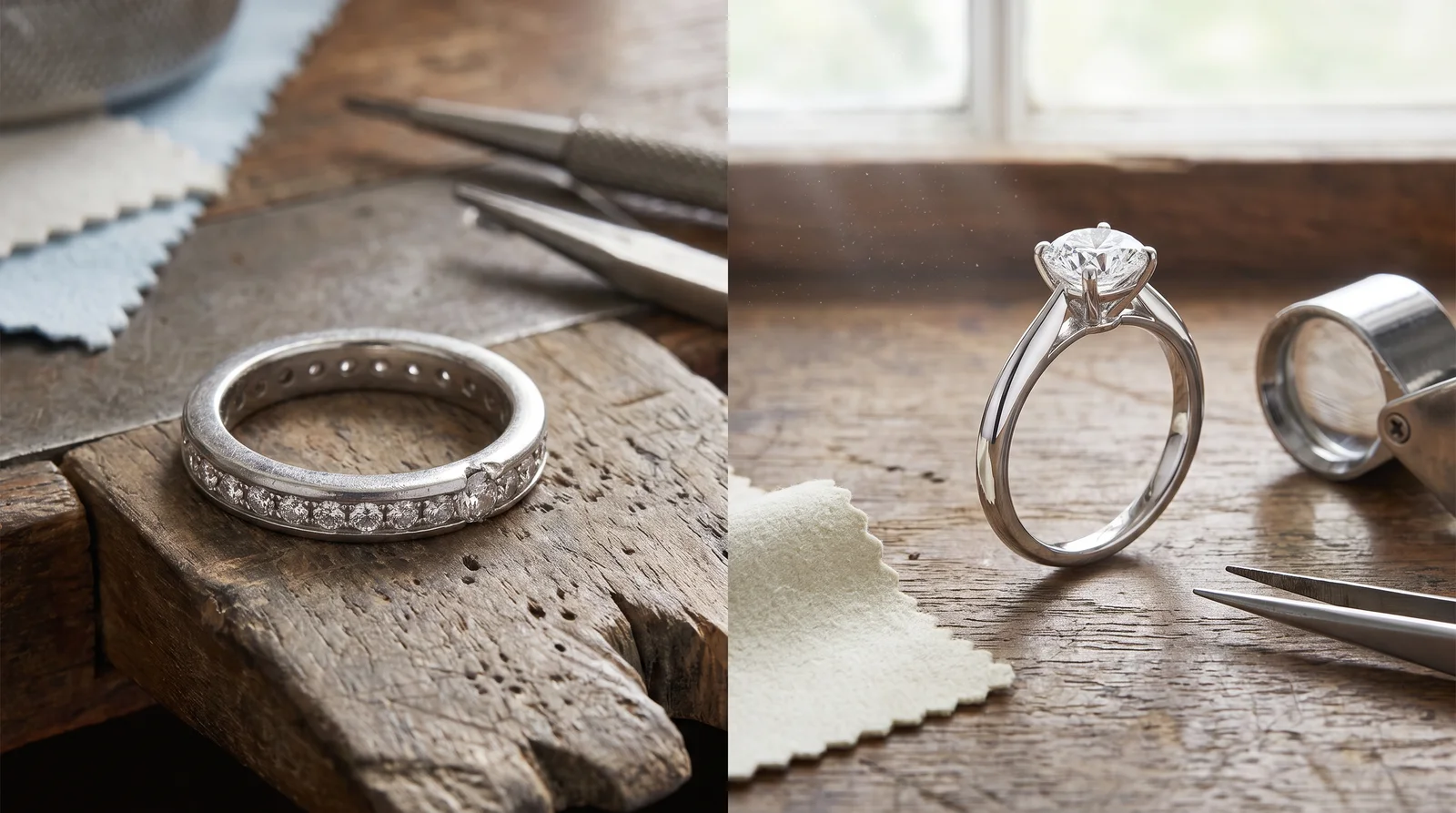
Full eternity bands don't inherently chip or wear faster than solitaires, but they do have more total stones exposed to daily contact, which increases the odds that any single stone experiences wear over time. This is a statistics problem more than a durability problem.
A solitaire has one diamond to worry about. A full eternity band might have 25 or more. Each individual stone in a well-set channel or bezel is just as protected as a solitaire's stone would be. But when you multiply exposure points by 25, the chance that one stone eventually needs attention goes up simply due to volume, not because the design itself is weaker. This is really a full eternity band pros and cons conversation dressed up as a durability question.
Half eternity bands split the difference nicely here. They carry roughly half the total diamond count of a comparable full eternity band, meaning fewer exposure points and correspondingly less long-term maintenance. If you've been going back and forth on full vs half eternity band and durability is your main hesitation, that stone count difference is the real deciding factor, more than aesthetics.
The palm-facing stones on a full eternity band deserve their own mention here, since that's the section people worry about most.
What Happens to the Diamonds That Sit Against Your Palm
The stones running along the underside of a full eternity band do see more friction than the top-facing stones, since they're in near-constant contact with your palm during gripping, typing, and gym work. This isn't a design flaw. It's just physics. A channel or bezel setting handles this friction far better than a prong setting does, since there's nothing raised to catch or bend. If you're someone who grips a barbell, steering wheel, or kitchen knife for hours a week, this palm-side wear is worth discussing directly with your jeweler before you buy, so they can steer you toward a lower-profile setting for that section specifically.
Knowing that full eternity bands can handle daily wear with the right setting still leaves the question of who should skip the full wraparound entirely. That's worth addressing honestly.
Who Should Choose Half Eternity or Channel Set Instead?
People with physically demanding routines, manual jobs, or a strong preference for low maintenance jewelry are usually better served by a half eternity or channel set band rather than a full eternity in a delicate setting. This isn't about settling for less. It's about matching the ring to the life it actually has to survive.
Signs You're a Half Eternity Person
If you work with your hands constantly, whether that's nursing, teaching, cooking, gardening, or physical labor, a half eternity band removes the palm-side friction issue entirely since there are no stones on that section to begin with. You also get a ring that's genuinely easier to resize later if your finger size changes, since there's plain metal available for a jeweler to work with. Anyone still deciding between the two should check out this comparison of full vs half eternity band styles for a deeper side by side look at cost, comfort, and resizing flexibility.
Signs You're a Channel Set Full Eternity Person
If you love the idea of complete 360 degree sparkle but you're nervous about snagging, a channel set full eternity band gives you both. You get the symbolic unbroken circle without the raised prongs that catch on everything. This is genuinely the sweet spot for most people asking whether an eternity ring works for an active lifestyle, since it delivers the full look with meaningfully lower snag risk than shared prong versions.
Signs You Should Skip Full Eternity Entirely
If your job involves frequent glove use, heavy machinery, or repeated hand washing throughout the day, like healthcare work or food service, even a channel set full eternity band might be more ring than you need daily. In these cases, a low profile half eternity or even a flush set band tends to hold up better and requires far less thought each morning.
Once you've settled on the right style for your life, the conversation naturally shifts to keeping that ring in good shape over the years ahead.
What Realistic Maintenance Actually Looks Like Long Term
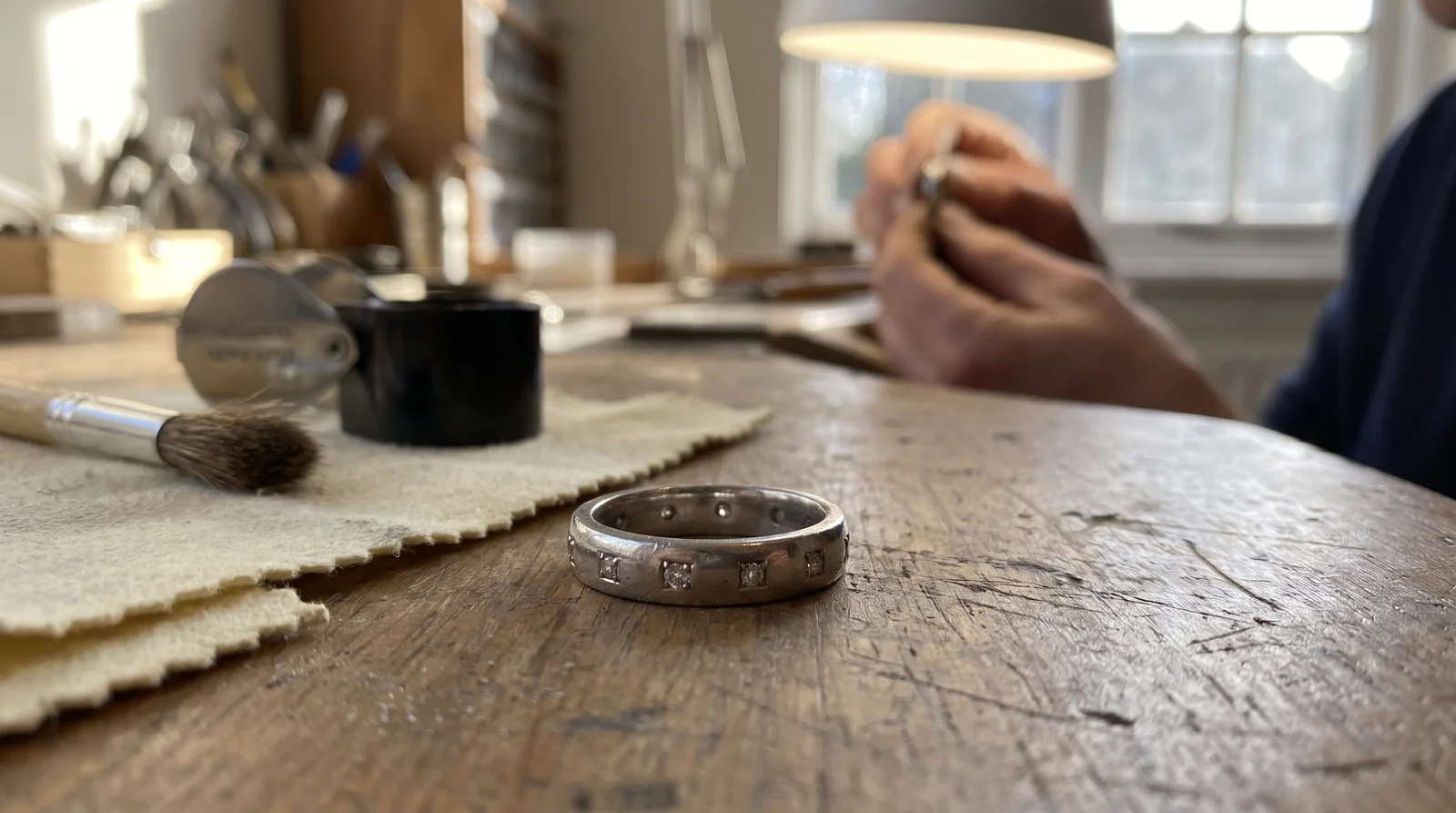
Realistic maintenance for a full eternity band means periodic professional inspections, occasional cleaning, and knowing what early warning signs to watch for, not constant babying. This is not high maintenance jewelry if you set expectations correctly from the start.
How Often You Should Get It Checked
Most jewelers recommend a professional inspection once a year for a ring worn daily, and twice a year if you're particularly active or work with your hands constantly. This appointment is quick. A jeweler checks prong tightness, looks for any loosening in the channel walls, and cleans the underside where oils and lotion tend to build up. It typically takes fifteen minutes and often costs nothing if you bought the ring from that jeweler.
What to Watch for Between Appointments
Between professional checks, pay attention to how the ring catches light. A stone that suddenly looks duller or sits slightly crooked compared to its neighbors is worth a closer look. You can learn the specific signs your diamond is loose so you know exactly what to check for at home without needing a jeweler's loupe. Catching this early is the difference between a five minute fix and a lost stone.
When Repairs Become Necessary
Even well-maintained rings eventually need some repair work, whether that's re-tipping worn prongs, re-rhodium plating white gold, or replacing a lost stone. This is normal for any ring worn daily for years, not a sign you bought the wrong style. If you do run into wear related damage down the line, knowing your repair options ahead of time takes the stress out of it.
With maintenance expectations set realistically, let's tackle the specific questions that come up most often when people are on the fence about buying.
Frequently Asked Questions About Wearing Eternity Bands Daily
Can a full eternity ring be resized?
Resizing a full eternity ring is difficult because stones run continuously around the band with no plain metal section for a jeweler to cut and adjust. Some jewelers can add sizing beads or use specialized techniques for small adjustments, but it's never as simple as resizing a plain band. If sizing flexibility matters to you, it's worth reading up on how many sizes a ring can realistically be adjusted before you commit to a full eternity style.
How do I make sure my eternity ring fits correctly the first time?
Getting sized professionally in person, ideally at the end of the day when fingers are slightly larger, gives the most accurate result. Ask to try on a ring of similar width, since wider bands typically need to be sized slightly larger than thin bands for the same comfortable fit. This is genuinely the most important step in the entire buying process for a full eternity band, since there's so little room to correct a sizing mistake afterward.
Will wearing an eternity band at the gym damage it?
A channel or bezel set eternity band in a durable metal handles gym wear just fine for most activities, though heavy lifting with bare hands on a barbell puts more direct pressure on the ring than most daily tasks. Many people prefer to remove any ring during heavy lifting sessions simply to protect their fingers, not because the ring itself is at risk. Cardio, yoga, and general gym use rarely cause issues for a well-set band.
Do eternity bands wear out faster than a simple wedding band?
A plain wedding band with no stones will always be lower maintenance than any style with diamonds set into it, simply because there's nothing to loosen or catch. That said, a well-set channel or bezel eternity band ages at a similar rate to other stone-set rings like solitaires, since the setting style matters more than the overall stone count for wear resistance.
Is it worth paying more for platinum if I'm active?
Platinum's density means it holds stones securely over long periods and develops wear gracefully rather than losing material, which appeals to people who don't want to think about their ring often. But 14k gold offers comparable daily wear durability at a lower price point, making it a smart choice for anyone active on a tighter budget. Both are genuinely good options depending on what you value more, cost or that specific platinum patina.
Making the Call That Actually Fits Your Life
A full eternity band can absolutely be an everyday ring. The people who love wearing theirs years later are almost always the ones who matched the setting to their actual routine instead of buying based on sparkle alone. Channel and bezel settings protect stones through gym sessions, dishwashing, and manual work in a way that shared prongs simply can't match. Gold karat and metal choice add another layer of control over how the ring ages against your specific hands and habits. If your lifestyle is genuinely rough on jewelry, there's no shame in choosing a half eternity or channel set style instead. That's not settling. That's buying smart. Whatever direction you land on, talk to a jeweler who will ask about your daily routine before recommending a setting, not just show you the prettiest option in the case.