Is That natural vs lab grown gemstone necklace Listing Hiding an Imitation?

Read the stone description, not just the necklace title. It should say whether the gem is natural, laboratory grown, or an imitation. A natural vs lab grown gemstone necklace choice is about where the stone formed. An imitation is a different material made to look like that gem. If the listing does not name the material, ask before you pay. A photo alone cannot tell you.
Start with the stone, not the word “real”
A necklace listing is clear only when it names both the stone and what it is made from. “Blue gemstone pendant” tells you the color, but not whether the stone is sapphire, glass, or something else. “Ruby necklace” gives you a stone name, yet leaves room for questions about origin and treatment.
For natural vs synthetic gemstones, origin is the key difference. A natural ruby formed in the earth. A synthetic ruby grew in a lab but has ruby’s properties. An imitation ruby only looks like ruby. It may be glass. That difference between synthetic gems and imitations matters more than whether a seller calls a stone “real.”
When buying gemstone jewelry online, look for plain terms such as “natural sapphire,” “laboratory grown sapphire,” or “blue glass imitation.” Each can be a fair buy when labeled clearly. The risk is paying for one and getting another. Once you know the material, check the rest of the listing.
What a natural vs lab grown gemstone necklace label tells you
The natural vs lab grown gemstone necklace label tells you where the gem formed. It does not say if the stone was treated. Natural stones formed without laboratory growth. People made lab grown stones, but these share the gem material’s defining properties. Stones in either group can be changed after growth.
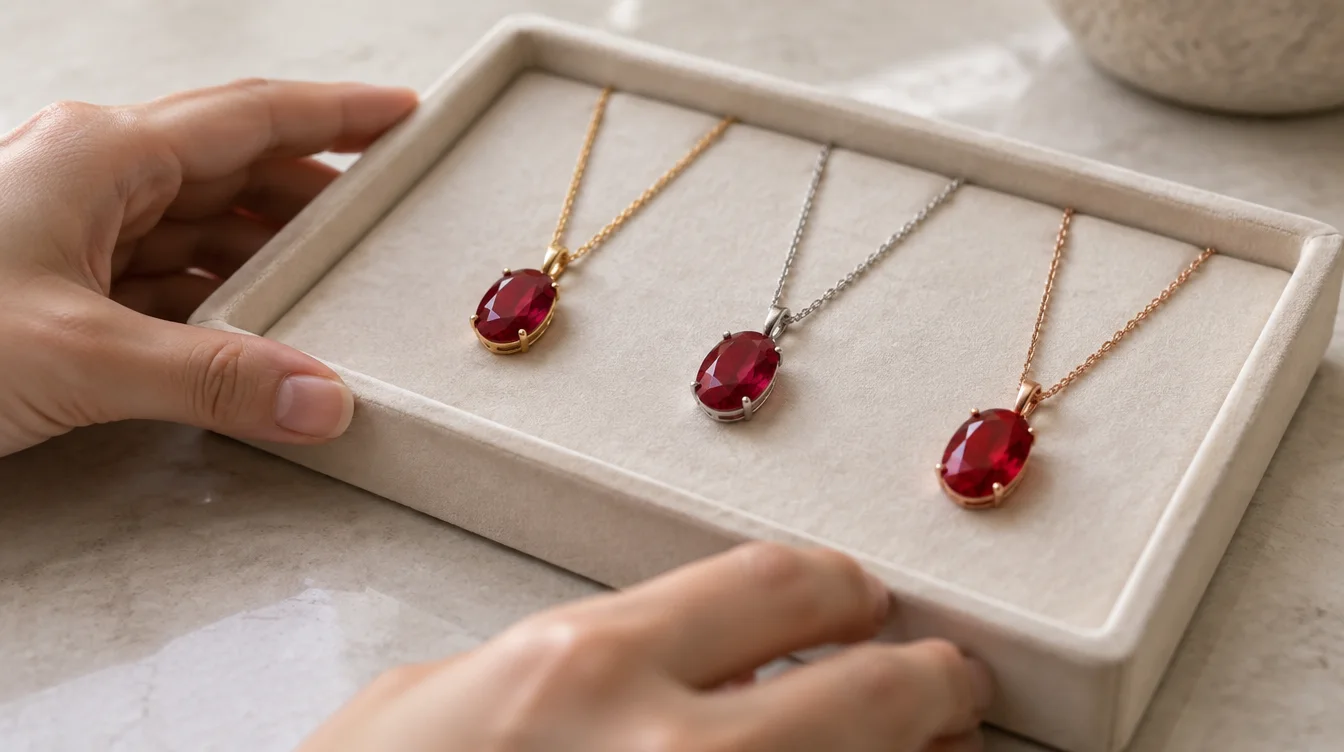
Natural is an origin claim
“Natural emerald” means the emerald formed in the earth. It does not mean untreated. If that matters to you, ask about treatment too. Natural gems vary in appearance. A sample photo may not show the pendant you will receive.
Laboratory grown is not the same as imitation
People often ask, “are lab created gemstones real?” A laboratory grown ruby is ruby, but not natural ruby. Red glass can look like ruby, yet it is not ruby. That explains synthetic vs simulated gemstones: synthetic names a laboratory grown gem; simulated names a look alike.
Neither origin is right for everyone. Choose natural if the stone’s origin matters to you. Choose laboratory grown if you want the same gem material without natural origin. If color or style matters most, a clearly labeled imitation may fit your budget. Next, check how the listing labels the stone.
Read vague necklace wording with care
Vague wording should prompt a question, not an assumption. “Emerald green” may describe a color rather than an emerald. “Ruby style” may describe a look. Even “gemstone necklace” can leave the actual stone unnamed.
What does genuine gemstone mean in a listing? “Genuine” does not tell you if a stone is natural, laboratory grown, or treated. Ask the seller to name the material and its origin. For a green pendant, “What is the green stone?” is more useful than “Is it real?”
Read the full page, including any material details below the photos. Check whether the title, description, and selectable options agree. A page might show several colors or stone choices under one shared description. Confirm which words apply to the option in your cart. If the necklace has more than one kind of stone, ask about each one.
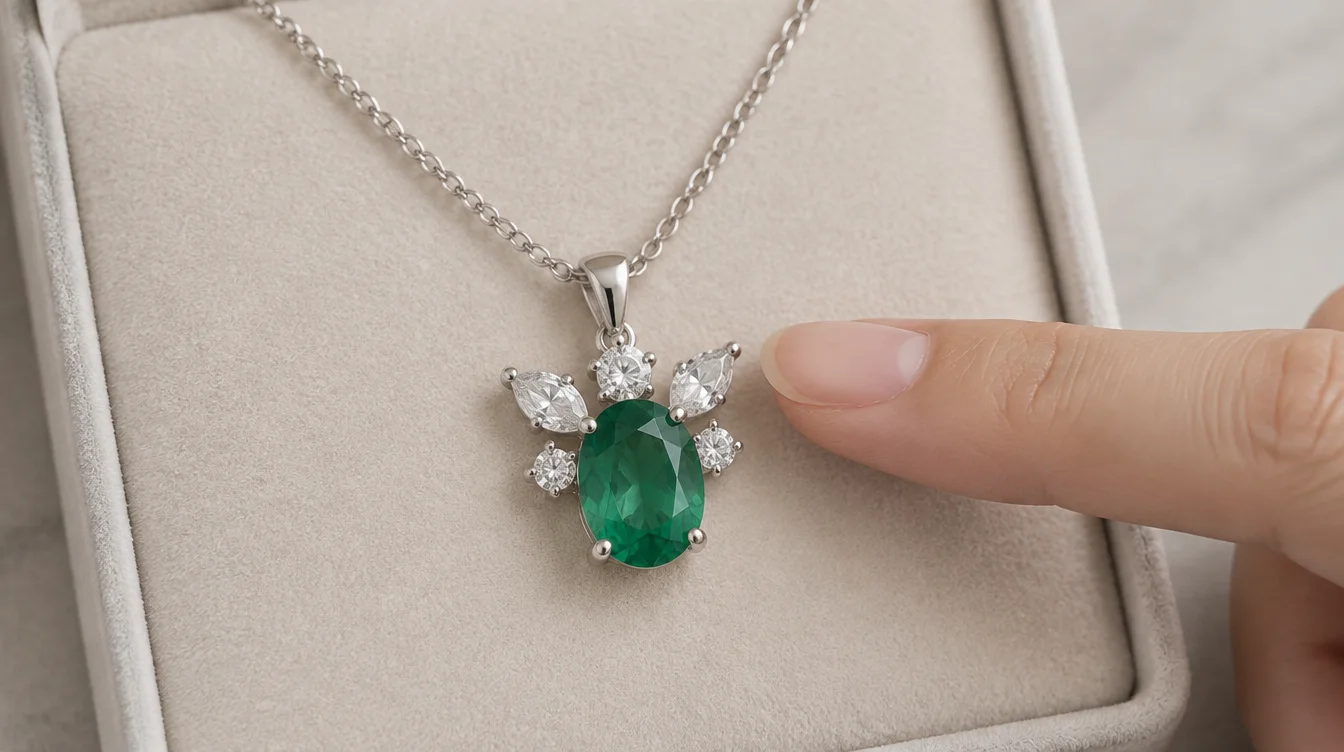
For synthetic vs simulated gemstones, ask two things. Is it the named gem grown in a lab? Or is it another material made to look like that gem? Then ask if “natural” covers every stone or just the main pendant. Clear answers help you assess treatments.
Keep origin and gemstone treatments separate
Gemstone treatments describe changes to a stone, not where it first formed. A natural sapphire can be heated. An emerald can be filled. Calling either stone natural does not answer the treatment question. The authentication guide from Ulka covers treatments such as heat, filling, coating, and dyeing. These can affect how a stone looks or how you care for it.
Ask what treatment the pendant stone has received and what care it needs. Be precise: “Is this natural sapphire heated, diffusion treated, or sold without a treatment claim?” A reply of “genuine sapphire” does not address any of those points. For a closer look at why those sapphire terms differ, see this guide to sapphire heat and diffusion treatment.
Here is a simple way to keep the claims apart. Picture two listings for blue sapphire pendants. One says “natural sapphire, heated.” The other says “laboratory grown sapphire” and says nothing about treatment. The first answers both questions. The second answers origin but leaves treatment open. That does not prove a problem, yet it gives you a useful question to send.
When comparing natural vs synthetic gemstones, do not read “untreated” as natural. Ask about origin first. Then ask about gemstone treatments. Both answers can affect whether the necklace meets your needs. Next, check the proof behind the seller’s claims.
Match the claim to the paperwork
Paperwork helps when it covers the claim you care about. A receipt records what the seller promised. A lab report may identify the stone sent for testing. It may also give findings on origin or treatment. Read the report itself. Not every certificate answers every question.

If a listing shows a report, compare its description with the necklace. Check the stone type, shape, measurements, and any report number shown. Ask whether the report covers the mounted pendant stone or a loose stone pictured elsewhere. If the seller cannot connect the report to the necklace, its value to your decision is limited.
A modest fashion necklace may not come with a detailed lab report. You can still ask for its material and origin in writing. Stronger proof may matter more for a necklace priced as natural and untreated. Weigh the claim, the cost, and how much doubt you can accept.
Photos show color and style. They cannot prove natural origin on their own. The seller’s words matter. When needed, the documents must match the item too. Before ordering, find out what happens if a claim remains unclear.
Ask these questions before buying gemstone jewelry online
When buying gemstone jewelry online, ask the seller to name the stone, its origin, and any known treatments. Ask for all three in one reply. Is the pictured necklace the exact one you will receive? If not, ask what may vary.
Ask what paperwork comes with the necklace and what it covers. Read the return terms before paying. Can you return it after an independent inspection? What is the deadline, and who pays return shipping? Get those answers in writing.
A practical message can be short: “Please confirm the pendant stone’s material, whether it is natural or laboratory grown, any treatments, and the return terms if it does not match that description.” For an imitation, ask for its actual material rather than accepting “simulated emerald.”
Save the listing and the seller’s reply with your order record. If the answers stay vague, do not hunt for a clue in the photos. Wait for a clear reply. The questions below can help you ask for one.
Common questions about necklace stone labels
A listing can tell you what the seller claims before you buy. These answers cannot replace testing of the stone itself.
Are lab created gemstones real?
Yes, when the laboratory grown stone is the named gem material. A laboratory grown emerald is emerald, but it is not natural emerald. Ask for its origin to be stated plainly.
What does genuine gemstone mean?
“Genuine” alone does not say whether a gem is natural or treated. Ask the seller to name the stone, its origin, and any disclosed treatments. Specific terms tell you more.
Can photos prove a gemstone necklace is natural?
No. Photos show how a necklace looks, not how its stone formed. Ask for a clear written description and, when the claim calls for it, relevant paperwork.
How can I spot an imitation in a listing?
Look for words such as “simulated,” “imitation,” “glass,” or a material name that differs from the gem in the title. If the description only gives a color, ask what the stone is made from. A clearly disclosed imitation is a choice, not a trick.
Those questions bring the decision back to the claim you can check before paying.
Choose the necklace with the clearest answer
A natural vs lab grown gemstone necklace choice should not rest on a photo. Start with the stone’s identity. Check its origin and any treatments. Then see whether the seller’s words, paperwork, and return terms agree.
Natural, laboratory grown, and imitation stones can all make appealing necklaces. You need to know which one you are buying. If the listing leaves that unclear, ask the seller the questions above. Buy when the reply gives you enough detail to choose.