Men's Wedding Ring Metal Choice White Gold Gold Platinum: Which One Actually Survives Your Job and Your Gym Bag
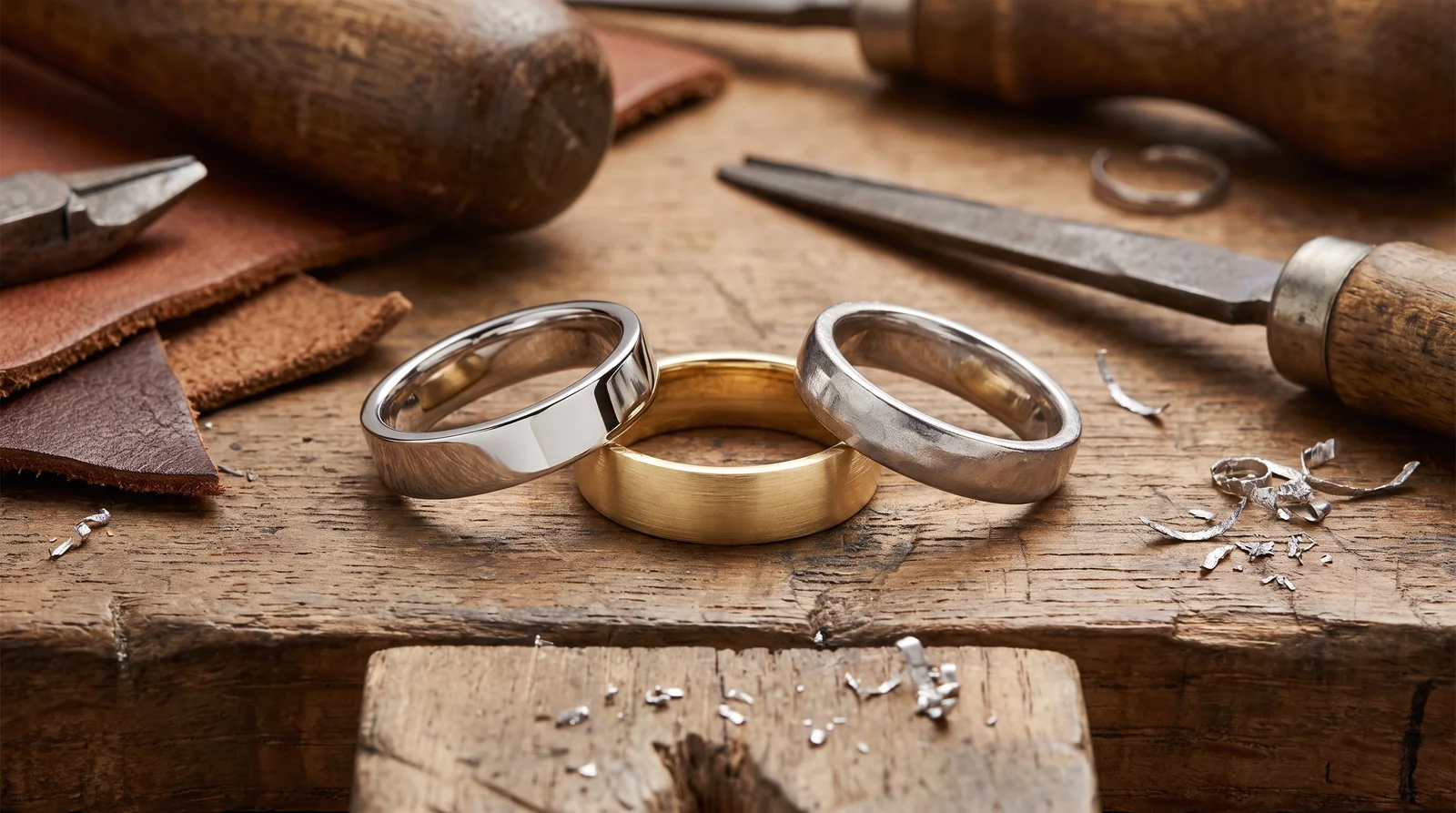
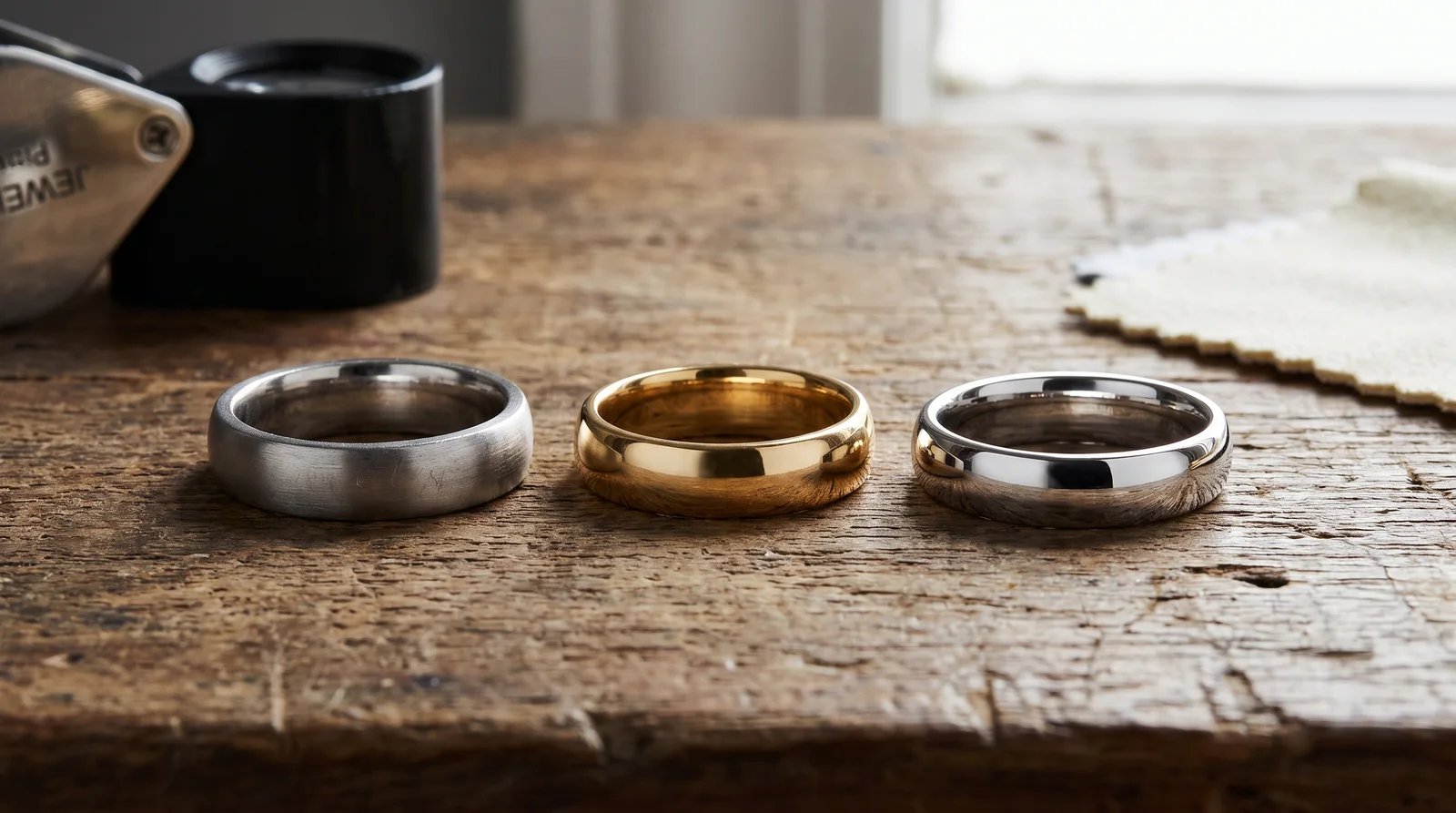
For most guys who work with their hands, hit the gym daily, or just don't want to think about their ring, 14k or 18k yellow gold and platinum tend to outperform white gold. Both offer better long term durability and lower maintenance. The men's wedding ring metal choice white gold gold platinum decision comes down to upkeep tolerance versus weight and cost. White gold looks great on day one but needs periodic rhodium replating. Platinum costs more upfront. But it shrugs off decades of daily wear better than almost anything else in the precious metal category.
Why Men's Ring Decisions Aren't the Same as Women's
Men choose wedding ring metal differently than women because the ring has to survive a different daily reality. A woman's engagement ring often gets removed for dish washing, gym sessions, or heavy lifting. Most men wear their band nonstop, through construction sites, weight rooms, car repairs, and yard work. That changes the calculus entirely. Scratch resistance, weight tolerance, and how a metal hides wear matter more than how it photographs next to a diamond.
Women's metal guides usually focus on how platinum or white gold pairs with a center stone and matches skin tone. Men's plain bands don't have a diamond stealing the spotlight. So the metal itself carries the whole visual weight. That means scratches show differently, patina reads differently, and comfort on a thicker band becomes a bigger factor. This is the gap most jewelry articles skip entirely.
With that context set, let's break down what each metal actually does under real conditions men face every day.
Does Platinum Feel Too Heavy for Daily Men's Wear
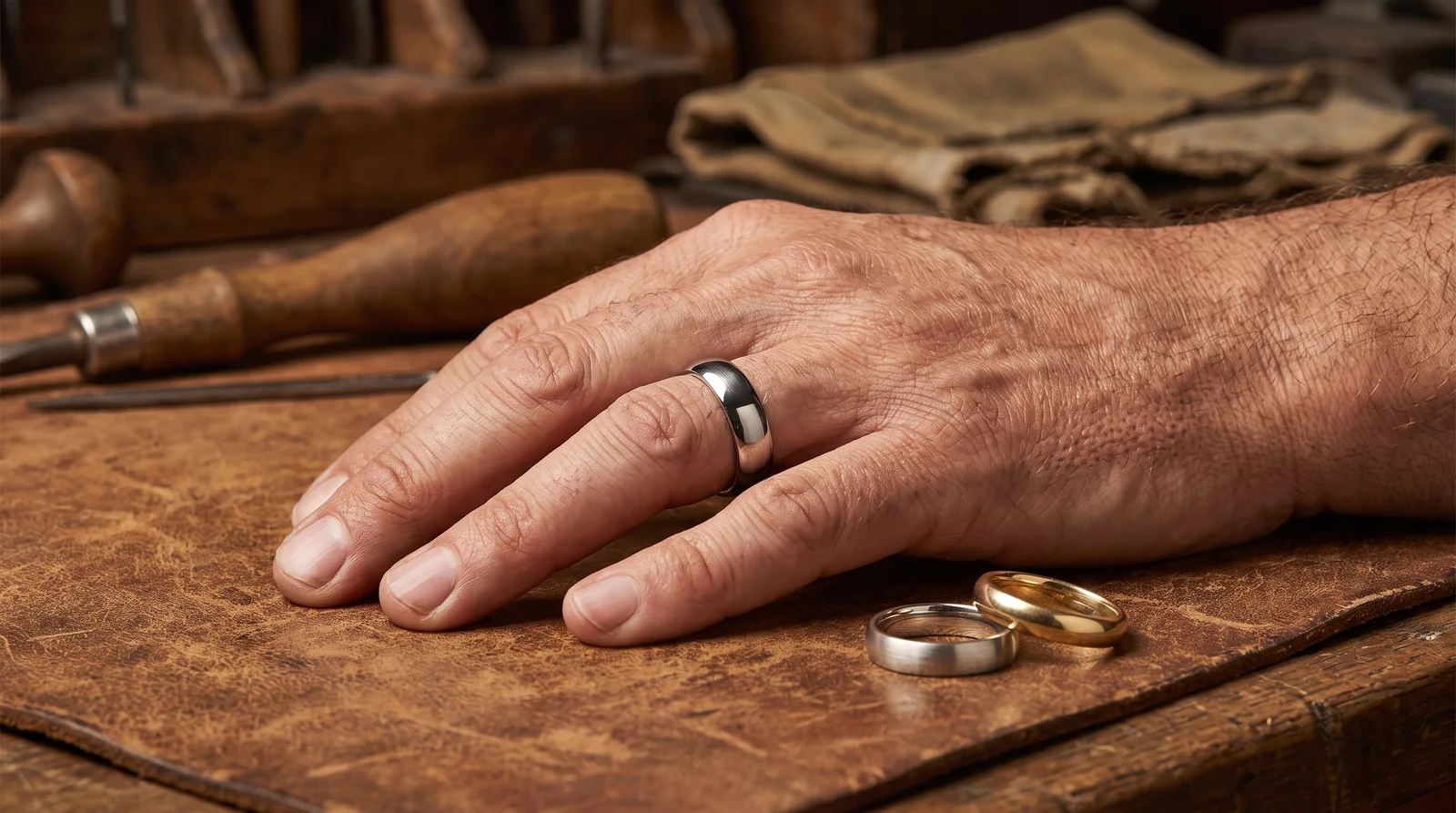
Platinum feels noticeably heavier than gold. For some men that weight becomes uncomfortable on wider bands. Platinum has a density of about 21.45 grams per cubic centimeter, compared to roughly 12.9 for 14k white gold. In practical terms, a 6mm comfort fit band that weighs 8.4 grams in 14k gold can weigh nearly 14 grams in platinum. That's almost 65 percent more mass sitting on your finger all day.
Who Notices the Weight and Who Doesn't
Guys who already wear thick watches or heavy rings tend not to notice platinum's extra heft. Men switching from a lightweight titanium or thin gold band often feel it immediately, especially in the first few weeks. Some describe it as reassuring, almost like a permanent presence on the hand. Others find it distracting during workouts or repetitive hand tasks like typing or gripping tools.
Band Width Changes Everything
Narrow platinum bands, in the 4mm to 5mm range, rarely feel heavy at all. The weight problem shows up mostly on wider styles, 8mm and above, favored by larger hands or bolder looks. If you want platinum's durability without the heft, go narrower. Let the metal's density work in your favor rather than against it.
Weight is a personal threshold, not a dealbreaker for most men. The bigger question for daily wear is how each metal holds up against the abuse a working ring takes.
Men's Wedding Ring Durability Comparison for Real Job Sites and Gyms
When you run a men's wedding ring durability comparison against real job site and gym conditions, platinum and higher karat gold alloys consistently outlast white gold's surface finish. Platinum sits at 4 to 4.5 on the Mohs hardness scale, which sounds soft compared to 14k gold's 4 to 5 rating. But hardness numbers only tell half the story. What matters more is how each metal behaves when it gets scratched.
Scratches vs Displacement
White gold and yellow gold lose actual metal when scratched. Material gets scraped away, and over years the ring genuinely thins out. Platinum works differently. When it scratches, the metal displaces rather than disappears, similar to pushing clay instead of shaving it off. A jeweler can polish a platinum band and restore its profile without removing material. This displacement property is also why platinum prongs holding stones tend to stay secure much longer than white gold prongs, which thin and eventually need reinforcement.
What This Means for Manual Labor
If you work in construction, do mechanical work, or handle tools daily, your ring is going to get hit, scraped, and banged around constantly. Platinum absorbs that abuse and keeps most of its mass. Yellow gold, especially 14k, holds up reasonably well too, since the alloy content adds real hardness compared to pure gold. White gold's rhodium layer is the weak point here. The plating wears through faster under constant friction, exposing the warmer alloy underneath.
Durability isn't just about hardness ratings on paper. It's about how the metal behaves after ten years of real contact with tools, gym equipment, and everyday friction. That brings us to how scratches actually look on the surface.
Which Metal Hides Scratches Better on a Men's Ring
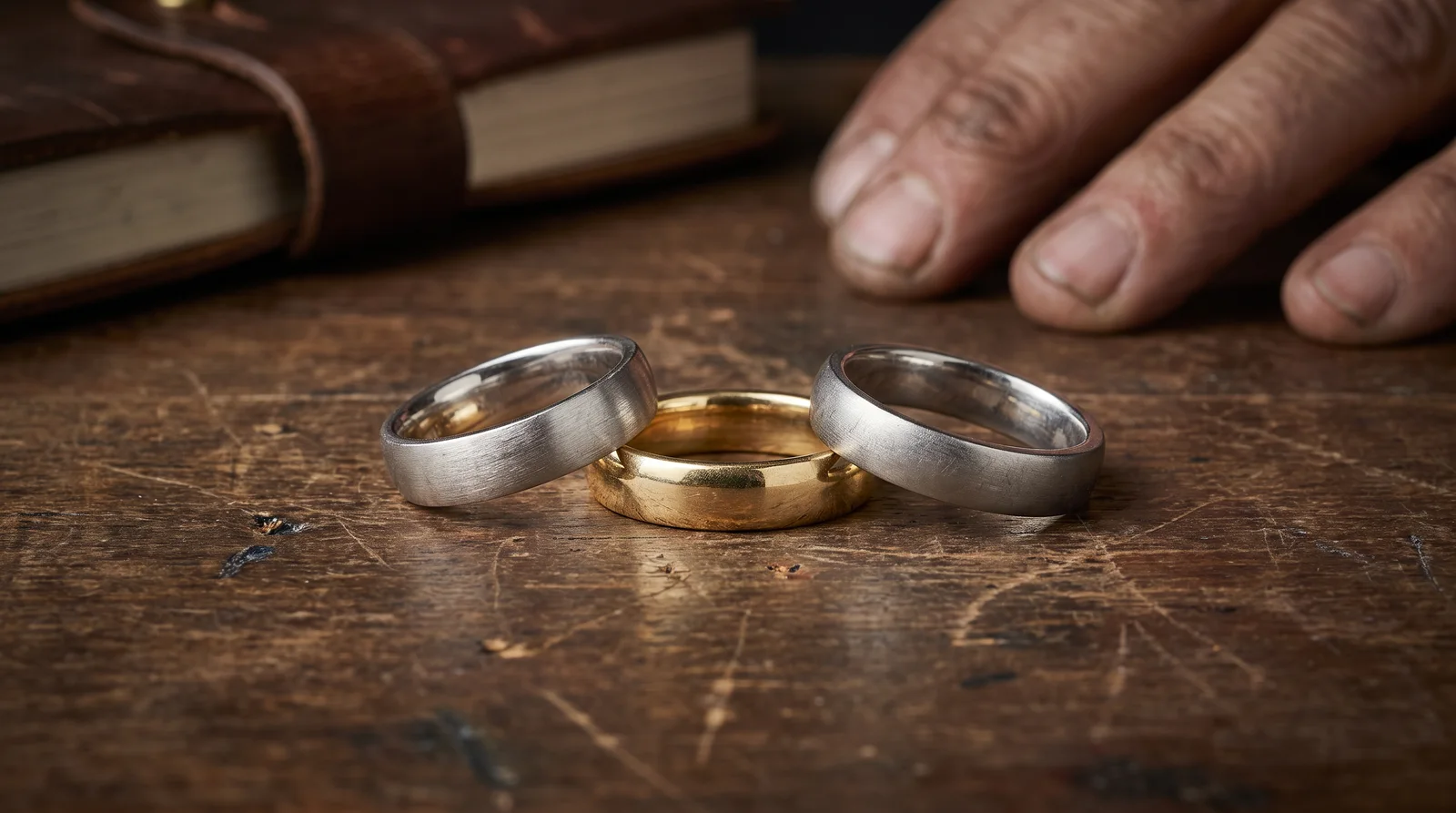
Platinum hides scratches better than white gold or polished yellow gold because it develops an even patina instead of showing individual scuff marks. This matters a lot for men who don't want to polish their ring every few months. A brand new platinum band looks bright and slightly grey. After six to twelve months of daily wear, it develops a soft, satin like finish that many men actually prefer over a mirror shine.
Platinum Wedding Ring Patina vs Scratches Explained
The platinum wedding ring patina vs scratches distinction confuses a lot of first time buyers. Patina isn't damage. It's a uniform texture that forms as thousands of tiny surface marks blend together evenly across the band. Individual scratches on a high polish platinum ring show up clearly at first. But as more accumulate, they merge into that satin texture instead of standing out as isolated marks. Many men let this happen naturally rather than paying for repolishing every year.
Where Yellow Gold and White Gold Fall Short
Yellow gold in 14k or 18k shows scratches as bright, obvious lines against its warm tone, especially on a high polish finish. A brushed or matte yellow gold band camouflages this much better for guys who work with their hands. White gold has a different problem. Since the bright white color comes from a thin rhodium coating, scratches wear through that layer and reveal the warmer, slightly yellow gold underneath. That contrast between plating and base metal makes wear more visible than on solid platinum or solid gold alloys.
If hiding wear matters to you, a brushed or matte finish in any metal will always outperform polished surfaces. But the base metal choice still determines how much maintenance you'll need long term. That's where white gold's upkeep requirements come into play.
Platinum vs White Gold Maintenance Cost Over a Decade
Platinum vs white gold maintenance cost comparisons usually favor platinum once you factor in a decade or more of ownership. White gold needs rhodium replating every one to three years to maintain its bright white finish. Each visit typically costs 60 to 90 dollars. Over ten years, that adds up to 240 to 720 dollars in replating alone, not counting occasional polishing. You can read more detail on how often white gold needs replating if you want the full maintenance schedule.
Platinum's Upfront Cost vs Long Term Savings
Platinum jewelry typically costs 40 to 60 percent more than an equivalent 14k white gold design. That's because of its higher purity, around 95 percent platinum, and greater density. As of early 2026, platinum trades near 960 to 1,020 dollars per troy ounce. Gold sits closer to 2,900 to 3,100 dollars per ounce. Still, the higher purity and weight in a finished platinum ring closes that price gap significantly. Once you add up replating, polishing, and eventual prong repair for white gold, the ten year total cost of ownership often lands close to platinum's. Sometimes it's within a few hundred dollars either way.
Resizing Costs Favor White Gold
White gold wins on resizing. Most jewelers charge 40 to 80 dollars for a simple white gold resize. Platinum resizing runs 80 to 200 dollars. That's because it melts at 1,768 degrees Celsius versus about 1,064 for gold, so it requires specialized equipment. If you expect your ring size to change over the years, factor this into your decision alongside the replating math.
Maintenance cost is only half the equation, though. For men who want to skip rhodium replating altogether, yellow gold offers a real alternative worth considering.
Best Metal for Men's Wedding Bands Daily Wear (Without Babying It)
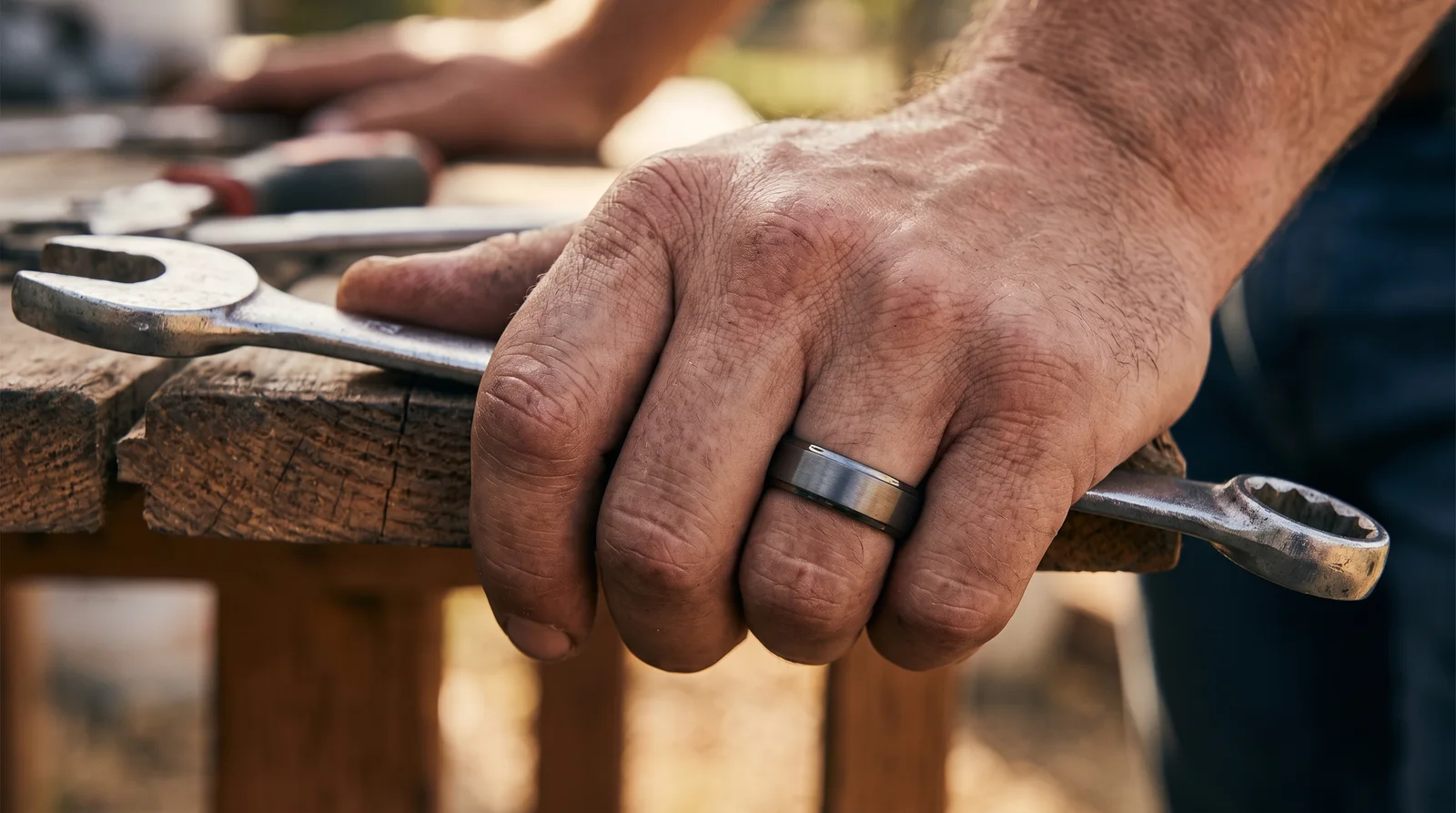
The best metal for men's wedding bands daily wear, for guys who won't take the ring off or treat it gently, is usually 14k yellow gold or platinum. Both require far less obsessive care than white gold. Yellow gold never needs replating since its color comes from the metal itself, not a plated layer. It resists tarnish and corrosion well, and a scratched yellow gold band can simply be repolished without revealing a different color underneath.
Do Men Need White Gold, or Does Yellow Gold Work Better
Plenty of men choose white gold purely for the look, and that's a valid reason. But if daily wear without maintenance is the priority, yellow gold solves the rhodium problem entirely. You get a warm, classic tone that ages honestly instead of fading from bright white to a duller undertone as the plating wears thin. Some men mix metals, choosing a white gold engagement set for their partner while wearing yellow gold or platinum themselves specifically to avoid replating visits.
What Karat Gold Holds Up Best for Manual Work
For men who work with their hands, 14k gold outperforms 18k for pure durability. Higher karat gold contains more pure gold, which is softer, so 18k dents and scratches more easily than 14k. The tradeoff is color richness, since 18k has a deeper, warmer tone. If your ring takes daily abuse from tools, machinery, or heavy gym equipment, 14k is the more practical choice. For a deeper breakdown of the karat tradeoffs, this comparison of 14k versus 18k gold for daily wear covers the hardness differences in more detail.
Choosing between these metals ultimately comes down to matching the ring to your actual routine, not just your style preference, which is exactly what the next section walks through.
Matching Metal Choice to Your Actual Lifestyle
Matching your ring metal to your lifestyle means being honest about how rough you actually are on jewelry, not how careful you intend to be. Men who do physical labor, play contact sports, or hit the gym daily should lean toward platinum or 14k gold in a brushed or matte finish. These options resist visible wear and don't require frequent trips to a jeweler.
Desk Jobs and Lower Impact Routines
If your daily routine is lower impact, an office job, minimal manual work, occasional gym visits, white gold becomes a much more reasonable option. The replating schedule stretches out longer when the ring isn't taking constant abuse, and the bright white finish holds up well between visits. Comfort and style preference can take priority here since durability concerns matter less.
Plain Bands vs Bands With Detail
Plain, simple band designs tend to hide wear better across all three metals compared to heavily detailed or textured styles, where scratches and dents show up in the fine grooves. If you want something low maintenance and durable, a plain band gives you fewer surfaces for wear to accumulate. This guide to plain wedding bands covers metal and upkeep tradeoffs specifically for simpler designs, which pairs well with the durability priorities most men care about.
Once you've matched the metal to your routine, a few common questions almost always come up before making the final call.
Frequently Asked Questions About Men's Wedding Ring Metals
How often does a men's white gold ring need rhodium replating
Most men need replating every one to two years, though it can stretch to three years depending on how rough you are on the ring and your skin chemistry. Guys who work with their hands or hit the gym daily tend to need it more often since the plating wears through faster under friction.
Why does platinum cost more than gold even though gold has a higher price per ounce
Platinum jewelry uses about 95 percent pure metal, compared to 58.3 percent in 14k gold, and it's significantly denser, so a finished ring contains more actual platinum by weight. Combined with the specialized labor needed to work platinum, the finished ring often costs more even when the raw metal price per ounce is lower than gold's.
Can platinum turn yellow or discolored over time
No, platinum stays white all the way through since it's not plated like white gold. It develops a satin patina from years of tiny surface scratches, but the underlying color never changes or fades.
Does yellow gold scratch more than platinum or white gold
Yellow gold does scratch more easily than platinum since it's softer on the Mohs scale, and scratches remove material rather than displacing it like platinum does. A brushed or matte finish minimizes how visible those scratches appear day to day.
What's the most practical metal for a man who won't take his ring off
Platinum or 14k gold in a brushed finish tends to work best for men who never remove their ring, since both resist visible wear without needing frequent maintenance. If you want zero replating concerns, yellow gold is the simplest long term option since there's no plated layer to wear through.
Picking the Ring That Matches How You Actually Live
There's no universal right answer here. If you're rough on jewelry and don't want to think about maintenance, platinum or 14k yellow gold will serve you better than white gold over the next twenty years. If you love the bright white look and don't mind a replating visit every year or two, white gold still makes plenty of sense. The right choice comes down to matching the metal to your hands, your job, and how much upkeep you're genuinely willing to do. If you want help comparing specific styles side by side, browse our collection of men's wedding bands or reach out and we'll walk through what fits your daily routine best.