The Real Reason Your Lobster Clasp Won't Close (And It's Not What You Think)
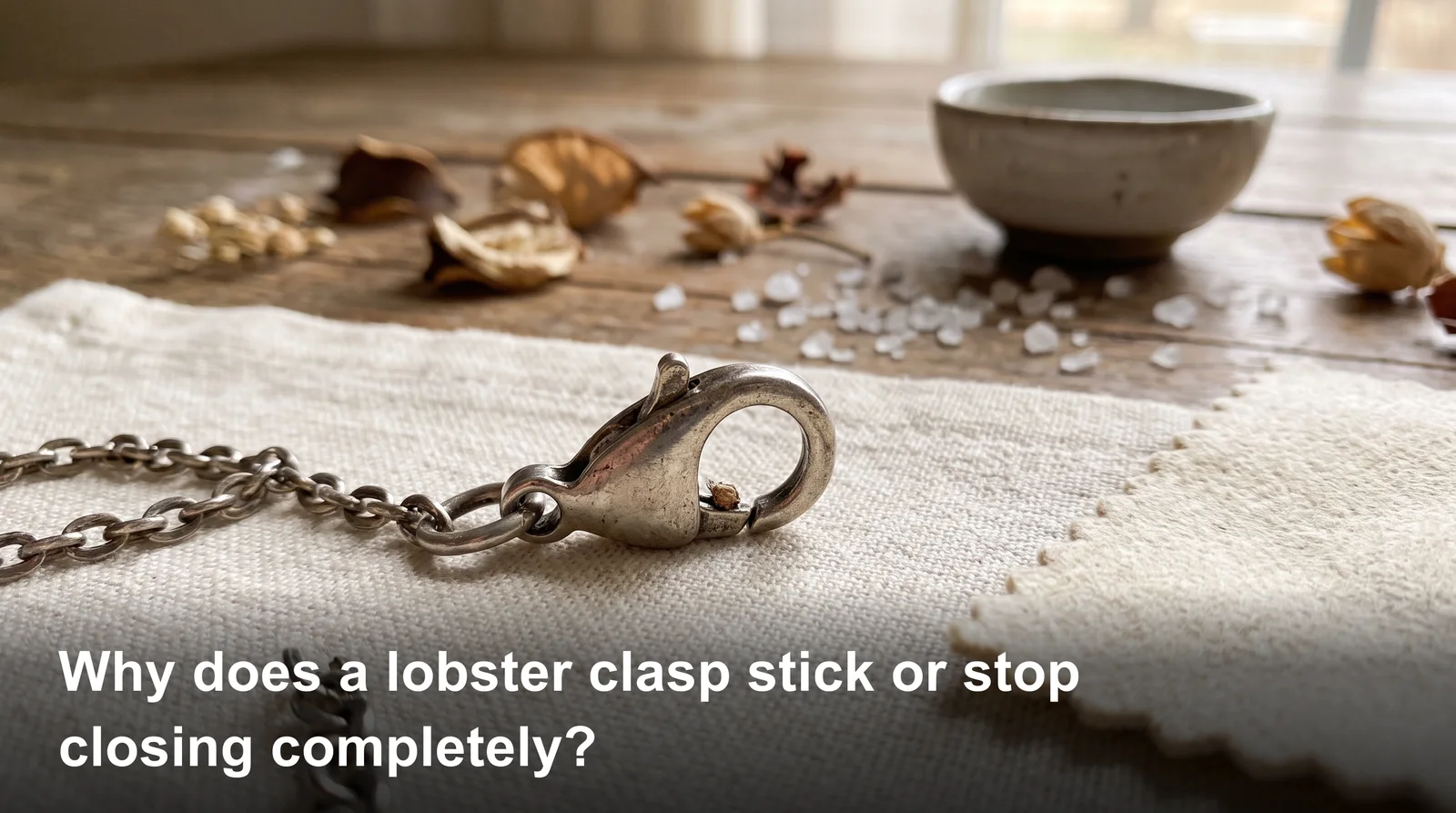
Your lobster clasp won't close and you're stuck fiddling with it in the mirror. It's not just annoying. A stuck clasp is often the first sign your jewelry needs help before something worse happens, like a lost necklace or bracelet.
Why a Lobster Clasp Won't Close in the First Place
Most of the time, a lobster clasp won't close because dirt or grime jams the tiny spring inside. Skin oil, lotion, and dust build up over months. That gunk gets into the small lever and stops it from moving all the way.
Sometimes it's not dirt at all. The metal spring inside can wear out or bend from years of daily use. Either way, the fix depends on knowing which problem you have.
Let's break down exactly how these clasps work, so you can spot the real issue fast.
How Does a Lobster Clasp Work, Really?
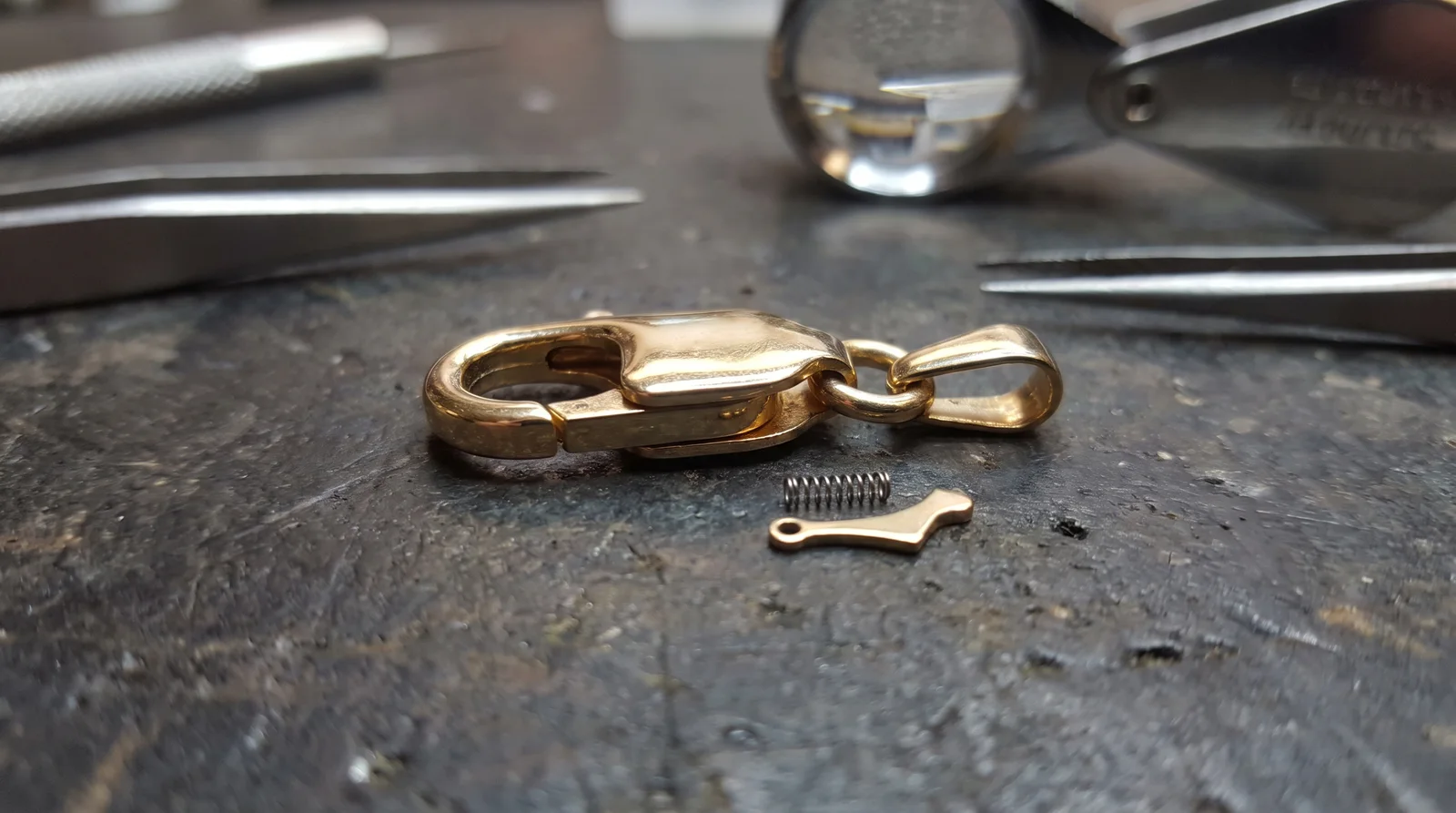
A lobster clasp works with a tiny spring-loaded lever inside a metal shell. You push the lever with your thumbnail, and it opens a small gap. That gap lets you hook the clasp onto a jump ring or loop.
The Parts Inside a Lobster Clasp
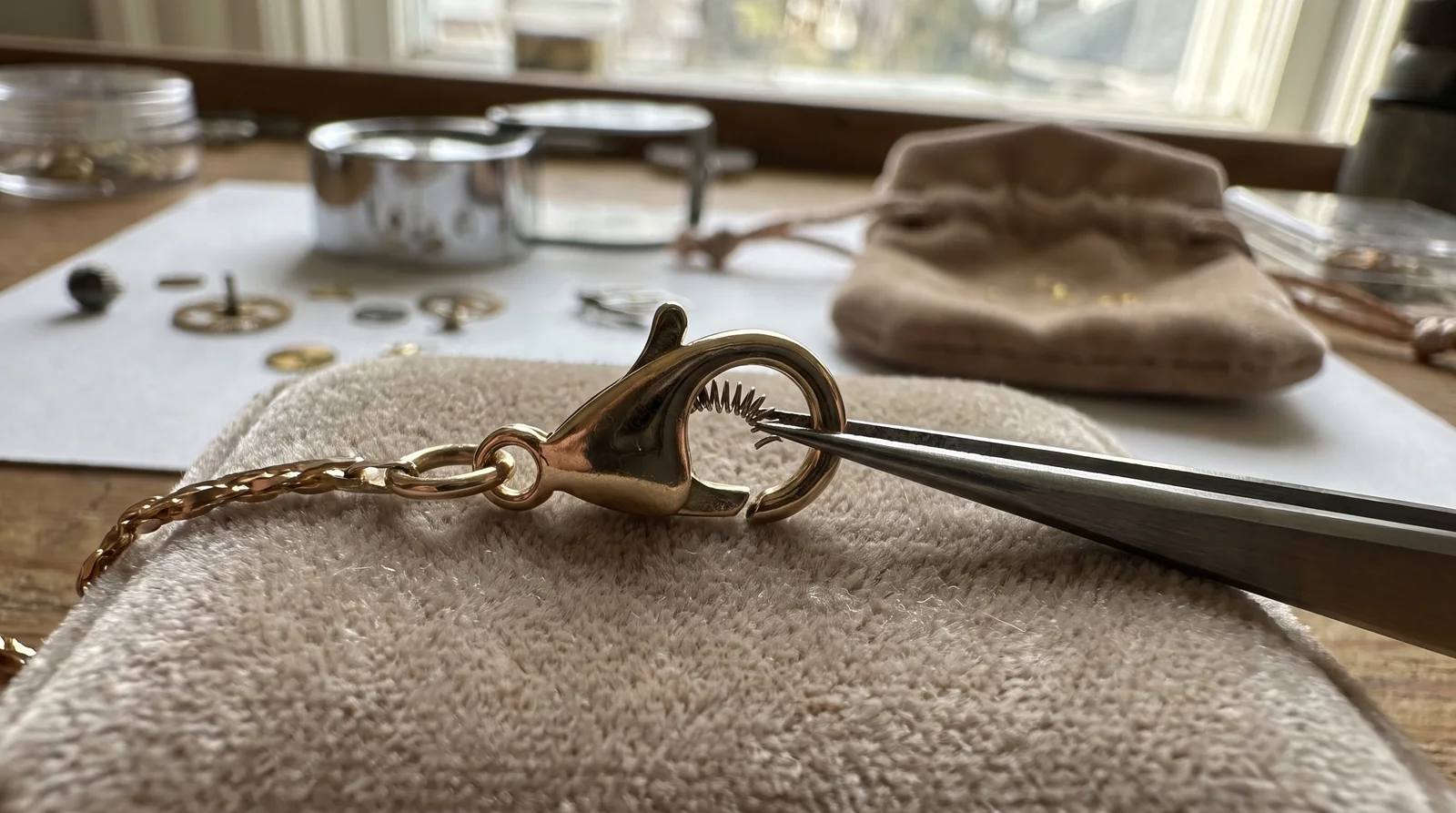
Inside the shell sits a small spring, a lever, and a pivot pin. The spring pushes the lever shut. When you press it, the lever swings open against that spring tension.
If any one of these three parts fails, the whole clasp stops working right. It's a small mechanism, but it does a lot of work every single day.
Why Size and Metal Type Matter
Smaller clasps have thinner springs. They wear out faster than bigger ones. Gold and silver clasps also behave differently than plated brass, since softer metals bend more easily under stress.
This is actually similar to how other jewelry parts wear down over time. If you've ever read about how often white gold needs upkeep, you know soft metals need more care than people expect.
Now that you know how the clasp works, let's look at what causes it to jam.
What Causes a Lobster Clasp Stuck Problem
A lobster clasp gets stuck for one of three reasons. It's either dirty, bent, or worn out from age. Each cause needs a other fix.
Buildup and Grime
This is the most common cause by far. In fact, about 60% of clasp repairs we see start with simple grime buildup, not broken parts.
Lotion, perfume, and sweat all sneak into that tiny spring gap. Over time it hardens like glue. If you've never read our guide on how to clean jewelry the right way, now's a good time.
Bent or Misaligned Lever
Sometimes the lever gets knocked out of place. Maybe the necklace got caught in a bag zipper or yanked too hard.
A bent lever won't sit flush anymore. That means it can't press down to open the clasp, or it won't spring back to close it.
Worn-Out Spring Mechanism
Springs don't last forever. After years of daily opening and closing, metal fatigue sets in.
This is the same kind of wear you'd see in a ring prong that's thinning out. Our post on prong retipping cost covers this exact kind of slow metal failure. Clasps face the same fate, just in a other spot.
Now let's talk about how to actually fix these problems yourself.
How to Fix a Lobster Clasp at Home
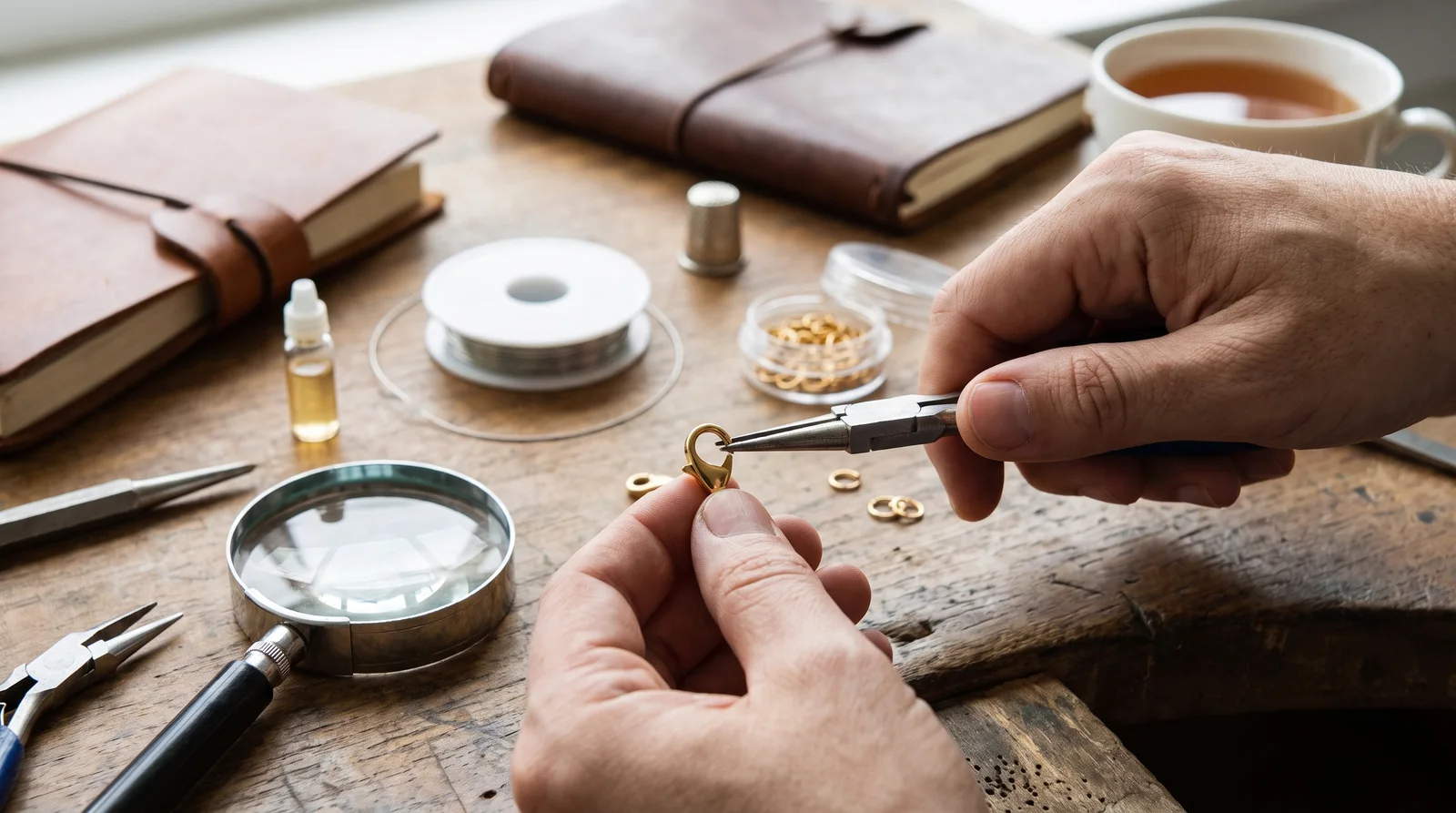
You can fix a lobster clasp stuck from grime with a simple soak and scrub. Grab a soft toothbrush, mild soap, and warm water.
Step-by-Step Cleaning Method
Soak the clasp for five minutes in warm soapy water. Then scrub gently around the spring and lever with the toothbrush.
Rinse it well and dry it completely. Test the clasp a few times to see if it opens smoothly now.
When Lubrication Helps
A tiny drop of watch oil can help a stiff lever move again. Don't use household oils like olive oil, since they attract more dust.
Apply one small drop, then work the lever open and shut about ten times. This spreads the oil evenly across the spring.
If cleaning and oil don't fix it, the clasp likely needs actual lobster clasp repair or full replacement.
How to Open a Lobster Clasp Without Breaking It
You open a lobster clasp by pressing the small lever with steady, light pressure. Don't yank or force it, even if it feels stuck.
Forcing a stuck clasp is how most necklace clasp broken cases happen. The lever snaps clean off under too much pressure. If it won't budge after cleaning, stop pushing and get it looked at by a jeweler instead.
This connects to something we always tell customers about small jewelry parts.
Why Small Jewelry Parts Deserve Big Focus
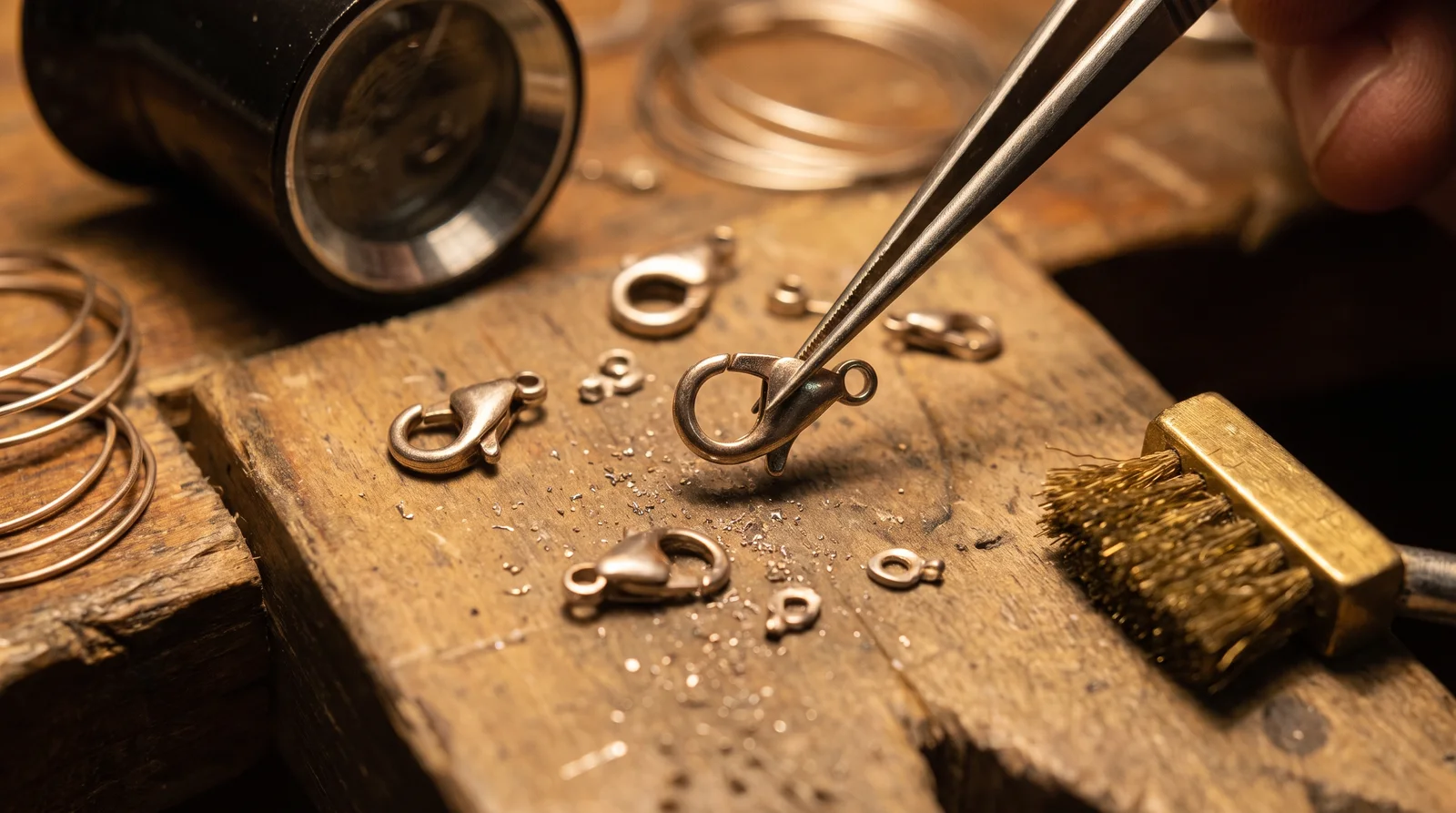
Small parts like clasps fail quietly, then all at once. It's the same story with loose diamonds you can read about in our piece on signs your diamond is loose.
A clasp that sticks today might snap off next week. Catching it early saves you from losing a necklace for good. It also saves you money, since early repairs cost far less than full clasp replacement.
If you're curious about other jewelry findings and how they connect, our guide on turning a tie pin into a pendant shows how these small mechanisms work across other jewelry types.
Types of Jewelry Clasps and Which Ones Fail Least
Lobster clasps aren't the only option, and some hold up better over time. Toggle clasps, magnetic clasps, and spring ring clasps are the other common types of jewelry clasps you'll see.
Spring rings are actually more fragile than lobster clasps, since their spring sits in a smaller space. Toggle clasps rarely jam because they don't use a spring at all. Magnetic clasps skip springs completely, but they can snap open under weight, so they're not ideal for heavy pieces.
Knowing your clasp type helps you know its weak points before they become a problem.
Frequently Asked Questions
Why does my lobster clasp keep sticking after cleaning?
The spring inside may already be worn out, not just dirty. If cleaning doesn't help after two tries, the mechanism itself likely needs replacing.
Can I fix a lobster clasp myself?
Yes, for grime buildup you can clean it at home safely. But bent levers or broken springs need a jeweler's tools to fix right.
How much does lobster clasp repair cost?
Most basic repairs run between $10 and $30, depending on the metal. Gold clasps cost more since they need matching gold solder.
Does a stuck clasp mean my necklace is unsafe to wear?
Not right away, but it's a warning sign. A clasp that sticks today can fail completely within weeks of daily wear.
What's the strongest type of clasp for daily wear?
Toggle clasps tend to last the longest since they skip the spring mechanism entirely. Lobster clasps come in second, mainly in thicker gauges.
Getting Your Clasp Back to Normal
A sticky clasp isn't something to ignore or force. Clean it, test it gently, and know when to call in a pro. Most fixes are simple, but a broken spring or bent lever is a job for a jeweler, not a butter knife.
If your necklace or bracelet clasp still won't cooperate after trying these steps, bring it in and let us take a look. We'll get it opening and closing like new, and check the rest of your piece while we're at it.