The Hidden Catch in making a wedding ring from your own gold
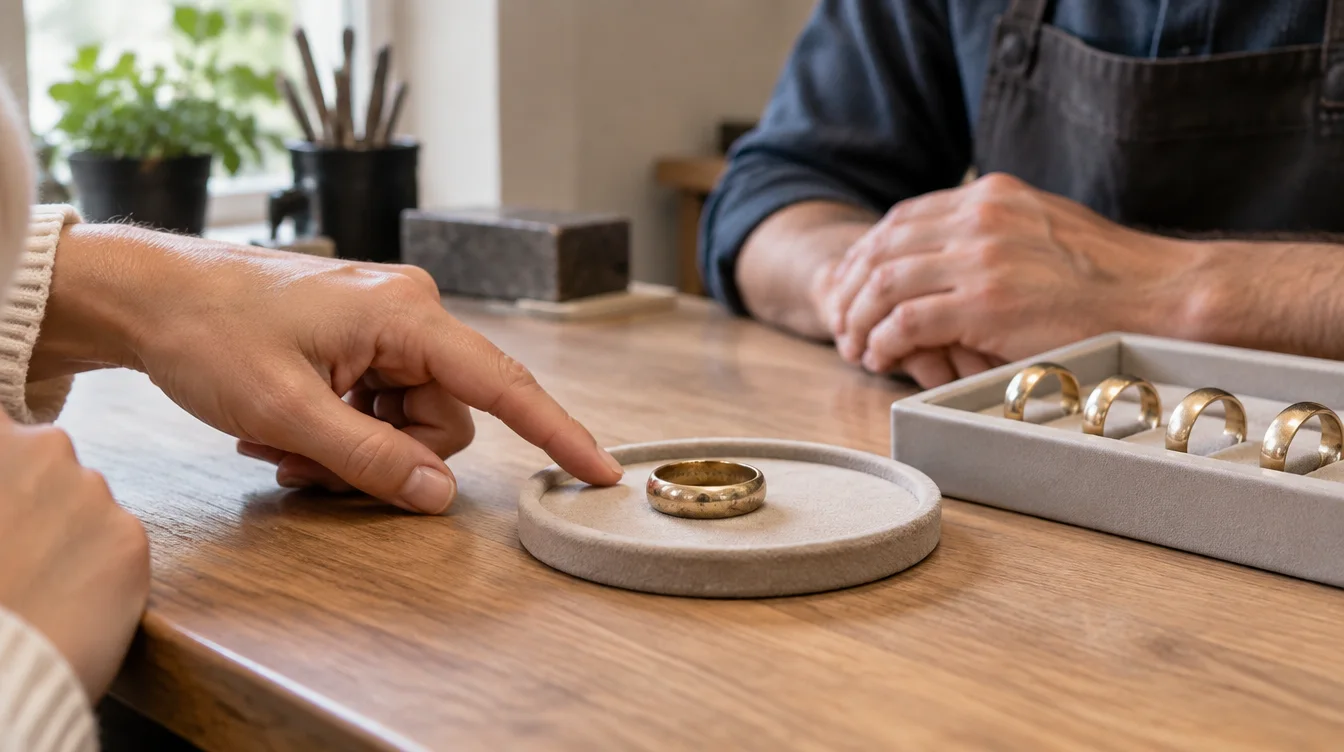
Yes, making a wedding ring from your own gold can put your actual old gold in the band. The jeweler must agree to keep and use your metal separately. Scrap credit or a ring made with recycled gold does not promise that result. Direct reuse depends on the old pieces, ring design, usable metal, and maker’s process.
What does making a wedding ring from your own gold really mean?
Making a wedding ring from your own gold can mean three things. A maker may reuse your metal, refine it separately, or give you credit for it. Only the first two may put your original gold in the new ring. The difference matters when the old piece is your grandmother’s band.
Suppose you bring a plain gold ring to a jeweler. One workshop may melt and work that specific ring into your band. Another may send it to a refiner and use the value against fresh metal. Both might describe the job as recycling your gold. The finished rings could look alike, but their connection to the old ring is not the same.
Direct reuse keeps the old metal in the workshop
With direct reuse, the maker identifies suitable pieces, removes anything that should not go into the melt, and uses their metal in the new ring. Fresh metal or alloy may be added. Your old gold may therefore be part of the finished band rather than its only ingredient.
Ask the maker to describe the process for your specific pieces. “We can use old gold” is not a promise that they can use yours. A workshop may accept a plain yellow gold band but decline a chain with many soldered joints. Its answer may also change when you choose a wide band instead of a narrow one.
Direct reuse is a real service, not merely a theoretical possibility. Reflective Jewelry shows a white gold band remade from an old white gold ring. That example shows what this shop has done. It does not mean every white gold item will suit every maker.
Separate refining needs a clear chain of custody
Some makers refine old gold before making a new alloy. This may help when the starting mix is unknown or unsuitable for direct work. But “refined” does not tell you whether your gold stays apart from other clients’ metal.
If you want your actual gold back, ask whether the refiner keeps your lot separate. Ask what returns to the workshop and how it is identified. Can the maker use that returned metal in your band? Get answers before you leave the jewelry. A receipt showing only weight and credit may record a sale, not a plan to return your gold.
One jeweler may refine, then make a new alloy from the returned gold. Another may credit the value of the gold and buy standard stock for your ring. Dorothée Rosen describes refining as her preferred technical route, but says her customer process credits the trade value of old gold. Ask about both the metal process and the way you will be billed.
Trade credit preserves value, not the same atoms
Trade credit is easy to misunderstand. The jeweler assesses your old gold, assigns it a value, and applies that value to a ring made from other material. An inherited ring can still help pay for your wedding band. Its metal may not be in the band.
Gem Breakfast says it does not melt down or reuse client gold. Its suggested route is to sell old pieces and put the proceeds toward a new custom ring. That can be a good choice when the budget matters more than physical continuity. It is the wrong choice if keeping the actual heirloom gold in the band is the point.
Once you know which promise you want, the next question is whether your pieces can support it.
How a jeweler decides whether your old gold can become a ring
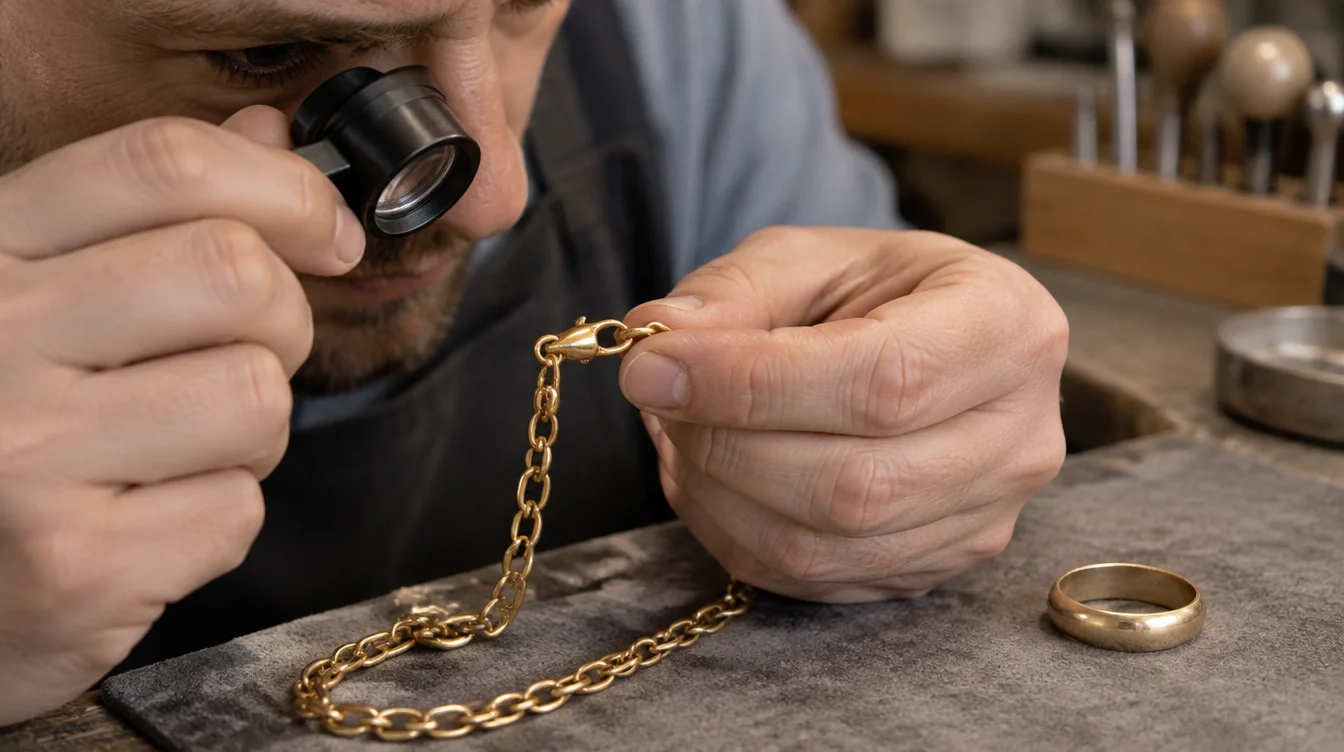
A jeweler should assess each piece before promising to use it in your wedding ring. A stamp is a starting point. It does not describe everything that may enter a melt. Bring each item you hope to use. Say which ones must supply metal for the new band.
That last detail can change the plan. You may be happy to sell a broken chain for credit but want your mother’s wedding band kept separate. If the workshop treats both as one scrap lot, the job may not meet your goal. Labeling the sentimental piece during the first conversation helps everyone discuss the same thing.
Purity tells the maker how much gold is present
Karat describes the share of gold in an alloy. An 18 karat piece is 75 percent gold, while a 14 karat piece is about 58 percent gold, as explained in this comparison of white gold and platinum wedding bands. The rest is made up of other metals. Those other metals matter when a maker plans a new color and working method.
A 14 karat stamp does not tell the jeweler that two old pieces have the same alloy recipe. It also does not account for repairs or parts added later. A clasp, a replaced section, or an old solder joint may have a different makeup from the main piece. Ask what the workshop will test and whether it plans to combine the items.
Do not remove stamps, take pieces apart, or melt anything at home. The useful first step is much less dramatic: photograph the pieces, note their markings, and let the maker inspect them. If a piece has an uncertain history, say so. A careful answer is better than a confident guess.
Solder and mixed parts can change the answer
A plain gold piece gives the maker a clearer start than a repaired necklace with many links. Solder, findings, settings, and nonmetal parts may need attention first. The jeweler may remove them, refine the gold, or decline direct reuse.
A family band sized several times may contain joins its owner never noticed. That does not rule out reuse. The maker should inspect those joins before promising a direct melt. If every stamped item goes into one pot, ask how the shop handles repairs and mixed parts.
The issue is not that old gold is inherently bad. The issue is knowing what is in it. Posy Fine Jewellery says it assesses each piece before reuse and calls yellow gold a more reliable choice in its shop. It says some alloys work better as credit. That reflects its methods. It is not a rule for every maker.
Available weight matters more than the number of pieces
Two small rings may hold less usable metal than one heavy band. Ask the jeweler to weigh each item and explain how much can go into your proposed ring. Stones and parts set aside before metal work should not count as gold.
The finished ring’s weight matters too. A wide, thick band needs more metal than a slim band in the same alloy. Ring size also affects the amount. You need the maker’s estimate for your design, not a weight guessed from a photograph.
Some extra material may be needed for the chosen method, and not every gram you bring will necessarily appear in the finished ring. Ask where any remainder goes. Will it be returned, held for you, used in a second item, or credited? A clear plan for leftovers is part of a clear plan for reuse.
The proposed ring must suit the available alloy
Your preferred look can affect direct reuse. Yellow gold going into a yellow gold band gives the maker one set of choices. Turning that material into pale white gold calls for a more involved alloy plan. Ask what will be added. Can your starting material meet the planned karat and color?
Design can also affect the method. A simple band may suit a maker’s approach to working old metal. A ring with fine details may lead the same shop to recommend a different production route. What matters is the maker’s explanation of why your material fits that route, not a broad claim that all old gold can or cannot be reused.
After assessment, you can compare the available routes without losing sight of your main goal.
Which route actually keeps your gold in the finished band?
Direct reuse or documented separate refining can keep your gold in the wedding band. Ordinary trade credit does not promise that. Compare each proposal on four points: where your metal goes, what the maker adds, what records you receive, and what the work costs.
Those points make the quotes easier to compare. A low quote without separate handling is not the same service as a higher quote that tracks an heirloom ring. Neither is wrong for everyone. They meet different goals.
Direct reuse suits a traceable, workable piece
Direct reuse may suit you when one piece matters most and the maker can work with it. Say you want an inherited band in your new wedding ring. The workshop can assess it alone and tell you whether more metal is needed.
Ask the shop to identify the old ring on its job sheet. The written plan should say which item it will use and whether other metal may be mixed in. Any newly sourced gold should appear in that plan. “Made from your gold” need not mean “made only from your gold.” Know which one you are buying.
Direct reuse has limits. A piece may be too light for the design, contain uncertain components, or be a poor match for the maker’s process. The honest answer may be to simplify the design, add material, refine the old gold, or choose credit. A refusal to promise direct reuse can be a sign of careful assessment rather than lack of skill.
Separate refining suits metal that needs a new start
Separate refining may help when the maker needs a known starting material for a new alloy. It may also suit several pieces that are hard to blend directly. If you expect your actual gold back, your lot must stay identifiable through the process.
Ask whether the jeweler or refiner will process your material as its own lot. Then ask what comes back. Is it gold recovered from your pieces, equivalent gold from a pool, or cash value? Each route may be called recycling. Only the first clearly keeps your actual metal.
Separate processing may require a minimum amount or a fee. Refining may also leave less metal to use. The supplied examples do not establish standard terms or yields. Get the workshop’s terms in writing. If your lot is too small to keep separate, the maker should tell you before taking it.
Pooled refining suits value recovery, not strict continuity
In pooled refining, your old gold may join other clients’ gold. You may receive credit or an equal amount of material. You cannot identify your own input in the output. That may suit you if you want to avoid waste and lower the purchase price.
It does not satisfy a promise that the wedding ring contains your father’s ring. The distinction is not about whether recycled gold is genuine gold. It is about whether the sentimental claim is accurate. Ask the maker to use plain terms: “Will the same gold from this item return for my ring, or will I receive its value?”
Trade credit suits a flexible budget
If you want to trade in old gold for a new ring, compare store credit with a cash offer first. A store may apply its offer toward a ring. A gold buyer may pay you instead. Ask each business how it sets the weight, purity, deductions, and final value.
Credit often makes more sense for pieces without strong sentimental value. A broken bracelet you never liked could help pay for a band made from known new material. Meanwhile, you could keep one meaningful ring untouched or seek a specialist to reuse it. You do not have to treat the whole jewelry box as one lot.
The choice becomes sharper with white gold, since its color alone tells you little about its exact makeup.
Can white gold be melted down and reused in your wedding ring?
Yes, white gold can sometimes be melted down and reused. The jeweler must first assess its alloy, repairs, and planned design. Neither “never” nor “of course” is a sound answer for every piece. The answer depends on your ring and the maker’s process.
Reflective Jewelry documents a white gold ring remade into a new wedding band. Posy Fine Jewellery, by contrast, says some gold alloys may be better used as credit in its shop. These views need not conflict. The pieces, methods, and shop practices differ.
If you are asking, “can white gold be melted down and reused,” ask a second question right away: “Can you reuse my white gold, with its unknown repairs, for this exact band?” That gets you a useful answer. Bring the piece in rather than relying on its color or a photograph.
White gold is an alloy, not a single recipe
White gold mixes gold with other metals to change its color and working properties. Two rings with the same karat mark may not work alike in the shop. A maker who knows the alloy may accept direct reuse. Another may prefer refining or credit if the mix is uncertain.
Ask whether the new band will have the old piece’s karat. If not, the jeweler should explain what will be added and how purity will be checked. Be wary of a promise to change any white gold to any color or purity without an alloy plan.
A white gold ring may also have a surface finish that affects how it looks. Your maker should tell you what color to expect from the new alloy itself and what finish, if any, is planned. That matters more than assuming the old ring’s appearance will carry over after it is remade.
Do not mix metals just to make up weight
Added metal may help if your white gold piece is too light. But “more gold” is not a full specification. Ask what karat and alloy the maker will add. If you also bring yellow gold, ask whether it will stay separate, enter a planned mix, be refined, or receive credit.
Some combinations may work under a maker’s process. Others may not suit the color or method you chose. A jeweler should be able to explain the plan in terms you understand. You need not approve a vague mixture simply because every ingredient has a gold stamp.
Once the metal plan is clear, you can ask whether you have enough for the ring you want.
How much old gold do you need for a wedding ring?
You need enough usable metal for your chosen ring and the maker’s method. Otherwise, you need an agreed source of added metal. No single gram figure fits every band. Width, thickness, finger size, alloy, and construction all affect the amount.
The best question is not “How many old rings do I need?” Ask, “What is the estimated finished weight of my proposed ring, and how much of my assessed metal can you use?” A maker can answer that against a design. A generic online estimate cannot inspect your jewelry or account for parts that must be removed.
A worked example shows what weight can and cannot prove
This calculation is an example, not a quote or production yield. Assume you bring a 12 gram band confirmed as 14 karat gold. At about 58 percent gold, its alloy holds roughly 7 grams of pure gold. The other roughly 5 grams are alloy metals. Those figures describe its makeup. They do not show that all 12 grams can become a finished ring without assessment.
Now assume the planned band needs more metal than the maker can recover and use. The jeweler might add compatible metal, change the band’s size or shape, or suggest another route. The quote should state the planned karat, estimated finished weight, and added material. Those details tell you more than the old piece’s weight.
Assume you bring two 14 karat items weighing 6 grams each. Together, they hold about 7 grams of pure gold. That does not mean the maker should melt them together. One may have many repairs. The other may be the piece you want to preserve. Keep them separate until both are assessed.
Ask what “made from my gold” will mean on the invoice
Suppose a jeweler says your 12 gram ring can contribute to a new 15 gram band. Ask whether that means its metal goes into the band and new metal is added. Ask how much of each is expected. A description such as “customer gold supplied” may not tell you whether the workshop will use your gold, credit it, or exchange it for equivalent stock.
Tracking each part of the metal may be hard once it is worked. A finished ring cannot label its ingredients. Still, the maker can record the agreed route. Records can name the submitted piece, starting weights, additions, and leftover metal. Seek that record if the ring’s story matters to you.
Weight and purity also shape the quote, but they are not the whole cost.
What drives the cost of making a ring from old gold?
The cost of making a ring from old gold depends on the design and metal work. Assessment, refining, added material, and the shop’s credit terms also matter. Supplying gold does not remove the labor charge. Handling a small lot with an unknown mix may add work instead of saving it.
There is no sound single price to give from the supplied examples. Reflective Jewelry advertises a starting price for some redesign work, but that is one studio’s offer, not a general rate for a band made from your metal. Serendipity Diamonds says its remakes are priced individually according to the design, materials, and work. Your quote needs the same specificity.
Separate the ring price from the gold value
Ask for a written quote with separate charges. It should show ring making, design, added metal, refining or handling, and any gold credit. If the shop gives one total, ask how your gold affects it. Find out whether the price covers physical reuse or includes a discount from scrap value.
For trade credit, ask what weight and karat the shop used. Ask whether stones, clasps, or nongold parts were excluded from that weight. Then ask whether the quoted credit is fixed when you approve it or may change after further assessment. These are ordinary questions, not accusations.
Compare quotes using the same ring specifications. A narrow plain band and a wide band with a complex finish are not equal jobs. Neither are a direct reuse quote and a credit quote. First compare what each maker will deliver. Then compare the price.
Old gold can reduce metal spending without making labor free
Suitable old gold may reduce how much new metal the maker must supply. It will not remove the cost of skilled work. Nor does it mean the quote falls by the retail price of a finished ring. The maker’s production method still affects the price.
Scrap credit uses a different calculation. It reflects the buyer’s terms for the metal, not what you once paid for the jewelry. Gem Breakfast says a sale of old gold is based mainly on purity, weight, and the market price of gold. Its article also notes that a buyer’s payout is less than the full market value of the contained gold. The exact offer is a matter for the buyer you choose.
If your actual gold matters, do not judge by cost alone. A lower price may mean the shop gives you credit and uses new metal. That may save money, but it gives you a different ring.
Compare the price of certainty
Separate handling, detailed records, or refining a small lot may cost more than scrap credit. Ask what each charge covers. A fee called “heirloom reuse” does not answer your main question if the workshop cannot explain how it keeps your metal separate.
Do not ask a maker to promise a process they cannot support. A clear credit offer may be better than an unsupported promise of direct reuse. You can use the credit for a new ring and keep the most meaningful piece. That tells the ring’s story honestly.
The quote will be easier to judge if you ask the right questions before the jeweler begins.
What should you ask jewelers who reuse old gold?
Ask jewelers who reuse old gold what will happen to each of your pieces. Follow the path from intake to finished ring. The answer should cover testing, separate handling, added metal, and leftovers. “We recycle gold” is only a starting answer.
State your goal plainly: “I want metal from this particular ring to be in my new wedding band.” Point to the ring. Identify any other jewelry you may sell for credit. That can prevent a costly mix up.
Ask for a piece by piece assessment
Which pieces have been tested, and what did the tests show? Are the karat marks consistent with the jeweler’s assessment? Do repairs, solder, settings, or mixed parts affect reuse? Which items does the maker accept for direct work, and which would be refined or credited?
Expect the answer to be specific. A maker might accept one plain band while declining a repaired chain. That is more useful than a single yes or no for the bag of jewelry you brought in. If testing happens after intake, ask when the final decision will be made and whether you can decline the job at that stage.
Also ask who does the work. Some shops make rings in their own workshop. Others use an outside specialist for part of the process. Either arrangement may suit you. You simply need to know who will hold the gold and whether the separate handling promise follows it.
Ask how your metal is identified and stored
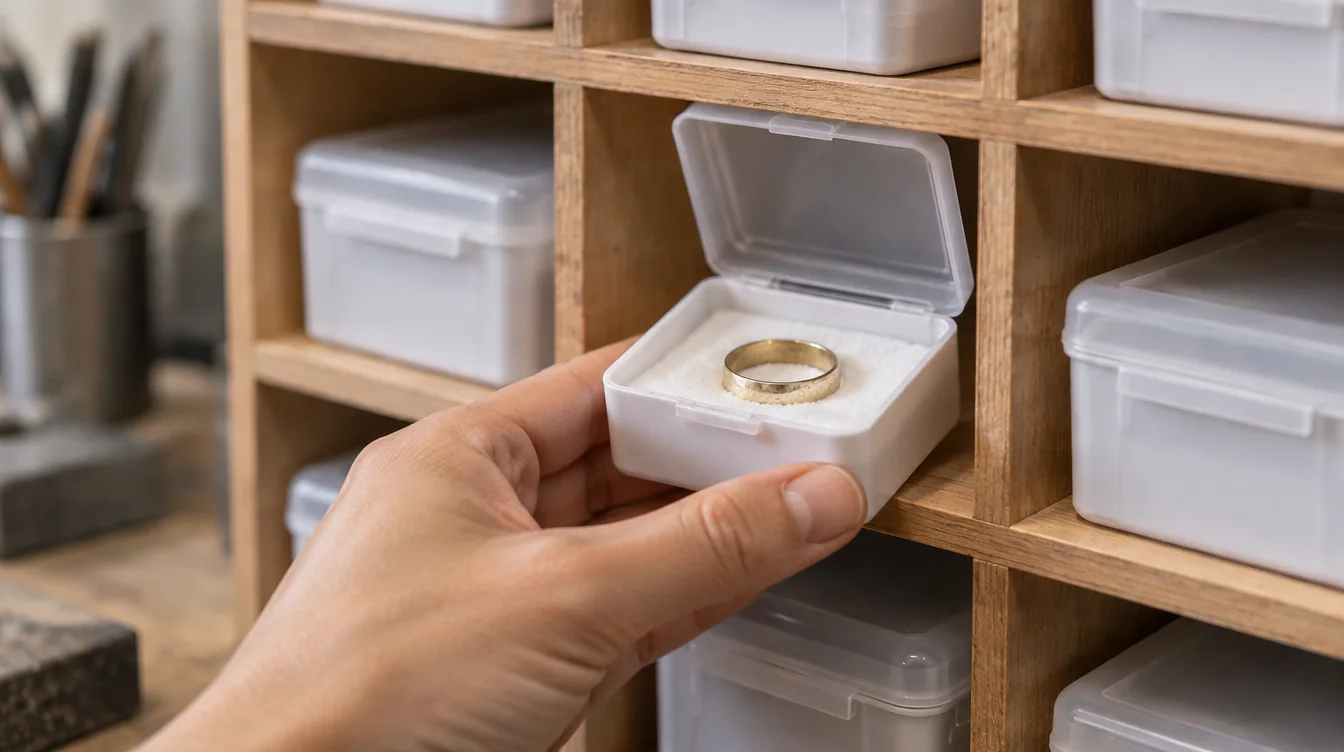
Will the shop photograph and weigh the item in front of you? What will the receipt say? Will the workshop give it a job number and keep it apart from other clients’ metal? If it leaves the shop, how will the next worker identify it?
Records cannot fix a weak process, but they show what the shop agreed to do. Keep your photographs and a copy of the intake form. Note any engraving or clear mark before handoff. Do not rely on a spoken promise being recalled weeks later.
Ask what the shop can document after completion. A maker may be able to provide a production note that says the identified item was used, whether material was added, and what happened to any remainder. Do not expect a simple photograph of molten metal to prove its identity. The chain of custody is what matters.
Ask exactly what “refining” means here
Does the refiner keep your lot separate? Will gold from your pieces come back to the workshop? Or will the shop get credit? If equivalent gold comes from a pooled supply, will the jeweler say so plainly? Ask before the old pieces are changed.
These questions are especially useful when the maker says direct reuse is not possible. Refining might still meet your sentimental goal, but only if the material is handled in the way you expect. If separate refining is not available for your amount, you can choose another specialist or decide that credit is acceptable.
Ask about added material and the final specification
What karat will the finished ring be? What metal will be added, and why? How much of the finished band is expected to come from your item? What happens if assessment finds less usable metal than first thought?
Some answers will be estimates until work begins. Ask which terms are firm and which may change. Choose a point when the shop must contact you before adding metal, changing the design, or switching to credit. The quote can allow for new findings without giving up your consent.
Ask what comes back to you
Will unused gold be returned as metal, kept for a future job, or credited? Will removed parts come back? If the ring cannot be made as planned, what happens to the original pieces and any fees already paid?
Ask these questions while the jewelry is still intact. Once an heirloom has been cut apart or melted, a change of mind cannot restore its old form. A clear stopping point protects both you and the maker.
With those answers in hand, you can turn a hopeful conversation into a workable agreement.
How to set up a reuse project without losing track of the metal
Record the pieces, approve the metal route, and put that route in the job terms. These steps give you a chance to pause before the old jewelry is changed for good.
Start with an inventory, not a design sketch
Lay out the pieces and photograph both sides. Note stamps, engravings, repairs you know about, and any item you do not want altered. If one ring carries the story, keep it separate from pieces you might sell. You can discuss the design once the maker has assessed what can actually be used.
Tell the jeweler what matters most. Do you want some of the exact heirloom gold in your band? Do you want all of it there if possible? Or do you want its value toward a new ring? Each goal calls for a different quote. You might accept added gold but not pooled refining.
Approve the metal route before production
Ask the maker to name the route: direct reuse, separate refining with your material returned, or credit. If testing will decide, record when you must approve the final route. This keeps the job from shifting quietly from “your gold in the ring” to “your gold credited against the ring.”
Discuss additions at the same time. A wedding band can still carry your family gold if fresh metal is added, but that fact belongs in the plan. Ask for the proposed karat, color, dimensions, and estimated weight. If those change, the material balance may change too.
Check the completed paperwork
When you collect the ring, review the final specification and ask about the submitted metal. Did the approved route stay the same? Was extra metal added? Is there unused gold or a credit to settle? If the workshop promised a production note, collect it with the ring.
Keep the record with any family note about the old piece. Years from now, “made with gold from Grandma’s band” will mean more when the details are accurate. A good record also stops the story from turning into a claim nobody can check.
Not every project will pass each step. The next choice is whether to change the ring plan or change the metal plan.
When should you choose direct reuse, refining, or credit?
Choose direct reuse when the exact old metal matters most and a qualified maker accepts it. Choose separate refining when the metal needs it and its return can be documented. Choose credit when price matters more than wearing that exact gold.
Consider a plain 14 karat yellow gold band left by a parent. You want a simple wedding band in a similar color. A maker assesses the old ring, explains any added metal, and agrees to track it separately. Direct reuse may fit your aim. It is still worth getting the plan in writing before the old band is altered.
Now consider several pieces with different stamps, soldered repairs, and unknown histories. You want one band with a set karat and color. The maker may suggest refining instead of blending the pieces directly. If the refiner keeps your lot separate and returns its gold, that route may preserve the link you want. If not, ask about credit.
Finally, imagine a drawer of broken chains with no special attachment to their metal. You mainly want to spend less on a new band. Trade credit may be simpler. Get a clear valuation and compare offers. There is no need to pay for separate handling if it does not serve your goal.
The hardest case is a deeply meaningful piece that the maker cannot safely or reliably use as proposed. Changing the design may help, but do not force it. You might choose a different workshop or keep the original ring intact. Sentiment is not preserved by making a claim about the finished band that no one can support.
A few short answers can help you test a jeweler’s proposal before you commit.
Frequently asked questions about reusing old gold
These answers separate physical reuse from the financial value of old gold. Your jeweler still needs to assess your pieces before giving a firm answer.
Can you melt down gold to make a new ring?
Yes, a qualified maker may melt suitable old gold for a new ring. Added metal may be needed. If you ask “can you melt down gold to make a new ring,” also ask whether your pieces will supply the metal or receive credit.
Does a recycled gold wedding ring contain my family gold?
Not necessarily. “Recycled gold” may describe the workshop’s metal. Your old jewelry may receive credit instead. Ask for written proof that your identified piece will supply metal for the finished band.
How does gold refining for jewelry affect sentimental continuity?
Gold refining for jewelry can support continuity if your lot stays separate and recovered gold returns for your ring. If the process pools your material with other gold and gives you credit or equivalent stock, you retain its value rather than its physical identity.
Can I combine several old gold pieces in one wedding band?
Possibly. Stamps alone cannot show whether the pieces should be combined. Before agreeing to mix them, have the jeweler assess each item and its repairs. Discuss the target karat and planned method too.
Why is the cost of making a ring from old gold not just a melting fee?
The cost of making a ring from old gold includes the work needed to assess, make, and finish the new band. Refining, separate handling, design changes, and added material may also affect the quote. Ask the maker to separate those charges from any credit for your gold.
Before you decide, ask what you want to carry forward.
Make the promise about your wedding ring one you can trust
Making a wedding ring from your own gold is possible. But you need to know what happens to your specific metal. Ask for an assessment and a written plan. The plan should name the route, added metal, and leftovers. If the shop offers only scrap credit, call it credit. You can choose that route without calling it direct reuse.
Bring your most meaningful piece to a jeweler who can explain the process. Ask, “Will gold from this item be in my finished band?” If yes, ask how the shop will keep that promise. If no, consider another maker, a different design, or a fair credit offer.