White Gold vs Platinum Wedding Band: Which One Should You Actually Buy?
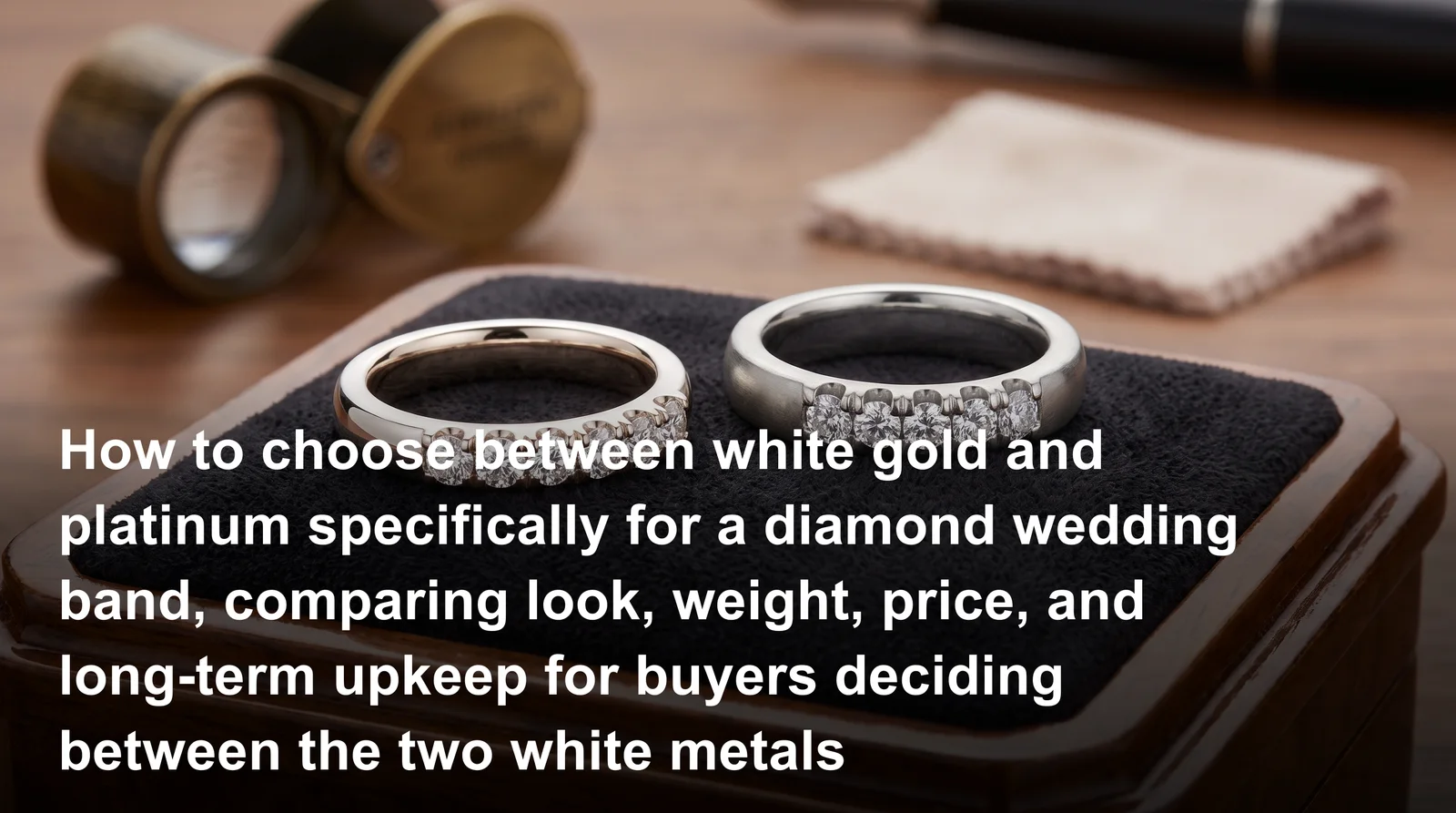
If you have already decided on a white metal, the real question is simpler than most guides make it sound. Choose platinum if you want the lowest maintenance and the safest bet for sensitive skin. Choose white gold if you want a lighter feel and a lower upfront price and do not mind rhodium touch ups down the road. Everything else in this article just fills in the details behind that choice.
A white gold vs platinum wedding band decision usually comes down to three things: how much weight you want on your finger, how much upkeep you are willing to deal with over the next 20 years, and whether your skin reacts to certain metals. There is no universally correct answer here. There is only the right answer for your hand, your wallet, and your patience for maintenance visits.
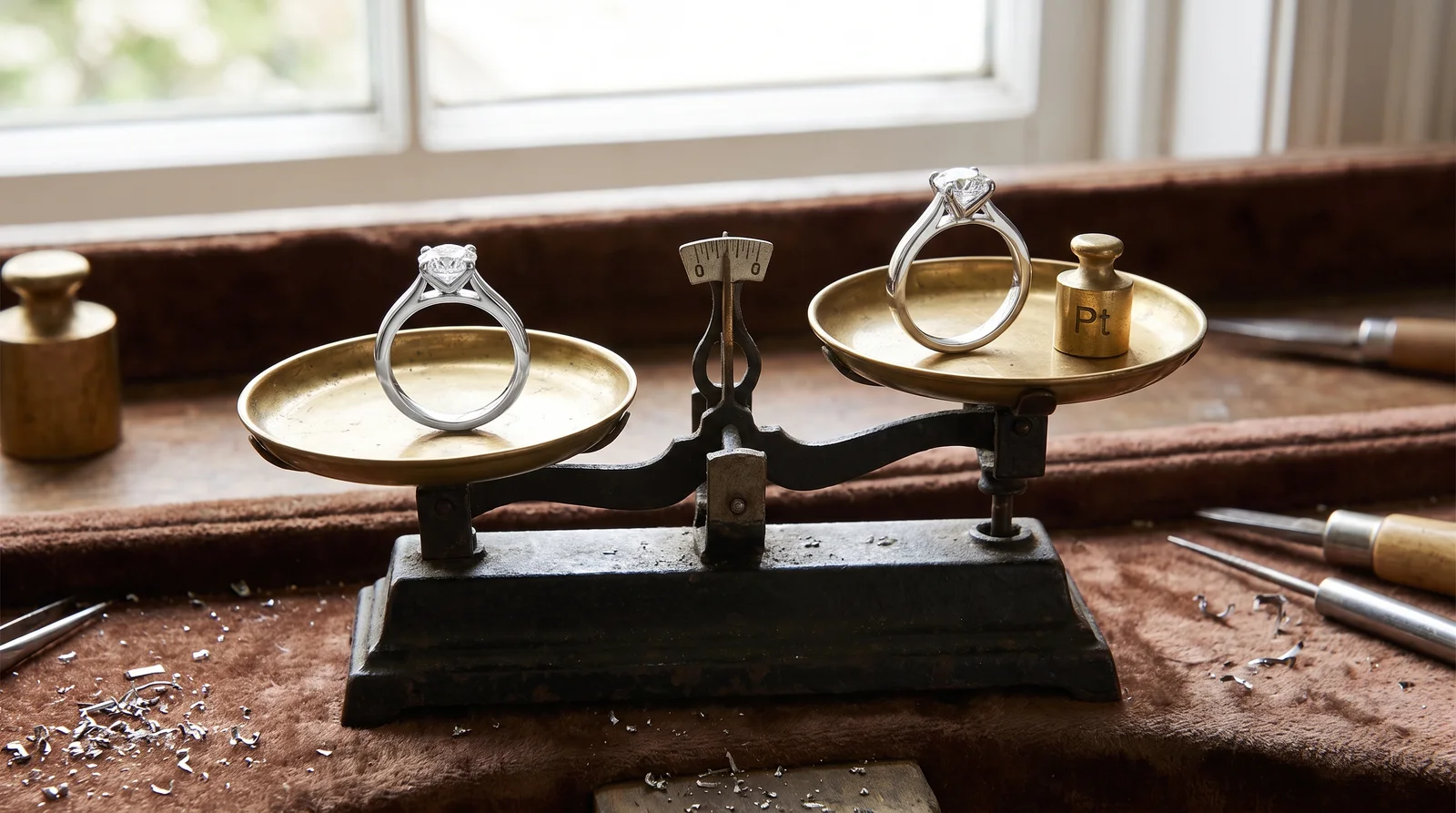 Platinum is noticeably heavier than white gold in the same ring size and band width, and you will feel this the moment you try both on. Platinum has a density of about 21.45 g/cm³. Compare that to roughly 15.2 g/cm³ for 18K white gold and around 12.9 g/cm³ for 14K white gold. A 6mm comfort fit band in platinum can weigh close to 14 grams, while the identical design in 14K white gold might come in around 8 grams. That is a difference you notice within the first hour of wearing it, not something abstract on a spec sheet.
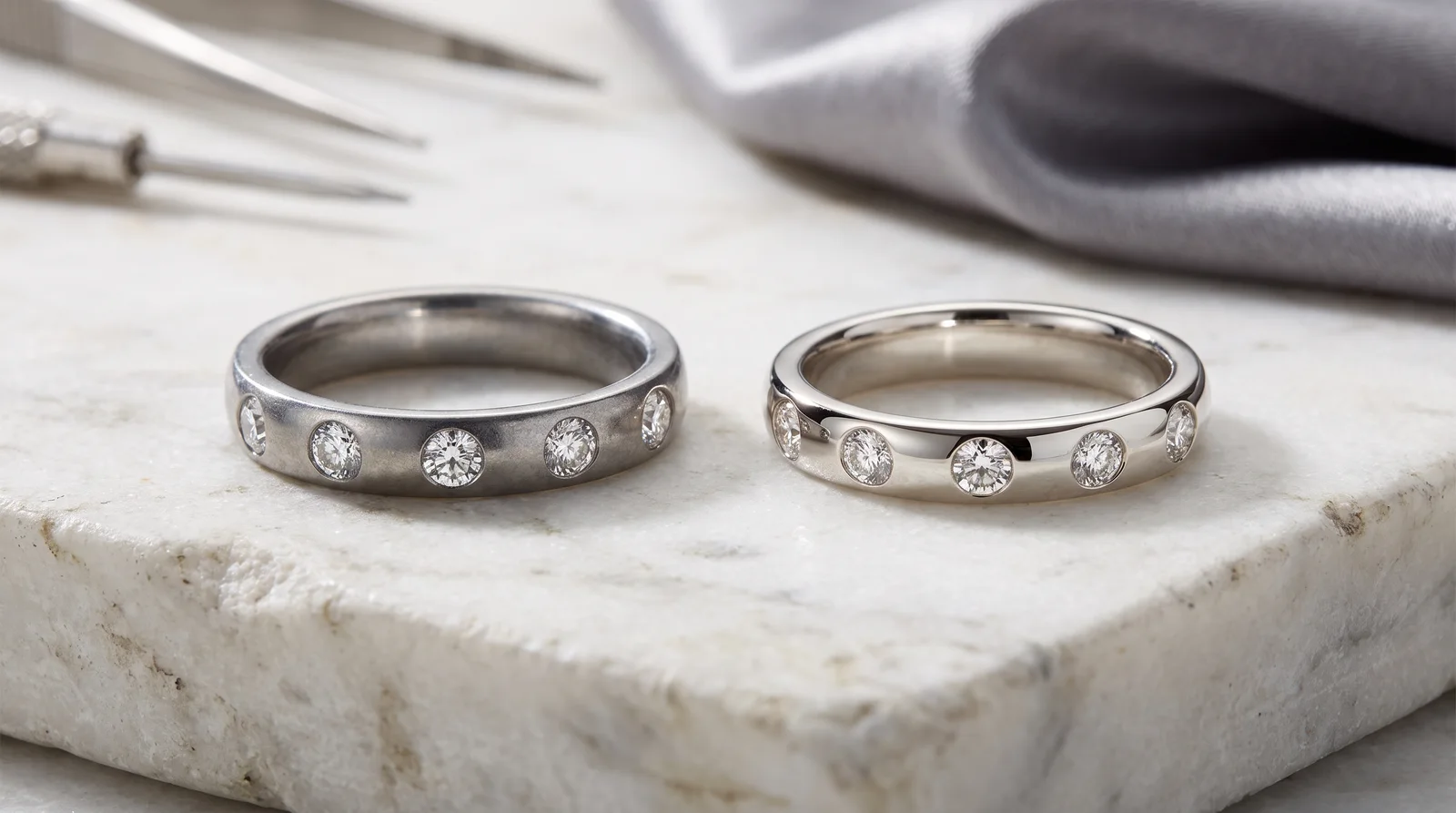 Fresh out of the box, white gold usually looks whiter and shinier than platinum, which surprises a lot of shoppers. That bright, almost mirror-like finish comes from the rhodium plating, and it genuinely outshines platinum on day one. Platinum, by contrast, has a naturally cooler, slightly grey-white tone straight from the jeweler. It is not dull, but it is not as blindingly bright as a freshly plated white gold band.
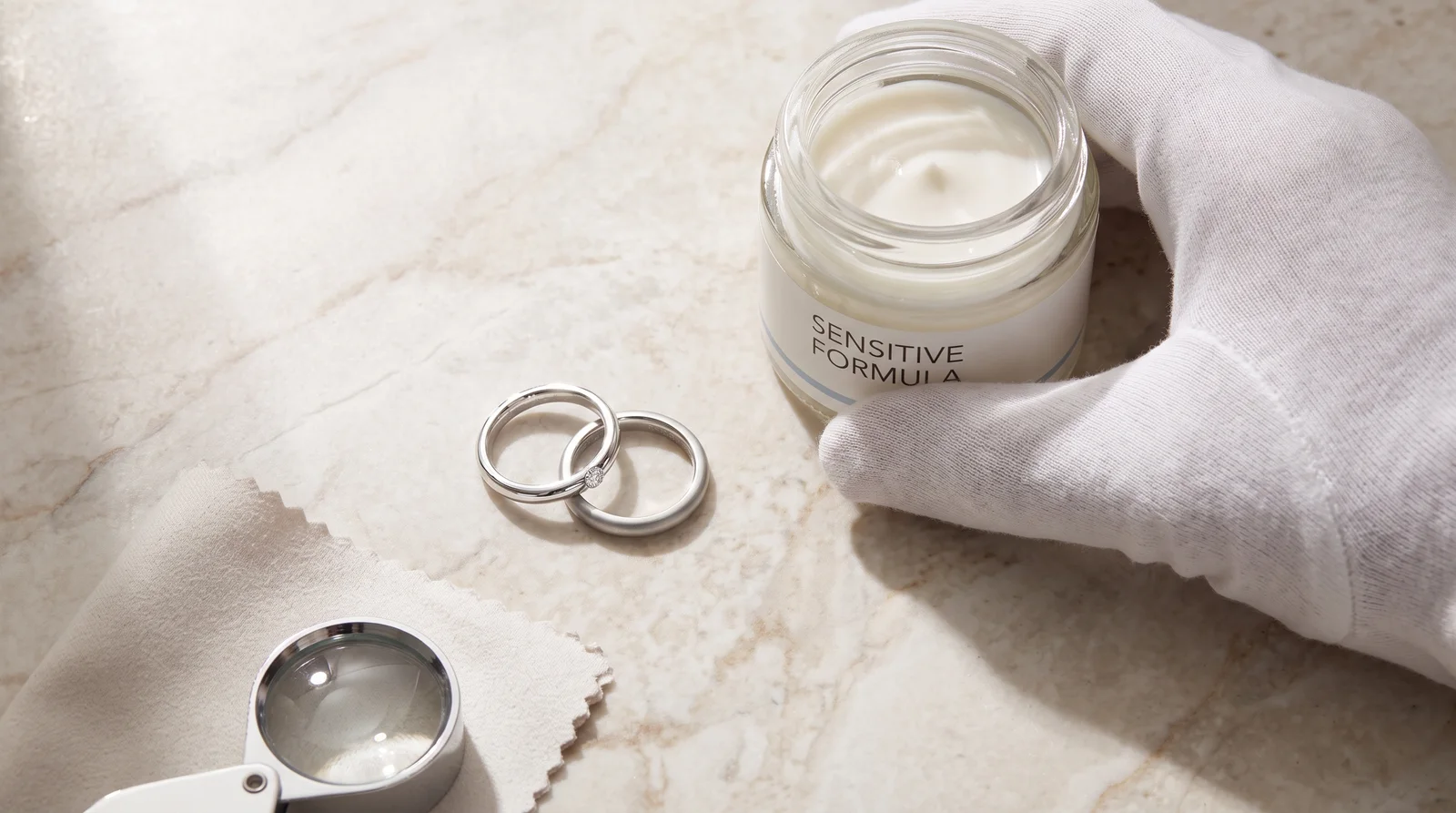 Platinum is the safer choice if you have sensitive skin or a known metal allergy. At 95% purity, platinum contains very little of anything besides platinum itself, and the small amount of alloy used is typically iridium or ruthenium, both of which are well tolerated by most people. White gold's alloy mix sometimes includes nickel, which is one of the most common metal allergens around. Reputable jewelers can make nickel-free white gold using palladium instead, so this is not a guarantee against white gold entirely. It is more of a reason to ask directly what alloy your specific ring uses before you buy, especially if you have reacted to costume jewelry or watch bands in the past.

What Is the Real Difference Between White Gold and Platinum?
Platinum is a naturally white metal used at 95% purity, while white gold is yellow gold alloyed with white metals and finished with a rhodium coating. That single fact explains almost every other difference on this list. Platinum does not need help looking white. Gold does, which is why every white gold band leaves the factory with a rhodium layer that gives it that bright, almost blue-white shine. The catch is that rhodium is a plating, not a permanent part of the metal underneath. Wear it down and the warmer tone of the gold alloy starts to show through. Platinum has nothing to wear down in that sense, because the color is the metal itself. This is the foundation for almost every practical difference buyers care about, so let's get into how that plays out on your actual hand.Platinum vs White Gold Weight: Why One Feels So Much Heavier
Platinum is noticeably heavier than white gold in the same ring size and band width, and you will feel this the moment you try both on. Platinum has a density of about 21.45 g/cm³. Compare that to roughly 15.2 g/cm³ for 18K white gold and around 12.9 g/cm³ for 14K white gold. A 6mm comfort fit band in platinum can weigh close to 14 grams, while the identical design in 14K white gold might come in around 8 grams. That is a difference you notice within the first hour of wearing it, not something abstract on a spec sheet.
Does Heavier Always Mean Better?
Not necessarily. Some people equate weight with quality and love the substantial feel of platinum on the hand. Others find a heavy band tiring, especially with wider profiles worn all day, every day. There is no wrong preference here. Try on both before you commit, because weight is the one variable you cannot judge from a photo or a spec chart.Platinum vs White Gold Price: What You Pay Now and Later
Platinum costs more upfront than white gold, typically 40% to 60% more for a comparable design. Part of that comes from the raw material. Even though platinum trades lower per ounce than gold on paper, jewelry made from it uses far more pure metal per ring since it is cast at 95% purity instead of the 58.3% to 75% purity typical of white gold. Labor adds to the gap too. Platinum has a higher melting point and takes more skill and time to shape, solder, and set stones in, and that labor gets built into the price you pay at the counter. Here is where it gets interesting for buyers thinking long term. White gold's lower sticker price narrows once you factor in rhodium replating and occasional prong repair over the years. Platinum's higher sticker price narrows once you factor in that it rarely needs replating and its prongs tend to hold diamonds securely for decades. Depending on how you wear your ring and how often you get it serviced, the ten year cost of ownership between the two metals can end up closer than either upfront price suggests. If you want a sense of where current pricing stands before you shop, our metal prices page breaks down what platinum and white gold actually cost right now.Out of the Box Color: Platinum's Grey vs White Gold's Bright Shine
Fresh out of the box, white gold usually looks whiter and shinier than platinum, which surprises a lot of shoppers. That bright, almost mirror-like finish comes from the rhodium plating, and it genuinely outshines platinum on day one. Platinum, by contrast, has a naturally cooler, slightly grey-white tone straight from the jeweler. It is not dull, but it is not as blindingly bright as a freshly plated white gold band.
How the Color Changes Over Years of Wear
The story flips over time. Platinum develops a soft satin patina after months of daily wear, and plenty of people end up preferring that worn-in look to a glossy finish. White gold, meanwhile, gradually loses its rhodium layer and starts revealing the warmer undertone of the gold underneath. Some people notice this within eight months. Others do not see it for two or three years, depending on skin chemistry and how often the ring gets exposed to soaps, lotions, and friction. If you want a deeper look at how quickly that shift tends to happen, this piece on how often white gold needs replating walks through the timeline in more detail.White Gold vs Platinum Durability: Which One Actually Holds Up Better?
Platinum and white gold both scratch, but they scratch in completely different ways, and that difference matters more than raw hardness numbers suggest. Platinum sits around 4 to 4.5 on the Mohs scale, while 14K white gold typically lands around 4 to 5 once alloyed. On paper that makes white gold seem tougher. In practice, the way each metal responds to a scratch tells a different story.Does Platinum Scratch Easier Than White Gold?
Yes, platinum picks up surface marks more easily than white gold. But when platinum scratches, the metal is displaced rather than removed, similar to how a dent pushes material aside instead of shaving it off. A jeweler can polish that surface and the ring keeps its original weight and profile. White gold scratches differently. When it scratches, tiny amounts of metal are actually removed from the surface. Repeat that over 15 or 20 years and a white gold band can genuinely lose a small amount of mass, which is part of why older white gold prongs sometimes need to be rebuilt or retipped.What This Means for Your Diamond Over Decades
For a diamond wedding band specifically, this displacement property is a real advantage for platinum prongs holding stones over the long haul. They tend to stay thicker and more secure decades in, since the metal moves rather than wears away. White gold prongs are still plenty durable for daily wear, but they are more likely to need a check-up and possible retipping after eight or more years of steady use. Either metal can protect your diamond well. The difference shows up mainly in how much attention the setting needs many years down the line, which brings us to skin sensitivity, another factor that can settle this decision fast.White Gold vs Platinum for Sensitive Skin
Platinum is the safer choice if you have sensitive skin or a known metal allergy. At 95% purity, platinum contains very little of anything besides platinum itself, and the small amount of alloy used is typically iridium or ruthenium, both of which are well tolerated by most people. White gold's alloy mix sometimes includes nickel, which is one of the most common metal allergens around. Reputable jewelers can make nickel-free white gold using palladium instead, so this is not a guarantee against white gold entirely. It is more of a reason to ask directly what alloy your specific ring uses before you buy, especially if you have reacted to costume jewelry or watch bands in the past.
How to Decide: A Simple Framework by Budget, Maintenance, and Skin
The fastest way to choose is to run your own priorities through three filters: budget, tolerance for upkeep, and skin sensitivity. If budget is your main constraint and you do not mind an occasional trip to the jeweler, white gold gets you a very similar look for meaningfully less money upfront. If low maintenance matters more to you than the initial price tag, platinum's lack of replating needs makes it the lower hassle option over 20 or 30 years of wear. If you have sensitive skin or a documented nickel allergy, platinum is the safer default, though a nickel-free white gold alloy is worth asking about if you are set on that brighter finish. And if weight matters to you day to day, try on both in your actual ring size before deciding anything, because that is the one variable no comparison chart can settle for you. Once you have landed on a metal, the next decision is usually band style and width, which is where something like our guide to plain wedding bands can help narrow things down. And if you are still torn, our team can talk through your specific hand, budget, and lifestyle when you start a custom project with us.Frequently Asked Questions
Is platinum or white gold better for wedding rings?
Neither is objectively better across the board. Platinum wins on low maintenance, hypoallergenic properties, and long-term prong security, while white gold wins on upfront price and a lighter feel on the hand.Does platinum scratch easier than white gold?
Yes, platinum picks up surface scratches more readily because it is a softer metal. Those scratches displace metal rather than remove it, though, so platinum keeps its weight and can be polished back to a smooth finish repeatedly.How does rhodium plating maintenance factor into the decision?
White gold needs periodic rhodium replating to keep its bright white color, since the coating wears down with daily use. Platinum never needs this step because its white color comes from the metal itself, not a surface coating.Is white gold or platinum heavier?
Platinum is significantly heavier. In the same ring size and band width, a platinum band can weigh close to 60% more than the equivalent white gold design.Can resizing a wedding band be harder in one metal versus the other?
Platinum's higher melting point and density make it more labor intensive to resize than white gold, and not every jeweler has the equipment for it. Our resizing page covers what to expect with each metal if you think your ring size might change over time.Final Thoughts
Both metals make a genuinely excellent diamond wedding band, and neither choice is a mistake. What matters is being honest with yourself about what you will actually tolerate over the next few decades. If you want a heavier feel, a naturally hypoallergenic metal, and you would rather skip maintenance appointments, platinum earns its higher price tag. If you would rather save money now, wear something lighter, and do not mind rhodium touch ups every so often, white gold does the job beautifully. Try both on before you decide anything final. Weight and color are things you feel and see, not things you can judge from a spec sheet. If you want help thinking through which metal fits your hand, your budget, and your lifestyle, start a custom project with our team and we will walk you through it directly.Share this articleLink copied