Initial Necklace vs Name Necklace: The Style Mistake Most Canadians Make Picking Theirs
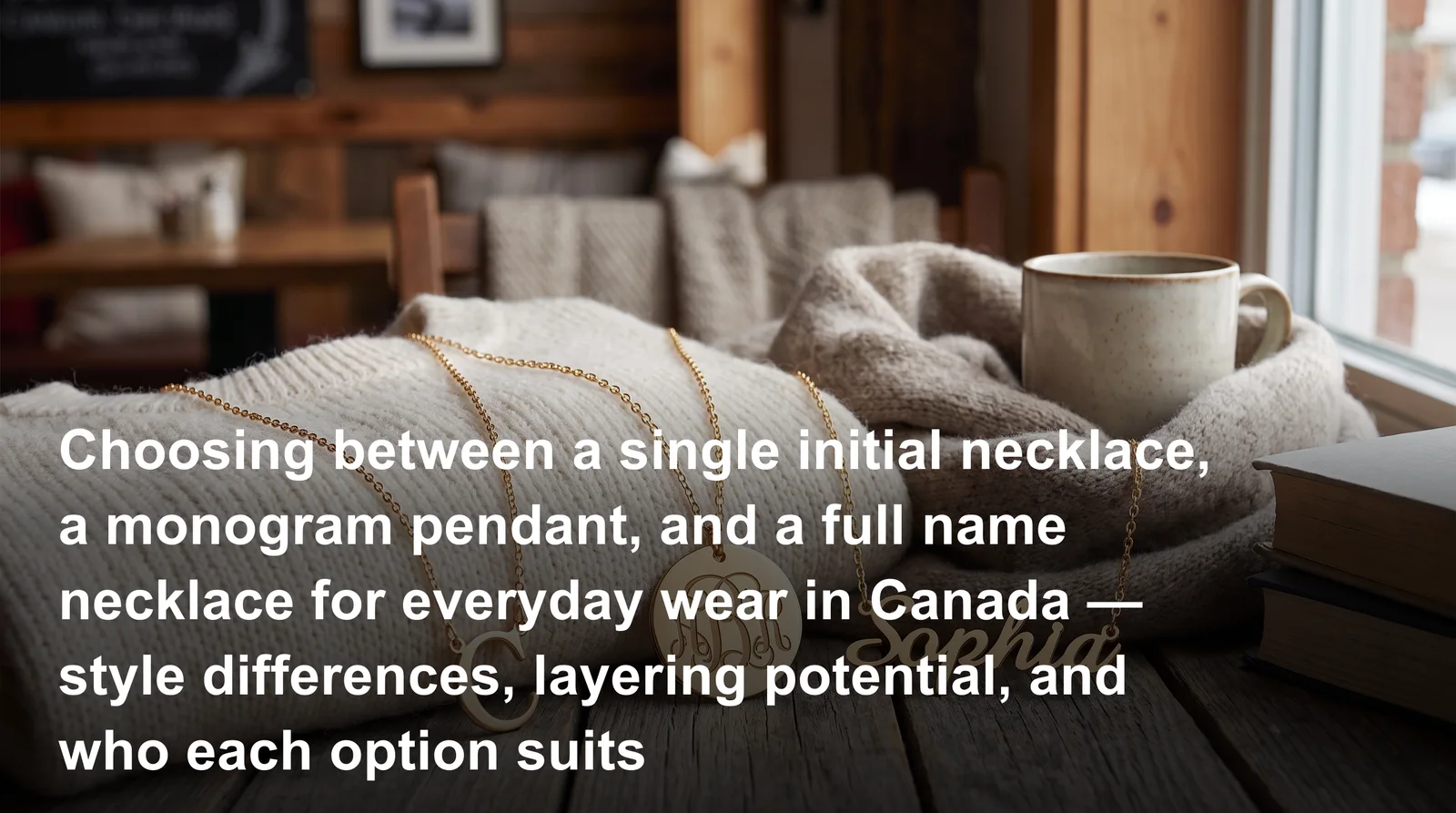
Standing in front of a personalization menu with three options staring back at you is harder than it should be. A single letter feels safe. A full name feels bold. A monogram feels somewhere in between, and that ambiguity is exactly what trips people up.
The short answer to the initial necklace vs name necklace debate comes down to how much visual space you want your jewelry to take up and how it needs to behave with the rest of your neckline. A single letter stays quiet and layers easily. A full name plate commands attention on its own. A monogram sits between the two, more decorative than a letter but less literal than a name. Your everyday habits, not your budget, should drive this choice.
What Actually Separates an Initial Necklace From a Name Necklace
The core difference is legibility versus abstraction, not just letter count. An initial necklace shows one character, so it reads as a symbol rather than a statement. A name necklace spells the whole word out, usually in script, so anyone glancing at your collarbone knows exactly what it says.
A monogram pendant sits in its own category entirely. It typically interlocks two or three letters in a decorative arrangement, often with the surname initial larger in the center, flanked by first and middle initials. This is closer to a family crest than a name tag. If you are comparing monogram pendant vs name necklace options specifically, think of the monogram as ornamental and the name plate as informational. One is meant to be admired up close. The other is meant to be read from across a room.
Why Single Letters Read Differently From Full Names
A single letter carries no fixed meaning to a stranger, which is part of its appeal. It could represent your own first name, a partner, a child, or someone you have lost. A name necklace removes that ambiguity completely. There is no guessing involved, which is exactly why some people want one and exactly why others avoid it for daily wear in more conservative workplaces.
Understanding this distinction sets up the next question most Canadian shoppers actually have, which is what a single letter is supposed to represent in the first place.
Single Initial Necklace Meaning and Why It Still Resonates

A single initial necklace meaning depends almost entirely on context, since the letter itself is neutral until you attach a story to it. For most buyers, the letter represents their own first name, worn as a quiet form of self identification. Industry data suggests the large majority of single letter orders use the wearer's first initial rather than a surname, which lines up with how people actually wear these pieces day to day.
Surname initials carry a different tone entirely. A last name letter, especially in a bold serif or gothic font, reads as heritage or family identity rather than personal branding. This is the choice people make when the piece is meant to represent a household rather than an individual. Neither approach is more correct. It is really a question of whether you want the necklace to say something about you specifically or about where you come from.
With the meaning question settled, the next practical hurdle is how these letters actually sit and read on the body, which is where a lot of shoppers get surprised.
Sizing, Placement, and the Legibility Problem With Small Letters
Small single letter charms can become illegible depending on which letter you choose, and this is rarely discussed before purchase. Letters with simple, closed shapes like O, D, or C stay crisp even at a tiny scale. Letters built from thin vertical strokes, like I, L, J, or even a cursive T, can lose their shape once cast small, especially in a flowing script font. At a conversational distance of a few feet, a lowercase script I can genuinely be mistaken for a decorative squiggle rather than a letter.
Sideways Initial Necklace Styling and Why It Photographs Well
A sideways initial necklace lays the letter on its side rather than upright, and this single design choice changes how the whole piece behaves. Sitting flat against the collarbone rather than hanging vertically, a sideways letter tends to sit flush and still, which reduces the flipping problem that plagues small vertical pendants. It also reads as more modern, which is part of why it has become one of the most requested letter orientations over the past few years.
Chain Length Changes How the Letter Reads
Placement on the neckline matters as much as the letter style itself. A shorter chain, in the 14 to 16 inch range, sits high and puts a small pendant front and center, which helps compensate for a letter that might otherwise disappear. An 18 inch chain sits a bit lower and works well whether the initial is worn alone or as the top layer in a stack. Once you understand placement, the natural next step is figuring out how these pieces actually work together when you start combining them.
How to Layer Name Necklaces With Monograms and Single Letters
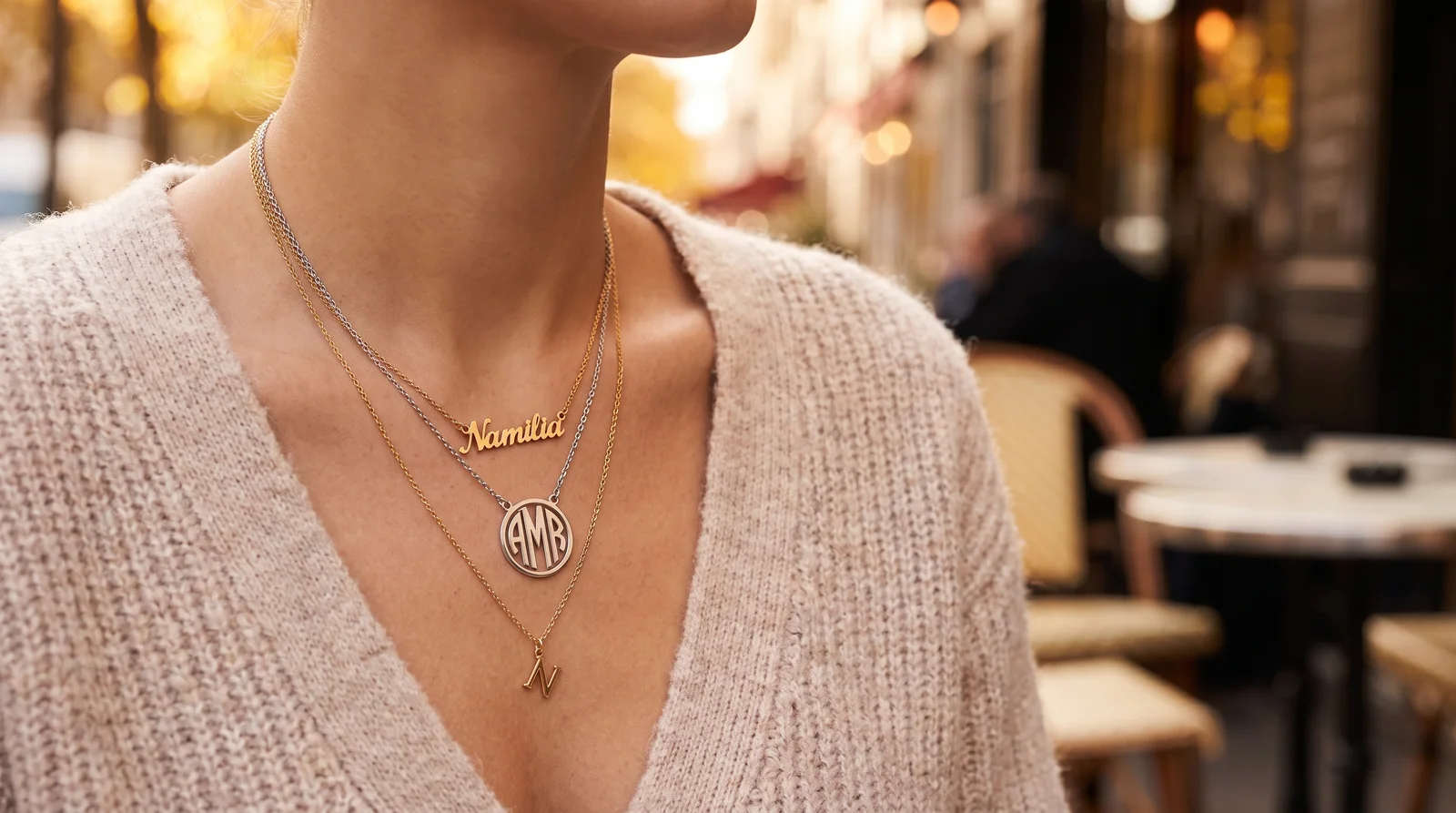
Layering name necklaces successfully comes down to chain length separation, not matching styles. The most common mistake is putting two pendants on similar length chains, which causes them to tangle and compete for the same visual space. A workable stack usually puts the boldest piece, often a full name plate, on the shortest chain around 16 inches, sitting closest to the throat.
From there, a monogram or single initial on an 18 to 20 inch chain sits just below it, giving each piece room to be seen without overlapping. A third, even longer piece, such as a small pendant or coin charm around 22 inches, can round out the stack if you want three layers rather than two. Mixing metal tones across the stack, such as a gold name plate with a silver initial, tends to read as intentional rather than mismatched. If you are building a heavier stack with multiple pendants, it is worth checking how heavy a pendant can be for a chain before you commit to combining several solid pieces on one strand.
Matching Chain Construction to a Layered Look
A thin chain paired with a heavy name plate will eventually distort under the pendant's weight, showing wear at the connector points long before the chain itself fails. This becomes more important once you are stacking pieces rather than wearing one. Reading up on solid versus hollow gold chain construction for pendants is worth doing before you invest in a stack you plan to wear daily rather than occasionally. Once your chains and pendants are matched properly, the remaining decision usually comes down to who each format actually suits best.
Who Each Necklace Format Actually Suits
The right format depends on how much attention you want your jewelry to draw, not on age or budget. A single initial suits people who already layer several necklaces, work in conservative settings, or simply prefer their jewelry to whisper rather than announce. It is also the safer gifting choice when you are not entirely certain how a name is spelled or which nickname someone prefers.
A monogram pendant suits someone who wants a decorative, almost heraldic look, often as a single statement piece rather than part of a stack, since the interlocking letters already provide visual complexity on their own. A full name plate suits people who want the piece to be unmistakably personal, whether that is their own name, a partner's, or a child's. When you compare name necklace vs initial necklace which is more personal, the honest answer is that a full name is more immediately specific, while an initial can carry deeper private meaning depending on the story behind it.
Thinking through the best necklace for everyday wear really means asking how the piece behaves against your body over a normal day, not just how it looks in a photo. A heavier name plate stays anchored and rarely flips, while a lightweight initial can shift position as you move, which is worth knowing before you commit to one format over another. For anyone shopping personalized jewellery Canada wide, that everyday behaviour matters more than the initial impression in a display case. If you want a closer look at what a full name plate typically costs before deciding, this breakdown of custom name necklace pricing in Toronto is a useful reference point.
Frequently Asked Questions
How do I stop a small initial pendant from flipping over?
Flipping happens because a light pendant sits too close to the chain line to stay weighted forward. A slightly heavier bail or a sideways initial necklace orientation both help keep the letter facing outward during normal movement.
Why do some letters look wrong in cursive fonts?
Thin, tall letters like I, L, and J can lose their shape once scaled down into a flowing script, especially at charm size. Choosing a block font for these specific letters usually solves the legibility issue.
Can I layer a monogram pendant with a single initial?
Yes, as long as the chains sit at different lengths so the two pieces do not compete for the same spot on your collarbone. A two to four inch gap between chain lengths is usually enough separation.
Does a full name necklace work for everyday wear or just special occasions?
A well proportioned name plate on a properly matched chain holds up fine for daily wear, since its weight actually helps it sit flush rather than shift around. It only becomes impractical if the plate is unusually wide relative to a thin chain.
What is the difference between engraving and a name plate pendant?
A name plate pendant has the letters cast or cut directly into the metal shape itself, while engraving adds text onto an existing surface, such as a disc or bar. If you are curious how engraved styles compare, this guide to a gold engraved necklace walks through that format in more detail.
There is no single correct answer in the initial necklace vs name necklace decision, only the right answer for how you actually get dressed in the morning. If you layer necklaces daily, start with a letter or a monogram and build from there. If you want one piece that says exactly who it is for, a name plate does that job better than anything else. Whichever direction feels right, our custom necklace collection is a good place to start narrowing it down.