Why a 935 Stamp Is Not Enough to Know how to identify genuine Argentium silver
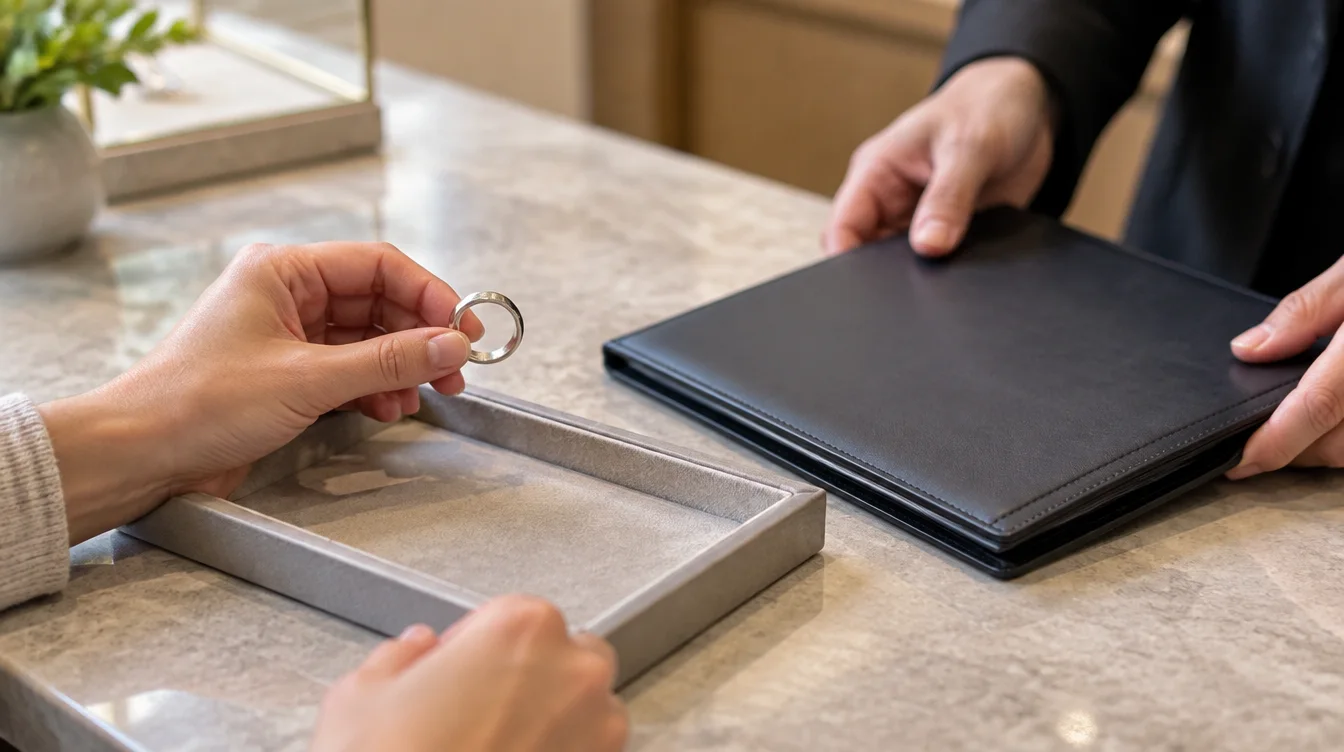
To learn how to identify genuine Argentium silver, check the purity mark, then ask for evidence that links the finished piece to the branded alloy. A 935 or 960 stamp states a silver content claim, not the alloy’s identity. Even a unicorn symbol needs context. If the marks and seller records do not agree, treat the piece as unverified until you can get better evidence.
How to identify genuine Argentium silver without trusting one stamp
To identify an Argentium piece, ask two questions. How much silver does it claim to contain? What supports the claim that its alloy is Argentium? A number can answer the first, but not the second.
Listings often blur that difference. A seller may show a clear 935 stamp and call the ring Argentium. The photo shows the stamp. It does not show where the metal came from or who made the ring. Nor does it show records for that design.
Silver marks serve different purposes. A purity mark concerns silver content. A maker’s mark names a responsible party. An assay mark can show formal testing. These marks should not be confused. The Silver Society’s guide to British silver marks explains how tested hallmarks differ from marks that only resemble them.
Argentium raises another question. Its name refers to a specific alloy, not just a silver percentage. A piece may meet its stated silver fineness without proof that it is Argentium. Its listing, marks, and seller records should agree.
Read the seller’s exact words first. “935 silver,” “Argentium silver,” and “Argentium style” make different claims. Ask which claim covers the finished item. Does it include the chain, clasp, posts, and other parts? A clear answer lets you check the photos and records.
If the seller cannot identify the alloy used in the finished piece, do not fill that gap with a guess based on its color or shine. The next step is to read the marks for what they actually say.
What an Argentium silver stamp can and cannot establish
An Argentium silver stamp is a useful clue only when you know what kind of mark you are looking at. Numbers describe claimed fineness. Names, symbols, and maker’s marks may help trace a piece, but their presence alone does not prove who applied them.
What do 935 and 960 tell you?
If a mark states fineness in parts per thousand, 935 means 935 parts silver in 1,000 parts of the marked metal, or 93.5%. For 960, the figure is 96%. The Silver Society explains this system using the sterling standard of 925 parts silver in 1,000.
That is the practical answer to “935 silver meaning” in a jewelry listing. It states purity, not the full alloy recipe. The number does not name the other metals or the metal supplier.
The same limit applies to “960 silver meaning.” If used as a fineness mark, 960 claims 96% silver. It does not show that the other 4% matches the alloy named by the seller.
Compare two rings, both stamped 935. One seller has a maker’s record naming the metal bought for that ring. The other has only a close photograph of the stamp. Their numbers match, but the evidence behind the Argentium claim does not. Neither buyer needs to assume the second ring is false. It simply has less support.
What does a 925 stamp mean here?
Under the same system, a 925 mark claims 92.5% silver. It commonly marks sterling silver, as the Silver Society’s explanation of sterling fineness shows. On its own, it does not support a claim that a piece is made from a different named alloy.
If a listing says Argentium but shows only 925, ask why. The stamp might be on a separate chain or finding. The listing might be wrong. You need an answer about the part you plan to buy, not silver jewelry in general.
Is the unicorn mark proof?
A seller may cite an Argentium silver unicorn mark as proof of alloy identity. Treat it as a clue, not a verdict. A photo cannot prove the mark was used with permission. Nor can it prove the mark applies to the whole piece.
Ask for a sharp photo of the symbol beside the fineness and maker’s marks. Find out who made the piece. Then ask what record links that maker to the metal used. If the seller has a product card, invoice, or maker’s description, check its design and metal details against the listing.
A generic unicorn image on a product page cannot verify a specific ring. Ask to see the mark on the ring itself. The photo should show enough of the surface to place it. Then inspect the rest of the piece.
Where should you look for marks on the finished jewelry?
Check each metal part covered by the seller’s claim. A pendant and chain can have different makers. An earring post may be a separate finding. One clear stamp need not describe a whole set.
For a ring, ask for the full inner band and close views of each mark. For a necklace, check the pendant back, bail, clasp, and tag. Check a bracelet’s clasp and rigid parts too. Earring marks can be tiny, so the post or back needs a sharp photo. These are common places to find silver marks, according to Varenya Galleria’s hallmark guide.
Ask for photographs that show context
A close view should show more than a lone number. Ask for one photo that places the mark on the piece. Ask for another that shows its detail. For a ring, include the inner band. For a pendant, include the back and bail.
Ask for photos in plain light, without a filter that hides scratches or shifts contrast. A short video may help with a faint stamp. Do not ask the seller to polish an old or delicate item just to reveal a mark. Better light and a magnified photo are safer requests.
Read the whole cluster of marks
Write down each visible letter, number, and symbol in order. A maker’s mark beside a fineness mark gives you more to check than a cropped 935. If the seller calls a stamp an official hallmark, ask who tested the item. A maker’s stamp is not an independent assay.
For inherited jewelry with British marks, the guide to reading British hallmarks on inherited jewelry can help you read the separate marks. Do not assume every modern stamp follows the British system. Rules and marks vary by place.
Match each mark to the right component
Picture a pendant stamped 960 on its back and a chain stamped 925 near the clasp. The pendant’s mark does not turn the chain into 960 silver. Ask whether the seller’s Argentium claim covers the pendant only or the full necklace.
That question also matters for earrings. A decorative front, post, and back may not all use the same metal. When a listing describes the entire pair as Argentium, the seller should be able to say which parts the description covers.
Photos can show where a mark sits. They cannot show the metal’s history. For that, you need records.
Which seller documents make an Argentium claim more credible?
The strongest records link the finished piece to its maker, the metal bought, and the design sold. A loose certificate saying “silver” tells you less. Look for a record that names the piece and its alloy.
Start with the item description or invoice. It should name Argentium rather than rely on a stamp photo. Compare its metal details with the photos and all parts in the sale. If an invoice covers only a pendant, an added chain needs its own metal description.
Ask for a traceable explanation, not a pile of paper
A small maker may have a supplier invoice for wire or sheet. They may also have a work order and product record. A retailer may have the maker’s metal details for the finished design. Either helps if the maker, item, and metal match. The seller can hide personal details and unrelated prices before sharing a copy.
Ask this: “What document links this finished ring to the Argentium metal you bought?” The answer should address that ring. It is not enough to show that the business once bought Argentium. That purchase cannot prove every later design used the same stock.
A retailer may struggle to trace a mass made item to raw metal. Ask for the maker’s metal details for that product. Also request a sales invoice with a matching item code. The code links the metal claim to the model for sale.
Know the limits of a certificate
Check what each document proves. A lab report on silver purity differs from a maker’s alloy claim. A metal batch certificate needs a clear link to the piece. An appraisal may describe the piece without proving where its metal came from.
Names and dates help, but they are not magic. Compare the document’s item code, dimensions, and component description with the listing. A report for a ring cannot verify a matching necklace. A document that says only “silver” cannot settle a claim about Argentium.
Keep the listing, marked photos, invoice, and written answers together. If the description changes later, you can see what was promised. Those records can help an independent jeweler review a disputed claim.
These records give the seller a clear claim to explain. If the answer stays vague, decide what evidence you need before buying.
When should you buy, ask again, or seek professional verification?
Rely on an Argentium claim only when the description, photos, and traceable records agree. Ask for anything missing before paying. If the evidence still conflicts, seek independent advice. Or judge the piece only by claims the seller can support.
When the marks and records agree
Suppose a maker lists a ring as Argentium and shows its inner band marks. The maker also has a record linking that design to the metal used. That supports the claim better than a stamp alone. Still, ask whether any solder or added part differs from the band.
No single photo or document proves every detail. Look for an account you can check. Ask the seller to explain any gap between the stamp, written metal details, and finished piece.
When a piece is unmarked
An unmarked piece is not automatically an imitation, but the missing mark leaves you with fewer visible clues. Ask who made it, why it lacks a mark, and what records name the alloy. A small handmade item or a worn piece may call for more questions, not an instant verdict. Varenya Galleria notes that some small or older silver jewelry can have faint or hard to find marks in its guide to locating jewelry marks.
If the seller has only a verbal claim, treat the piece as unverified Argentium. The claim may be true. You do not yet have enough evidence to rely on it.
When the evidence conflicts
A 925 clasp needs an explanation if the full necklace is sold as 960 Argentium. So does a certificate that names no item. Let the seller correct an honest listing error. Ask for the new description in writing.
For a valuable piece, a jeweler or qualified testing service can examine it. Ask what the test can establish before you pay. A silver fineness result may support a purity claim. It may leave the brand and supply history unresolved.
Do not use a home acid test on jewelry you do not own. It can damage the finish. It also cannot link the piece to a named supplier. If the seller cannot make that link, decline the Argentium claim or the purchase.
The next questions turn on what a mark, missing mark, or test can prove.
Frequently asked questions about Argentium marks
Questions about how to identify genuine Argentium silver lead to the same check. Read each clue within its limits. Then ask the seller to link it to the finished piece.
Can a 935 stamp prove jewelry is Argentium?
No. Under the parts per thousand system, 935 claims 93.5% silver. It does not name the rest of the alloy or show where the metal came from.
Does a 960 stamp prove a piece is Argentium?
No. “960 silver meaning” is a claim of 96% silver, not proof of a named alloy. Ask for records that link the finished item to the seller’s Argentium claim.
How can I check an Argentium silver unicorn mark?
Ask for a clear photo of the mark on the piece, beside its other marks. Then ask who made the jewelry. What records support that maker’s use of Argentium? The symbol alone cannot tell you.
What if there is no Argentium silver stamp?
Check the whole item before calling it unmarked. Look at hidden surfaces and separate findings. If you find no mark, ask for a written metal description. Also ask for records for the finished piece. Seek professional advice if the claim matters and those records are missing.
These short answers point to the same buying habit: ask the seller to connect the claim to the item in your hands.
Make the seller’s claim match the piece
Knowing how to identify genuine Argentium silver takes more than one stamp. Read the fineness mark. Check which part bears it. Then match the written Argentium claim to the maker’s records for that piece.
A 935 or 960 number tells you what silver content is claimed. A unicorn mark gives you another clue to check. Neither tells you who made the piece or what metal they used. If the seller cannot explain both, pause before paying for an alloy identity you cannot verify.
Before buying, ask for marked photos and a written metal description for the item. A seller who knows the piece should answer plainly. If you then want to weigh the documented alloy for your needs, read the separate guide on whether Argentium silver is worth its price for everyday jewelry.