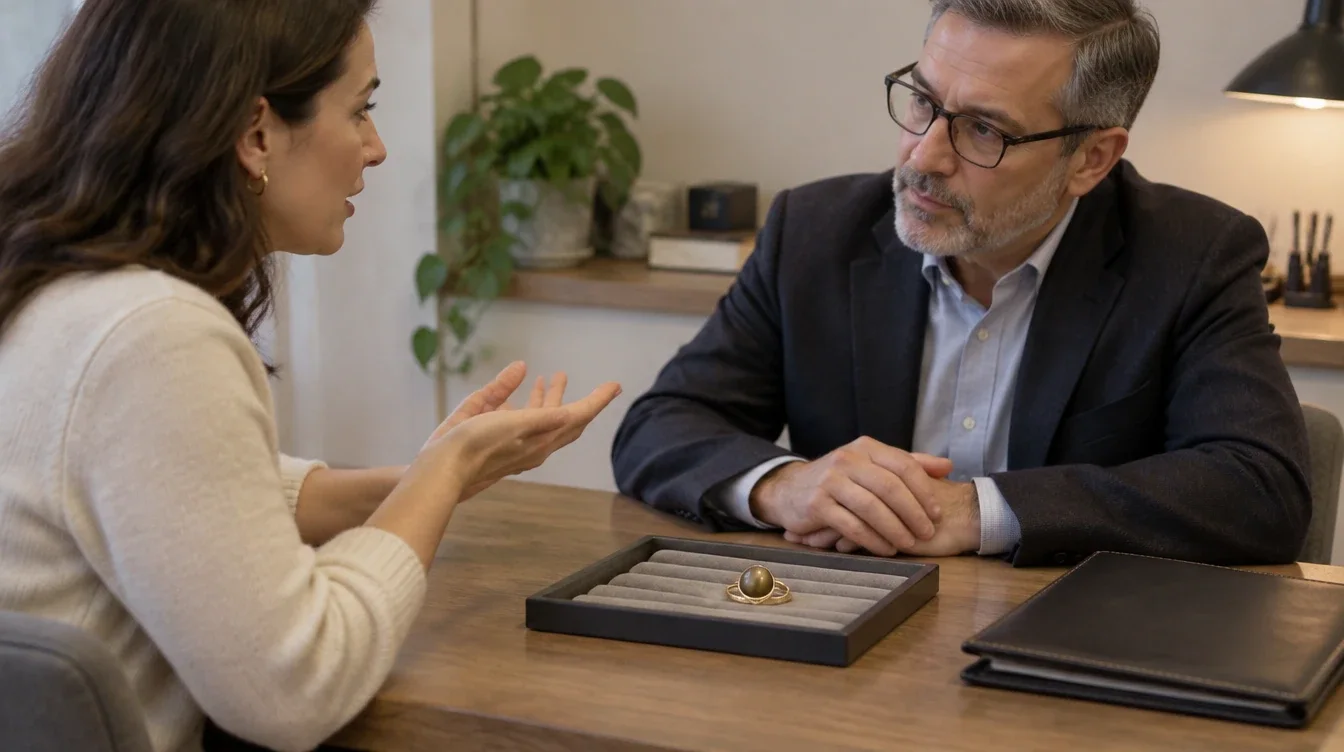
Learn how to identify cat's eye chrysoberyl Before Trusting That Bright Line
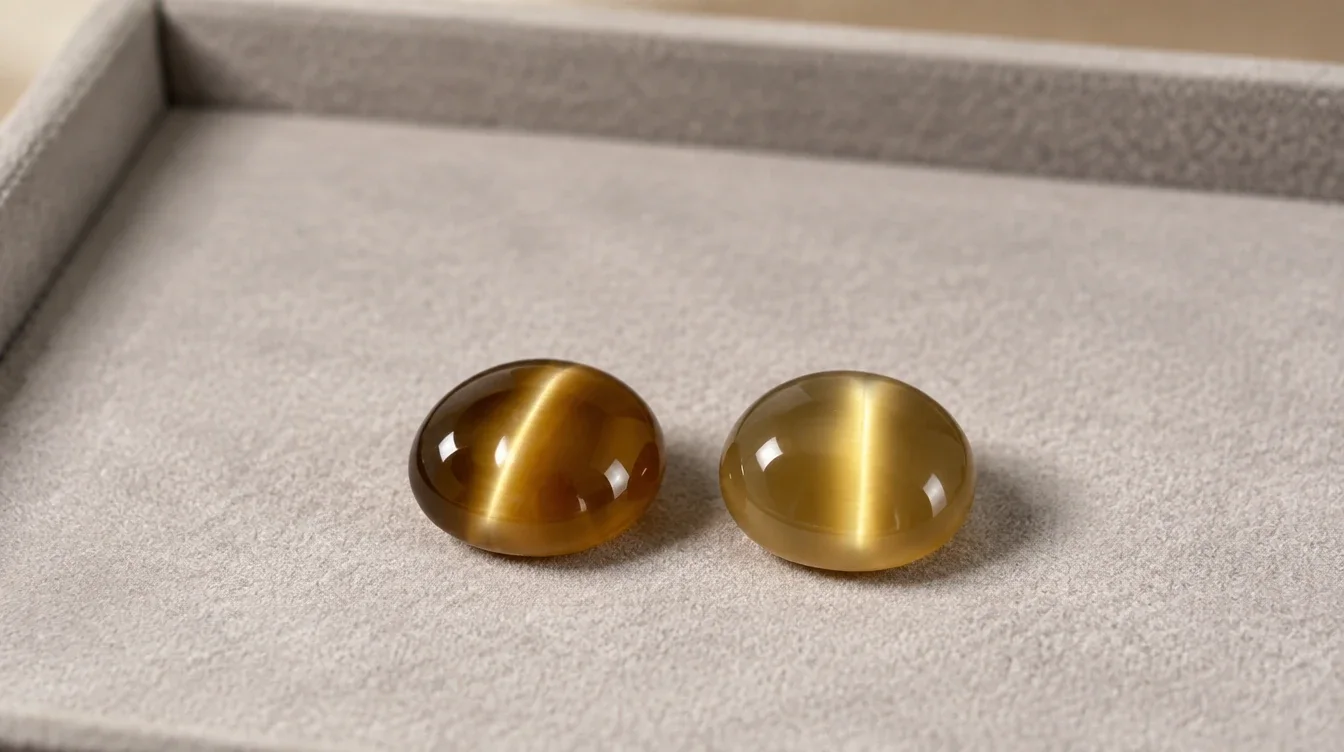
To learn how to identify cat's eye chrysoberyl, treat its bright line as a clue, not proof. Seek gemological testing before paying for a stone whose natural identity is unconfirmed. Fiber optic glass can closely mimic the effect, even in mounted jewelry, as a GIA laboratory examination showed. Start with safe visual checks. Then ask what evidence backs the seller’s exact claim.
Why a convincing eye does not prove chrysoberyl
A moving band of light shows an optical effect. It does not tell you what the material is. When weighing chrysoberyl cat's eye vs glass, both can show chatoyancy. That is the name for the band. Skyjems explains that glass makers copy the effect with structures lined up inside the glass.
Chrysoberyl is a mineral. Its chatoyant variety is also called cymophane. Fiber optic cat's eye glass is made of fused glass fibers. It is not chrysoberyl grown in a lab. Calling glass “synthetic chrysoberyl” would blur two different claims about the material.
Our explanation of natural, laboratory grown, and imitation terminology helps tell those labels apart. Ask the seller to name the material in plain terms.
Glass can be a lovely choice when sold honestly as glass. Buyers seeking natural chrysoberyl need evidence of what it is. A pleasing eye is not enough. Neither a costly setting nor a confident sales pitch proves the claim.
Separate what you like about the stone from what you know about it. That makes your first visual check more useful.
Start learning how to identify cat's eye chrysoberyl with safe checks
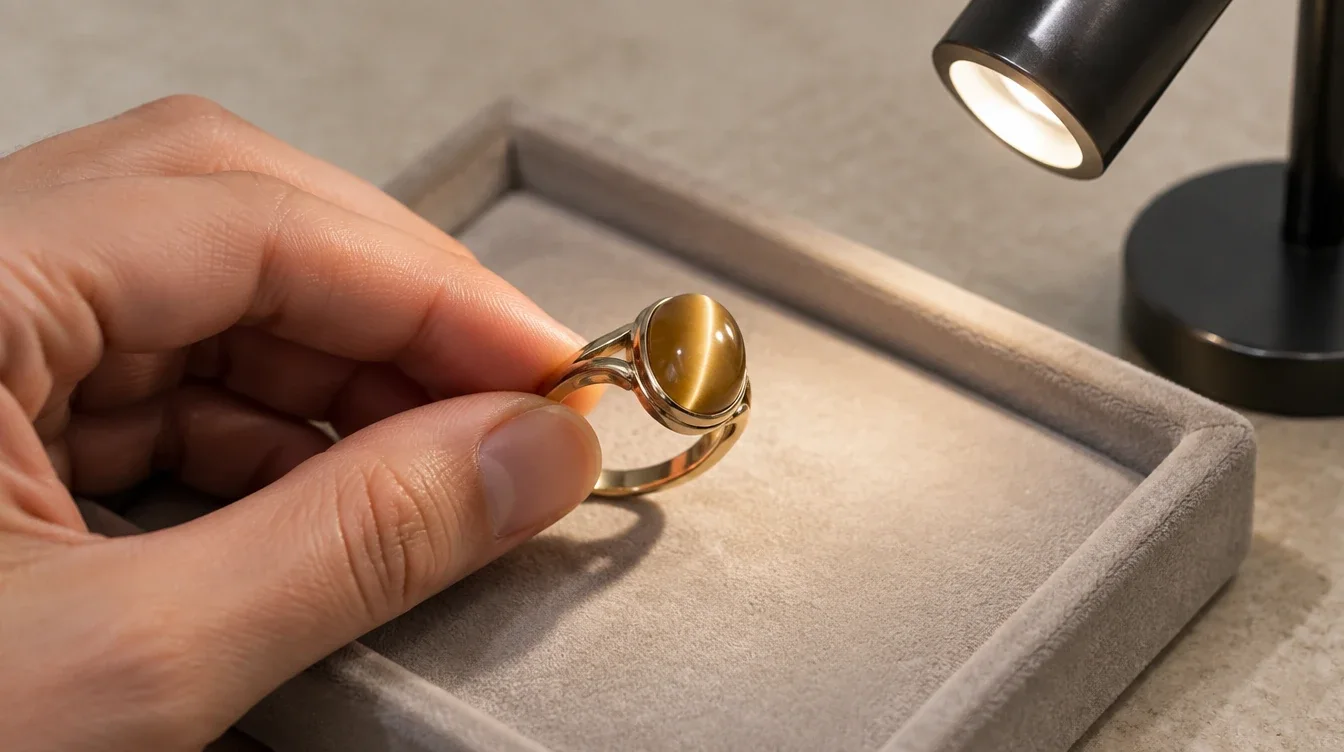
Safe visual checks help you spot things to question. They cannot replace identification. Ask to see the actual stone under one direct light. Then move it slowly. GemSelect recommends this lighting because diffuse light can make the eye harder to judge.
Watch the eye without turning beauty into proof
Look at how clearly the line appears across the dome. Check whether you enjoy its movement and contrast. These observations help assess appearance, which is a separate question from identity.
A sharp eye does not prove glass. A soft eye does not prove an imitation either. GemSelect describes a sharp, centered eye as desirable in chrysoberyl, while glass can also display a crisp band. That overlap makes sharpness alone a poor identity test.
Ask for views that show more than the face
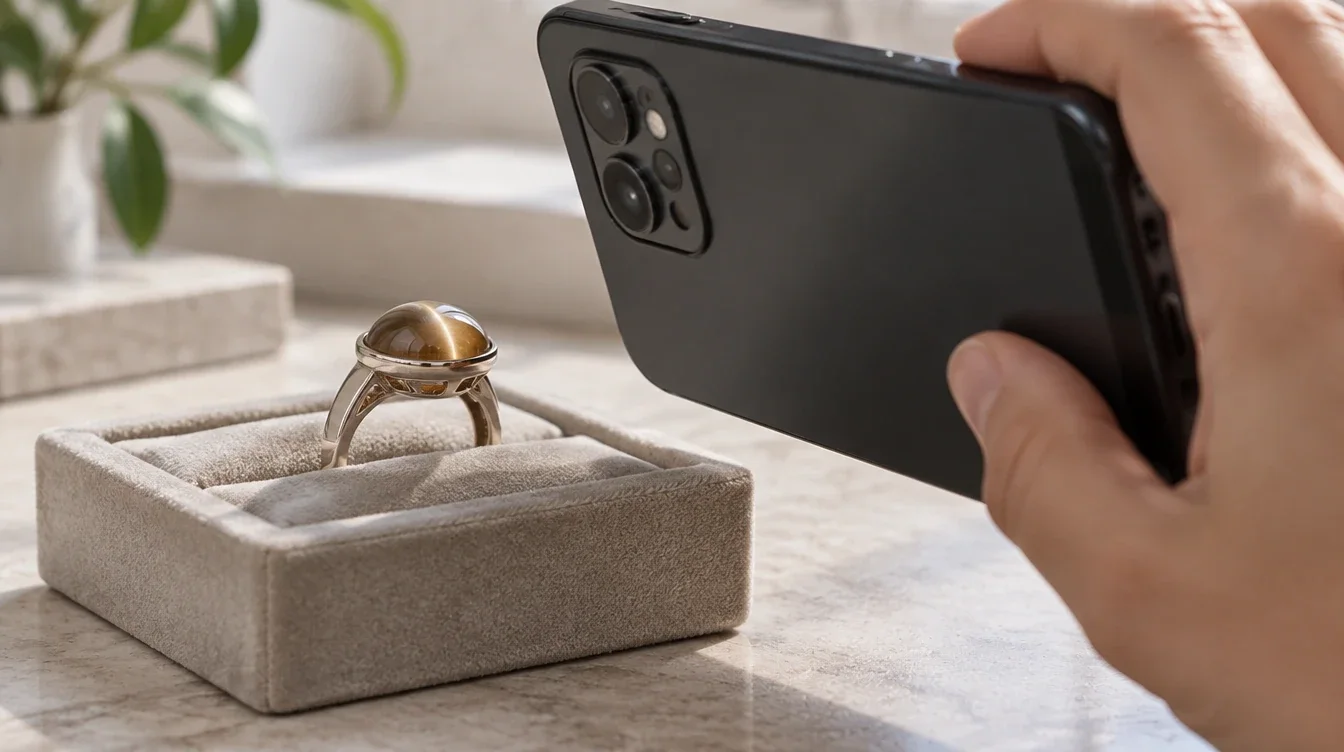
Ask for photos of the sides and any visible base. Request a video in ordinary light, too. Include the whole ring or pendant in at least one view. Close detail helps, but a wider view helps show which item the seller is presenting.
To ask how to tell if a cat's eye stone is real, first define “real.” Do you mean natural chrysoberyl or just genuine chatoyancy? Color and photos can raise questions. Neither gives you a lab result.
Leave scratch tests, heat, and chemicals out of the process. Your next useful step is closer inspection, not damage.
What magnification can reveal inside the stone
Magnification can show the bundled structure of fiber optic glass. That structure sets it apart from chrysoberyl. The strongest example here comes from GIA’s Summer 2023 laboratory notes, rather than a visual rule about color or eye sharpness.
A documented glass imitation in a ring
GIA examined a brownish yellow cabochon set in a ring. Its estimated weight was 5.56 carats. The client submitted it as chrysoberyl. At first glance, it looked much like that gem.
A microscope showed long parallel tubes when viewed from above. From the side, it showed a honeycomb structure. These findings and gemological testing identified fiber optic cat's eye glass. The side view gave clues that the lovely face did not.
When learning how to identify cat's eye chrysoberyl, give that evidence more weight than looks. An eye that seems “too perfect” tells you less. An expert must still judge the parallel features. Natural chatoyancy also involves aligned inclusions.
A handheld loupe may not show the detail needed. Metal can hide the area you need to see. An unclear view does not prove the structure is absent. Do not loosen the stone yourself to check.
If magnification leaves doubt, tests of optical properties can help.
What laboratory measurements add to the comparison
Laboratory measurements test material properties rather than relying on resemblance. For buyers, the chrysoberyl refractive index is useful because it gives a gemologist a reference against which to compare the examined stone.
Refractive index checks
Refractive index tells you how a material bends light. GemSelect lists chrysoberyl at 1.744 to 1.755. These values are dimensionless, not a measure of size or quality.
What the documented reading established
In the GIA ring examination, the spot reading was 1.57, well below chrysoberyl’s range. Microscopy and infrared spectroscopy backed the finding that it was glass. That reading is for the tested stone, not all glass.
Results should agree with each other
A chrysoberyl refractive index reading is one part of the exam. Does the result back the material claim? Ask whether the other findings agree. A textbook value does not show that the offered stone was tested.
Why ultraviolet light is not a verdict
GIA’s glass sample showed strong chalky fluorescence under short wave ultraviolet light. Yet Skyjems describes glass fluorescence as variable. A glow, or its absence, should not settle the purchase alone.
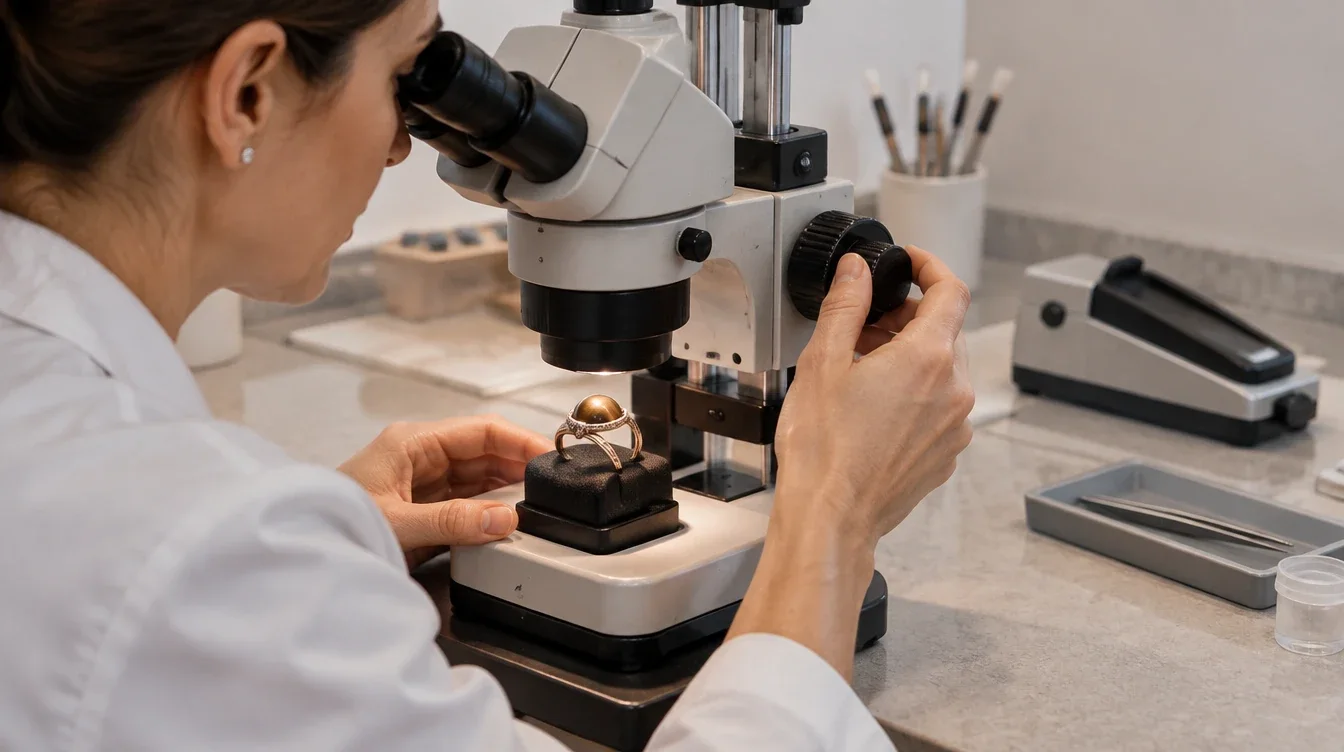
That is how to identify cat's eye chrysoberyl with instruments. Look for test findings from the actual stone that agree. Next, check that the paperwork states them clearly.
When to request an independent identification report
Seek independent identification when buying on a natural chrysoberyl claim the seller cannot back. There is more reason to test if photos are limited. The same is true if the setting blocks inspection. Testing also matters more if losing the purchase price would hurt.
Buyers often search for cat's eye gemstone certification. What the report covers matters more than that phrase. Ask for a gemological identification report. Read what it says. A shop card stating “natural cat’s eye” may not record independent testing.
Use a claim, evidence, decision check
Take this example, not a reported customer case. A seller offers a honey colored ring with a bright eye. An appraisal names the stone as chrysoberyl. Ask who identified it and which tests were done. Does the document describe that ring?
If the reply only repeats the color and eye description, the identity remains unsupported. If a laboratory report is supplied, compare its photograph, dimensions, description, and report number with the offered item. Ask the issuing lab about any mismatch.
For a chrysoberyl cat's eye vs glass decision, keep three questions separate. How does the stone look, what is it, and what is the asking price? A beautiful video answers the first, not all three.
Learning how to identify cat's eye chrysoberyl includes knowing when to stop guessing. Agree on testing and return terms before you pay. What happens if the test result differs from the listing? Include that in the terms.
Ask whether the lab accepts mounted stones and what the setting may prevent it from establishing. Never authorize removal without discussing the risk and responsibility first.
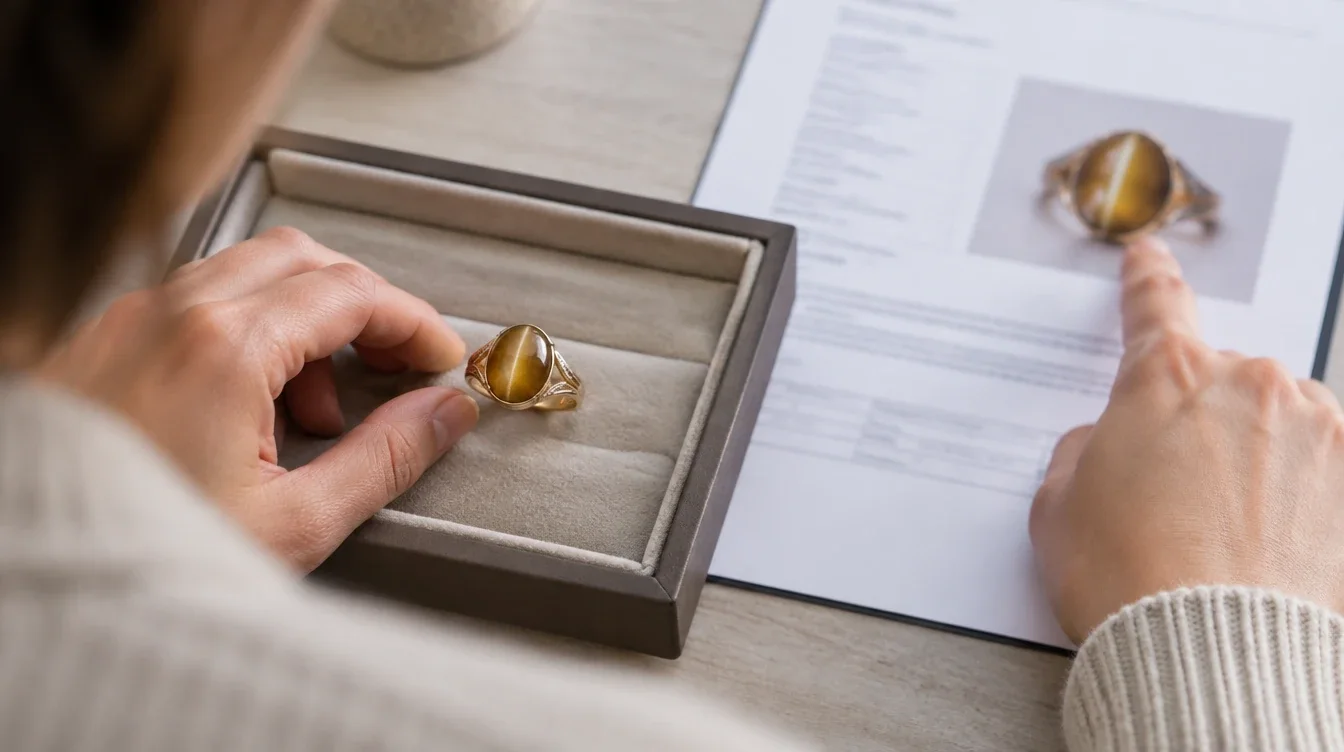
Once the evidence and sale terms are clear, check these common questions.
Common questions before buying
Most buyer doubts come down to what a clue can prove and what still needs testing.
How can I tell whether a cat’s eye stone is real from photos?
Photos alone are not a reliable answer to how to tell if a cat's eye stone is real chrysoberyl. Use them to judge its look, then ask for better evidence. This matters most when only the polished face is shown.
Can natural chrysoberyl have a blurry eye?
Yes, a weak or blurry eye can reflect quality rather than false identity; GemSelect discusses eye sharpness as a buying factor. Do not reject a stone or accept it as genuine based on that feature alone.
What should cat's eye gemstone certification establish?
Ask whether the report identifies the examined stone as natural chrysoberyl and records its cat’s eye phenomenon. Read treatment findings separately, and ask the lab about any limits rather than assuming the document answers every question.
Does a low price prove the stone is glass?
No, price gives you a reason to check, not proof of the material. Ask for evidence of identity before judging whether the offer is good value or an unsupported claim.
Those limits leave you with a buying rule you can use.
Buy the stone whose identity you can support
The safest purchase pairs an appearance you enjoy with evidence for the material you are buying. Learning how to identify cat's eye chrysoberyl does not mean becoming a laboratory at home. It means refusing to let one appealing feature answer every question.
Ask for clear views and the exact name of the material. Seek testing if the claim is still in doubt. Before paying a natural chrysoberyl price, ask an independent gemologist to review the stone. Have them review its paperwork too. If evidence is missing, pause the purchase rather than rely on hope.