How to Choose Earrings for Unpierced Ears Without Buying a Pair That Pinches
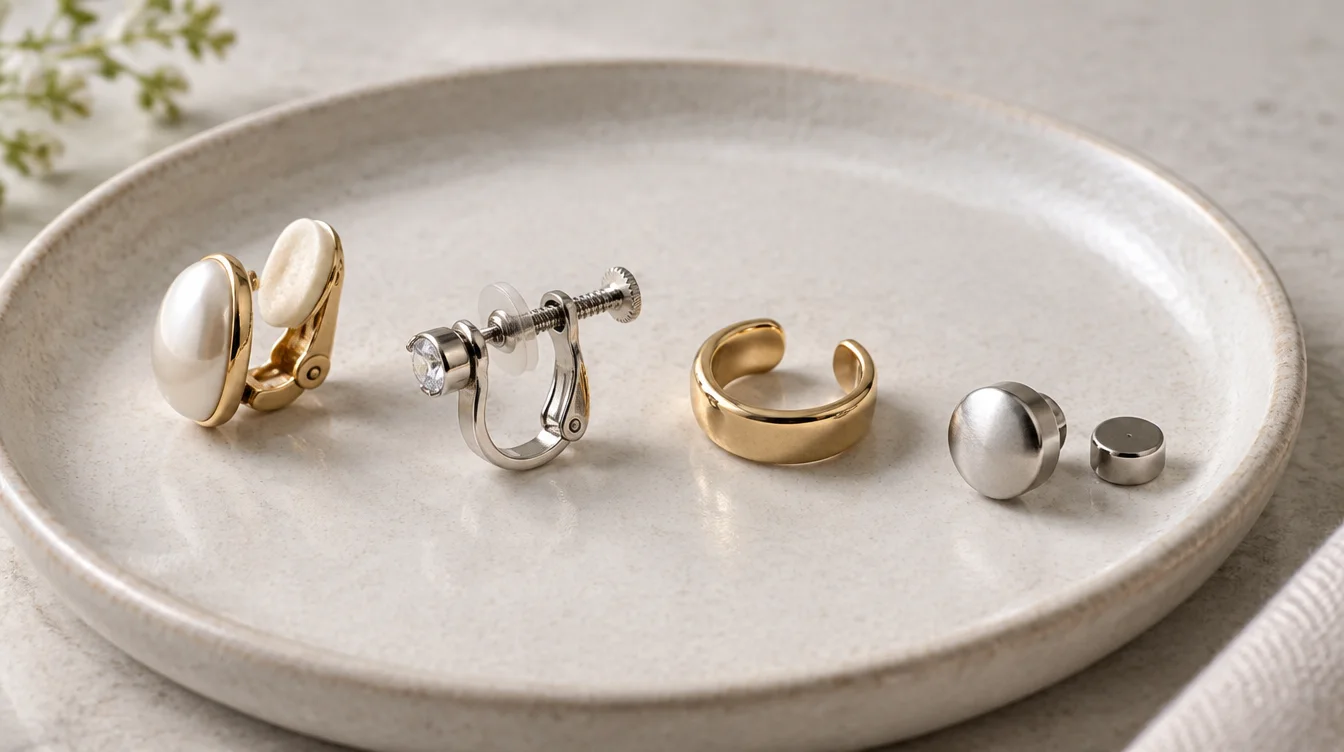
To learn how to choose earrings for unpierced ears, start with where you want to wear them. Pick a light hinged clip or adjustable screw clamp for the lobe, a cuff for the ear’s outer edge, or a magnet for a discreet stud look. No closure is comfortable or secure for every ear. Fit, weight, skin contact, and how long you plan to wear the pair matter more than the style name.
How to choose earrings for unpierced ears by where they sit
Lobe earrings and ear cuffs need different kinds of grip. A clip, screw clamp, or magnet holds the soft earlobe between two contact points. A cuff sits around the firmer outer rim of the ear. Decide which look you want before comparing closures.
For a classic stud or drop, begin with a lobe fitting. If you want a small accent higher on the ear, try a cuff shaped for that spot. Do not force a lobe clip onto cartilage just to copy a cuff’s look. Its contact surfaces may not sit flat there.
Next, think about the time and setting. A light pair for dinner gives you more options than a pair you hope to wear through a full workday. Hair, scarves, and frequent phone use can also catch or shift an earring. A closure that feels fine while standing still may need a closer fit check before you leave home.
That simple choice of placement narrows the field. Now you can compare the closures that belong on the lobe.
Which types of clip-on earrings work for everyday wear?
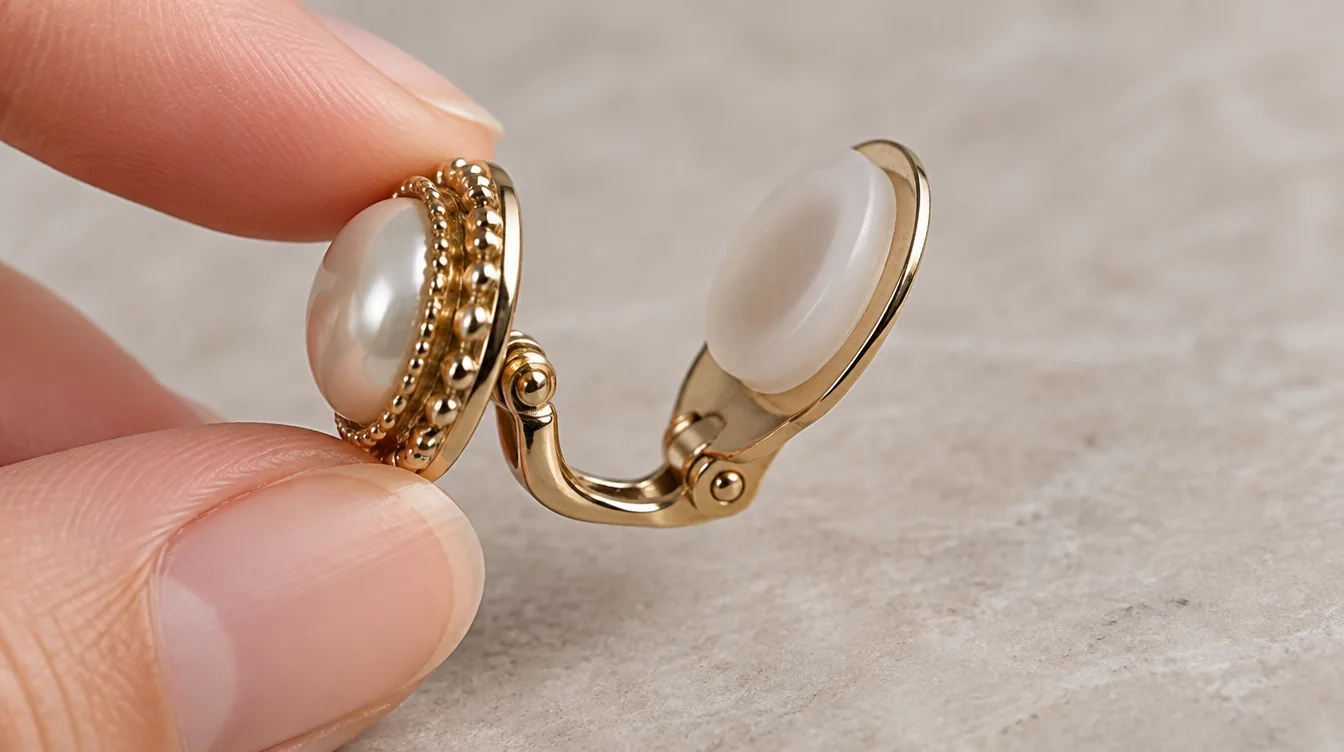
Hinged clips are easy to handle, but their comfort depends on pressure and contact area. They open, sit over the lobe, and close with a spring or folding back. Most take only a moment to put on. Their set tension, however, may suit one person’s lobes and pinch another’s.
Hinged and paddle clips
A paddle back presses a broader plate against the rear of the lobe. That wider surface can feel gentler than a narrow metal edge, though the spring still needs to grip. Check both sides of the hinge before buying. A rough seam or tilted plate can make one small spot bear most of the pressure.
Some hinged clips allow slight adjustment, but do not bend a new pair without the maker’s instructions. Repeated bending can weaken a fitting, as a jewelry maker’s overview of nonpiercing findings cautions. If a ready made pair arrives painfully tight, ask the seller about adjustment or choose another closure.
Coil, resin, and padded clips
Other types of clip-on earrings use a curved coil, a clear resin clasp, or a soft pad at the contact point. A pad can spread pressure and soften a hard edge. It cannot fix a clip whose spring is much too tight. Clear resin may also hide the fitting, but its grip and fit still need testing.
A seller’s comparison of clip designs describes coil, paddle, and resin options with different contact shapes. Treat its wear time suggestions as product guidance, not a promise for your ears. Lobe thickness, earring weight, and clip tension can change the result.
For comfortable clip-on earrings, start with a light design and smooth, broad contact points. If you need more control over the grip, try an adjustable screw clamp.
When do screw-on clamps make more sense than clips?
Screw-on clamps make sense when you need to set lobe pressure yourself. A small screw moves the rear contact point toward or away from the earring front. Open it before placing the earring, then turn it until the pair feels steady. Stop before the lobe feels squeezed.
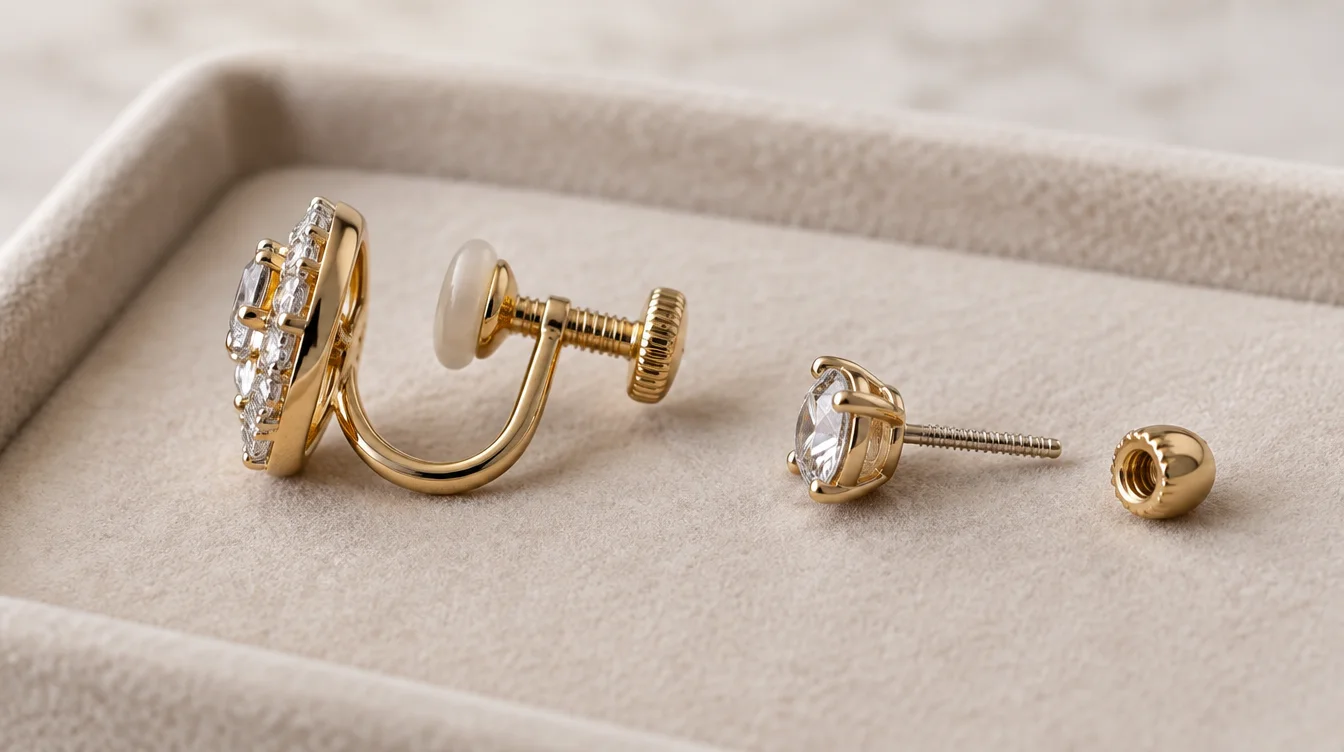
Listings for screw-back earrings for non-pierced ears can be confusing. A true nonpiercing screw clamp holds the lobe from outside. A threaded post and matching screw back pass through a piercing. Look for a photo of the open fitting from behind. If you see a post meant to go through the ear, it will not work on an unpierced lobe.
Screw clamps offer fine adjustment, but they take longer to put on than hinged clips. Small screws can also be awkward if your fingers are stiff or you often change earrings in a hurry. A hinged screw clamp may be easier to place on a thicker lobe because it opens first. Test how readily its screw turns before relying on it for daily wear.
A heavy drop still needs caution. Tightening a screw to hold extra weight trades slipping for pressure. Choose a lighter design if a secure fit starts to hurt. If you would rather avoid pressure on the lobe altogether, compare cuffs next.
Are ear cuffs without piercing a better fit for you?
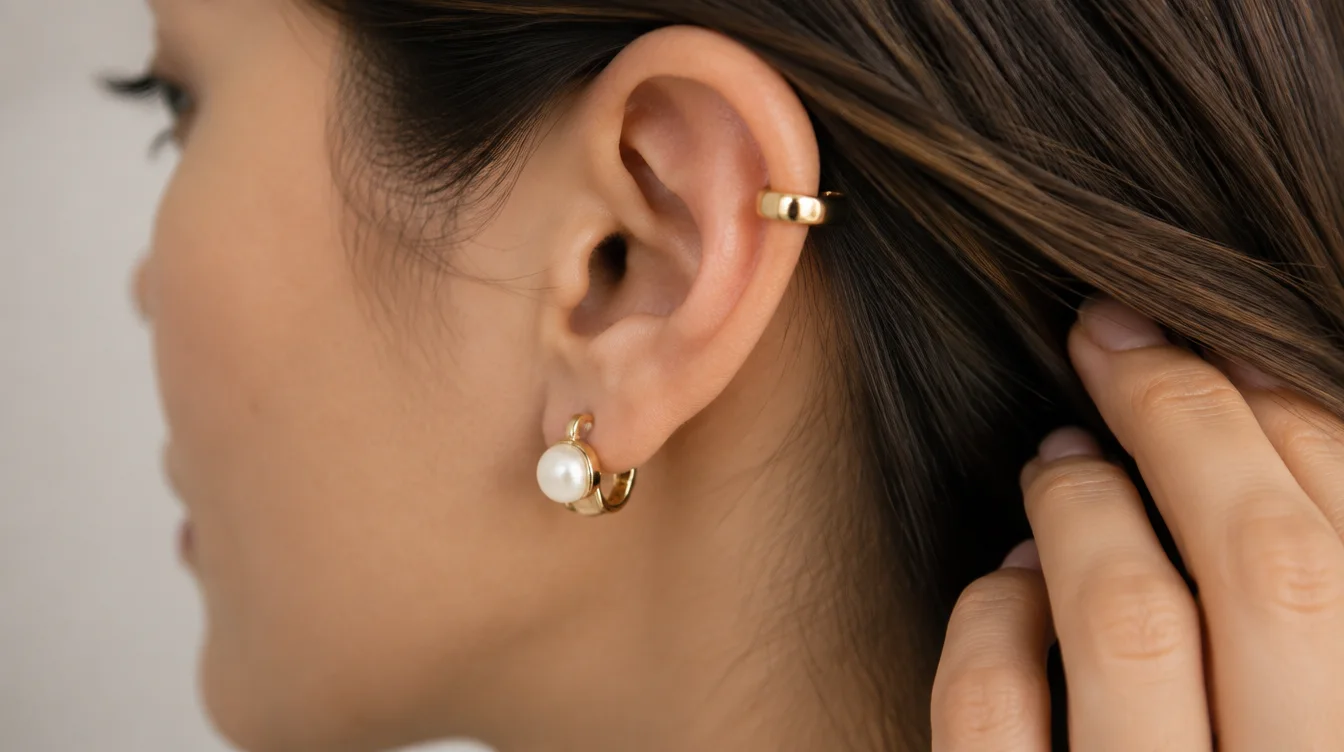
Ear cuffs without piercing are a good choice when you want an accent on the outer ear instead of the lobe. A cuff grips the ear’s rim rather than pinching between a front and back plate. That change in placement can feel better for some people, but a poorly fitted cuff can still rub or slip.
Look at the shape of your ear and the cuff’s opening. A simple open cuff needs a spot where the rim helps hold it in place. A hinged cuff closes around its intended area. Neither should need a painful squeeze to stay put. Slide an open cuff on at a narrower part of the ear, then move it gently to its resting spot if the design permits.
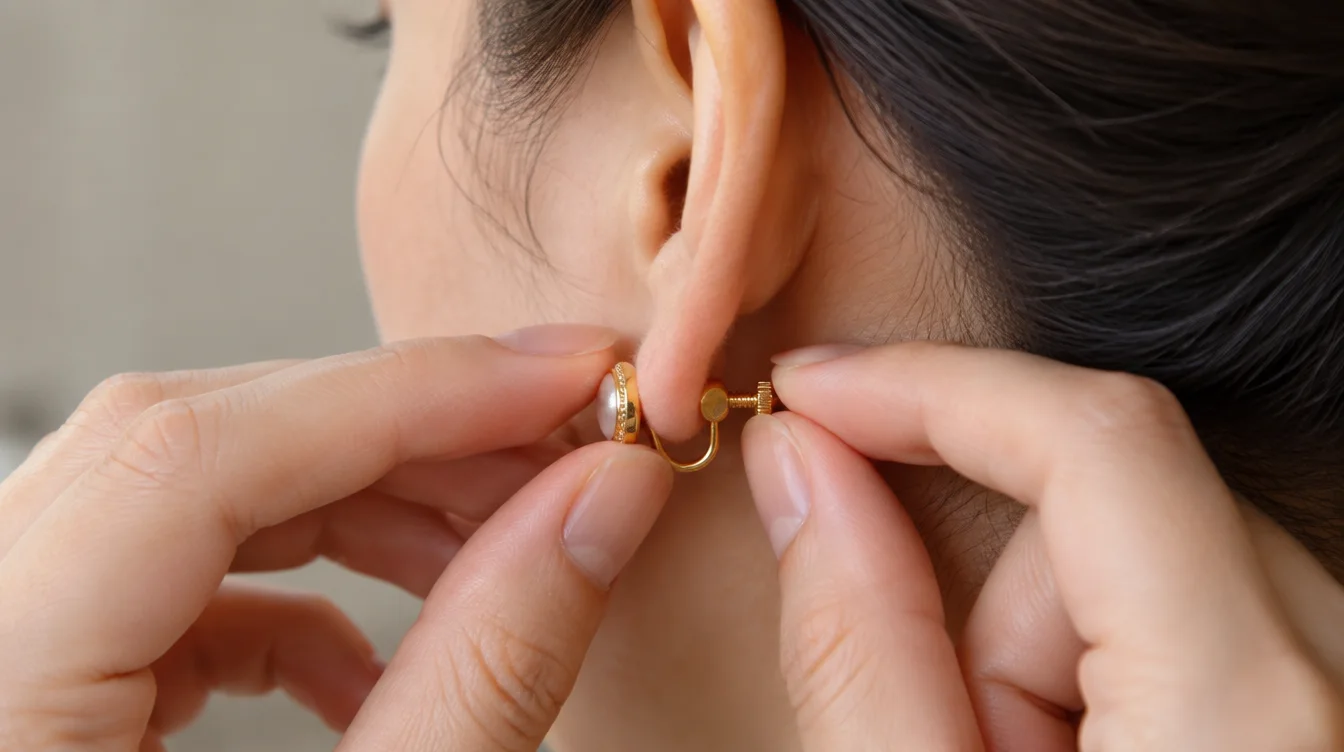
For a close look at grip styles and placement, see this guide to fitting an ear cuff without piercing. Its central point is useful while shopping: where a cuff sits matters as much as how tight it feels. Check the product photos for its intended position instead of assuming every cuff fits every part of the ear.
Ear cuffs without piercing also avoid the problem of matching a large ornament to a small lobe clip. Still, check for edges that might catch hair or press against glasses. If your goal is a tiny ornament that seems to sit directly on the lobe, magnets offer a different look.
What should you know before buying magnetic earrings?
Magnetic earrings give a studlike look without a visible clip, but they need careful handling. One piece sits in front of the lobe and a separate magnet sits behind it. That small rear piece is easy to misplace. A thick lobe, a heavy front, or movement may also make a pair less steady.
Choose magnetic earrings for short, low movement wear before trusting them at a busy event. Try a light style first. Check that the front and back meet squarely, with no hair caught between them. Do not add magnets or assume a stronger grip will be more comfortable; extra pressure can make the lobe sore.
Small loose magnets are a serious concern around children. The seller’s guide to magnetic styles warns that swallowed magnets need urgent medical attention. Keep these earrings and their backs away from children. If you have a pacemaker, defibrillator, or another implanted medical device, ask your clinical team before wearing magnetic jewelry.
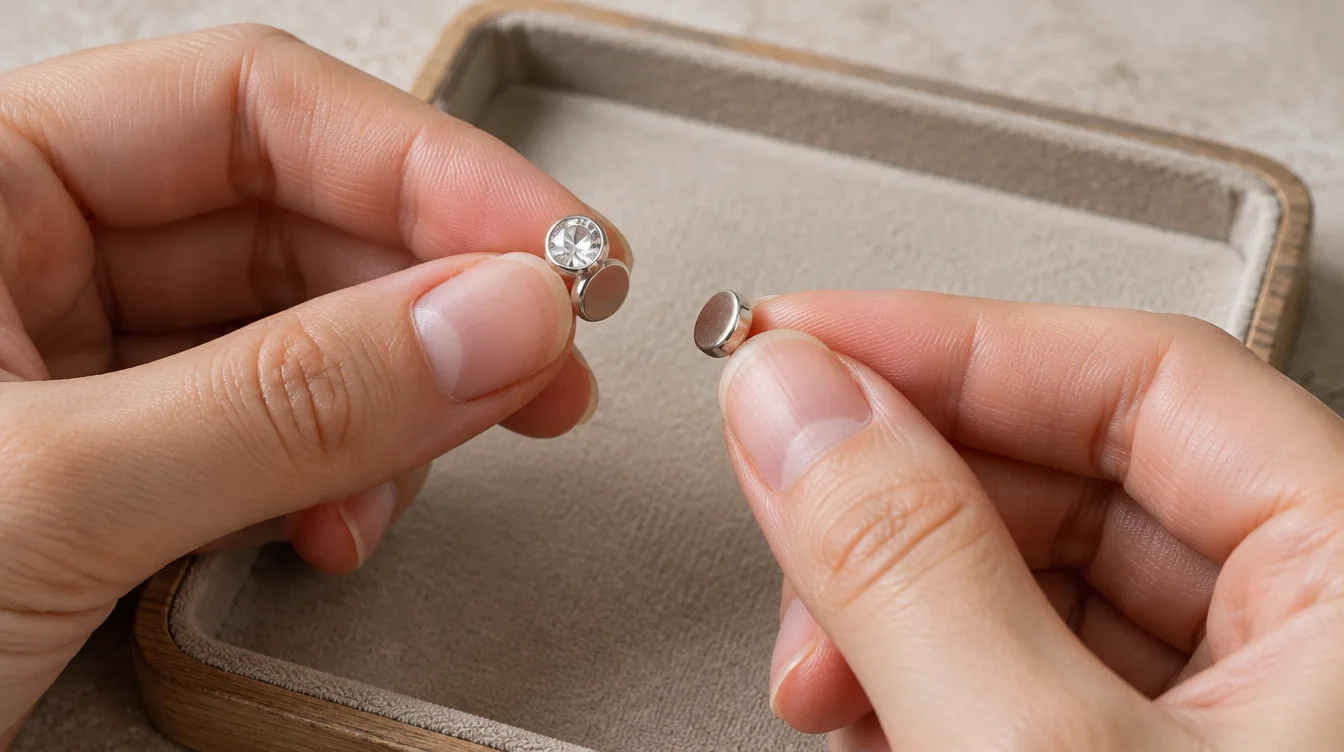
Looks alone will not settle the choice. A short trial on your own ears reveals what a product photo cannot.
How should you test comfort and security before keeping a pair?
A trial fit should check pressure, movement, and handling separately. Put on clean earrings with dry hands. Note how easily each closure opens and closes. Then look in a mirror: both fronts should sit where you meant them to, without one lobe being pulled lower.
Check pressure before testing grip
Wear the pair at home for a short stretch while you sit and walk. Pressure should feel even, not sharp. Remove the earrings if you feel pain, tingling, or numbness. A mark that quickly fades is different from lasting soreness or broken skin, so give your ears a rest if either appears.
For clip-on earrings for sensitive ears, check both the metal and the pad. Skin touches the back fitting as well as the decorative front. A seller’s sensitive ear guide points to pressure, weight, and contact materials as separate causes of discomfort. Ask what each touching part contains rather than relying on a broad claim such as “hypoallergenic.”
Check movement without pulling hard
After the pressure check, turn your head and move your hair as you normally would. Lightly touch the earring front. It should not shift at once, yet it should not need a painful grip to stay on. If a drop swings and tugs with each step, try a shorter or lighter pair.
This is the most useful way to judge how to choose clip-on earrings for a long day: test the actual pair, not just the closure name. Keep the packaging until you know both earrings fit. Ears can differ slightly, so give each side its own check.
Once you know which fitting feels right, the remaining questions are easier to answer.
Common questions about unpierced earrings
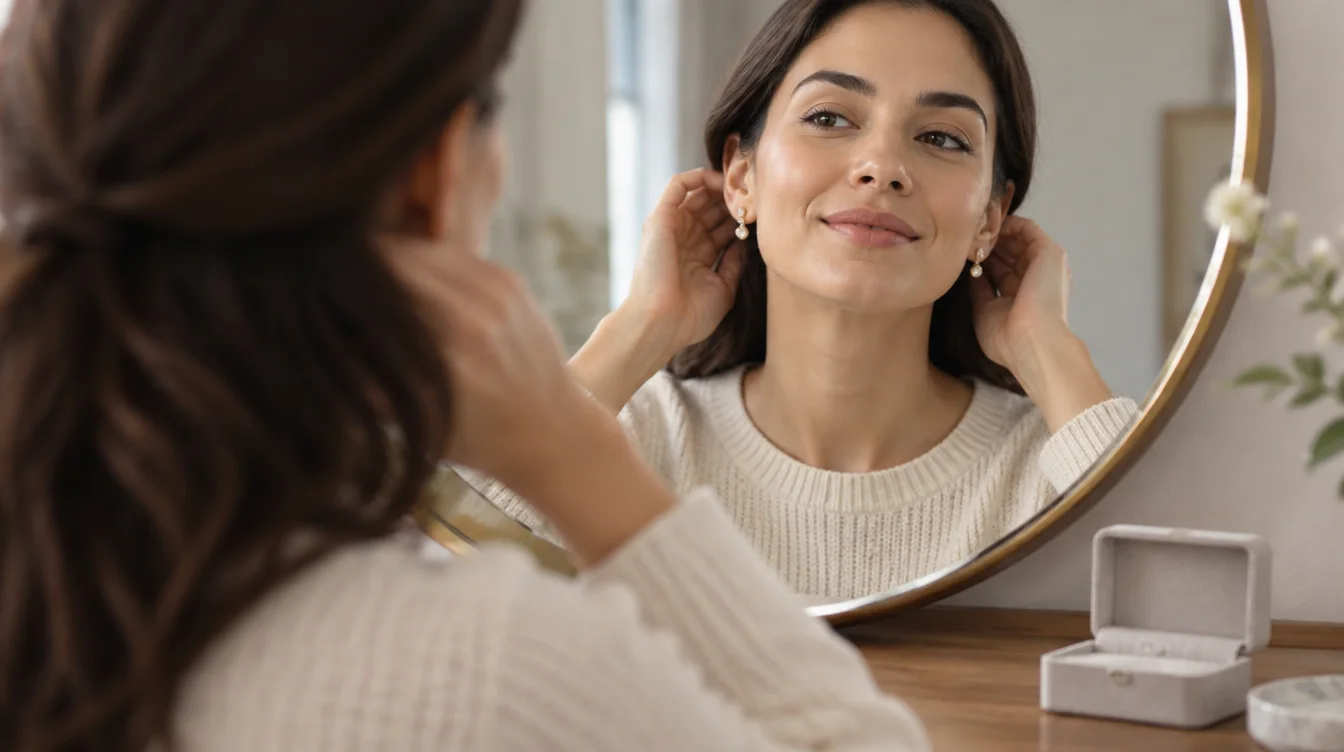
The right ready made pair depends on placement, pressure, and weight. These quick answers cover the choices shoppers most often face.
How do I choose clip-on earrings for thick earlobes?
Look for an opening that fits the lobe without force. An adjustable screw clamp or a clip designed with more room may be easier than a short spring clip. Test the actual pair, since closure names alone do not tell you its opening size.
Can clip-on earrings for sensitive ears still cause a reaction?
Yes. A pad may ease pressure while exposed metal still touches your skin. Check the materials of every contact point, and stop wearing a pair that causes itching, a rash, or lasting soreness.
Does a stronger grip make heavier earrings safe to wear?
Not always. More grip also means more pressure on the lobe. If a heavy pair needs tightening until it hurts, choose a lighter ornament or a different design.
What is the quickest way to tell a screw clamp from a screw back post?
Check the rear product photo. A nonpiercing clamp has two surfaces that meet around the lobe. A screw back post passes through a pierced hole before its threaded back attaches.
With those checks in mind, you can choose a pair for how it wears, not just how it looks.
Choose the pair you can forget you are wearing
Knowing how to choose earrings for unpierced ears starts with fit. Try a light hinged clip for a simple lobe look. Choose a screw clamp when you need to adjust pressure, or a cuff for the outer ear. Choose magnets only when their small parts and fit suit your situation.
When you shop, inspect the fitting as closely as the front. Then try the pair at home before its first full outing. The right earrings should let you enjoy the look without spending the day thinking about your ears.