Wondering how to build a minimalist jewelry collection without buying duplicates?
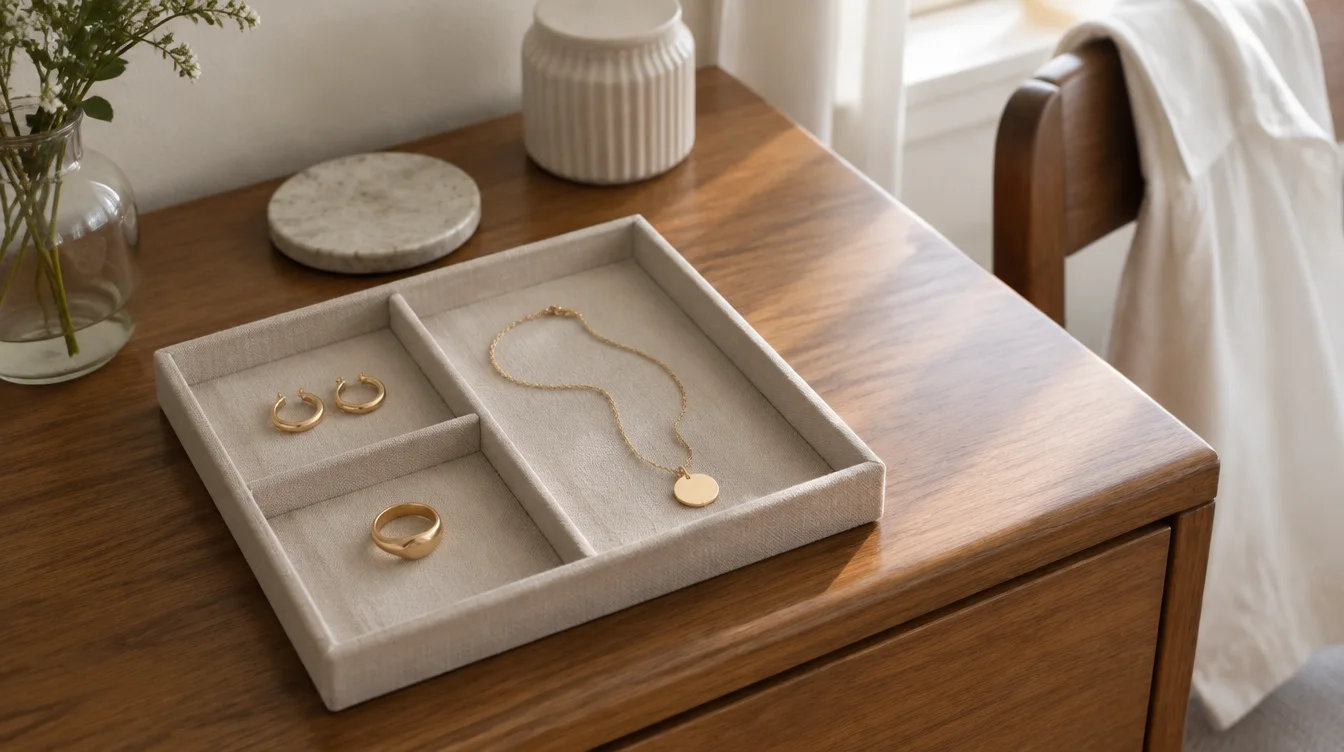
To learn how to build a minimalist jewelry collection, start with what you wear. Buy only pieces that fill a real gap. Let your usual outfits and daily routine guide you, not someone else’s piece count. Keep gifts and heirlooms you value, even if you rarely wear them.
Audit what you wear before you shop
The best starting point is a close look at your actual wear habits. Put your jewelry where you can see it, including the pieces stored in boxes or bags. Then separate what you wear often from what you keep for special reasons.
Do not judge a piece by how much you liked it in the store. Ask when you last chose it over another option. If two necklaces suit the same clothes, but you always reach for one, that tells you more than either product description can.
Notice the roles your jewelry already fills
Think in roles rather than categories. A small hoop and a stud may both be earrings, yet one might be your easy work choice while the other feels right with a dress. Two nearly identical hoops may serve the same role. That is a possible duplicate.
Give each piece a plain description, such as “earrings I wear to work” or “ring I keep on for errands.” A photo record of your jewelry can help if pieces are spread across several places. For this exercise, a few phone photos and short notes are enough.
Separate unworn pieces from unwanted ones
A necklace you treasure is not clutter just because you rarely wear it. Nor is a formal piece you still wear to events. Keep these pieces apart from daily jewelry so they do not skew your choices.
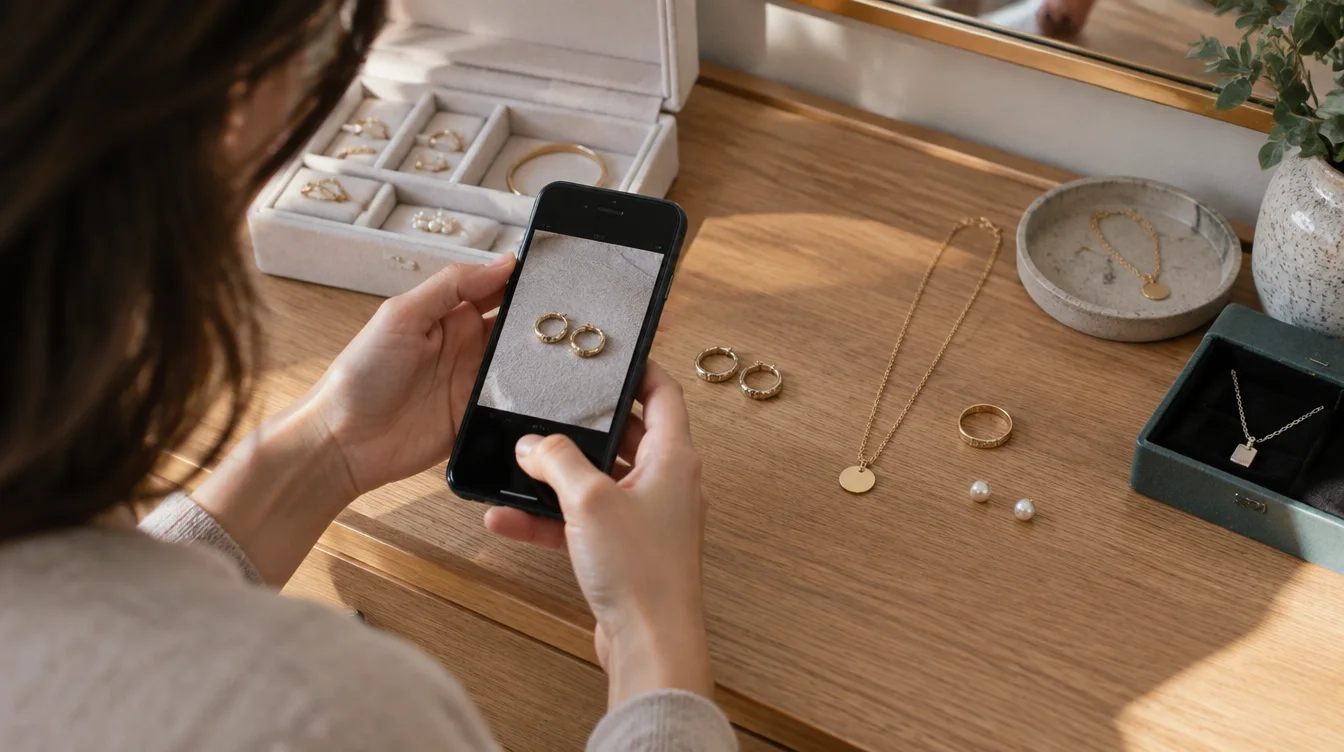
Take a closer look at pieces you expected to wear often. Does the clasp frustrate you? Does the pendant catch on a sweater? Is a ring uncomfortable by lunchtime? Fix what you can, and remember these problems when you shop.
Once you know what earns regular wear, test whether the rest can work with your wardrobe.
How to build a minimalist jewelry collection around your real outfits
A useful collection works with the clothes you wear most weeks, not an imagined version of your wardrobe. Pick a few recurring outfits from work, days off, and any regular social plans. Try your current jewelry with each one.
Someone who wears crew neck tops most days may choose earrings and rings more often than necklaces. Someone who needs bare hands at work may wear a necklace instead. Neither needs to buy jewelry just to complete a standard set.
Use the three outfit test
Before you buy, name three outfits you own that you would wear with the piece. Three is a decision prompt, not a style rule. If only one outfit comes to mind, ask whether you want to pay for an occasional piece.
Be specific. “My black work shirt, blue weekend sweater, and green dress” is a useful answer. “It goes with everything” is not. Try a similar piece you own with those outfits if you can. Its comfort and look may change your mind.
Check what changes when you add it
A capsule jewelry collection needs choice, but not every type of jewelry. One pair of everyday earrings, one necklace, and one ring may be enough for you. Someone else may wear several earrings and never touch a bracelet.
Ask what the new piece lets you do that your current pieces cannot. A second ring may make sense if it feels lighter for daily wear. A second ring with the same look and feel probably adds little.

To spot a duplicate, compare what pieces do, not what they are called.
Find duplicate roles before they reach your jewelry box
Two pieces may be redundant if you would wear them in the same situations but strongly prefer one. They need not look alike. A plain pendant and a small charm necklace can compete for the same outfit, neckline, and mood.
Place the piece you want to buy beside its closest match at home. Ask when you would wear each and how each feels. Does the new one offer a clear benefit? If it wins, you may be replacing a piece rather than adding a new choice. That can make sense, but name the decision honestly.
Compare the job each piece does
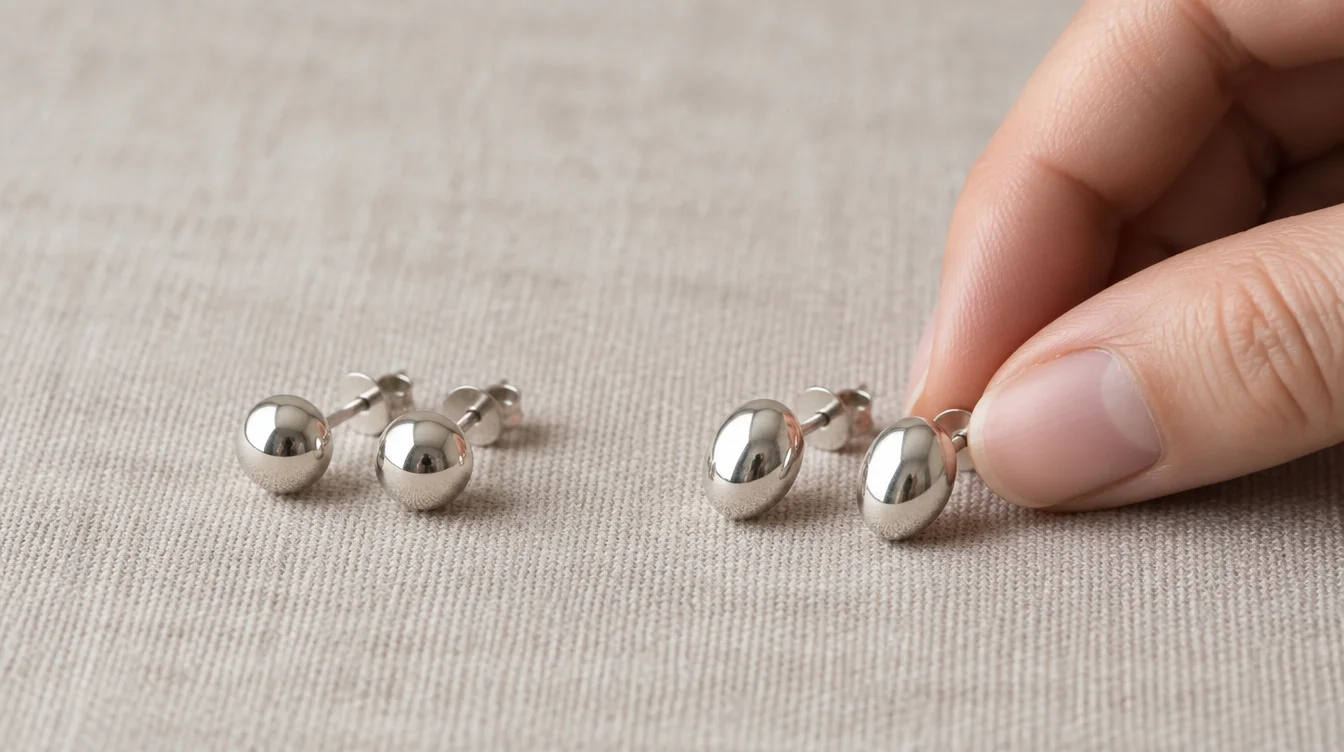
Say you wear smooth silver studs four days a week. Another pair catches your eye in a slightly different shape. If both serve as quiet daytime earrings, they compete for the same job. Earrings you would choose for regular formal events might fill a gap instead.
The same test works for chains, bands, and bracelets. Compare how often you would reach for each piece, not just how they look laid out on a counter.
Allow for backups when they solve a problem
Duplicate roles are not always wasteful. If you rely on one pair of earrings and sometimes leave it behind while traveling, a backup may be useful. If a favorite chain is being repaired, a second chain can keep a pendant wearable.
Still, “backup” should describe a need you have faced, not a reason invented at checkout. In how to build a minimalist jewelry collection, the goal is to avoid accidental repetition, not ban every similar piece.
Once each role is clear, you can decide which kinds of jewelry deserve money first.
Choose minimalist jewelry essentials by use, not by checklist
The right minimalist jewelry essentials fit the life you lead and feel good to wear. Start with the type you wear most. If you put on earrings each morning, improve that choice before buying a bracelet you have never missed.
A practical first purchase might be a comfortable pair of earrings, a chain that works with your regular clothes, or a ring with a low profile. It is not automatically all three. Give the first piece time in your routine before choosing the next.
Buy the piece you reach for, but wish worked better
Your current favorite can show you what to buy. Perhaps you love a necklace’s simple shape, but its clasp is hard to use. Perhaps a ring suits every outfit, yet its raised setting catches on sleeves. Seek the same role with the problem fixed.
Before replacing a favorite, check whether repair would solve the issue. A clasp that sticks may need attention rather than a whole new necklace. If that is your problem, see what can cause a lobster clasp to stop closing.
Leave room for personality
A capsule jewelry collection does not have to be a box of plain, matching pieces. A sculpted band or a pair of earrings with an unusual shape can still be easy to wear. The question is whether you choose it often and enjoy it.
A meaningful piece can earn its place without passing the three outfit test. Keep it as a keepsake or occasion piece instead of forcing it into your daily set. Clear roles leave room for character without turning every appealing design into a purchase.
After choosing the role, look closely at the material and construction that must support it.

Match jewelry materials to how you will wear each piece
The best jewelry materials for everyday wear depend on your skin, budget, care habits, and how much rubbing a piece will face. A ring that meets desks and door handles has a different job from a pendant worn over clothing. Judge both the material and the way the piece is made.
Choose for wear and care, not metal color alone
Solid gold and platinum may appeal if you want a piece without a surface coating. Sterling silver is another option if you like its look and are willing to care for it when it tarnishes. For plain silver pieces, care suited to sterling silver can help you keep what you own in use.
Gold vermeil and other plated pieces can offer a look you like at a lower purchase price than solid gold, but their surface can wear with use. Ask the seller what the base metal and coating are. If a piece causes skin irritation, stop wearing it and check its materials rather than assuming every piece in the same color will feel alike.
These are choices, not a ranking. Someone happy to rotate pieces and care for a finish may choose differently from someone who wants one ring for frequent wear.
Inspect the parts you will handle
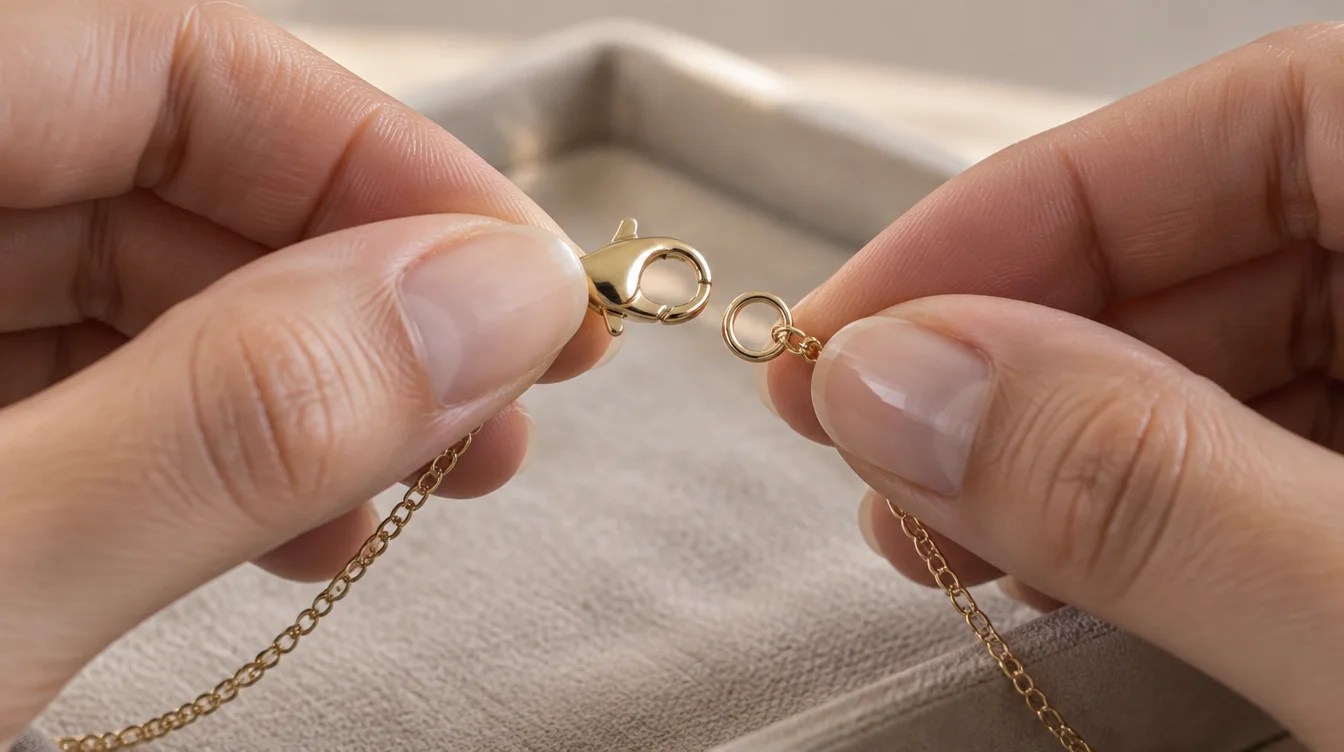
Simple jewelry can still have a rough edge or an awkward clasp. Open and close the clasp before buying. Check that an earring back stays in place. Bend your finger to see how a ring feels. If the piece has stones, consider whether its setting suits your daily tasks.
Knowing how to build a minimalist jewelry collection means judging the whole piece, not just its metal label. A necklace you cannot fasten easily will spend more time in its box, whatever it is made from.
With the role and wear requirements settled, you can make a buying plan that slows down impulse choices.
Buy one gap at a time and skip the rest
The simplest buying plan is to name one missing role, set a budget, and wait until a piece meets both. This keeps an attractive sale item from changing your plan. A discount is not useful when you would not wear the piece at its regular price.
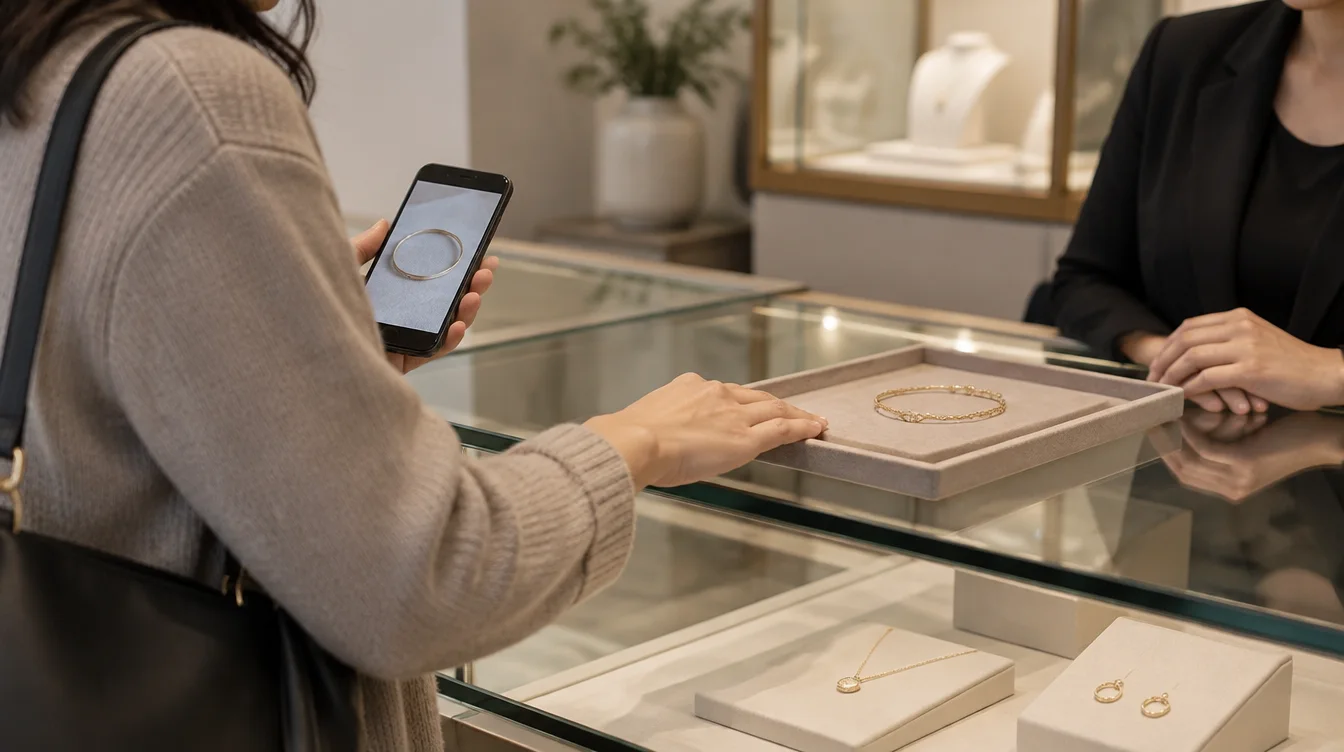
Write a short brief before you shop: what the piece will replace or add, where you will wear it, and what annoyed you about past options. Bring a photo of any piece it might duplicate. You can then compare candidates against your own needs rather than against each other alone.
Use cost per wear as a question, not a promise
Here is an illustrative calculation, not a price claim. Say a piece costs 120 units of your local currency, and you wear it 60 times. Its purchase cost is 2 units per wear. Another costs 60 units but gets worn 10 times, for 6 units per wear. Repairs and cleaning would raise either figure.
You cannot know future wear for certain. Still, estimating it can reveal when a cheaper piece is likely to sit unused. Be honest about your calendar, comfort, and the jewelry you already favor.
Know when to skip a purchase
Skip a piece if you cannot name its job. Pass if it repeats a piece you prefer or needs clothes you do not own. Pause if you cannot resolve a concern about its clasp, finish, or setting. It is easier to walk away now than sort through another unused piece later.
Those same questions also help when you want to reduce what is already in your collection.
Declutter without losing pieces that matter
To learn how to declutter jewelry, sort pieces by why you keep them, not by a set number. Keep daily wear, occasion wear, and sentimental pieces apart. A grandmother’s ring does not need space beside your work earrings in a daily tray.
Start with the easy calls. Set aside broken pieces for repair quotes if you still want them. Give wearable pieces you no longer choose to someone who wants them, or consider resale or donation. Check a piece’s material and stones before judging its value. Looks alone are not a reliable guide.
Put pieces you are unsure about in a separate box. Note why you hesitate. You may need a different chain, a repair, or an occasion to wear one. Revisit the box after some time in your usual routine. If you never sought a piece out, that helps you decide.
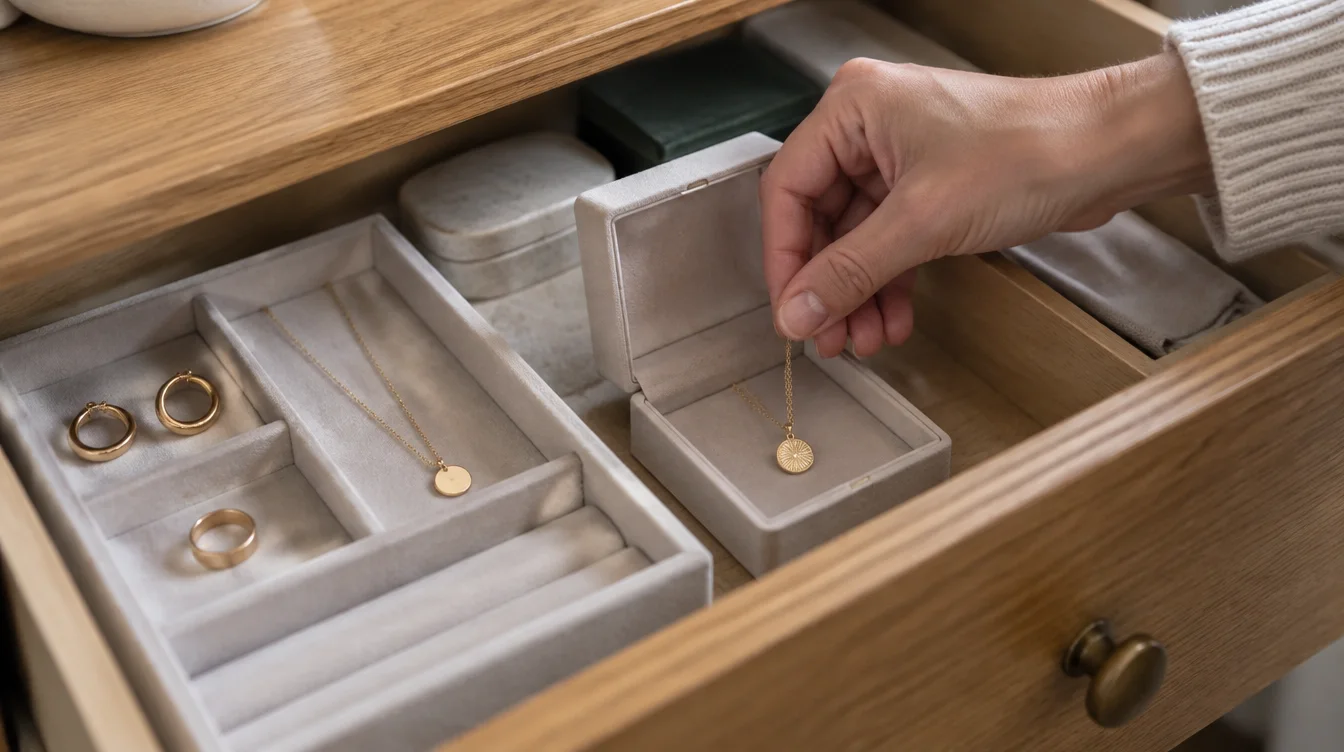
Part of learning how to build a minimalist jewelry collection is making your favorites easy to find. Keep daily pieces in view. Store delicate items so they do not tangle or rub together. That leaves two questions: how much choice do you need, and when is it enough?
Frequently asked questions about a small jewelry collection
A small jewelry collection has no fixed size or required set of pieces. These answers can help you judge yours against your own habits.
How many pieces of jewelry should I own?
The answer to “how many pieces of jewelry should I own” depends on what you wear, how often you change your look, and what you keep for special reasons. Count daily choices apart from keepsakes. No single total can tell you whether your collection works.
What should I buy first for a capsule jewelry collection?
Buy a better version of the piece you already reach for most, or fill a gap you notice often. If you never wear bracelets, a bracelet should not be first just because a checklist includes one.
Can I keep two pieces that do the same job?
Yes, if you enjoy and use both, or if a backup solves a real problem. If one always wins when you get dressed, pause before buying a third with the same role.
How do I know when to stop buying jewelry?
Stop when your usual outfits have choices you enjoy and new candidates do not fill a clear gap. You can still buy a special piece later; just give it an honest role before paying for it.
Those answers bring the decision back to what a collection is meant to do for you each day.
Let your favorite pieces set the limit
Knowing how to build a minimalist jewelry collection does not require perfect taste or a strict piece count. It takes attention to what you wear, what bothers you, and what a new purchase would change. Begin with your jewelry box and three real outfits. Then choose one gap to fill, or decide you have none.
Try that check before your next purchase. You may find the piece you need is already yours.