How to Arrange Birthstones in a Family Ring Without Sending the Wrong Message
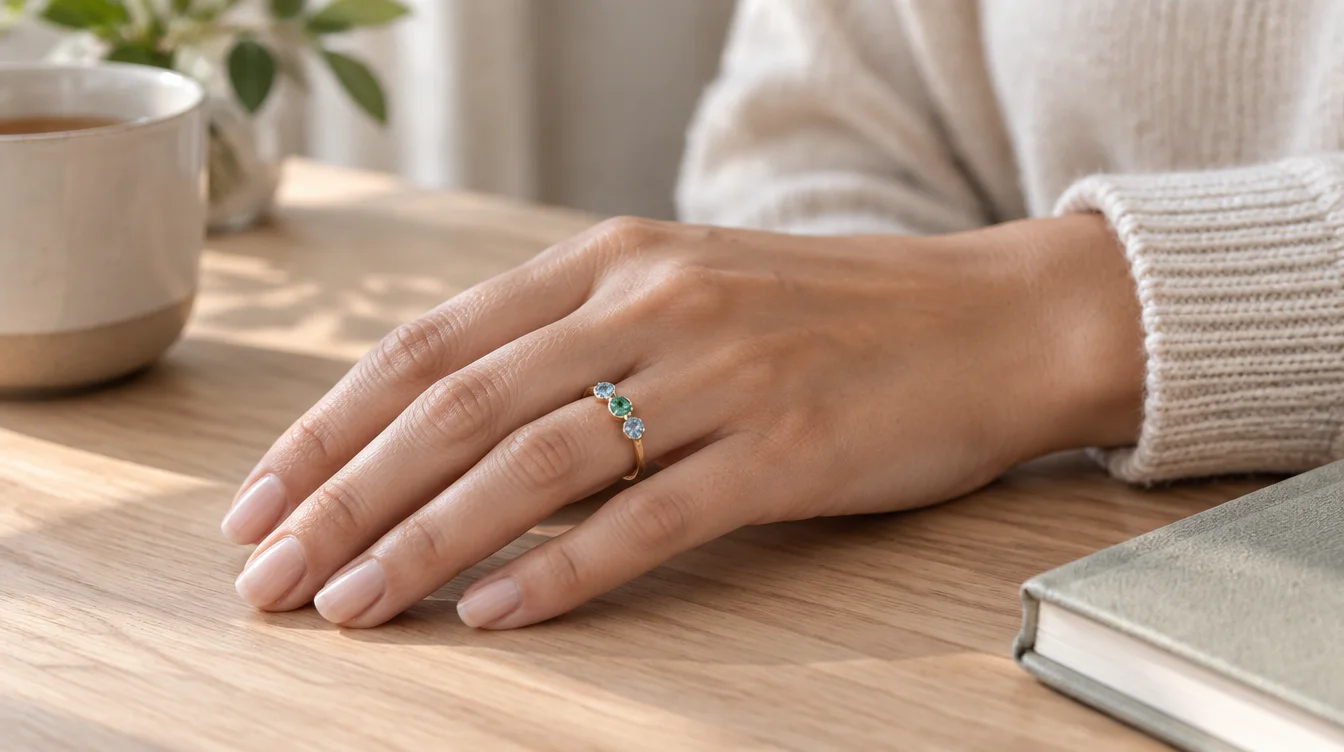
Decide who the ring represents, then choose a stone order you can explain in one sentence. That is the simplest answer to how to arrange birthstones in a family ring. Birth order is easy to remember, while color balance can suit an uneven mix of gems. Neither choice works well unless you confirm who owns each position and ask whether the design can take more stones later.
Decide whose stones belong in the ring
A family ring needs a clear guest list before it needs a layout. Some rings represent children only. Others include a partner, a parent, or grandchildren. Choose the group that matches the wearer’s idea of family, rather than assuming every relative must appear.
If the ring is a gift, ask a quiet question before ordering. Would the wearer want their own stone included? What about a child who joined the family through marriage or adoption? These are personal choices. A jeweler cannot make them by picking a pattern.
Think about how the family may change. A ring for two children may later need a third stone. You cannot plan for everything. Still, decide whether the ring shows the family now or should grow with it.
Write each person’s name beside their birth month. That small record will keep the next choice, stone order, tied to people rather than colors.
How to arrange birthstones in a family ring without implying rank
Choose a stone order the wearer can explain. Birth order tells a timeline. Balanced color placement puts the look first. Pick the rule before judging how the stones look together.
Use birth order when the ring tells a family timeline
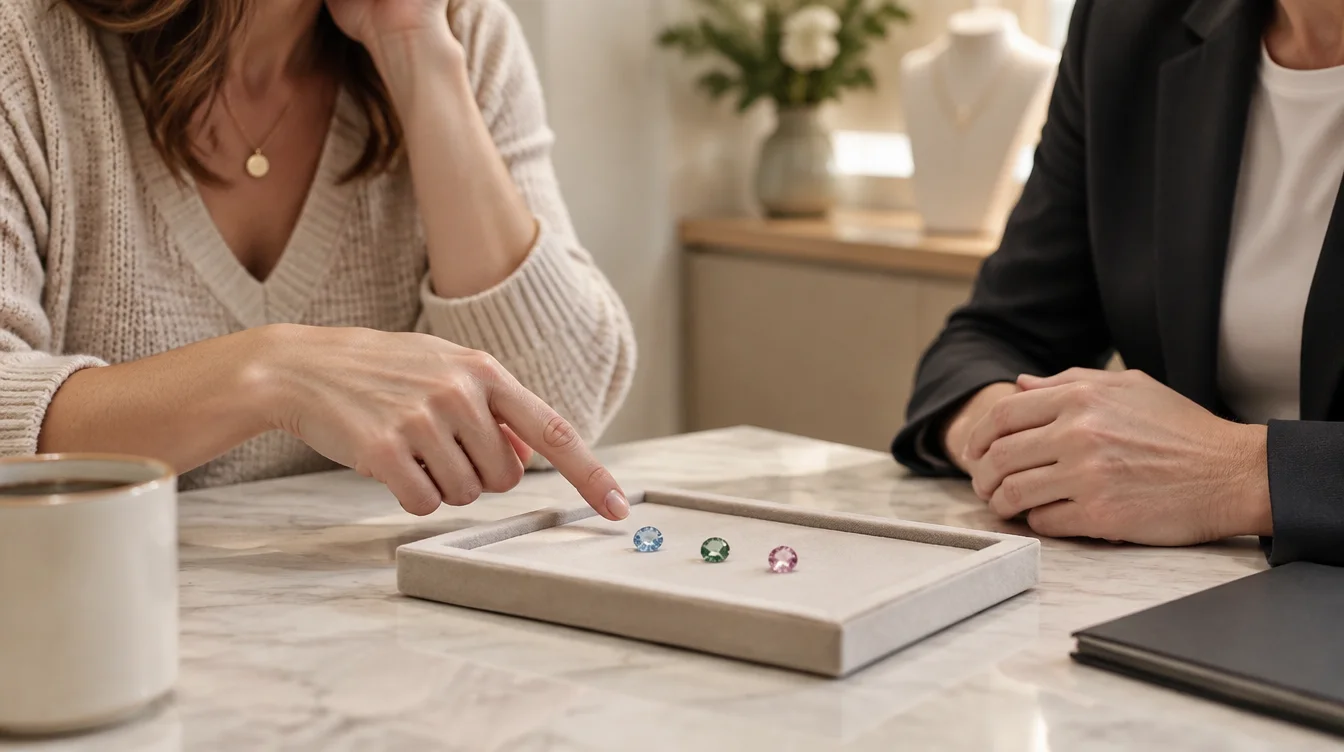
For children’s stones, oldest to youngest is easy to explain. If parents are included, decide where their stones go. They could come first or sit apart from the children’s stones. Also record which way the jeweler reads the positions: from the wearer’s left or from the front.
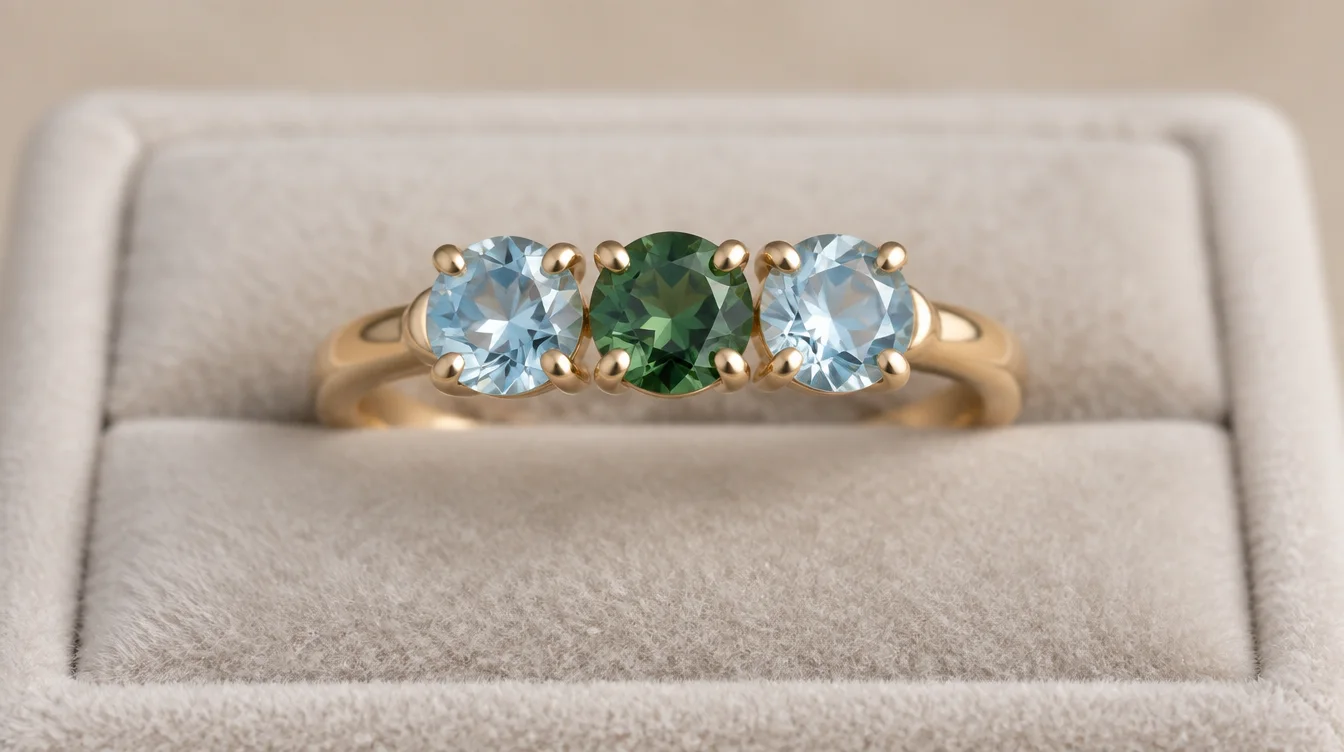
A three stone example makes the point. Suppose Ada was born in March, Ben in May, and Cora in March. Birth order gives Ada, Ben, Cora, even though the first and last stones match. No stone has to be larger.
Use color balance when the layout matters more than sequence
Color placement can give mixed stones a calmer look. It helps most in a cluster with no clear first position. Keep each person’s stone in the plan. Write down the final positions, too.
A center stone may seem to mark the “most important” person. That can happen even when you chose it for color. If that would bother the wearer, choose similar stone sizes or a row with no focal point. If the center has a special meaning, tell the family what it is.
For another view of how stone pairs share attention, see this guide to balancing two gemstones in a ring. Once the order feels right, check what repeated months do to that plan.
Give repeated birthstones their own place
People born in the same month can have matching stones in separate spots. You need not change one person’s gem just for contrast. The person assigned to each spot gives the stones their meaning. Unique colors are not required.
In the Ada, Ben, and Cora example, two March stones frame May’s stone. The look is balanced, but the order still follows their ages. For a cluster, a small engraving could help the wearer tell the March stones apart.
Ask if names or initials will fit without crowding the ring. If engraving will not fit, keep the approved sketch with the receipt. Years later, that record may help more than a color chart.
Matching stones solve the visual question. The next step is making sure the finished ring matches the plan you approved.
Approve a labeled sketch before the ring is made
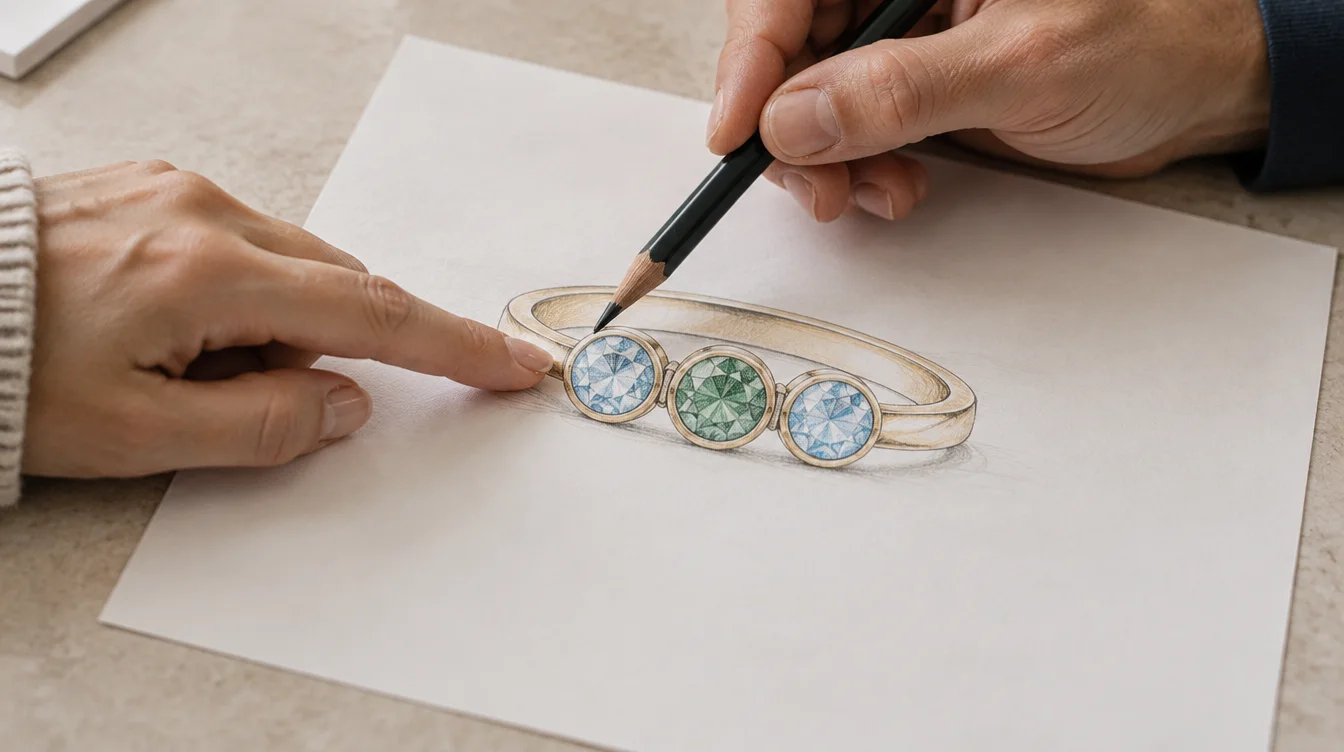
A labeled sketch can catch an order mistake before the ring is made. Ask to see the ring as it will be worn. Each stone position should have a number, name, and month. A list of gems alone is not enough.
Check people, positions, and proportions
Read the sketch aloud: “Position one is Ada, position two is Ben.” Compare it with the order form. Does the drawing show the wearer’s view or the front view? A reversed view can turn a correct list into the wrong layout.
Check stone size as well as color. A larger center gem may be part of the setting. It may also suggest a family ranking you did not mean. If you want equal visual weight, ask to see equal size stones in the drawing.
Put personal choices in writing
For custom family birthstone rings, a short note can prevent a long misunderstanding. It might say, “Children in birth order from the wearer’s left, with equal size stones.” If you choose color order instead, list each name beside its final position.
The FarahBlush arrangement guide also says to record who belongs in each position. Match that map to the seller’s order instructions. Your chosen order only works if the maker gets the same map.
Save the approved version. Then ask what the design can actually accommodate if the family grows.
Plan future additions before choosing the setting
Whether a stone can be added later depends on the ring’s design. Ask how many stones the setting can hold and where a new one would go. Would it shift the current order or call for a new ring? The jeweler’s willingness alone cannot answer those questions.
Ask about an expandable design
For custom family birthstone rings, ask for a clear addition plan. “Can another stone be set beside the last one?” is more useful than “Can this be changed later?” Before you approve the design, ask the jeweler to put any limit in writing.
An empty spot can work if the wearer likes its look. It can also make the ring feel unfinished. You could finish the ring now and accept that a later change may need a new setting.
Consider a separate band instead
Stackable birthstone rings give each new person a separate band. The first ring’s stone map stays as it is. But several bands take more room on a finger. Their settings may not sit neatly together, either.
Try sample bands together if you can. Ask if their profiles meet well and if one more band would still feel comfortable. Stackable birthstone rings suit a family that may grow. One shared setting suits someone who wants a single finished piece.
With an addition plan in hand, the last questions become easier to answer.
Frequently asked questions about family birthstone rings
These are the questions worth settling before you place an order.
How to arrange birthstones in a mother's ring?
For how to arrange birthstones in a mother's ring, start with who she wants represented. Put children in birth order for a clear timeline, or use a labeled color layout if she prefers the look. Ask before placing her own stone at the center.
What does a family birthstone ring mean?
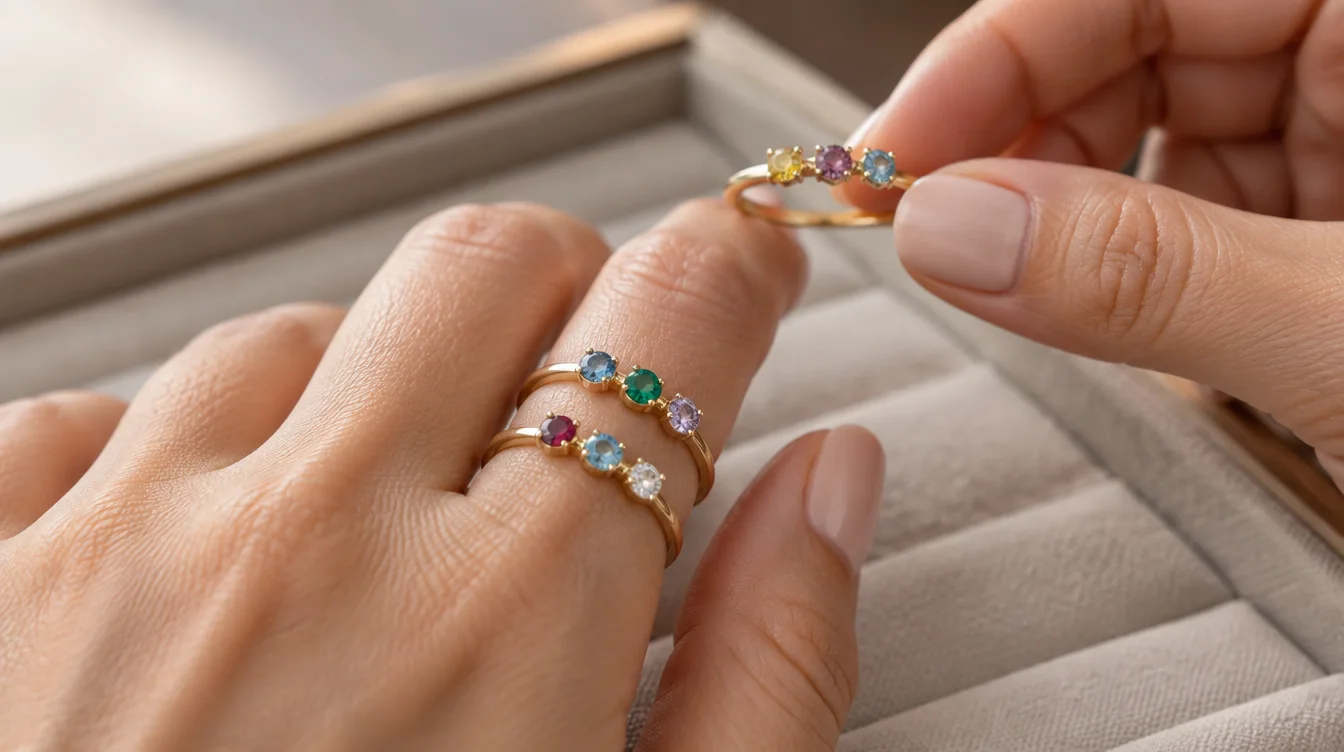
Family birthstone ring meaning comes from the people each stone represents. A center gem, matching pair, or birth order can add private meaning. No layout sends the same message to every family.
Can you add stones to a mother's ring?
If you ask, “can you add stones to a mother's ring,” check its setting and free space. Ask the maker about that specific design. Some rings may need a new setting to hold another stone.
Why choose separate bands over one family ring?
Separate bands make later additions easier to plan. They leave the first ring’s stone order intact. A single ring may look tidier, but confirm its capacity before it is made.
Those answers bring the choice back to the wearer and the story the ring should tell.
Make the ring’s story easy to keep
There is no hidden rule for how to arrange birthstones in a family ring. Choose the people, agree on an order, and approve a sketch that names every stone. If future additions matter, ask the maker for a clear plan now, not after the ring is finished.
Before you order, give the jeweler your map of people and stone positions. Ask to approve a labeled design. The wearer will have a ring whose meaning is clear and whose layout matches your plan.