Why hematite vs magnetic hematite Can Change What You Think You Bought
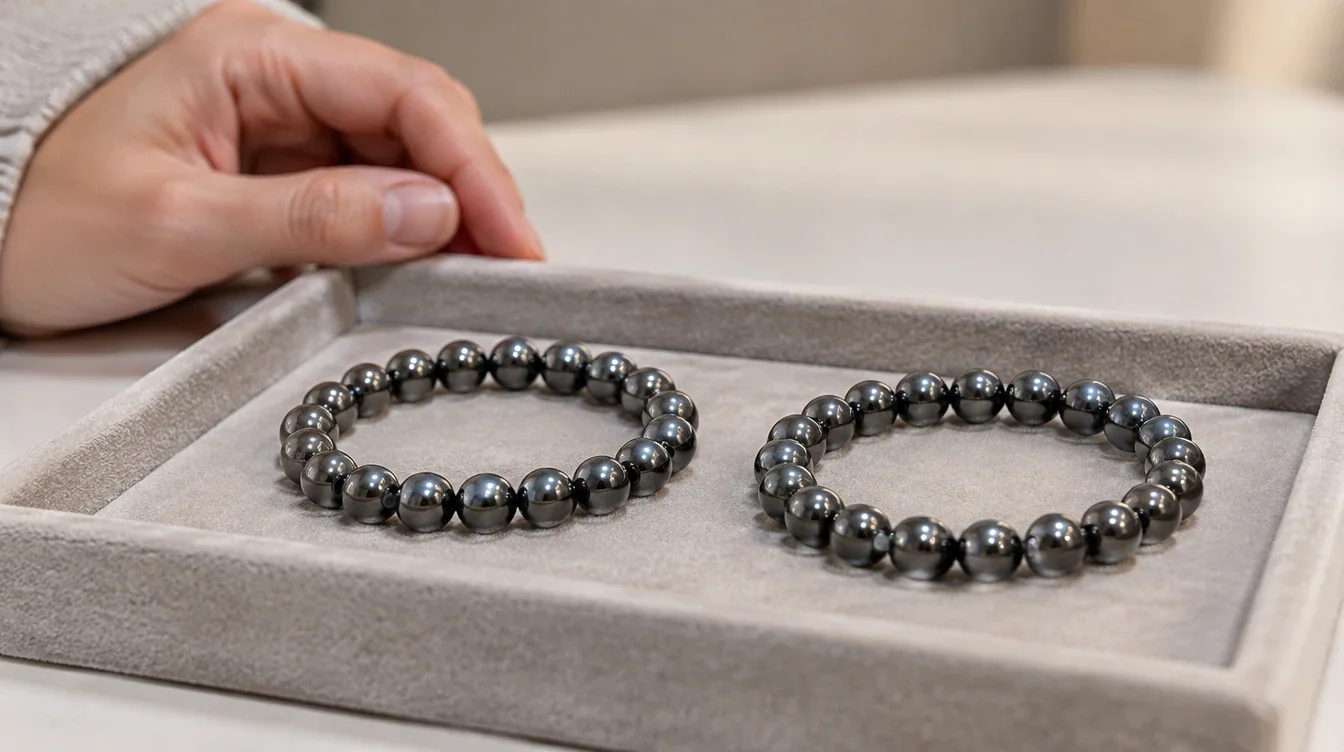
Strongly magnetic beads sold as hematite are usually lookalikes, not natural hematite. They are made to copy the stone, according to Fire Mountain Gems. For hematite vs magnetic hematite, focus on what the beads are made of. The difference is not just how strong their magnetic pull is. A clasp can confuse the check. A whole bracelet's pull does not tell you what each bead is.
What the bead names actually mean
Natural hematite and manufactured hematine can look alike. They are not the same material. Fire Mountain Gems distinguishes natural hematite from Hemalyke, its branded imitation. The supplier says hematine is manufactured to look like the stone.
For hematite vs hematine, ask what you are buying. Is it a cut natural mineral or a copy of its look? Neither needs a sales story. Both need a clear, honest description.
Read Hemalyke as a material clue
The hematite vs hemalyke comparison is not about two grades of natural stone. Hemalyke names a manufactured alternative. Ask the seller to confirm that identity on your receipt, rather than relying on a display card that says only “hematite.”
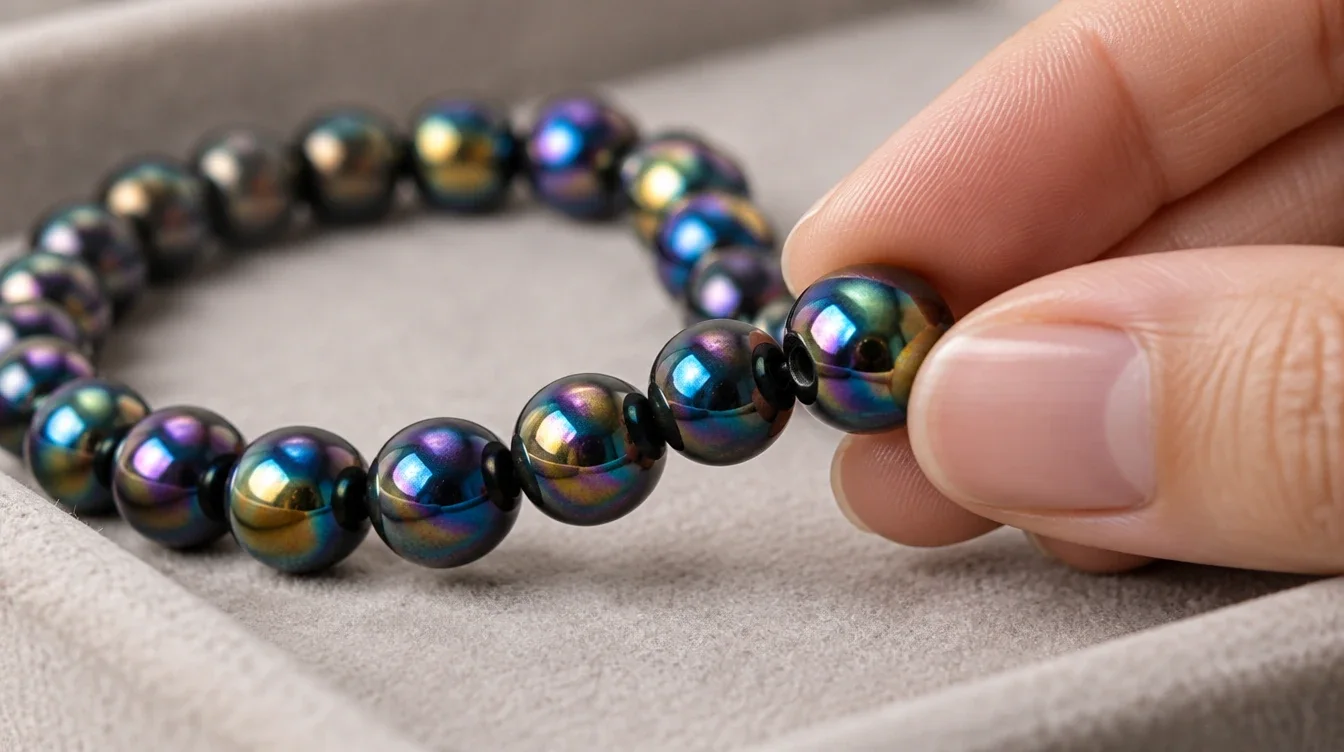
Keep the rainbow finish and the bead beneath it separate. Fire Mountain Gems describes titanium based electroplated finishes on hematine and Hemalyke. That color does not prove what is inside.
Once the names are clear, the magnetic clues make more sense.
Why strong magnetism raises a question
A strong pull casts doubt on a natural hematite claim. It does not prove the bead is genuine. RockIdentifier describes natural hematite as weakly magnetic to nonmagnetic and magnetic hematine as a manufactured bead material.
So, is hematite magnetic? A weak pull is possible. Beads that cling firmly together need a closer check. Not every magnetic stone is manufactured, though.
A magnet narrows possibilities
Magnetite is a natural mineral with strong magnetic behavior, as the same mineral comparison explains. A strong pull alone cannot distinguish magnetite from every manufactured alternative. It also cannot name a bead's exact chemical recipe.
To ask what is magnetic hematite made of, start with the supplier. Ask for its material specification. Product descriptions often name ferrite products. That does not prove what your bracelet is made of.
No visible pull does not prove natural hematite either. Treat what you see as one clue. Then check which part caused the response.
Separate the clasp from the beads
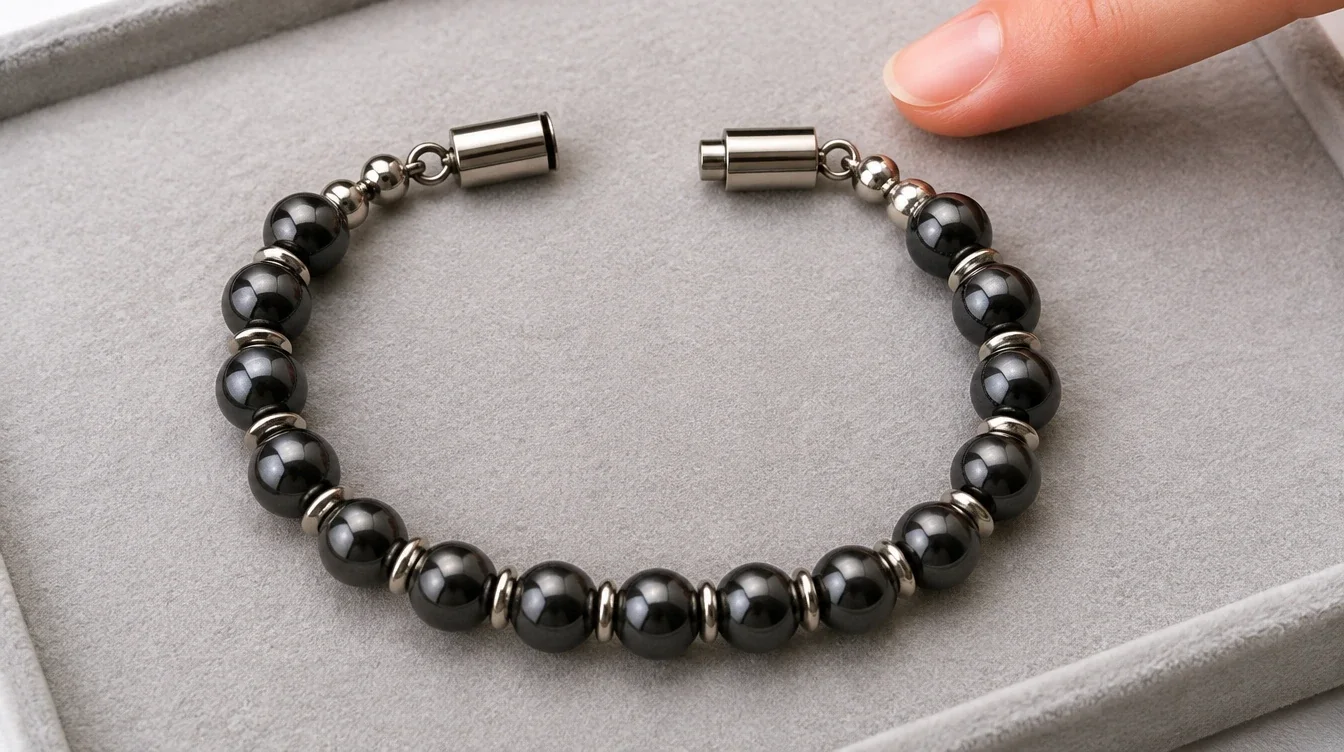
A clasp's magnetic response tells you about the clasp. It may not tell you about the stones. Check where the movement starts before judging the piece. Is it a bead, metal spacer, or closure?
Lay the piece on a clear surface. Look at how it is put together. If you gently check a bead's magnetic response, keep the clasp away. Do not drag the bracelet, pull against its cord, or let beads snap together.
Two illustrative bracelet checks
Only the closure responds
Imagine a bracelet whose clasp moves while the beads show no clear response. Write down just what you saw. Calling the whole bracelet “fake hematite” would go beyond that result. You still need a clear description of the bead material.
Several beads cling together
Now imagine beads pulling toward each other away from the closure. That gives you reason to ask what they are. Are they manufactured magnetic material? The pull does not prove the supplier's formula. A product photo cannot settle that either.
If you have an implanted medical device, skip casual magnet tests. Seek medical advice instead. Our advice on magnetic closures explains why device details matter.
Check where the pull comes from so the result does not mislead you.
Why a streak test is wrong for finished jewelry
A hematite streak test rubs off material. The test is not harmless to polished jewelry. Hematite's characteristic streak is reddish brown, but making that powder rubs material off the surface.
A useful mineral test can still be a poor jewelry test.
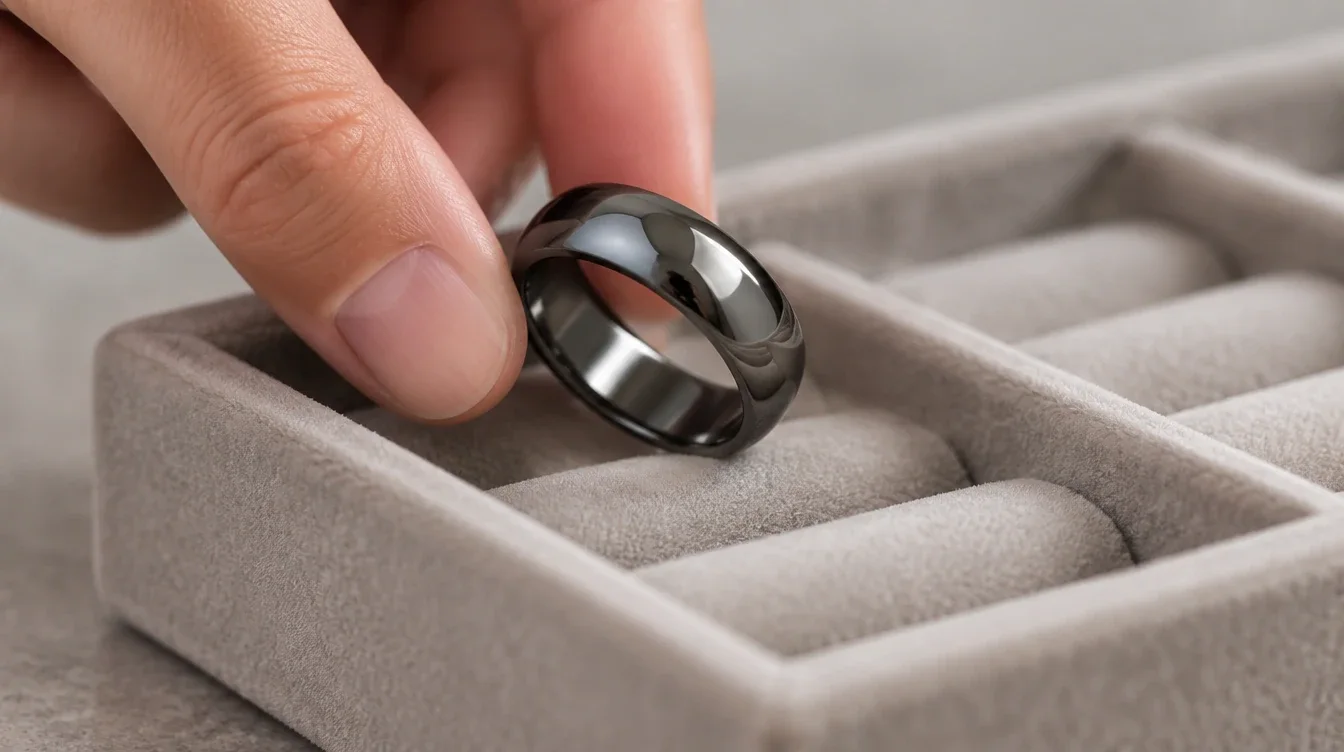
When learning how to tell if hematite is real, keep the type of piece in mind. A loose specimen meant for testing is one thing. A polished ring, inherited pendant, or strand you may return is another.
Keep the finish intact
Do not scrape a bracelet across a plate or tile. Skip knife scratches, solvents, and attempts to expose the bead's core. Ask a gemologist which checks suit the piece. Do that before agreeing to a test that leaves a mark.
Weight and shine alone cannot tell you what a bead is. Fire Mountain Gems says natural hematite and its manufactured lookalike both have heft. Both have a metallic look too. That is why touch and sight alone can mislead you.
Ask the seller next, rather than damage the piece for an uncertain answer.
How to compare hematite vs magnetic hematite before paying
Before prices, check the stated material and proof of that claim. Read the return terms too. Natural origin matters only if you want it. The seller must also be able to back the claim.
Ask plainly: “Are these beads natural hematite, manufactured hematine, or another named material?” Then ask if the beads have a coating. Does the magnetism come from the beads or the clasp?
Save the reply with the listing and receipt. You will have a record of what was promised. That is better than relying on your memory of a chat.
Match the evidence to your decision
The label “genuine magnetic hematite” needs an explanation. On its own, it does not prove natural stone. Ask what backs the natural origin claim. Manufactured beads may suit you if you just like the look. The seller should still name what they are made of.
Ask a qualified gemologist before paying for a costly piece. Do the same if you doubt the seller's description. Ask how they can identify the beads. Fire Mountain Gems advises a professional check when you need to know if hematite is natural. Ask what that check covers. Will they check one bead or the whole strand?
For hematite vs hematine, compare beads of similar size and finish. Compare how they are built and the seller's terms too. Price alone does not prove a bead is genuine. These checks help answer the questions below.
Questions buyers ask about hematite beads
For clear answers about hematite, keep clues separate from proof. That applies to each question below.
How can I check whether a bead is magnetic?
For “is hematite magnetic,” check the bead away from nearby hardware. A strong pull is reason to ask what the bead is. No pull does not prove natural origin.
What should a magnetic hematite seller disclose?
Ask “what is magnetic hematite made of” when you shop. Seek the material's name for that piece. Claims about shine or benefits do not answer the question.
Does Hemalyke mean natural hematite?
No, hematite vs hemalyke compares natural stone with a branded manufactured lookalike. Sellers who promise natural stone should not use those names as if they mean the same thing.
Can I confirm authenticity without scratching my bracelet?
Want to know how to tell if hematite is real? Ask for the material's name in writing. Seek professional advice too. Do not try a hematite streak test on finished jewelry just to find out.
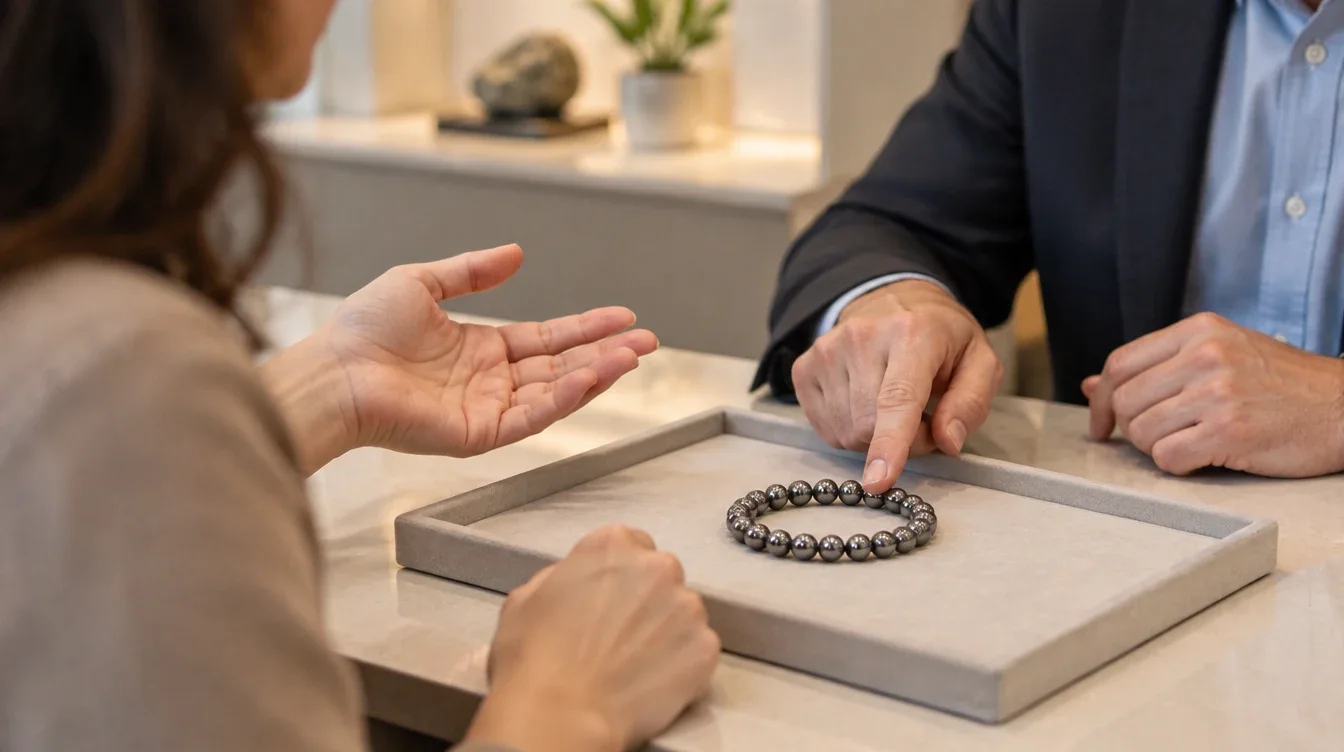
With those limits clear, choose the piece for what it actually is.
Buy the bead, not the promise
Choose natural hematite if its origin matters to you. Ask for evidence to back that claim. Manufactured beads can suit you if you like them. Their material should be clearly stated too. Before you order, ask the seller what the beads are made of. Keep the reply. If the answer stays vague, wait until someone can explain exactly what you would get.