Could a flush vs bezel set men's wedding band change how your ring wears?
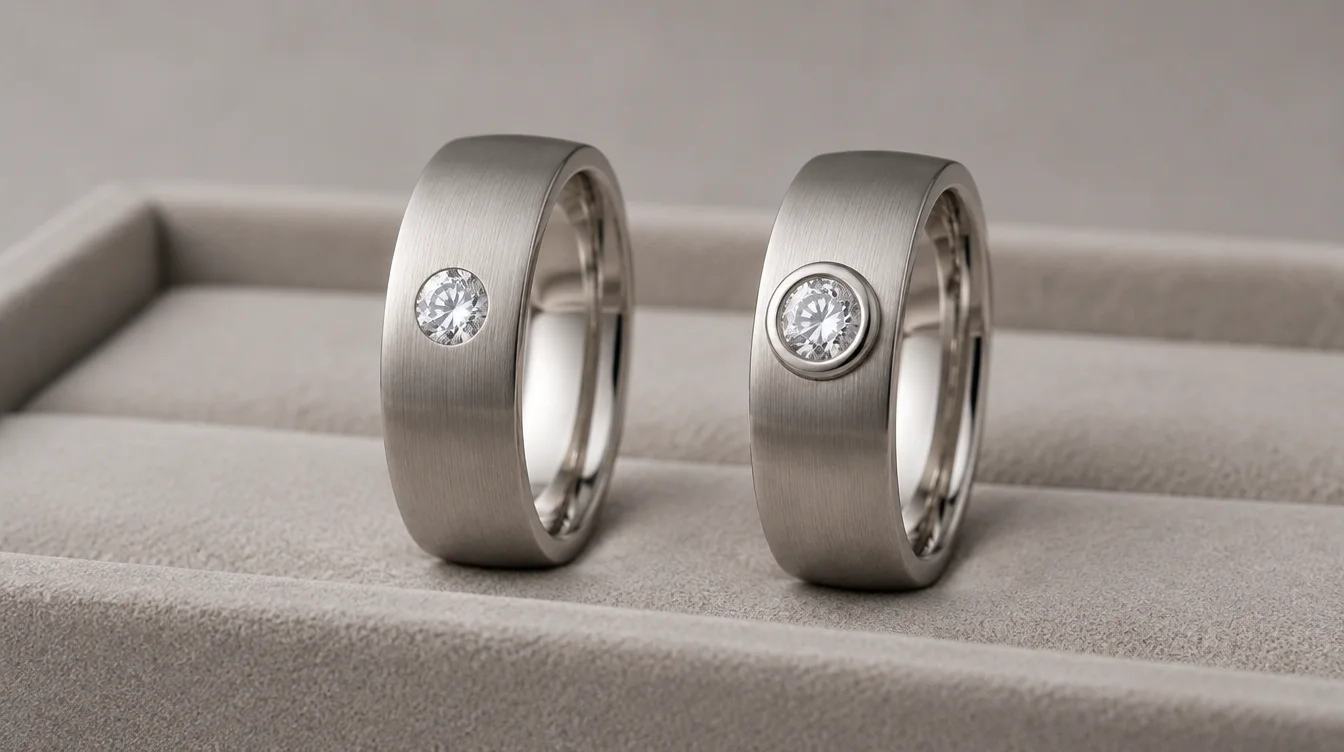
Choose a flush setting if you want the diamond set into the band with the smoothest possible surface. Choose a full bezel if you want a visible metal frame and more room to make the diamond a feature. In a flush vs bezel set men's wedding band, neither construction is automatically safer: security depends on sound metalwork, a suitable stone size and the finished ring’s profile.
What changes in a flush vs bezel set men's wedding band?
The key difference is where the metal holds the diamond. A flush stone sits in a seat cut into the band, with metal worked over its edge. A bezel uses a separate rim, or one formed as part of the ring, that folds over the stone’s edge. Both can avoid exposed prongs, but they do not create the same shape on your hand. Market Square Jewelers describes flush stones as sitting within the band and bezel stones as having a visible frame.
A flush set men's wedding band often looks like a plain ring until light catches the diamond. A bezel set men's wedding band gives that same diamond a clear outline. Picture two rings with the same width, metal and round stone. In one, the band remains the main visual shape. In the other, your eye goes straight to the framed stone.
Ask to see the rings from the side as well as from above. That view reveals a difference photos often hide: how far the setting rises from the band.
Does flush always mean lower than bezel?
No. A flush diamond usually sits within the band’s surface. A bezel may sit level with the band or rise above it. The setting name alone does not tell you the finished height. A thick band with a deeply recessed bezel may feel smoother than a thin band with a raised flush stone or raised metal around it.
Check the highest point, not the setting name
Place the ring on a flat surface and look across its top. Does any part of the bezel rise above the shoulders of the band? Does the metal around a flush stone form a bump? Then run a fingertip lightly across the setting. You are checking the finished shape, not trying to test whether the stone will move.
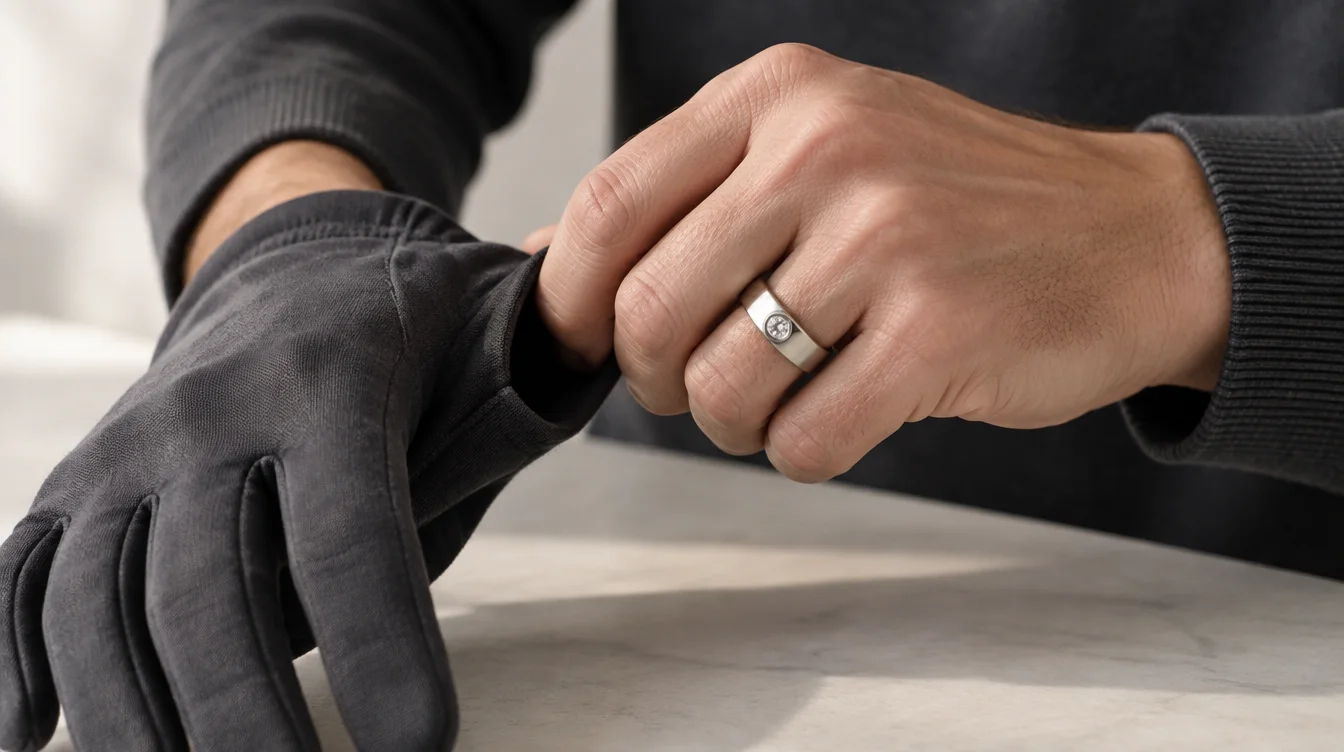
For someone who pulls on work gloves each day, the highest point matters more than a product description that says “low profile.” Gloves can catch a raised rim even when that rim has no sharp edge. A smooth, level bezel may suit the same routine just fine.
Look at the band beneath the stone
A diamond needs space below its visible top. On a thinner band, cutting a seat for a larger flush stone may leave less metal beneath or beside it. A jeweler may instead choose a taller band, a smaller diamond or a bezel that rises above the band. Those are design choices, not faults by themselves.
If you want a large stone and a slim ring, ask what the finished cross section allows. Once height is clear, compare how much metal each design leaves around the diamond.
How does the metal around the diamond affect its look?
Flush and bezel settings both cover part of a diamond’s edge, but they show that metal in different ways. A flush setting blends the stone into the band. A bezel draws a line around it. Neither tells you, by itself, which diamond will look brighter.
Flush metal becomes part of the band
In a flush set men's wedding band, the diamond appears to emerge from the metal. That can look especially clean with one small round stone. Add several stones, and the spacing becomes part of the design. Equal gaps feel orderly; varied gaps can look deliberate when the layout has a clear pattern.
Close work matters here. Check that the metal around each diamond looks even and that no edge seems rough. A ring can be smooth to the eye yet feel sharp when your finger crosses the setting.
A bezel makes the rim visible
In a bezel set men's wedding band, the rim may be fine and quiet or wide enough to become a design feature. A wide rim can make a small diamond look more framed, while covering more of its outer edge. A thin rim shows more stone, but it still needs enough sound metal to hold it.
Do not judge sparkle from the setting name alone. Diamond cut, surface dirt, rim width and lighting all affect what you see. Compare finished rings under the same light, then ask to see them away from the bright display case. Appearance matters, but daily security deserves its own test.
Which setting holds up better in daily wear?
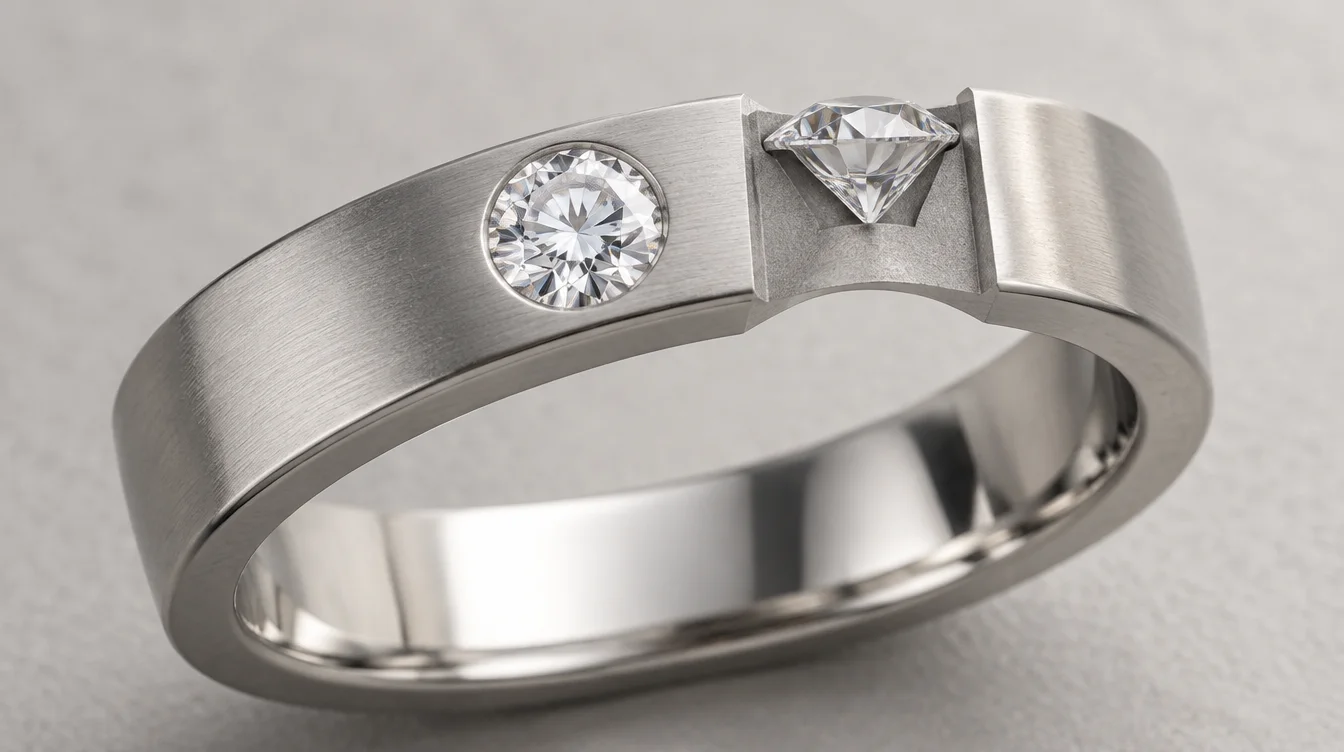
Neither setting wins every security comparison. A well made flush setting and a well made full bezel both protect a diamond’s edge and avoid exposed prongs. Hendrickson’s Jewelry notes that bezels cover the stone’s edge and that setting choice should account for activity, stone size and maintenance. What matters most is the actual ring in front of you.
Where a flush setting can struggle
The seat must fit the diamond, and the surrounding band needs enough metal to hold it. Wear or damage near the stone can change that grip over time. A flush stone also has no raised rim around it, so its top may take direct contact when the ring strikes a hard surface. Flush setting pros and cons start with that tradeoff: a very smooth exterior, but less design room in a thin band.
Suppose you want one diamond in a narrow band you plan to wear for decades. Ask whether the chosen stone leaves enough metal around and below its seat. If the answer calls for a thicker ring, try that thickness on before you order.
Where a bezel can struggle
A full rim shields the stone’s edge, but it can still wear, bend or lift after a hard blow. A raised bezel can also take a hit before the rest of the band does. Bezel setting pros and cons depend on how the rim is built, not just whether a product page calls it a bezel.
Check whether the rim meets the stone evenly all the way around. Ask if it is a full bezel; a partial bezel leaves some edges open. For a ring worn during heavy work, neither design makes the diamond or your finger safe from every impact. The setting comparison from Market Square Jewelers treats both designs as protective options, not as a promise against damage.
The “most secure diamond setting” depends on the specific ring and how you wear it. Next, compare two designs with similar proportions.
How should you compare two rings before buying?
Compare rings with the same diamond size, band width and metal whenever you can. Otherwise, a tall bezel beside a wide flush band tells you more about those two designs than about the settings themselves. Men's diamond wedding band settings make more sense when the other choices stay as close as possible.
Use the same daily wear test
Try each ring with your hand relaxed and then closed around a bag handle. Notice whether the setting presses against the next finger or catches fabric as you slide a glove over it. These simple checks cannot prove long term durability, but they can reveal a shape that annoys you now.
Ask about the stone seat and surrounding metal
For a flush ring, ask whether the band has enough metal at the stone’s sides and beneath its seat. For a bezel, ask how the rim is formed and whether it sits above the rest of the band. A jeweler should be able to show you the side profile and explain the finished construction without relying on a style name.
Ask what can be inspected later
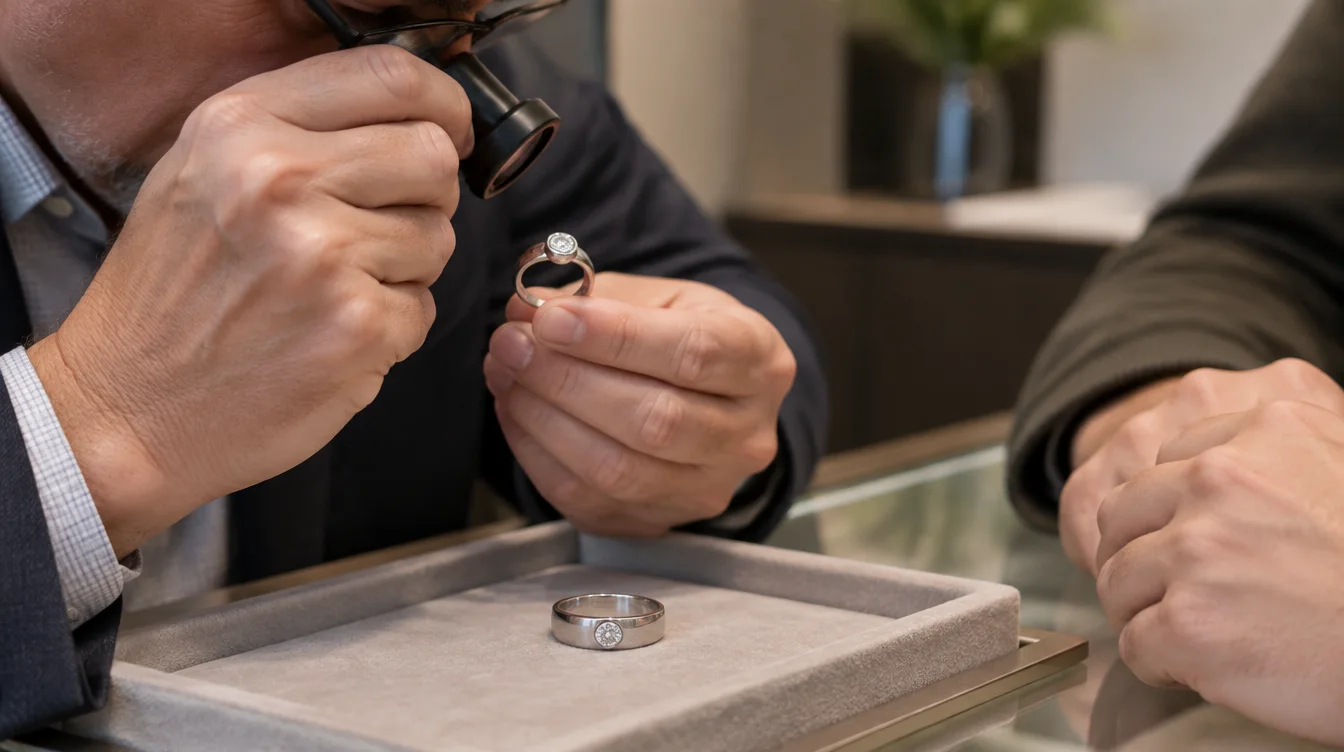
Have the jeweler show you what a sound setting looks like under magnification. Ask what changes should bring you back: a gap at the rim, a rough edge, movement in the stone or a fresh dent near it. Do not try to tighten a stone yourself. If it moves, stop wearing the ring until a jeweler checks it.
Also ask where a future size change would be made and whether the stone placement limits it. If you are choosing diamonds around the whole band, the separate question of daily wear and resizing in an eternity band deserves attention before you buy. With those answers in hand, choosing a style becomes much less abstract.
Which construction fits your routine and taste?
Choose flush if you want the band to stand out and the surface to sit as low as the design allows. Choose bezel if you want a visible outline that protects the diamond’s edge. Check that you are comfortable with the rim’s finished height. Either choice can work for daily wear when the ring’s proportions and workmanship suit the stone.
If you wear gloves often, compare the actual profiles while putting a glove on. If you want the diamond to read clearly from across a table, view both rings at that distance. Someone who wants a quiet detail may prefer one small flush stone. Someone who wants a distinct focal point may prefer a full bezel.
Do not choose a ring based only on a claim about the most secure diamond setting. A well made ring that feels comfortable is more useful than a reassuring label. These common questions can help you make the final check.
Frequently asked questions about flush and bezel bands
The answers below apply to finished rings, not every design sold under the same setting name. If two rings differ in thickness or stone size, check those details before treating them as equals.
Does a flush set diamond sit completely below the band?
Not always. Its top is usually near the band’s surface, but the finished height can vary with the stone and the seat. Look across the ring from the side rather than assuming “flush” means recessed.
Can a bezel set diamond still catch on a glove?
Yes, if its rim rises enough above the band or has a rough edge. A low, smooth bezel may cause no trouble. Try the finished ring with the kind of glove you wear.
How can I tell if a diamond is loose?
Movement, a new rattle or a visible gap at the holding metal calls for a jeweler’s inspection. Do not keep testing the stone with a fingernail. Stop wearing the ring until it has been checked.
What is the most secure diamond setting for a men's band?
There is no reliable winner based on the setting name alone. A sound full bezel and a sound flush setting can both protect a diamond, while poor fit or worn metal can weaken either one. Ask a jeweler to assess the exact band, stone and construction you plan to buy.
If you are still torn, put your two finalists side by side and compare their profiles one last time.
Choose the ring you would still want to wear next year
A flush vs bezel set men's wedding band is not just a choice between two ways to hold a stone. It is a choice between a diamond that sits within the band and one with a frame you can see. Start with that visual difference, then check height, metal around the stone and comfort on your hand.
Take two comparable rings to a jeweler and ask to see their side profiles and setting details. Once you know how each one is built, choose the ring that feels right in your routine, not merely the one with the more reassuring label.