Can a pearl be both keshi and baroque? The label that confuses careful shoppers
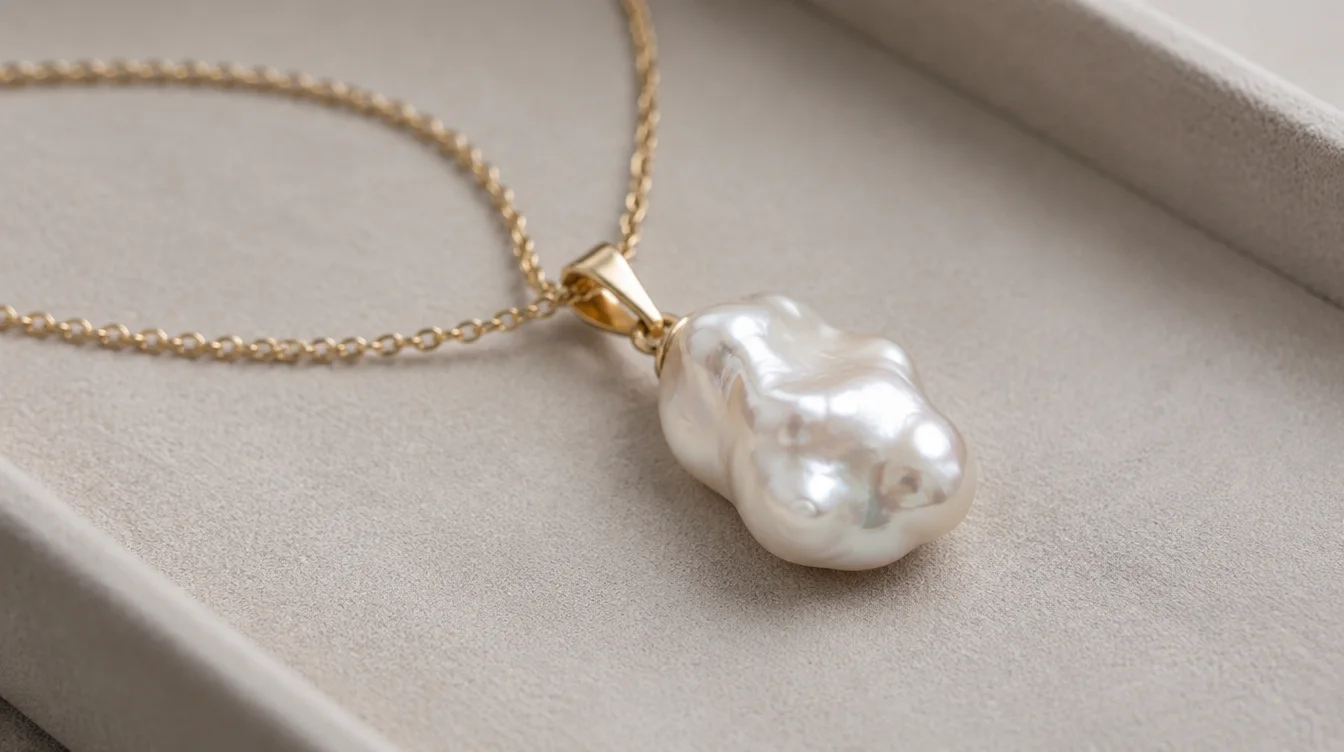
Yes, a pearl can be both keshi and baroque. If you ask can a pearl be both keshi and baroque, the terms name different traits. Keshi describes formation; baroque describes shape. An irregular outline does not prove a pearl is keshi. Ask the seller what supports that claim.
When can a pearl be both keshi and baroque?
A pearl can carry both labels if it formed as keshi and has an irregular shape. The terms do not conflict. Keshi tells you about its origin and structure. Baroque tells you what you can see.
Think of a listing for an irregular keshi pendant. “Baroque” helps you picture its outline. “Keshi” makes a claim you cannot confirm from the outline alone. That distinction matters most when the seller uses keshi to explain a higher price.
A useful first check is to ask what each word adds to the description. If both words only seem to mean “not round,” the listing needs more detail. Start with the formation claim.
What does keshi tell you about formation?

Keshi means a pearl formed without a bead nucleus during pearl cultivation. It does not mean the pearl grew wild. The mollusk may reject a bead but keep forming a pearl. Pearl forming tissue may also develop on its own. The account of keshi formation from Raffie Pearls describes these paths and notes that trade use of the term has broadened.
How are keshi pearls formed in a cultured pearl harvest?
If you search how are keshi pearls formed, you will often find the rejected bead story. It is a helpful example, not a test you can apply to every pearl. A seller should be able to say which mollusk produced the pearl and what is known about that harvest.
The seller may know little. After a pearl leaves the farm, its exact formation history can be hard to trace. “No bead” helps, but it does not tell you how that individual pearl grew.
So, what are keshi pearls when you see the term on a tag? Treat it as a specific origin claim, then ask what evidence sits behind it. Next, separate that claim from the visible shape.
What does baroque tell you about shape?
Baroque means the pearl has an irregular shape. It does not tell you if a bead sits inside. Baroque pearls can come from different mollusks and cultivation methods. The Skyjems pearl encyclopedia calls baroque a broad shape category. It treats keshi as a separate term that can overlap with baroque.
So, what are baroque pearls in a shop display? They are pearls sold for their nonround forms. They may have curves, ridges, or uneven ends. Some sellers call only strongly irregular pearls “baroque.” They list drops and buttons separately. Those names do not tell you how a pearl formed.
Other pearl shapes can look uneven at first. A smooth drop may be matched with another drop. A baroque pair may differ more. Online, ask to see both sides and a photo beside a ruler. You can judge shape from photos; formation needs other evidence.
How should you read a keshi baroque listing?
Read a keshi baroque listing as two claims, then check each one on its own. A clear seller can describe the outline and explain why the pearl is called keshi. A vague seller may use both words simply because the pearl looks unusual.
Read the description in two parts
Check the shape claim
Photos should show the pearl from several angles, especially for earrings. Ask whether the pair is matched for size, color, and outline. A front view can hide a flat back or a deep ridge that changes how the pearls hang.
Check the formation claim
Ask what backs the “keshi” label. Does the seller have farm records, a supplier’s written description, or a gemological report? Ask for a copy. A report may show facts about structure. It may not record the full cultivation history.
Picture two irregular white pearls of similar size. Both may fairly be called baroque. Only one may have sound support for a keshi label. Photos cannot tell you which one. Ask before you pay for that formation claim.
This approach also keeps you from rejecting a pearl you love merely because its label is incomplete. The next question is what to do when the seller cannot answer.
What if the seller cannot support the keshi label?
If the seller cannot support “keshi,” judge the pearl as an attractive baroque pearl rather than treating keshi identity as established. You may still want it. Just make the choice based on what you can assess: shape, luster, surface, size, matching, and the return policy.
Ask the seller to put any formation claim in writing. If the claim affects the price, compare a listing with clearer records. If you want a striking pendant, its look may matter more than its cultivation history.
Neither label guarantees better quality. A poorly matched keshi pair may appeal less than a well matched baroque pair of another type. For a first strand, the broader freshwater and Akoya comparison can help you weigh looks, consistency, and origin. That buying test makes the next questions easier to answer.
Frequently asked questions about keshi and baroque pearls
These answers separate what a label can tell you from what still needs proof.
Are keshi pearls baroque?
Many keshi pearls have irregular shapes. A keshi pearl can also be baroque. Still, are keshi pearls baroque in every listing? Check its outline rather than assuming the terms always go together.
Can a photo prove a pearl is keshi?
No. A photo can show shape and some surface detail. It cannot show the pearl’s full formation history. Ask what records or findings support the seller’s claim.
Does no bead nucleus mean a pearl is natural?
No. A pearl without a bead can still be a cultured pearl. Keep “natural,” “cultured,” and “keshi” separate when you read a description.
What should I ask before buying?
Ask for the pearl type and the basis for the keshi label. Request clear views of its shape and the return terms. If the seller cites a report, read it before paying.
Those answers should leave you with a clearer choice, not just a longer product name.
Choose the pearl, then check the claim
A keshi baroque label is not always a conflict. It can describe both formation and shape. Only the shape is clear at a glance. Ask what backs “keshi,” then judge the pearl’s quality. Choose a seller who gives clear answers and clear photos.