Freshwater vs Akoya Pearls for Beginners: Why Your First Necklace Choice Affects You for Decades
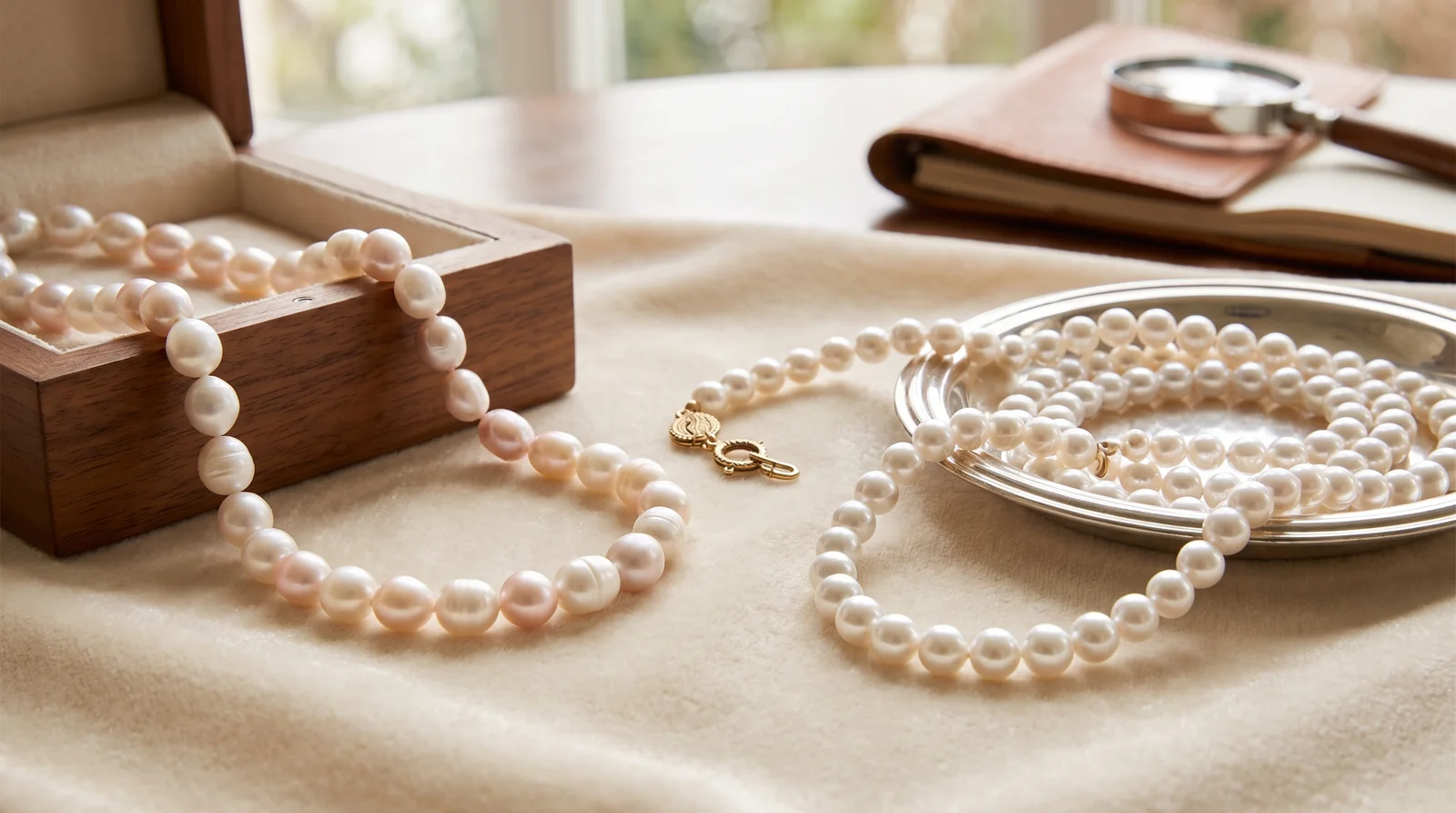
If you want a pearl necklace that stays round and glossy with almost zero babysitting, akoya pearls are the safer bet. If you want something you can wear daily without worrying about scratches or replacement costs, freshwater pearls hold up just as well for a fraction of the price. The real difference for beginners comes down to shape consistency over time, how often you will restring the strand, and what long-term care actually costs. Neither pearl type is fragile, but they age differently.
Freshwater vs Akoya Pearls for Beginners: What Actually Changes After Year One
The first year with a pearl necklace tells you almost nothing about how it will hold up. Pearls do not show their true character until they have been worn, stored, snagged on a sweater, and left in a jewelry box through a few humid summers. Freshwater vs akoya pearls for beginners really becomes a question about year three, year ten, year twenty. That is where the two types start to diverge in ways a first-time buyer rarely anticipates in the showroom.
Akoya pearls are bead-nucleated, meaning a round shell bead sits at the center with a nacre coating layered on top. That nacre coating is typically thinner than what you get on a solid freshwater pearl, sometimes just 0.35mm to 0.6mm on commercial grades. Freshwater pearls, by contrast, are usually solid nacre from center to surface because there is no bead nucleus involved. This structural difference is the single biggest factor in how each pearl type wears over the decades, and it deserves more attention than most first-time buyers give it.
Understanding this structural gap sets up everything else in this guide, from luster longevity to restringing schedules.
Pearl Luster Freshwater vs Akoya: Which One Actually Lasts
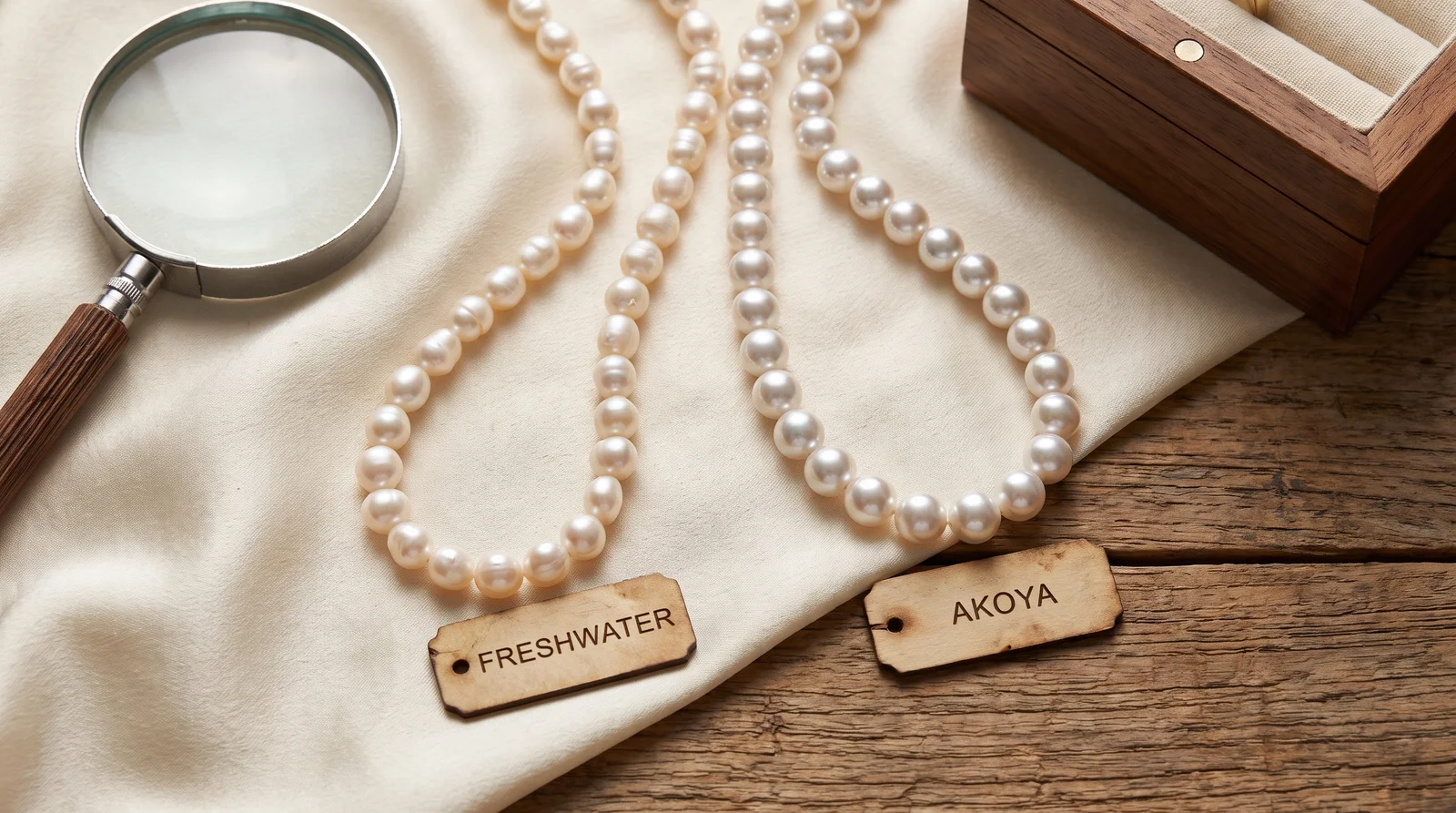
Akoya pearls start with sharper, more mirror-like luster, but that shine can fade faster if the nacre layer is thin. Freshwater pearls start softer and more satiny, yet high-grade strands often hold their glow longer because there is simply more nacre to lose before you notice a difference. Luster quality at the point of sale is not the same question as luster durability ten years down the road, and beginners often confuse the two.
Why Akoya Shine Looks So Sharp at First
Akoya pearls get compared to ball bearings for a reason. Light hits the thin, dense nacre layer and bounces back with crisp, well-defined reflections. You can often see a clear image of your own face on a high-grade akoya surface. That effect is gorgeous under store lighting, and it is exactly why akoya strands photograph so well for weddings and portraits.
Why Freshwater Luster Ages Differently
Freshwater pearls have a warmer, more diffused glow rather than a hard mirror shine. Because the nacre is solid all the way through, minor surface wear over the years does not expose a bead nucleus underneath. A freshwater pearl can develop small surface changes with age and still look like a whole pearl, not a chipped one. That distinction matters more for daily wearers than for someone buying an occasional-wear strand.
Luster longevity feeds directly into how predictable each pearl type looks over time, which brings up the next major consideration: shape.
Freshwater vs Akoya Pearls Quality: How Shape Consistency Holds Up With Age
Akoya pearls stay rounder for longer because their bead nucleus locks in the shape from day one. Freshwater pearls, especially lower grades, can show more visible shape variation as nacre layers shift slightly with years of wear and temperature changes. This is one of the clearest quality gaps between the two types, and it rarely gets discussed outside of pearl trade circles.
A matched akoya strand, especially AAA grade or the top Hanadama tier, keeps its eight-way-roller roundness through decades of normal wear. The bead underneath does not deform. Freshwater pearls without a bead nucleus rely entirely on how the mussel deposited nacre, so even excellent AAA strands can show very slight shape drift as pearls settle against each other on a strand over years of handling. It is subtle. Most people never notice it in daily life. But if shape precision matters to you long term, akoya has a structural advantage that freshwater cannot fully match, regardless of grade.
Shape stability leads naturally into the next practical concern most beginners overlook: how tough these pearls actually are day to day.
Freshwater Pearls Durability Everyday Wear: What Beginners Get Wrong
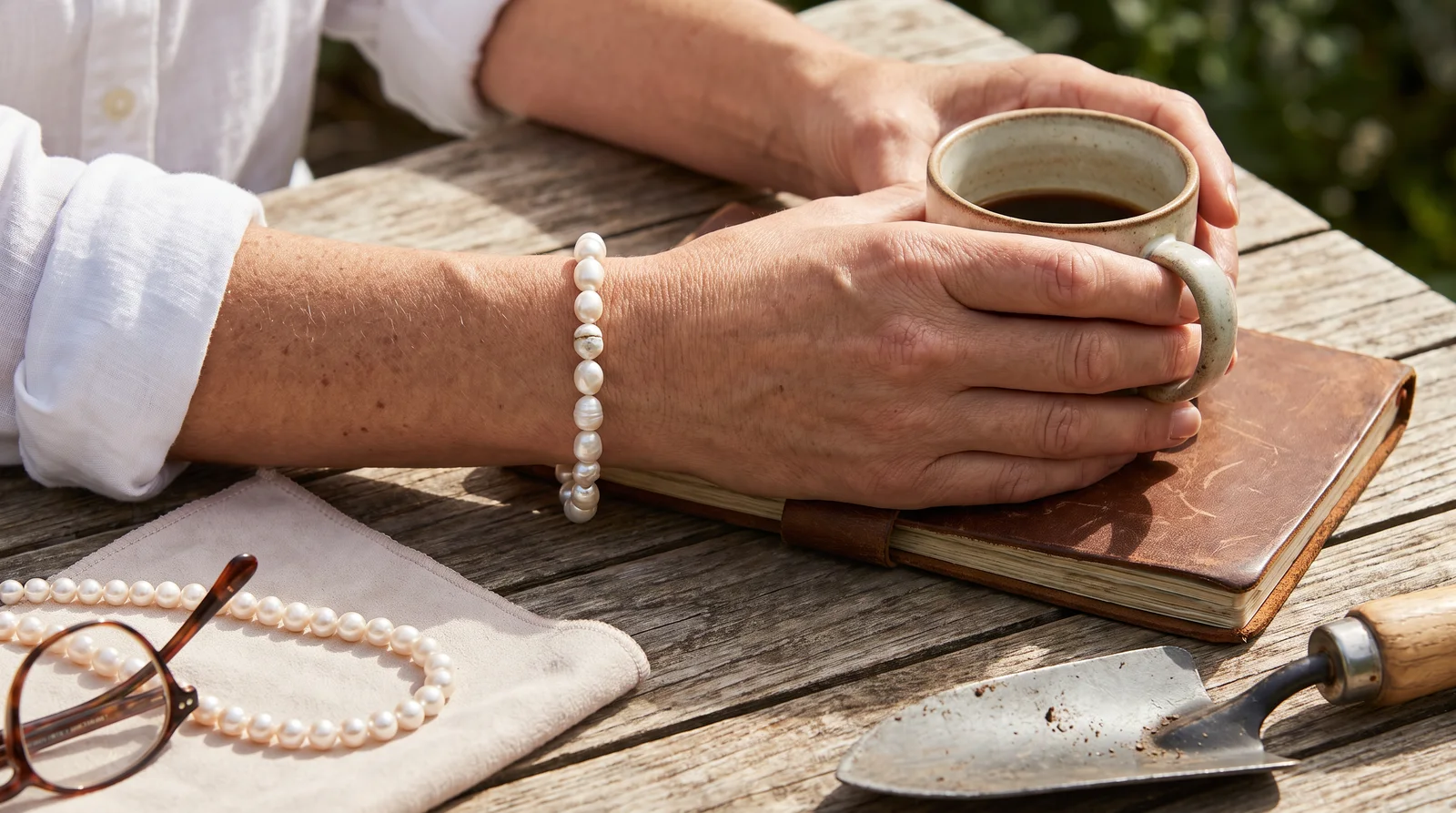
Freshwater pearls are more forgiving for daily wear because their solid nacre structure resists chipping better than a thin-coated bead pearl. That does not mean akoya pearls are delicate. Both types sit around 2.5 to 4.5 on the Mohs hardness scale, softer than diamonds or sapphires, and both can be damaged by the same things: perfume, hairspray, sweat, and rough contact with harder jewelry.
What Wears Pearls Down Faster Than People Expect
Chemical exposure does more damage than physical bumps in most cases. Perfume and lotion applied right before putting on pearls will dull the surface over months of repeated exposure. Chlorine is particularly harsh on both pearl types. Sweat is mildly acidic and, over years, can etch nacre if pearls are not wiped down after wear.
Where Freshwater Pearls Genuinely Have the Edge
Because freshwater pearls lack a bead nucleus, there is no risk of the nacre coating chipping away to reveal a bead underneath, which is a real failure mode on lower-grade akoya pearls. A freshwater pearl with surface wear still looks like a pearl. A poorly made akoya pearl with worn nacre can show an unnatural bead color peeking through, which looks obviously wrong. For a first pearl necklace meant for regular office wear, dinners out, or being tossed in a bag between events, freshwater's solid structure is genuinely reassuring.
Durability under daily conditions naturally raises the question of maintenance, since even tough pearls need periodic attention to stay wearable.
Akoya Pearls Price Cost and the Restringing Bill Nobody Mentions Upfront
Akoya pearls cost more upfront and typically need more frequent restringing because their popularity as everyday-worn necklaces means more friction on the silk thread over time. A basic akoya strand runs from around $300 for smaller sizes with minor blemishes, climbing past $10,000 for flawless, larger, high-luster strands. Freshwater strands span a wider range, often starting near $50 and reaching $2,000 or more for premium AAAA color and round grades.
Restringing is the ownership cost most first-time buyers never budget for. Any strand worn regularly should be restrung roughly every one to two years, since silk thread stretches and weakens with wear, sweat, and repeated putting on and taking off. This applies to both freshwater and akoya pearls equally. It is not a pearl-type issue so much as a strand-construction issue. If you are already thinking about total repair and upkeep costs across your jewelry collection, it helps to look at broader numbers on jewelry repair, like this breakdown of typical chain repair cost ranges, to get a realistic sense of what ongoing maintenance runs across different pieces.
Once you factor in restringing, the real gap between freshwater pearls value affordable pricing and akoya's premium cost narrows somewhat, but akoya still comes out more expensive over a twenty-year ownership window in most cases.
Best Pearls for First Time Buyers: Matching the Pearl to Your Actual Life
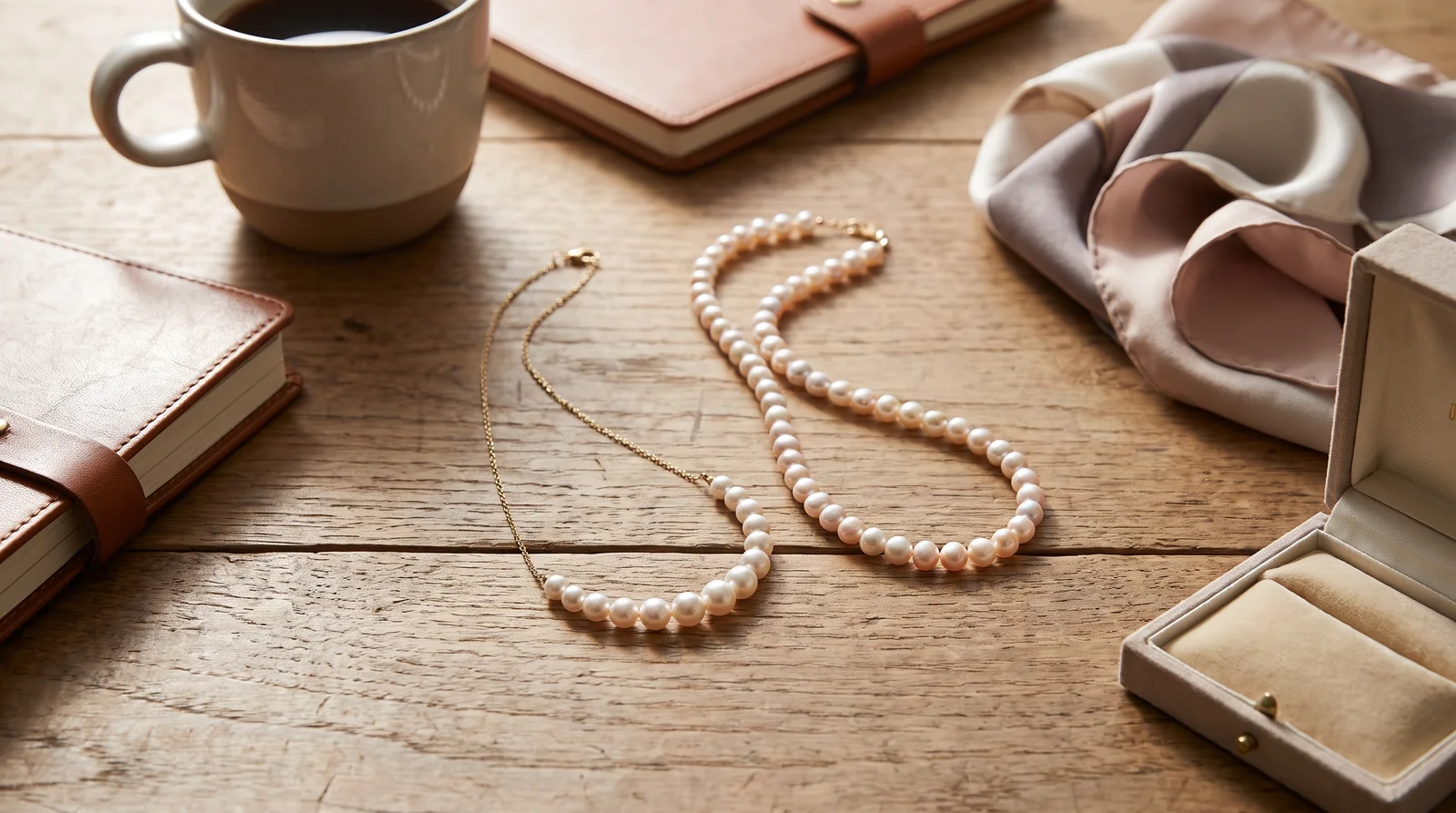
The best pearls for first time buyers depend on how often you plan to wear them and what you want the strand to still look like in fifteen years. If you want a classic strand for weddings, formal dinners, and photos that get pulled out a few times a year, akoya's shape stability and mirror shine make sense despite the higher price. If you want something you reach for constantly, freshwater pearls give you durability and value without the anxiety of wearing an expensive strand daily.
A lot of first-time buyers also overlook the setting their pearls are attached to, especially on pendants or clasps. Most pearl necklaces use gold clasps and settings, and the quality of that gold affects how well the whole piece holds up alongside the pearls themselves. If you are unfamiliar with gold purity standards, this guide on whether 14k gold is good for everyday jewelry is worth a look before you finalize a purchase, since a weak clasp can undermine even the best pearl strand.
Choosing based on lifestyle rather than just appearance tends to produce fewer regrets, which brings us to some direct answers on the questions beginners ask most.
Freshwater vs Akoya Pearls FAQ
How often do pearl necklaces need restringing?
Most pearl necklaces worn regularly need restringing every one to two years. If pearls are worn only occasionally, restringing every three to four years is usually sufficient. Watch for stretched or discolored thread between pearls as a sign it is overdue.
Why do akoya pearls cost more than freshwater pearls?
Akoya oysters typically produce one pearl per growth cycle, while a single freshwater mussel can produce dozens. That production difference, combined with akoya's higher luster and shape consistency, keeps akoya prices significantly higher across nearly every size and grade.
Can freshwater pearls look as good as akoya pearls?
High-grade freshwater pearls, particularly metallic and Edison varieties, can rival akoya luster and roundness at a much lower price. Lower-grade freshwater pearls will show a visible difference in shine and shape compared to akoya. Grade matters more than type alone.
Does everyday wear ruin pearls faster than occasional wear?
Everyday wear does accelerate thread wear and surface exposure to skin oils, sweat, and perfume. It does not necessarily shorten the pearl's overall lifespan if you clean and restring on schedule. Neglecting maintenance causes far more damage than frequency of wear alone.
What is the biggest mistake first-time pearl buyers make?
Most beginners focus entirely on size and initial shine without asking about nacre thickness or restringing needs. A smaller pearl with excellent nacre and luster will outlast and outshine a larger pearl with a thin coating. Ask about nacre depth before you ask about millimeter size.
Choosing With Confidence: What Your First Pearl Necklace Should Actually Deliver
Both pearl types are real, both are beautiful, and both can serve you well for decades if you understand what you are buying into. Akoya gives you sharper shine and rounder consistency at a higher price with slightly more upkeep sensitivity. Freshwater gives you tougher daily-wear structure and better value, with a softer glow that many people grow to prefer once they own it. Neither choice is wrong. The mistake is buying without knowing how each one behaves five or ten years from now, not just how it looks under the store lights today. If you are ready to compare actual strands side by side, or you want help thinking through settings, clasps, and long-term care for your first pearl piece, reach out and talk it through with someone who handles these decisions daily. A good jeweler should be able to answer nacre and restringing questions as easily as they answer questions about shine.