Could black rhodium prongs on white diamonds Make Your Ring Look Better?
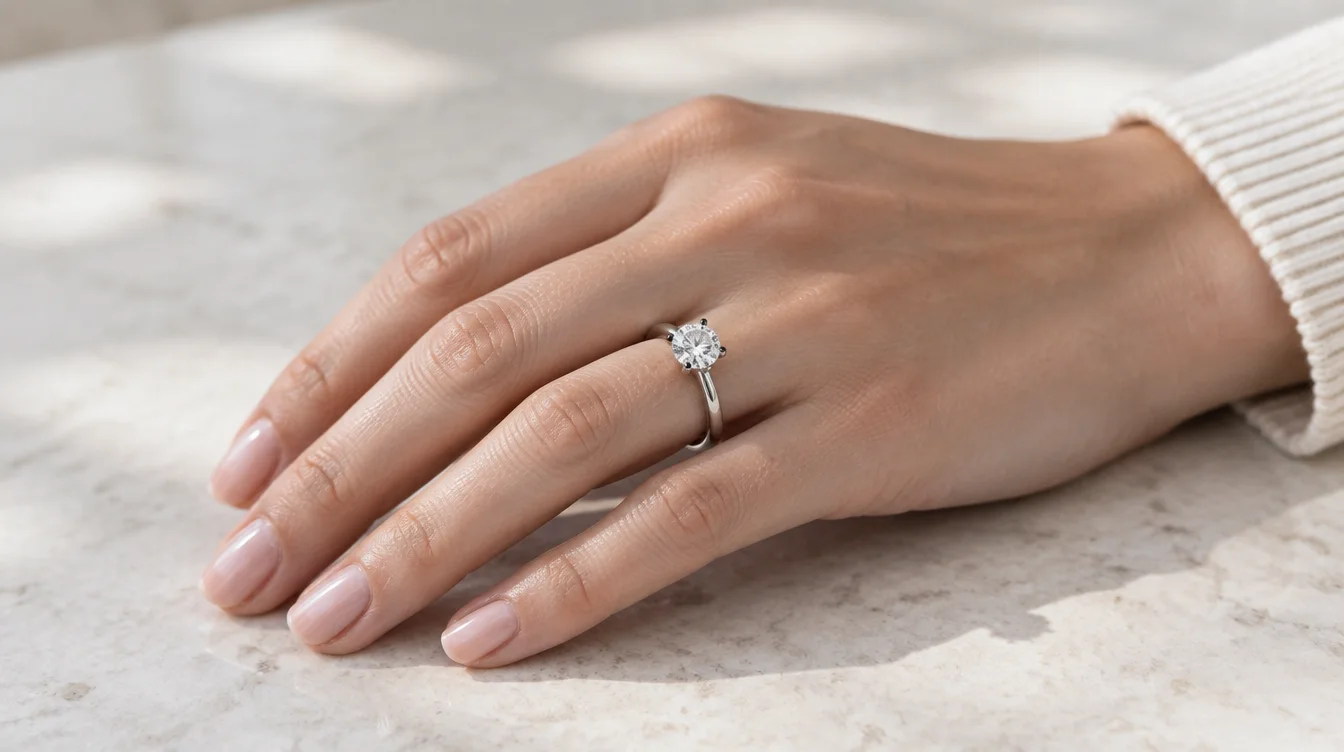
Choose black rhodium prongs on white diamonds if you want a dark frame around each stone. Choose bright prongs if you want the metal to blend into the diamond’s edge. Neither finish changes the diamond’s color or cut, so compare both on the same stone before you approve a design.
What black rhodium prongs on white diamonds actually change
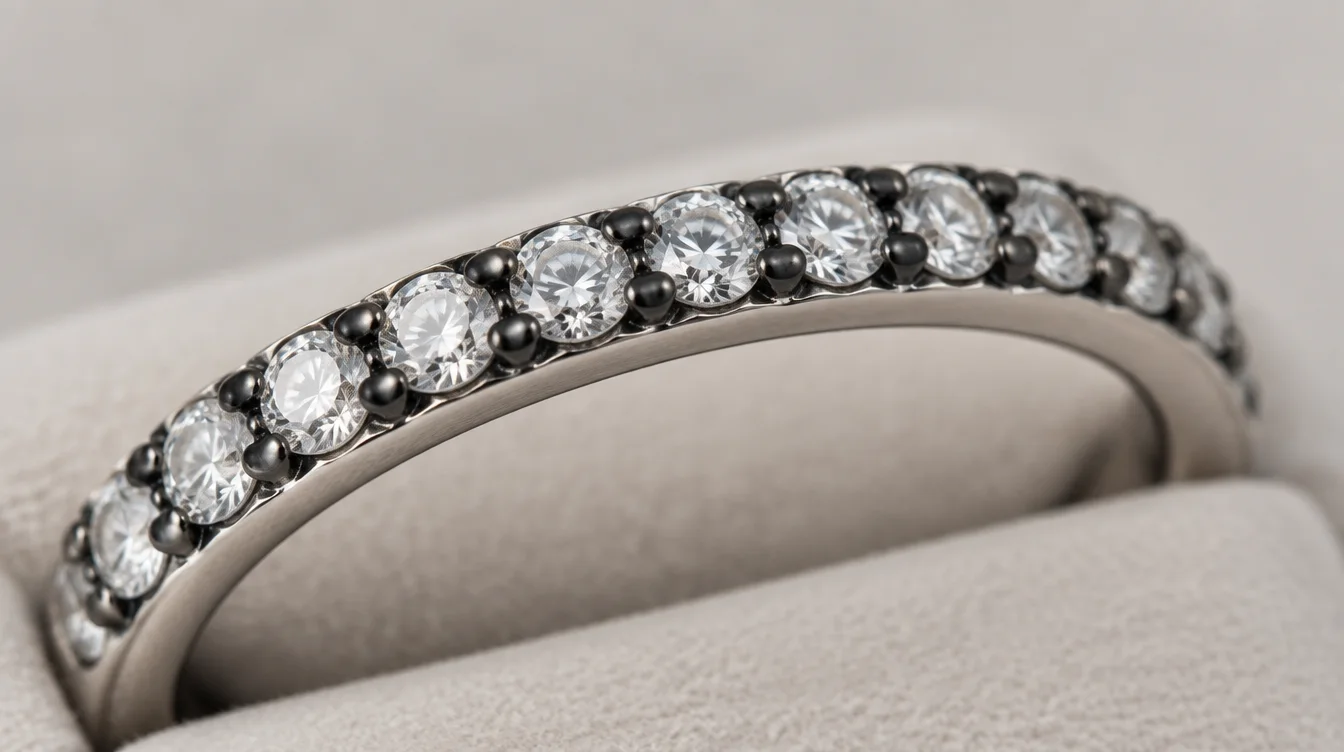
Dark prongs change the outline you see around a white diamond, not the diamond itself. A fine black tip can make each point of contact more visible. Bright metal tends to fade into the edge, especially when the prongs are small.
That difference matters most when you look at the whole ring. Black rhodium prongs can give a solitaire a sharper, more graphic look. Around many small stones, dark metal can help separate one diamond from the next. Jewelry designers also use the finish in recessed areas to add depth, as The True Gem shows in its design examples.
Neither effect is a promise of better sparkle. Start by judging the stone and its setting separately, then see whether you like them together.
How should you compare dark and bright settings?
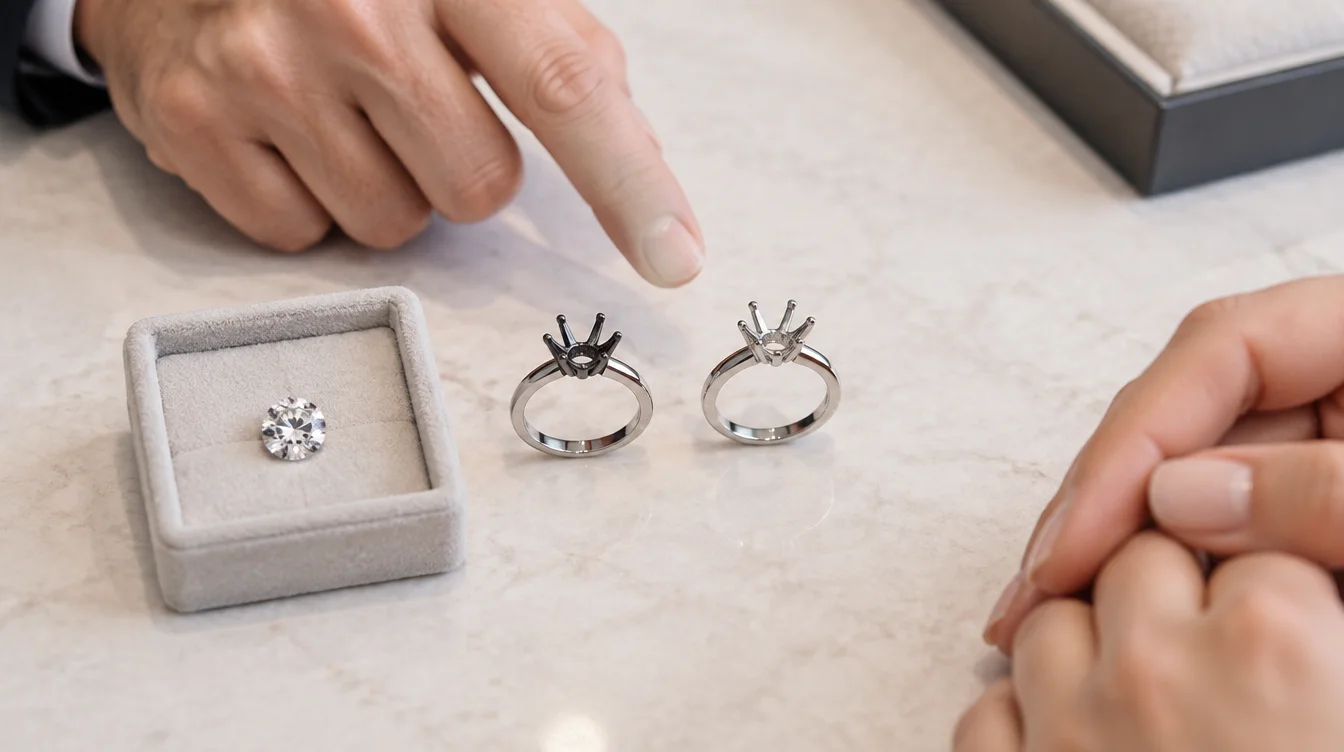
Compare the same diamond against both finishes, with the prong shape and setting height held steady. Otherwise, you may credit the metal for a change caused by a different design. If a jeweler has sample heads, ask to view the stone in each. Photos can help, but an in person comparison gives you more angles.
Look first in soft daylight, then under the light where you often wear jewelry. Hold each sample at normal viewing distance. A close photo makes tiny prongs seem larger than they do on your hand. Turn the ring and watch whether the dark tips form a neat frame or draw your eye away from the stone.
Try a bright setting beside the dark one, not just from memory. If you are weighing a step cut design, our guide to white gold emerald cut engagement rings covers other setting choices worth checking at the same time.
Once you know which look you prefer, decide how much metal should carry it.
Where should the dark finish go?
Selective black plating gives you contrast without making every visible surface dark. You might choose only the prong tips, the full prongs, or the metal beneath a row of small diamonds. Ask for a sketch that marks the exact boundaries. “Dark setting” leaves too much room for different interpretations.
Prong tips or full prongs?
Dark tips make a small accent. Full dark prongs make the frame easier to spot from the side. Prong shape matters too: round tips and pointed claws do not read the same way. Prongs must still fit and hold the stone properly; finish is not a substitute for sound setting work. Whiteflash’s prong guide explains how prong form and fit affect the finished ring.
What about the shank and small stones?
A dark recess under small diamonds can add definition while leaving the outer band bright. A fully dark shank makes a much stronger statement, but its broad surface faces more daily contact. The True Gem notes that plating wears with use and the base metal can show through.
Placement sets the look now. The finish sample tells you what shade you are actually buying.
What should you ask to see before approving the finish?
Ask for a finished sample on the same base metal, not just a drawing or a black swatch. Black rhodium may read as charcoal rather than deep black. Its appearance can also vary with the plating process, according to Skyjems’ plating overview.
Have the jeweler show where the dark finish begins and ends. Check the top view, side view, and the space beneath the stone. Ask how they will handle later work near the prongs. A sample with comparable prong size is more useful than a large dark band.
For black rhodium vs white rhodium, judge both under the same light. Bright white plating reflects more light from the metal; dark plating makes that metal less prominent in some views and more outlined in others. Neither comparison tells you the diamond’s color grade. Your choice should rest on the look you want, plus the care it calls for.
What tradeoff comes with your choice?
Black rhodium prongs offer a distinct frame, but their dark surface is plating. Contact and cleaning habits affect how long it keeps an even look. Bright prongs also need care, yet changes in a pale finish may be less obvious to your eye.
Before ordering, ask whether the jeweler can refresh only the dark areas. Ask if later prong repair will affect them. If you would dislike any change in contrast, bright metal may suit you better. If you like a clear outline and accept finish upkeep, dark accents may be the better fit.
Those details shape the questions worth asking before you order.
Questions buyers ask about dark prongs
How long does black rhodium plating last?
No single time span fits every ring. How long does black rhodium plating last on yours? Placement, wear, and contact with other surfaces all matter. Ask your jeweler what they expect for your proposed design.
Can black rhodium be removed?
Much of it can be polished away, but small spaces around stones may be hard to reach. If you wonder “can black rhodium be removed” before buying, ask which parts of your design could remain dark. The True Gem describes that limit for areas near pavé and diamonds.
What does black rhodium jewelry care involve?
Keep the ring away from abrasive work and harsh chemicals, and clean it gently. For black rhodium jewelry care, ask your jeweler which cleaning method suits your stones and setting; have loose prongs checked rather than cleaning around them aggressively.
Choose the frame you want to keep seeing
Black rhodium vs white rhodium is a visual choice first, with upkeep close behind. Compare one diamond in both looks, agree on exactly where the finish goes, and inspect a sample before you commit. Take those three requests to your jeweler. You will be choosing the ring you actually saw, not the one you had to imagine.