So are watermelon tourmaline slices fragile enough to rule out everyday wear?

A watermelon tourmaline slice pendant can suit careful everyday wear if its thickness, fractures and mounting have been assessed first. When asking “are watermelon tourmaline slices fragile,” judge each stone on its own. Do not rely on its hardness score. Have a professional check a thin slice with an uncertain crack before regular wear, even if its color looks perfect.
Why hardness cannot answer the whole question
Scratch resistance cannot tell you if a tourmaline slice will survive a knock. Both risks matter when choosing a pendant.
Published watermelon tourmaline hardness is 7 to 7.5 on the Mohs scale. Gem Rock Auctions lists that range alongside brittle tenacity. It also warns about heat and sudden temperature changes. A stone can resist some scratches yet still fracture.
That distinction explains why “does tourmaline break easily” needs a qualified answer. A sound stone is not something to treat as glass, but a hard blow remains a concern. Natural Gemstones distinguishes hardness from toughness and advises protection from sharp impacts.
Color bands are not proof of weakness
The pink center and green rim alone do not show that a crack is present. GemSelect describes the colors as natural zoning within tourmaline. A color boundary is not always a seam that will split.
Equally, attractive zoning does not prove a slice is sound. Ask about its actual condition rather than accepting “natural character” as a complete answer. Start that assessment with the side view, where thickness becomes clear.
Check thickness across the whole slice
Check thickness at the edge and any thin spots, not just the center.
Ask the seller for the stone’s length, width and thickness in millimeters. Does that thickness cover just the stone, or its metal backing too? A frame can make the stone look thicker from the side.
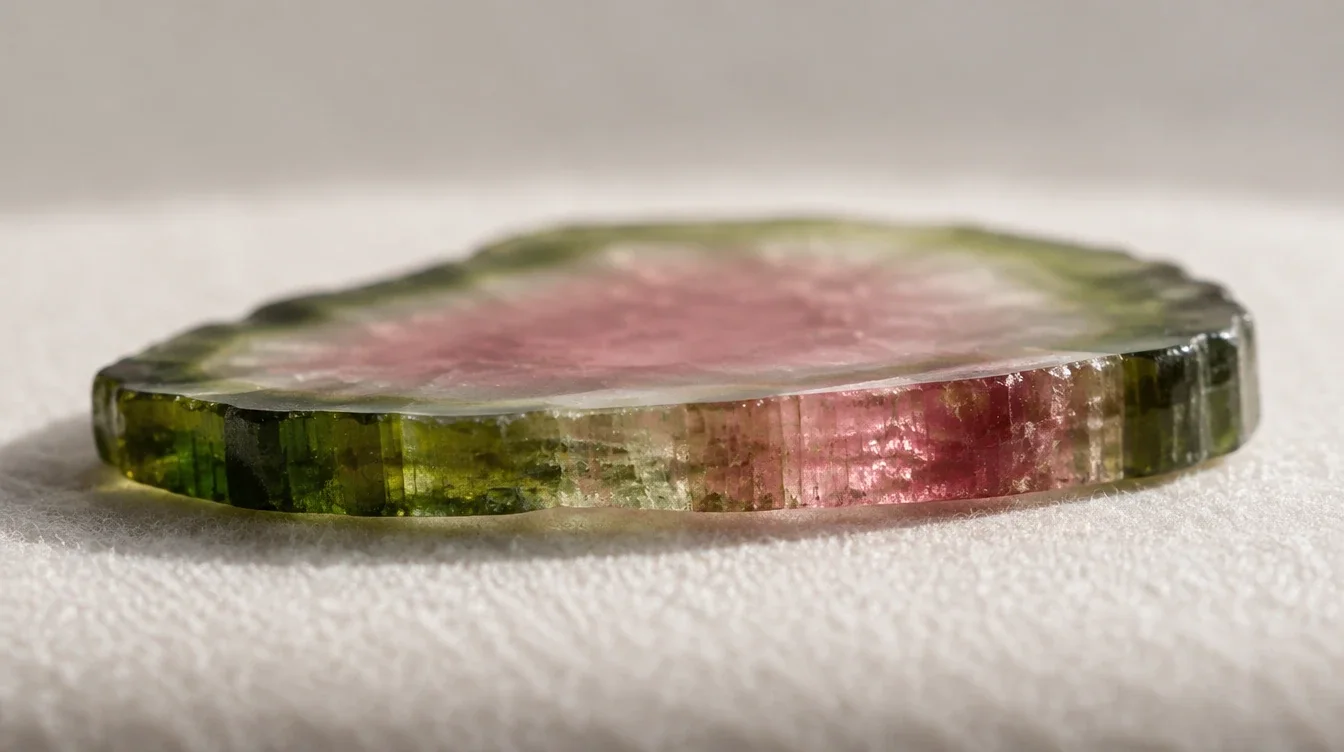
GemSelect notes that very thin material needs careful mounting. But the supplied excerpts give no tested minimum thickness for safe daily use. A rule like “anything above this measurement is safe” goes beyond that evidence.
Read the profile, not just the listing
Ask for a straight side photograph and views from several edges. Look for thin spots or small points along an uneven outline. Ask the jeweler whether those areas change how you should wear the pendant.
When the seller provides one number
Ask where the measurement was taken. Is the thickness the same throughout? Those answers tell you more than another statement about carat weight. Weight alone cannot show the shape you need checked.
When the side is hidden
A deep frame may hide much of the stone. Ask for photographs taken before setting, if available. Request a written account of its condition too. Missing views call for questions, but do not prove damage.
Once you can see the profile, look through the face. Check the lines and internal features.
Separate visible character from unresolved fractures
A visible inclusion does not automatically rule out a slice, but a suspected fracture needs more than an attractive photograph.
GemSelect notes that internal features can add to a slice’s appeal. That describes its looks, not its strength. Judge those two things on their own when choosing a stone.
Ask whether any fracture reaches the front, back or outer edge. Also ask whether chips, previous repairs or fillings have been observed. If the seller cannot answer, arrange an inspection during the return period rather than guessing.
Ask for an assessment of the actual stone
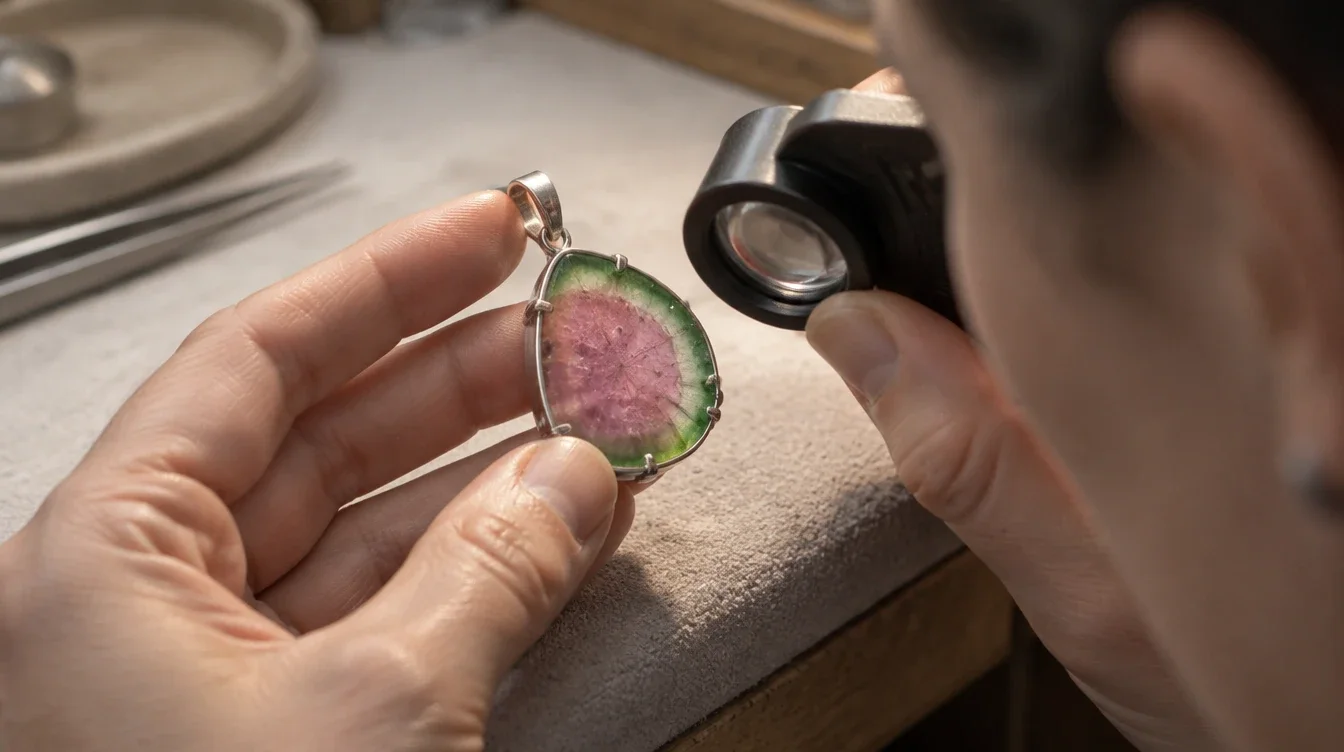
A jeweler or gemologist should explain what they can see. They should note what stays hidden too. Ask them to check the slice in its intended mounting. A loose stone check may not answer every question about the finished pendant.
For a useful comparison, our discussion of thin diamond edges also asks buyers to check thickness, chips and fractures. That does not mean diamond and tourmaline can be judged alike. A material’s good name cannot replace a check of the actual cut.
Do not test a doubtful line yourself
Do not bend, tap or press a slice to see whether a line moves. Avoid scraping it with a pin. Those tests cannot give you a sound buying answer. They also mean handling the piece more than needed.
Instead, ask the seller to mark the line in a photograph. Have them explain it, and keep their answer with your receipt. Once you know the stone’s condition, check how the mounting protects it.
Look for edge protection and suitable support
Judge a protective mounting by how much edge it covers and how it holds the slice.
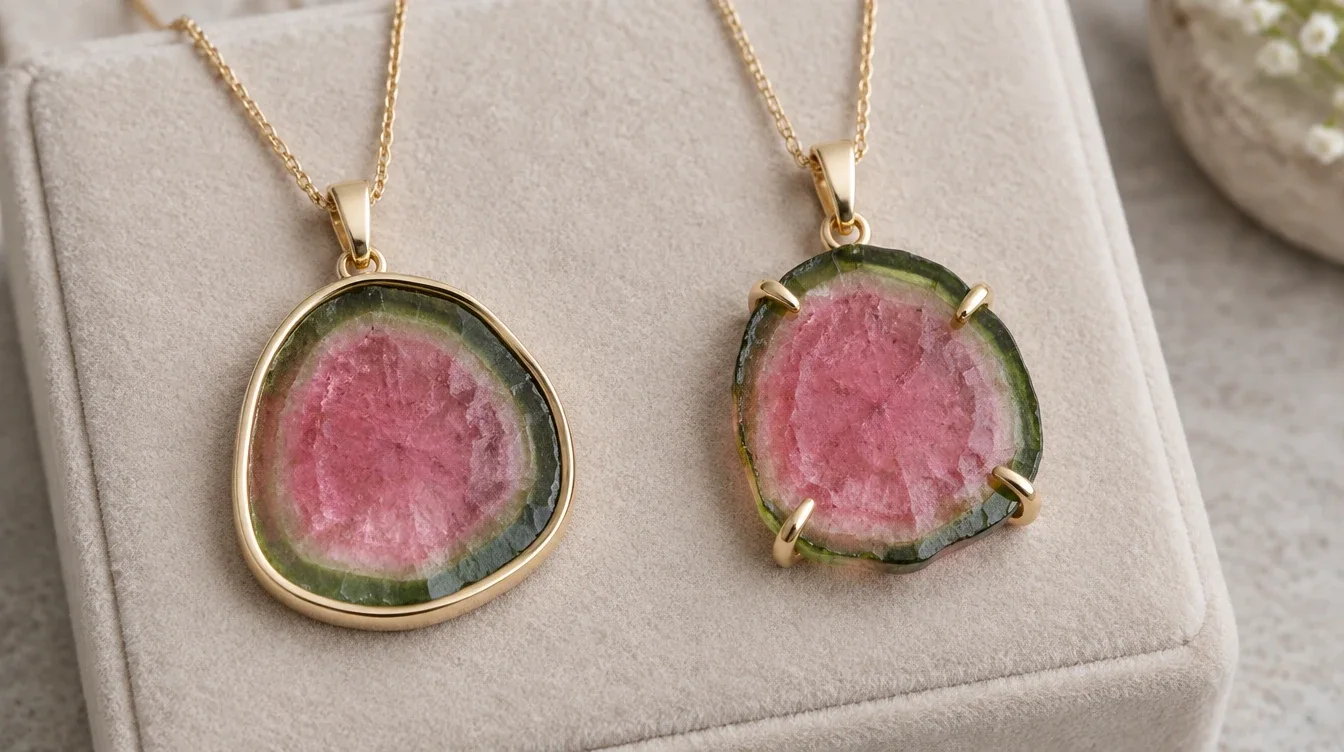
A tourmaline bezel setting places a metal rim around the stone. One Step Gems describes bezels as providing edge protection, but that does not prove every finished pendant is well protected.
Ask for front, side and back views. Have the maker show where the slice rests and how it is held. Which parts stay exposed? The word “bezel” should start that discussion, not end it.
Compare coverage using the same questions
For a rimmed design, ask how much of the green border will remain visible. For a prong design, ask which stretches of edge remain open. Then compare both designs against the same stone condition and your intended routine.
A tourmaline bezel setting may suit you if you accept seeing less edge in return for more coverage. An open design may appeal if you want to see the full outline. Both still need a check for fractures first.
Check the attachment point too
If a fitting passes through a drilled hole, ask for a close view of that area. Have its condition checked just like the outer edge. Hanging straight does not prove the attachment suits the stone.
Never squeeze prongs or tighten metal against the slice yourself. Ask the maker how they would adjust it later. Then think about what the pendant will meet during your day.
Decide whether everyday wear fits your routine
Everyday wear makes sense only if the checked pendant suits your habits.
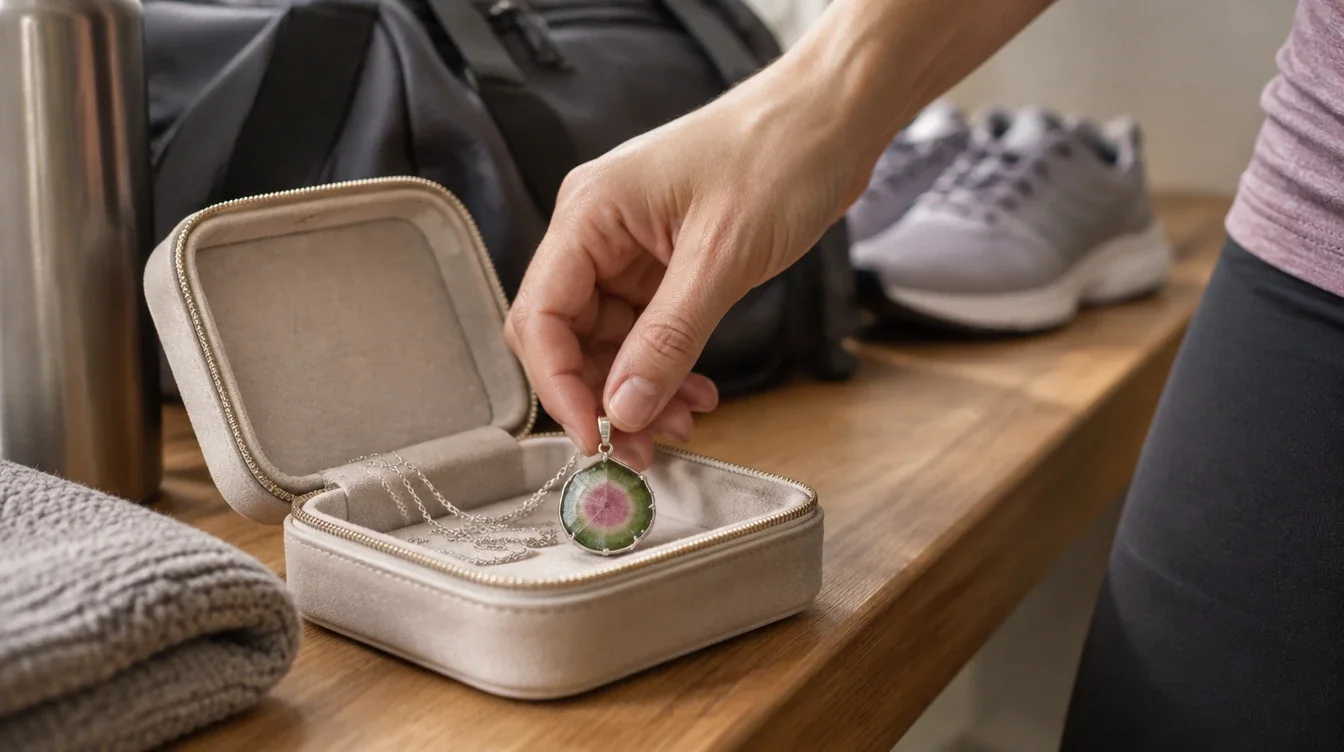
When people ask “can you wear tourmaline every day,” they often mean very different things. Wearing a pendant to lunch is not the same as leaving it on through exercise, sleep and housework. Make your intended routine clear before buying.
Tourmaline durability advice warns against sharp impacts and harsh handling. Think about those risks in your day. Remove a slice before sport. Take it off for tasks where it could hit equipment, get trapped or catch.
Use three decisions rather than a safety score
First, consider regular careful wear only if inspection supports it. The mounting must suit the slice too. Second, choose occasional wear if you accept more handling limits for a design you love. Third, wait to buy if a crack, attachment or hidden edge remains unexplained.
Occasional wear is not a repair for an unsafe stone.
As an example, compare two pendants with similar colors. One has a condition record, clear side views and mounting details. The other has only a bright front photograph and a vague claim of durability. Choose the one with better records. Or seek more facts before choosing either.
That comparison is not a test result. It shows why a lack of facts should not put you at ease. Next, ask for the evidence that could change your choice.
What photographs can and cannot settle
Photographs help you compare looks and the parts of the mounting you can see. They cannot prove that every slice suits daily wear.
GemSelect recommends reviewing multiple images and measurements rather than relying on one image. Ask for a video that turns the pendant slowly, plus clear views of its back and edges. Request ordinary lighting as well as the seller’s display lighting.
The answer to “are watermelon tourmaline slices fragile” should describe your chosen piece. Who checked it? Was that before mounting? What wear limits do they suggest? Facts about watermelon tourmaline hardness alone cannot explain a doubtful line.
Make the return period part of the plan
Before paying, check that the return window allows time for an independent inspection. Does custom work change those terms? Save screenshots of the listing and the seller’s written answers.
If the stone is already mounted, an examiner may need to qualify their opinion about concealed areas. Ask what can be assessed without removing it. Do not authorize removal without discussing risk, cost and return terms first.
Clear purchase terms give you room for an honest assessment. If you keep the pendant, gentle care is part of the wear plan.
Keep care gentle and watch for changes
Care for a slice pendant based on its condition and how it is made.
Advice on how to clean watermelon tourmaline starts with warm soapy water and a soft brush. The piece must be intact, with no special treatment restrictions. Natural Gemstones recommends that method and advises against ultrasonic and steam cleaning. Ask the seller for care steps if the piece has repairs, fillings or adhesives.
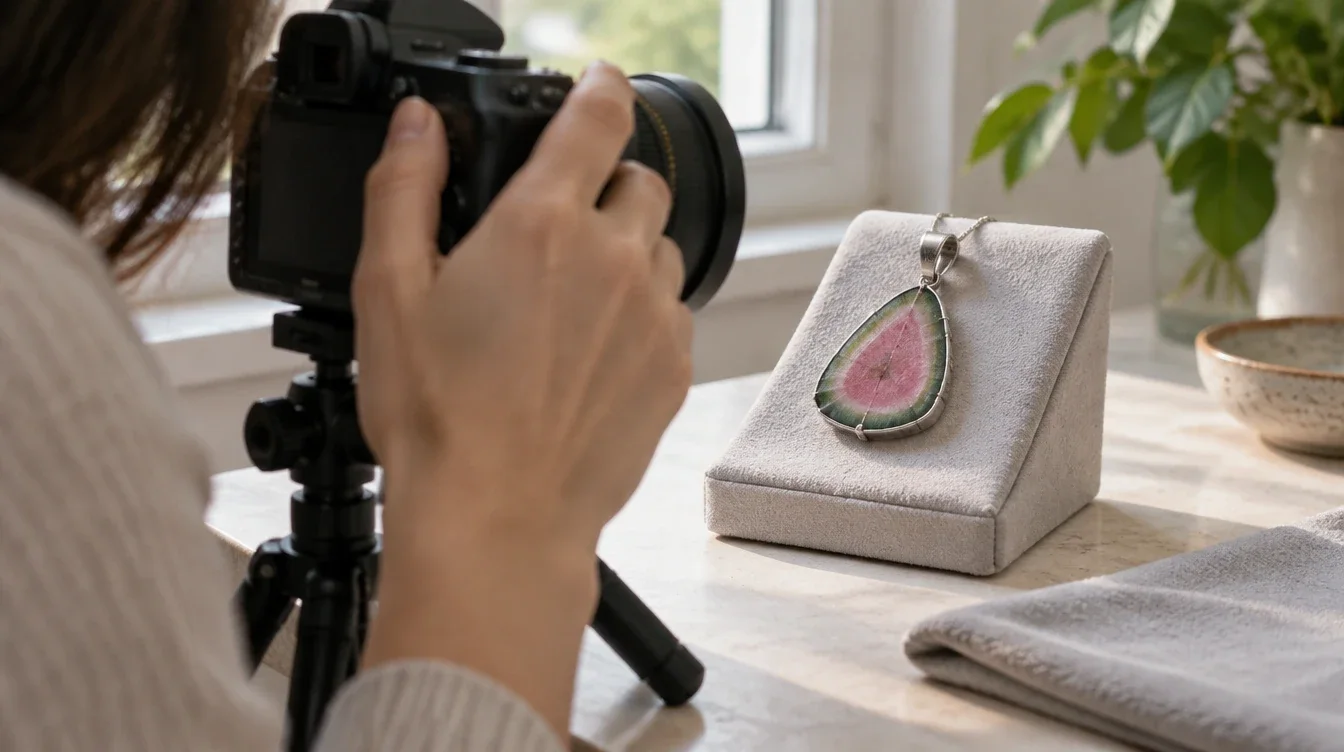
Handle the pendant over a soft towel, not an open sink. Use light pressure and stop if anything moves. Store it apart from harder gems, as the same care guidance recommends.
Before wearing it, check for a new chip, a changed line or a loose fitting. If it looks different after a knock, set it aside for inspection. That rule also applies to these common questions.
Questions buyers ask before committing
The safest buying answers address the actual slice, its mounting and how you will wear it.
Does tourmaline need a fully enclosed back?
A closed back alone does not prove durability. Before choosing either design, ask how it supports the stone. Which parts can you still see and check?
Can a slice be worn daily without a bezel?
It may be, but check the stone and alternative mounting together. To answer “can you wear tourmaline every day,” look at exposed edges and wear habits. Those matter more than a blanket yes.
Why can a hard gemstone still chip?
Hardness measures scratch resistance. It does not mean a stone is safe from impact damage, as the cited durability advice explains. To answer “does tourmaline break easily,” check its condition and the knocks it may face.
How should a cracked slice be cleaned?
Have a professional check the slice before brushing or soaking it. For a damaged or repaired piece, follow its care instructions. General advice on how to clean watermelon tourmaline must not replace them.
Those answers bring the purchase back to what you can inspect.
Choose the slice you can wear with confidence
A watermelon tourmaline slice pendant needs more than lovely color to suit you. Choose one with a condition record and a mounting made for that stone. Its care needs should fit your habits too.
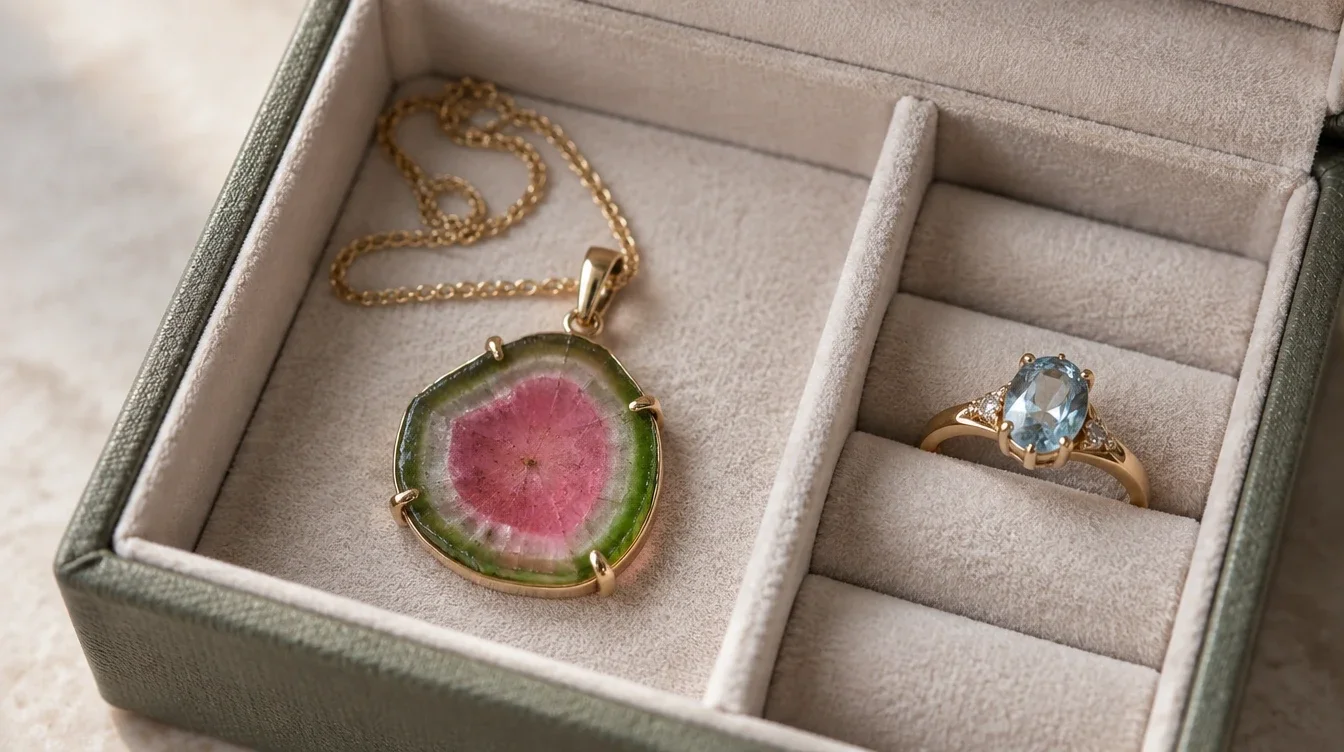
Before buying, ask for side views and thickness details. Get clear answers about fractures too. Take the pendant and those records to a jeweler to check. Then decide if regular or occasional wear suits you.